
The Caucasus cuisine represents one of the world’s most fascinating culinary treasures, where European and Asian traditions intertwine in every bite. This mountainous region, cradle of millennial civilizations, has developed a unique cuisine that combines ancestral techniques with extraordinary ingredients: aromatic herbs that perfume entire valleys, exotic spices brought by Silk Road caravans, crunchy nuts from local forests, and fermented dairy products that have nourished generations of mountain dwellers.
From the emblematic Georgian khachapuri to aromatic kebabs grilled to perfection over charcoal embers, each recipe from Caucasus cuisine tells a millennial story. These are tales of peoples who have jealously preserved their culinary identity, resisting invasions and keeping alive traditions that today conquer palates worldwide.
A Crossroads of Civilizations: The Roots of Caucasian Cuisine
Caucasian cuisine didn’t emerge from nothing. It’s the result of centuries of cultural exchange in a region that functioned as a natural bridge between continents. The Caucasus, historically situated on the legendary Silk Road, absorbed and transformed culinary influences from the Middle East, Persia, and Central Asia, forging a unique gastronomy that fiercely maintains its local essence.
The Caucasian mountains n

ot only protected their peoples from invasions, but also preserved culinary techniques that could have been lost in other regions. The cultural diversity of the Caucasus is perfectly reflected at their table: each valley developed its own specialties, each town contributed its secrets.
The Oriental Heritage that Transformed the Local Table
The commercial caravans that crossed these mountains not only transported precious silks and aromatic spices, but also completely revolutionized local cuisine. Earthy cumin, fresh cilantro, and golden saffron arrived from Persian bazaars, while the tandoor oven from Central Asia found in the Caucasus’s mountainous climate the perfect conditions for baking crispy breads and juicy meats.
This rich oriental influence is especially manifested in complex marinades that tenderize even the toughest meats, spice blends that awaken all the senses, slow-cooked stews that concentrate deep flavors, and ancestral techniques that mothers teach daughters generation after generation.
Indigenous Traditions: The True Soul of the Caucasus
Now, while external influences enriched Caucasian cuisine, local peoples never abandoned their most authentic preparations. Pkhali, that delicious vegetable puree mixed with ground walnut paste, and kefir, the original probiotic born in these mountains, represent the purest gastronomic identity of the region.
At every Caucasian family table, traditional recipes are transmitted like sacred treasures. Grandmothers patiently teach their granddaughters the secrets of perfect khachapuri—the exact oven temperature, the precise point of the cheese—while grandfathers ceremoniously share the exact technique for marinating shashlik that will carry the family’s flavor.
Georgian Khachapuri: The Cheese Bread that Conquered the World

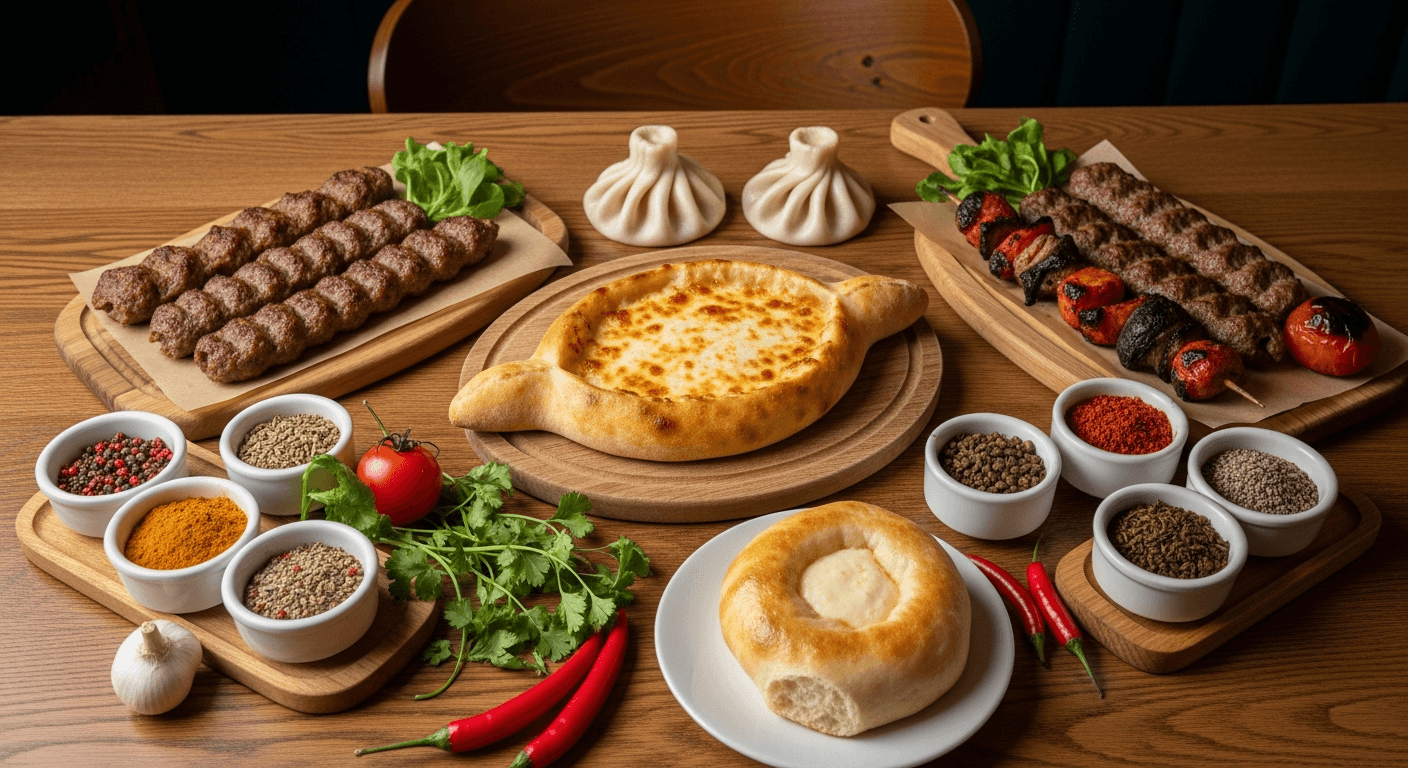
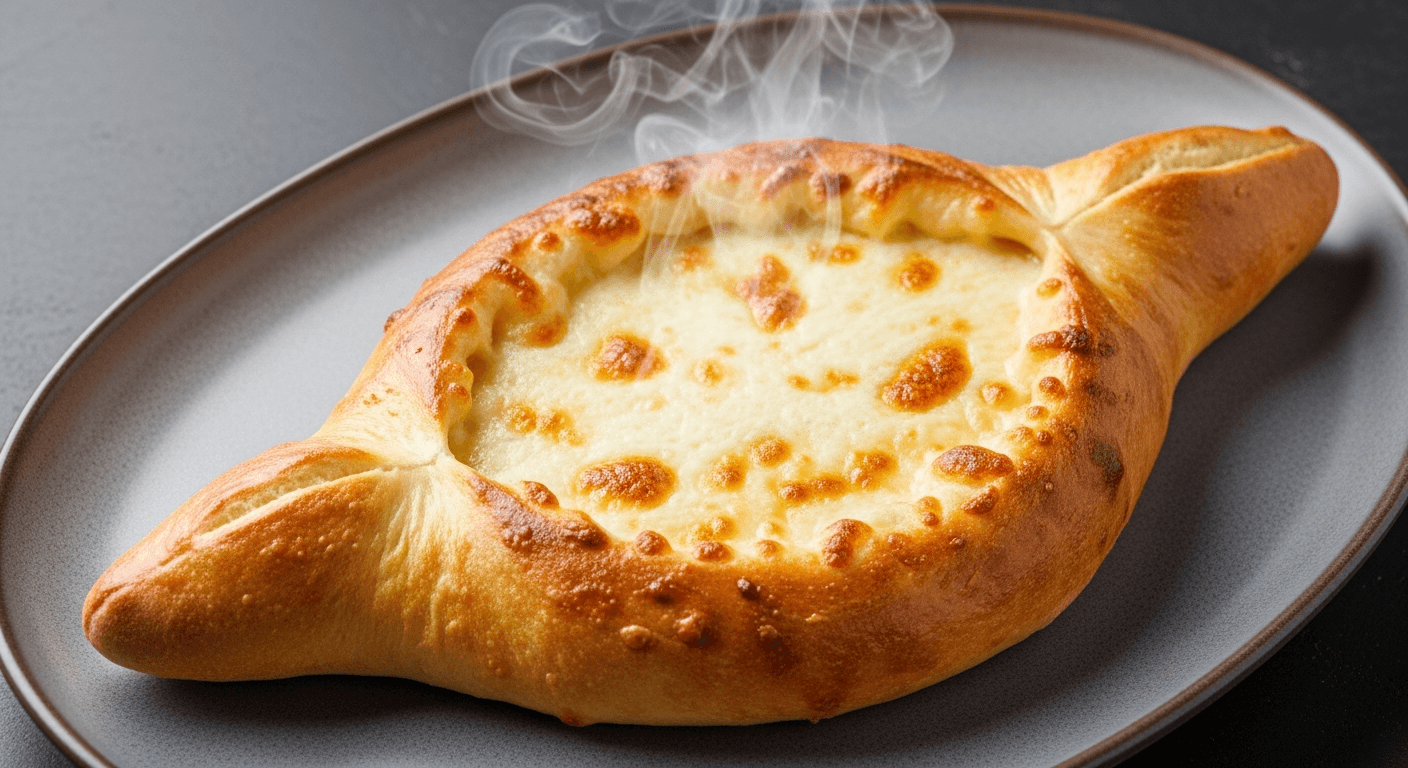
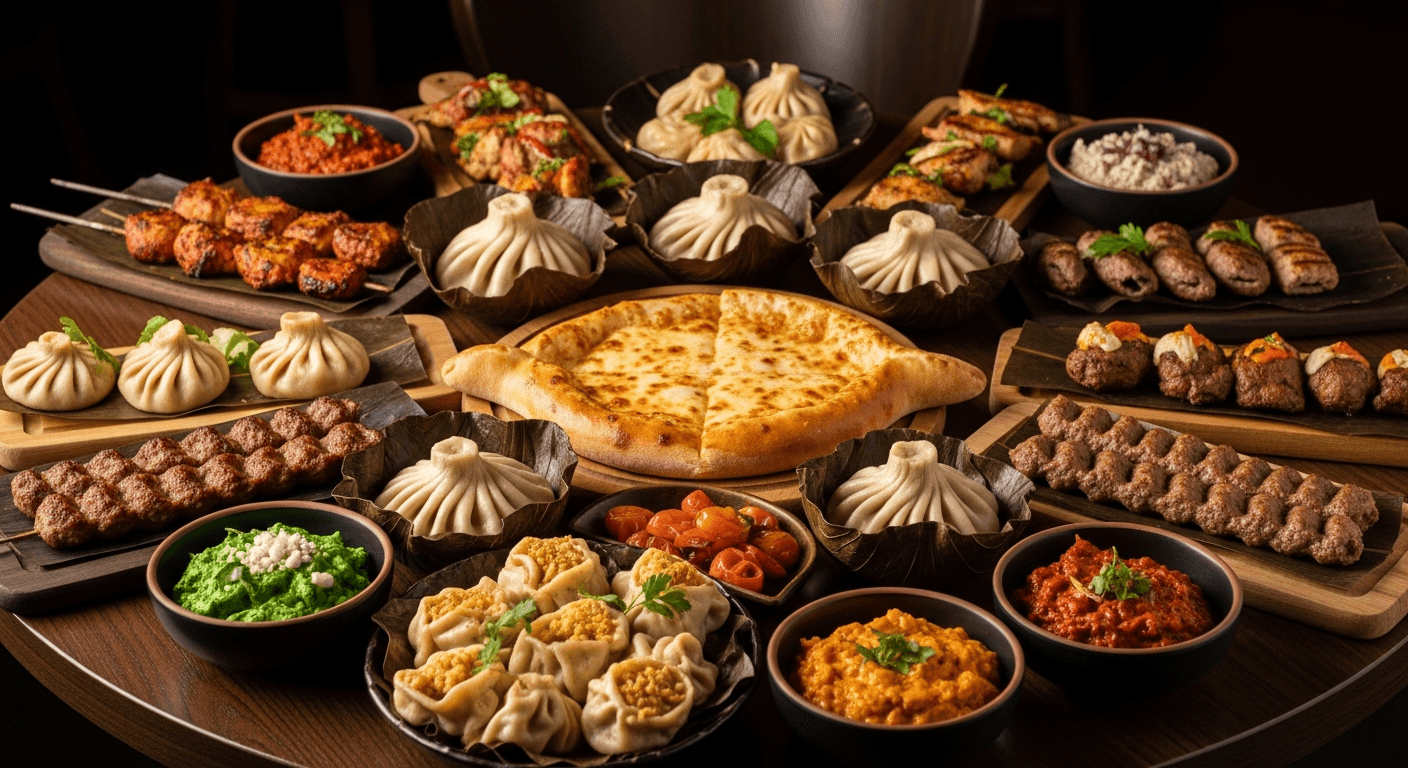
Georgian khachapuri is, without exaggeration, the crown jewel of Georgia’s gastronomy. More than simple cheese bread, it’s a complete culinary experience that varies dramatically according to the region where it’s prepared. The spectacular Adjaruli Khachapuri, with its characteristic boat shape that sails to your table, arrives steaming with bubbling sulguni cheese, crowned with a perfect golden egg and a generous piece of butter that melts seductively before your eyes.
The diversity of Georgian khachapuri is amazing. The Imeruli, round and golden like the mountain sun, comes generously filled with local cheese that stretches in silky threads. The Megruli represents the most indulgent version, with creamy cheese inside and a golden crust outside that crunches at first bite. The Achma, with its multiple layers of dough and cheese, resembles a Georgian lasagna that requires fork and knife.
During periods of religious fasting, Lobiani takes center stage: the variant filled with spiced red beans that demonstrates that Caucasus cuisine always finds delicious ways to adapt to spiritual traditions without sacrificing flavor.
Caucasian Kebabs: Art Over Burning Embers
Caucasian kebabs elevate simple grilling to the category of refined culinary art. Each region of the Caucasus has developed its secret marinade, transmitted as family heritage: Georgians prefer local red wine mixed with fresh mountain herbs, while Azerbaijanis opt for spiced yogurt that penetrates deeply into the meat.
Shashlik, with its generous chunks of lamb or beef meticulously interspersed with colorful peppers and sweet onions, reigns supreme at outdoor celebrations. Caucasian grilling traditions include specific rituals: the fire must reach perfect temperature, the meat must marinate for exactly the necessary time, and the griller must turn the skewers with precise rhythm.
The Complete Ritual of the Perfect Kebab
An authentic Caucasian kebab never arrives alone at the table. It’s accompanied by warm and flexible lavash that enve

lops the juicy meat, grilled vegetables that have absorbed aromatic smoke, sweet-and-sour tkemali sauce made with local green plums, and a generous bouquet of fresh herbs: cilantro, parsley, and basil that cleanse the palate between bites.
The complete experience of Caucasian kebabs transcends food to become a social ceremony. Entire families gather around the fire, sharing stories while the meat cooks slowly, creating memories that last as long as the flavors.
Dolma and Pkhali: The Caucasus’s Vegetarian Elegance
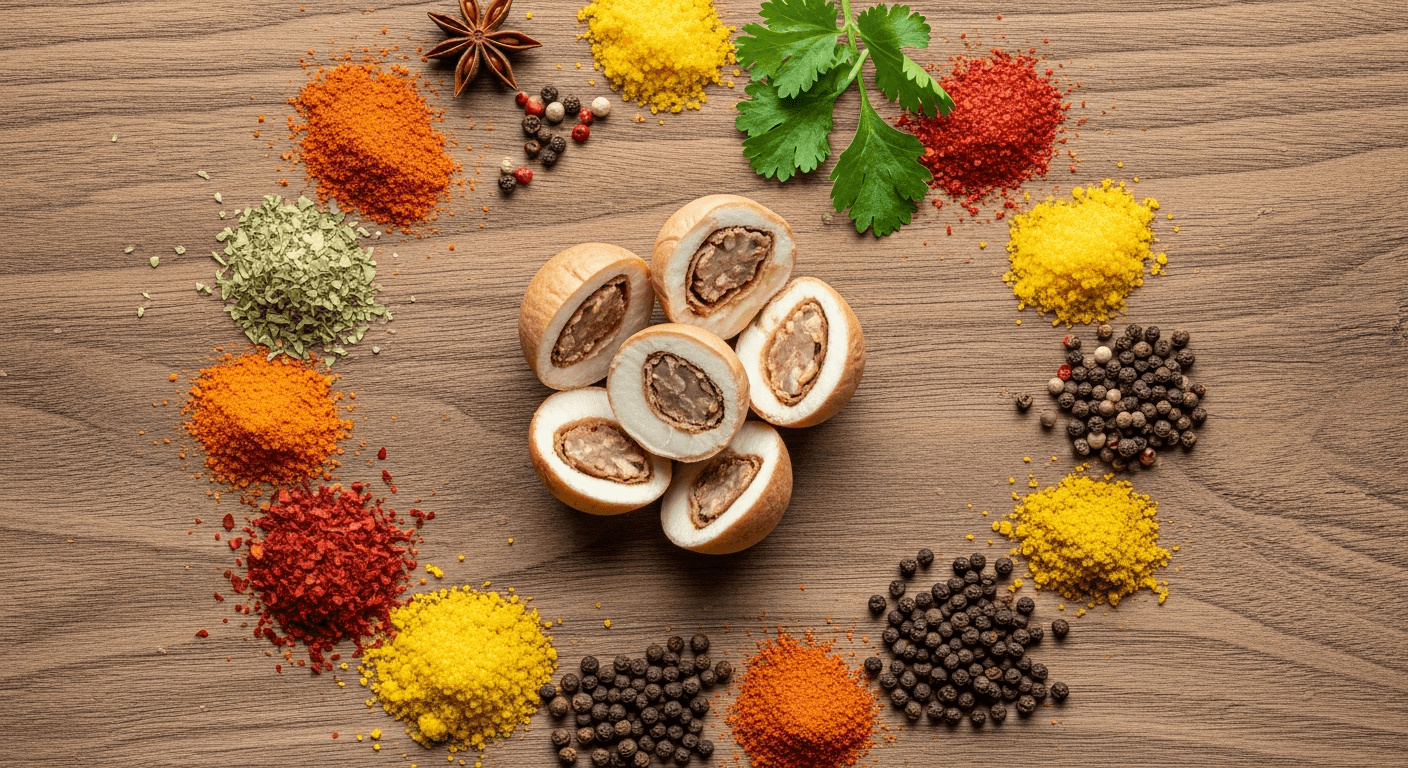
Dolma represents culinary poetry carefully wrapped in tender grape leaves. Each small roll reveals complex layers of flavor: lamb meat tender as silk, aromatic rice perfumed with oriental spices, toasted pine nuts that provide texture, and a carefully balanced bouquet of fresh herbs that sing in harmony.
Vegetarian versions of dolma, especially popular during Lent periods, incorporate finely ground
walnuts, golden raisins that provide natural sweetness, and rice spiced with cinnamon and black pepper. Dolma preparation is traditionally a social ritual where entire families gather to roll hundreds of small packages, turning the kitchen into a sacred space of conversation and cultural transmission.
Pkhali: Vegetarian Sophistication at its Maximum Expression
Pkhali categorically demonstrates that vegetarian cuisine from Caucasus gastronomy can be extraordinarily sophisticated and satisfying. Tender spinach, sweet beets, or smoked eggplants are alchemically transformed into elegant purees mixed with an aromatic paste of fresh walnuts, spicy garlic, and mountain herbs.
Traditionally served in small portions artistically decorated with pomegranate seeds that explode in the mouth, pkhali are the perfect appetizer for any supra (traditional Georgian banquet). Their preparation requires patience: vegetables must be cooked to the exact point, nuts ground until achieving perfect silky texture.
Traditional Beverages: Liquid History of the Caucasus
Traditional beverages from Caucasus cuisine deserve a separate chapter. Georgia proudly holds the title of world cradle of wine, backed by archaeological evidence dating back 8000 years. The traditional fermentation method in qvevris—enormous clay vessels buried in the earth—was recognized by UNESCO as Intangible Heritage of Humanity, and rightfully so.
Georgian amber wines, made with prolonged contact with grape skins, have revolutionized the contemporary wine world. Their extraordinary tannic complexity and distinctive notes of dried fruits, mountain honey, and oriental spices make them perfect companions for rich Caucasian cuisine.
Chacha and Kefir: From Fire to Ice
Chacha is the spirit that warms Georgian souls during mountainous winters
. Artisanally distilled from selected grape pomace, with alcohol content dangerously oscillating between 40 and 60 degrees, it stars in all important toasts. Georgians consider it practically medicinal, especially the version aromatized with local honey and wild high mountain herbs.
At the opposite extreme is Caucasian kefir, the respected ancestor of all modern probiotics. Kefir grains, jealously guarded as family treasures and transmitted from mother to daughter, produce a slightly effervescent drink, rich in beneficial bacteria that have kept mountain peoples healthy for millennia.
Magic Ingredients: The Caucasus’s Secret Pantry
Caucasian cuisine is distinguished worldwide by its masterful use of fresh herbs and carefully selected spices. Each local market is a sensory festival of aromas where they mix: fresh cilantro omnipresent in almost all dishes, Georgian tarragon (the favorite herb for chicken and fish), dill essential in salads and yogurt dishes, and the legendary khmeli suneli, the Georgian secret blend that combines 12 different spices
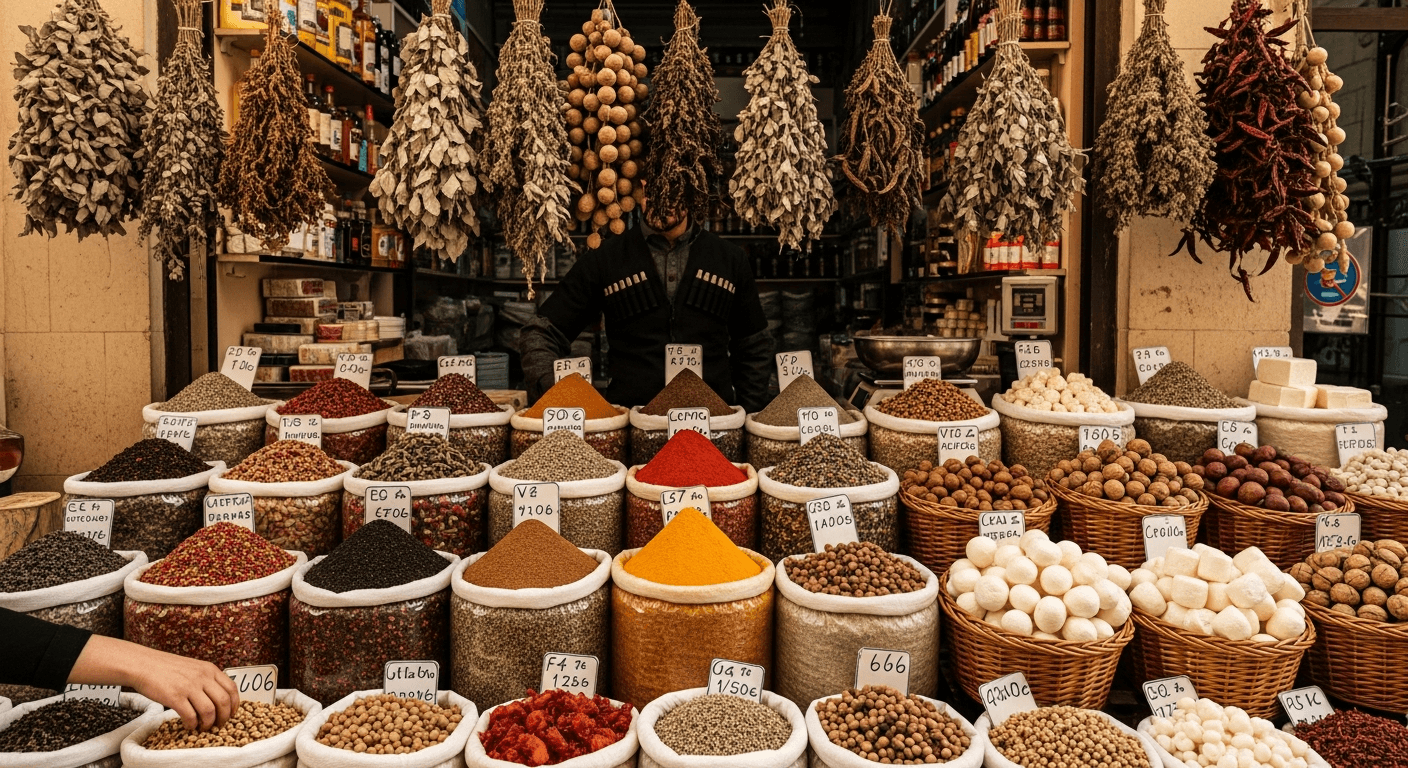
in perfect harmony.
Caucasus walnuts are internationally legendary for their exceptional quality and intense flavor. Finely ground to achieve silky textures, they form the structural base of emblematic sauces like satsivi (creamy walnut sauce for Christmas chicken) and bazhe (the lighter version perfect for vegetables and delicate fish).
Pomegranate, ancestral symbol of prosperity throughout the Caucasus, appears in multiple culinary forms: fresh juice that marinates tender meats, seeds that decorate festive dishes like edible jewels, and pomegranate molasses (narsharab) that adds irresistible sweet-and-sour complexity to sophisticated sauces and marinades.
Caucasus Cuisine in the 21st Century
Caucasus cuisine is currently experiencing an extraordinary renaissance moment. Young and talented chefs creatively reinterpret ancestral recipes without betraying their authentic essence, while traditional restaurants jealously keep alive centuries-old techniques transmitted by generations.
This unique cuisine continues conquering sophisticated international palates, demonstrating that genuine authenticity and extraordinary flavor never go out of style. According to international gastronomic studies, Georgian cuisine is among the world’s most interesting for its diversity and originality.
Exploring Caucasus cuisine is immersing oneself in centuries of fascinating history, where each dish narrates epic encounters between millennial cultures and each toast celebrates the legendary hospitality of these mountain peoples who have known how to preserve their culinary treasures for future generations.
Frequently Asked Questions about Caucasus Cuisine
What makes Caucasus cuisine unique?
Caucasus cuisine is unique due to its geographical position between Europe and Asia, which has allowed the fusion of oriental culinary techniques with local mountain ingredients. Its masterful use of fresh herbs, complex spices, and natural fermented products like kefir distinguish it from other regional cuisines.
What is the most representative dish of Caucasian cuisine?
Georgian khachapuri is considered the most emblematic dish, especially the boat-shaped Adjaruli. However, Caucasian kebabs and dolma are also fundamental to regional culinary identity.
Is Caucasus cuisine suitable for vegetarians?
Absolutely. Caucasian cuisine offers extraordinary vegetarian options like pkhali (vegetable purees with walnuts), vegetarian dolma, and multiple preparations with fermented dairy and mountain vegetables.
Where can I try authentic Caucasus cuisine?
Georgian, Armenian, and Azerbaijani restaurants in major cities offer good approximations. However, the most authentic experience is lived by visiting the region, where each family maintains traditional recipes transmitted by generations.
What drink best accompanies Caucasian food?
Georgian wines are the perfect accompaniment, especially amber wines made in qvevris. For more spiced dishes, kefir or tan (ayran) provide an ideal refreshing contrast.



 Español
 English
 Français
 Deutsch
 Italiano
 Português
0 Comments