Caucasus Gastronomy: Guide to Traditional Dishes and Drinks
The gastronomy of the Caucasus is one of the most compelling reasons to visit Georgia, Armenia and Azerbaijan. Every dish tells centuries of history, trade routes and cultural fusions you won't find anywhere else in the world.
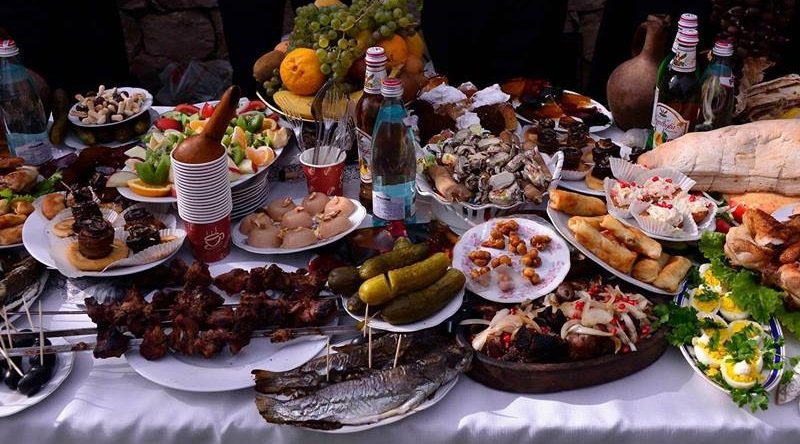
The Georgian table, a feast of flavors between Europe and Asia
Culinary influences: the Caucasus as a crossroads of civilizations
Persia, the Ottoman Empire, Russia and the ancient Silk Roads left their mark on every recipe. The result is a cuisine that blends Middle Eastern spices with European fermentation techniques and the generosity of the Caucasian supra tradition (ceremonial banquet).
The Eastern heritage in every bite
Walnuts, pomegranate, fenugreek and fresh coriander appear in almost every dish. It's no coincidence: Georgia was for centuries a crossroads between Central Asia and the Mediterranean.
Essential dishes you must try
Khachapuri: the cheese bread that conquers hearts
Khachapuri is the most iconic dish of Georgia. There are at least five regional varieties; the Adjarian version, boat-shaped with an egg in the center, is the most photogenic. The yolk is mixed with melted cheese at the table and eaten with the bread edges.
Dolma: art wrapped in vine leaves
Dolma —minced meat with rice and spices wrapped in vine leaves— is ubiquitous throughout the Caucasus, though each culture claims its own version. In Armenia it usually includes cinnamon; in Georgia, fresh herbs.
Shashlik and kebab: mastery over the embers
Shashlik (marinated meat skewer) is the quintessential Caucasian barbecue. It is marinated in wine, pomegranate vinegar or yogurt for hours before being slowly grilled.
Pkhali: Georgian vegetarian elegance
Balls of spinach, beetroot or green beans blended with walnuts, garlic and spices. Pkhali is the quintessential Georgian vegetarian appetizer, colorful and full of nuance.
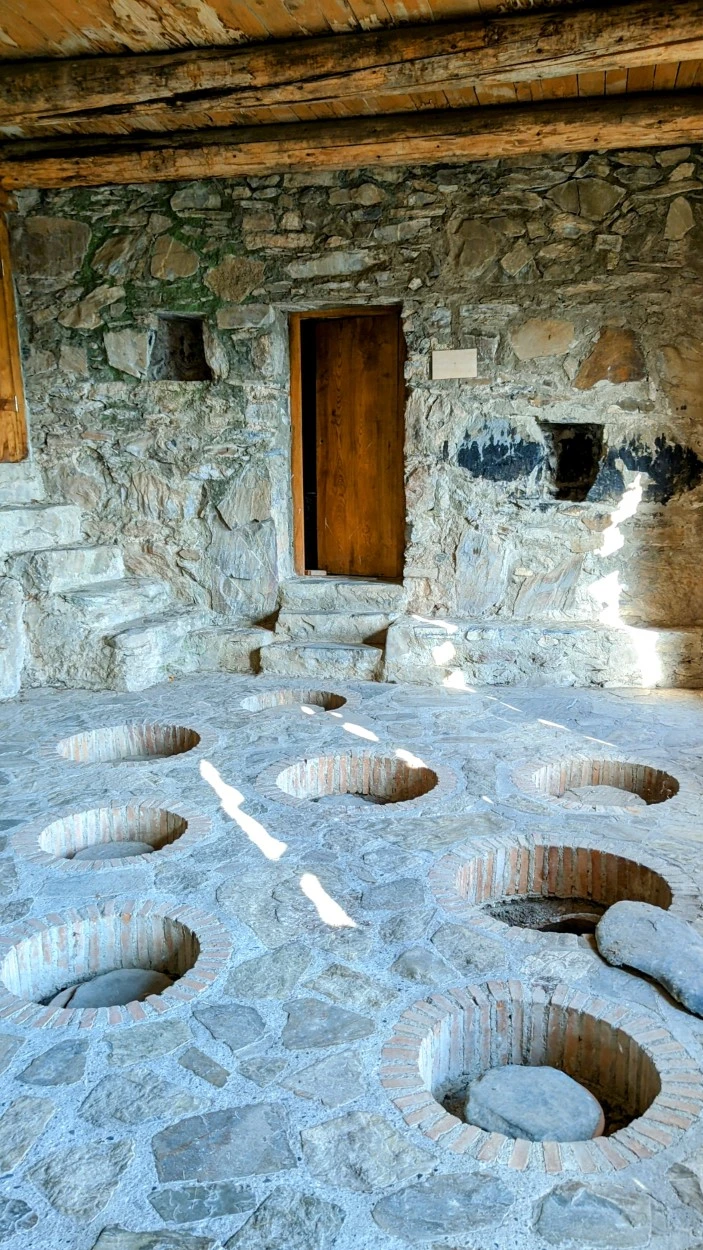
Qvevri, buried clay jars, are the foundation of ancient Georgian winemaking
Traditional drinks of the Caucasus
Georgian wine: 8,000 years of winemaking tradition
Georgia is the cradle of wine: the earliest evidence of winemaking dates back 8,000 years. Amber (orange) wines made in qvevri —buried clay jars— are unique in the world and hold UNESCO recognition. Discover Baia's Wine winery, a perfect example of this living tradition.
Chacha: the liquid fire of Georgia
Chacha is the Georgian grape pomace spirit, with alcohol content ranging from 50° to 70°. Every family has its own recipe and it is common for the host to distill it at home.
Tea ceremonies in Azerbaijan
In Azerbaijan, black tea served in armuds (pear-shaped glasses) is a social ritual. It is always accompanied by homemade jams, walnuts and sugar cubes.
Essential ingredients: the Caucasian pantry
Walnuts, pomegranate, coriander, blue fenugreek (utskho suneli), tarragon, sulguni cheese, corn and red beans. These ingredients appear again and again in recipes passed down from generation to generation.
Caucasian gastronomy today: tradition and modernity
Tbilisi today has a vibrant food scene where young chefs reinterpret ancestral recipes with contemporary techniques. However, the best experience is still sitting at a family table and letting yourself be carried away by the hospitality of the supra. Visit Abanotubani and end the evening at one of its restaurants next to the sulfur baths.
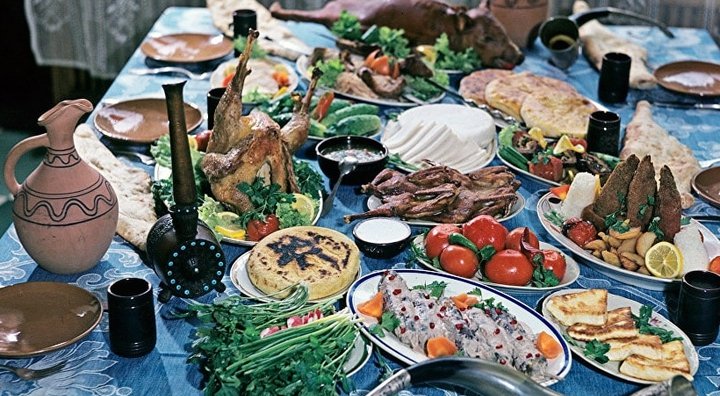
The Georgian supra, a banquet where food is the excuse for celebration
Frequently asked questions
What is the most typical dish of Georgia?
Khachapuri is the most iconic dish of Georgia, especially the Adjarian variant with melted cheese and egg. Alongside it, khinkali (broth and meat dumplings) is another favorite you can't miss.
Is Georgian wine different from European wine?
Yes, especially the amber wines made in qvevri (clay jars). Fermentation with grape skins for months produces orange wines with unique tannins and complexity. Georgia has more than 500 indigenous grape varieties.
Is it difficult to eat vegetarian in the Caucasus?
In Georgia it's quite easy: pkhali, lobiani (bean bread), vegetable soups and cheeses make the vegetarian diet rich and varied. In Armenia and Azerbaijan meat plays a bigger role, though there are always options.


