History of Armenia Through Its Iconic Monuments
Armenia is not just a country: it is one of the oldest living civilizations in the world. With more than 3,000 years of documented history, it was the first country in the world to adopt Christianity as its official religion (301 AD), has survived empires, invasions, and genocide, and has left a monumental heritage of a richness and beauty that very few countries in the world can match. To know Armenia is to walk through its history stone by stone.
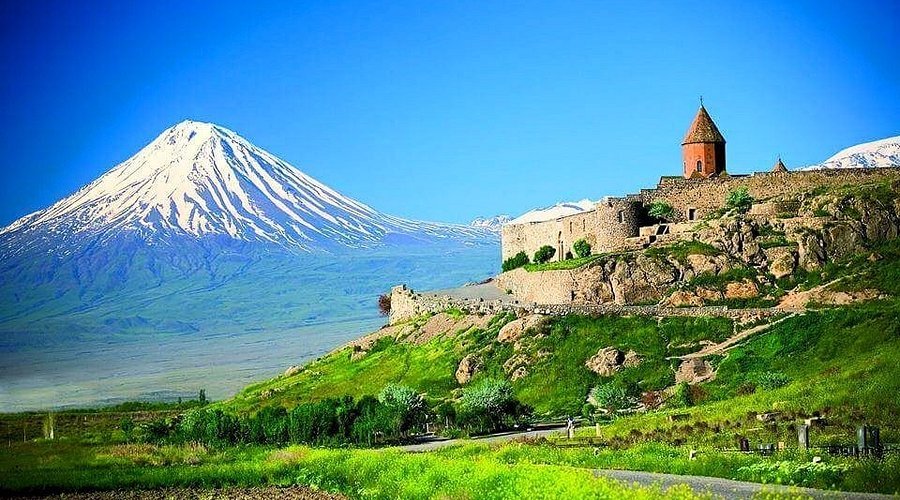
Khor Virap Monastery at dawn, with Mount Ararat lit up in the background, is the most moving and iconic image in all of Armenia.
Ancient Armenia: Urartu and the Pre-Christian Era
Erebuni Fortress (782 BC) — The origin of Yerevan
The Erebuni Fortress, on the outskirts of Yerevan, was founded in 782 BC by King Argishti I of the Kingdom of Urartu. Its name is the origin of the toponym "Yerevan." The archaeological museum at the site preserves swords, shields, ceramics, and frescoes of a sophistication that challenges our image of a civilization 2,800 years ago.
Garni Temple (1st century AD) — The Hellenistic gem
The Garni Temple is the only temple in a pagan Greco-Roman style preserved in the Caucasus: a structure of Corinthian columns dedicated to the sun god Mihr, built in the 1st century AD under Hellenistic influence. That it survived a 17th-century earthquake (it was reconstructed in the 1970s) and more than two millennia of history is a miracle. The landscape of the basalt canyon surrounding it adds drama.
The First Christian Country: Monuments of the Early Era
Khor Virap (4th century)
The place where Armenia's Christian history began: in the pit of this fortress, Saint Gregory the Illuminator was imprisoned for 13 years before healing King Tiridates III and converting him to Christianity. The Khor Virap monastery, with the imposing Mount Ararat in the background, is the most reproduced and iconic image in the entire country.
Etchmiadzin Cathedral (4th century)
Considered the oldest Christian cathedral in the world still in use, Etchmiadzin Cathedral was built shortly after Armenia's conversion to Christianity (over a previous pagan temple) and is the seat of the Armenian Apostolic Church and the Catholicos, Armenia's supreme spiritual leader. The complex is a UNESCO World Heritage Site.
Armenia's Great Medieval Monasteries
Geghard Monastery (4th century, rebuilt 12th–13th centuries)
Partially carved into living rock, the Geghard Monastery (UNESCO World Heritage Site) is one of the most singular monastic complexes in the world. Its cave interior, with chapels hewn into the stone and extraordinary acoustics, creates a unique atmosphere of spirituality and art. The name ("holy lance") comes from the lance with which Christ was wounded, kept here according to tradition.
Tatev Monastery (9th century)
Perched on a cliff in southern Armenia, the Tatev Monastery was during the Middle Ages one of the great intellectual centres of the Armenian world. The University of Tatev, with figures such as philosopher Grigor Tatevatsi, influenced Armenian thought for centuries. Accessible today via the world's longest cable car.
Haghpat and Sanahin (10th–13th centuries)
The two twin monasteries of northern Armenia, declared UNESCO World Heritage Sites, were the most important academic centres of medieval Armenia. Their illuminated manuscript scriptoria, music schools, and black tufa stone architecture are of world-class calibre. They complement each other perfectly in a single visit.
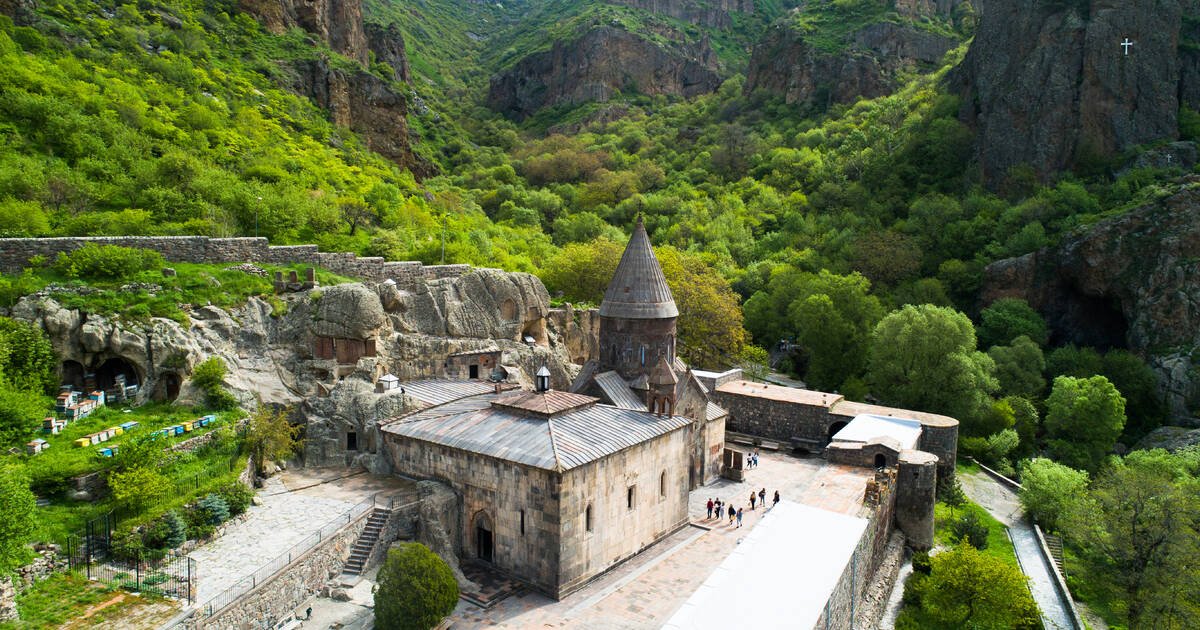
The cave interior of Geghard Monastery, with its chapels carved directly into the rock, creates a spiritual atmosphere unique in the world.
How to Visit Armenia's Historical Monuments
Most of the most important monuments are less than 2 hours from Yerevan by car. The more distant ones (Tatev, Haghpat-Sanahin, northern Armenia) require at least one night outside the capital. A specialist agency like Destino Cáucaso can arrange a complete historical itinerary with a guide expert in Armenian history.
Frequently Asked Questions
How many Armenian monuments are on the UNESCO World Heritage List?
Armenia has four sites inscribed on the UNESCO World Heritage List: Geghard Monastery and the Garni Temple (inscribed as an ensemble), the Monasteries of Haghpat and Sanahin (inscribed as an ensemble), the Cathedral and Churches of Etchmiadzin (ensemble), and the Archaeological Site of Zvartnots. All are worth a visit.
Why was Armenia the first Christian country in the world?
In 301 AD, King Tiridates III of Armenia converted to Christianity under the influence of Saint Gregory the Illuminator, declaring Christianity the official religion of the Armenian state. This occurred before the toleration of Christianity in the Roman Empire (Edict of Milan, 313 AD). Armenian tradition holds that this conversion was a divine miracle; historically, it also responded to political factors of distancing from Persian Zoroastrianism.
Where is Mount Ararat and why is it so important to Armenia?
Mount Ararat (5,165 m) is currently on Turkish territory, although it can be clearly seen from Armenia. Ararat is the national symbol of Armenia par excellence: it appears on the country's coat of arms, on the 500-dram banknote, and in the heart of every Armenian. The loss of Ararat after the Treaty of Kars (1921) is a historical wound that Armenians carry present in their collective identity.


