A 17-day journey through the best of Azerbaijan, Georgia and Armenia, three unique countries in the heart of the Caucasus. From vibrant Baku, Azerbaijan's capital, with its blend of modernity and tradition, to Georgia's enchanting mountain landscapes and Armenia's historic treasures, this itinerary is designed to captivate lovers of culture, history and nature. Every day is full of discoveries: ancient cities, millennia-old monasteries, dream landscapes and the unique hospitality of this fascinating region. More than a trip — an unforgettable experience!
Start your journey in Baku, where you'll discover the majesty of the Caspian Sea and historic sites like Gobustan with its ancient petroglyphs. Then cross into Georgia to enjoy the romantic city of Tbilisi, the cave churches of Uplistsikhe and the lush landscapes of Signagui. In Armenia, marvel at UNESCO World Heritage monuments like Haghpat and Geghard, and visit sacred sites like Khor Virap and Echmiadzin. End the trip with the natural scenery of Batumi, the Black Sea coast and the impressive caves of Prometeus and Sataplia. Each day this itinerary will surprise you with new adventures and the chance to explore the Caucasus's rich cultural and natural heritage. Get ready for a trip you'll remember forever!
Itinerary
Day 1 – Transfer from Baku Airport to Baku
Total route – 20 km, 0 h 30 min Transfer at the scheduled time. Route 20 km, 0 h 30 minDay 2 – Baku – Absheron – Baku
Total route – 94 km, 2 h 4 min After breakfast at the hotel, we begin our adventure. Planned visits: Route 9 km, 0 h 25 minPalace of the Shirvanshahs
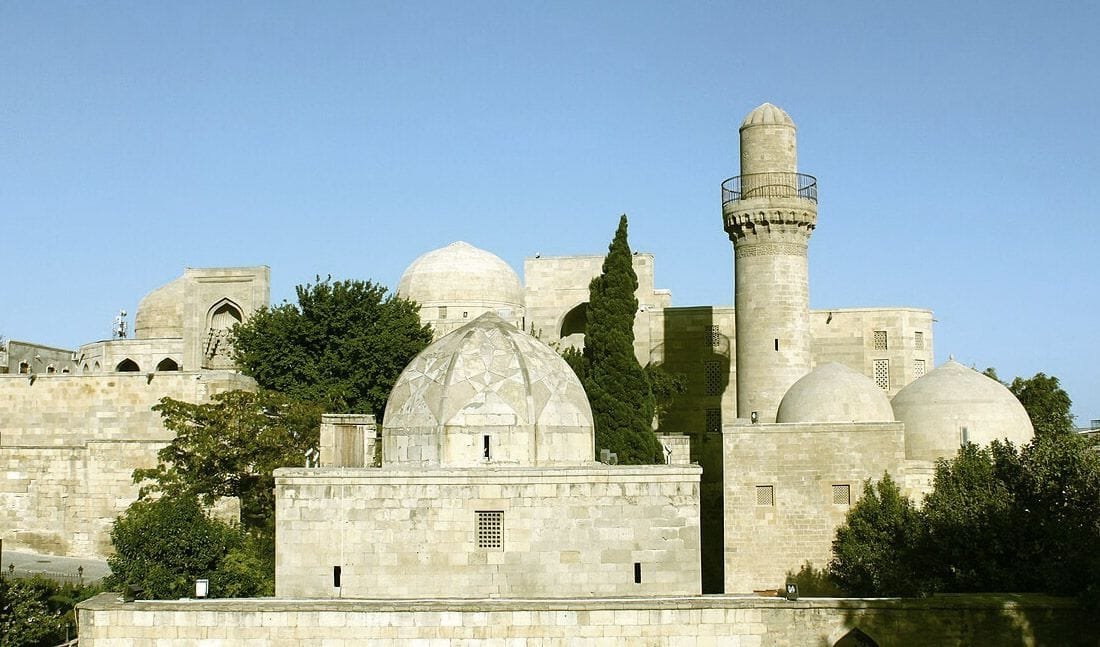 The Palace of the Shirvanshahs stands majestically in the heart of Baku's Old City, Azerbaijan's capital, as a testament to the grandeur of the 15th-century Shirvanshah dynasty. This medieval palace complex, declared a UNESCO World Heritage Site, encompasses various buildings including the divan, family mausoleum and palace mosque, all built in the distinctive local limestone. The architecture blends elements of the Shirvan-Absheron style with Persian and Islamic influences, highlighted by intricate portals and delicate ornamental carvings. During our visit, we explore the palace's many chambers, admire panoramic views of Baku Bay from its terraces and immerse ourselves in the fascinating history of the Shirvanshahs through its ceremonial halls and archaeological exhibitions.
Route 21 km, 0 h 30 min
The Palace of the Shirvanshahs stands majestically in the heart of Baku's Old City, Azerbaijan's capital, as a testament to the grandeur of the 15th-century Shirvanshah dynasty. This medieval palace complex, declared a UNESCO World Heritage Site, encompasses various buildings including the divan, family mausoleum and palace mosque, all built in the distinctive local limestone. The architecture blends elements of the Shirvan-Absheron style with Persian and Islamic influences, highlighted by intricate portals and delicate ornamental carvings. During our visit, we explore the palace's many chambers, admire panoramic views of Baku Bay from its terraces and immerse ourselves in the fascinating history of the Shirvanshahs through its ceremonial halls and archaeological exhibitions.
Route 21 km, 0 h 30 min
Ateshgah – Fire Temple
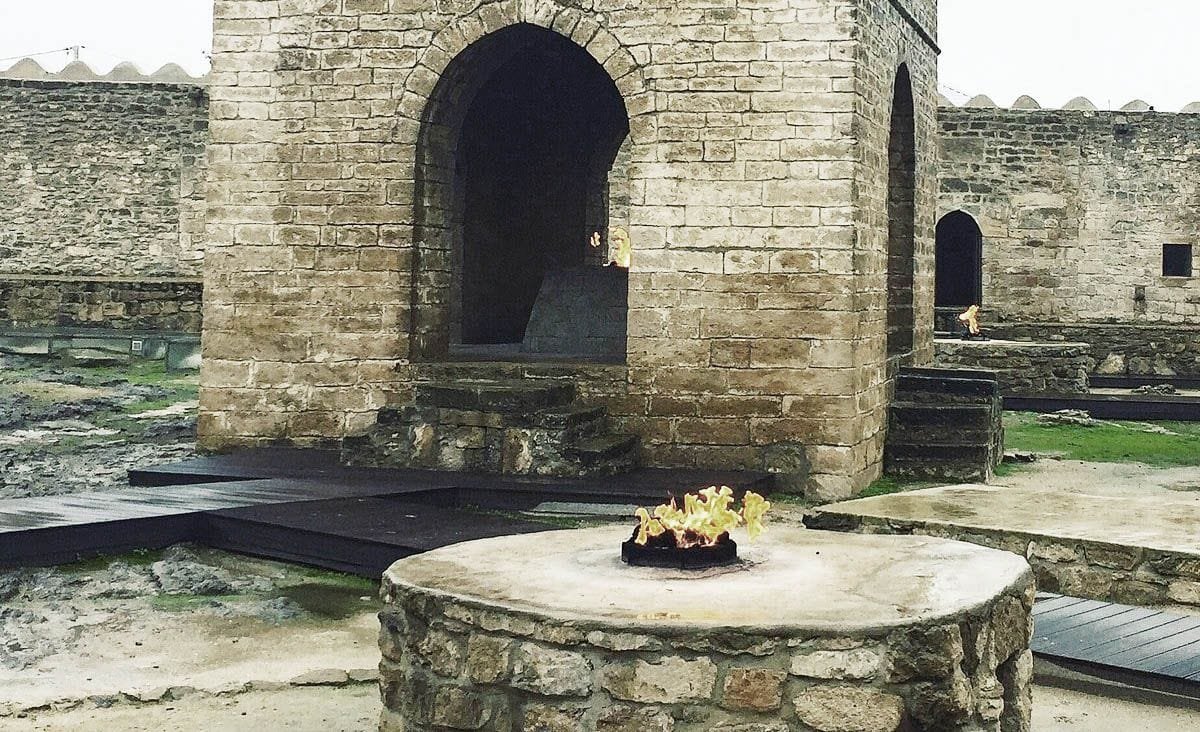 Ateshgah, known as the Baku Fire Temple, is an extraordinary religious complex on the Absheron peninsula in Azerbaijan. This ancient Zoroastrian temple, built in the 17th century over a natural gas seep, was an important pilgrimage centre for Hindu and Zoroastrian fire worshippers. Its unique pentagonal structure, a UNESCO Heritage Site, houses an eternally burning flame fed by natural gas and displays a fascinating blend of Persian and Indian architectural elements. During our exploration, we marvel at the naturally burning flames, walk through the ancient pilgrims' cells and immerse ourselves in the rich history of the Silk Road at this mystical site.
Route 35 km, 0 h 30 min
Ateshgah, known as the Baku Fire Temple, is an extraordinary religious complex on the Absheron peninsula in Azerbaijan. This ancient Zoroastrian temple, built in the 17th century over a natural gas seep, was an important pilgrimage centre for Hindu and Zoroastrian fire worshippers. Its unique pentagonal structure, a UNESCO Heritage Site, houses an eternally burning flame fed by natural gas and displays a fascinating blend of Persian and Indian architectural elements. During our exploration, we marvel at the naturally burning flames, walk through the ancient pilgrims' cells and immerse ourselves in the rich history of the Silk Road at this mystical site.
Route 35 km, 0 h 30 min
Yanardag – State Historical, Cultural and Natural Reserve
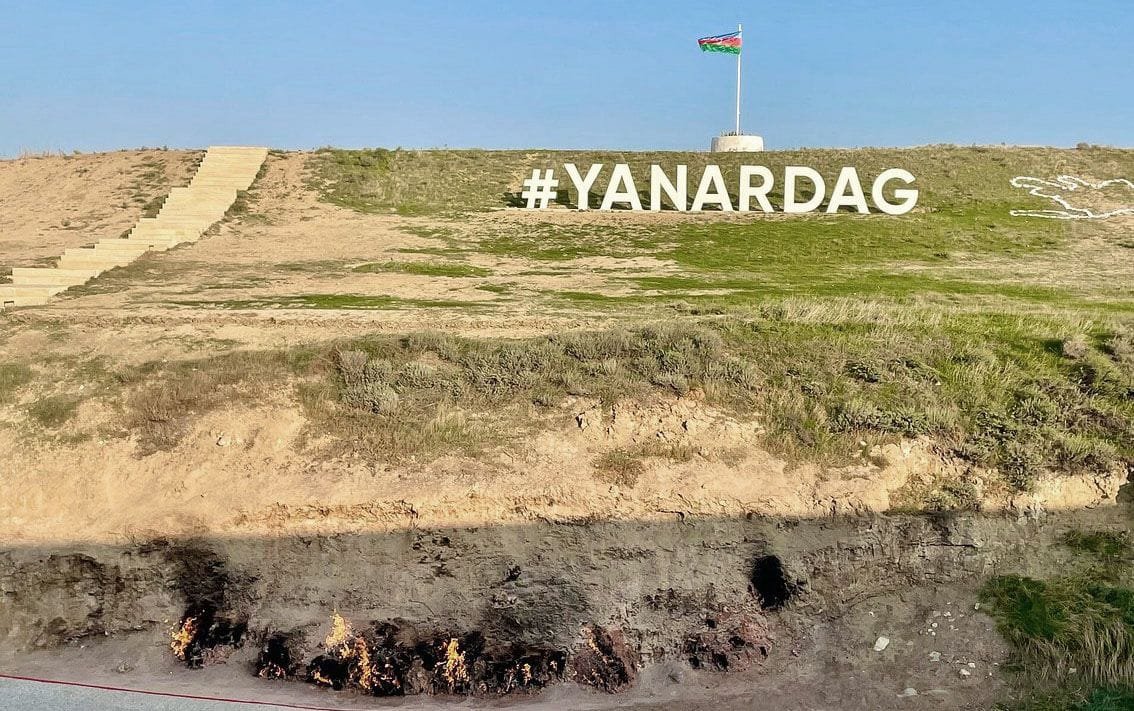 Yanardag, an impressive fire mountain located 27 kilometres from Baku in Azerbaijan, is an extraordinary natural phenomenon where flames continuously emerge from a hillside of porous sandstone. This eternal fire, burning uninterrupted thanks to natural gas seeps, has fascinated people for centuries and was one of the reasons ancient Zoroastrians considered Azerbaijan a sacred land. The State Historical, Cultural and Natural Reserve protects this spectacular phenomenon, with flames reaching up to 3 metres high, a living testament to why Azerbaijan is known as the "Land of Fire." During our visit, we gaze in wonder at the dancing flames against the night sky, listen to the soft hiss of gas rising from the ground and feel the mystical warmth of this perpetual fire that has captivated travellers for generations.
Route 17 km, 0 h 35 min
Yanardag, an impressive fire mountain located 27 kilometres from Baku in Azerbaijan, is an extraordinary natural phenomenon where flames continuously emerge from a hillside of porous sandstone. This eternal fire, burning uninterrupted thanks to natural gas seeps, has fascinated people for centuries and was one of the reasons ancient Zoroastrians considered Azerbaijan a sacred land. The State Historical, Cultural and Natural Reserve protects this spectacular phenomenon, with flames reaching up to 3 metres high, a living testament to why Azerbaijan is known as the "Land of Fire." During our visit, we gaze in wonder at the dancing flames against the night sky, listen to the soft hiss of gas rising from the ground and feel the mystical warmth of this perpetual fire that has captivated travellers for generations.
Route 17 km, 0 h 35 min
Heydar Aliyev Cultural Centre
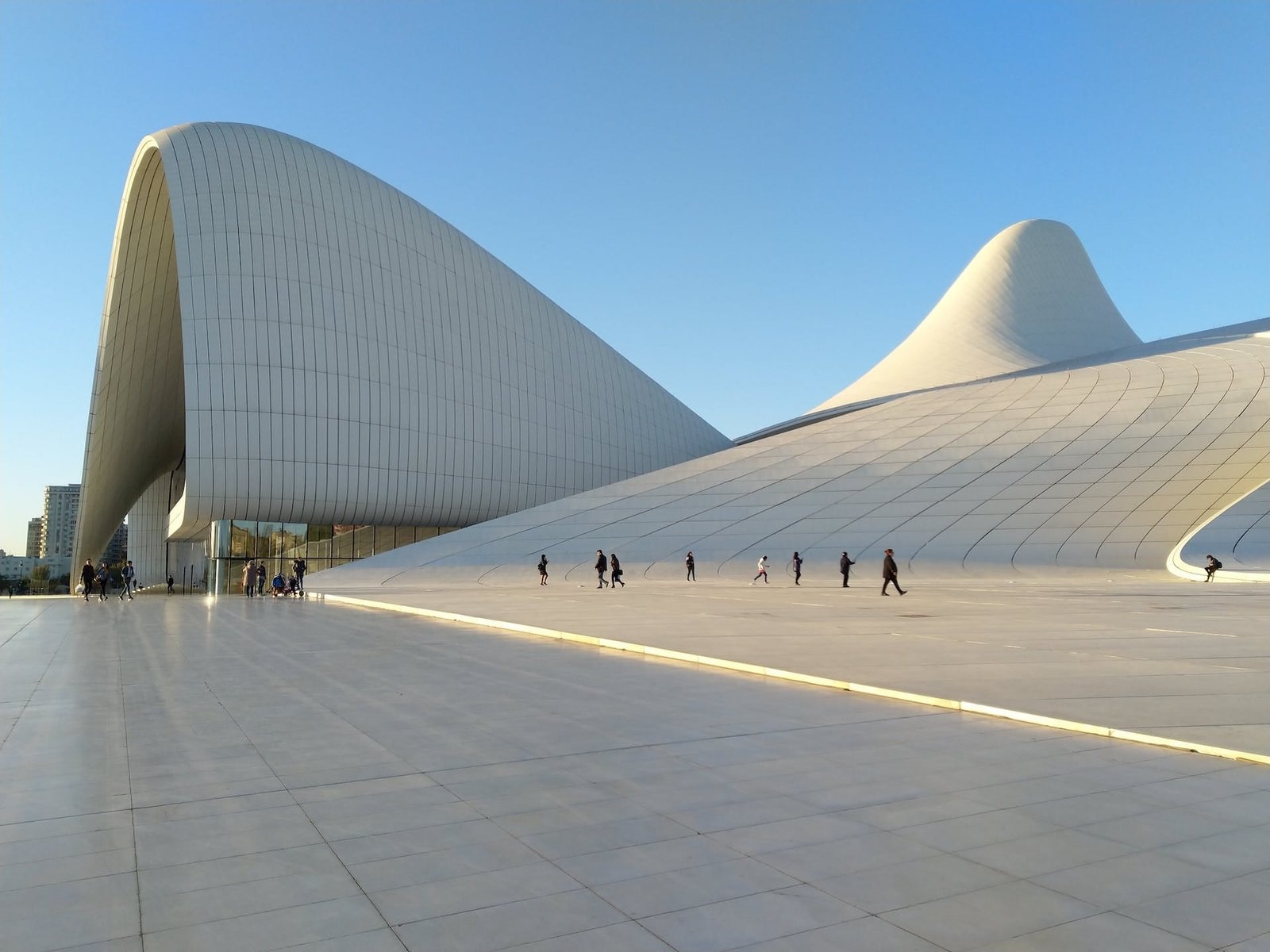 The Heydar Aliyev Cultural Centre, located in the heart of Baku, Azerbaijan, is an architectural and cultural landmark designed by the renowned Zaha Hadid. This striking building is known for its fluid, modern curves symbolising the union of tradition and the future. In addition to its innovative architecture, it houses exhibitions, cultural events and interactive spaces celebrating Azerbaijani history and art. Recognised worldwide, this centre represents a milestone in contemporary design and Azerbaijan's national identity. During our visit, we explore its fascinating galleries, admire the unique design and learn about Azerbaijan's rich culture and history in an unforgettable experience full of art and innovation.
Route 2 km, 0 h 4 min
The Heydar Aliyev Cultural Centre, located in the heart of Baku, Azerbaijan, is an architectural and cultural landmark designed by the renowned Zaha Hadid. This striking building is known for its fluid, modern curves symbolising the union of tradition and the future. In addition to its innovative architecture, it houses exhibitions, cultural events and interactive spaces celebrating Azerbaijani history and art. Recognised worldwide, this centre represents a milestone in contemporary design and Azerbaijan's national identity. During our visit, we explore its fascinating galleries, admire the unique design and learn about Azerbaijan's rich culture and history in an unforgettable experience full of art and innovation.
Route 2 km, 0 h 4 min
Yashil Bazar
 The Yashil Bazar, also known as the Green Market, is one of Baku's most vibrant and authentic traditional markets, the capital of Azerbaijan. Located in the heart of the city, this bustling covered market has been for generations the epicentre of local trade in fresh produce. Its aisles hold a dazzling variety of fruits, vegetables, aromatic spices, fresh herbs, dried fruits and the famous Azerbaijani pickles, all presented in the characteristic Caucasian style. The Soviet-era architecture of the building contrasts with the warmth and colour of the traditional stalls, where vendors keep centuries-old trading traditions alive. During our tour, we immerse ourselves in a sensory feast of aromas and flavours, sample the delicious qurut (dried yoghurt), chat with the friendly local vendors and discover the secrets of Azerbaijan's rich gastronomy as we explore the lively aisles of this historic market.
Route 10 km, 0 h 4 min
The Yashil Bazar, also known as the Green Market, is one of Baku's most vibrant and authentic traditional markets, the capital of Azerbaijan. Located in the heart of the city, this bustling covered market has been for generations the epicentre of local trade in fresh produce. Its aisles hold a dazzling variety of fruits, vegetables, aromatic spices, fresh herbs, dried fruits and the famous Azerbaijani pickles, all presented in the characteristic Caucasian style. The Soviet-era architecture of the building contrasts with the warmth and colour of the traditional stalls, where vendors keep centuries-old trading traditions alive. During our tour, we immerse ourselves in a sensory feast of aromas and flavours, sample the delicious qurut (dried yoghurt), chat with the friendly local vendors and discover the secrets of Azerbaijan's rich gastronomy as we explore the lively aisles of this historic market.
Route 10 km, 0 h 4 min
Day 3 – Baku – Gobustan – Baku
Total route – 204 km, 3 h 30 min After breakfast at the hotel, we begin our adventure. Planned visits: Route 70 km, 1 h 5 minGobustan Rock Art – Petroglyphs Museum
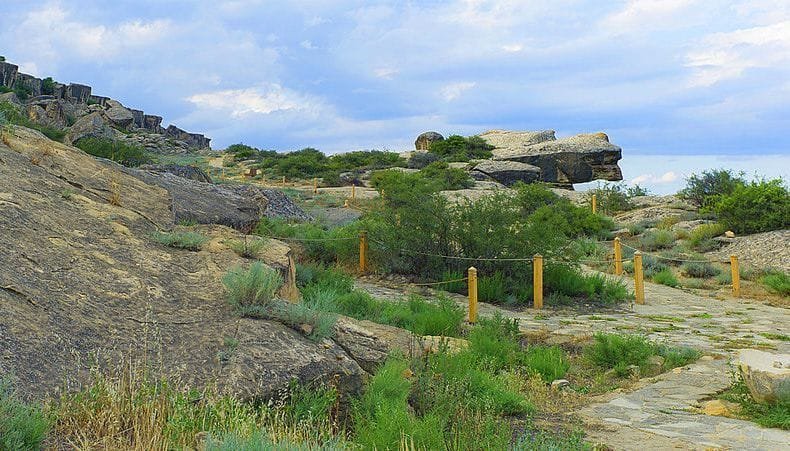 The Gobustan Petroglyphs Museum in Azerbaijan is an archaeological site declared a UNESCO World Heritage Site. This open-air museum houses more than 6,000 rock carvings dating back 40,000 years, offering a glimpse into prehistoric life. Set in a desert landscape near the Caspian Sea, Gobustan also features ancient human settlements and the famous mud volcanoes, completing the unique experience of this destination.
During our visit we admire the intricate rock carvings, explore the remains of ancient civilisations and observe the fascinating mud volcanoes that make Gobustan a truly special place.
Route 30 km, 0 h 50 min
The Gobustan Petroglyphs Museum in Azerbaijan is an archaeological site declared a UNESCO World Heritage Site. This open-air museum houses more than 6,000 rock carvings dating back 40,000 years, offering a glimpse into prehistoric life. Set in a desert landscape near the Caspian Sea, Gobustan also features ancient human settlements and the famous mud volcanoes, completing the unique experience of this destination.
During our visit we admire the intricate rock carvings, explore the remains of ancient civilisations and observe the fascinating mud volcanoes that make Gobustan a truly special place.
Route 30 km, 0 h 50 min
Mud Volcanoes
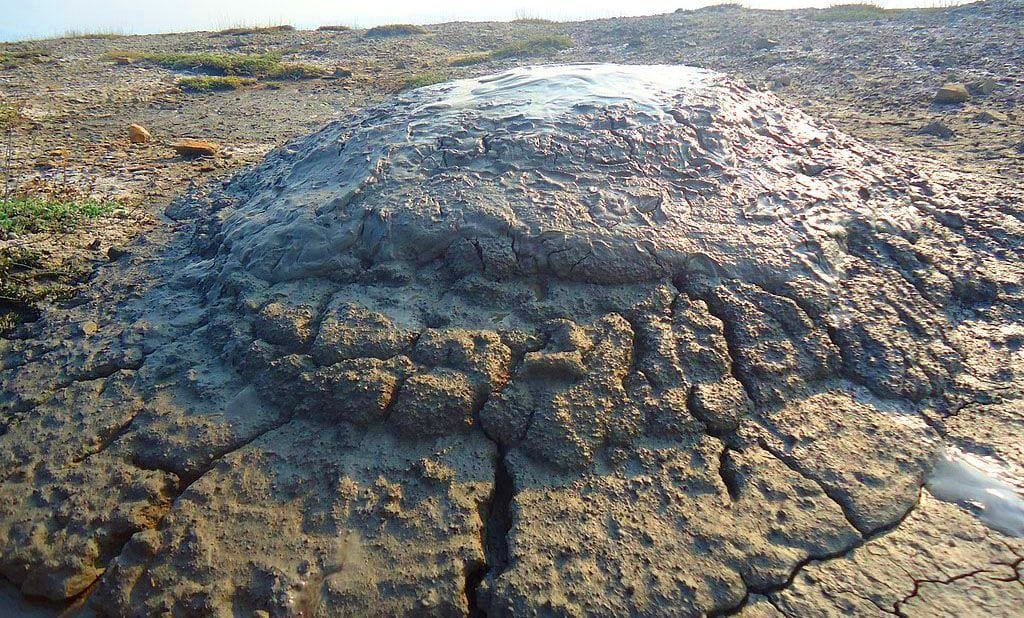 Azerbaijan's mud volcanoes are one of the most fascinating geological phenomena in the Caucasus, located mainly on the Abşeron peninsula and the coastal regions of the Caspian Sea. These extraordinary natural features, comprising almost half of the world's mud volcanoes, have witnessed the region's rich geological history for thousands of years. The lunar landscape created by more than 400 active volcanoes presents a unique spectacle where bubbling mud rises from deep within the earth, forming cones and small eruptions that have fascinated scientists and visitors for generations. During our exploration, we marvel at the spectacle of cold mud geysers spurting from the ground, experience the healing power of these mineral muds and walk along paths winding between the volcanic cones, capturing unique photographs of this extraterrestrial landscape so characteristic of Azerbaijan.
Route 84 km, 1 h 25 min
Azerbaijan's mud volcanoes are one of the most fascinating geological phenomena in the Caucasus, located mainly on the Abşeron peninsula and the coastal regions of the Caspian Sea. These extraordinary natural features, comprising almost half of the world's mud volcanoes, have witnessed the region's rich geological history for thousands of years. The lunar landscape created by more than 400 active volcanoes presents a unique spectacle where bubbling mud rises from deep within the earth, forming cones and small eruptions that have fascinated scientists and visitors for generations. During our exploration, we marvel at the spectacle of cold mud geysers spurting from the ground, experience the healing power of these mineral muds and walk along paths winding between the volcanic cones, capturing unique photographs of this extraterrestrial landscape so characteristic of Azerbaijan.
Route 84 km, 1 h 25 min
Carpet Museum
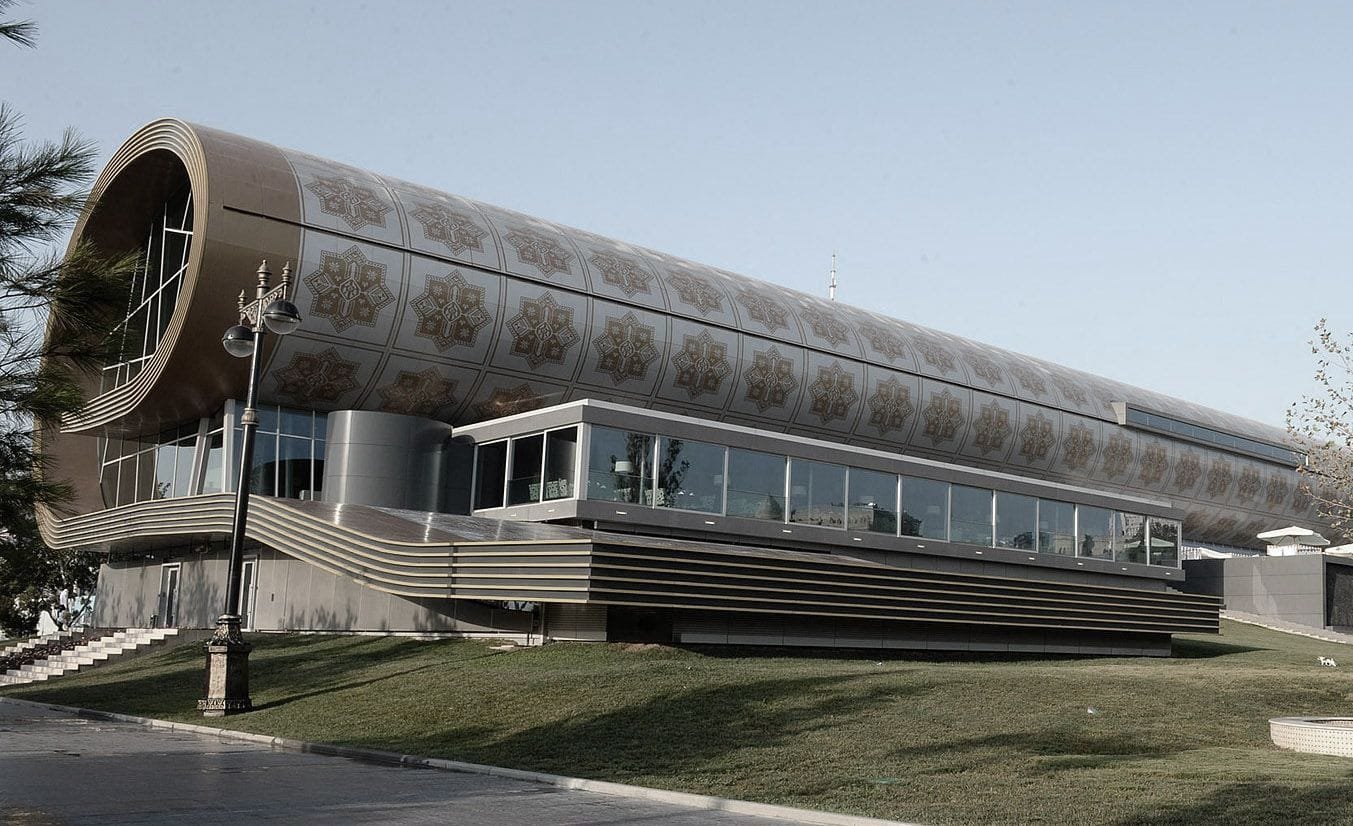 The Azerbaijan Carpet Museum in Baku is a fascinating cultural space celebrating the country's rich carpet-weaving tradition, recognised as Intangible Cultural Heritage by UNESCO. Its building, designed in the shape of a rolled carpet, is a unique architectural work housing a collection of carpets, textiles and tools spanning centuries of history. The museum not only preserves the traditional art but also offers a space to learn about Azerbaijan's unique techniques and designs.
During our visit we admire the intricate carpets, discover the secrets behind their creation and immerse ourselves in the rich cultural heritage of this outstanding museum.
Route 20 km, 0 h 10 min
The Azerbaijan Carpet Museum in Baku is a fascinating cultural space celebrating the country's rich carpet-weaving tradition, recognised as Intangible Cultural Heritage by UNESCO. Its building, designed in the shape of a rolled carpet, is a unique architectural work housing a collection of carpets, textiles and tools spanning centuries of history. The museum not only preserves the traditional art but also offers a space to learn about Azerbaijan's unique techniques and designs.
During our visit we admire the intricate carpets, discover the secrets behind their creation and immerse ourselves in the rich cultural heritage of this outstanding museum.
Route 20 km, 0 h 10 min
Day 4 – Baku – Shamaki – Sheki
Total route – 347 km, 5 h 27 min After breakfast at the hotel, we begin our adventure. Planned visits: Route 90 km, 1 h 20 minDiri Baba Mausoleum
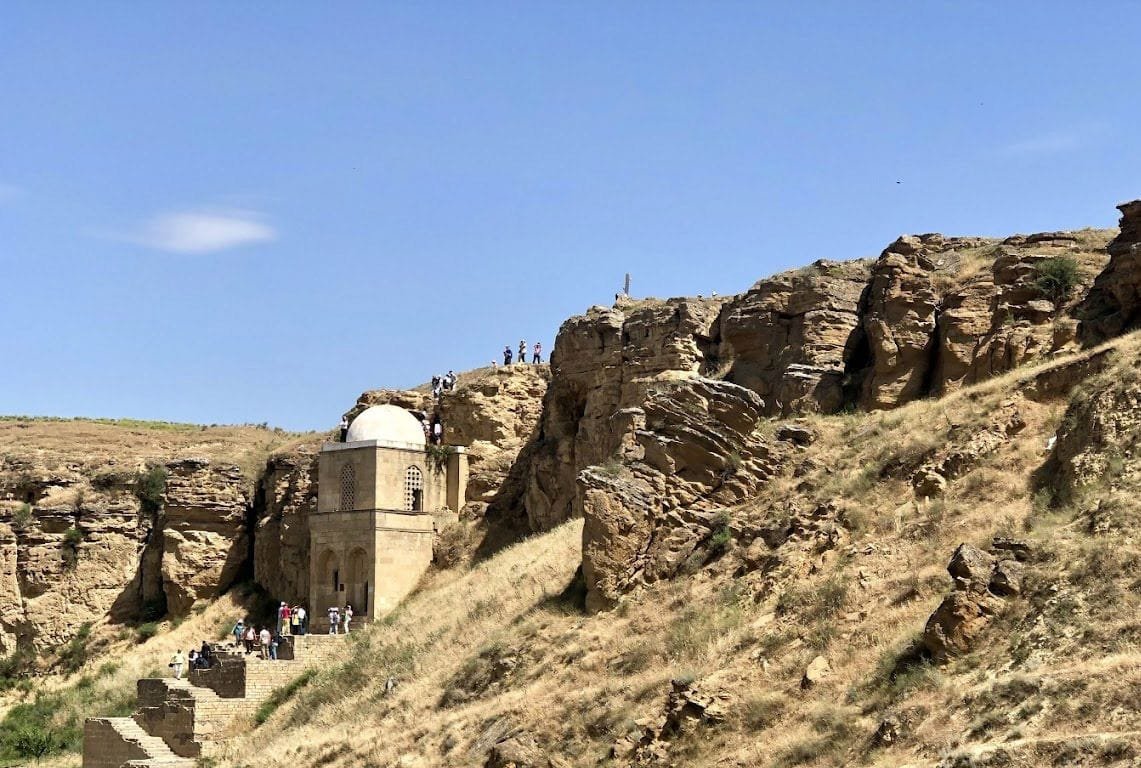 The Diri Baba Mausoleum, located in the village of Maraza, Azerbaijan, is a fascinating 15th-century historical monument. Carved into a cliff, this mausoleum blends Islamic architecture and nature, creating a mystical atmosphere. Its design, with intricate stone details and a location that seems to defy gravity, makes it a unique place shrouded in legends about its role as the sanctuary of a sacred hermit.
During our visit we explore its intricate architecture, climb the cliff to admire the views and immerse ourselves in the stories and legends surrounding this extraordinary monument.
Route 35 km, 0 h 30 min
The Diri Baba Mausoleum, located in the village of Maraza, Azerbaijan, is a fascinating 15th-century historical monument. Carved into a cliff, this mausoleum blends Islamic architecture and nature, creating a mystical atmosphere. Its design, with intricate stone details and a location that seems to defy gravity, makes it a unique place shrouded in legends about its role as the sanctuary of a sacred hermit.
During our visit we explore its intricate architecture, climb the cliff to admire the views and immerse ourselves in the stories and legends surrounding this extraordinary monument.
Route 35 km, 0 h 30 min
Seven Domes Mausoleum
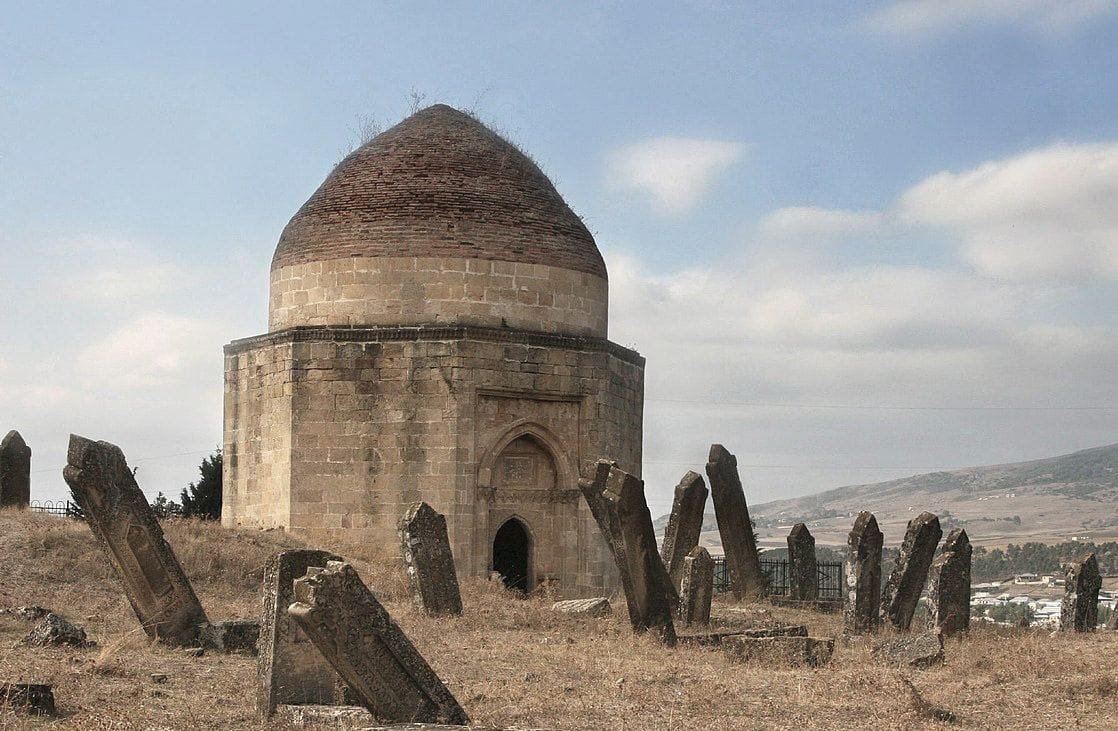 The Seven Domes Mausoleum in the city of Shemakha, Azerbaijan, is an impressive funerary monument dating from the 18th century. This historic site, surrounded by hills and peaceful landscapes, served as the final resting place for nobles and rulers of the Shirvan region. Its distinctive design, with multiple domes and Islamic architectural details, reflects Azerbaijan's rich cultural and spiritual heritage.
During our visit we explore its unique structures, appreciate the symbolism of its architecture and enjoy the serenity of the surroundings that make this place a cultural treasure.
Route 206 km, 3 h 2 min
The Seven Domes Mausoleum in the city of Shemakha, Azerbaijan, is an impressive funerary monument dating from the 18th century. This historic site, surrounded by hills and peaceful landscapes, served as the final resting place for nobles and rulers of the Shirvan region. Its distinctive design, with multiple domes and Islamic architectural details, reflects Azerbaijan's rich cultural and spiritual heritage.
During our visit we explore its unique structures, appreciate the symbolism of its architecture and enjoy the serenity of the surroundings that make this place a cultural treasure.
Route 206 km, 3 h 2 min
Khan's Summer Palace
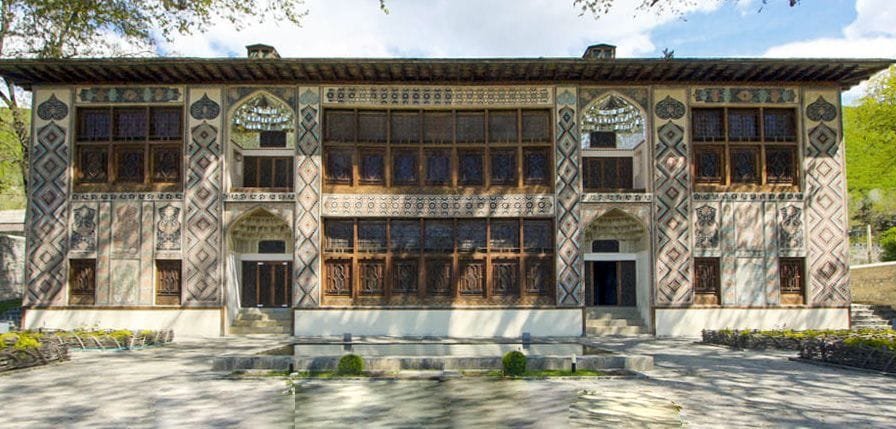 The Khan's Summer Palace in Sheki, Azerbaijan, is an 18th-century architectural gem reflecting the cultural and historical richness of the region. Built as the residence of the Sheki khans, this palace stands out for its exquisite design, including intricate stained-glass windows, detailed frescoes and wood carvings. Surrounded by gardens, it is an outstanding example of Eastern architecture. During our visit, we admire its dazzling stained glass, explore the elegant rooms and are transported back to the era of the khans as we discover the history of this magnificent palace.
Route 8 km, 0 h 20 min
The Khan's Summer Palace in Sheki, Azerbaijan, is an 18th-century architectural gem reflecting the cultural and historical richness of the region. Built as the residence of the Sheki khans, this palace stands out for its exquisite design, including intricate stained-glass windows, detailed frescoes and wood carvings. Surrounded by gardens, it is an outstanding example of Eastern architecture. During our visit, we admire its dazzling stained glass, explore the elegant rooms and are transported back to the era of the khans as we discover the history of this magnificent palace.
Route 8 km, 0 h 20 min
Albanian Church of Kish
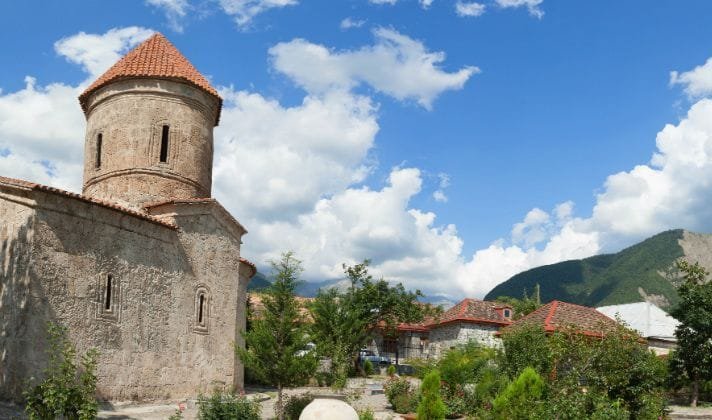 The Albanian Church of Kish, located in the picturesque village of Kish near Sheki, Azerbaijan, is an ancient Christian temple dating from the 1st century. Considered the oldest church in the Caucasus, it was an important spiritual centre of the Caucasian Albanian kingdom. Its architecture blends local and Byzantine influences, and its mountain setting enhances its historical atmosphere. Today it functions as a museum, notable for its archaeological excavations and unique religious history.
During our visit we explore its restored interior, learn about the ancient civilisations that built it and enjoy the serenity of the picturesque village surrounding it.
Route 8 km, 0 h 15 min
The Albanian Church of Kish, located in the picturesque village of Kish near Sheki, Azerbaijan, is an ancient Christian temple dating from the 1st century. Considered the oldest church in the Caucasus, it was an important spiritual centre of the Caucasian Albanian kingdom. Its architecture blends local and Byzantine influences, and its mountain setting enhances its historical atmosphere. Today it functions as a museum, notable for its archaeological excavations and unique religious history.
During our visit we explore its restored interior, learn about the ancient civilisations that built it and enjoy the serenity of the picturesque village surrounding it.
Route 8 km, 0 h 15 min
Day 5 – Sheki – Lagodekhi – Signagui – Tbilisi
Total route – 267 km, 4 h 33 min After breakfast at the hotel, we begin our adventure. Planned visits: Route 110 km, 1 h 50 minLagodekhi
Cross the border between Azerbaijan and Georgia. Border formalities and change of guide and transport. Route 45 km, 0 h 50 minSignagui
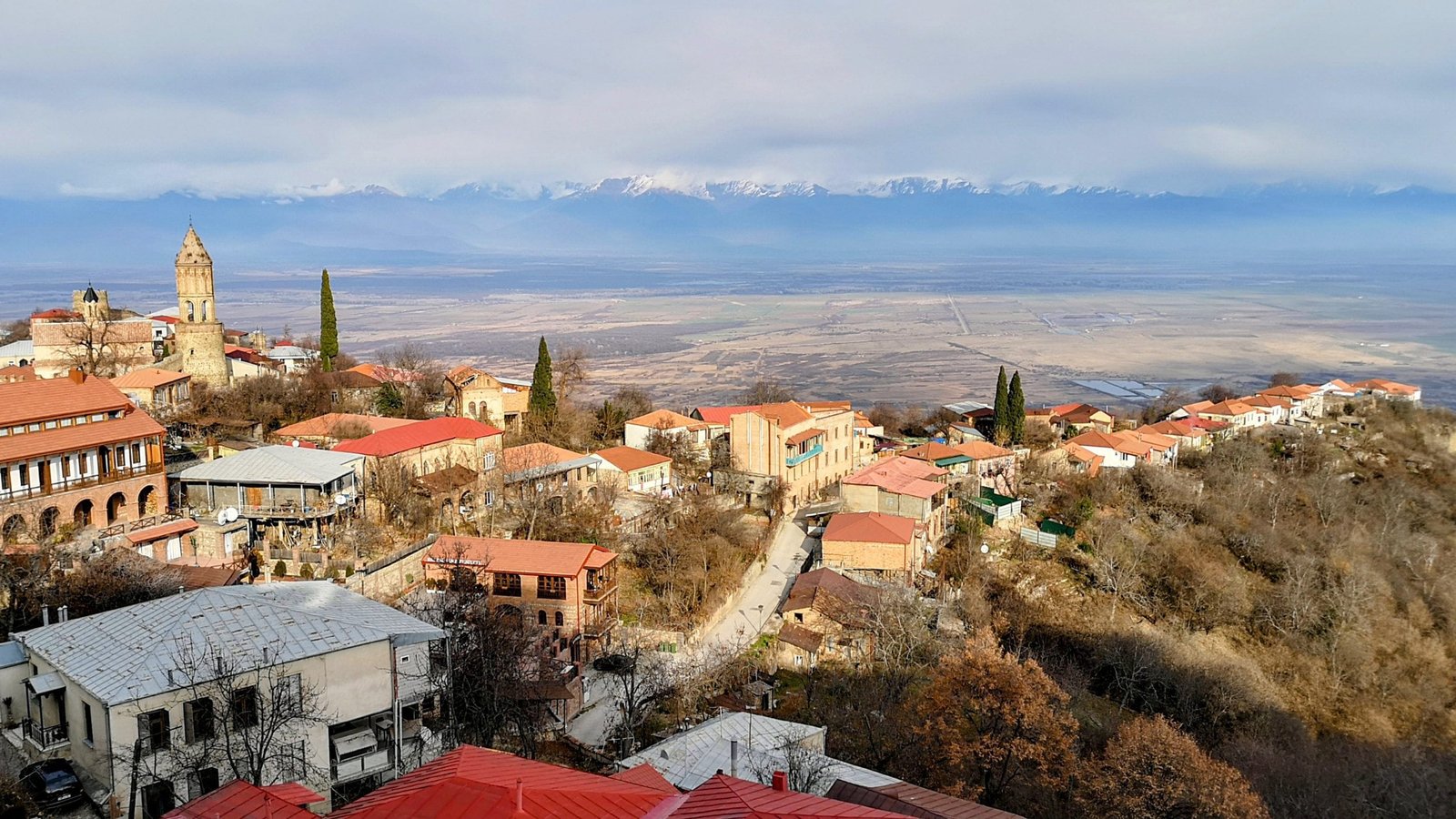 Signagui, known as the "City of Love," is a picturesque walled town in the wine region of Kakheti, 790 metres above sea level. This 18th-century town, surrounded by a 4-kilometre wall with 23 towers, offers stunning views of the Alazani valley and the Caucasus mountains. It is known for its traditional Georgian architecture, cobblestone streets and carved wooden balconies. During our visit, we stroll through its romantic lanes, sample the famous Kakheti wines at traditional cellars and watch the sunset over the valley from its ancient defensive walls.
Route 2 km, 0 h 5 min
Signagui, known as the "City of Love," is a picturesque walled town in the wine region of Kakheti, 790 metres above sea level. This 18th-century town, surrounded by a 4-kilometre wall with 23 towers, offers stunning views of the Alazani valley and the Caucasus mountains. It is known for its traditional Georgian architecture, cobblestone streets and carved wooden balconies. During our visit, we stroll through its romantic lanes, sample the famous Kakheti wines at traditional cellars and watch the sunset over the valley from its ancient defensive walls.
Route 2 km, 0 h 5 min
Bodbe Monastery
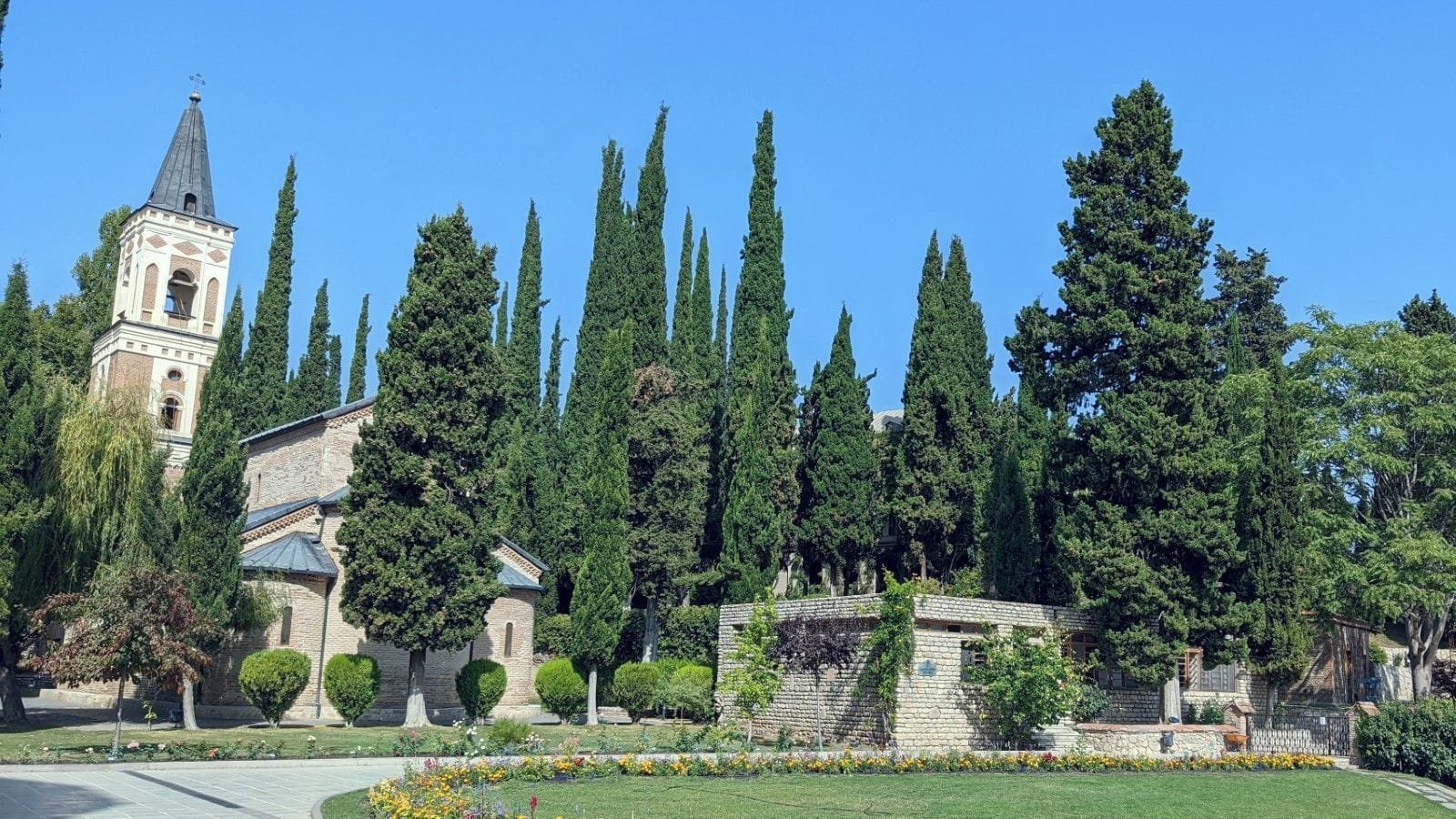 Bodbe Monastery in the Kakheti region is one of Georgia's most important pilgrimage sites, housing the tomb of Saint Nino, the missionary who brought Christianity to the country in the 4th century. This monastic complex, surrounded by centuries-old cypresses and lush gardens, combines architectural elements from the 9th and 17th centuries, featuring its three-nave basilica and traditional frescoes. During our visit, we descend along the sacred path to Saint Nino's miraculous spring, contemplate the views of the Alazani valley and experience the deep spirituality that permeates this holy place.
Route 110 km, 1 h 48 min
Bodbe Monastery in the Kakheti region is one of Georgia's most important pilgrimage sites, housing the tomb of Saint Nino, the missionary who brought Christianity to the country in the 4th century. This monastic complex, surrounded by centuries-old cypresses and lush gardens, combines architectural elements from the 9th and 17th centuries, featuring its three-nave basilica and traditional frescoes. During our visit, we descend along the sacred path to Saint Nino's miraculous spring, contemplate the views of the Alazani valley and experience the deep spirituality that permeates this holy place.
Route 110 km, 1 h 48 min
Day 6 – Tbilisi – Guided city tour
No driving After breakfast at the hotel, we begin our adventure. Planned visits:Rustaveli Avenue
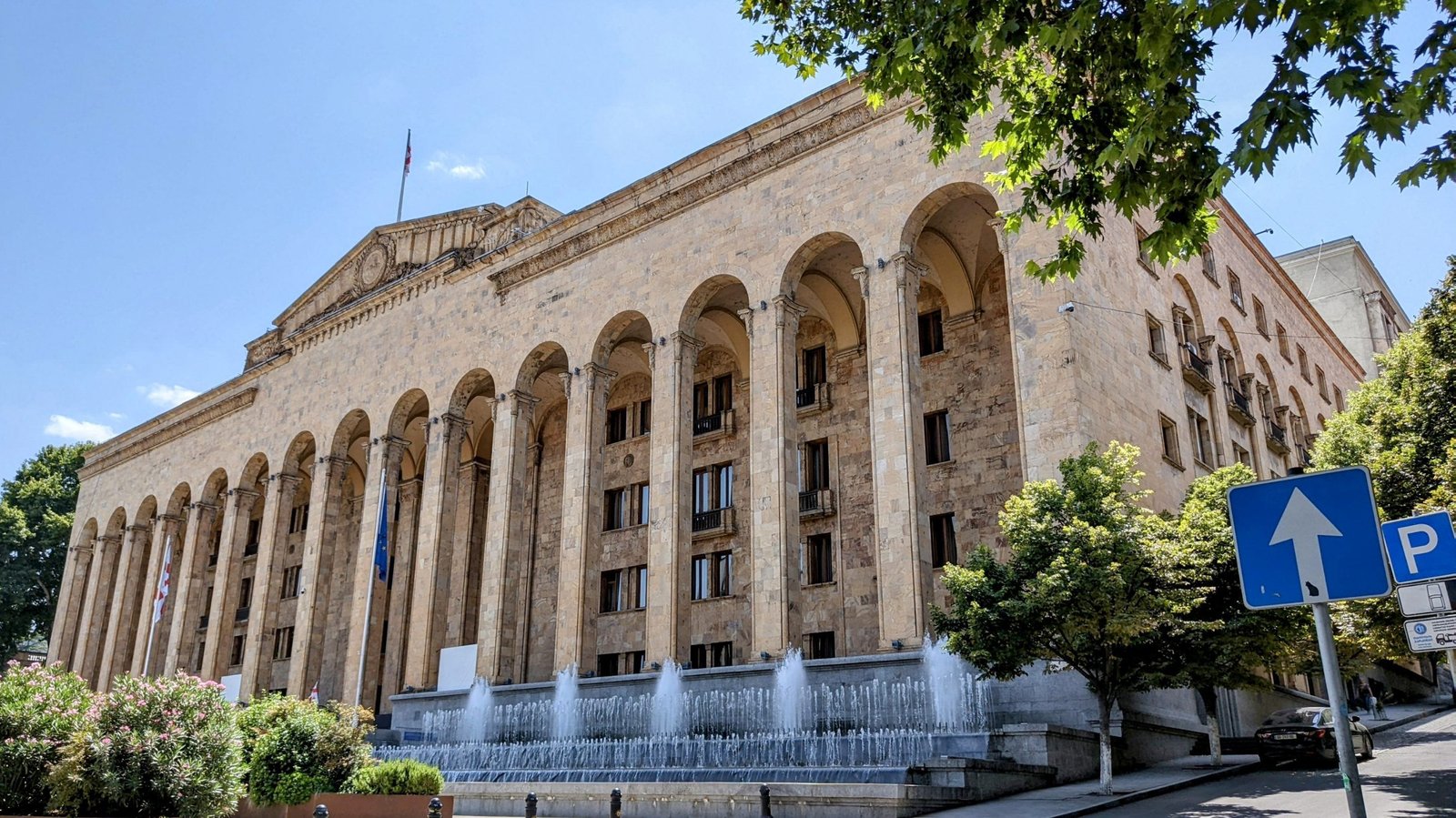 Rustaveli Avenue, the main artery of Tbilisi, stretches 1.5 kilometres from Freedom Square to Republic Square. This emblematic street, named after the medieval poet Shota Rustaveli, is home to the city's most prestigious buildings, including the Parliament of Georgia, the Opera Theatre and the National Museum, all built in neoclassical and Art Nouveau style during the 19th century. During our walk, we enjoy the vibrant Georgian cultural life, stop at elegant historic cafés and admire the monumental architecture while exploring the many shops and art galleries.
Metekhi Square
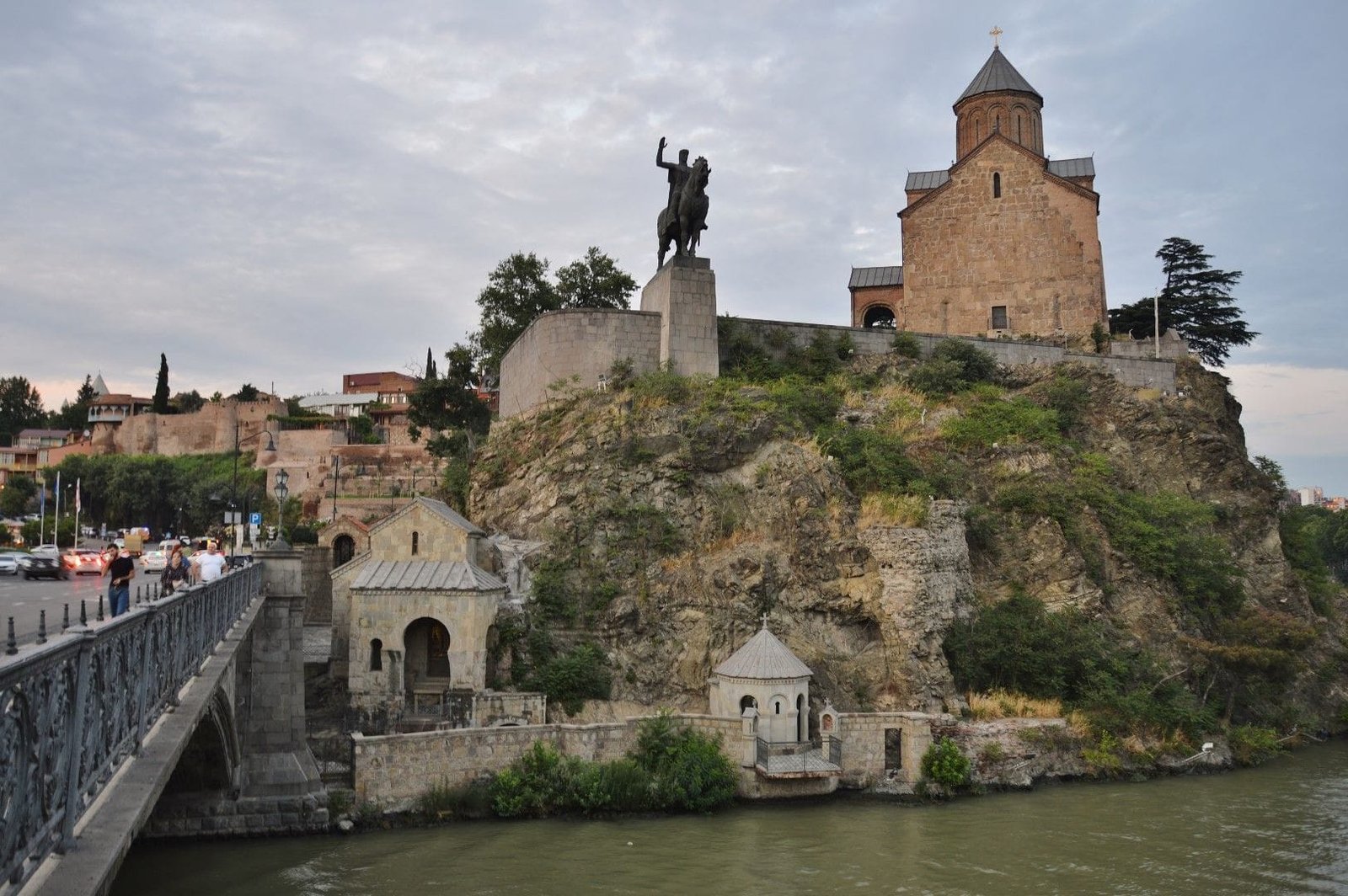 Metekhi Square, one of Tbilisi's most emblematic historic sites, stands on a cliff with privileged views over the Mtkvari river. This landmark is dominated by the 13th-century church and the equestrian statue of King Vakhtang Gorgasali, the city's legendary founder. The square was for centuries the home of the royal palace, establishing itself as a strategic and cultural centre. Although the original church was built in the 5th century, the structure we can admire today is a 13th-century reconstruction. During our tour, we delight in the stunning panoramic views of the old town and the famous bathhouse district, explore the Metekhi church and immerse ourselves in the fascinating history of the king who established Tbilisi as the capital of Georgia.
Narikala Fortress
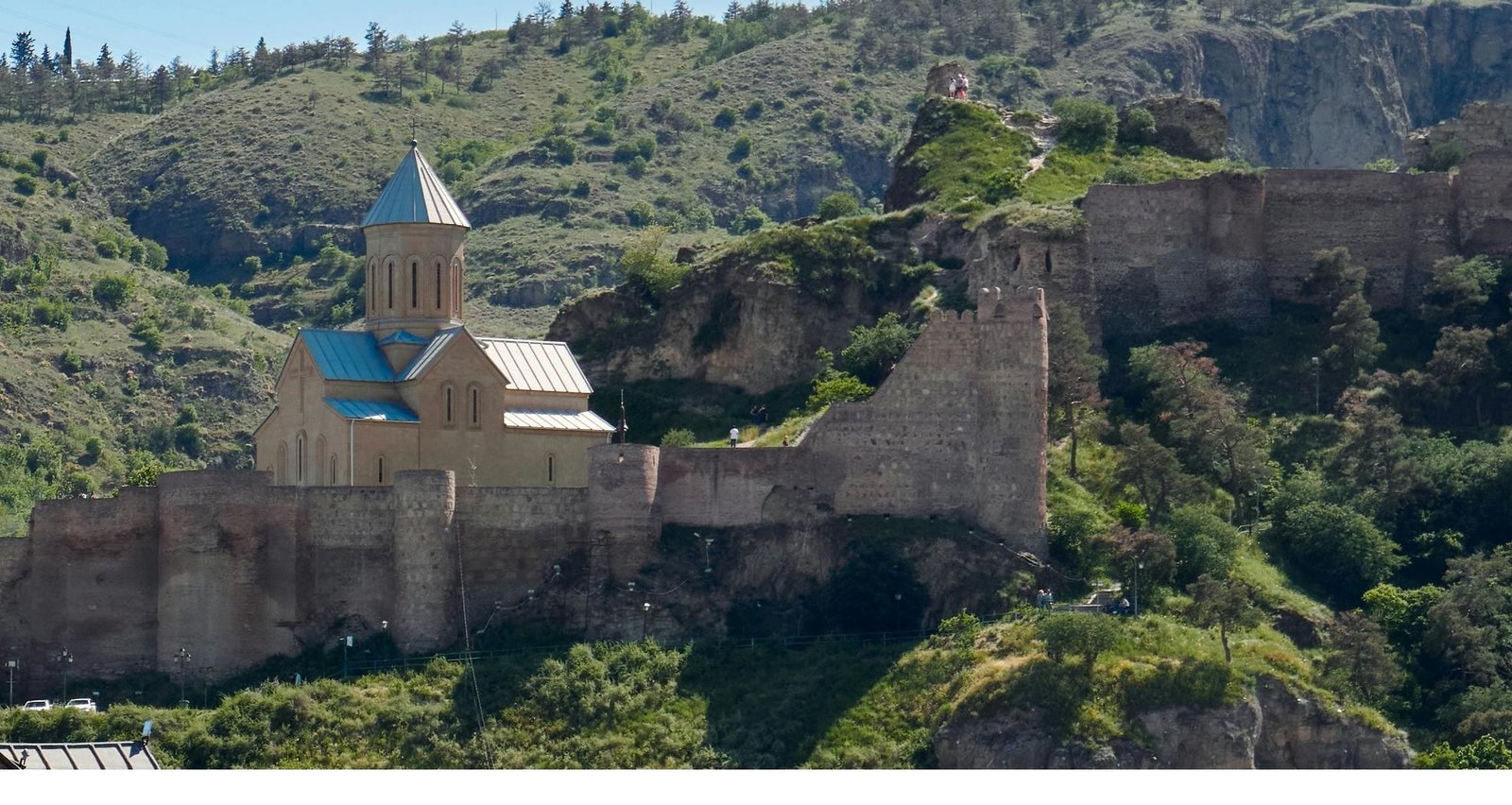 Narikala Fortress, the iconic symbol of Tbilisi, has dominated the city's skyline since the 4th century. This ancient citadel, originally Persian and later expanded by Arabs and Georgians, rises above a steep hill with views over the Mtkvari river and the old town. Its imposing walls and towers have witnessed the various civilisations that ruled Georgia, including the reconstructed St Nicholas Church from the 12th century. During our visit, we ride the cable car up to the fortress, walk along its ancient defensive walls and capture stunning panoramic views of Tbilisi as the sun sets over the city.
Abanotubani
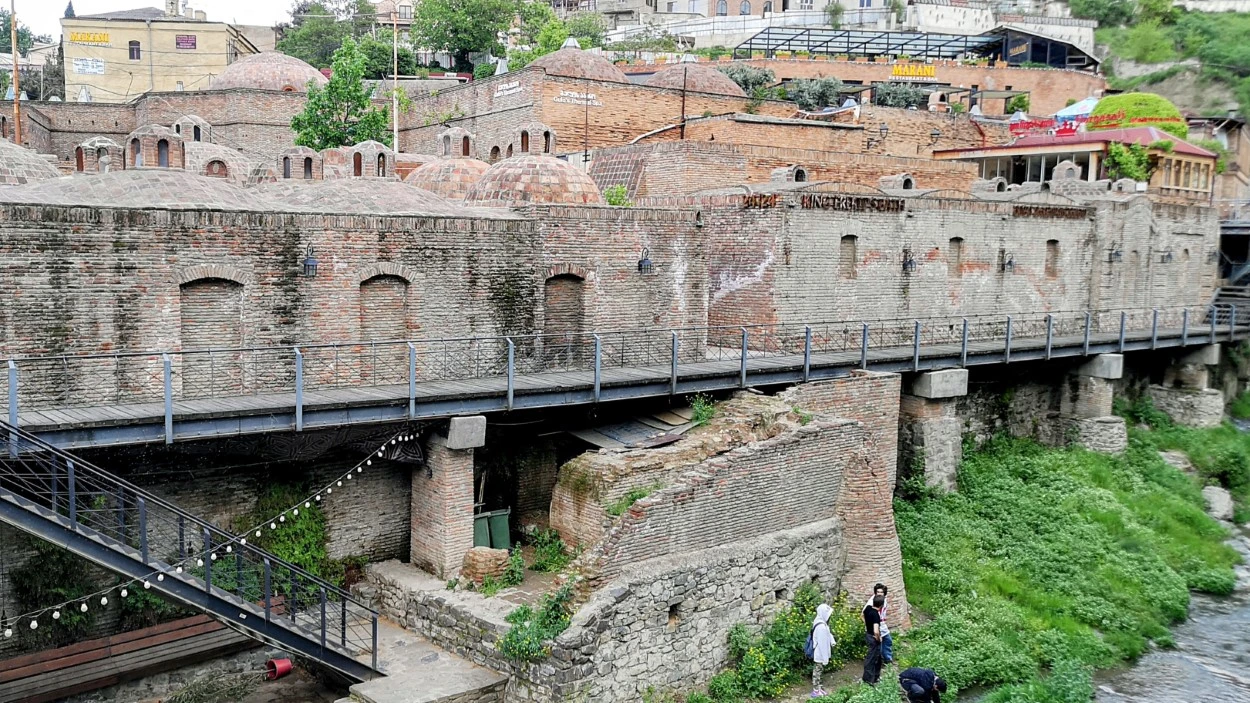 Abanotubani, the historic sulphur bathhouse district in the heart of old Tbilisi, is the original nucleus where the Georgian capital was founded. Located on the right bank of the Mtkvari river, this neighbourhood is famous for its characteristic sulphur baths with brick domes emerging from the ground, witnessing over 1,500 years of history. The natural thermal waters that spring from deep within the earth maintain a constant temperature of 37–40°C, and their healing properties attracted illustrious visitors such as Alexander Pushkin and Alexandre Dumas. During our visit, we wander through these streets of legendary thermal waters and lose ourselves in the picturesque medieval alleyways weaving between the baths, breathing the most authentic essence of old Tbilisi.
Anchiskhati
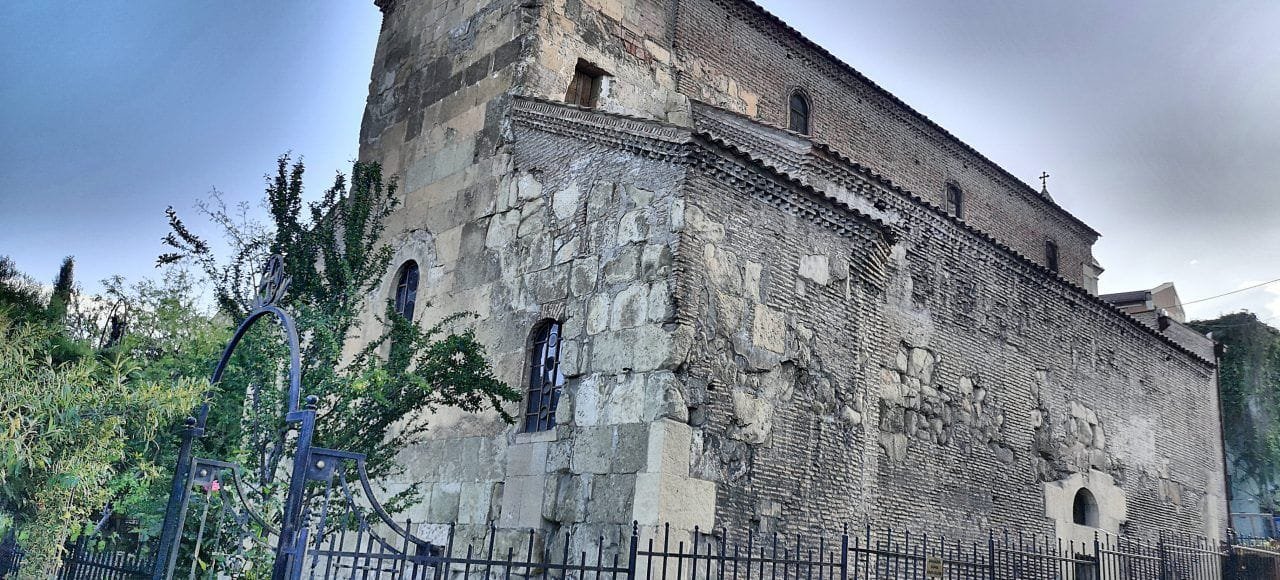 The Anchiskhati Basilica, the oldest church in Tbilisi, has been a vital testament to Georgia's Christian history since the 6th century. Located in the heart of the old town, this sandstone church dedicated to the Nativity of the Virgin Mary takes its name from the miraculous icon of Christ (Anchiskhati) it housed for centuries. Its typically Georgian three-nave basilica architecture is complemented by medieval frescoes and a 17th-century bell tower. During our exploration, we experience the mystical atmosphere of the temple, listen to the ancient Georgian polyphonic chants that still resound within its walls and admire the craftsmanship of its traditional icons.
Day 7 – Tbilisi – Sadakhlo – Haghpat – Saghmosavank – Yerevan
Total route – 289 km, 5 h 28 min After breakfast at the hotel, we begin our adventure. Planned visits: Route 74 km, 1 h 18 minSadakhlo
Armenia–Georgia border formalities; change of transport and guide. Route 43 km, 0 h 55 minHaghpat Monastery
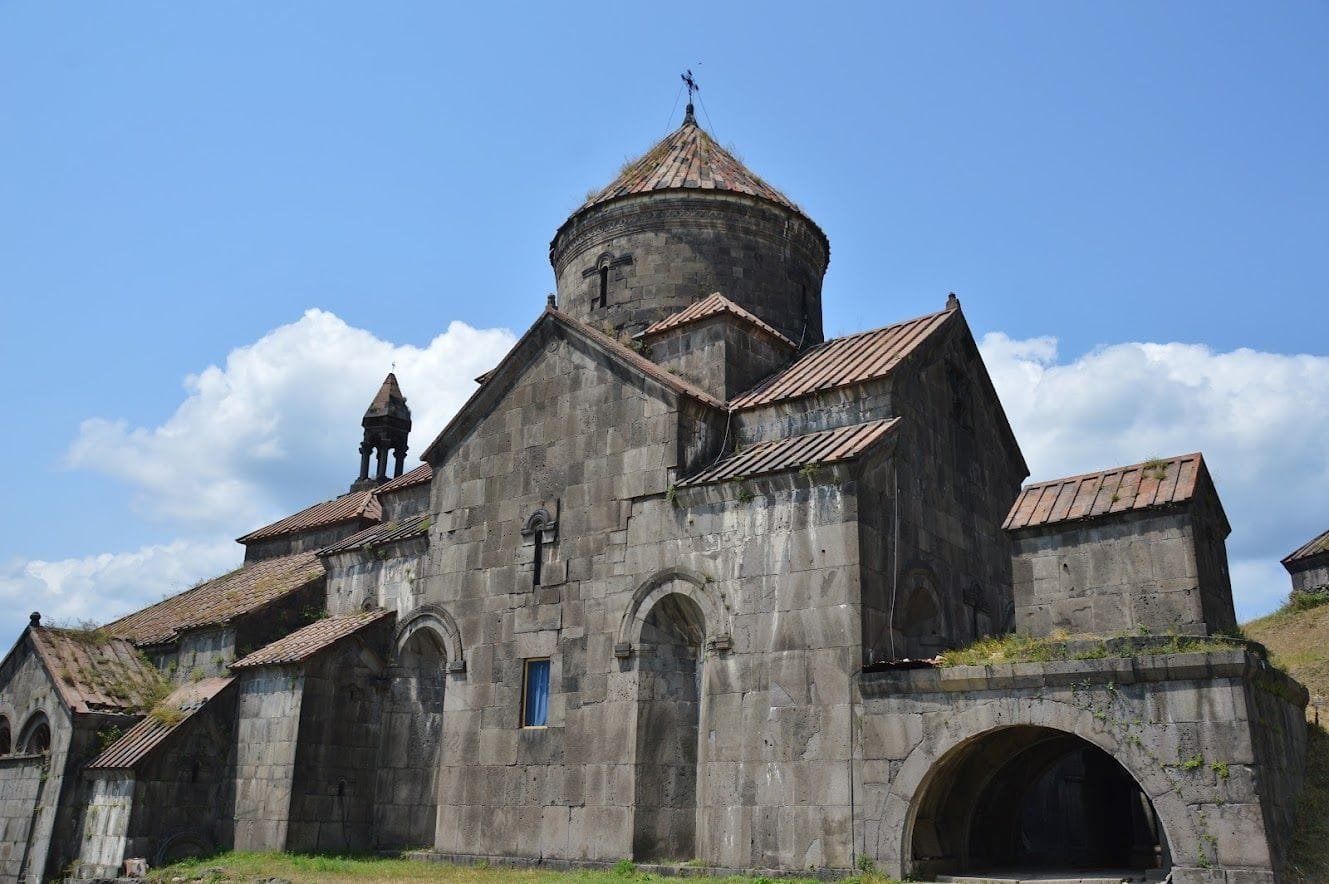 Haghpat Monastery in the Lori region of Armenia is a jewel of medieval architecture and a UNESCO World Heritage Site. Founded in the 10th century, this monastery stands out for its harmonious design, with churches, khachkars and a library reflecting Armenia's cultural and spiritual peak in the Middle Ages. Set in a mountain landscape, Haghpat combines spirituality and a rich historical heritage that draws pilgrims and visitors from around the world.
During our visit we explore its detailed stone sculptures, discover the historical treasures it holds and enjoy the panoramic views that make Haghpat an unforgettable place.
Route 140 km, 2 h 30 min
Haghpat Monastery in the Lori region of Armenia is a jewel of medieval architecture and a UNESCO World Heritage Site. Founded in the 10th century, this monastery stands out for its harmonious design, with churches, khachkars and a library reflecting Armenia's cultural and spiritual peak in the Middle Ages. Set in a mountain landscape, Haghpat combines spirituality and a rich historical heritage that draws pilgrims and visitors from around the world.
During our visit we explore its detailed stone sculptures, discover the historical treasures it holds and enjoy the panoramic views that make Haghpat an unforgettable place.
Route 140 km, 2 h 30 min
Saghmosavank
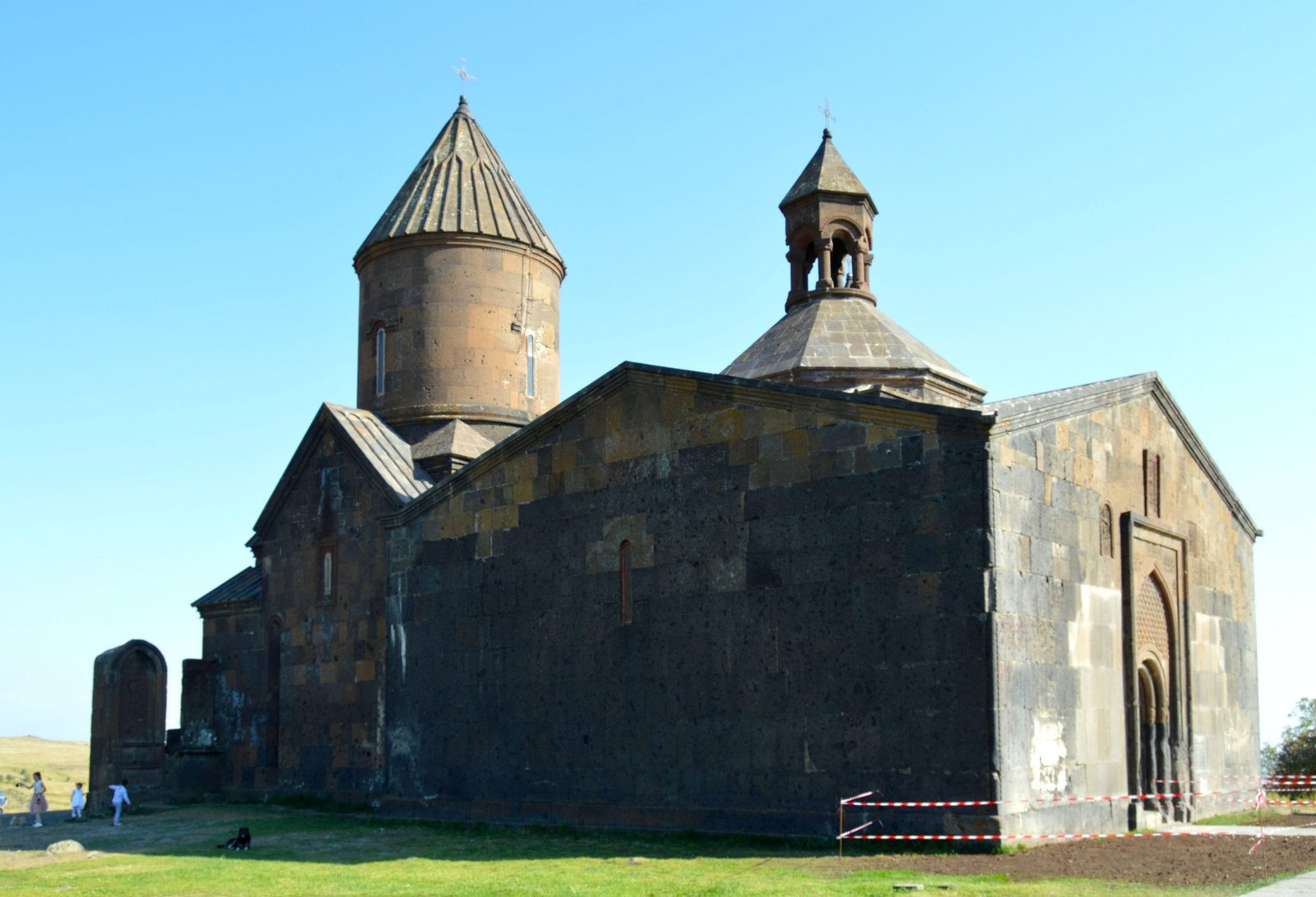 Perched above the spectacular Kasagh river canyon in the Aragatsotn province of Armenia, the Saghmosavank Monastery is an architectural gem from the 13th century. This medieval monastic complex stands out for its extraordinary manuscript library and its gavit adorned with intricate reliefs — one of the finest examples of Armenian cultural flowering under the Zakarian dynasty. Its strategic location above the gorge and its distinctive reddish volcanic stone make it a unique testament to Armenian religious architecture. During our visit, we marvel at the panoramic views of the canyon stretching to Mount Aragats, explore the ancient manuscript halls and feel the spiritual energy that permeates every corner of this sacred precinct.
Route 32 km, 0 h 45 min
Perched above the spectacular Kasagh river canyon in the Aragatsotn province of Armenia, the Saghmosavank Monastery is an architectural gem from the 13th century. This medieval monastic complex stands out for its extraordinary manuscript library and its gavit adorned with intricate reliefs — one of the finest examples of Armenian cultural flowering under the Zakarian dynasty. Its strategic location above the gorge and its distinctive reddish volcanic stone make it a unique testament to Armenian religious architecture. During our visit, we marvel at the panoramic views of the canyon stretching to Mount Aragats, explore the ancient manuscript halls and feel the spiritual energy that permeates every corner of this sacred precinct.
Route 32 km, 0 h 45 min
Day 8 – Yerevan City Tour – Zvartnots – Echmiadzin – Garni – Geghard – Yerevan
Total route – 120 km, 2 h 2 min After breakfast at the hotel, we begin our adventure. Planned visits: Route 0 km, 0 h 0 minYerevan City Tour
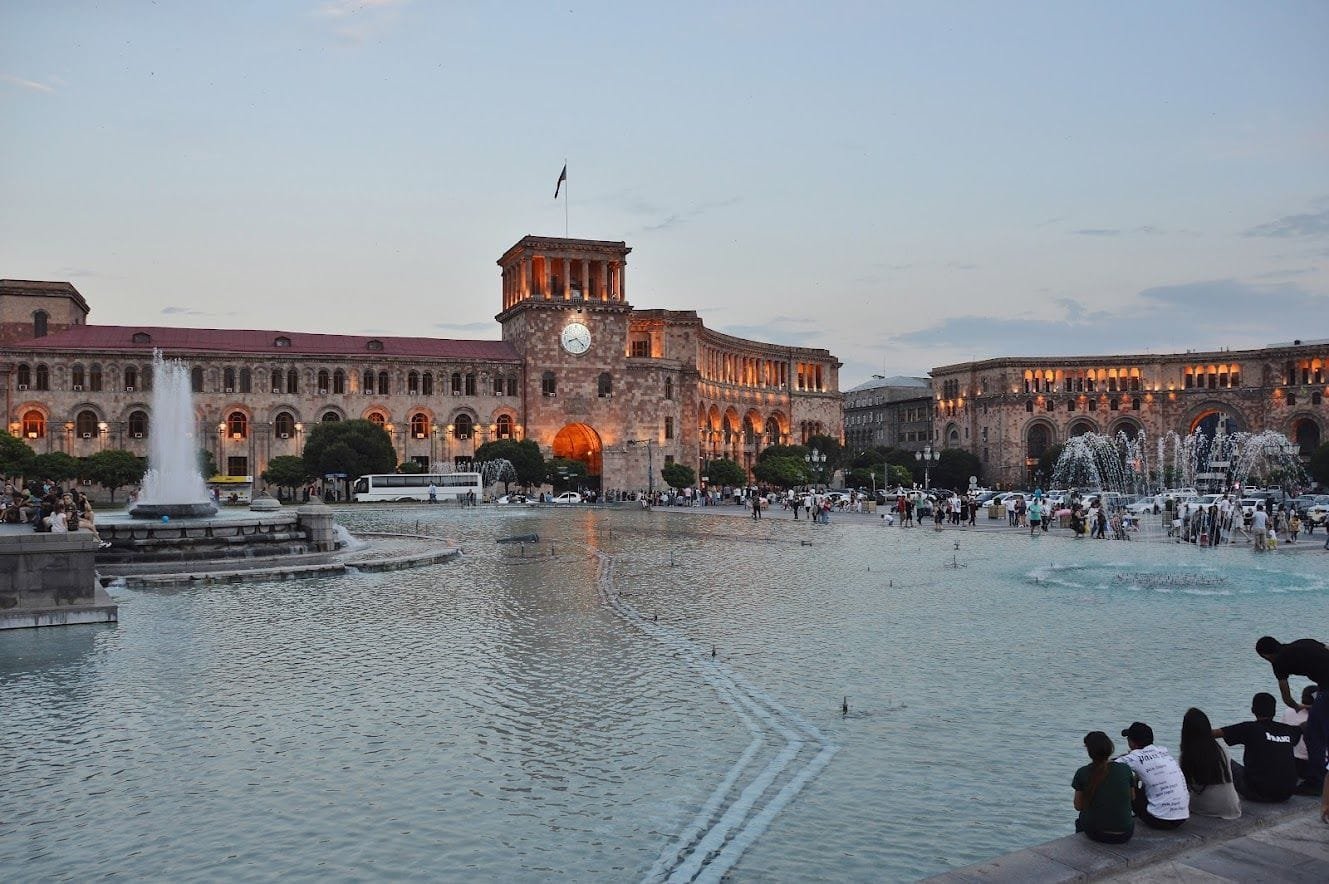 A city tour of central Yerevan, Armenia's vibrant capital, is the best way to discover its rich history and culture. Nestled in the Ararat valley, this city blends Soviet architecture, modern avenues and ancient monuments, such as the emblematic Republic Square and the impressive Cascade. Famous for its welcoming atmosphere, open-air cafés and views of Mount Ararat, Yerevan is known as one of the oldest continuously inhabited cities in the world. During our visit, we walk through its lively streets, explore historic landmarks and enjoy genuine Armenian hospitality while sampling local delicacies.
Route 20 km, 0 h 32 min
A city tour of central Yerevan, Armenia's vibrant capital, is the best way to discover its rich history and culture. Nestled in the Ararat valley, this city blends Soviet architecture, modern avenues and ancient monuments, such as the emblematic Republic Square and the impressive Cascade. Famous for its welcoming atmosphere, open-air cafés and views of Mount Ararat, Yerevan is known as one of the oldest continuously inhabited cities in the world. During our visit, we walk through its lively streets, explore historic landmarks and enjoy genuine Armenian hospitality while sampling local delicacies.
Route 20 km, 0 h 32 min
Zvartnots Temple
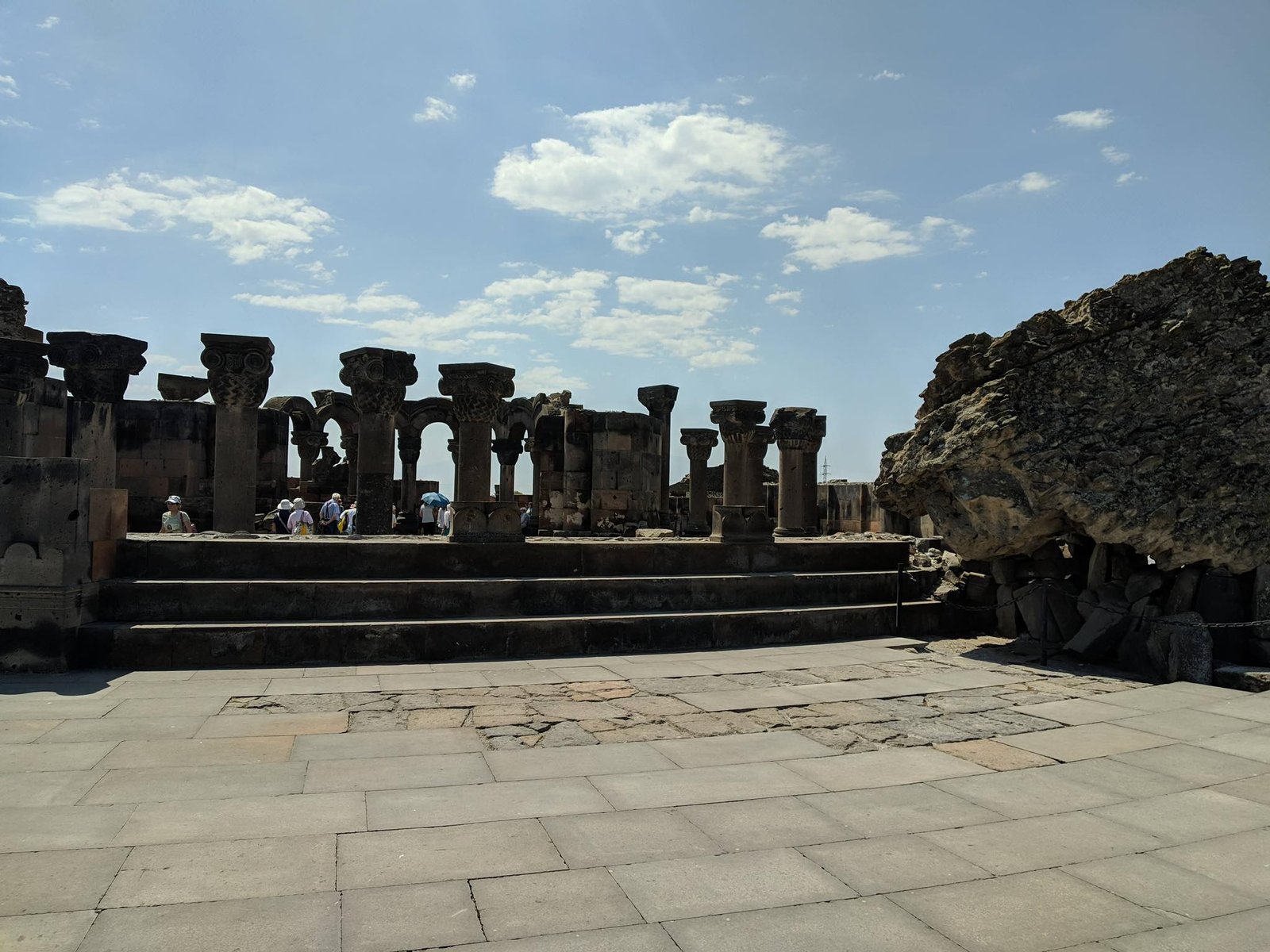 Declared a UNESCO World Heritage Site, the majestic Zvartnots Temple was built in the 7th century near Echmiadzin, Armenia, and represents the pinnacle of medieval Armenian architecture. This unique monument, whose name means 'Temple of the Vigilant Angels', was remarkable for its innovative three-level circular design reaching 45 metres in height, setting new architectural standards for its era. Although now in ruins after collapsing in the 10th century due to an earthquake, its imposing remains, finely carved capitals and pioneering use of arches and vaults demonstrate the sophistication of ancient Armenia. During our exploration, we walk among the massive columns that once supported this architectural wonder, admire the delicate vine and pomegranate reliefs and are transported to the splendour of the ancient Kingdom of Armenia as Mount Ararat appears on the horizon.
Route 10 km, 0 h 5 min
Declared a UNESCO World Heritage Site, the majestic Zvartnots Temple was built in the 7th century near Echmiadzin, Armenia, and represents the pinnacle of medieval Armenian architecture. This unique monument, whose name means 'Temple of the Vigilant Angels', was remarkable for its innovative three-level circular design reaching 45 metres in height, setting new architectural standards for its era. Although now in ruins after collapsing in the 10th century due to an earthquake, its imposing remains, finely carved capitals and pioneering use of arches and vaults demonstrate the sophistication of ancient Armenia. During our exploration, we walk among the massive columns that once supported this architectural wonder, admire the delicate vine and pomegranate reliefs and are transported to the splendour of the ancient Kingdom of Armenia as Mount Ararat appears on the horizon.
Route 10 km, 0 h 5 min
Echmiadzin
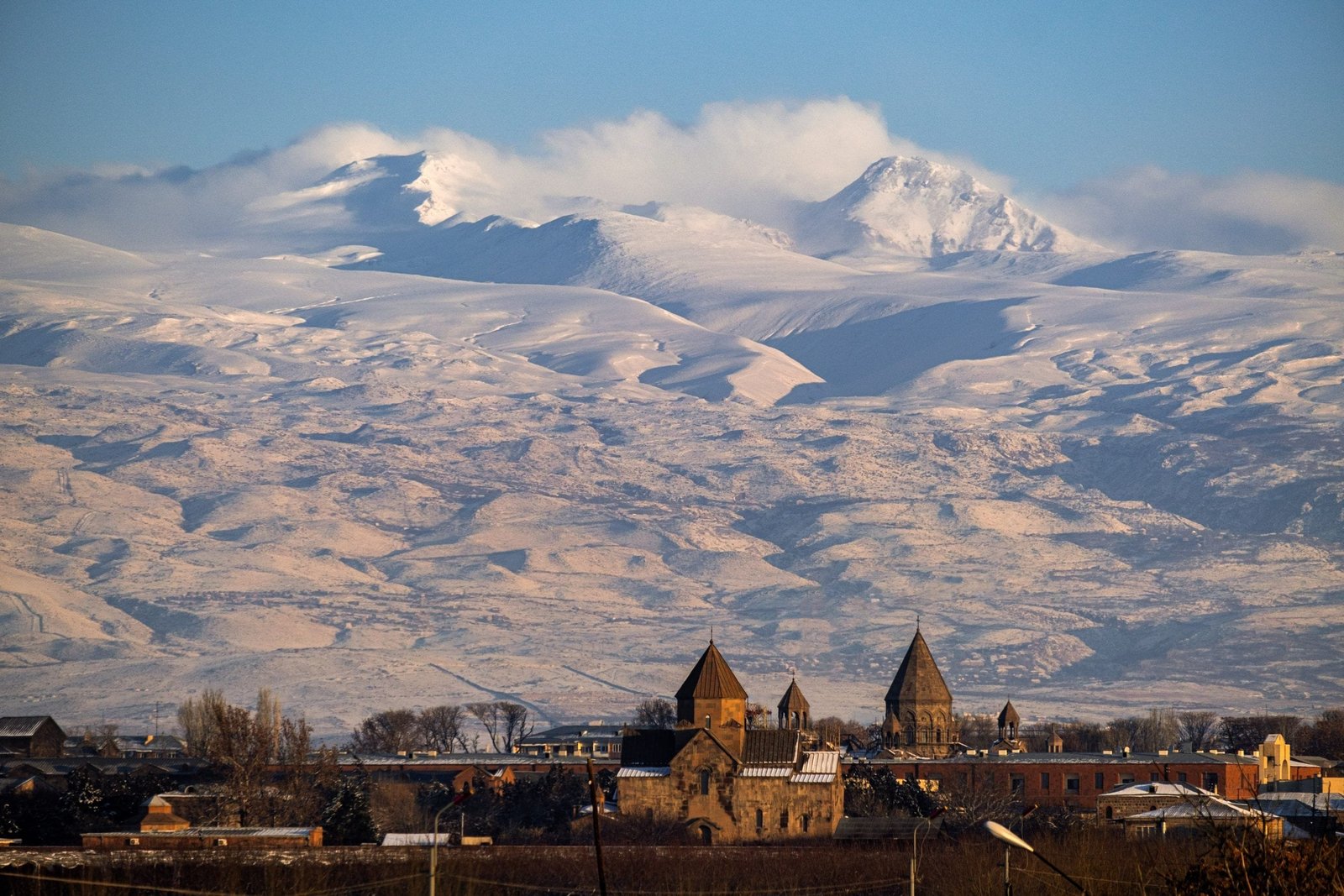 Echmiadzin, known as the Holy See of the Armenian Apostolic Church, is one of Armenia's holiest cities. Located in the Armavir region, it houses the Echmiadzin Cathedral, considered the oldest Christian church in the world, built in the 4th century. This important spiritual and cultural centre features impressive architecture and a rich heritage reflecting Armenia's deep Christian history. It is a must-visit destination for lovers of history and religion. During our visit, we explore the majestic cathedral, discover religious treasures and immerse ourselves in the sacred atmosphere of this unique place.
Route 54 km, 1 h 10 min
Echmiadzin, known as the Holy See of the Armenian Apostolic Church, is one of Armenia's holiest cities. Located in the Armavir region, it houses the Echmiadzin Cathedral, considered the oldest Christian church in the world, built in the 4th century. This important spiritual and cultural centre features impressive architecture and a rich heritage reflecting Armenia's deep Christian history. It is a must-visit destination for lovers of history and religion. During our visit, we explore the majestic cathedral, discover religious treasures and immerse ourselves in the sacred atmosphere of this unique place.
Route 54 km, 1 h 10 min
Garni
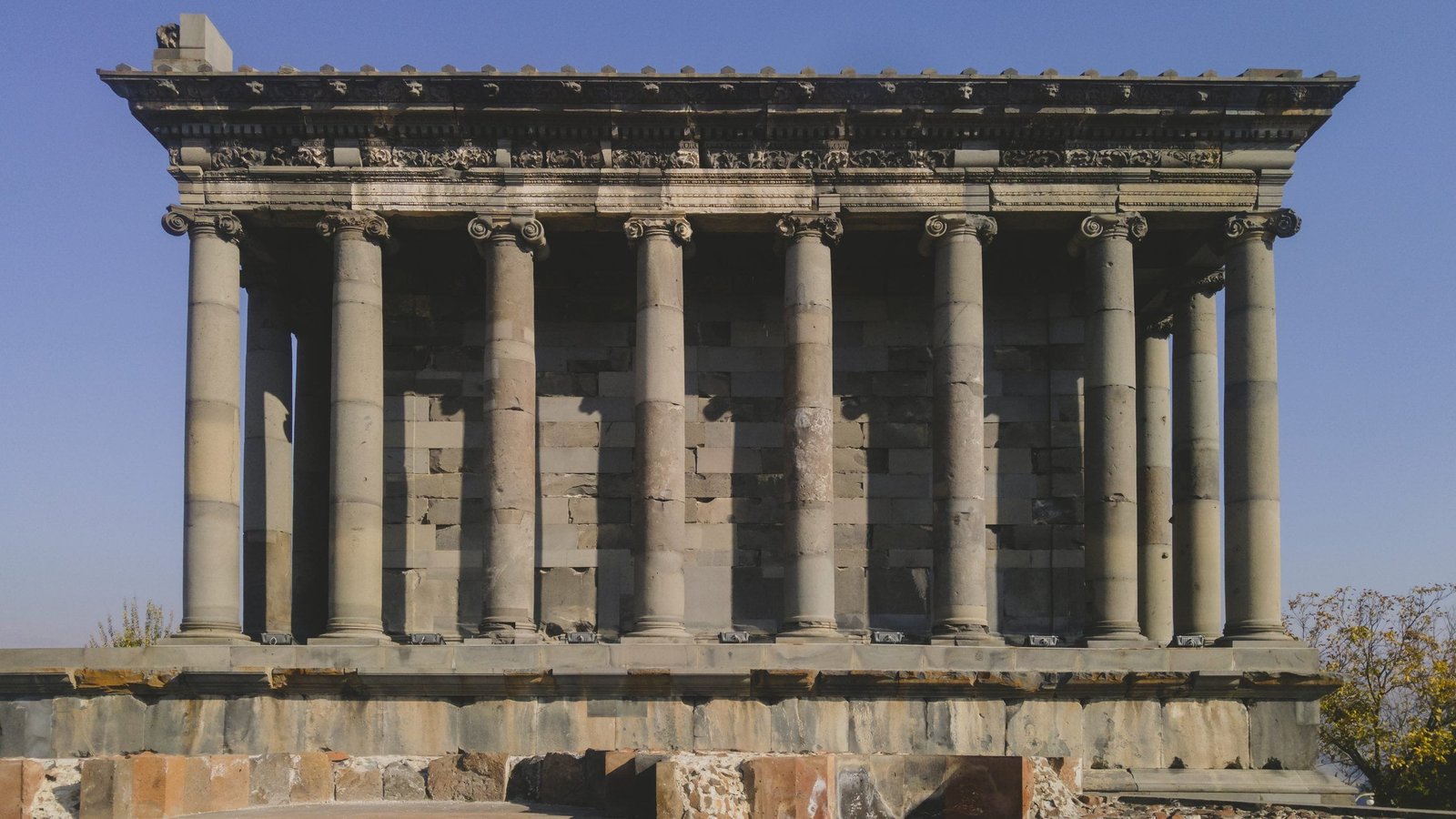 Garni, located in Armenia's Kotayk region, is an emblematic destination known for its 1st-century pagan temple — unique in the South Caucasus. Built in honour of the god Mihr, this Hellenistic temple is an exceptional example of ancient Armenian architecture. Surrounded by impressive landscapes, including the Azat river gorge and the famous ""Symphony of Stones"", Garni combines history, culture and nature in a spectacular setting.
During our visit we explore the temple, admire its unique acoustics and walk through the gorge to discover the rock formations that make Garni an unforgettable destination.
Route 10 km, 0 h 15 min
Garni, located in Armenia's Kotayk region, is an emblematic destination known for its 1st-century pagan temple — unique in the South Caucasus. Built in honour of the god Mihr, this Hellenistic temple is an exceptional example of ancient Armenian architecture. Surrounded by impressive landscapes, including the Azat river gorge and the famous ""Symphony of Stones"", Garni combines history, culture and nature in a spectacular setting.
During our visit we explore the temple, admire its unique acoustics and walk through the gorge to discover the rock formations that make Garni an unforgettable destination.
Route 10 km, 0 h 15 min
Geghard
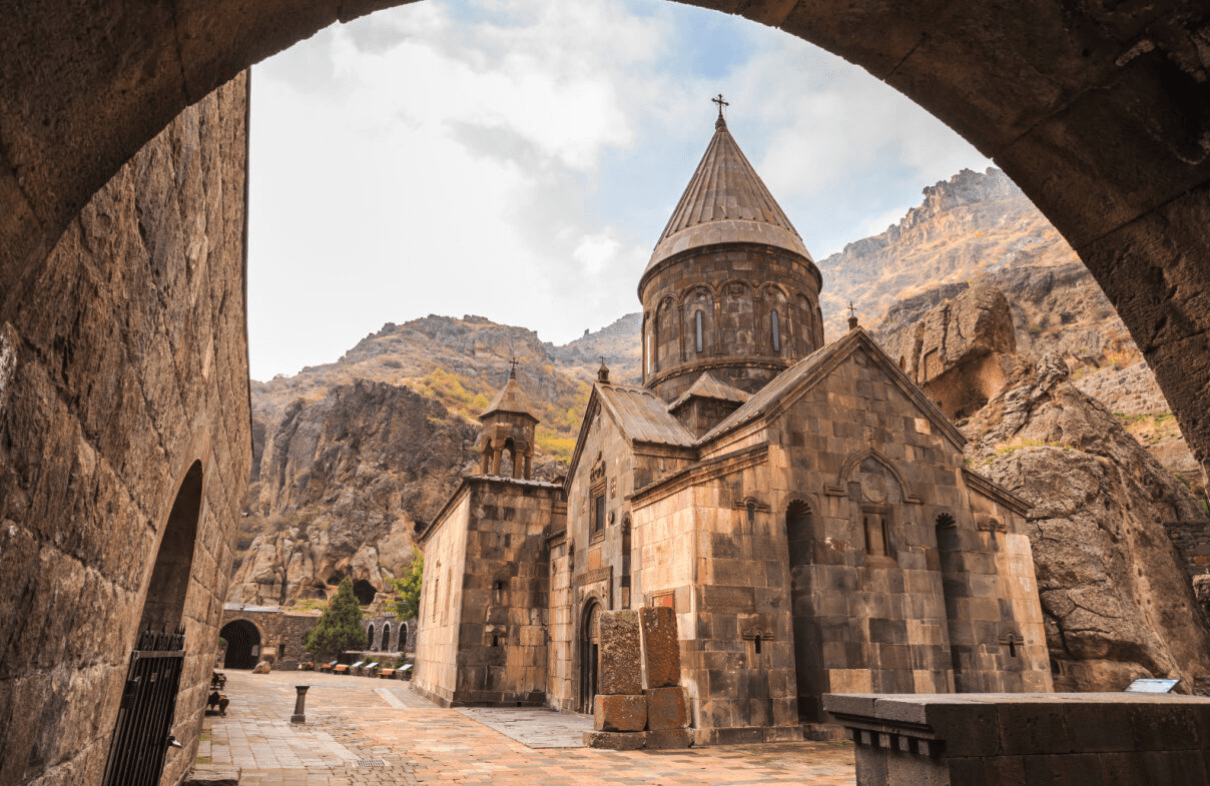 Geghard, located in Armenia's Kotayk region, is a medieval monastery and UNESCO World Heritage Site. Founded in the 4th century and partially carved into the rock, this sacred site stands out for its impressive architecture, which fuses nature and art. Its name, meaning ""monastery of the spear"", relates to the relic said to have pierced Christ's side. Surrounded by mountain landscapes and a mystical atmosphere, Geghard is a symbol of Armenian spirituality.
During our visit we walk through its rock-carved chapels, admire the intricate engravings and enjoy the serenity of the surroundings as we discover its deep history and significance.
Route 26 km, 0 h 40 min
Geghard, located in Armenia's Kotayk region, is a medieval monastery and UNESCO World Heritage Site. Founded in the 4th century and partially carved into the rock, this sacred site stands out for its impressive architecture, which fuses nature and art. Its name, meaning ""monastery of the spear"", relates to the relic said to have pierced Christ's side. Surrounded by mountain landscapes and a mystical atmosphere, Geghard is a symbol of Armenian spirituality.
During our visit we walk through its rock-carved chapels, admire the intricate engravings and enjoy the serenity of the surroundings as we discover its deep history and significance.
Route 26 km, 0 h 40 min
Day 9 – Yerevan – Khor Virap – Noravank – Areni Cave – Yerevan
Total route – 240 km, 4 h 8 min After breakfast at the hotel, we begin our adventure. Planned visits: Route 44 km, 0 h 48 minKhor Virap
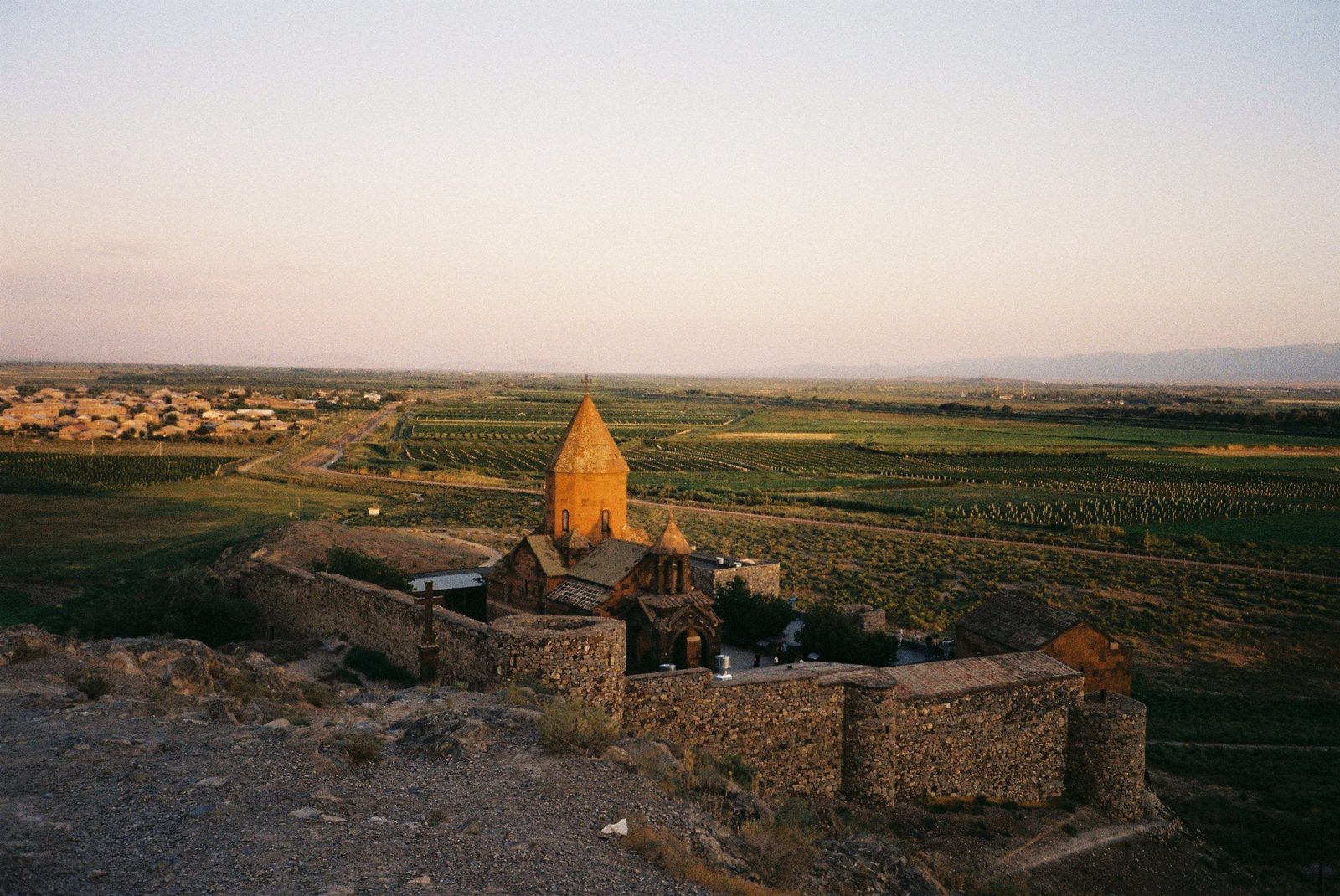 Khor Virap, situated on the Ararat plain in Armenia, is one of the country's most emblematic monasteries, with a rich history linked to Christianity. This is the site where St Gregory the Illuminator was imprisoned before converting Armenia into the first Christian nation; it offers spectacular views of Mount Ararat. Its strategic location and profound spiritual significance make it a major pilgrimage and tourist destination.
During our visit we explore the ancient underground cells, admire the impressive view of Mount Ararat and discover the history that makes Khor Virap a sacred and unforgettable place.
Route 83 km, 1 h 20 min
Khor Virap, situated on the Ararat plain in Armenia, is one of the country's most emblematic monasteries, with a rich history linked to Christianity. This is the site where St Gregory the Illuminator was imprisoned before converting Armenia into the first Christian nation; it offers spectacular views of Mount Ararat. Its strategic location and profound spiritual significance make it a major pilgrimage and tourist destination.
During our visit we explore the ancient underground cells, admire the impressive view of Mount Ararat and discover the history that makes Khor Virap a sacred and unforgettable place.
Route 83 km, 1 h 20 min
Noravank Monastery
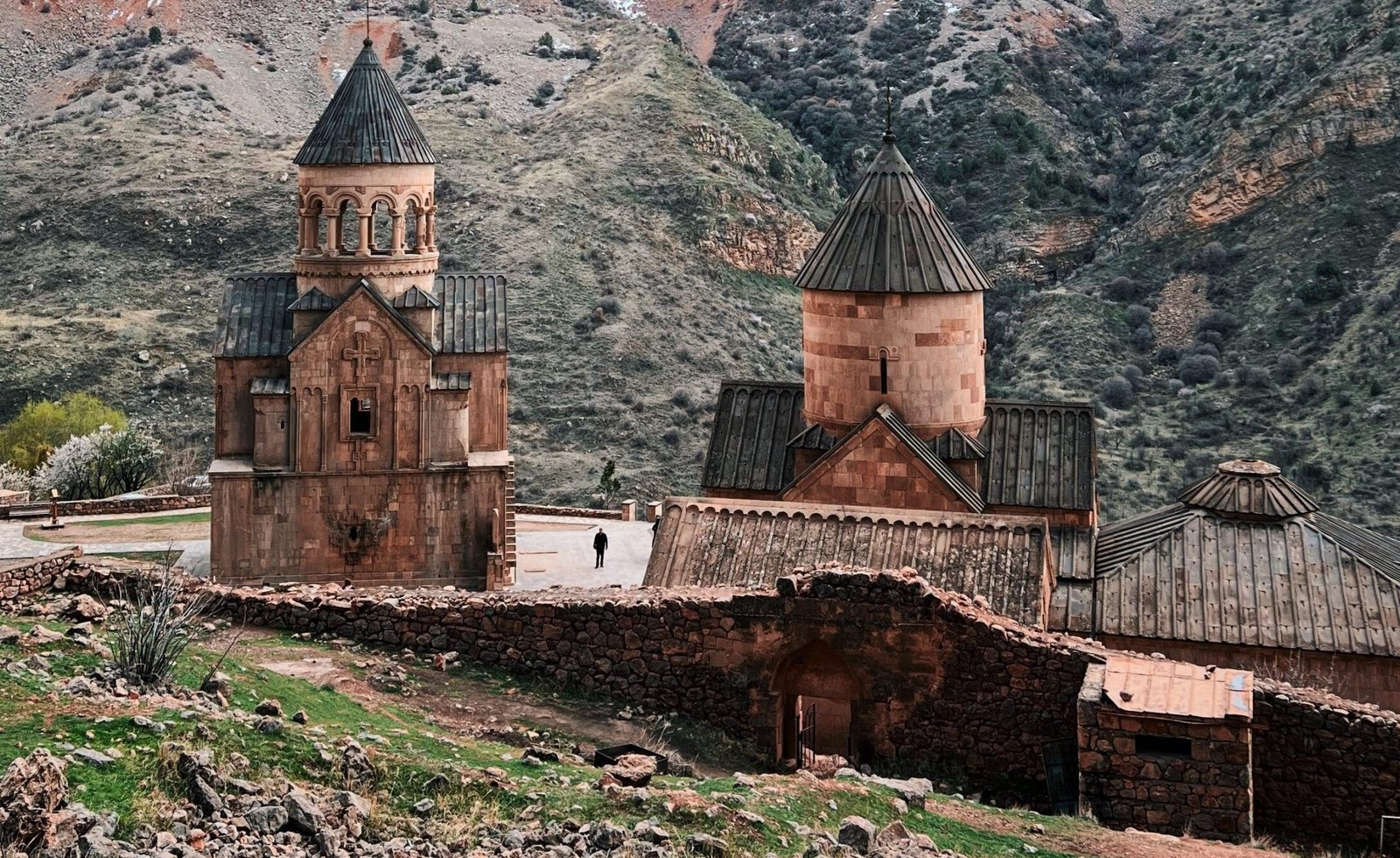 Noravank Monastery, located in a narrow canyon in Armenia's Vayots Dzor region, is an impressive 13th-century religious complex. Famous for its distinctive architecture combining intricate carvings and a two-storey church, the monastery is surrounded by imposing red cliffs. Noravank was an important cultural and spiritual centre, and its unique beauty makes it one of Armenia's most emblematic destinations.
During our visit we explore its elegant churches, admire the intricate sculptural details and enjoy the spectacular mountain scenery that makes Noravank an unforgettable place.
Route 3 km, 0 h 5 min
Noravank Monastery, located in a narrow canyon in Armenia's Vayots Dzor region, is an impressive 13th-century religious complex. Famous for its distinctive architecture combining intricate carvings and a two-storey church, the monastery is surrounded by imposing red cliffs. Noravank was an important cultural and spiritual centre, and its unique beauty makes it one of Armenia's most emblematic destinations.
During our visit we explore its elegant churches, admire the intricate sculptural details and enjoy the spectacular mountain scenery that makes Noravank an unforgettable place.
Route 3 km, 0 h 5 min
Areni Cave
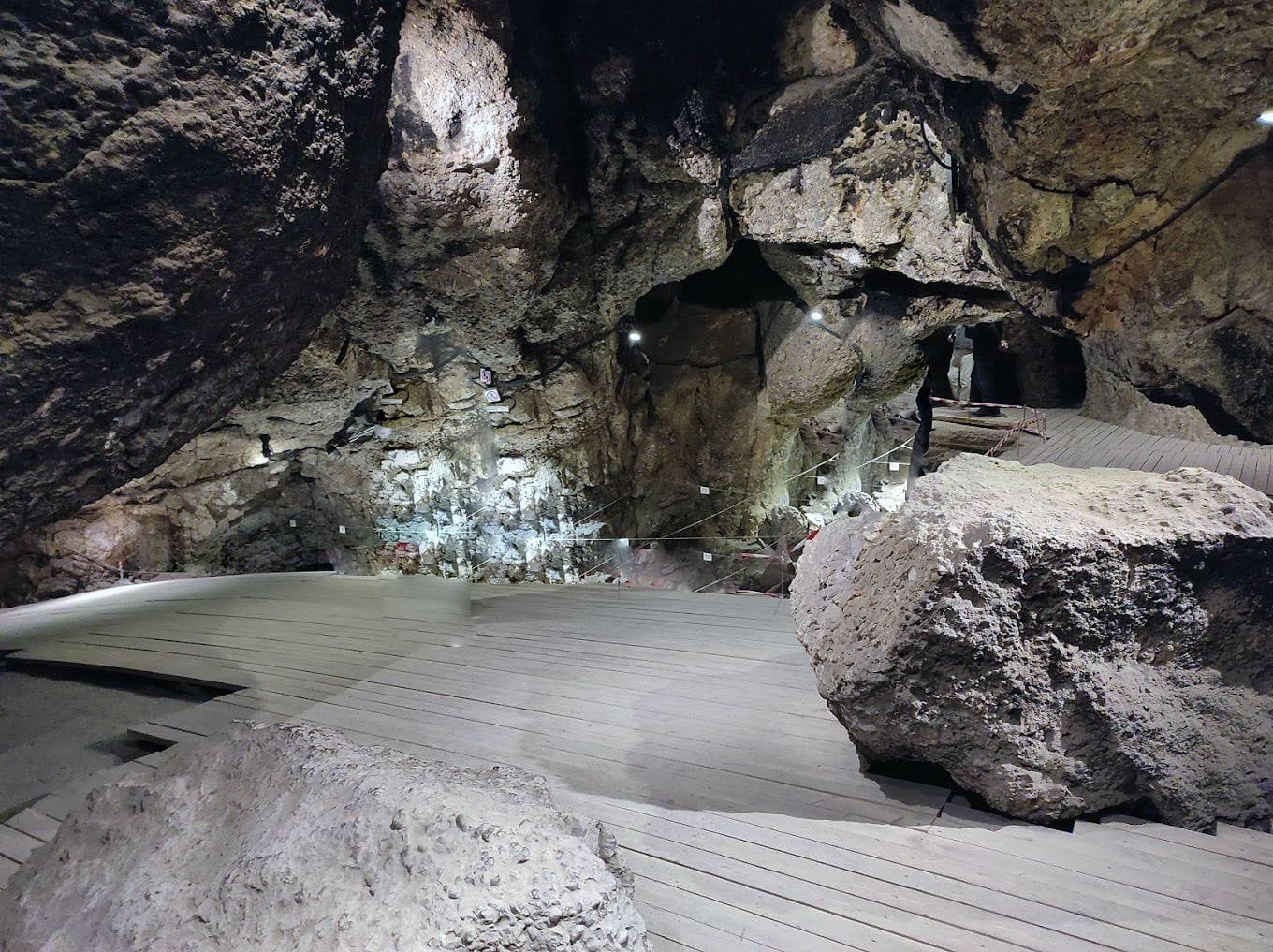 The Areni Cave, located in Armenia's Vayots Dzor region, is an archaeological site of great historical importance. Known as one of the oldest human settlements in the world, this cave is famous for the discovery of the oldest known winery, dating back over 6,000 years. Fascinating prehistoric artefacts have also been found here, revealing the origins of viticulture and life in the Copper Age. Surrounded by mountain scenery, it is a unique destination to explore the connection between history and nature. During our visit, we uncover the mysteries of this ancient cave, learn about its millennia-old history and enjoy the natural surroundings that make it a truly special place.
Route 110 km, 1 h 55 min
The Areni Cave, located in Armenia's Vayots Dzor region, is an archaeological site of great historical importance. Known as one of the oldest human settlements in the world, this cave is famous for the discovery of the oldest known winery, dating back over 6,000 years. Fascinating prehistoric artefacts have also been found here, revealing the origins of viticulture and life in the Copper Age. Surrounded by mountain scenery, it is a unique destination to explore the connection between history and nature. During our visit, we uncover the mysteries of this ancient cave, learn about its millennia-old history and enjoy the natural surroundings that make it a truly special place.
Route 110 km, 1 h 55 min
Day 10 – Yerevan – Sevan – Diliján – Goshavank – Sadakhlo – Tbilisi
Total route – 157 km, 5 h 35 min After breakfast at the hotel, we begin our adventure. Planned visits: Route 68 km, 1 h 10 minSevanavank Monastery
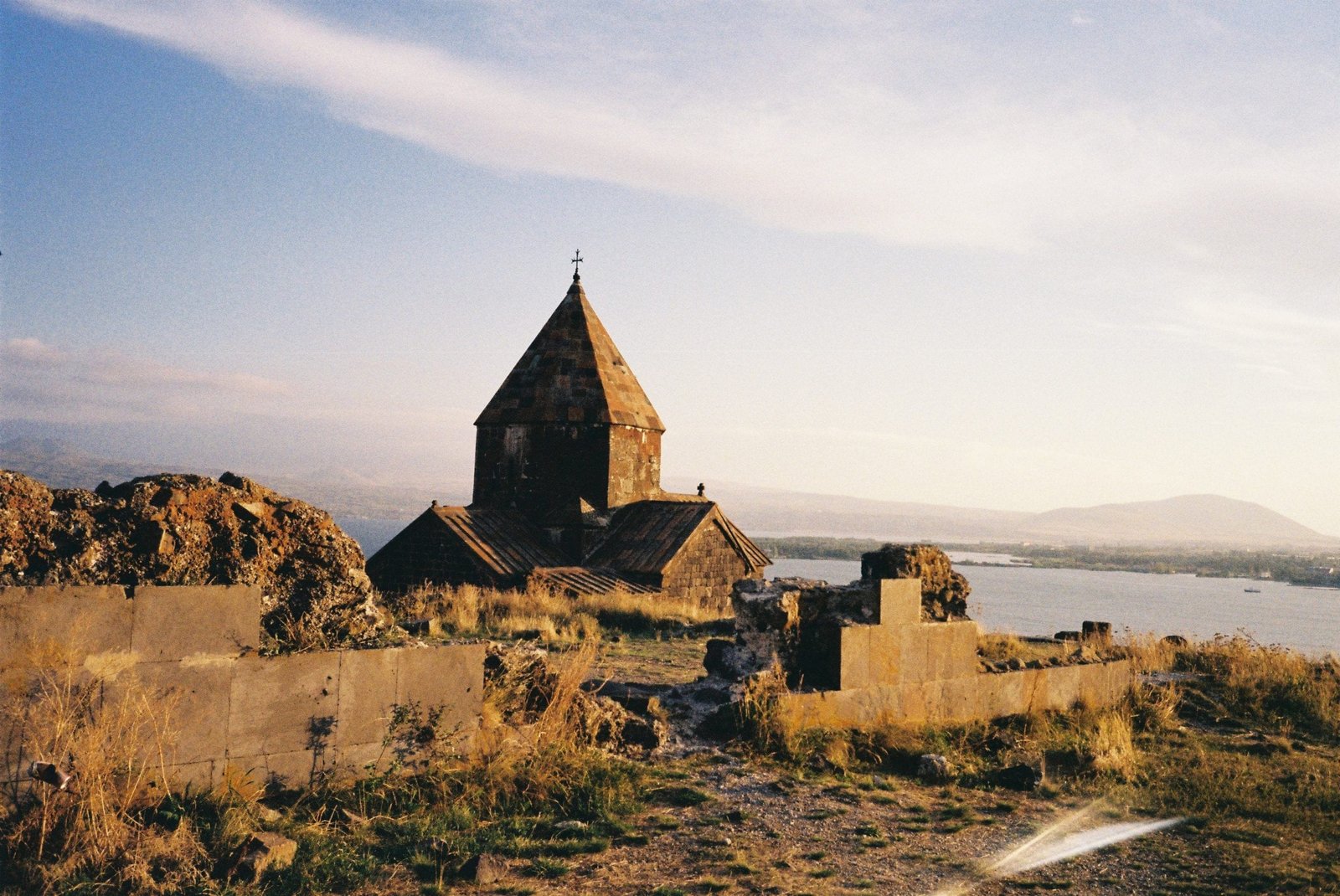 Sevanavank Monastery, situated on a peninsula of Lake Sevan in Armenia, is an iconic 9th-century religious complex. Originally built as a retreat for monks, this monastery features robust architecture with two medieval churches and panoramic views over the Caucasus's largest alpine lake. Sevanavank is a symbol of Armenian spirituality and a highlight for those seeking to combine history and nature.
During our visit we explore the ancient black-stone churches, enjoy the unrivalled views of Lake Sevan and immerse ourselves in the spiritual serenity of this unique place.
Route 32 km, 0 h 35 min
Sevanavank Monastery, situated on a peninsula of Lake Sevan in Armenia, is an iconic 9th-century religious complex. Originally built as a retreat for monks, this monastery features robust architecture with two medieval churches and panoramic views over the Caucasus's largest alpine lake. Sevanavank is a symbol of Armenian spirituality and a highlight for those seeking to combine history and nature.
During our visit we explore the ancient black-stone churches, enjoy the unrivalled views of Lake Sevan and immerse ourselves in the spiritual serenity of this unique place.
Route 32 km, 0 h 35 min
Diliján
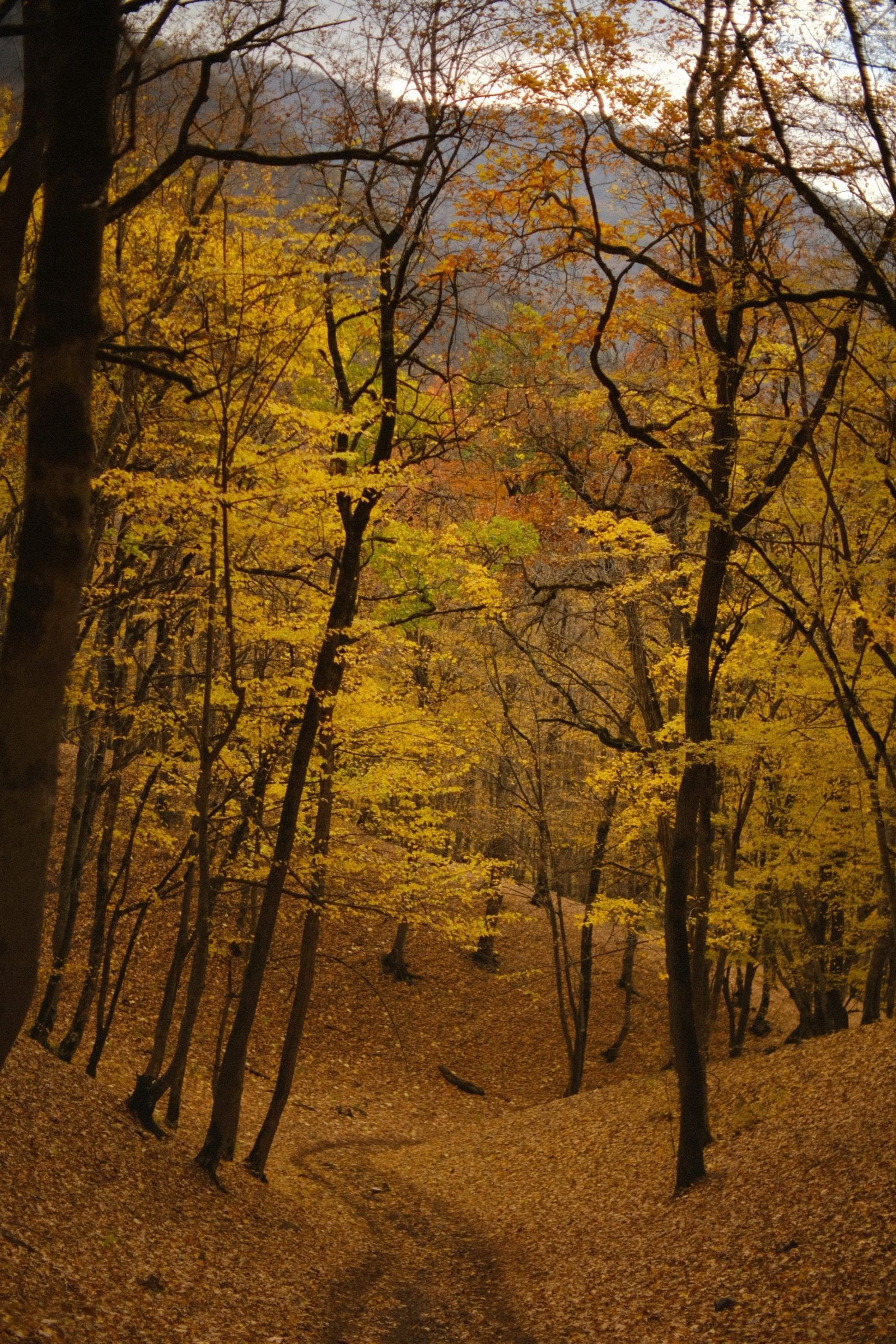 Known as the ""Little Switzerland of Armenia"", Diliján is a charming spa town in the Tavush province in northern Armenia. Surrounded by the dense forested mountains of Diliján National Park, covering more than 24,000 hectares of lush nature, this historic town is distinguished by its traditional Armenian architecture, with 19th-century wood and stone houses lining its winding streets. These carefully preserved buildings display the characteristic carved balconies and ornate windows that reflect the region's rich craft tradition.
The town has for centuries been an important cultural and healing centre, famous for its curative mineral waters and pure mountain air, attracting artists, composers and writers seeking inspiration. Diliján's unique microclimate — cool summers and mild winters — together with its renowned bicarbonate- and calcium-rich mineral springs, has made the town a favourite health-tourism destination since Soviet times.
During our stay, we stroll through the picturesque restored old town where every corner tells a story of traditional Armenia, sample the famous local mineral waters at historic fountains and venture along forest trails leading to centuries-old monasteries. The well-marked National Park paths offer routes for all levels, from gentle walks to challenging mountain hikes, letting us experience the perfect fusion of Armenian nature and culture. We also visit local craft workshops where master artisans continue practising traditional techniques passed down through generations.
Route 22 km, 0 h 25 min
Known as the ""Little Switzerland of Armenia"", Diliján is a charming spa town in the Tavush province in northern Armenia. Surrounded by the dense forested mountains of Diliján National Park, covering more than 24,000 hectares of lush nature, this historic town is distinguished by its traditional Armenian architecture, with 19th-century wood and stone houses lining its winding streets. These carefully preserved buildings display the characteristic carved balconies and ornate windows that reflect the region's rich craft tradition.
The town has for centuries been an important cultural and healing centre, famous for its curative mineral waters and pure mountain air, attracting artists, composers and writers seeking inspiration. Diliján's unique microclimate — cool summers and mild winters — together with its renowned bicarbonate- and calcium-rich mineral springs, has made the town a favourite health-tourism destination since Soviet times.
During our stay, we stroll through the picturesque restored old town where every corner tells a story of traditional Armenia, sample the famous local mineral waters at historic fountains and venture along forest trails leading to centuries-old monasteries. The well-marked National Park paths offer routes for all levels, from gentle walks to challenging mountain hikes, letting us experience the perfect fusion of Armenian nature and culture. We also visit local craft workshops where master artisans continue practising traditional techniques passed down through generations.
Route 22 km, 0 h 25 min
Goshavank
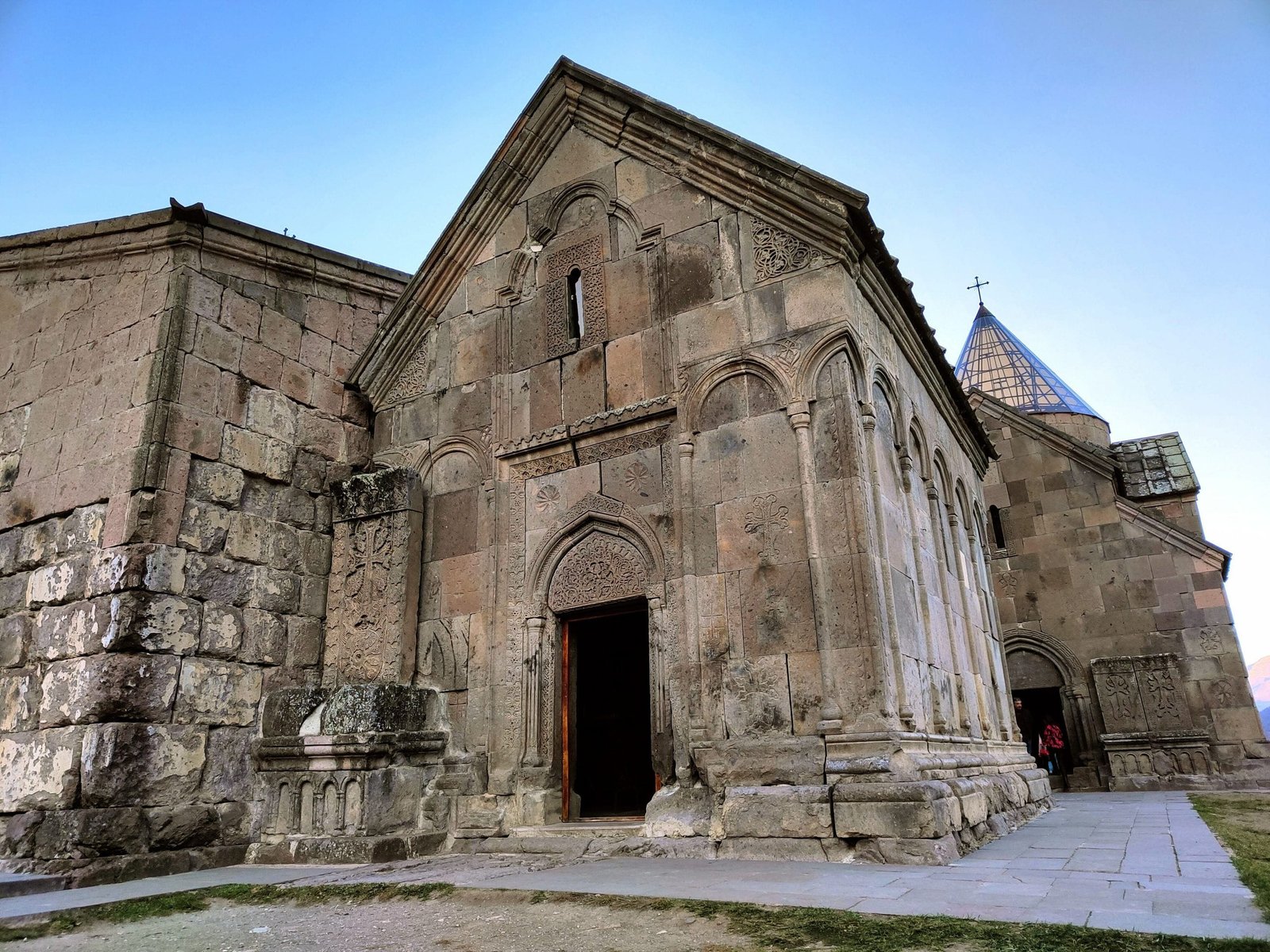 Goshavank, located in Armenia's picturesque Tavush region, is a 12th-century medieval monastery renowned for its elegant architecture and rich history. Founded by scholar Mkhitar Gosh, who also compiled Armenia's first civil and ecclesiastical code of laws, Goshavank is a symbol of the country's cultural and spiritual legacy. Surrounded by green hills and forests, the monastery is celebrated for its intricate khachkars (stone crosses) and tranquil atmosphere.
During our visit we explore its detailed sculptures, stroll through its peaceful surroundings and learn about the historical impact of this emblematic religious and educational centre.
Route 35 km, 3 h 25 min
Goshavank, located in Armenia's picturesque Tavush region, is a 12th-century medieval monastery renowned for its elegant architecture and rich history. Founded by scholar Mkhitar Gosh, who also compiled Armenia's first civil and ecclesiastical code of laws, Goshavank is a symbol of the country's cultural and spiritual legacy. Surrounded by green hills and forests, the monastery is celebrated for its intricate khachkars (stone crosses) and tranquil atmosphere.
During our visit we explore its detailed sculptures, stroll through its peaceful surroundings and learn about the historical impact of this emblematic religious and educational centre.
Route 35 km, 3 h 25 min
Day 11 – Tbilisi – Gori – Uplistsikhe – Akhaltsikhe
Total route – 248 km, 4 h 12 min After breakfast at the hotel, we begin our adventure. Planned visits: Route 89 km, 1 h 22 minStalin Museum
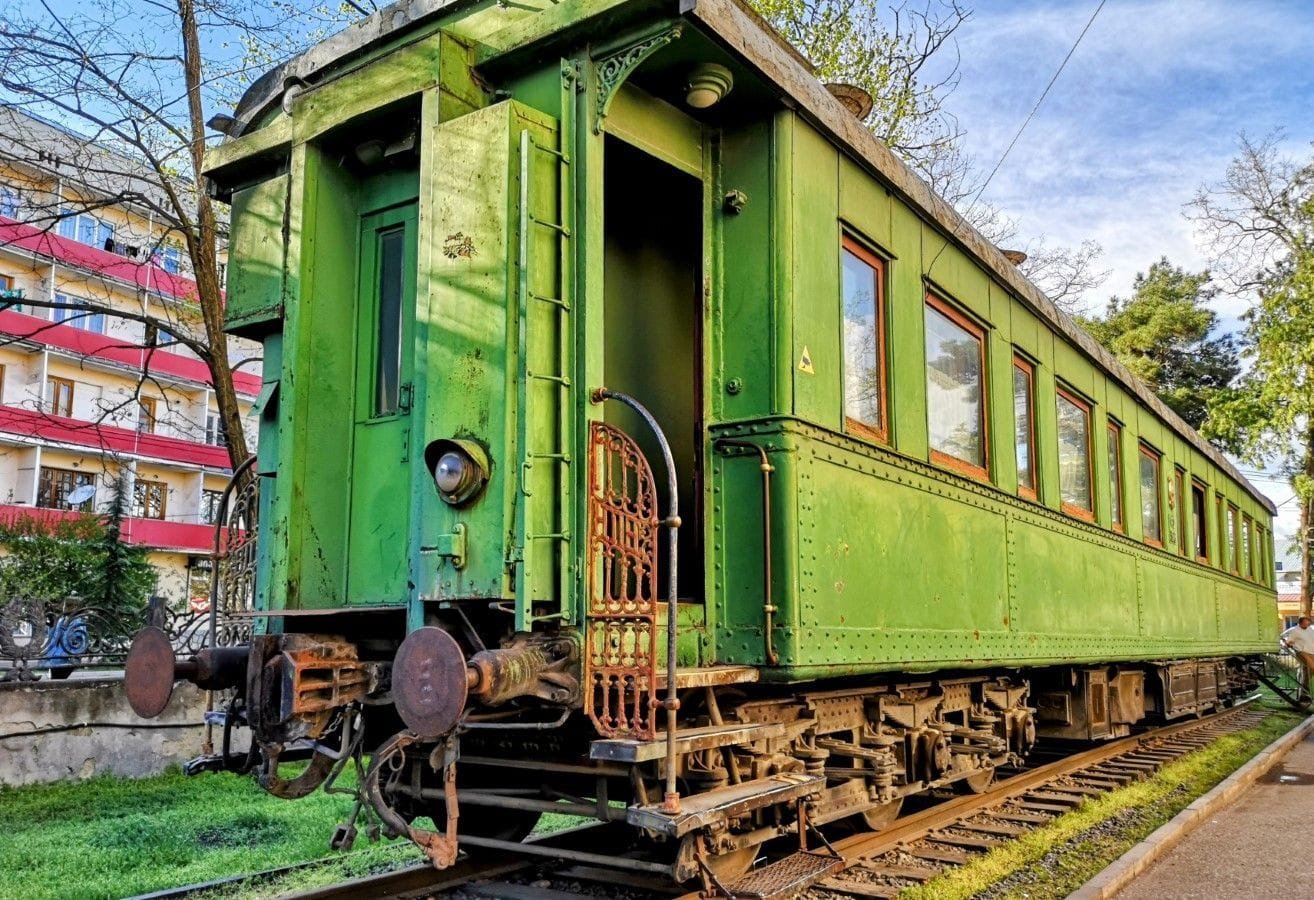 The Stalin Museum in Gori, birthplace of the controversial Soviet leader, is one of the last museums dedicated to Josef Stalin in the world. The complex includes the original birthplace, a Soviet palace-style building and Stalin's personal railway carriage. The exhibition holds an extensive collection of personal objects, photographs, historical documents and the original death mask of the dictator. During our visit, we explore the rooms documenting Stalin's life from his youth in Georgia to his Soviet leadership, examine his luxurious armoured railway carriage and reflect on the complex historical legacy he left in the region.
Uplistsikhe
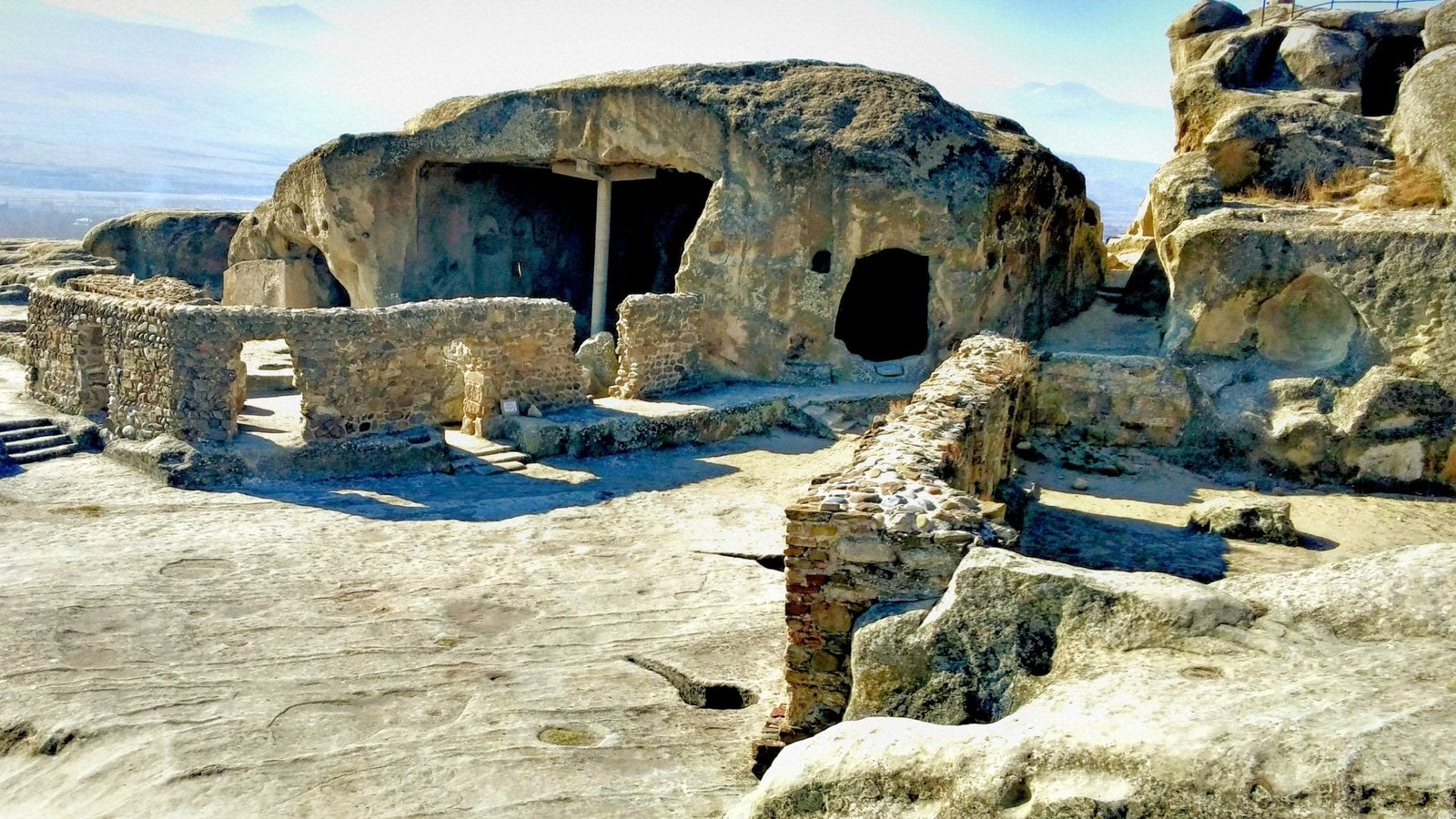 Located in the Kartli region of central Georgia, Uplistsikhe is an ancient rock-hewn cave city dating from the first millennium BC. This extraordinary archaeological complex, considered one of the oldest settlements in the Caucasus, was a major religious and commercial centre on the historic Silk Road. Its architectural structures include pagan temples, Christian basilicas and civic buildings reflecting the unique fusion of Christian and pagan styles. The city is notable for its street system, secret tunnels and an exceptionally well-preserved Roman-style theatre. During our visit we explore the ancient wine cellars, walk through rock-carved lanes and marvel at the panoramic views of the Mtkvari river from the top of this natural acropolis, transported through over 3,000 years of Caucasian history.
Day 12 – Akhaltsikhe – Vardzia – Khertvisi – Rabati – Kutaisi
Total route – 299 km, 5 h 45 min After breakfast at the hotel, we begin our adventure. Planned visits: Route 60 km, 1 h 20 minVardzia
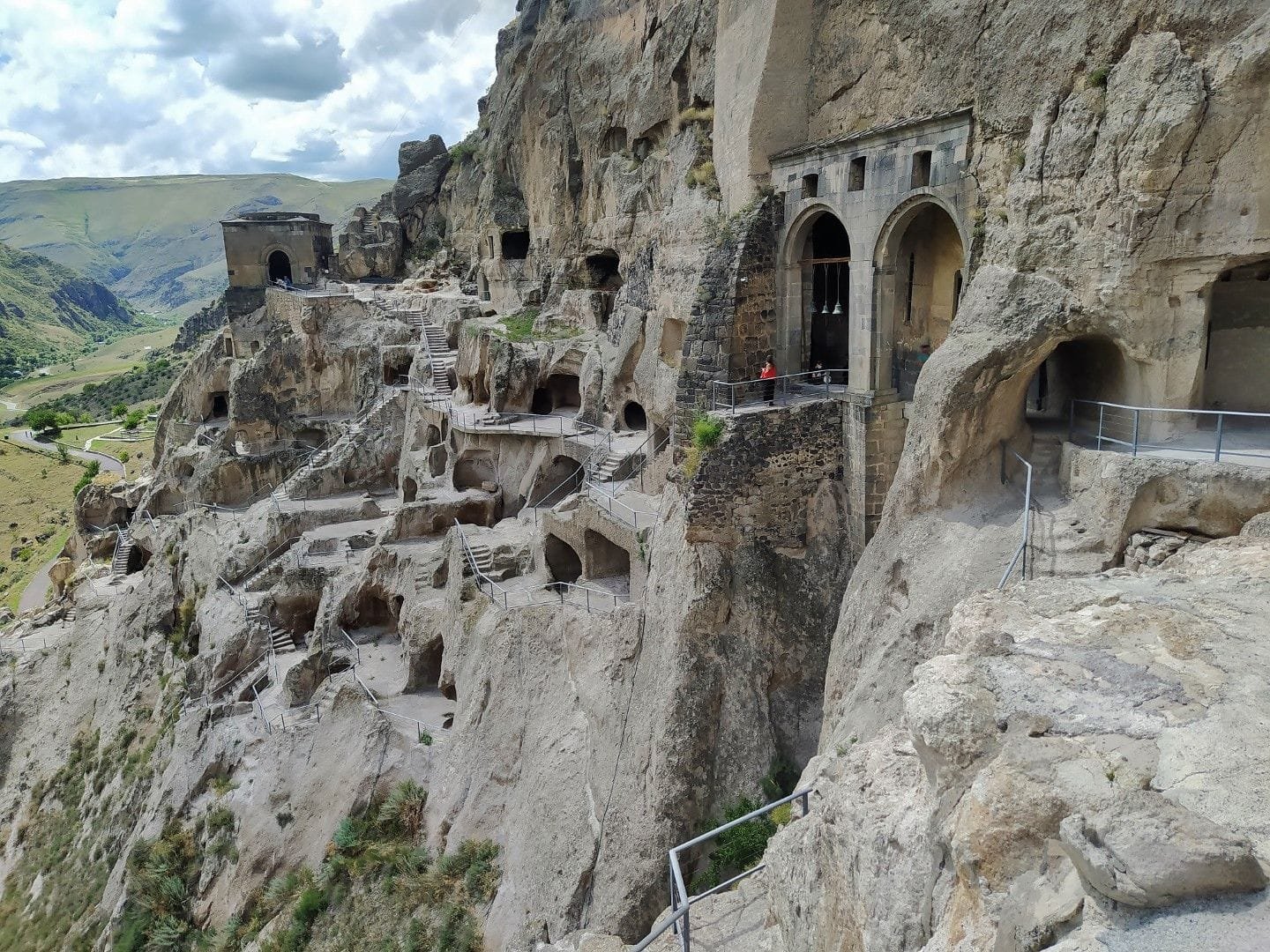 Carved into the vertical face of Mount Erusheli, Vardzia emerges as an impressive 12th-century cave monastery complex, a symbol of medieval Georgia's cultural peak during the reign of Queen Tamar. This monastic complex stretches 500 metres and reaches up to 19 storeys in height, housing more than 600 rooms including churches, wine cellars, libraries and an intricate system of tunnels and irrigation channels. The site is especially notable for the Church of the Dormition, which preserves exceptional 12th-century frescoes including a famous portrait of Queen Tamar. During our exploration, we walk through the secret tunnels and staircases connecting the different chambers, discover ancient wine cellars and marvel at the medieval frescoes that have survived earthquakes and centuries of history in this rock-carved architectural gem.
Route 16 km, 0 h 20 min
Carved into the vertical face of Mount Erusheli, Vardzia emerges as an impressive 12th-century cave monastery complex, a symbol of medieval Georgia's cultural peak during the reign of Queen Tamar. This monastic complex stretches 500 metres and reaches up to 19 storeys in height, housing more than 600 rooms including churches, wine cellars, libraries and an intricate system of tunnels and irrigation channels. The site is especially notable for the Church of the Dormition, which preserves exceptional 12th-century frescoes including a famous portrait of Queen Tamar. During our exploration, we walk through the secret tunnels and staircases connecting the different chambers, discover ancient wine cellars and marvel at the medieval frescoes that have survived earthquakes and centuries of history in this rock-carved architectural gem.
Route 16 km, 0 h 20 min
Khertvisi Fortress
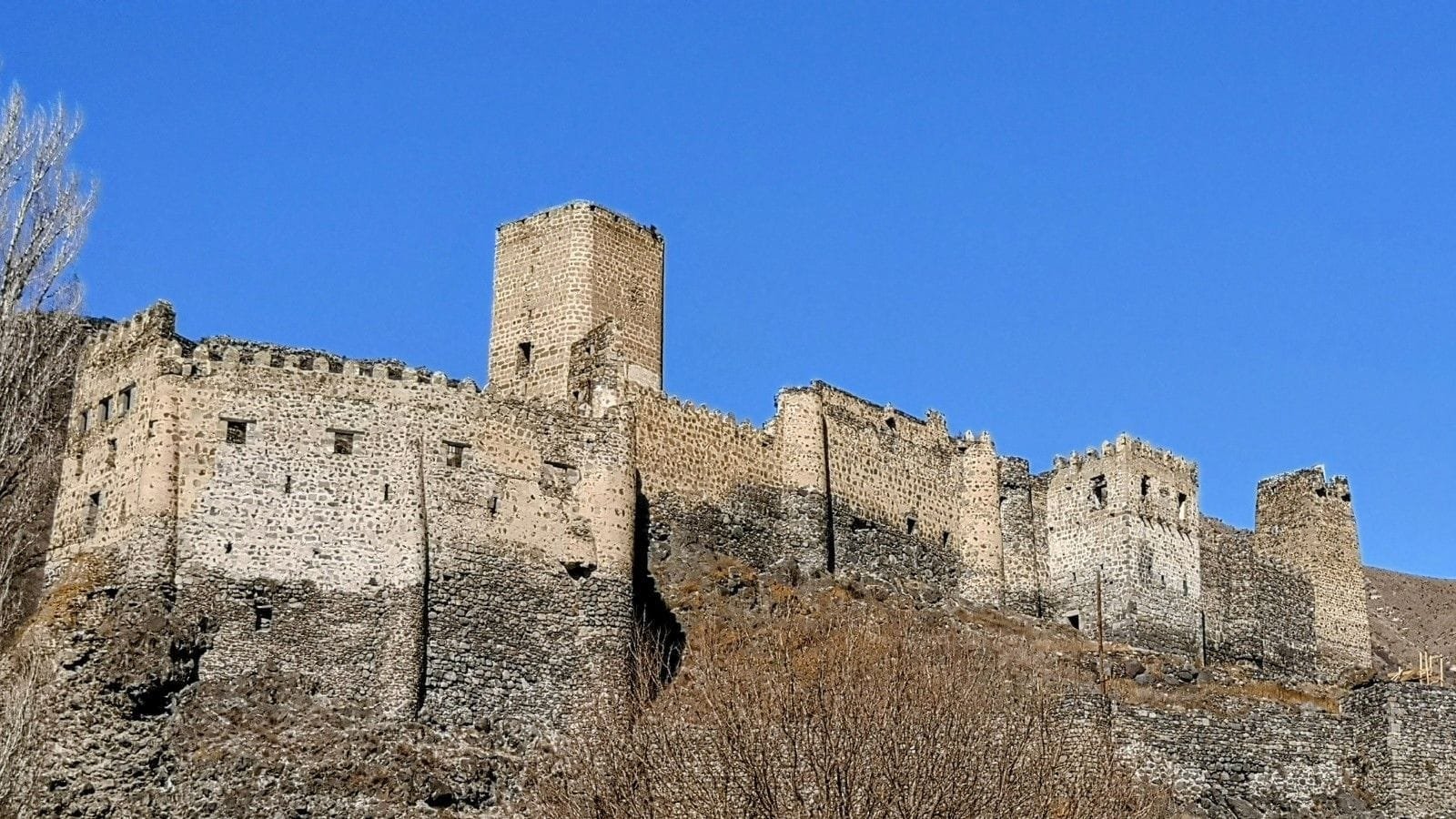 Khertvisi Fortress, set in the Samtskhe-Javakheti valley of Georgia, is one of the country's oldest fortresses, with origins dating to the 2nd century BC. Strategically positioned at the confluence of the Mtkvari and Paravani rivers, it was an important medieval defence point and a key stop on the Silk Road. Its imposing walls, towers and panoramic views of the valley make it a symbol of the region's historic resilience.
During our visit we explore the well-preserved structures, climb the towers to admire the landscape and immerse ourselves in the stories that make Khertvisi a place full of charm and history.
Route 47 km, 0 h 50 min
Khertvisi Fortress, set in the Samtskhe-Javakheti valley of Georgia, is one of the country's oldest fortresses, with origins dating to the 2nd century BC. Strategically positioned at the confluence of the Mtkvari and Paravani rivers, it was an important medieval defence point and a key stop on the Silk Road. Its imposing walls, towers and panoramic views of the valley make it a symbol of the region's historic resilience.
During our visit we explore the well-preserved structures, climb the towers to admire the landscape and immerse ourselves in the stories that make Khertvisi a place full of charm and history.
Route 47 km, 0 h 50 min
Akhaltsikhe Fortress (Rabat)
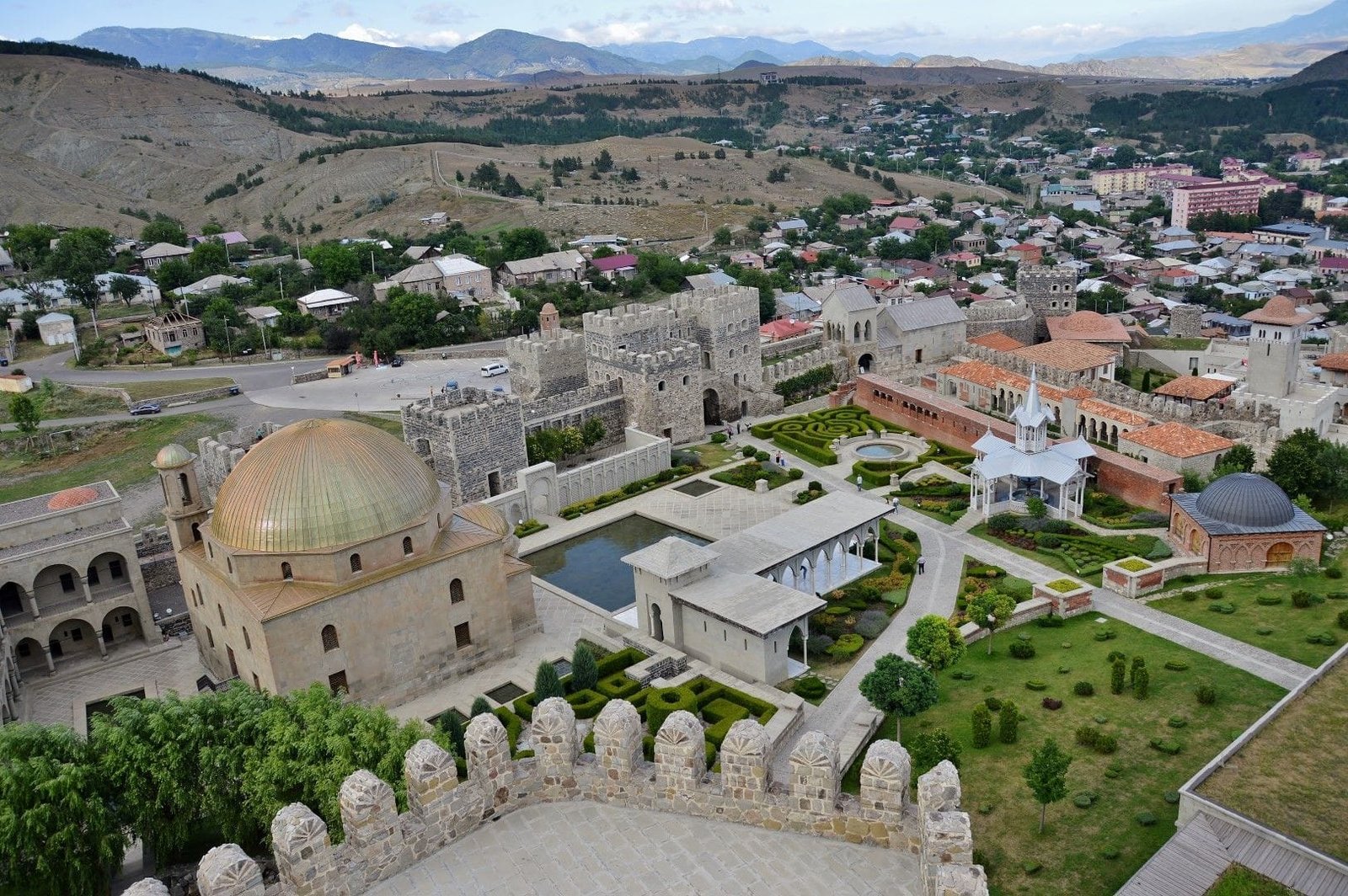 Akhaltsikhe Fortress (Rabat), located in the picturesque city of Akhaltsikhe, Georgia, is an impressive historical complex combining medieval architecture with unique cultural elements. Founded in the 9th century, this fortress has witnessed numerous civilisations, reflected in its churches, mosques and gardens. Its distinctive design blends Georgian, Ottoman and Persian influences, making it a symbol of the region's rich multicultural history. Restored in recent years, Rabat also houses a museum, a hotel and modern recreational areas.
During our visit we explore its imposing walls, stroll through the perfectly maintained gardens and discover the museum to learn the fascinating stories that shaped this unique destination.
Route 176 km, 3 h 15 min
Akhaltsikhe Fortress (Rabat), located in the picturesque city of Akhaltsikhe, Georgia, is an impressive historical complex combining medieval architecture with unique cultural elements. Founded in the 9th century, this fortress has witnessed numerous civilisations, reflected in its churches, mosques and gardens. Its distinctive design blends Georgian, Ottoman and Persian influences, making it a symbol of the region's rich multicultural history. Restored in recent years, Rabat also houses a museum, a hotel and modern recreational areas.
During our visit we explore its imposing walls, stroll through the perfectly maintained gardens and discover the museum to learn the fascinating stories that shaped this unique destination.
Route 176 km, 3 h 15 min
Day 13 – Kutaisi – Bagrati – Motsameta – Gelati – Nikortsminda – Kutaisi
#N/D #N/D After breakfast at the hotel, we begin our adventure. Planned visits: #N/D #N/D #N/D #N/D #N/D #N/D #N/D #N/D #N/D #N/D #N/DDay 14 – Kutaisi – Sataplia – Prometeus Cave – Kutaisi
Total route – 58 km, 1 h 26 min After breakfast at the hotel, we begin our adventure. Planned visits: Route 12 km, 0 h 20 minSataplia
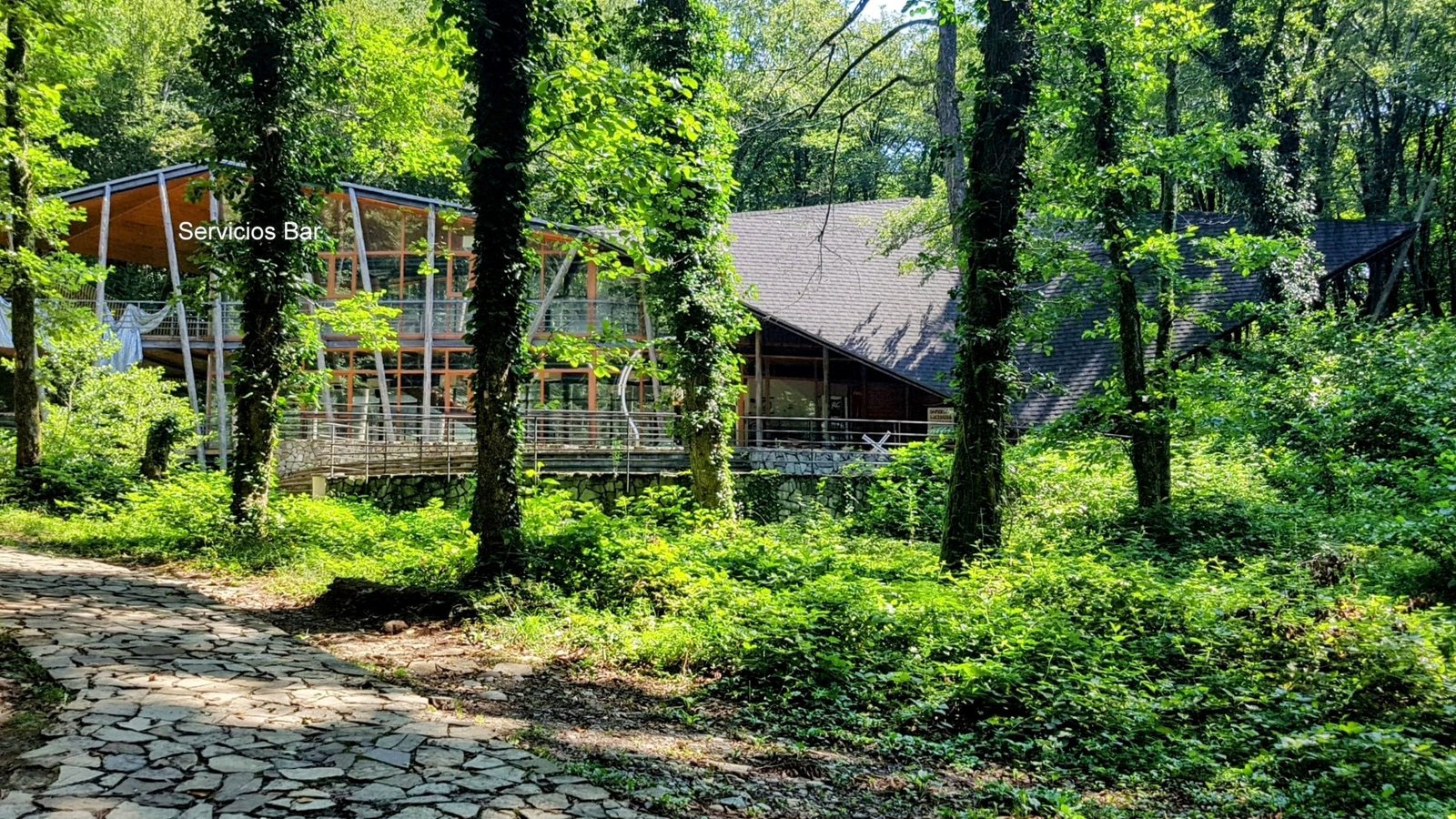 Located in Georgia's Imereti region, Sataplia Nature Reserve is an extraordinary natural park combining geological and palaeontological wonders. This unique site takes its name from the Georgian word for 'place of honey', after the ancient wild beehives in its limestone caves. The park houses one of the world's most important collections of dinosaur footprints, preserved in Upper Cretaceous rocks, alongside a spectacular karst cave system decorated with stalactites and stalagmites. Its glass viewing platform offers incomparable panoramic views of Kutaisi and the Caucasus mountains. During our adventure, we follow the tracks of theropod dinosaurs, explore the mysterious illuminated caverns and marvel at the views from the observation platform that seems to float above the forest.
Prometeus Cave
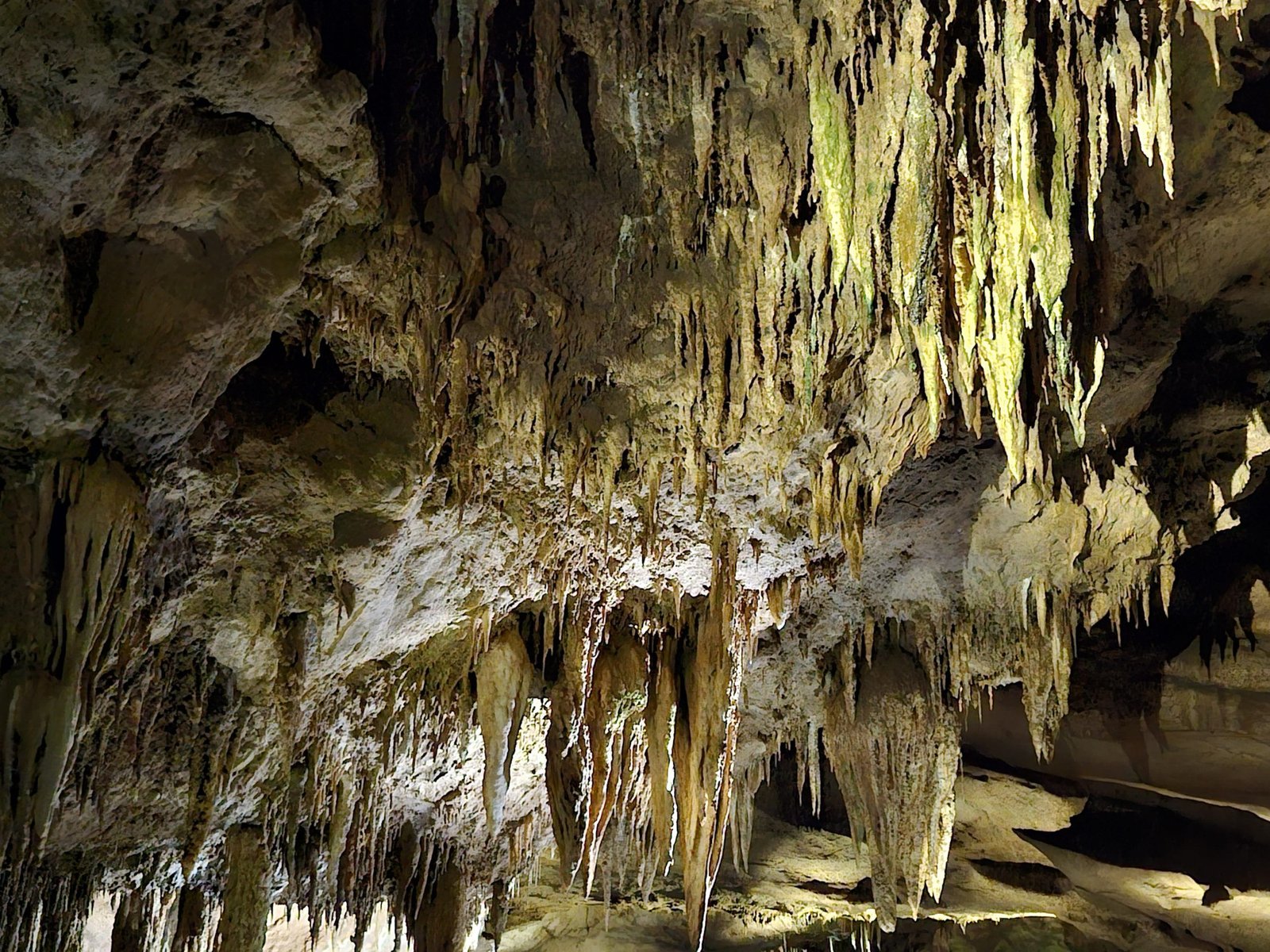 Prometeus Cave, located near Kutaisi in Georgia, is one of the country's most impressive and extensive caves, standing out as a major natural and tourist attraction. Discovered in 1984, this fascinating underground cavern offers a tour through spacious halls adorned with stalactites, stalagmites and spectacular rock formations that, thanks to careful lighting, create a magical and immersive atmosphere. In addition to the well-marked paths for exploring its impressive underground landscapes, visitors have the opportunity to enjoy a peaceful boat ride along the underground river that flows through the cave, providing a unique experience that highlights the natural and geological richness of the region. During our visit, we walk through its illuminated passages, marvelling at formations sculpted by nature over centuries, and enjoy a boat ride that lets us immerse ourselves in the serenity and hidden beauty of this underground world, making this journey an unforgettable experience.
Day 15 – Kutaisi – Okatse – Martvili – Batumi
Total route – 241 km, 4 h 40 min After breakfast at the hotel, we begin our adventure. Planned visits: Route 50 km, 1 h 5 minOkatse Canyon
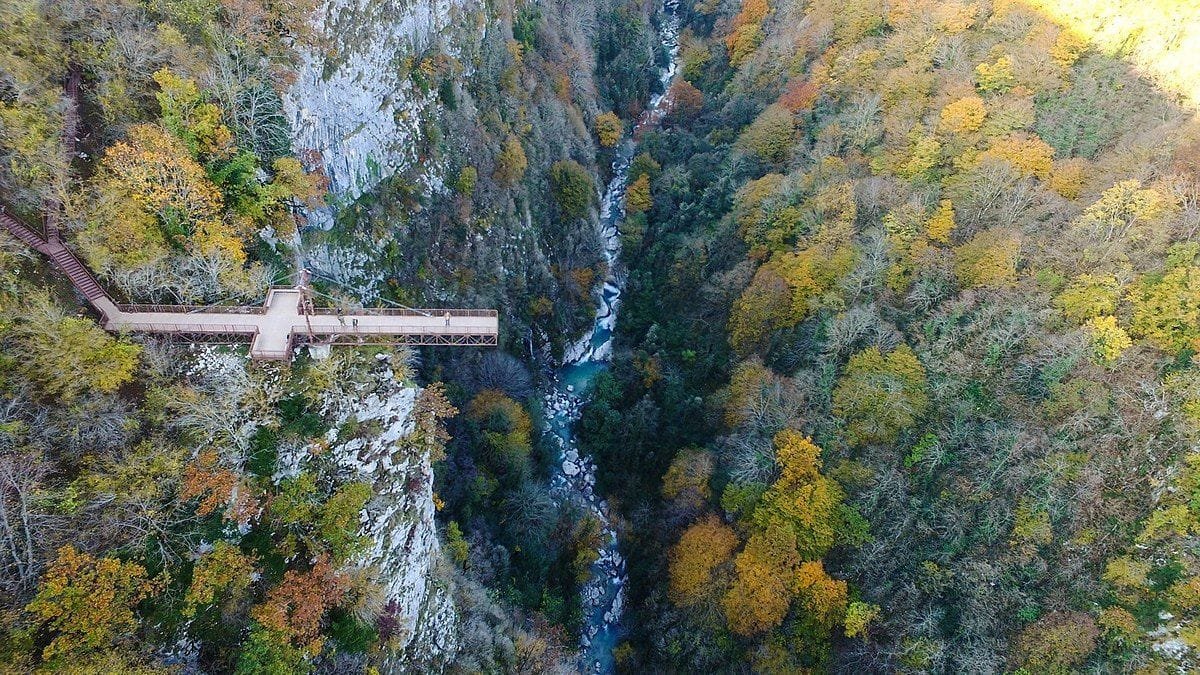 Okatse Canyon, located in Georgia's Imereti region, is a natural wonder offering spectacular views of a deep gorge surrounded by lush vegetation. This impressive canyon, with a 700-metre suspended walkway, allows visitors to walk at height and enjoy panoramic views of waterfalls and the river flowing below. It is an ideal destination for nature and adventure lovers.
During our visit we cross the suspended walkway, admire the scale of the canyon and enjoy the unique connection with nature that this spectacular place offers.
Okatse Canyon, located in Georgia's Imereti region, is a natural wonder offering spectacular views of a deep gorge surrounded by lush vegetation. This impressive canyon, with a 700-metre suspended walkway, allows visitors to walk at height and enjoy panoramic views of waterfalls and the river flowing below. It is an ideal destination for nature and adventure lovers.
During our visit we cross the suspended walkway, admire the scale of the canyon and enjoy the unique connection with nature that this spectacular place offers.
Martvili Canyon
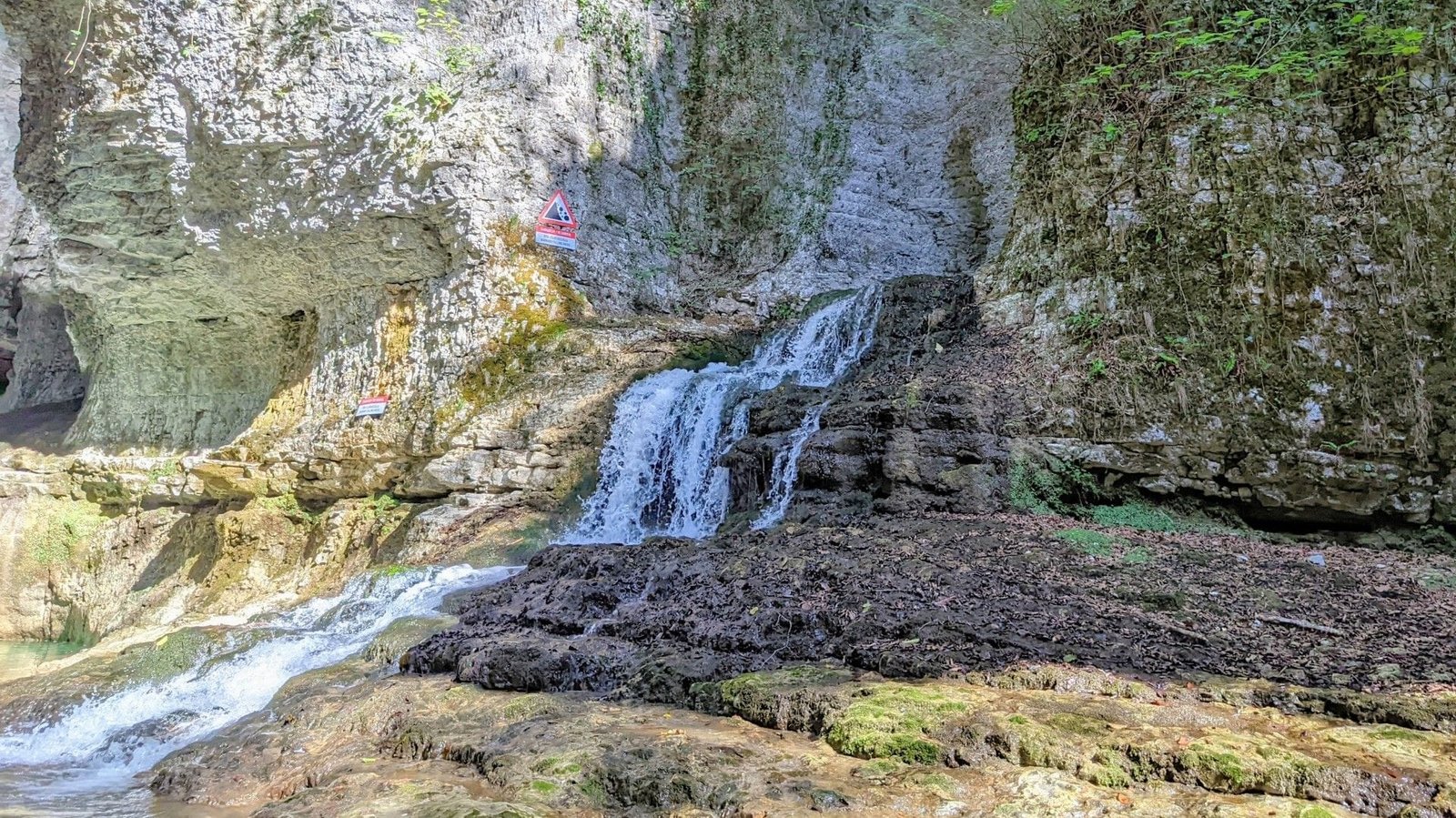 Martvili Canyon, located in Georgia's Samegrelo region, is a natural wonder known for its turquoise waters and impressive waterfalls. This canyon, formed by thousands of years of erosion, offers a dream setting surrounded by lush vegetation. Visitors can enjoy boat rides along the Abasha river, explore scenic trails and marvel at the unique rock formations and local legends associated with the place.
During our visit we sail through its crystal-clear waters, walk along its nature-lined trails and enjoy the serenity and incomparable beauty of Martvili Canyon.
Martvili Canyon, located in Georgia's Samegrelo region, is a natural wonder known for its turquoise waters and impressive waterfalls. This canyon, formed by thousands of years of erosion, offers a dream setting surrounded by lush vegetation. Visitors can enjoy boat rides along the Abasha river, explore scenic trails and marvel at the unique rock formations and local legends associated with the place.
During our visit we sail through its crystal-clear waters, walk along its nature-lined trails and enjoy the serenity and incomparable beauty of Martvili Canyon.
Day 16 – Batumi and surroundings
Total route – 27 km, 0 h 50 min After breakfast at the hotel, we begin our adventure. Planned visits: Route 6 km, 0 h 15 minBatumi Ethnographic Museum
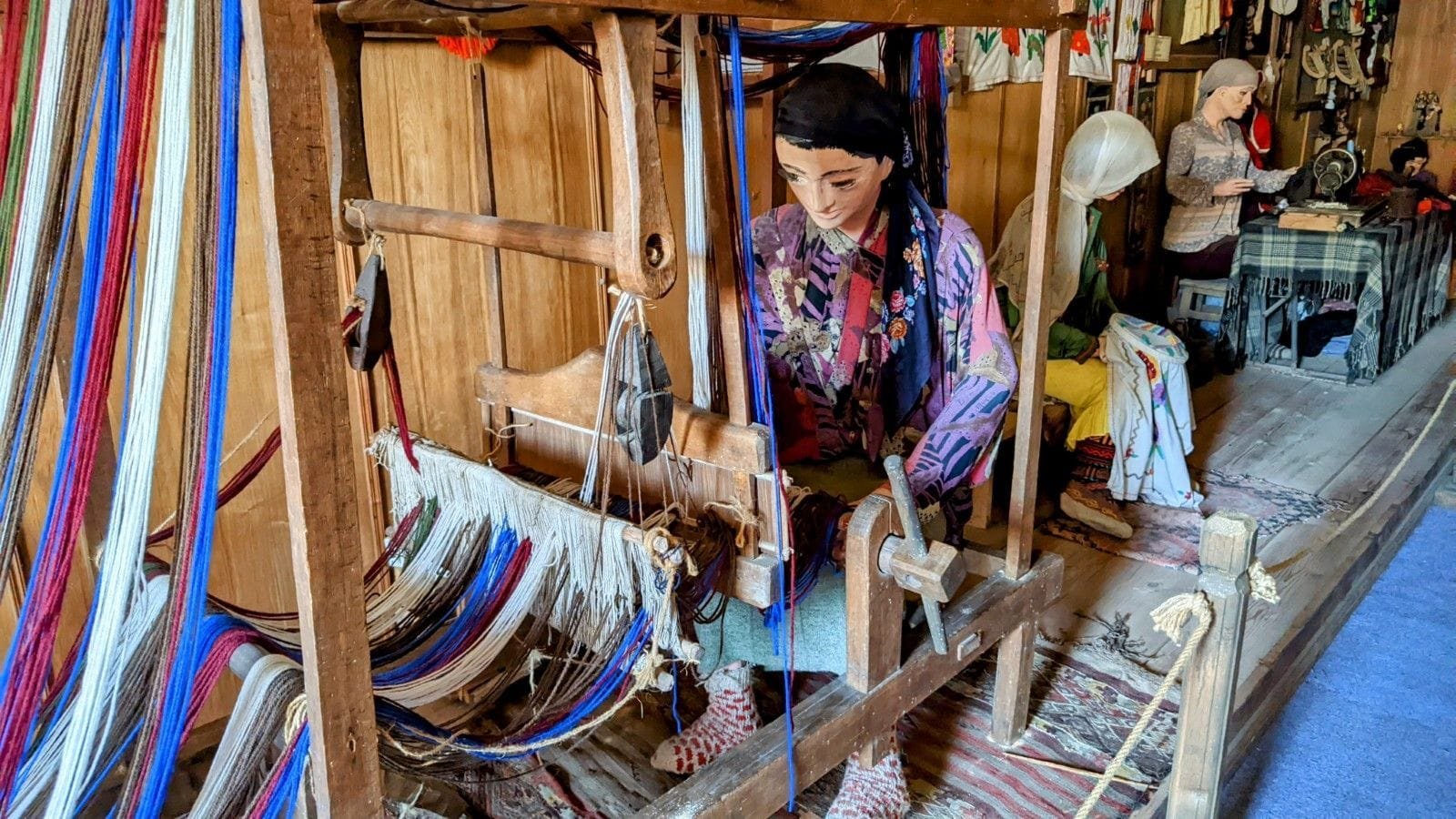 The Borjgalo Ethnographic Museum, located in Batumi, Georgia, is a fascinating space celebrating Georgian culture and traditions. Created by sculptor Kemal Turmanidze, this museum offers a unique collection of wooden sculptures and interactive displays representing the daily life, traditional crafts and customs of the country's various regions. Set in a welcoming atmosphere, Borjgalo is ideal for discovering the essence of Georgian life.
During our visit we explore the detailed sculptures, learn about Georgia's ancestral traditions and immerse ourselves in the cultural richness that makes this museum a unique place.
The Borjgalo Ethnographic Museum, located in Batumi, Georgia, is a fascinating space celebrating Georgian culture and traditions. Created by sculptor Kemal Turmanidze, this museum offers a unique collection of wooden sculptures and interactive displays representing the daily life, traditional crafts and customs of the country's various regions. Set in a welcoming atmosphere, Borjgalo is ideal for discovering the essence of Georgian life.
During our visit we explore the detailed sculptures, learn about Georgia's ancestral traditions and immerse ourselves in the cultural richness that makes this museum a unique place.
Gonio Fortress
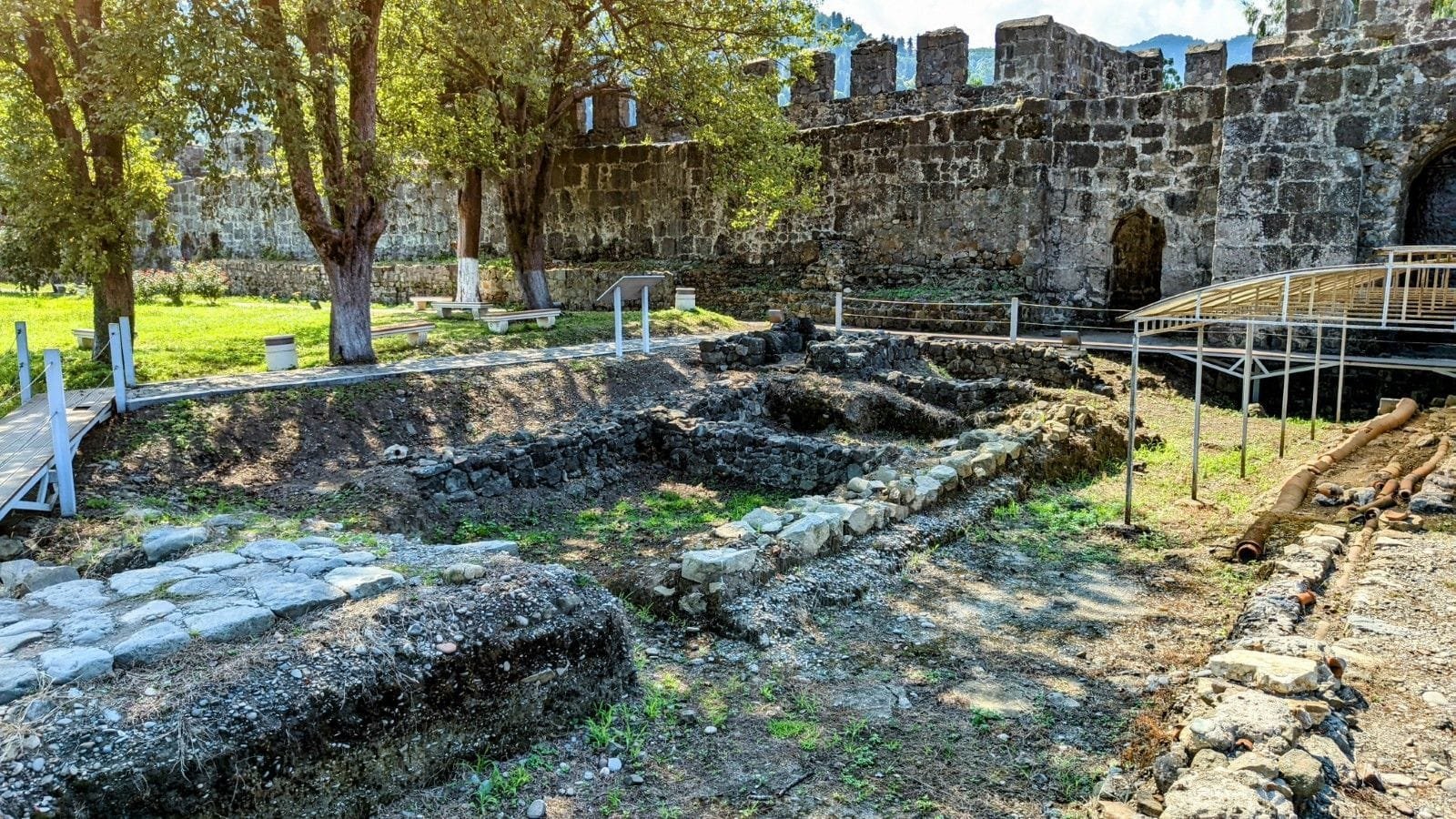 Gonio Fortress, located near the Black Sea coast a few kilometres from Batumi in Georgia, is a historically significant monument. Built in the Roman era, this fortification dates from the 1st century AD and is considered one of the oldest archaeological sites in the country. Famous for its defensive design and its connection to the Silk Road, Gonio also holds legends related to the tomb of the Apostle Matthew, blending history and myth.
During our visit we walk along its ancient walls, explore the archaeological museum and discover the mysteries and legends surrounding this fascinating destination on the Black Sea.
Gonio Fortress, located near the Black Sea coast a few kilometres from Batumi in Georgia, is a historically significant monument. Built in the Roman era, this fortification dates from the 1st century AD and is considered one of the oldest archaeological sites in the country. Famous for its defensive design and its connection to the Silk Road, Gonio also holds legends related to the tomb of the Apostle Matthew, blending history and myth.
During our visit we walk along its ancient walls, explore the archaeological museum and discover the mysteries and legends surrounding this fascinating destination on the Black Sea.


