Five days in each country and a single border. Georgia runs from Kakheti to the mountains: after Tbilisi on foot, Alaverdi, Nekresi and the tasting at Khareba with a night in Telavi, the crossing to the Military Highway up to the Gergeti church under Kazbek with a night in Gudauri, and the descent via Uplistsikhe, Svetitskhoveli and Jvari to the capital. On the sixth day you cross on foot at Sadakhlo and drop down to Yerevan through the Debed canyon, with Haghpat and Saghmosavank.
Armenia is done from a single hotel: the pink city of Yerevan with Garni and Geghard, the morning of Echmiadzin and Zvartnots, and Lake Sevan with the monasteries of Goshavank and Haghartsin among the forests of Dilijan. Transfer to Zvartnots airport on the tenth. Four hotels and two long days, the mountain one and the border one. Between November and April the Jvari pass can close and the order is adjusted at no cost.
Itinerary
Day 1 - Transfer from Tbilisi airport to the capital
Total road of the day - 18KM 0 Hours and 25 Minutes Arrival. Someone from the team is waiting at the airport with a sign; the rest of the day is yours. Road 18KM 0 Hours and 25 MinutesDay 2 - Tbilisi - Guided tour in Spanish
No driving On today's programme, Rustaveli Avenue, Metekhi Square, Narikala Fortress, Abanotubani and Anchiskhati.Rustaveli Avenue
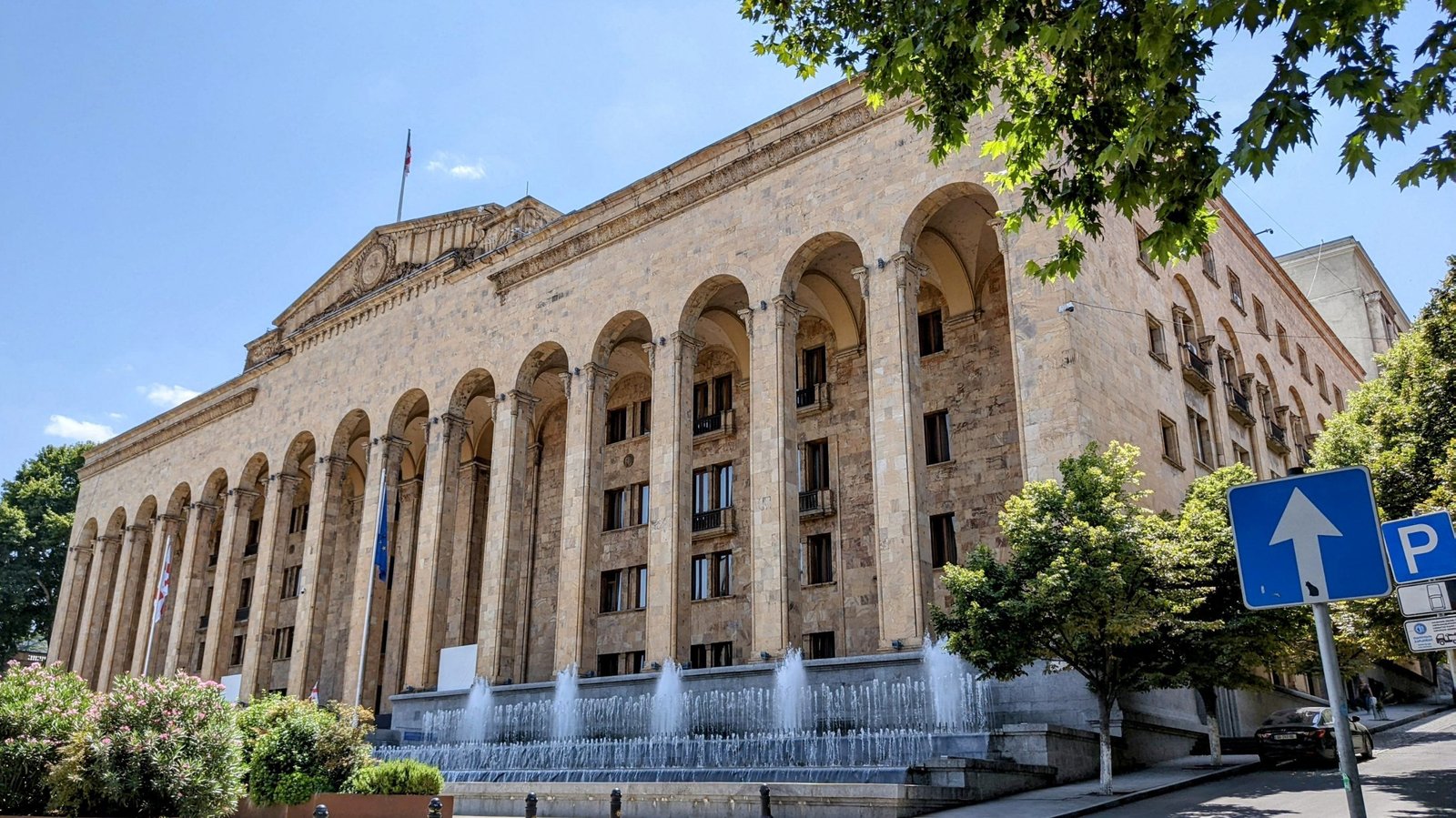 A kilometre and a half of plane trees between Freedom Square and Rustaveli Square. This is the street where Tbilisi shows off: the Parliament, the Moorish-looking Opera House of 1896, the Rustaveli Theatre, the Kashueti church, the National Museum and the grand hotels of the early 20th century. It is named after Shota Rustaveli, the 12th-century poet who wrote "The Knight in the Panther's Skin", the book every Georgian can quote.
It takes a good half hour on foot, or two metro stops if the heat is on. In front of the Parliament there is a plaque worth stopping for: on 9 April 1989 the Soviet army broke up a demonstration here and twenty-one people died, almost all of them women. That day still weighs on the politics of the country.
Metekhi Square
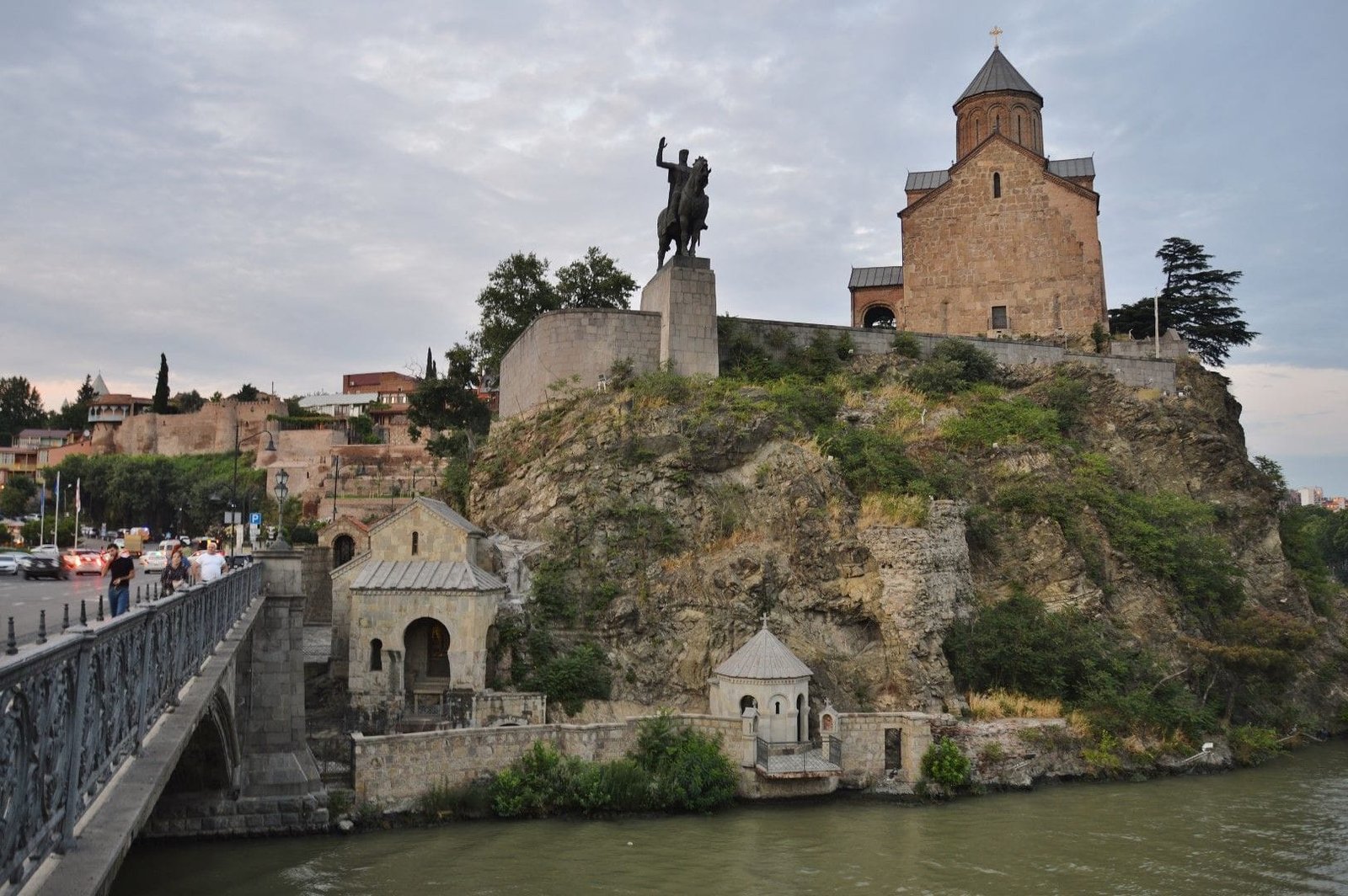 The king on horseback looking over the city from the cliff is Vakhtang Gorgasali, the founder of Tbilisi according to tradition; the statue dates from 1967. Next to him, the church of Metekhi, from the late 13th century, built by Demetre II on top of another from the 5th. The royal palace stood here for centuries, and in the 19th century and Soviet times the building was a prison: Gorky did time in it. Then it was a theatre, and in 1988 it became a church again.
We come here for the view, the best of the lower town: the sulphur baths right below, Narikala opposite and the river running between the two. It is a fifteen-minute stop that almost always runs longer because of the photos.
Narikala Fortress
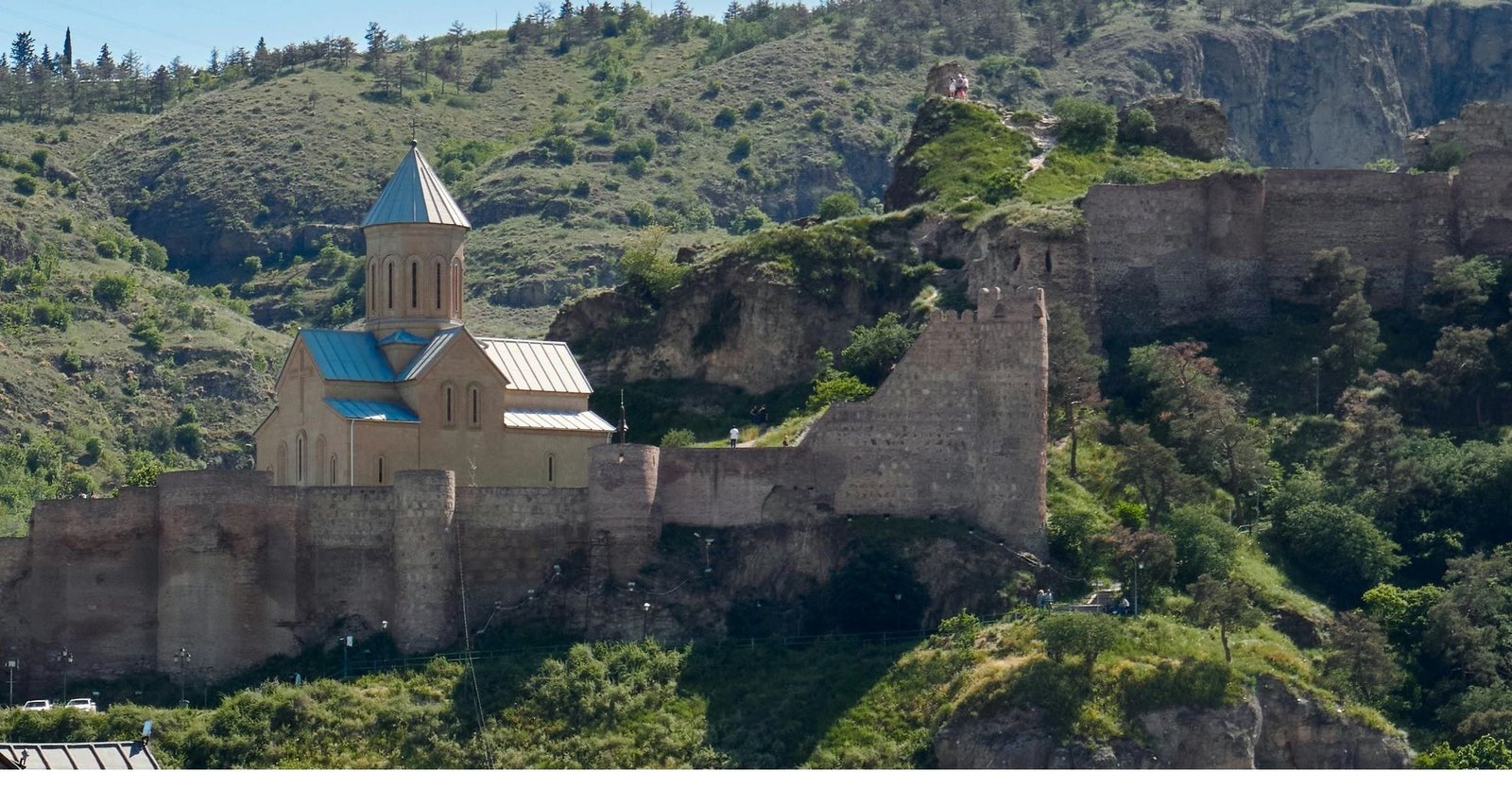 We take the cable car that leaves from Rike Park and crosses the river in two minutes; it costs the same as a metro ticket and is paid with the same card. At the top is Narikala, or what is left of it: the Persians founded it in the 4th century, the Arabs enlarged it in the 8th and the Georgians in the 12th, and in 1827 an explosion of the gunpowder store took out a good part of the walls. The church of St Nicholas inside dates from 1997, on medieval foundations.
The reason to come up is not the stones but the view: the whole old town, the domes of the baths, the river and Metekhi opposite. Careful, the walls have no railings and the rock is polished by so many feet. From here we walk down through the Betlemi quarter to the baths, passing the Mother of Georgia on the way, the aluminium statue of 1958 that watches over the city with a cup in one hand and a sword in the other.
Abanotubani
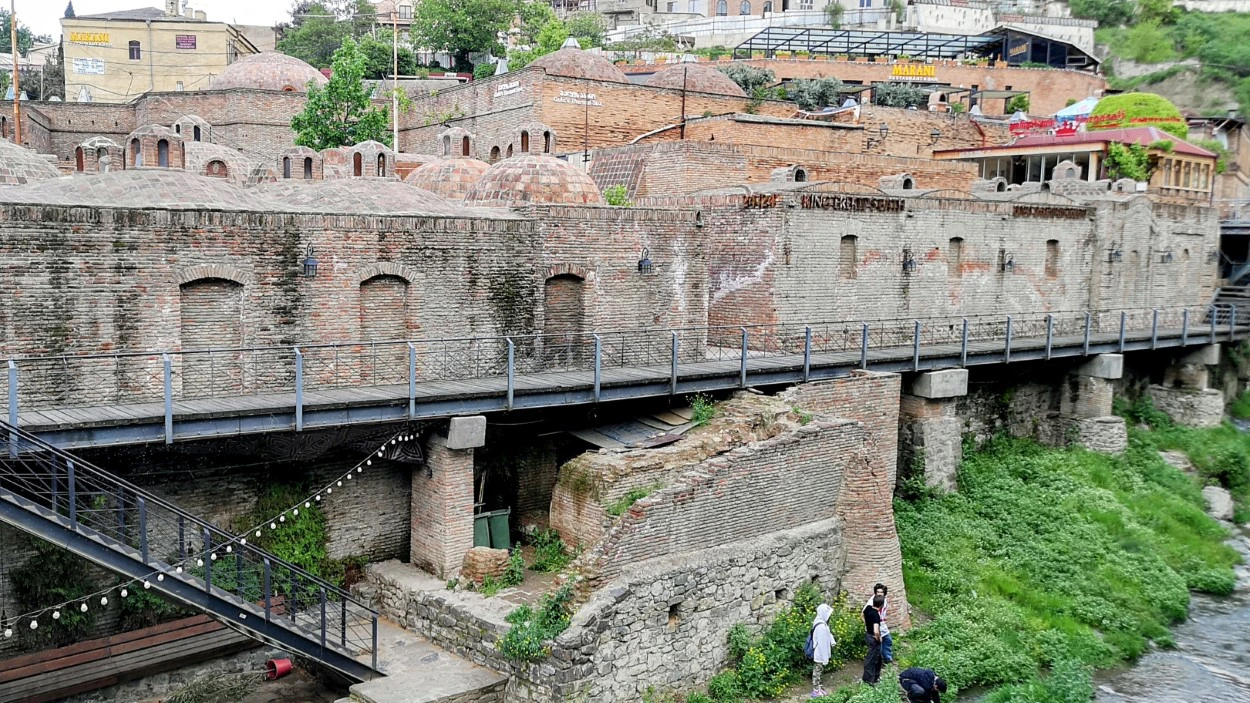 Tbilisi means "warm place", and the warmth comes from here. Abanotubani is the sulphur bath district, on the right bank of the Mtkvari just below Narikala: brick domes at ground level with the baths underneath, and water that comes up on its own at 37 to 40 degrees and smells of eggs. Legend has it that King Vakhtang Gorgasali founded the city in the 5th century after seeing a wounded pheasant healed in these waters. Pushkin bathed here in 1829 and wrote that he had never seen anything like it.
You can stroll and look, but what is worth it is going in: a private room with a hot-water pool and, if you like, a scrub with a coarse mitt that leaves you like new. Booking is needed in high season, and you bring swimwear and a towel or rent them. The blue-tiled façade belongs to the Orbeliani bath; the others are plainer outside.
Anchiskhati
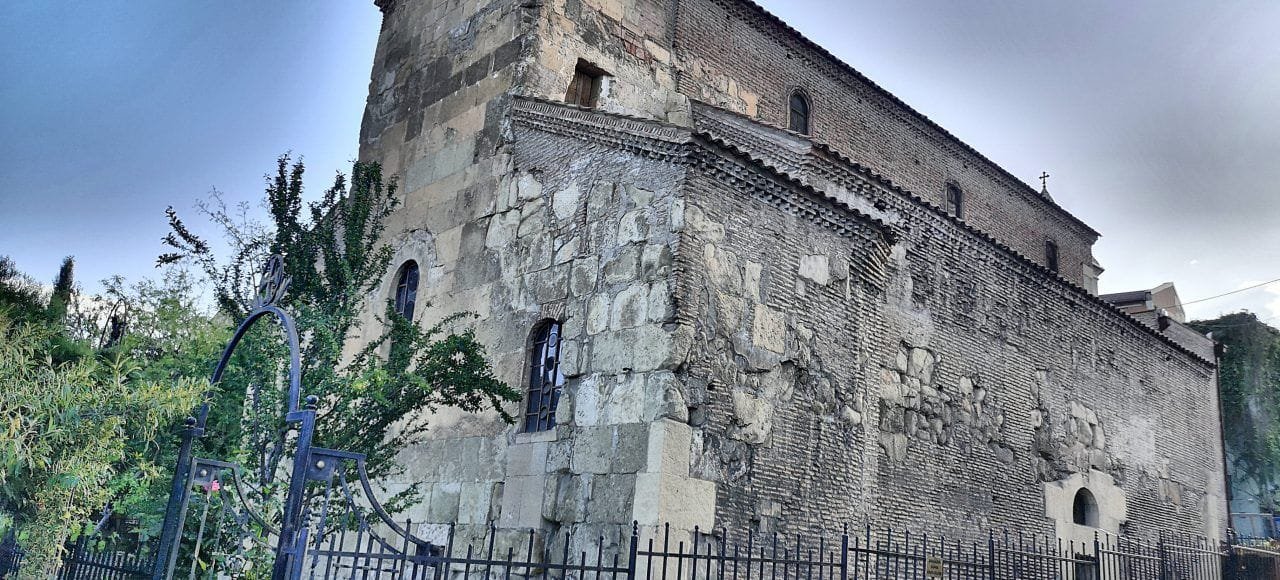 It is the oldest church still standing in Tbilisi, and it does not look it: a small three-nave basilica of plain stone, tucked into a street of the old town. King Dachi, son of Vakhtang Gorgasali, built it around the year 530. The name comes from the Christ icon of Ancha, which arrived here in 1664 from an area that is now Turkey and is now kept in the Art Museum. The brick bell tower of 1675 is what you see from the street.
If it falls on a Sunday morning, we go in during the liturgy: the Anchiskhati choir sings Georgian polyphony the way it was sung centuries ago, and it is one of the things people remember most from the trip. On other days it is almost empty and takes ten minutes. There are headscarves at the door for women.
Day 3 - Tbilisi - Alaverdi - Nekresi - Kvareli - Telavi
Total road of the day - 191KM 3 Hours and 43 Minutes In the morning, Alaverdi Monastery; in the afternoon, Nekresi Monastery and Khareba Winery. 191 km in all. Road 107KM 2 Hours and 12 MinutesAlaverdi Monastery
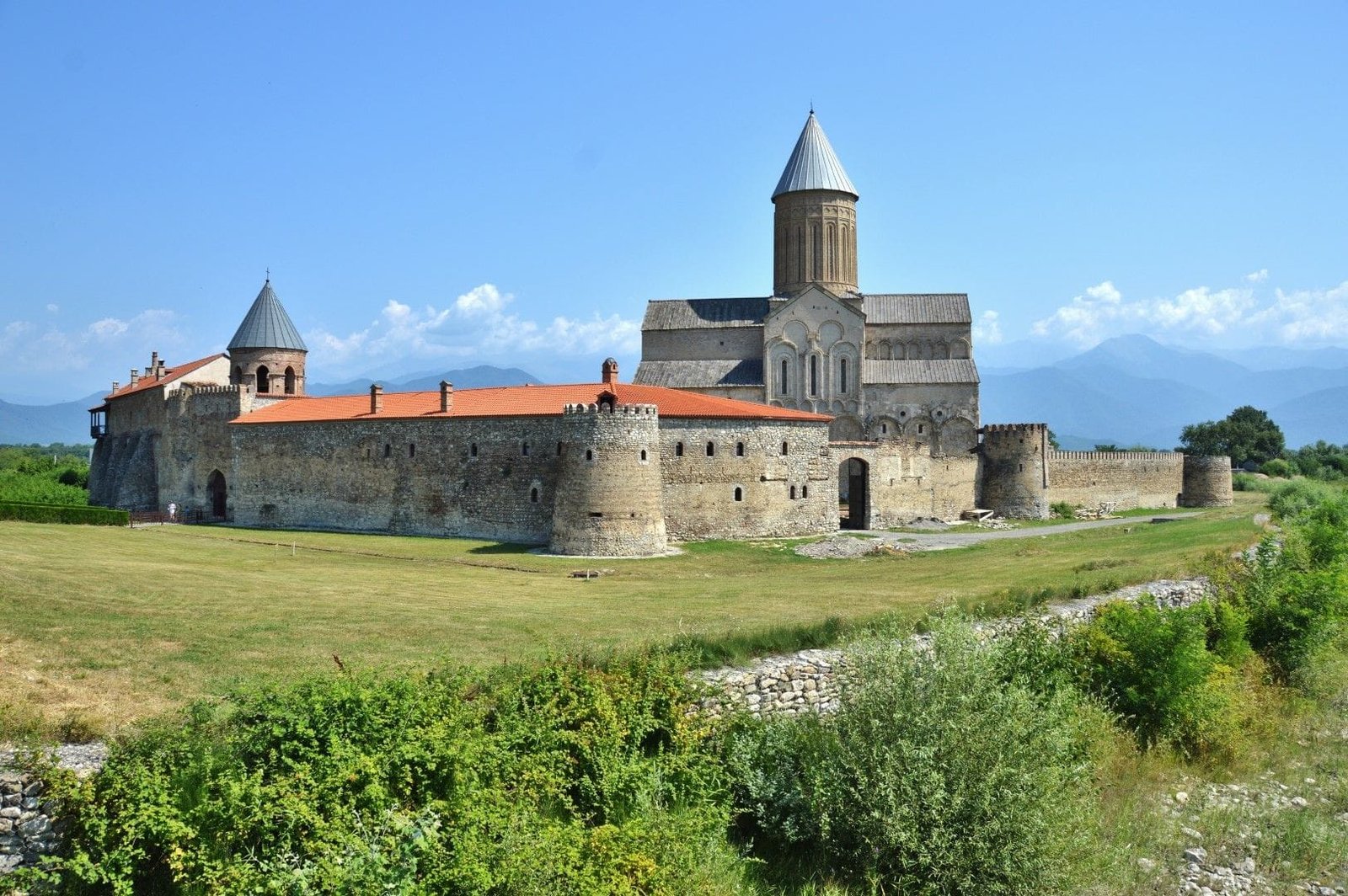 Alaverdi cathedral can be seen from far off across the Kakheti plain: 50 metres high, the second tallest church in Georgia and for almost a thousand years the tallest. Kvirike III built it in the early 11th century on the monastery founded in the 6th by Joseph of Alaverdi, one of the thirteen Assyrian fathers who brought monastic life to the country. Inside there are frescoes from the 11th to the 15th century, and photographing them is forbidden.
The monks have made wine in qvevri since 2006, reviving a tradition that goes back centuries here, and in September the Alaverdoba festival brings half the region together in the meadow outside. A 40-minute visit; headscarves for women and, if you are in shorts, there are skirts to borrow at the door.
Road 34KM 0 Hours and 36 Minutes
Nekresi Monastery
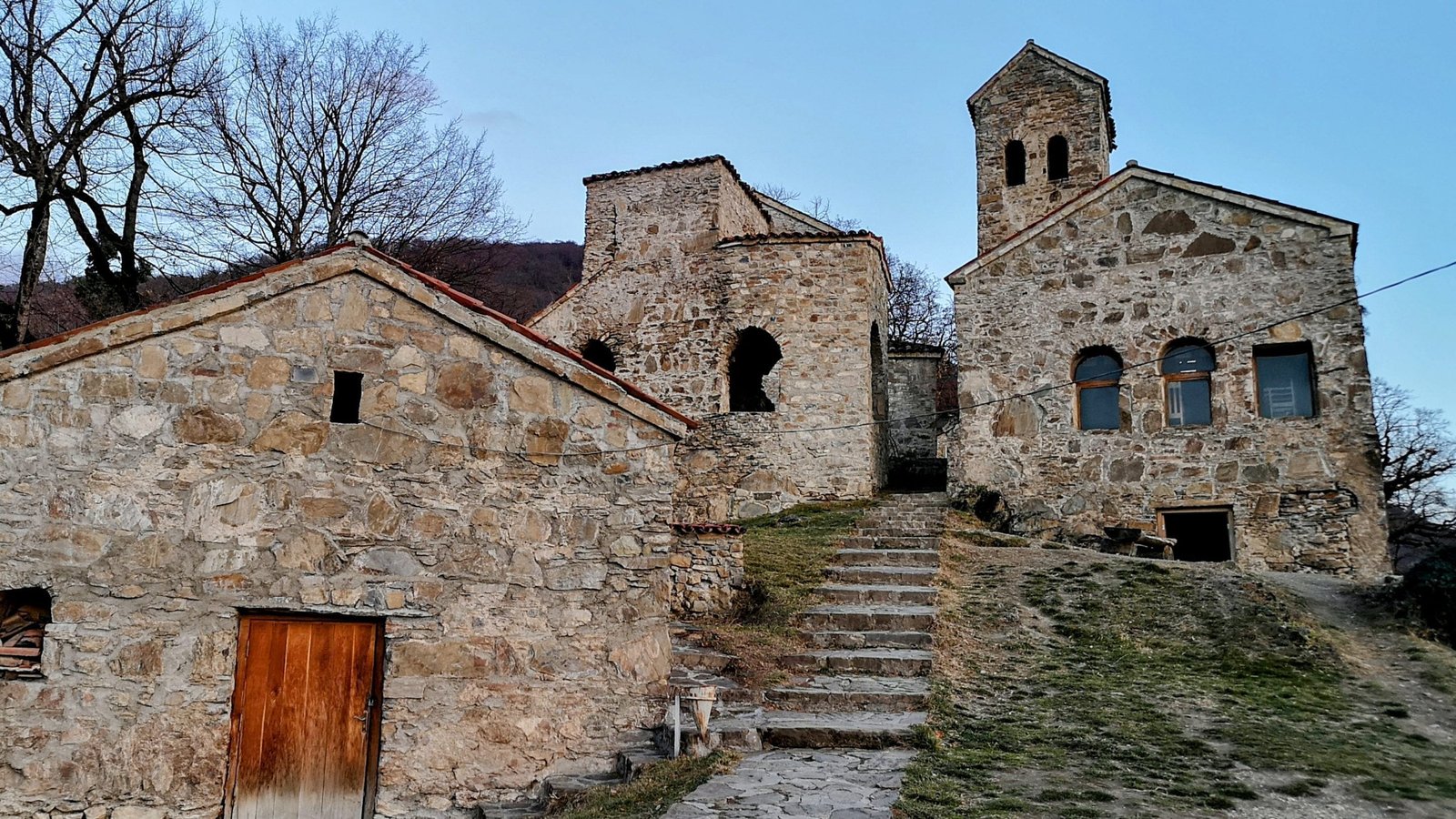 You leave the car at the bottom and go up in the monastery minibus, a kilometre and a half of slope through the forest, because Nekresi hangs on the hillside above the Alazani valley, near Kvareli. At the top there is a tiny 4th-century basilica, one of the oldest churches still standing in Georgia, and the complex founded in the 6th century by Abibos of Nekresi, another of the thirteen Assyrian fathers: church, tower, refectory and a marani, the cellar with buried wine jars. The views are among the best in Kakheti.
Forty-five minutes. The minibus goes up every few minutes; anyone who prefers to walk should allow half an hour of climb.
Road 12KM 0 Hours and 18 Minutes
Khareba Winery, the wine tunnel
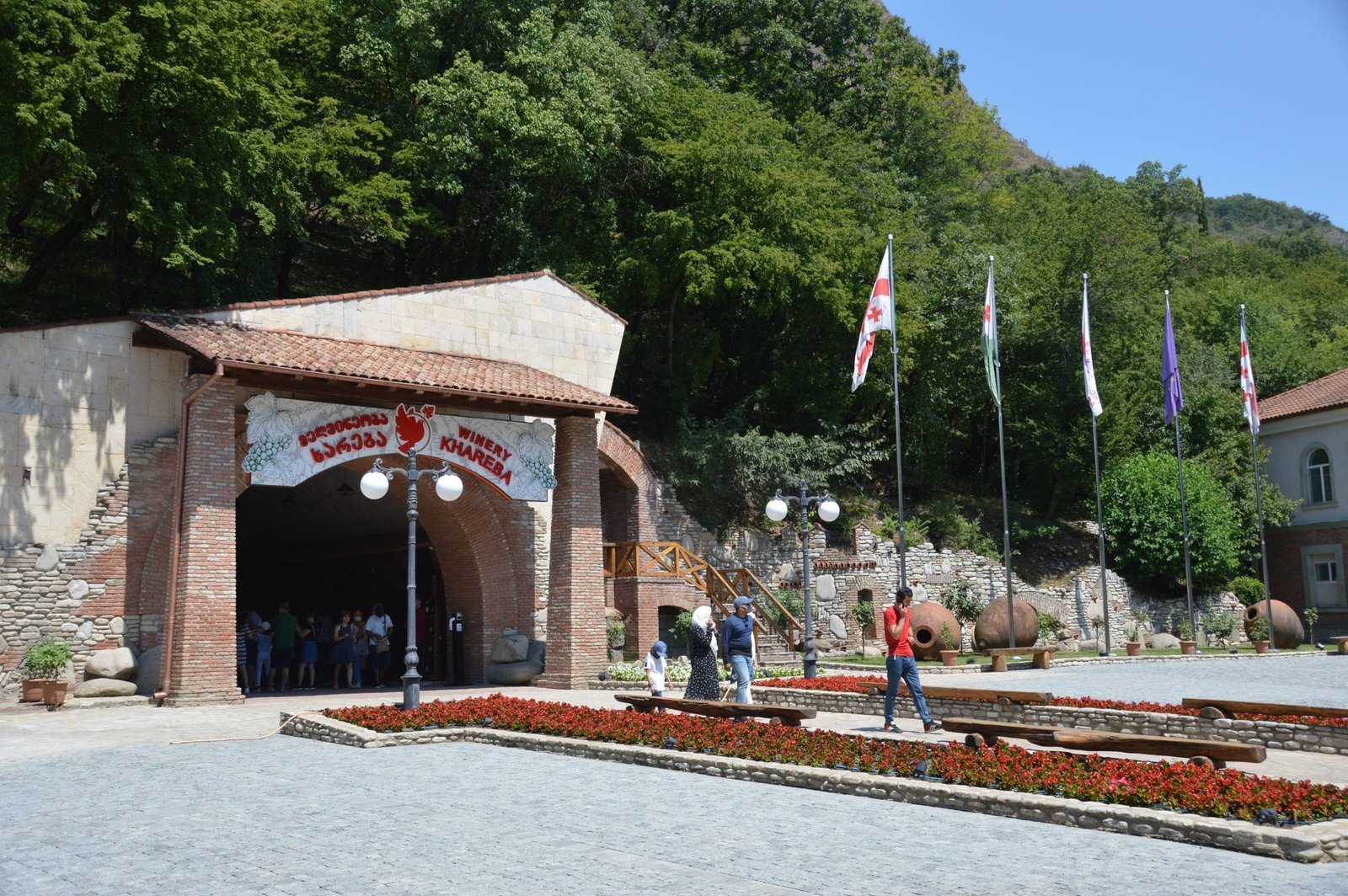 In 1962 the Soviets dug 7.7 km of tunnels into the Caucasus foothills near Kvareli to store wine at a constant temperature: 12 to 14 degrees all year round. Today they belong to the Khareba winery, which has filled them with bottles and qvevris, the buried clay vessels Georgia has made wine in for 8,000 years. You walk a lit stretch, the method is explained and you taste: usually a white from rkatsiteli, a red from saperavi and, for the brave, chacha, the grape-pomace spirit.
It is a big and fairly touristy winery, we say it so you know; in return, the tunnel is cool in high summer and the explanation is clear. An hour. Outside there is a restaurant with a terrace if lunch falls in the area.
Road 38KM 0 Hours and 37 Minutes
Day 4 - Telavi - Ananuri - Gergeti - Gudauri
Road 198KM 4 Hours and 35 Minutes About 280 km: from Telavi to the Military Highway via Tianeti, a stop at Ananuri and the climb to Gergeti. Lunch on the way.Ananuri
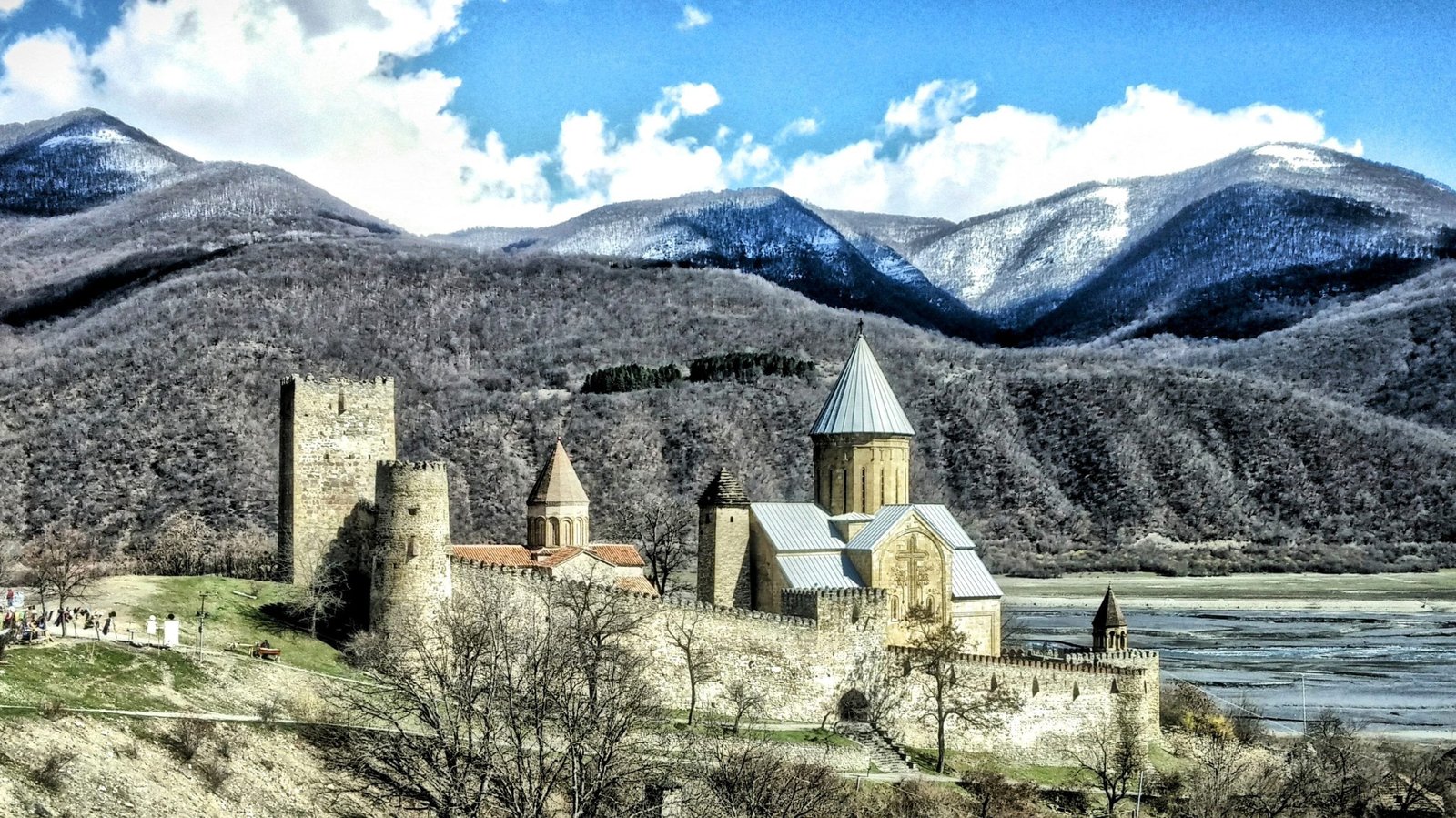 The first serious stop on the Georgian Military Highway, 66 km from Tbilisi: a fortress with two churches inside, planted above the Zhinvali reservoir. The turquoise water in all the photos dates from 1986, when the dam flooded the valley; until then the castle watched over a crossroads. It was the seat of the Eristavis of Aragvi, the dukes of the area, from the 13th to the 18th century, and the story you will be told is that of 1739, when a rival lord took it and put the whole family to the sword.
The best of Ananuri is the façade of the big church, the Assumption, from 1689: a huge cross carved with vines, lions and angels. You can climb the tower, up a narrow staircase. Half an hour, and at the exit there are stalls selling churchkhela, the strings of walnuts dipped in grape must, which are good here and not expensive. In autumn the reservoir drops and the postcard loses its colour.
Gergeti Trinity Church
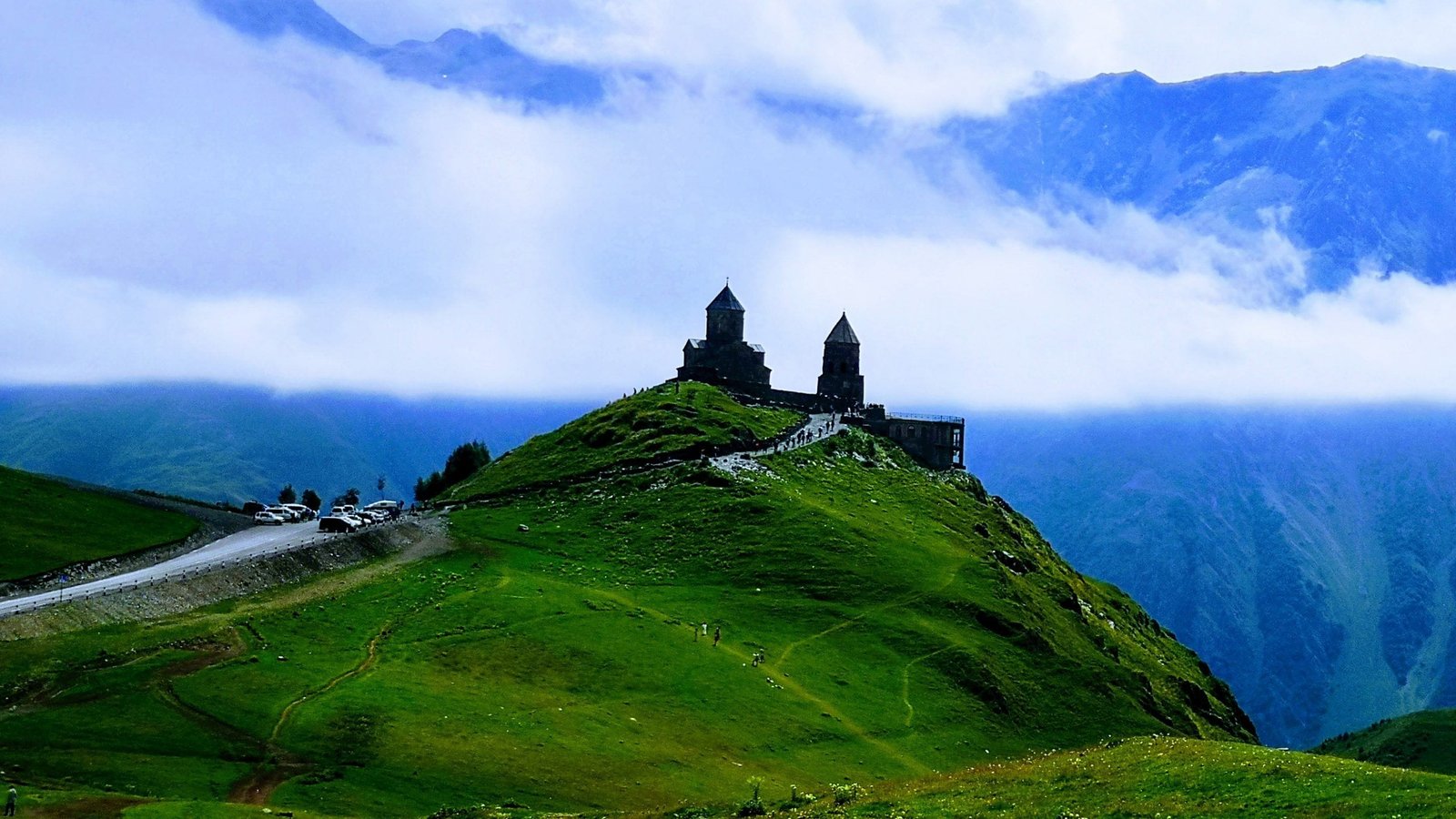 The photo of Georgia: a 14th-century church alone on a ridge at 2,170 metres, with Kazbek (5,047 m) behind it if the clouds allow. You get there from Stepantsminda, the village below, by a 6 km road that was paved only a few years ago; before that you needed a 4x4 or an hour and a half on foot, and in winter you still need the 4x4. For centuries the treasures of Mtskheta were hidden up here when invaders came, because of how remote it is.
Two warnings. First: Kazbek is usually covered from midday on, so we go up as early as we can and, if it is hidden, we wait a while, because sometimes it clears. Second: it is cold and windy at the top all year; in the middle of August we have seen people in T-shirts shivering. Headscarf to go in and covered shoulders; there are wrap skirts to borrow at the door for anyone in shorts. An hour for the drive up, the church and the photos.
Day 5 - Gudauri - Uplistsikhe - Svetitskhoveli - Djvari - Tbilisi
Total road of the day - 266KM 4 Hours and 34 Minutes We leave after breakfast. On the programme, Uplistsikhe, Svetitskhoveli and Jvari; 266 km in short stretches. Road 167KM 2 Hours and 35 MinutesUplistsikhe
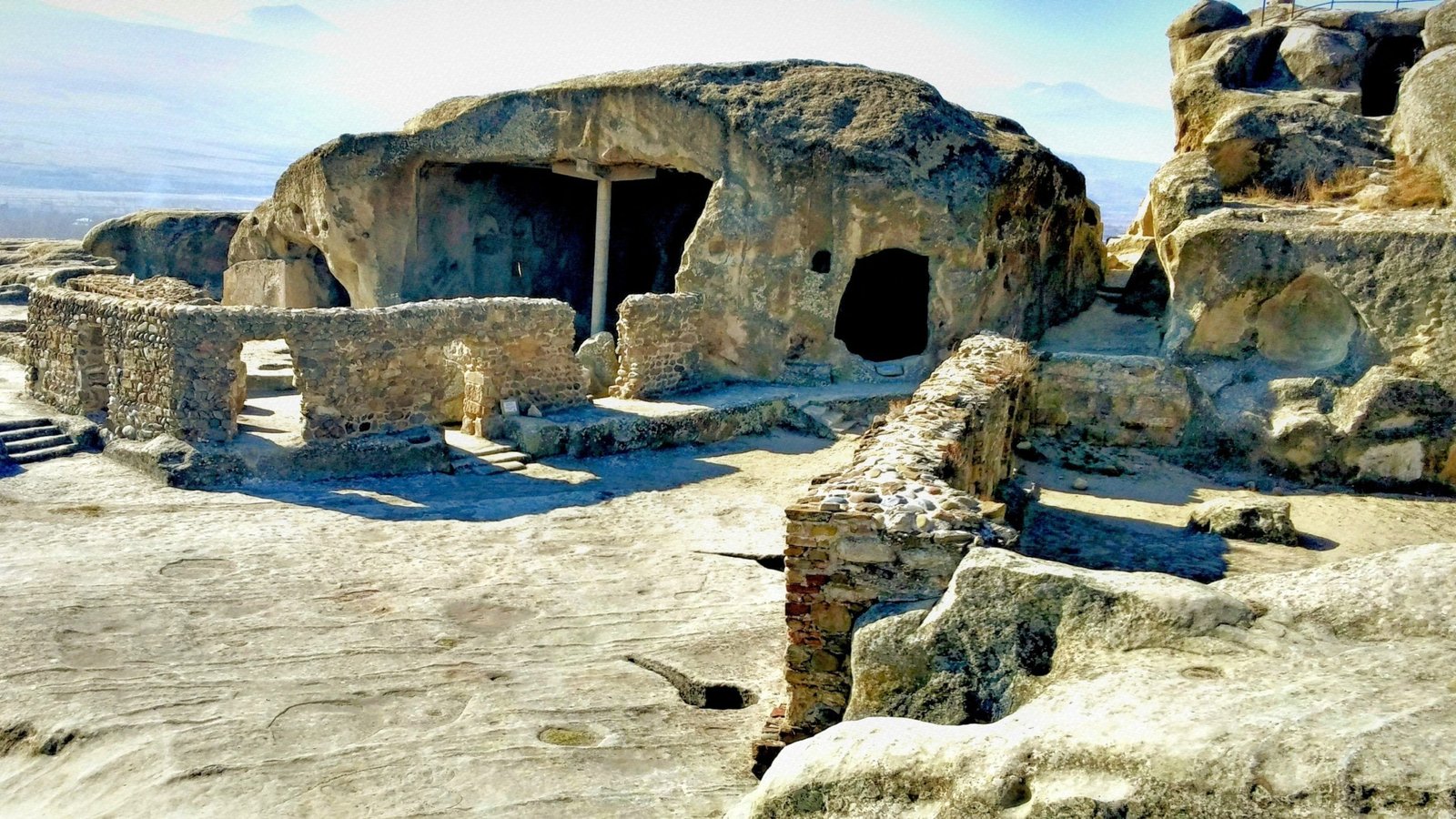 A whole town cut into the rock, 10 km from Gori above the Mtkvari river. People lived at Uplistsikhe from the first millennium BC until the Middle Ages: first a pagan centre, then a Christian one, and always a stop for the caravans. What remains are carved streets, a hall with a ceiling imitating wooden beams (they call it "Queen Tamar's hall"), wine presses, a tunnel down to the river and a 10th-century brick church planted on top of it all. The Mongols emptied it in the 13th century and it never recovered.
One piece of advice: in summer there is no shade and the rock burns, so go early or late in the day, and wear shoes with grip, because the polished stone is slippery. An hour is enough to climb up to the church and look down at the river.
Road 61KM 1 Hours and 5 Minutes
Svetitskhoveli
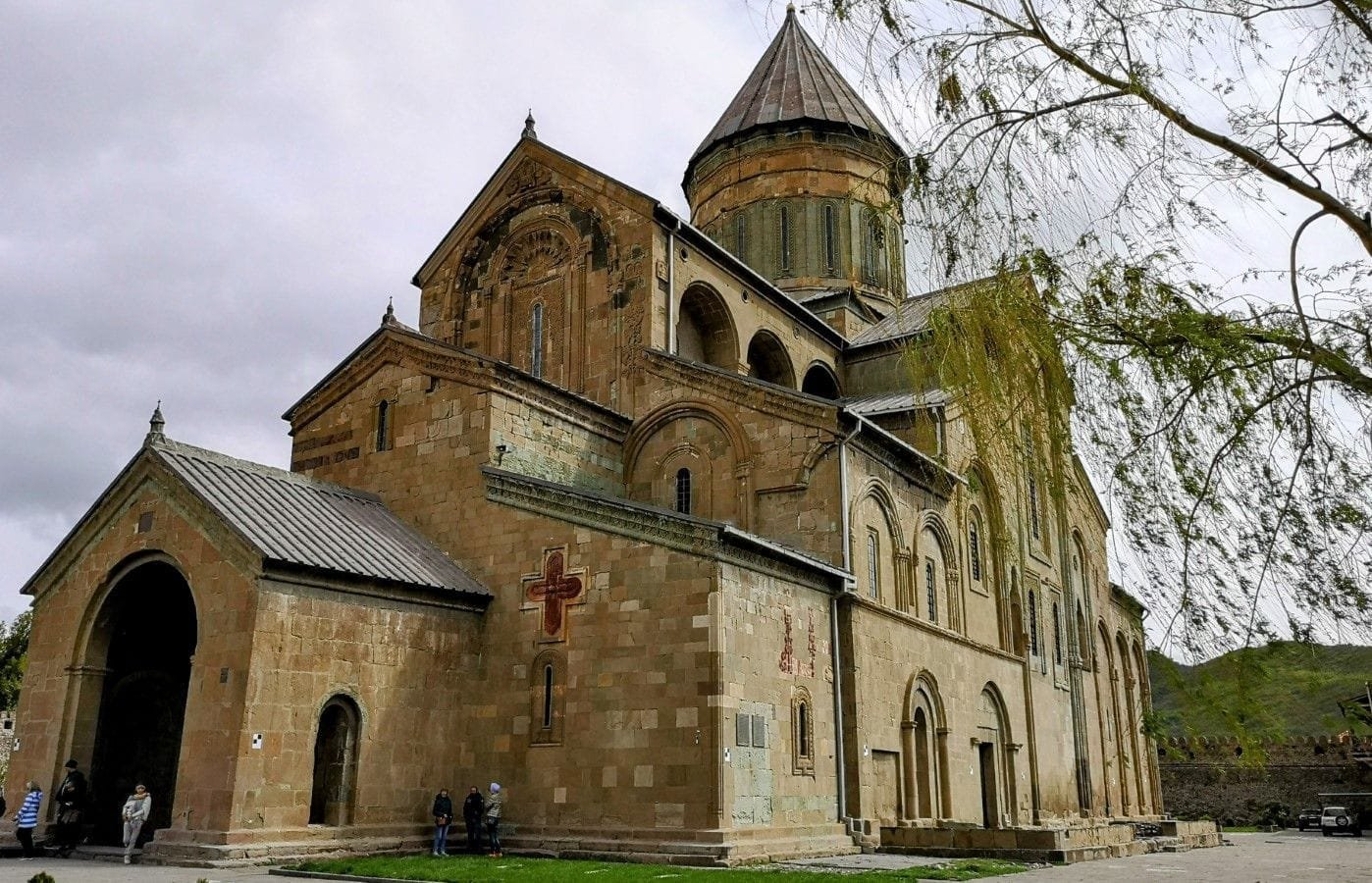 For a Georgian this is the cathedral, full stop. It stands in Mtskheta, the old capital, 20 km from Tbilisi, and the present building went up between 1010 and 1029 on the site of the 4th-century church of King Mirian, the one who converted the country to Christianity. Beneath it, according to tradition, lies the robe of Christ: a Jew from Mtskheta brought it from Jerusalem, his sister Sidonia died clutching it and they were buried together; a cedar grew from the spot, and from its trunk came the pillar that gives the church its name, "the life-giving pillar". Kings were crowned and buried here; the slabs of Vakhtang Gorgasali and Erekle II are in the floor.
A UNESCO site since 1994, and at weekends the weddings follow one another, so sometimes you wait at the door. Headscarves for women and covered shoulders for everyone. Half an hour inside, another in the lanes around it, which live off tourism but keep the feel of a village.
Road 13KM 0 Hours and 18 Minutes
Jvari, the Monastery of the Cross
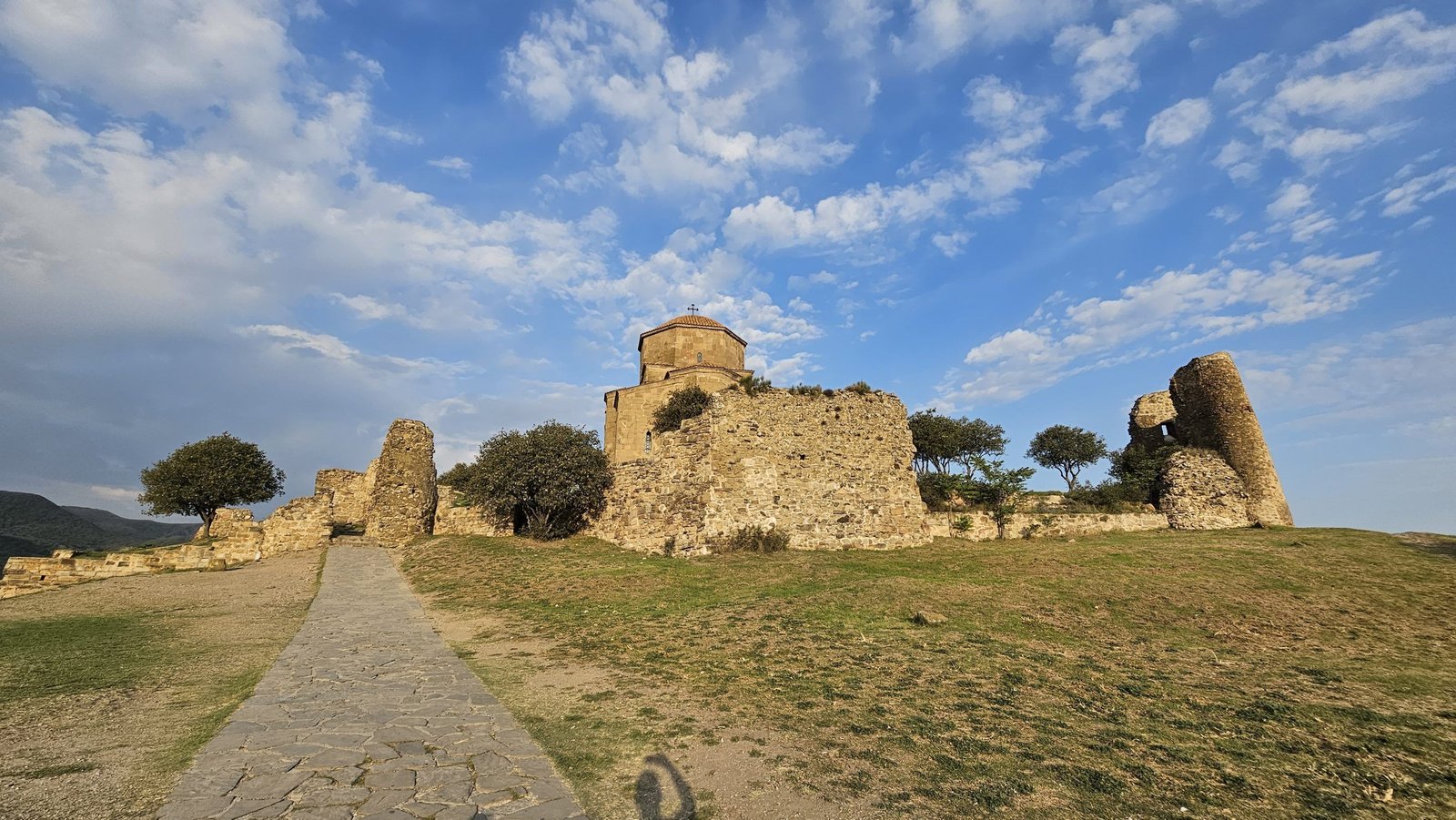 From the Tbilisi road you can see a small church on top of a bare hill above Mtskheta. It is Jvari, "the cross", and it is there because, according to tradition, in the 4th century St Nino planted a wooden cross on that spot when she converted Georgia. The present church was built between 586 and 605 and became the model for many others in the country: a cross plan with four apses and a dome in the middle, with hardly any decoration. It is a UNESCO site together with Mtskheta.
What you remember is the view: below, the Aragvi and the Mtkvari meet, each a different colour, with Svetitskhoveli cathedral in between. Lermontov set his poem "Mtsyri" here. It is almost always windy, so a jacket is not a bad idea even in July. Twenty minutes, half an hour if the day is clear.
Road 25KM 0 Hours and 36 Minutes
Day 6 - Tbilisi - Sadakhlo - Haghpat - Saghmosavank - Yerevan
Total road of the day - 289KM 5 Hours and 28 Minutes Today we change country. Haghpat Monastery and Saghmosavank; allow an hour for the border. 289 km in all. Road 74KM 1 Hours and 18 MinutesSadakhlo, the Georgia-Armenia border
Here you cross on foot: passport control on one side, a few hundred metres walking with your suitcase and control on the other. Between half an hour and an hour depending on the day. On the far side the car and guide of the next country are waiting, so this is where you say goodbye to the ones from this side. Road 43KM 0 Hours and 55 MinutesHaghpat Monastery
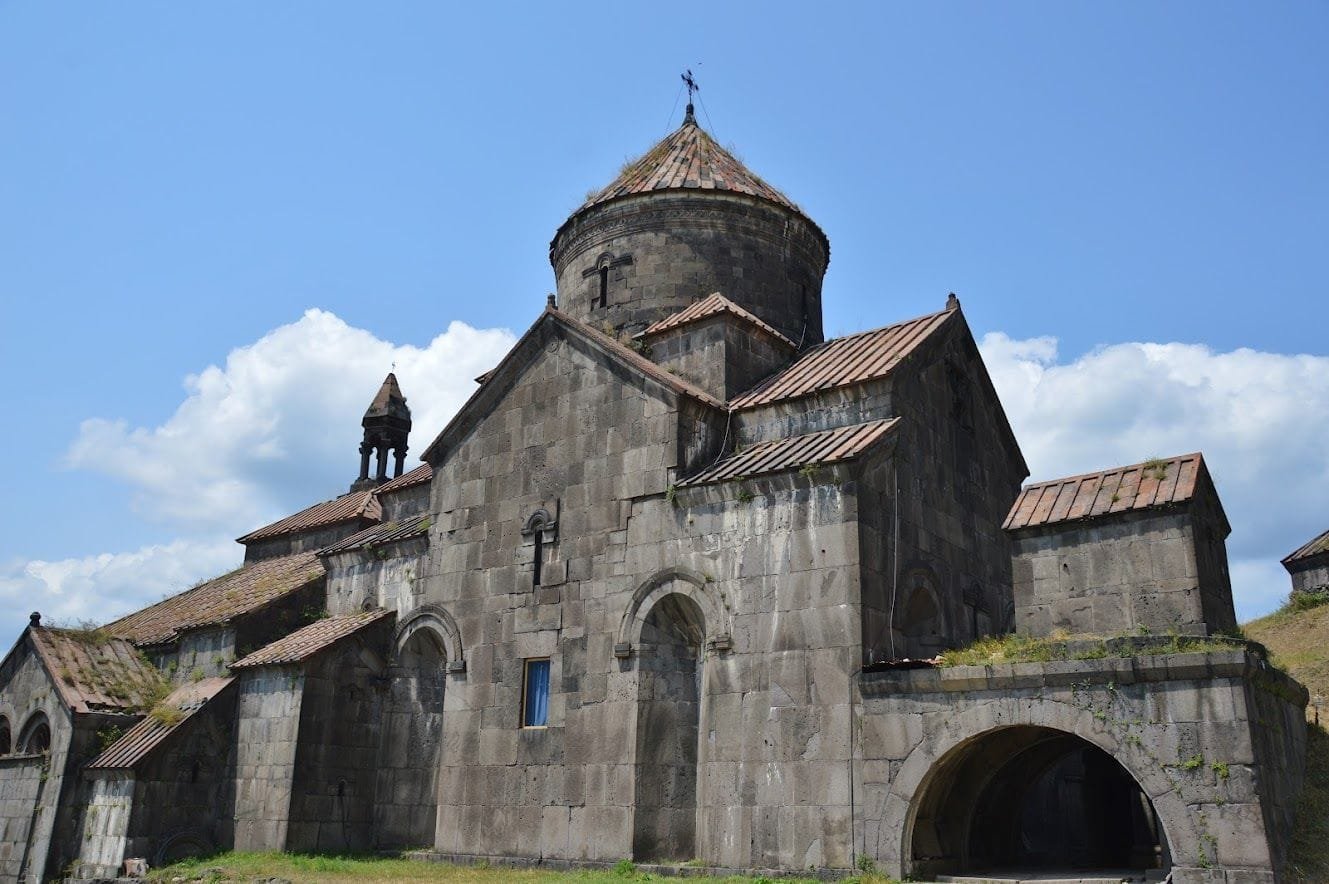 Above the Debed canyon, in the region of Lori and almost on the Georgian border, Haghpat has been a UNESCO site since 1996 and, for us, is the most complete Armenian monastery: the Holy Cross church of 991, the gavit with its crossed arches, the bell tower of 1245, the refectory and the library, with jars buried in the floor where the manuscripts were hidden when invaders came. Queen Khosrovanush founded it in 976. In the courtyard stands the khachkar of the Saviour, from 1273, the finest of the thousands there are in Armenia.
Sayat-Nova lived and died here, the 18th-century troubadour who sang in Armenian, Georgian and Azerbaijani and has a street named after him in Tbilisi. An hour, and another for Sanahin, 10 km away. It is 180 km from Yerevan; the town below, Alaverdi, is a mining town and ugly, and we say so to spare you the surprise.
Road 140KM 2 Hours and 30 Minutes
Saghmosavank
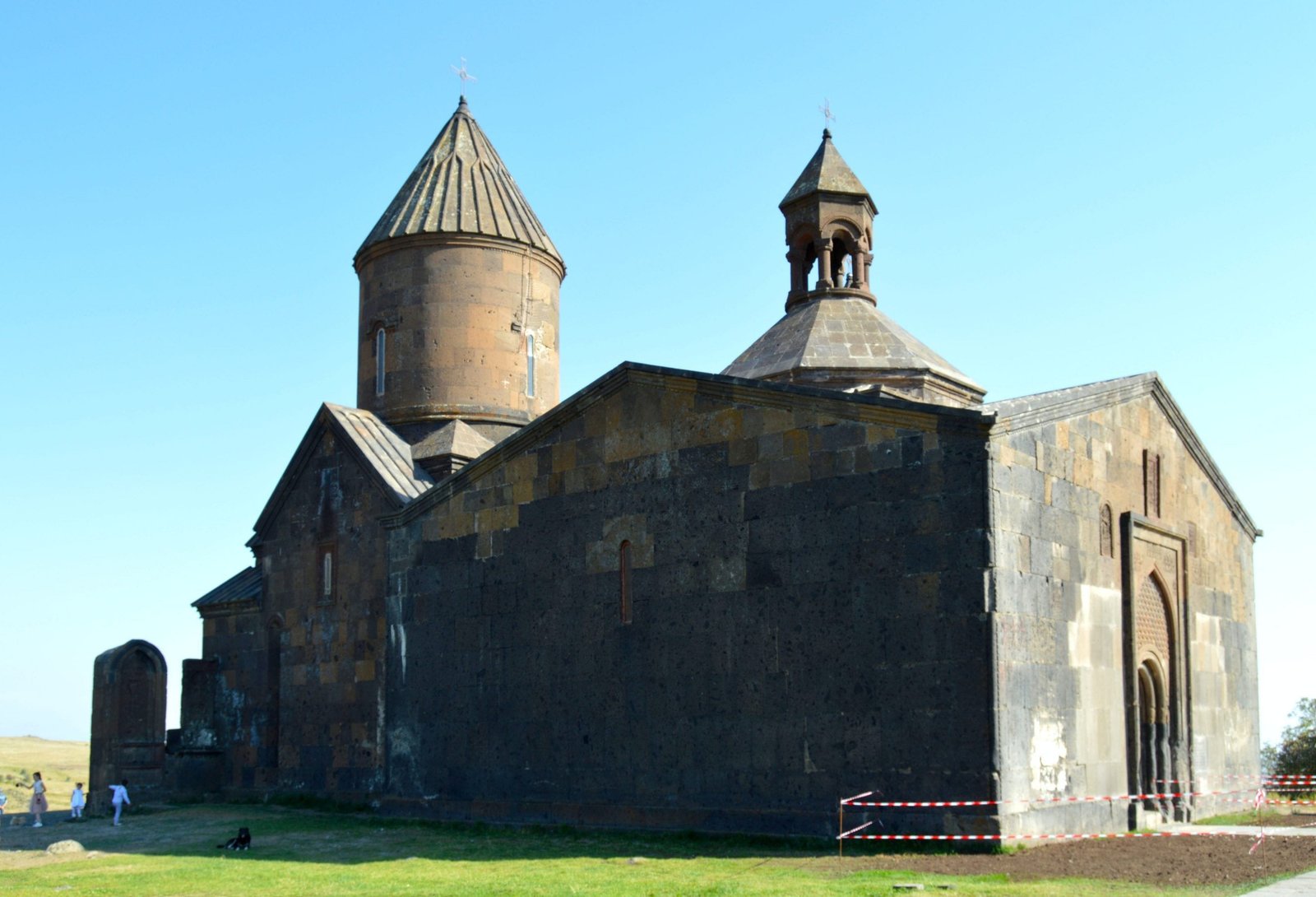 On the edge of a hundred-metre cut, the one the Kasagh river opens in the plateau, stands a reddish stone monastery of 1215 called "the one of the psalms": Saghmosavank. The Vachutian princes built it, and what is special about it is the gavit, the entrance hall with its stone vault and reliefs, and the library, because manuscripts were copied here for centuries. It is 30 km from Yerevan, on the way to Aragats, and there is almost never anyone there.
Half an hour. The best part is leaning over the canyon from the back wall and, on a clear day, seeing Ararat in the distance above the plain.
Road 32KM 0 Hours and 45 Minutes
Day 7 - Yerevan - Yerevan city walk - Garni - Gueghard - Yerevan
Total road of the day - 62KM 1 Hours and 33 Minutes First a walk around Yerevan, then Garni and Geghard. 62 km, 1 hour 33 minutes; lunch on the way. Road 0KM 0 Hours and 0 MinutesA walk around Yerevan
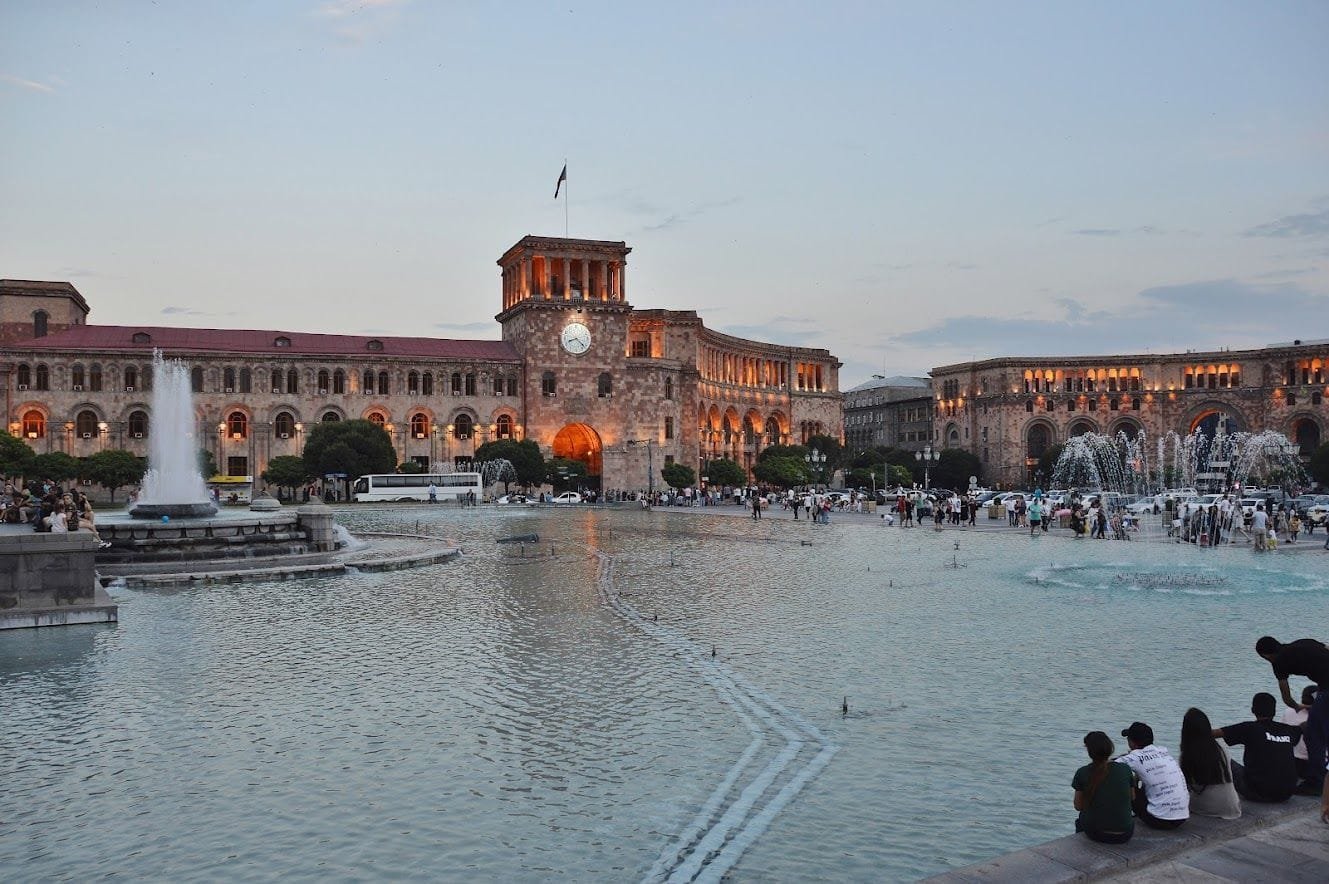 Yerevan is pink. Almost the whole centre is built of volcanic tuff of that colour, following the circular plan Alexander Tamanian drew in the 1920s, and Republic Square, with its arcades and its fountain, is the centrepiece. From there we go up to the Cascade, the monumental stairway begun in the seventies and finished in 2009 with the Cafesjian museum inside, by its escalators and past Botero's fat cat at the bottom. From the top, if the air is clean, the whole of Ararat, which is in Turkey but presides over the city.
The city boasts of being 29 years older than Rome: the fortress of Erebuni dates from 782 BC. But what you live today is something else: terraces, the Vernissage market at weekends, cafés that never close. Three or four hours on foot, comfortable shoes and, in summer, water: Yerevan in July goes over 35 degrees.
Road 26KM 0 Hours and 38 Minutes
Garni
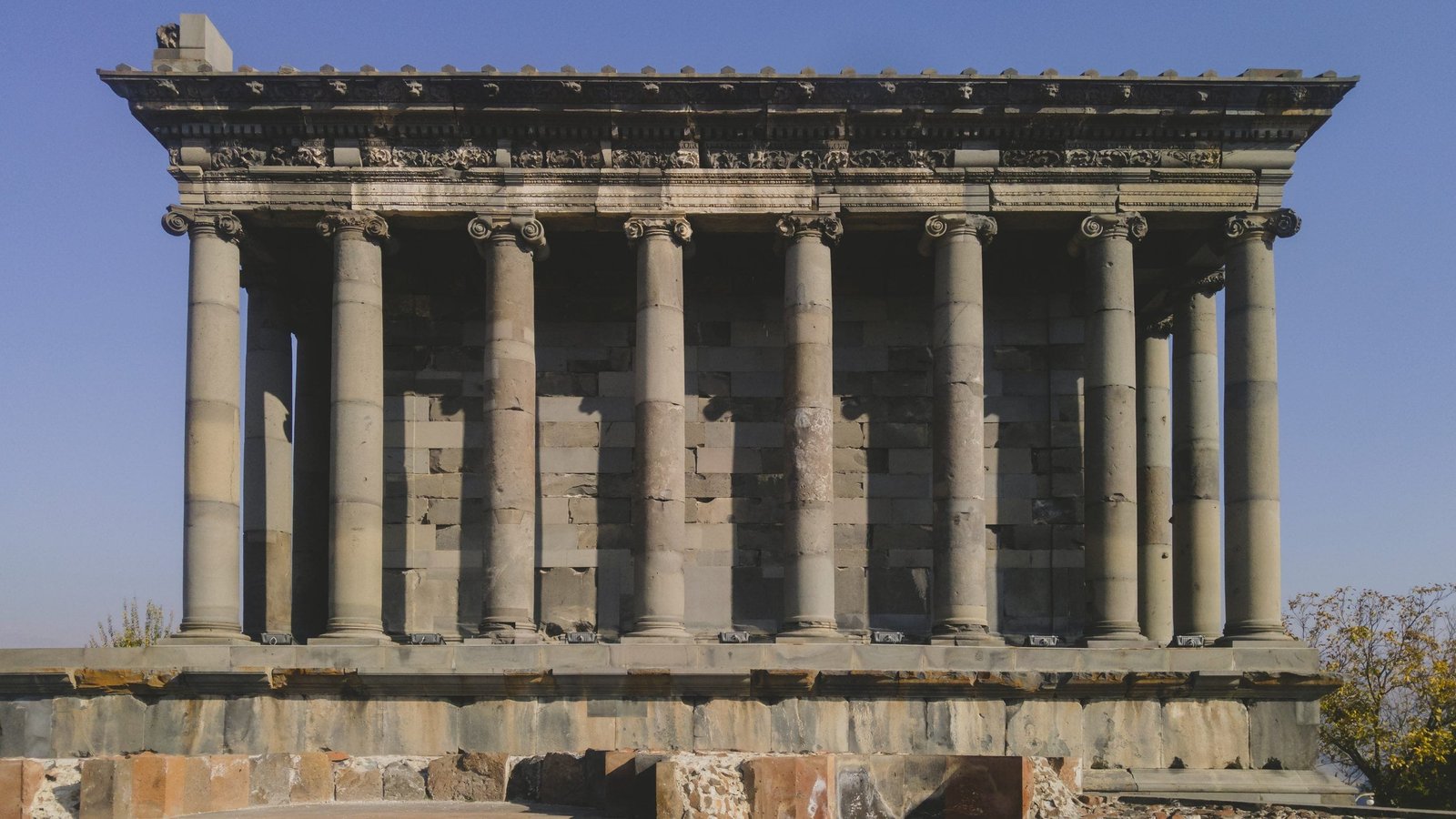 A Greek temple in Armenia. Garni was built by King Tiridates I around the year 77, dedicated to the sun god Mihr, and it is the only pagan building that survived the country's conversion to Christianity, probably because the kings used it as a summer house. What you see today is a reconstruction of 1969 to 1975 with the original stones: the earthquake of 1679 had brought the whole thing down. Next to it are the Roman baths with a mosaic and the inscription "we worked without receiving anything", which we guides find funny.
The other thing is the Azat gorge just below: the "symphony of stones", a wall of perfectly hexagonal basalt columns that look like an organ. You go down in the locals' 4x4s or on foot, 20 minutes of slope. An hour in all, more if we go down to the columns.
Road 10KM 0 Hours and 15 Minutes
Geghard
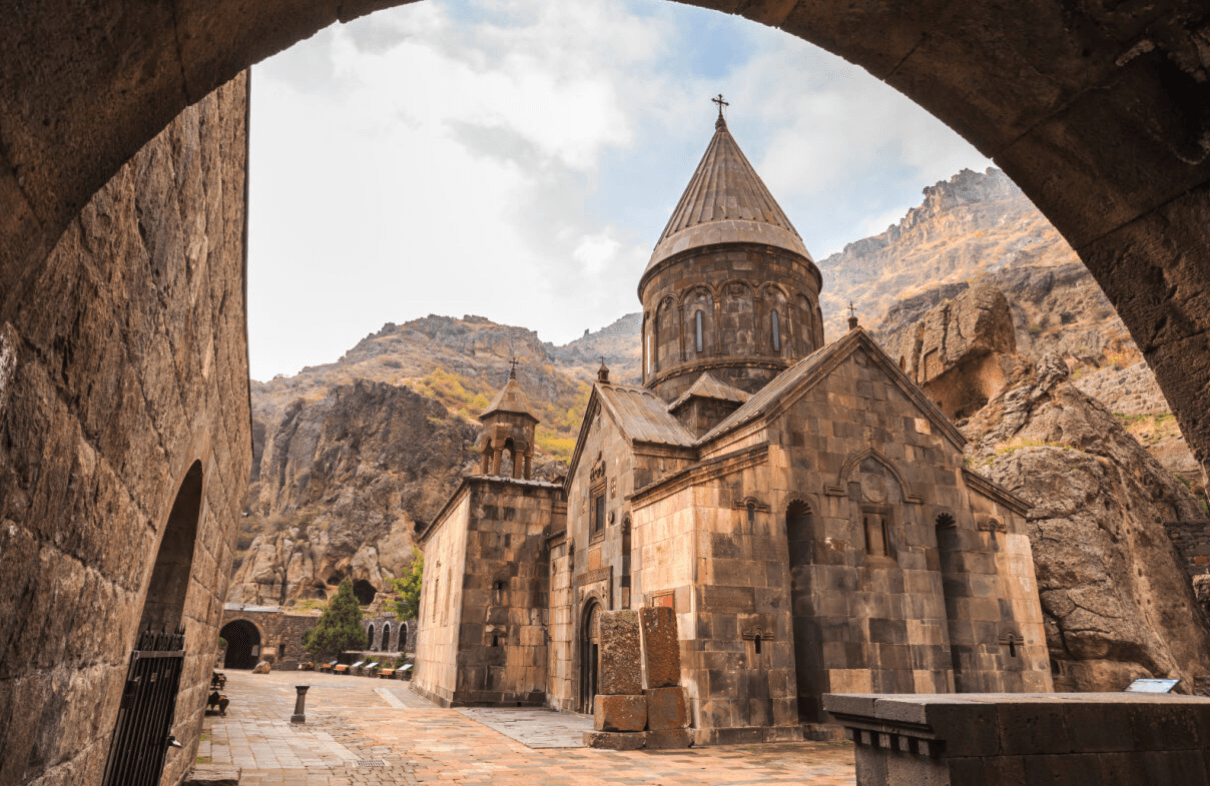 Half the monastery is inside the mountain. Geghard was founded by St Gregory the Illuminator in the 4th century beside a spring that still flows inside one of the chapels, and what you see dates from the 13th: the main church, of 1215, and the chambers cut into the rock by the Proshian princes, with their carved coats of arms and an acoustic you test by singing. The name means "spear": for centuries the one that, according to tradition, pierced Christ's side was kept here; it is now in the Echmiadzin museum. A UNESCO site since 2000.
An hour. It is the place in Armenia where we have most often seen people moved, especially if a choir happens to be in the rock chamber. At the exit the village women sell fresh lavash and gata, a sweet bread; worth stopping for.
Road 26KM 0 Hours and 40 Minutes
Day 8 - Yerevan - Echmiadzin - Zvartnots - Yerevan
Total road of the day - 49KM 1 Hours and 25 Minutes Echmiadzin and Zvartnots. It is 49 km; we leave early so as not to rush. Road 21KM 0 Hours and 45 MinutesEchmiadzin
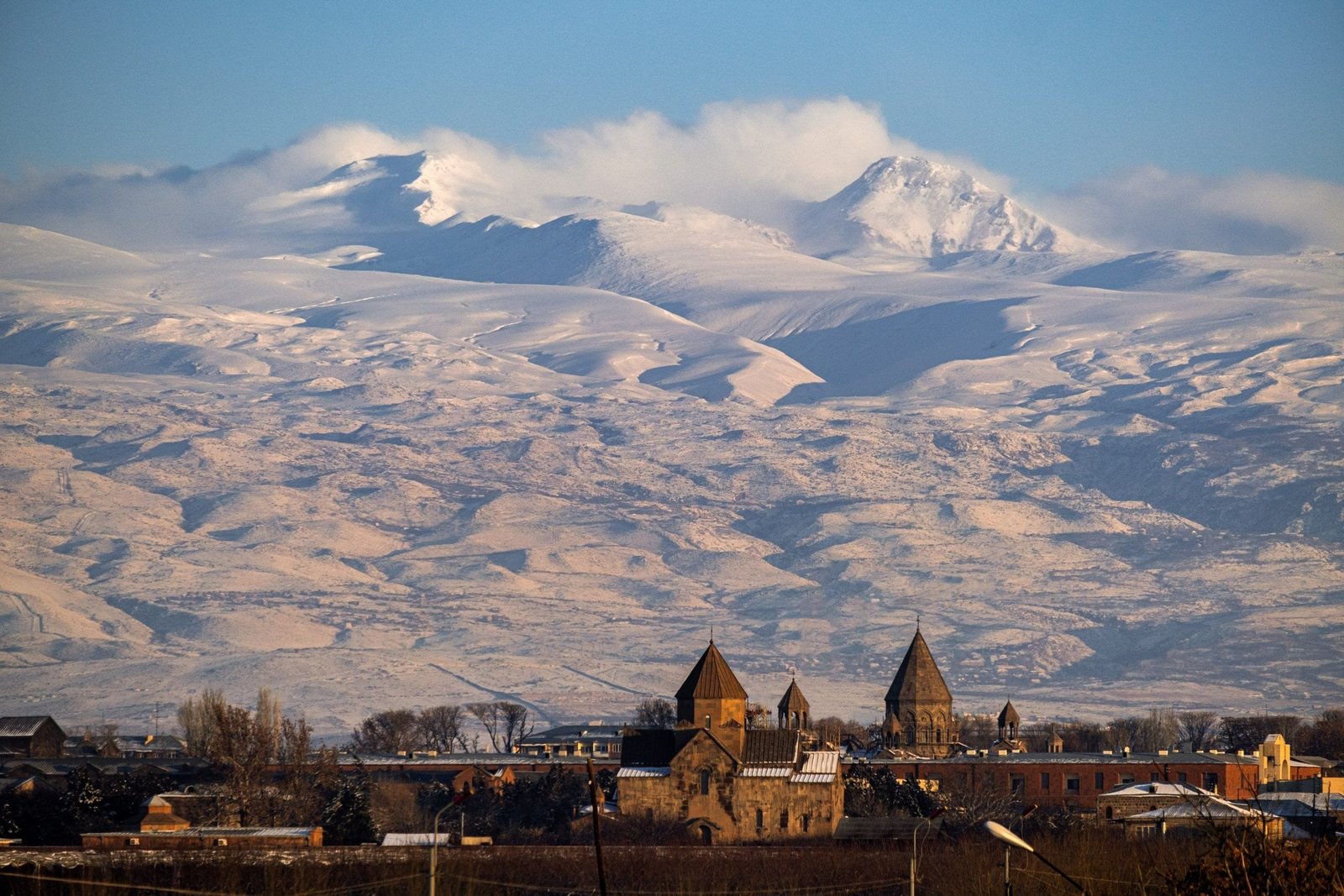 The Armenian Vatican. Echmiadzin, 20 km from Yerevan, is where the Catholicos lives, head of the Armenian Apostolic Church, and where the cathedral stands that St Gregory the Illuminator founded in 303, two years after Armenia became Christian, the first nation to do so. What you see is mostly 5th century and later alterations, and the cathedral has spent more than ten years under restoration. In the museum on the grounds are the spear of Geghard and other relics that say a lot to a believer and, to everyone else, at least explain what this place means.
An hour for the cathedral and the museum. On Sundays the sung liturgy fills the church and you go in all the same, quietly. Five minutes away are the churches of Hripsime and Gayane, from the 7th century, which are the ones architects like best, and the ruins of Zvartnots.
Zvartnots
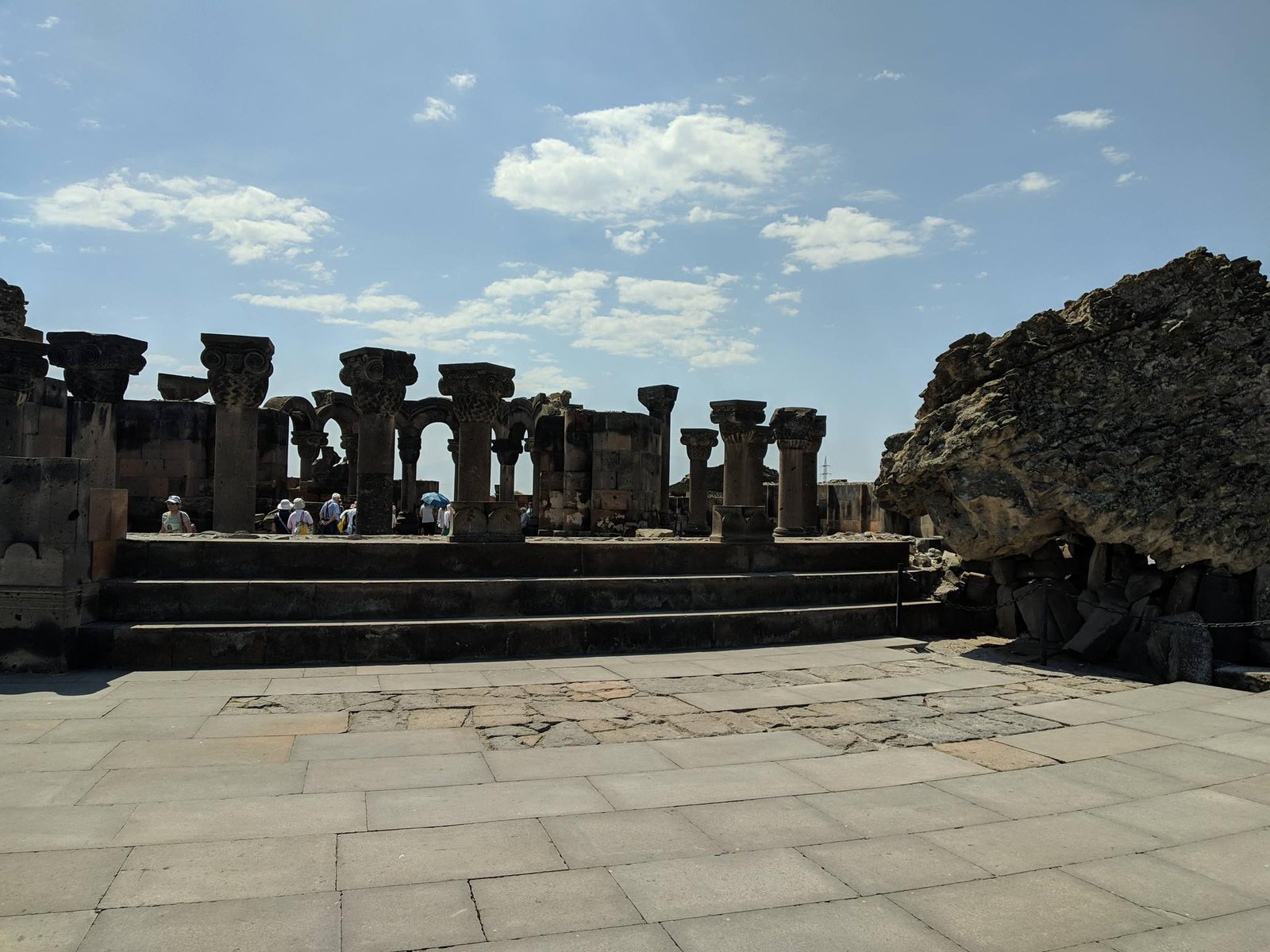 What is left of Zvartnots is a ring of columns and capitals with eagles, ten minutes from Echmiadzin and next to the airport. In the 7th century, between 641 and 661, Catholicos Nerses III raised here a round cathedral of three tiers and some 45 metres, the boldest of its age; an earthquake brought it down in the 10th century and nobody rebuilt it. It was excavated between 1900 and 1907, and in the small museum there is a model that helps you imagine what it was. A UNESCO site since 2000, together with Echmiadzin.
Half an hour. It is a flat, open site with Ararat in the background when the day is clear, which is why photos from here always come out well.
Day 9 - Yerevan - Sevanavank - Dilijan - Goshavank - Hagharstin - Yerevan
Total road of the day - 239KM 4 Hours and 5 Minutes Today the car is only the means: 239 km to reach Sevanavank Monastery, Dilijan, Goshavank and Haghartsin. Road 68KM 1 Hours and 10 MinutesSevanavank Monastery
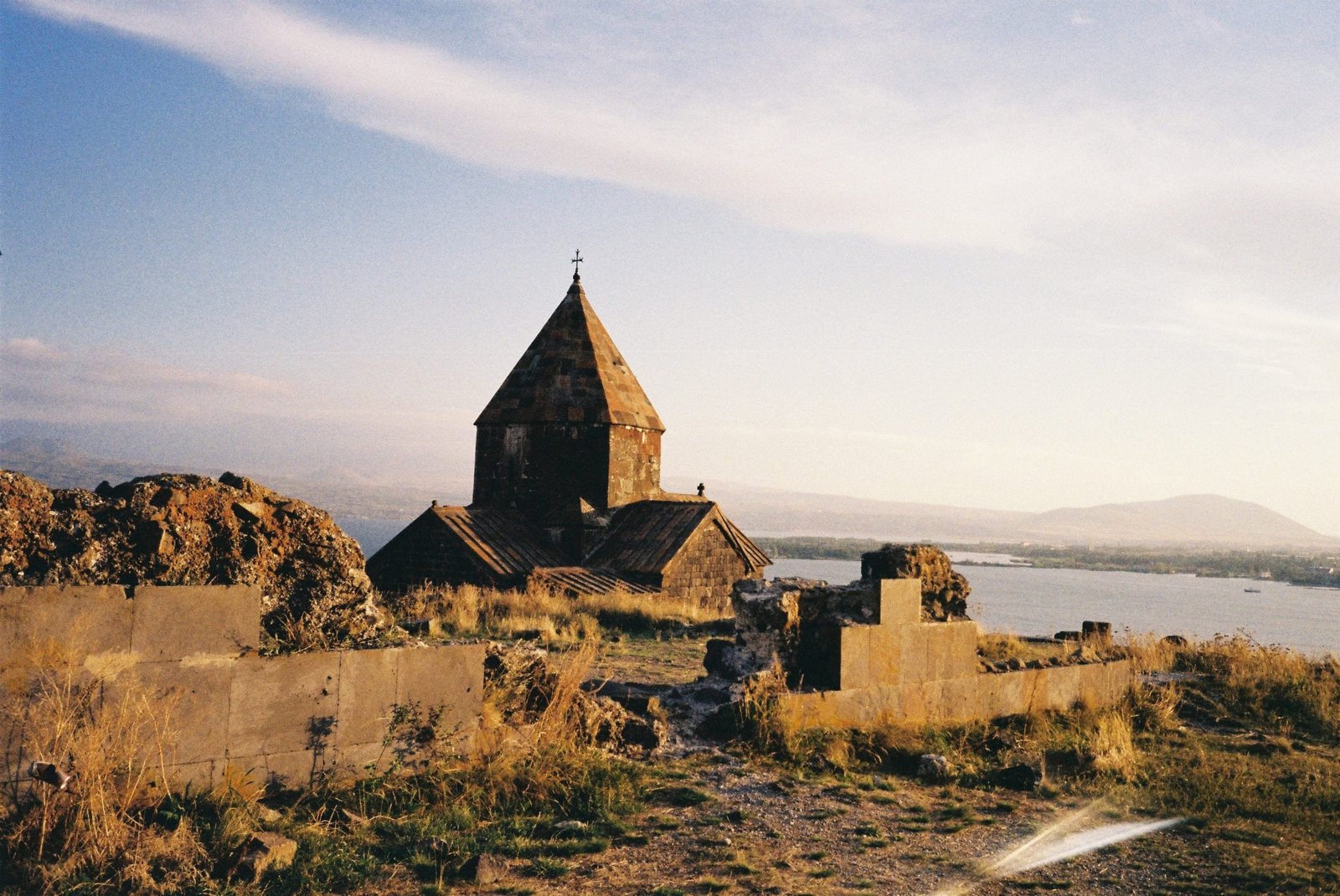 Lake Sevan sits at 1,900 metres and is so big it looks like the sea: 1,240 km², the largest in the Caucasus. Until the 1930s Sevanavank stood on an island; the Soviets lowered the lake by almost twenty metres for irrigation, and the island became a peninsula. Two black tuff churches of the year 874 remain, founded by Princess Mariam, daughter of King Ashot I, and 200 steps to climb. Today there is a seminary next door.
Three quarters of an hour. It is almost always windy and by September it is already cold; in high summer, on the other hand, people swim and along the shores they grill trout and ishkhan, the lake's own fish. It is 65 km from Yerevan.
Road 32KM 0 Hours and 35 Minutes
Dilijan
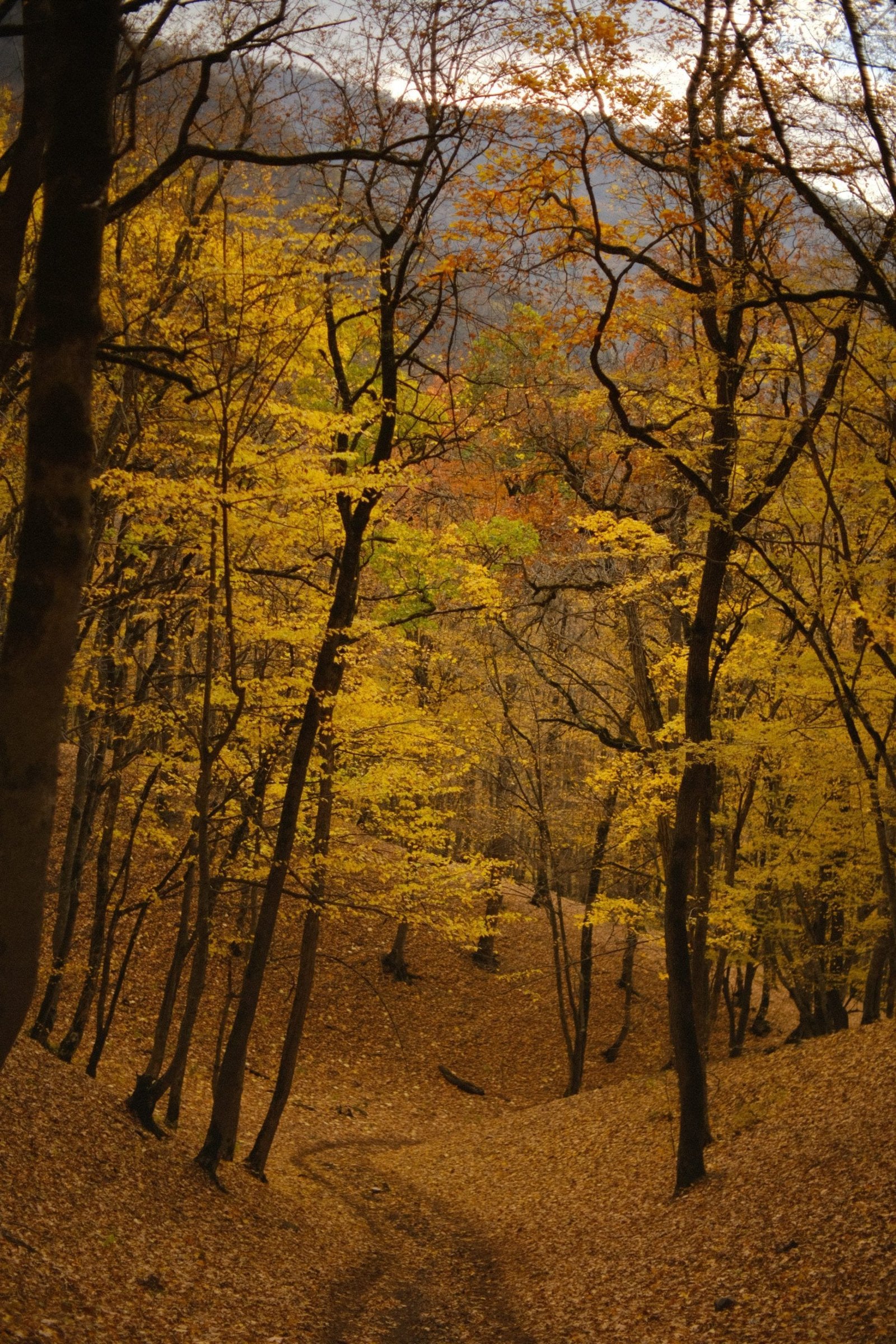 After the dry, pink Armenia of Yerevan, Dilijan is green: a spa town at 1,300 metres in the middle of a forested national park, in the province of Tavush, which the Soviets filled with sanatoriums and rest houses for composers. They call it "little Switzerland", as they do every place with pines and fresh air; no need to believe it. What there is is a restored stretch of old street, Sharambeyan, with 19th-century houses of wood and stone, craft workshops and a couple of cafés, and mineral water coming out of the street fountains.
An hour for the town is enough. Its value is elsewhere: it is the perfect base for the forest monasteries, Haghartsin and Goshavank, and for sleeping cool in summer when Yerevan goes over 35 degrees.
Road 22KM 0 Hours and 25 Minutes
Goshavank
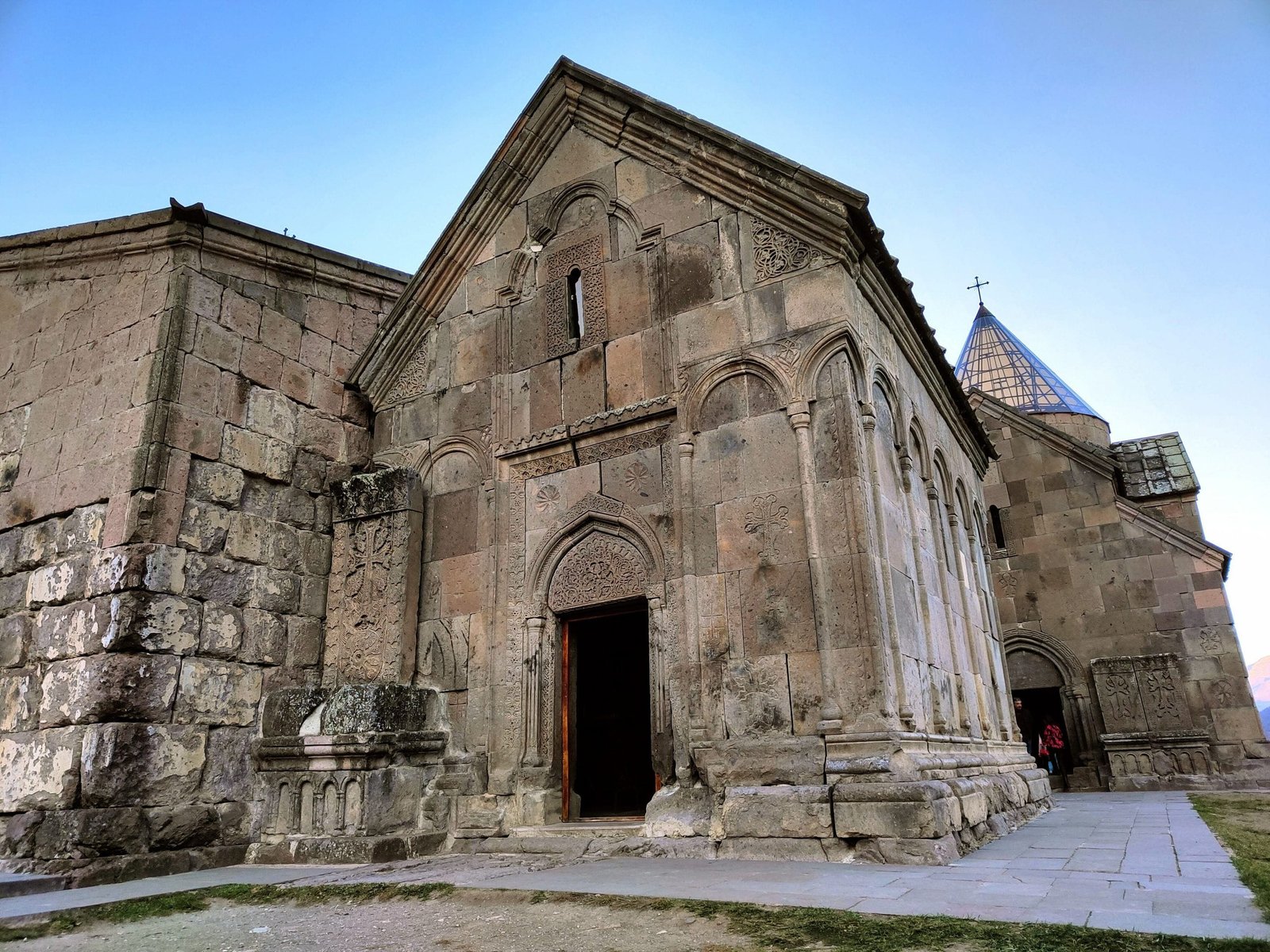 Mkhitar Gosh was the man who wrote Armenia's first law code, around 1184, as well as fables that are still read at school, and the monastery he founded in 1188 near Dilijan bears his name: Goshavank. It stands in a mountain village among walnut trees, and what sets it apart is a khachkar of 1291 by one Poghos, so fine it looks like lace rather than stone; Armenians rank it among the three best in the country. There are two churches, a book depository with a bell tower on top and the cell where Gosh is said to have worked.
Forty minutes. The village, Gosh, is one of the real ones: cows in the street and people who say hello.
Road 10KM 0 Hours and 15 Minutes
Haghartsin
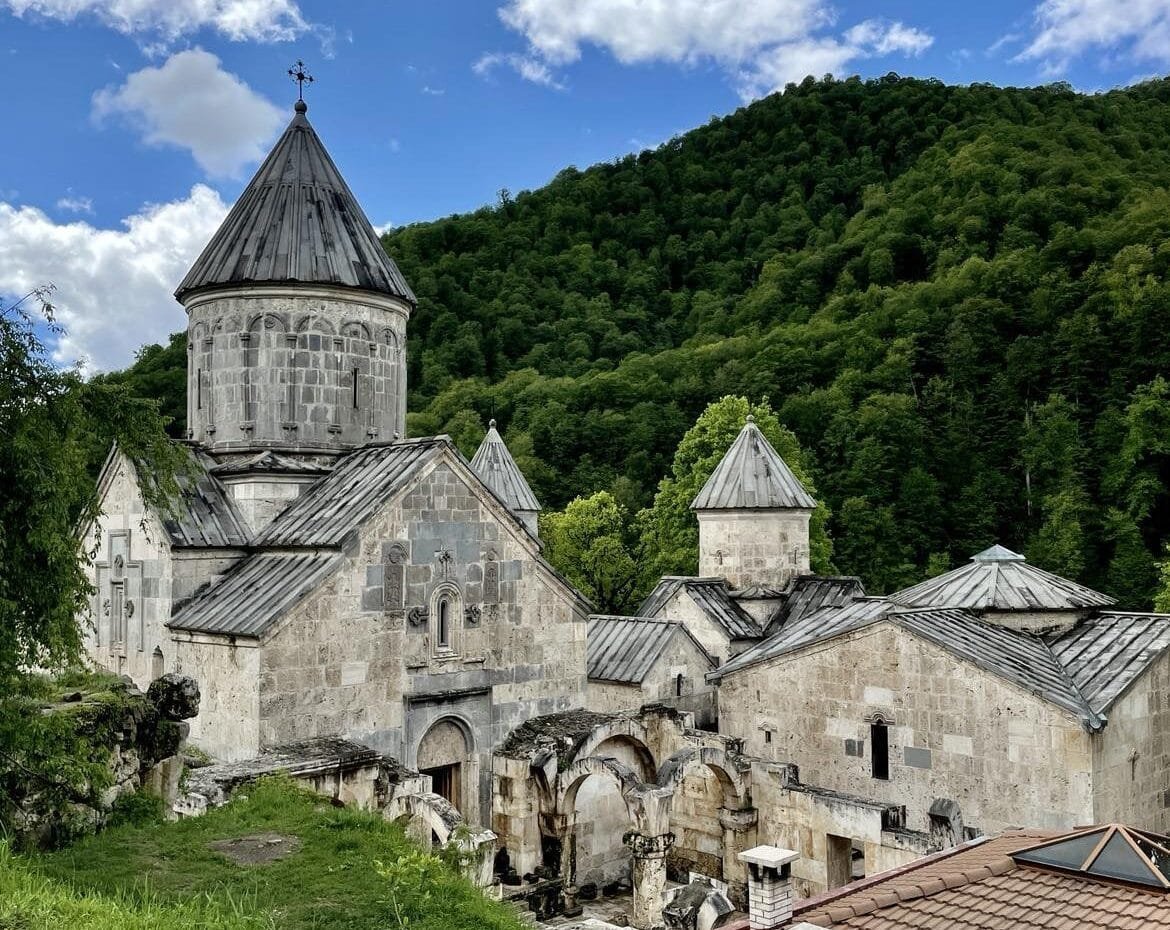 A monastery in a forest clearing, 12 km from Dilijan, reached by a road between beech trees that turns orange in October. Haghartsin was founded in the 10th century and what you see is 11th to 13th century: three churches, a refectory of 1248 with a vault that has no columns, and a very old walnut tree with a hole in the trunk that children crawl through to make a wish. It was thoroughly restored in 2011 with money from the Emir of Sharjah, who fell in love with the place on a visit, which is why it looks so new; some people find it too new.
Three quarters of an hour. It is one of the most visited monasteries in Armenia and at weekends it fills with families from Yerevan; on a weekday morning you can hear the forest.
Road 107KM 1 Hours and 40 Minutes


