A 14-day journey connecting the millennia-old cultures, stunning landscapes and vibrant cities of Azerbaijan, Georgia and Armenia. This carefully designed itinerary begins in the modern and enchanting city of Baku, with its blend of tradition and modernity, and takes you to explore natural and architectural wonders such as the Gobustan petroglyphs, the historic monasteries of Kazbegi and Geghard, and the legendary Areni cave. Each day promises a unique experience: from the beaches of the Absheron Peninsula to the tranquil scenery of Lake Sevan and the picturesque valleys of the Caucasus.
Your adventure begins with the vibrant rhythm of Baku, followed by tours through the ancient region of Shamaki and the charming city of Sheki. Crossing into Georgia, you will immerse yourself in its rich history, visiting iconic sites such as the Ananuri complex and the enigmatic cave city of Uplistsikhe. In Armenia, an impressive blend of mountain landscapes and architectural gems awaits you: the majestic Echmiadzin Cathedral, the monasteries of Khor Virap and Noravank, and the moving Armenian Genocide Memorial. This trip will let you discover the best of the Caucasus, offering a perfect combination of culture, history, nature and gastronomy that will leave you in awe. An unforgettable journey through three countries full of magic and tradition!
Itinerary
Day 1 - Transfer from Baku Airport to Baku
Total road distance - 20 km, 0 hours 30 minutes Transfer according to the scheduled arrival time. Road 20 km, 0 hours 30 minutesDay 2 - Baku - Absheron - Baku
Total road distance - 94 km, 2 hours 4 minutes After breakfast at the hotel, we begin our adventure. The planned visits are: Road 9 km, 0 hours 25 minutesPalace of the Shirvanshahs
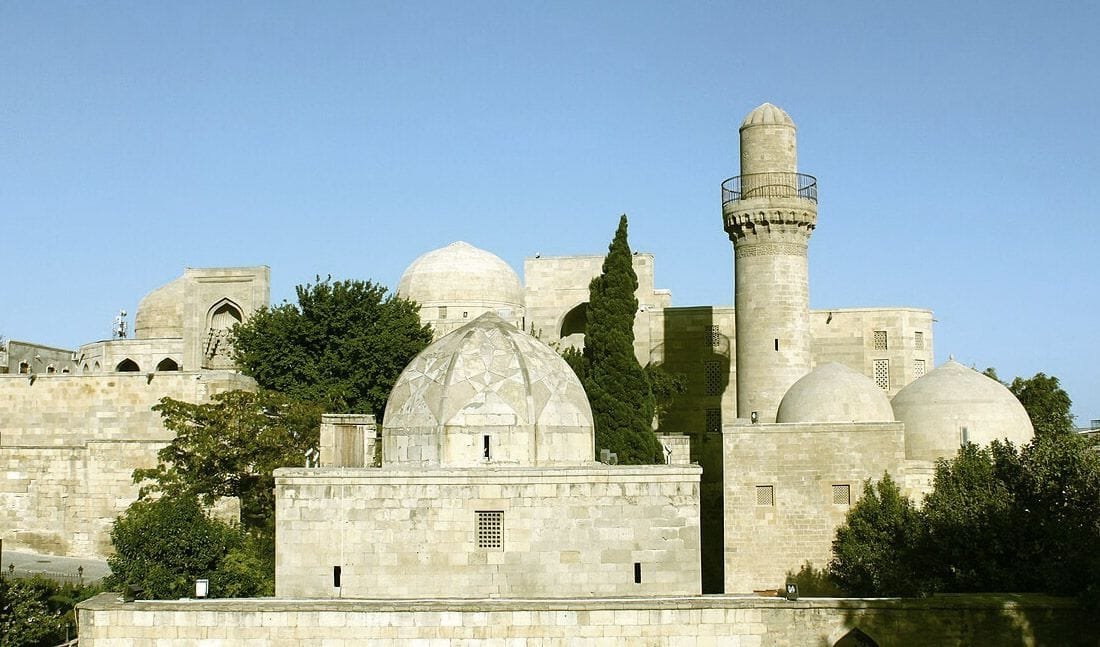 The Palace of the Shirvanshahs rises majestically in the heart of the Old City of Baku, capital of Azerbaijan, as a testament to the glory of the 15th-century Shirvanshah dynasty. This medieval palace complex, declared a UNESCO World Heritage Site, encompasses several buildings including the divan, the family mausoleum and the palace mosque, all built in the distinctive local limestone. The architecture blends elements of the Shirvan-Absheron style with Persian and Islamic influences, featuring intricate portals and delicate ornamental carvings. During our visit, we will explore the palace's many chambers, admire panoramic views of Baku Bay from its terraces and immerse ourselves in the fascinating history of the Shirvanshahs through its ceremonial halls and archaeological exhibits.
Road 21 km, 0 hours 30 minutes
The Palace of the Shirvanshahs rises majestically in the heart of the Old City of Baku, capital of Azerbaijan, as a testament to the glory of the 15th-century Shirvanshah dynasty. This medieval palace complex, declared a UNESCO World Heritage Site, encompasses several buildings including the divan, the family mausoleum and the palace mosque, all built in the distinctive local limestone. The architecture blends elements of the Shirvan-Absheron style with Persian and Islamic influences, featuring intricate portals and delicate ornamental carvings. During our visit, we will explore the palace's many chambers, admire panoramic views of Baku Bay from its terraces and immerse ourselves in the fascinating history of the Shirvanshahs through its ceremonial halls and archaeological exhibits.
Road 21 km, 0 hours 30 minutes
Ateshgah - Fire Temple
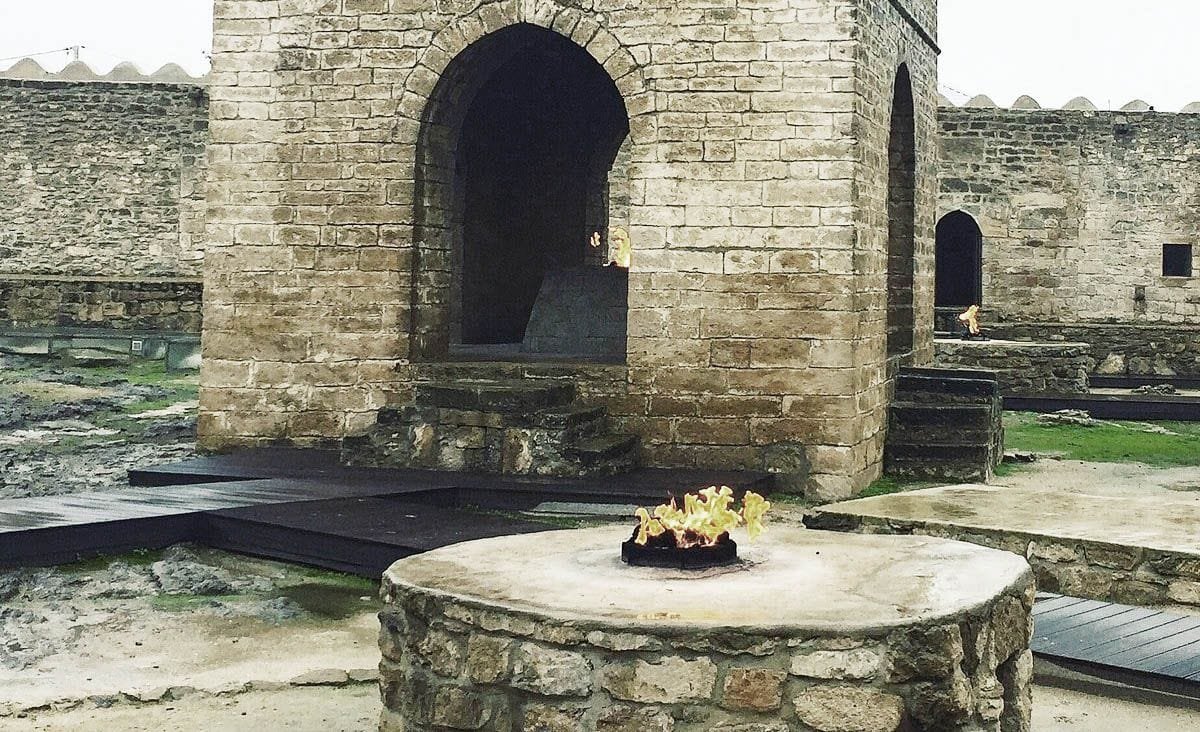 Ateshgah, known as the Fire Temple of Baku, is an extraordinary religious complex located on the Absheron Peninsula in Azerbaijan. This ancient Zoroastrian temple, built in the 17th century over a natural gas seep, was an important pilgrimage centre for Hindu and Zoroastrian fire worshippers. Its unique pentagonal structure, declared a UNESCO Heritage site, houses an eternally burning flame fed naturally and displays a fascinating blend of Persian and Indian architectural elements. During our exploration, we will marvel at the eternally burning flames, walk through the ancient pilgrim cells and immerse ourselves in the rich history of the Silk Road at this mystical site.
Road 35 km, 0 hours 30 minutes
Ateshgah, known as the Fire Temple of Baku, is an extraordinary religious complex located on the Absheron Peninsula in Azerbaijan. This ancient Zoroastrian temple, built in the 17th century over a natural gas seep, was an important pilgrimage centre for Hindu and Zoroastrian fire worshippers. Its unique pentagonal structure, declared a UNESCO Heritage site, houses an eternally burning flame fed naturally and displays a fascinating blend of Persian and Indian architectural elements. During our exploration, we will marvel at the eternally burning flames, walk through the ancient pilgrim cells and immerse ourselves in the rich history of the Silk Road at this mystical site.
Road 35 km, 0 hours 30 minutes
Yanardag - Historic, Cultural and Natural State Reserve
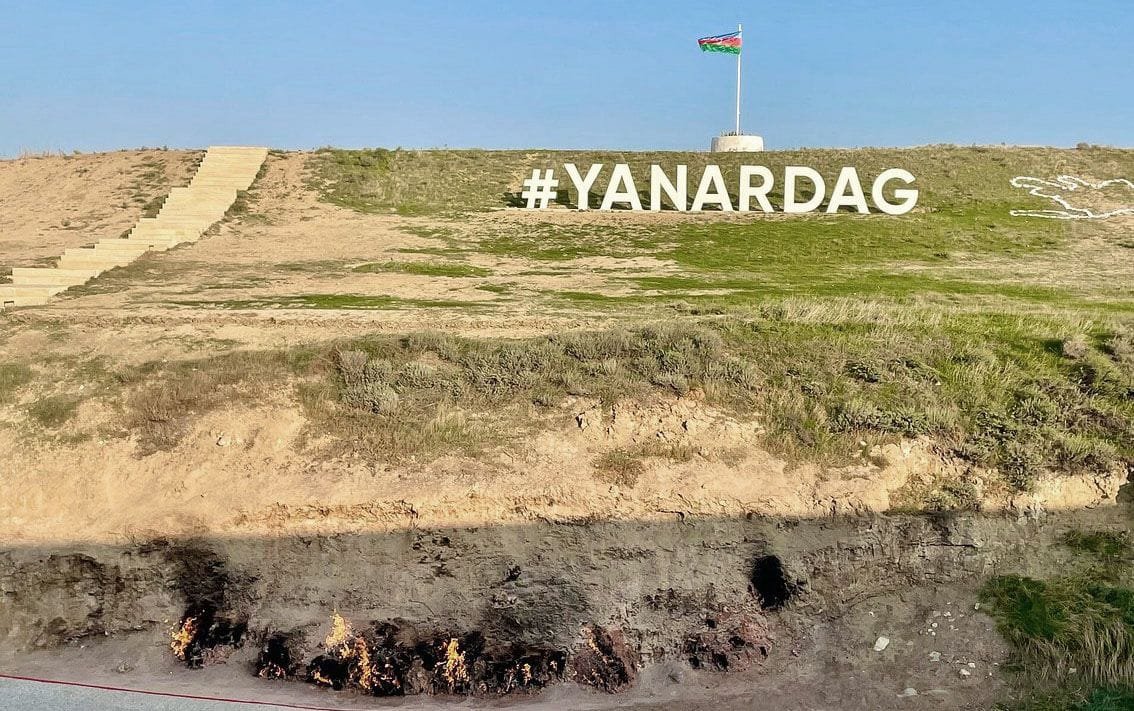 Yanardag, a spectacular fire mountain located 27 kilometres from Baku in Azerbaijan, is an extraordinary natural phenomenon where natural flames continuously emerge from a porous sandstone hillside. This eternal fire, which burns uninterruptedly thanks to natural gas seeps, has fascinated people for centuries and was one of the reasons ancient Zoroastrians considered Azerbaijan a sacred land. The Historic, Cultural and Natural State Reserve protects this spectacular phenomenon, which reaches up to 3 metres in height, and stands as a living testament to why Azerbaijan is known as the "Land of Fire". During our visit, we will gaze in awe at the dancing flames against the night sky, listen to the soft hiss of gas rising from the earth and feel the mystical warmth of this perpetual fire that has captivated travellers and pilgrims for generations.
Road 17 km, 0 hours 35 minutes
Yanardag, a spectacular fire mountain located 27 kilometres from Baku in Azerbaijan, is an extraordinary natural phenomenon where natural flames continuously emerge from a porous sandstone hillside. This eternal fire, which burns uninterruptedly thanks to natural gas seeps, has fascinated people for centuries and was one of the reasons ancient Zoroastrians considered Azerbaijan a sacred land. The Historic, Cultural and Natural State Reserve protects this spectacular phenomenon, which reaches up to 3 metres in height, and stands as a living testament to why Azerbaijan is known as the "Land of Fire". During our visit, we will gaze in awe at the dancing flames against the night sky, listen to the soft hiss of gas rising from the earth and feel the mystical warmth of this perpetual fire that has captivated travellers and pilgrims for generations.
Road 17 km, 0 hours 35 minutes
Heydar Aliyev Cultural Centre
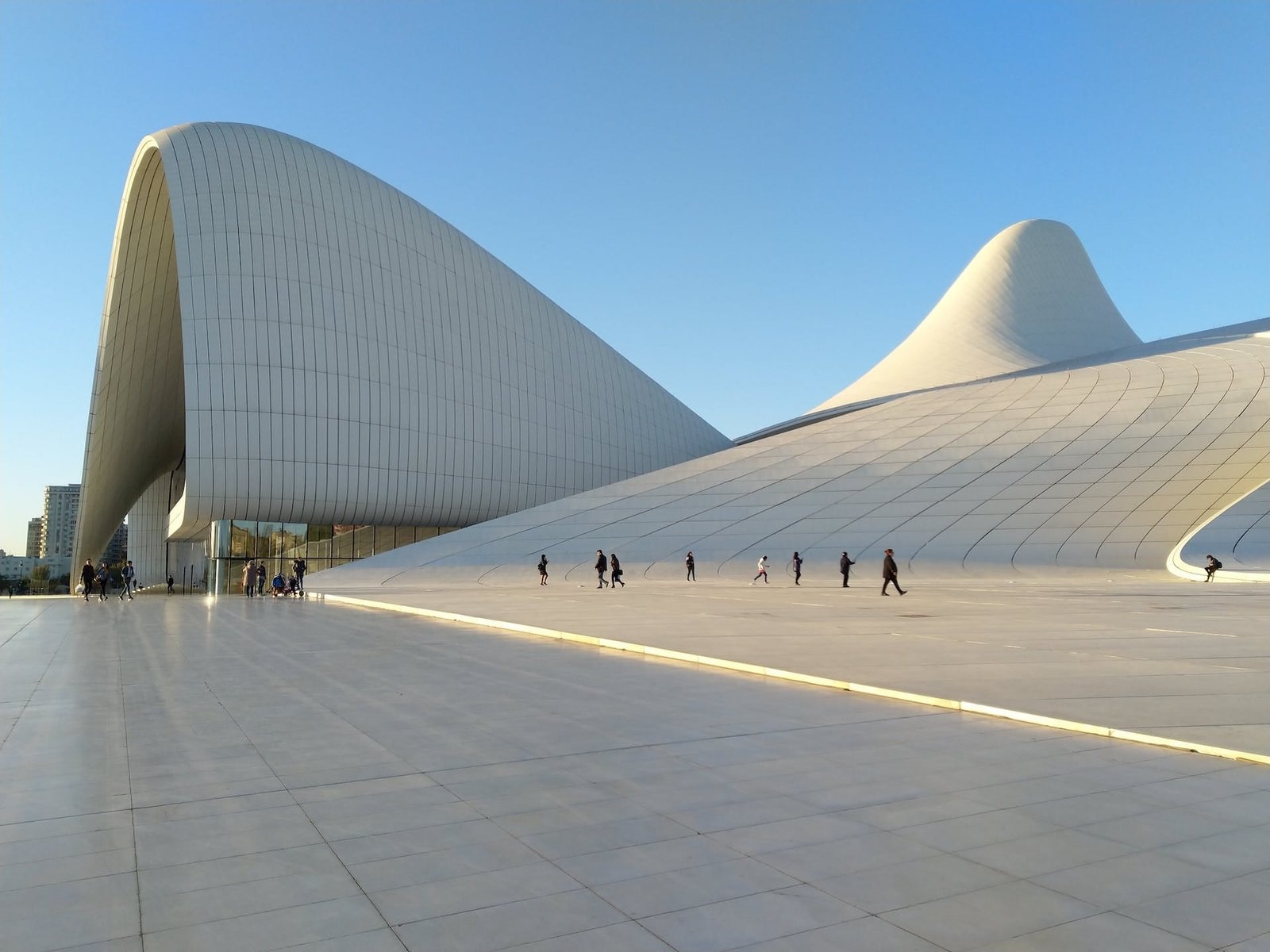 The Heydar Aliyev Cultural Centre, located in the heart of Baku, Azerbaijan, is an architectural and cultural icon designed by the renowned Zaha Hadid. This impressive building stands out for its fluid, modern curves, symbolising the union between tradition and the future. In addition to its innovative architecture, it houses exhibitions, cultural events and interactive spaces celebrating Azerbaijani history and art. Recognised worldwide, this centre represents a landmark of contemporary design and Azerbaijan's national identity. During our visit, we will explore its fascinating galleries, admire its unique design and learn about the rich culture and history of Azerbaijan, immersing ourselves in an unforgettable experience full of art and innovation.
Road 2 km, 0 hours 4 minutes
The Heydar Aliyev Cultural Centre, located in the heart of Baku, Azerbaijan, is an architectural and cultural icon designed by the renowned Zaha Hadid. This impressive building stands out for its fluid, modern curves, symbolising the union between tradition and the future. In addition to its innovative architecture, it houses exhibitions, cultural events and interactive spaces celebrating Azerbaijani history and art. Recognised worldwide, this centre represents a landmark of contemporary design and Azerbaijan's national identity. During our visit, we will explore its fascinating galleries, admire its unique design and learn about the rich culture and history of Azerbaijan, immersing ourselves in an unforgettable experience full of art and innovation.
Road 2 km, 0 hours 4 minutes
Yashil Bazar
 The Yashil Bazar, also known as the Green Market, is one of the most vibrant and authentic traditional markets in Baku, the capital of Azerbaijan. Located in the heart of the city, this bustling covered market has been for generations the hub of local trade in fresh produce. Its aisles hold a dazzling variety of fruits, vegetables, aromatic spices, fresh herbs, dried fruits and the famous Azerbaijani pickles, all presented in the distinctive Caucasus style. The Soviet architecture of the building contrasts with the warmth and colour of the traditional stalls, where vendors keep centuries-old trading traditions alive. During our tour, we will immerse ourselves in a sensory feast of aromas and flavours, taste the delicious qurut (dried yoghurt), interact with the friendly local vendors and discover the secrets of the rich Azerbaijani cuisine as we explore the lively aisles of this historic market.
Road 10 km, 0 hours 4 minutes
The Yashil Bazar, also known as the Green Market, is one of the most vibrant and authentic traditional markets in Baku, the capital of Azerbaijan. Located in the heart of the city, this bustling covered market has been for generations the hub of local trade in fresh produce. Its aisles hold a dazzling variety of fruits, vegetables, aromatic spices, fresh herbs, dried fruits and the famous Azerbaijani pickles, all presented in the distinctive Caucasus style. The Soviet architecture of the building contrasts with the warmth and colour of the traditional stalls, where vendors keep centuries-old trading traditions alive. During our tour, we will immerse ourselves in a sensory feast of aromas and flavours, taste the delicious qurut (dried yoghurt), interact with the friendly local vendors and discover the secrets of the rich Azerbaijani cuisine as we explore the lively aisles of this historic market.
Road 10 km, 0 hours 4 minutes
Day 3 - Baku - Gobustan - Baku
Total road distance - 204 km, 3 hours 30 minutes After breakfast at the hotel, we begin our adventure. The planned visits are: Road 70 km, 1 hour 5 minutesGobustan Rock Art - Petroglyphs Museum
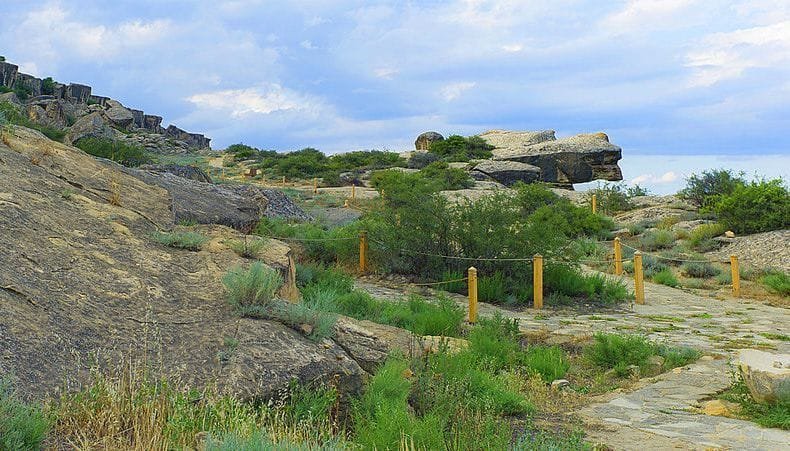 The Gobustan Petroglyphs Museum, located in Azerbaijan, is an archaeological site declared a UNESCO World Heritage Site. This open-air museum houses more than 6,000 rock-carved petroglyphs dating back 40,000 years, offering a glimpse into prehistoric life. Set in a desert landscape near the Caspian Sea, Gobustan is also noted for its ancient human settlements and the famous mud volcanoes that round out the unique experience of this destination.
During our visit we will admire the intricate rock engravings, explore the remains of ancient civilisations and observe the fascinating mud volcanoes that make Gobustan a truly special place.
Road 30 km, 0 hours 50 minutes
The Gobustan Petroglyphs Museum, located in Azerbaijan, is an archaeological site declared a UNESCO World Heritage Site. This open-air museum houses more than 6,000 rock-carved petroglyphs dating back 40,000 years, offering a glimpse into prehistoric life. Set in a desert landscape near the Caspian Sea, Gobustan is also noted for its ancient human settlements and the famous mud volcanoes that round out the unique experience of this destination.
During our visit we will admire the intricate rock engravings, explore the remains of ancient civilisations and observe the fascinating mud volcanoes that make Gobustan a truly special place.
Road 30 km, 0 hours 50 minutes
Mud Volcanoes
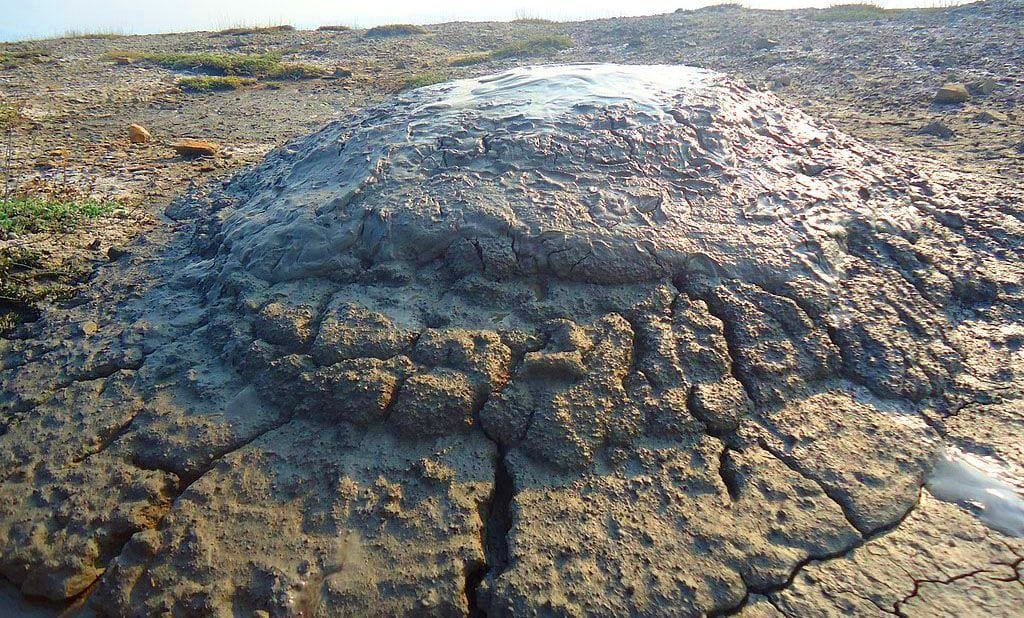 Azerbaijan's mud volcanoes represent one of the most fascinating geological phenomena in the Caucasus, located mainly on the Abşeron Peninsula and the coastal regions of the Caspian Sea. These extraordinary natural features, accounting for nearly half of the world's mud volcanoes, have borne witness to the region's rich geological history for thousands of years. The moonscape created by more than 400 active volcanoes offers a unique spectacle in which bubbling mud rises from deep within the earth, forming cones and small eruptions that have fascinated scientists and visitors alike for generations. During our exploration, we will marvel at the cold mud geysers spurting from the ground, experience the healing properties of these mineral muds and walk paths that wind among the volcanic cones, capturing unique photographs of this otherworldly landscape so characteristic of Azerbaijan.
Road 84 km, 1 hour 25 minutes
Azerbaijan's mud volcanoes represent one of the most fascinating geological phenomena in the Caucasus, located mainly on the Abşeron Peninsula and the coastal regions of the Caspian Sea. These extraordinary natural features, accounting for nearly half of the world's mud volcanoes, have borne witness to the region's rich geological history for thousands of years. The moonscape created by more than 400 active volcanoes offers a unique spectacle in which bubbling mud rises from deep within the earth, forming cones and small eruptions that have fascinated scientists and visitors alike for generations. During our exploration, we will marvel at the cold mud geysers spurting from the ground, experience the healing properties of these mineral muds and walk paths that wind among the volcanic cones, capturing unique photographs of this otherworldly landscape so characteristic of Azerbaijan.
Road 84 km, 1 hour 25 minutes
Carpet Museum
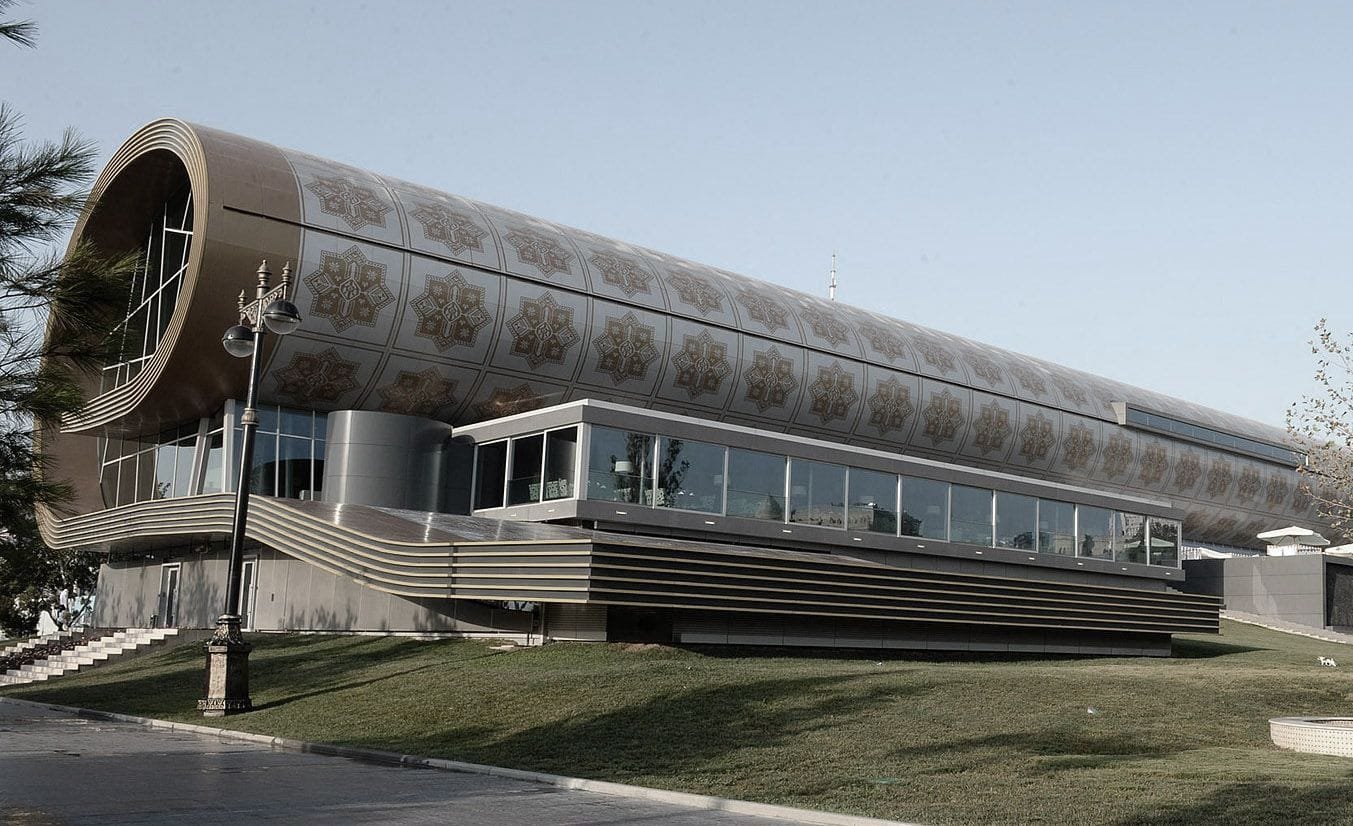 The Azerbaijan Carpet Museum, located in Baku, is a fascinating cultural space celebrating the country's rich carpet-weaving tradition, recognised as Intangible Cultural Heritage by UNESCO. Its building, designed in the shape of a rolled carpet, is a unique architectural work housing a collection of carpets, textiles and tools spanning centuries of history. This museum not only preserves traditional art but also offers a space to learn about Azerbaijan's unique techniques and designs.
During our visit we will admire the intricate carpets, discover the secrets behind their creation and immerse ourselves in the rich cultural heritage of this outstanding museum.
Road 20 km, 0 hours 10 minutes
The Azerbaijan Carpet Museum, located in Baku, is a fascinating cultural space celebrating the country's rich carpet-weaving tradition, recognised as Intangible Cultural Heritage by UNESCO. Its building, designed in the shape of a rolled carpet, is a unique architectural work housing a collection of carpets, textiles and tools spanning centuries of history. This museum not only preserves traditional art but also offers a space to learn about Azerbaijan's unique techniques and designs.
During our visit we will admire the intricate carpets, discover the secrets behind their creation and immerse ourselves in the rich cultural heritage of this outstanding museum.
Road 20 km, 0 hours 10 minutes
Day 4 - Baku - Shamaki - Sheki
Total road distance - 347 km, 5 hours 27 minutes After breakfast at the hotel, we begin our adventure. The planned visits are: Road 90 km, 1 hour 20 minutesDiri Baba Mausoleum
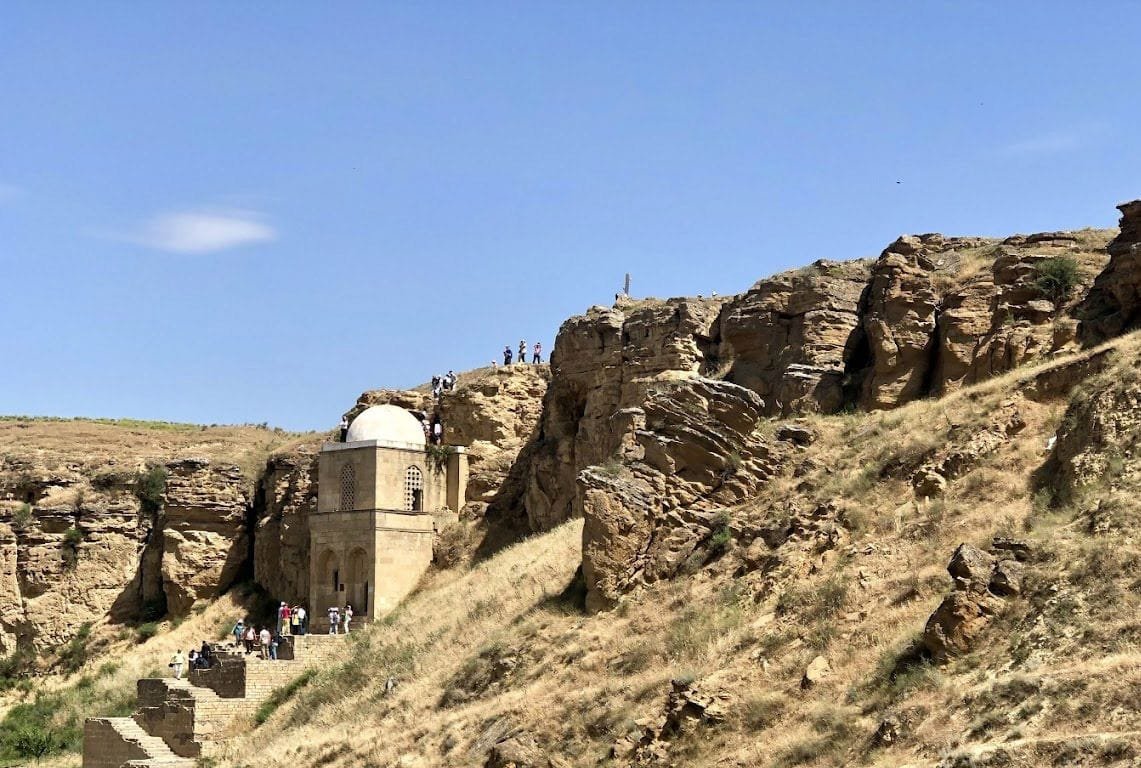 The Diri Baba Mausoleum, located in the village of Maraza, Azerbaijan, is a fascinating historical monument built in the 15th century. Carved into a cliff, this mausoleum combines Islamic architecture with nature, creating a mystical atmosphere. Its design, with intricate stone details and a location that seems to defy gravity, makes it a unique place, wrapped in legends about its role as a shrine of a holy hermit.
During our visit we will explore its intricate architecture, climb the cliff to admire the views and immerse ourselves in the stories and legends surrounding this extraordinary monument.
Road 35 km, 0 hours 30 minutes
The Diri Baba Mausoleum, located in the village of Maraza, Azerbaijan, is a fascinating historical monument built in the 15th century. Carved into a cliff, this mausoleum combines Islamic architecture with nature, creating a mystical atmosphere. Its design, with intricate stone details and a location that seems to defy gravity, makes it a unique place, wrapped in legends about its role as a shrine of a holy hermit.
During our visit we will explore its intricate architecture, climb the cliff to admire the views and immerse ourselves in the stories and legends surrounding this extraordinary monument.
Road 35 km, 0 hours 30 minutes
Seven Domes Mausoleum
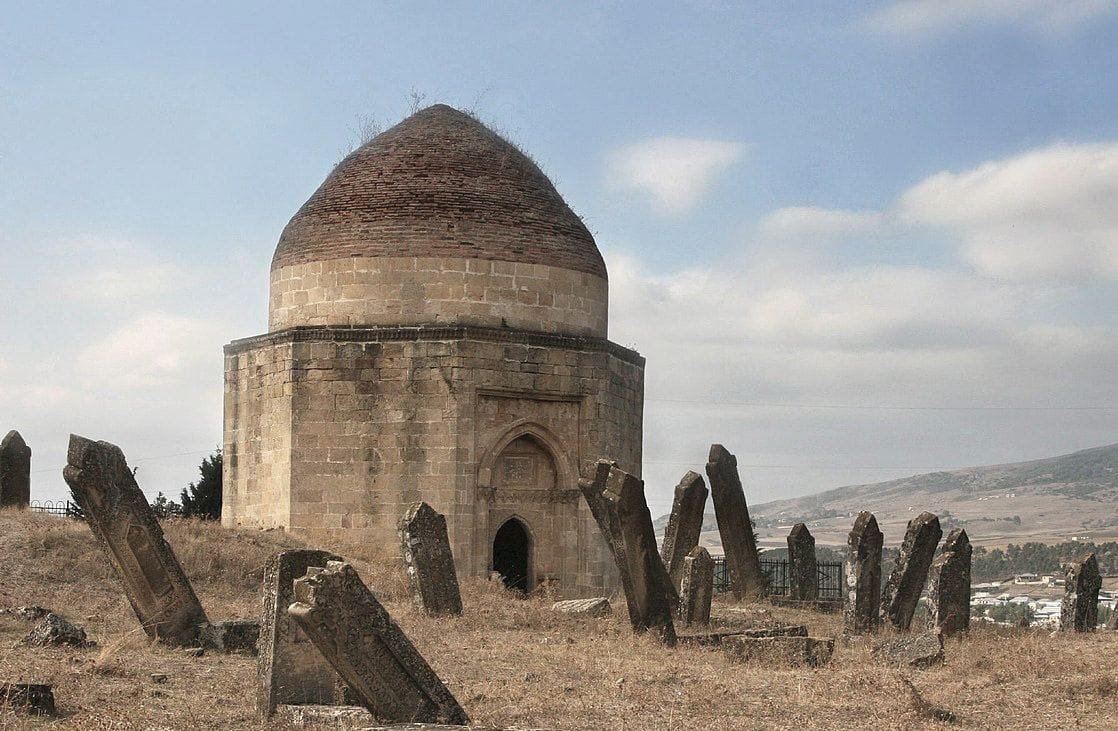 The Seven Domes Mausoleum, located in the city of Shemakha, Azerbaijan, is an impressive funerary monument dating from the 18th century. This historic site, surrounded by hills and tranquil landscapes, served as the final resting place for the nobles and rulers of the Shirvan region. Its distinctive design, with multiple domes and Islamic architectural details, reflects the rich cultural and spiritual heritage of Azerbaijan.
During our visit we will explore its unique structures, appreciate the symbolism of its architecture and enjoy the serenity of the surroundings that make this place a cultural treasure.
Road 206 km, 3 hours 2 minutes
The Seven Domes Mausoleum, located in the city of Shemakha, Azerbaijan, is an impressive funerary monument dating from the 18th century. This historic site, surrounded by hills and tranquil landscapes, served as the final resting place for the nobles and rulers of the Shirvan region. Its distinctive design, with multiple domes and Islamic architectural details, reflects the rich cultural and spiritual heritage of Azerbaijan.
During our visit we will explore its unique structures, appreciate the symbolism of its architecture and enjoy the serenity of the surroundings that make this place a cultural treasure.
Road 206 km, 3 hours 2 minutes
Khan's Summer Palace
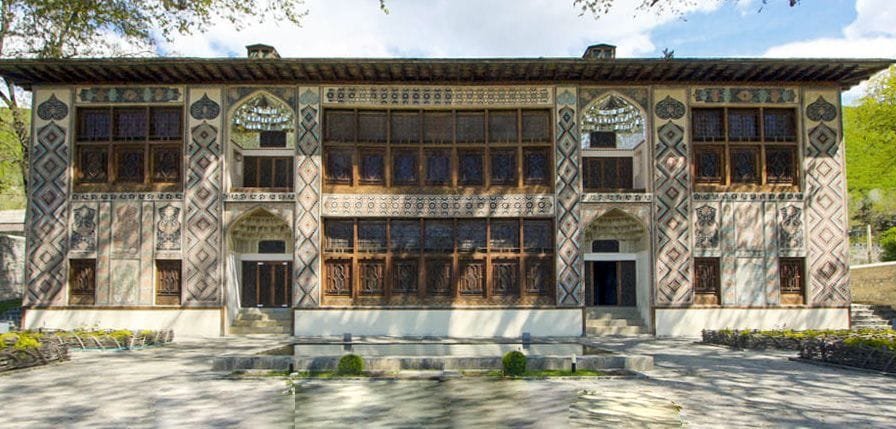 The Khan's Summer Palace, located in Sheki, Azerbaijan, is an 18th-century architectural gem reflecting the cultural and historical richness of the region. Built as a residence for the Khans of Sheki, this palace stands out for its exquisite design, including intricate stained-glass windows, detailed frescoes and wood carvings. Surrounded by gardens, it is an outstanding example of Oriental architecture and an important testament to the legacy of the Sheki dynasty. During our visit, we will admire its stunning stained-glass windows, explore the elegant rooms and transport ourselves to the era of the Khans as we discover the history of this magnificent palace.
Road 8 km, 0 hours 20 minutes
The Khan's Summer Palace, located in Sheki, Azerbaijan, is an 18th-century architectural gem reflecting the cultural and historical richness of the region. Built as a residence for the Khans of Sheki, this palace stands out for its exquisite design, including intricate stained-glass windows, detailed frescoes and wood carvings. Surrounded by gardens, it is an outstanding example of Oriental architecture and an important testament to the legacy of the Sheki dynasty. During our visit, we will admire its stunning stained-glass windows, explore the elegant rooms and transport ourselves to the era of the Khans as we discover the history of this magnificent palace.
Road 8 km, 0 hours 20 minutes
Albanian Church of Kish
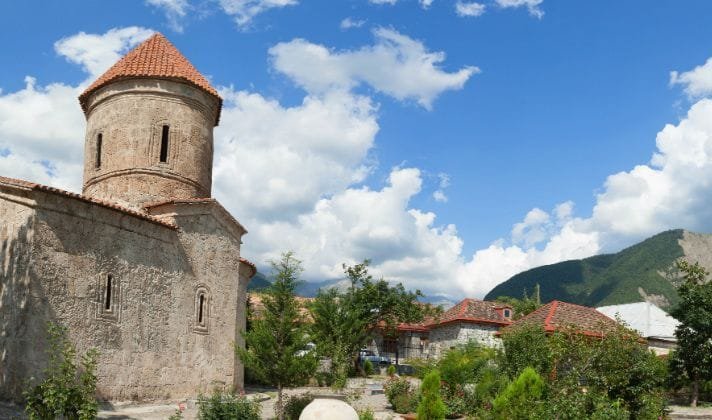 The Albanian Church of Kish, situated in the picturesque village of Kish near Sheki, Azerbaijan, is an ancient Christian temple dating from the 1st century. Considered the oldest church in the Caucasus, it was an important spiritual centre of the Caucasian Albanian kingdom. Its architecture combines local and Byzantine influences, and its mountain setting enhances its historical atmosphere. Today it functions as a museum, noted for its archaeological excavations and its unique religious history.
During our visit we will explore its restored interiors, learn about the ancient civilisations that built it and enjoy the serenity of the picturesque village that surrounds it.
Road 8 km, 0 hours 15 minutes
The Albanian Church of Kish, situated in the picturesque village of Kish near Sheki, Azerbaijan, is an ancient Christian temple dating from the 1st century. Considered the oldest church in the Caucasus, it was an important spiritual centre of the Caucasian Albanian kingdom. Its architecture combines local and Byzantine influences, and its mountain setting enhances its historical atmosphere. Today it functions as a museum, noted for its archaeological excavations and its unique religious history.
During our visit we will explore its restored interiors, learn about the ancient civilisations that built it and enjoy the serenity of the picturesque village that surrounds it.
Road 8 km, 0 hours 15 minutes
Day 5 - Sheki - Lagodekhi - Kvareli - Alaverdi - Telavi
Total road distance - 230 km, 3 hours 51 minutes After breakfast at the hotel, we begin our adventure. The planned visits are: Road 110 km, 1 hour 50 minutesLagodekhi
Cross the border between Azerbaijan and Georgia. Border formalities and change of guide and transport. Road 47 km, 0 hours 45 minutesKhareba Winery in the tunnel
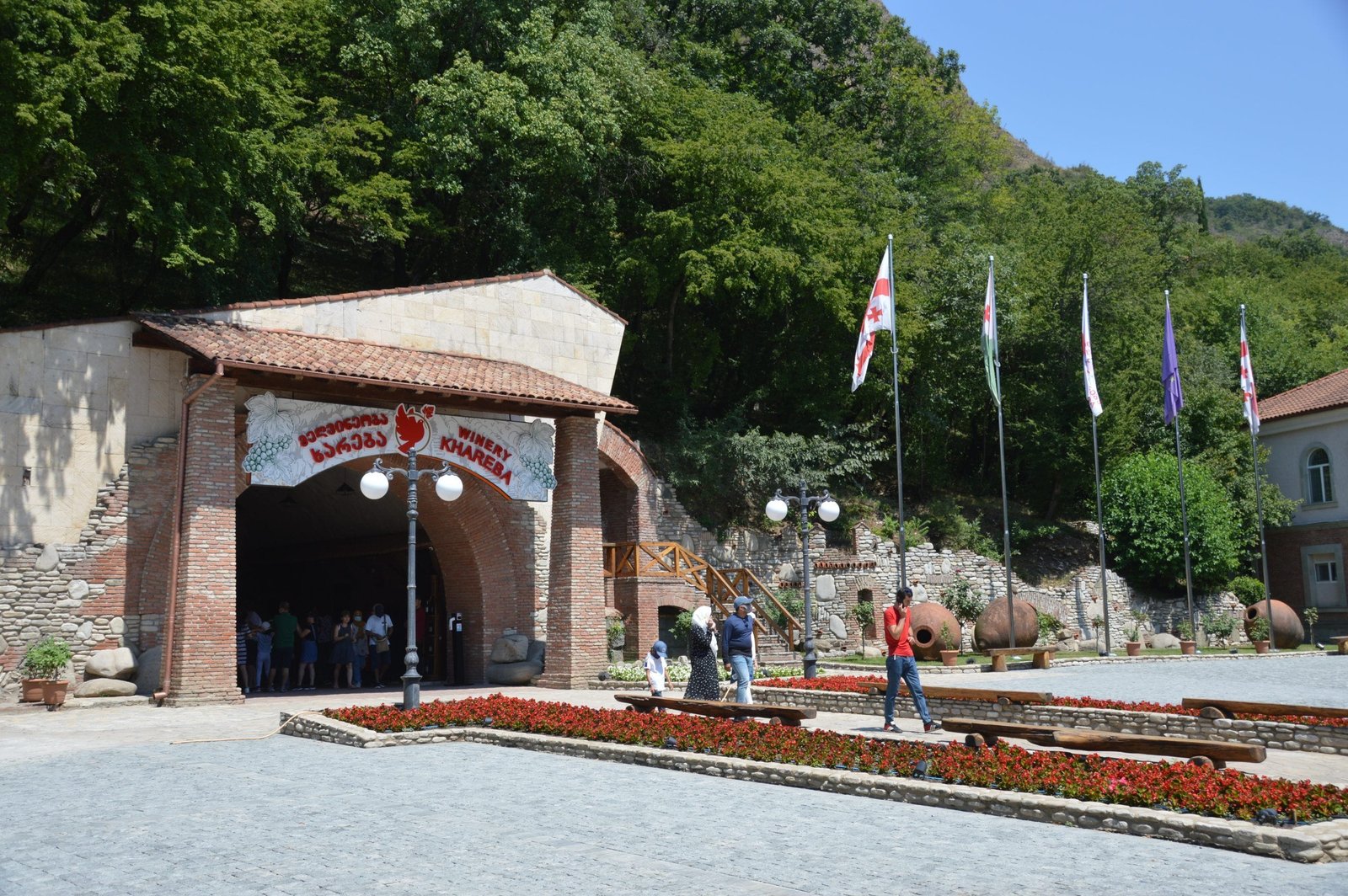 Nestled in the heart of the Kakheti region, Khareba Winery stands out for its extraordinary tunnel system carved into the Caucasian mountain, extending more than 7.7 kilometres at a depth of 60 metres. Originally built during the Soviet era, this underground labyrinth maintains a constant natural temperature of 12–14°C, creating ideal conditions for wine ageing. The winery combines traditional Georgian winemaking methods in qvevri with modern technology, producing exceptional wines from indigenous grape varieties such as Saperavi and Rkatsiteli. During our visit, we will walk the mysterious tunnels torch in hand, learn about Georgia's 8,000-year winemaking history and taste a select variety of wines while enjoying the local gastronomy.
Road 52 km, 0 hours 51 minutes
Nestled in the heart of the Kakheti region, Khareba Winery stands out for its extraordinary tunnel system carved into the Caucasian mountain, extending more than 7.7 kilometres at a depth of 60 metres. Originally built during the Soviet era, this underground labyrinth maintains a constant natural temperature of 12–14°C, creating ideal conditions for wine ageing. The winery combines traditional Georgian winemaking methods in qvevri with modern technology, producing exceptional wines from indigenous grape varieties such as Saperavi and Rkatsiteli. During our visit, we will walk the mysterious tunnels torch in hand, learn about Georgia's 8,000-year winemaking history and taste a select variety of wines while enjoying the local gastronomy.
Road 52 km, 0 hours 51 minutes
Alaverdi Monastery
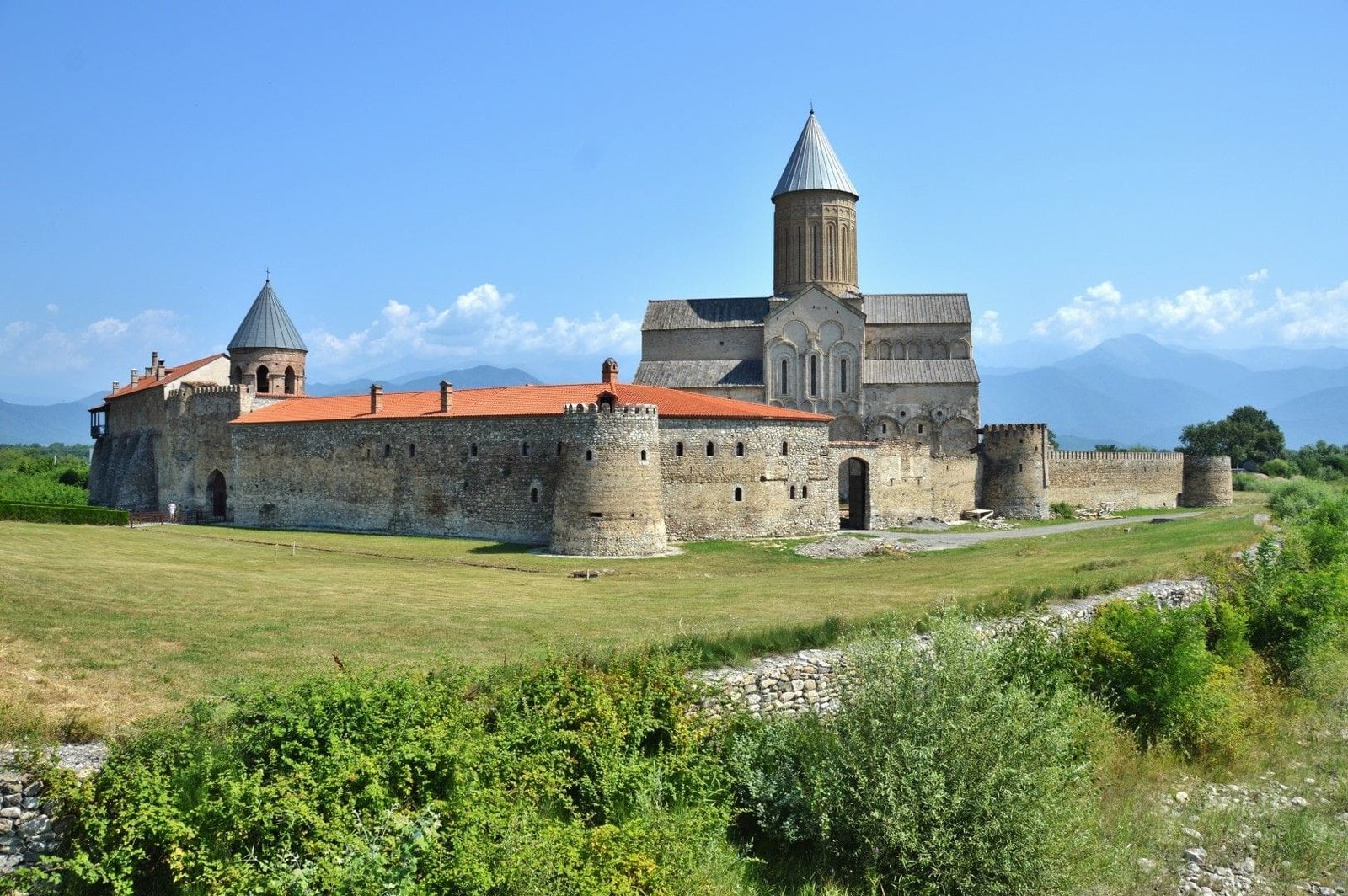 Alaverdi Monastery, located in the Kakheti region, Georgia, is an impressive cathedral dating from the 6th century. This historic site was founded by the monk Joseph of Alaverdi and, in the 11th century, became one of Georgia's tallest churches with its magnificent dome. Surrounded by vineyards, the monastery is also famous for its winemaking tradition, which connects it deeply to the culture of the region.
During our visit we will explore the majestic cathedral, learn about its rich history and enjoy the beauty of the vineyards surrounding this emblematic site in Kakheti.
Road 21 km, 0 hours 25 minutes
Alaverdi Monastery, located in the Kakheti region, Georgia, is an impressive cathedral dating from the 6th century. This historic site was founded by the monk Joseph of Alaverdi and, in the 11th century, became one of Georgia's tallest churches with its magnificent dome. Surrounded by vineyards, the monastery is also famous for its winemaking tradition, which connects it deeply to the culture of the region.
During our visit we will explore the majestic cathedral, learn about its rich history and enjoy the beauty of the vineyards surrounding this emblematic site in Kakheti.
Road 21 km, 0 hours 25 minutes
Day 6 - Telavi - Signagi - Bodbe - Tbilisi
Total road distance - 181 km, 3 hours 8 minutes After breakfast at the hotel, we begin our adventure. The planned visits are: Road 69 km, 1 hour 15 minutesSignagi
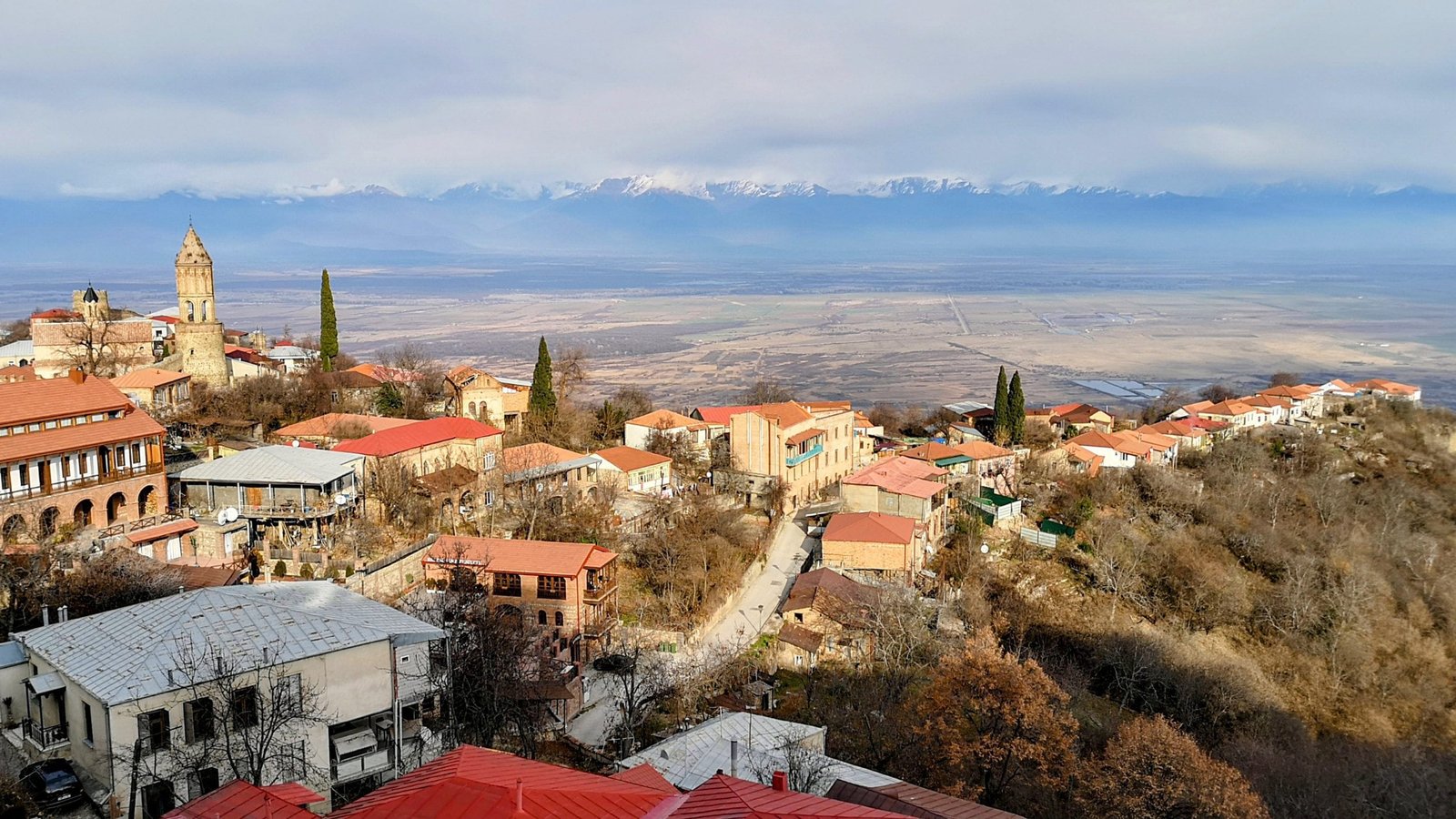 Signagi, known as the "City of Love", is a picturesque walled town set in the wine-growing region of Kakheti, 790 metres above sea level. This 18th-century town, enclosed by a 4-kilometre wall with 23 towers, offers stunning views of the Alazani valley and the Caucasus mountains. It is noted for its traditional Georgian architecture, cobblestone streets and carved wooden balconies. During our visit, we will stroll through its romantic lanes, taste the famous wines of Kakheti in traditional wine cellars and watch the sunset over the valley from its ancient defensive walls.
Bodbe Monastery
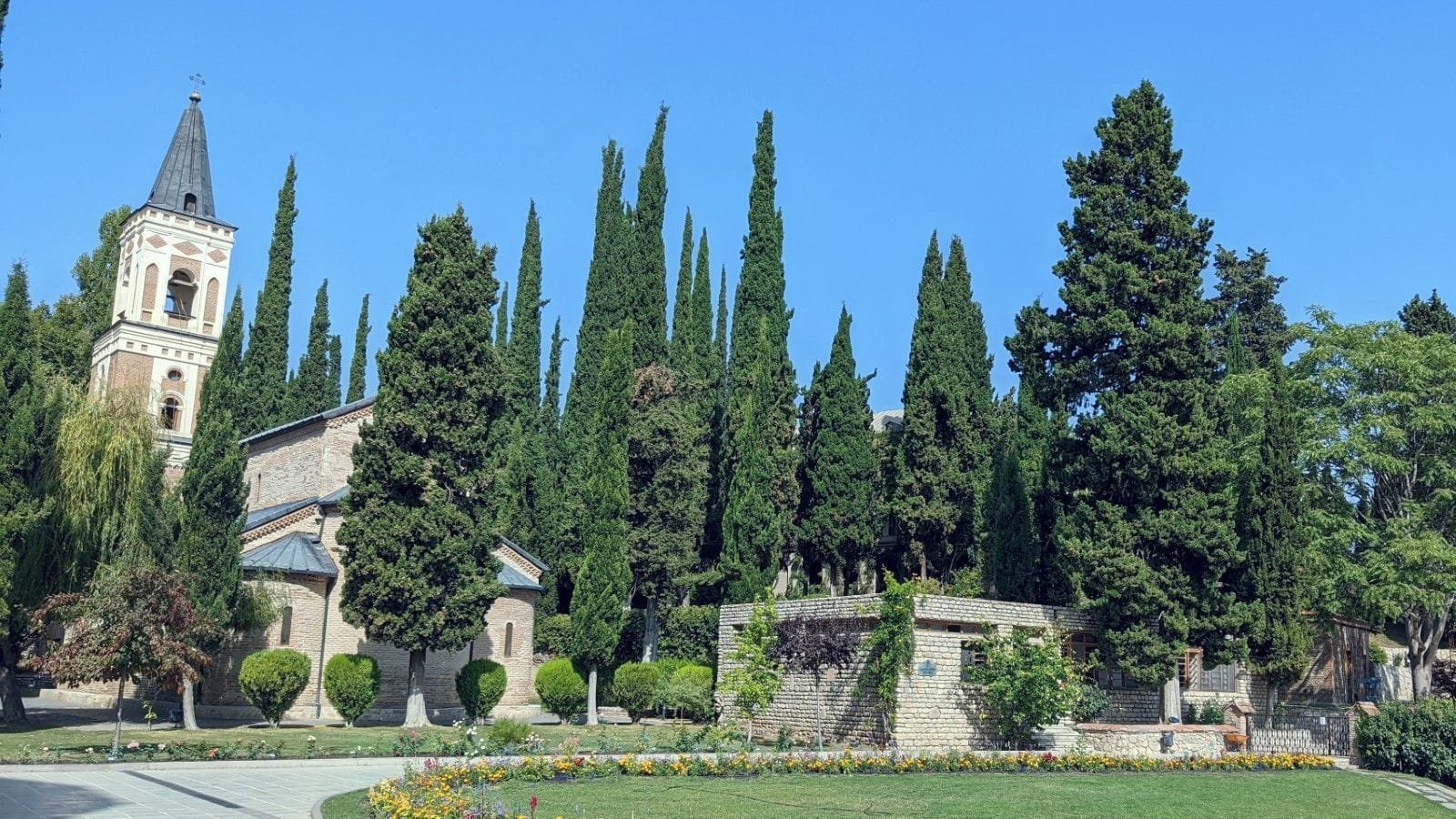 Bodbe Monastery, located in the Kakheti region, is one of Georgia's most important pilgrimage sites, as it houses the tomb of Saint Nino, the missionary who brought Christianity to the country in the 4th century. This monastic complex, surrounded by centuries-old cypresses and lush gardens, combines architectural elements from the 9th and 17th centuries, including its three-nave basilica and traditional frescoes. During our visit, we will descend the sacred path to Saint Nino's miraculous spring, contemplate the views of the Alazani valley and experience the deep spirituality that permeates this holy place.
Day 7 - Tbilisi - Ananuri - Kazbegi - Tbilisi
Total road distance - 321 km, 6 hours 0 minutes After breakfast at the hotel, we begin our adventure. The planned visits are: Road 67 km, 1 hour 10 minutesAnanuri
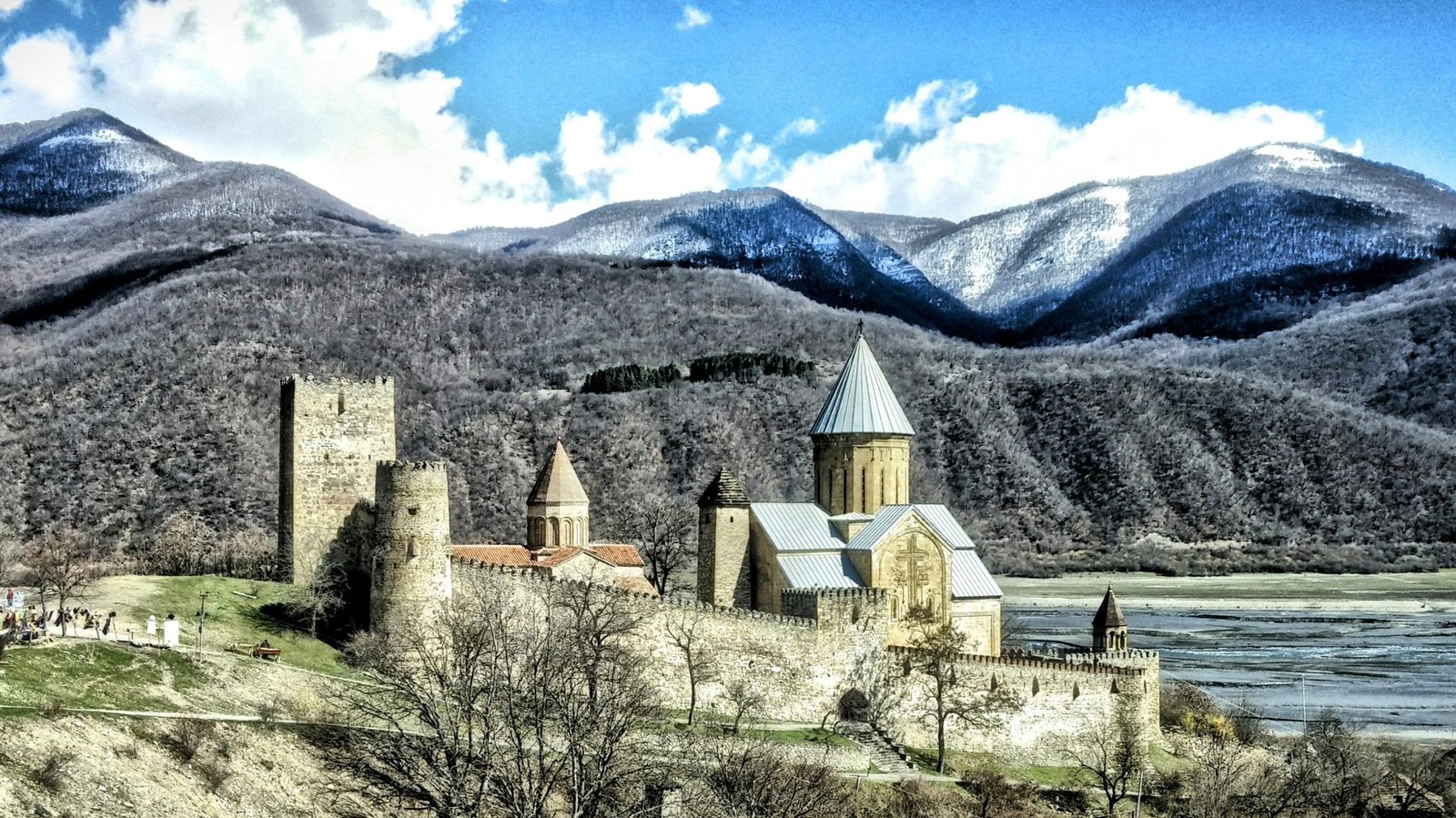 Ananuri, an impressive medieval fortress 66 kilometres from Tbilisi, rises majestically above the Zhinvali Reservoir on the historic Georgian Military Highway. This 13th-century architectural complex, which served as the seat of the eristavis (dukes) of Aragvi, combines defensive elements with extraordinary examples of Georgian religious architecture, featuring its main church with intricate stone reliefs and well-preserved frescoes. During our visit, we will explore the fortified towers, admire panoramic views of the turquoise reservoir and discover the secrets of medieval Georgian architecture as we stroll through its ancient cobbled courtyards.
Gergeti Trinity Church
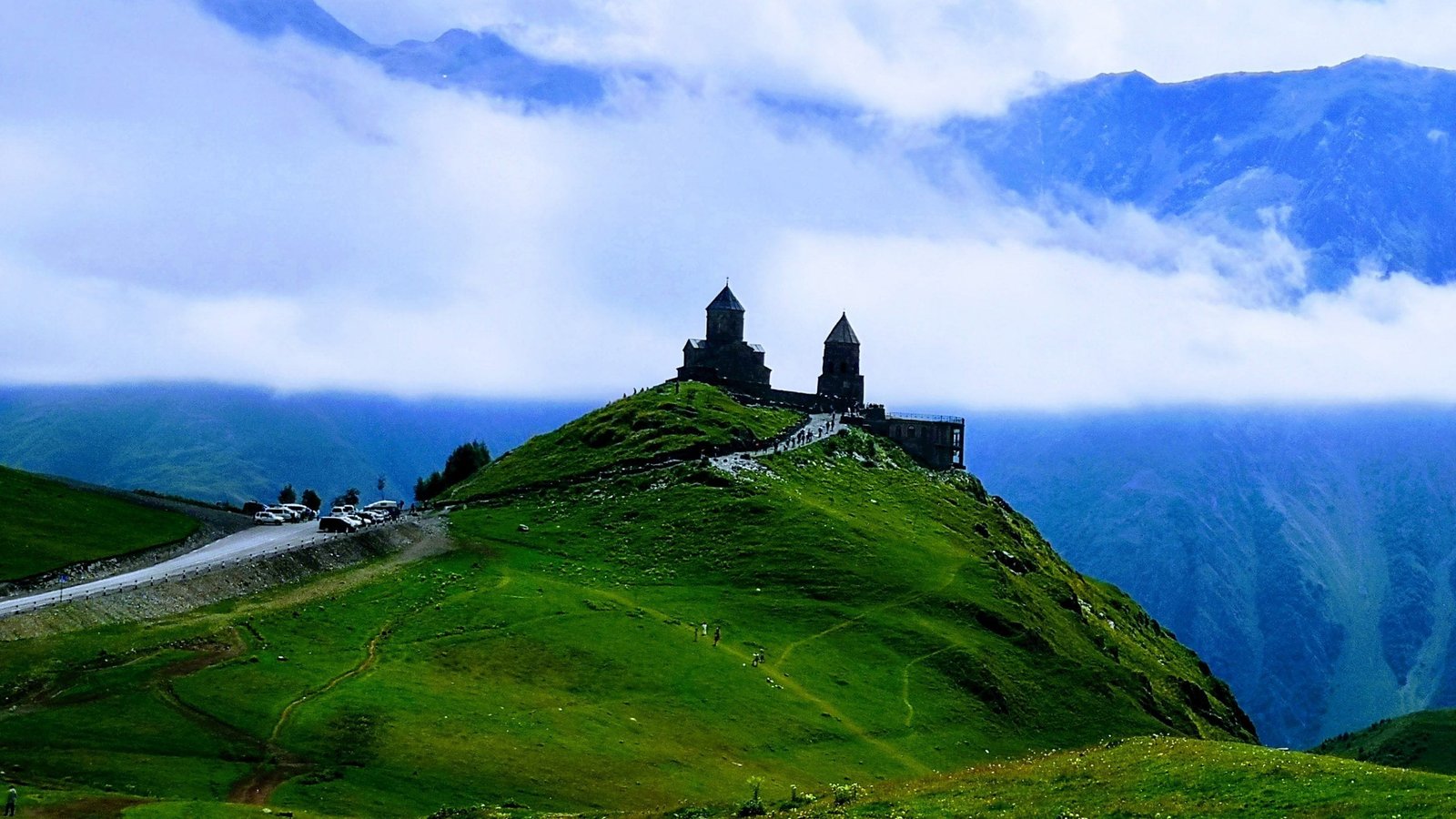 The Gergeti Trinity Church stands majestically at 2,170 metres above sea level in the shadow of Mount Kazbegi (5,047 m). This iconic 14th-century temple, situated in the historic region of Khevi, is one of Georgia's most recognisable symbols, noted for its remote location and its traditional Georgian architecture against the backdrop of the snow-capped Caucasus peaks. During our excursion, we will ascend by 4x4 along the winding mountain road, explore the ancient monastic complex and take in panoramic views of the surrounding glaciers and peaks.
Day 8 - Tbilisi - Gori - Uplistsikhe - Akhaltsikhe
Total road distance - 248 km, 4 hours 12 minutes After breakfast at the hotel, we begin our adventure. The planned visits are: Road 89 km, 1 hour 22 minutesStalin Museum
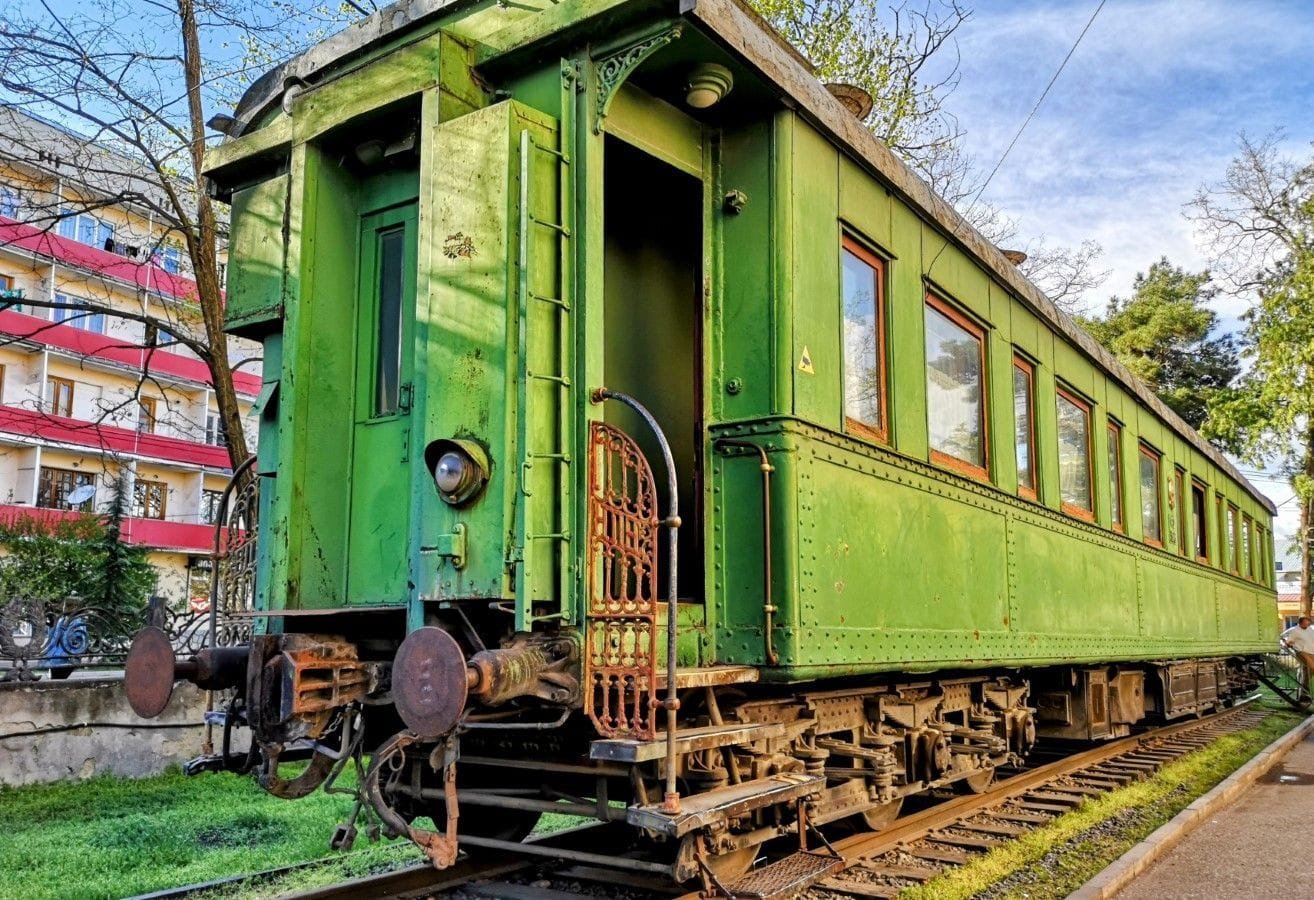 The Stalin Museum in Gori, birthplace of the controversial Soviet leader, is one of the last museums in the world dedicated to Josef Stalin. The complex includes the original birthplace, a Soviet palace-style building and Stalin's personal railway carriage. The exhibition houses an extensive collection of personal objects, photographs, historical documents and the dictator's original death mask. During our visit, we will explore the halls documenting Stalin's life from his youth in Georgia to his Soviet leadership, examine his luxurious armoured railway carriage and reflect on the complex historical legacy he left in the region.
Uplistsikhe
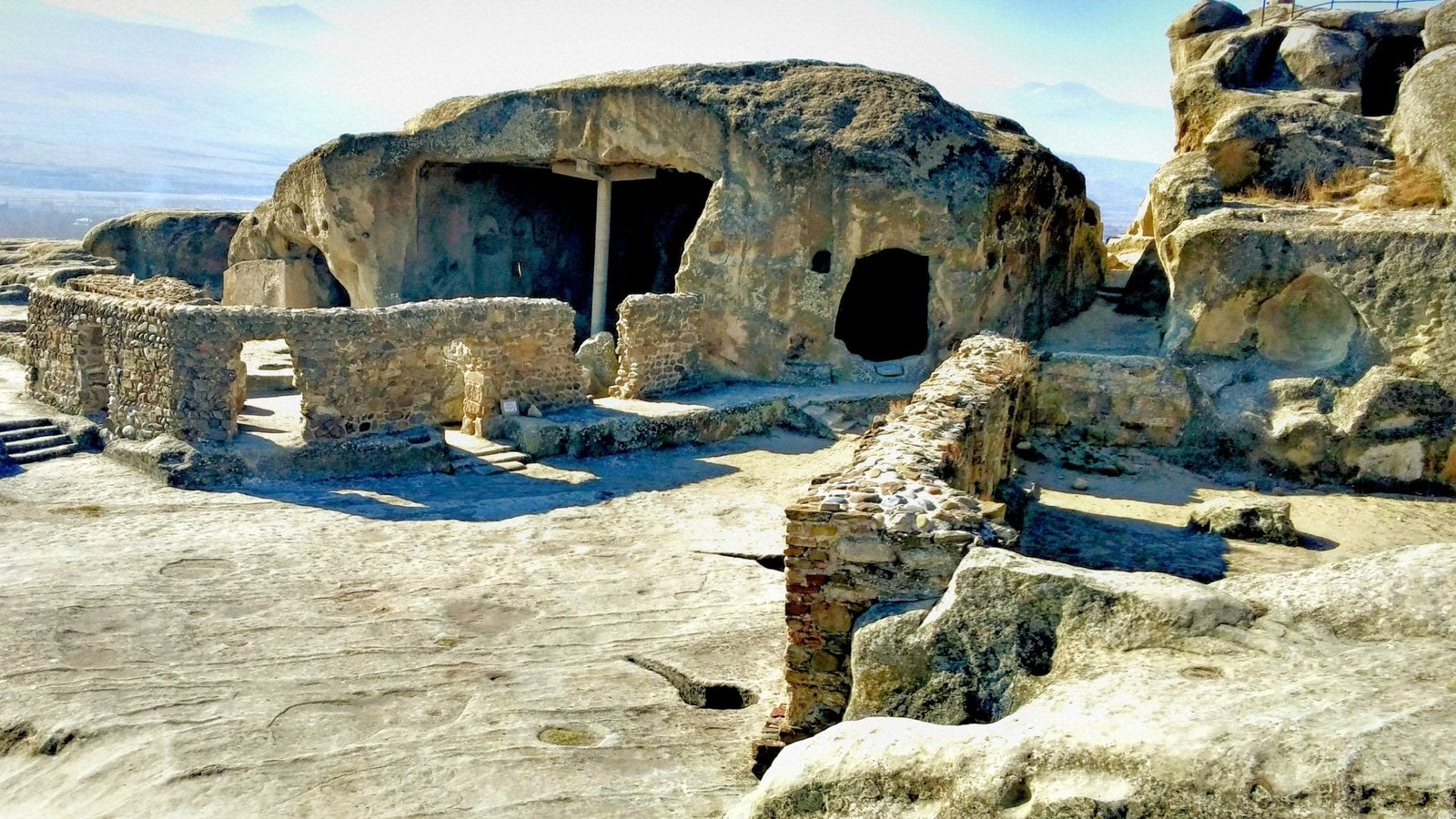 Located in the Kartli region of central Georgia, Uplistsikhe is an ancient rock-cut cave city dating from the first millennium BC. This extraordinary archaeological complex, considered one of the oldest settlements in the Caucasus, was an important religious and commercial centre on the historic Silk Road. Its architectural structures include pagan temples, Christian basilicas and civic buildings reflecting the unique fusion of Christian and pagan styles. The city is notable for its street system, secret tunnels and an exceptionally well-preserved Roman theatre. During our visit we will explore the ancient wine cellars, walk through lanes carved in stone and marvel at the panoramic views of the Mtkvari River from atop this natural acropolis, travelling through more than 3,000 years of Caucasian history.
Day 9 - Akhaltsikhe - Vardzia - Khertvisi - Bavra - Gyumri
Total road distance - 193 km, 4 hours 5 minutes After breakfast at the hotel, we begin our adventure. The planned visits are: Road 60 km, 1 hour 20 minutesVardzia
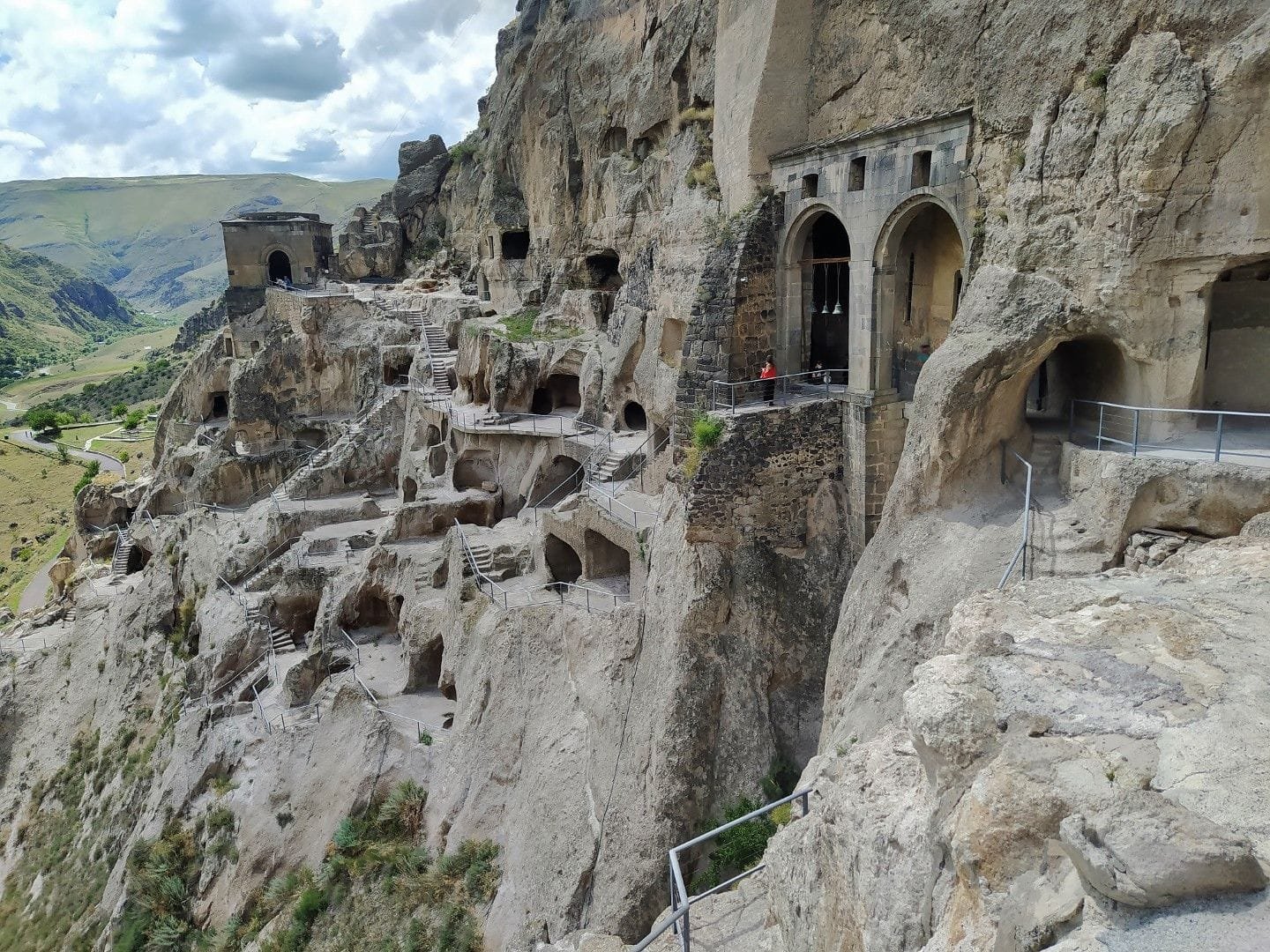 Carved into the vertical wall of Mount Erusheli, Vardzia emerges as a spectacular 12th-century rock-cut monastery city, a symbol of the cultural peak of medieval Georgia during the reign of Queen Tamar. This monastic complex extends 500 metres and reaches up to 19 levels, housing more than 600 rooms including churches, wine cellars, libraries and an intricate system of tunnels and irrigation. The site is particularly noted for the Church of the Dormition, which preserves exceptional 12th-century frescoes, including a famous portrait of Queen Tamar. During our exploration, we will walk through the tunnels and secret staircases connecting the different chambers, discover ancient wine cellars and marvel at the medieval frescoes that have survived earthquakes and centuries of history in this rock-cut architectural gem.
Bavra
Armenia-Georgia border formalities; change of transport and guide.Day 10 - Gyumri - City walk Gyumri - Dilijan Old Town - Sevan - Yerevan
Total road distance - 195 km, 3 hours 10 minutes After breakfast at the hotel, we begin our adventure. The planned visits are: Road 0 km, 0 hours 0 minutesCity walk through Gyumri
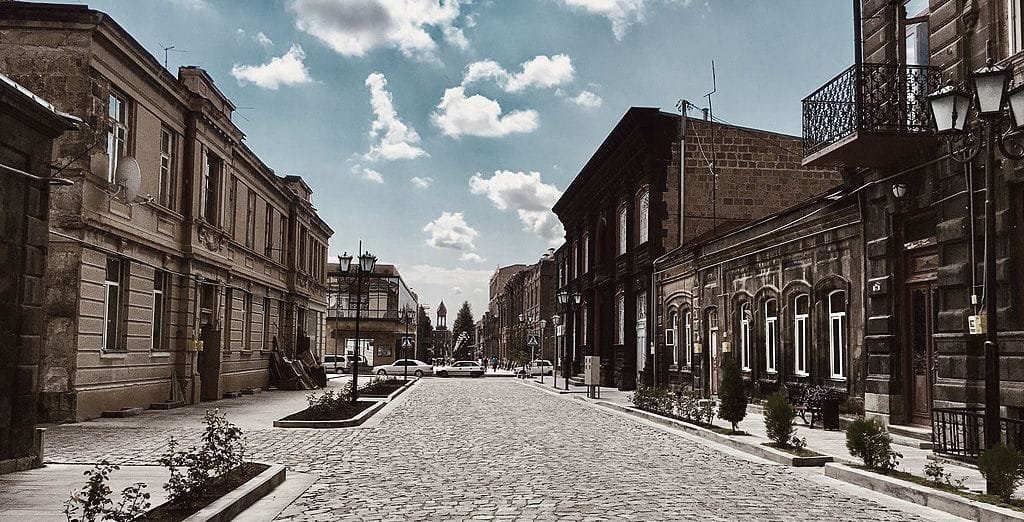 Gyumri, Armenia's second-largest city, sits on the fertile plain of Shirak, standing out as a cultural and historical treasure that reflects the country's rich heritage. This ancient city, formerly known as Alexandropol and Leninakan, preserves an impressive collection of 19th-century architecture in its distinctive black tuf stone style, having survived devastating earthquakes that have marked its history. The historic centre, known as Kumayri, captivates with its cobblestone streets, stately buildings and the magnificent Church of the Holy Apostles. During our walk through its historic streets, we will explore the lively local markets, taste the authentic cuisine of Shirak in traditional restaurants and immerse ourselves in the vibrant artistic atmosphere that has made Gyumri the cultural centre of Armenia.
Dilijan
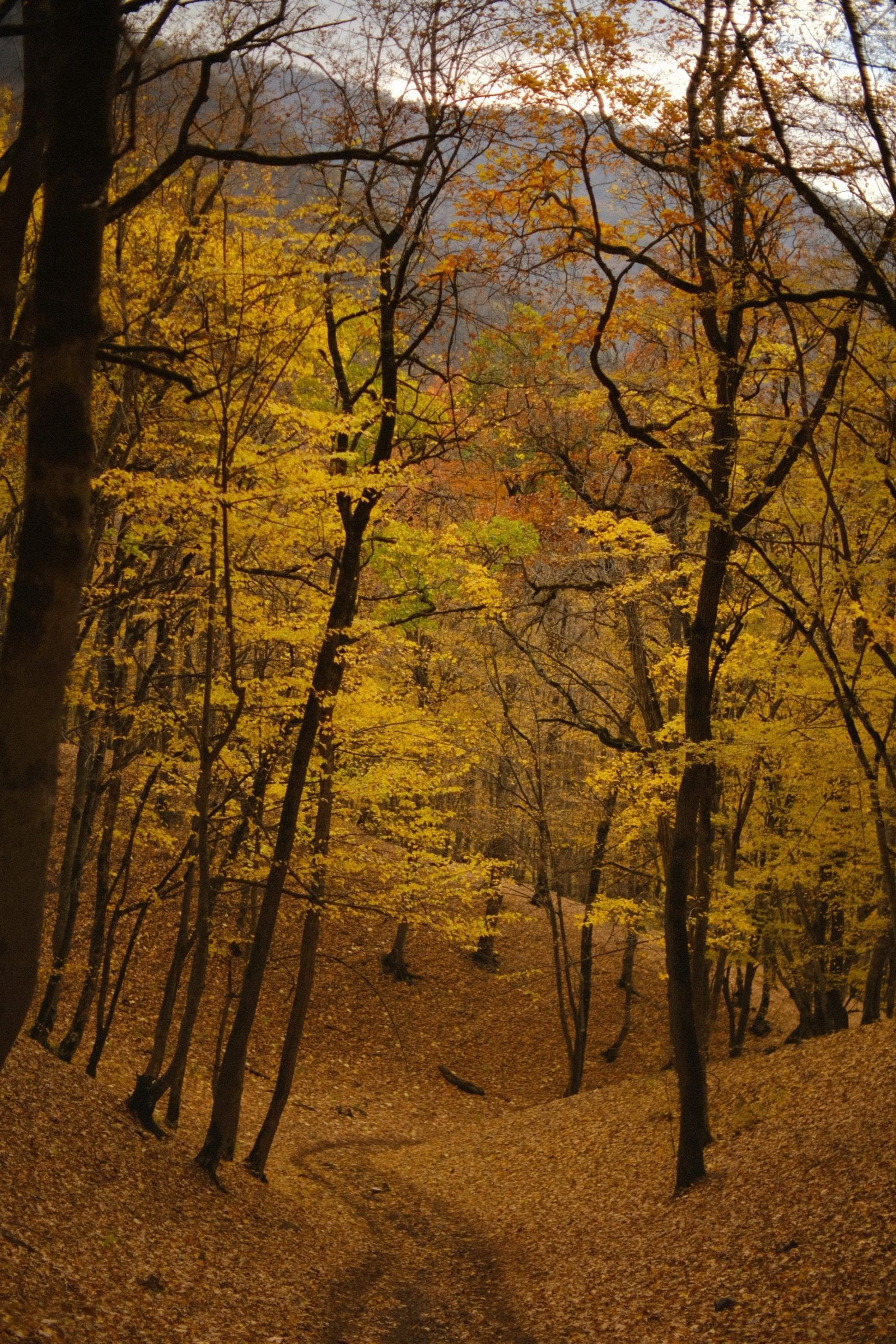 Known as the "Little Switzerland of Armenia", Dilijan is a charming spa town situated in the Tavush province in northern Armenia. Surrounded by the dense forested mountains of Dilijan National Park, covering more than 24,000 hectares of lush nature, this historic town is distinguished by its traditional Armenian architecture, with 19th-century wood and stone houses lining its winding streets. These carefully preserved buildings display the characteristic carved balconies and ornate windows that reflect the region's rich craft tradition.
The town has for centuries been an important cultural and healing centre, famous for its curative mineral springs and its pure mountain air, attracting artists, composers and writers in search of inspiration. Dilijan's unique microclimate, characterised by cool summers and mild winters, along with its recognised bicarbonate- and calcium-rich mineral springs, has made the town a preferred destination for health tourism since the Soviet era.
During our stay, we will stroll through the picturesque restored old town, where every corner tells a story of traditional Armenia, taste the famous local mineral waters at historic fountains and venture along forest paths leading to centuries-old monasteries. The well-marked trails of the National Park offer routes for all levels, from gentle walks to challenging mountain hikes, allowing us to experience the perfect blend of nature and Armenian culture. We will also have the opportunity to visit local craft workshops, where master craftspeople continue to practise traditional techniques passed down through generations.
Known as the "Little Switzerland of Armenia", Dilijan is a charming spa town situated in the Tavush province in northern Armenia. Surrounded by the dense forested mountains of Dilijan National Park, covering more than 24,000 hectares of lush nature, this historic town is distinguished by its traditional Armenian architecture, with 19th-century wood and stone houses lining its winding streets. These carefully preserved buildings display the characteristic carved balconies and ornate windows that reflect the region's rich craft tradition.
The town has for centuries been an important cultural and healing centre, famous for its curative mineral springs and its pure mountain air, attracting artists, composers and writers in search of inspiration. Dilijan's unique microclimate, characterised by cool summers and mild winters, along with its recognised bicarbonate- and calcium-rich mineral springs, has made the town a preferred destination for health tourism since the Soviet era.
During our stay, we will stroll through the picturesque restored old town, where every corner tells a story of traditional Armenia, taste the famous local mineral waters at historic fountains and venture along forest paths leading to centuries-old monasteries. The well-marked trails of the National Park offer routes for all levels, from gentle walks to challenging mountain hikes, allowing us to experience the perfect blend of nature and Armenian culture. We will also have the opportunity to visit local craft workshops, where master craftspeople continue to practise traditional techniques passed down through generations.
Day 11 - Yerevan - City tour Yerevan - Armenian Genocide Museum and Memorial - Victory Park - Garni - Geghard - Yerevan
Total road distance - 81 km, 1 hour 45 minutes After breakfast at the hotel, we begin our adventure. The planned visits are: Road 0 km, 0 hours 0 minutesCity tour of Yerevan
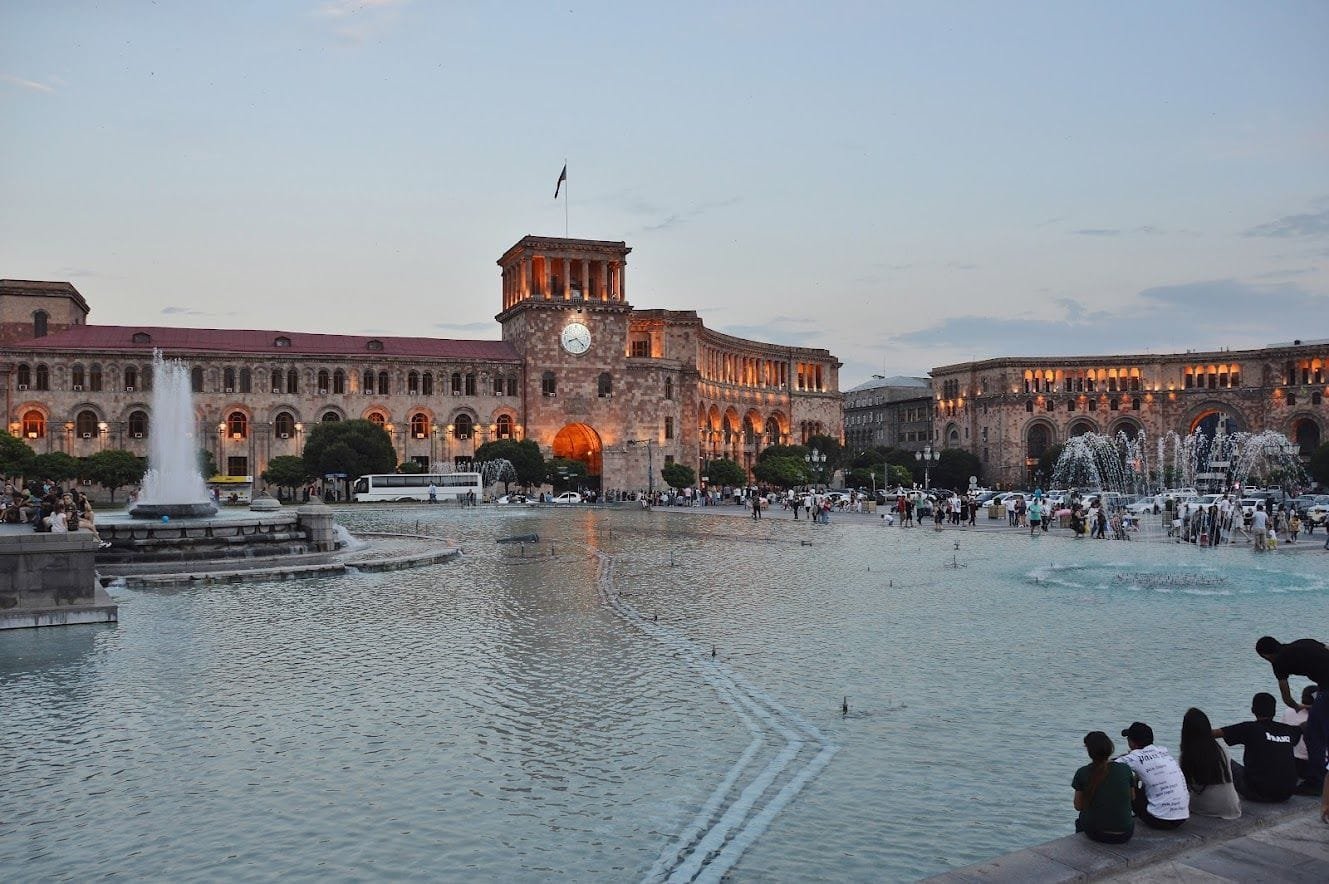 A city tour of central Yerevan, Armenia's vibrant capital, is the best way to discover its rich history and culture. Set in the Ararat valley, this city blends Soviet architecture, modern boulevards and ancient monuments such as the emblematic Republic Square and the impressive Cascade. Famous for its welcoming atmosphere, outdoor cafés and views of Mount Ararat, Yerevan is known as one of the oldest continuously inhabited cities in the world. During our visit, we will walk its lively streets, explore historical monuments and enjoy genuine Armenian hospitality while tasting local delights and experiencing the unique essence of this fascinating city.
Road 5 km, 0 hours 10 minutes
A city tour of central Yerevan, Armenia's vibrant capital, is the best way to discover its rich history and culture. Set in the Ararat valley, this city blends Soviet architecture, modern boulevards and ancient monuments such as the emblematic Republic Square and the impressive Cascade. Famous for its welcoming atmosphere, outdoor cafés and views of Mount Ararat, Yerevan is known as one of the oldest continuously inhabited cities in the world. During our visit, we will walk its lively streets, explore historical monuments and enjoy genuine Armenian hospitality while tasting local delights and experiencing the unique essence of this fascinating city.
Road 5 km, 0 hours 10 minutes
Armenian Genocide Museum
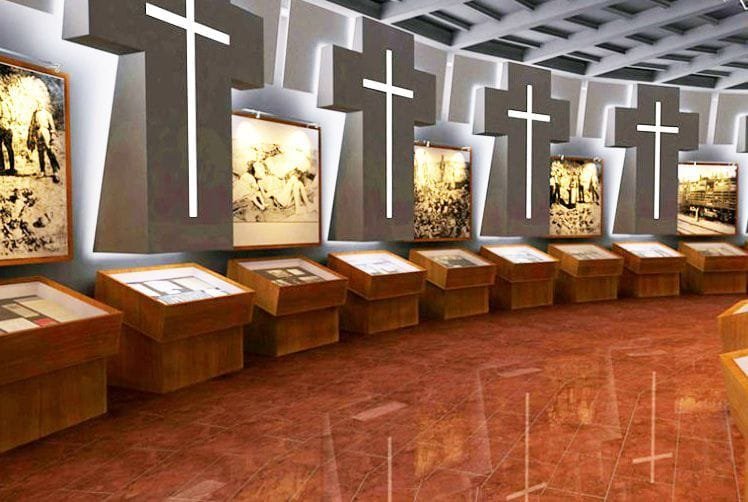 The Armenian Genocide Museum, located in the Tsitsernakaberd memorial complex in Yerevan, Armenia, is a solemn space dedicated to remembering and educating about the 1915 Armenian Genocide. The museum presents documents, photographs and testimonies narrating the tragic events and the resistance of the Armenian people. Its modern architectural design and its hilltop location overlooking the city reinforce its atmosphere of reflection and respect.
During our visit we will walk through its moving exhibitions, honour the memory of the victims and deepen our understanding of this important chapter of history to grasp its impact on Armenian identity.
Road 9 km, 0 hours 25 minutes
The Armenian Genocide Museum, located in the Tsitsernakaberd memorial complex in Yerevan, Armenia, is a solemn space dedicated to remembering and educating about the 1915 Armenian Genocide. The museum presents documents, photographs and testimonies narrating the tragic events and the resistance of the Armenian people. Its modern architectural design and its hilltop location overlooking the city reinforce its atmosphere of reflection and respect.
During our visit we will walk through its moving exhibitions, honour the memory of the victims and deepen our understanding of this important chapter of history to grasp its impact on Armenian identity.
Road 9 km, 0 hours 25 minutes
Tsitsernakaberd - Victory Park
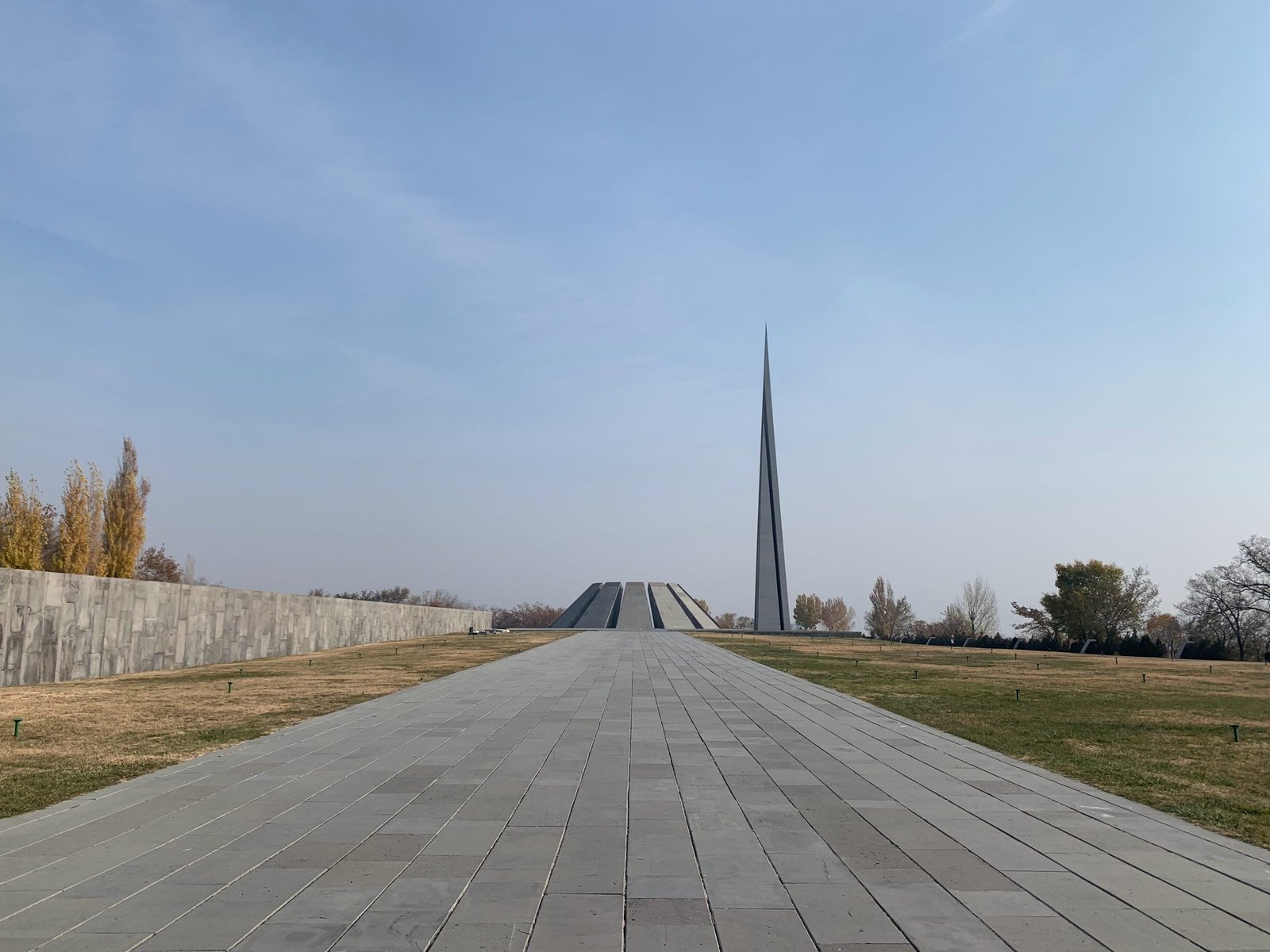 Erected on a hill overlooking Yerevan, the Tsitsernakaberd Memorial is a solemn monument dedicated to the victims of the Armenian Genocide. This memorial complex, inaugurated in 1967, consists of a 44-metre needle symbolising the rebirth of the Armenian people and a circle of twelve inclined basalt slabs surrounding an eternal flame. The ensemble includes the Genocide Institute-Museum, which houses important historical documents and testimonies. The surrounding park, known as Victory Park, complements the memorial with its Avenue of Memorial Trees, where world dignitaries have planted trees as a sign of solidarity. During our visit, we will walk in silent respect through the memorial, observe the eternal flame burning in memory of the victims and reflect on history while taking in the impressive views of Mount Ararat from the gardens.
Road 31 km, 0 hours 55 minutes
Erected on a hill overlooking Yerevan, the Tsitsernakaberd Memorial is a solemn monument dedicated to the victims of the Armenian Genocide. This memorial complex, inaugurated in 1967, consists of a 44-metre needle symbolising the rebirth of the Armenian people and a circle of twelve inclined basalt slabs surrounding an eternal flame. The ensemble includes the Genocide Institute-Museum, which houses important historical documents and testimonies. The surrounding park, known as Victory Park, complements the memorial with its Avenue of Memorial Trees, where world dignitaries have planted trees as a sign of solidarity. During our visit, we will walk in silent respect through the memorial, observe the eternal flame burning in memory of the victims and reflect on history while taking in the impressive views of Mount Ararat from the gardens.
Road 31 km, 0 hours 55 minutes
Garni
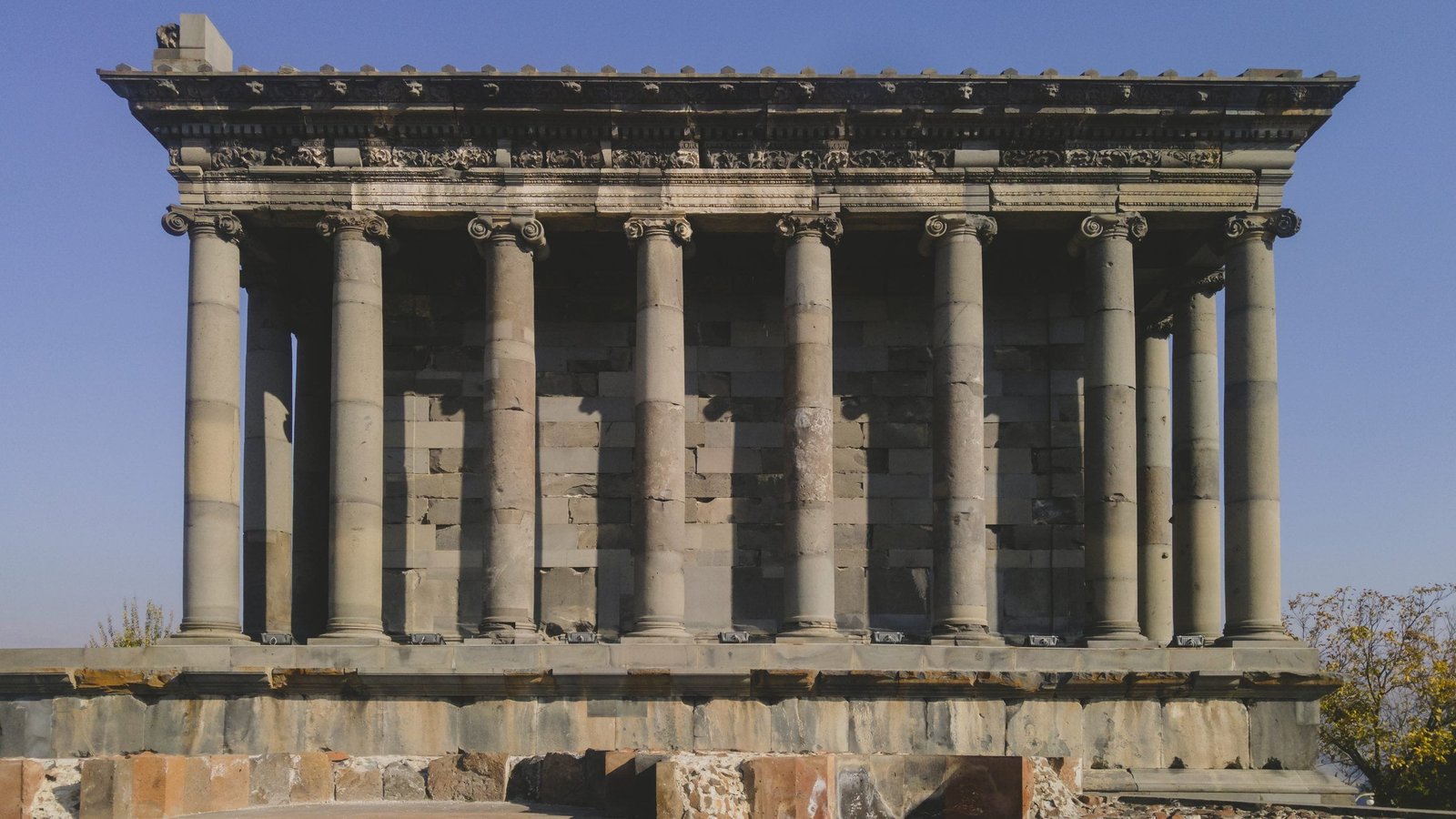 Garni, situated in the Kotayk region of Armenia, is an emblematic destination known for its 1st-century pagan temple, unique of its kind in the South Caucasus. Built in honour of the god Mihr, this Hellenistic temple is an exceptional example of ancient Armenian architecture. Surrounded by impressive landscapes, including the gorge of the Azat River and the famous "Symphony of Stones", Garni combines history, culture and nature in a spectacular setting.
During our visit we will explore the temple, admire the unique acoustics of the site and walk through the gorge to discover the rock formations that make Garni an unforgettable destination.
Road 10 km, 0 hours 15 minutes
Garni, situated in the Kotayk region of Armenia, is an emblematic destination known for its 1st-century pagan temple, unique of its kind in the South Caucasus. Built in honour of the god Mihr, this Hellenistic temple is an exceptional example of ancient Armenian architecture. Surrounded by impressive landscapes, including the gorge of the Azat River and the famous "Symphony of Stones", Garni combines history, culture and nature in a spectacular setting.
During our visit we will explore the temple, admire the unique acoustics of the site and walk through the gorge to discover the rock formations that make Garni an unforgettable destination.
Road 10 km, 0 hours 15 minutes
Geghard
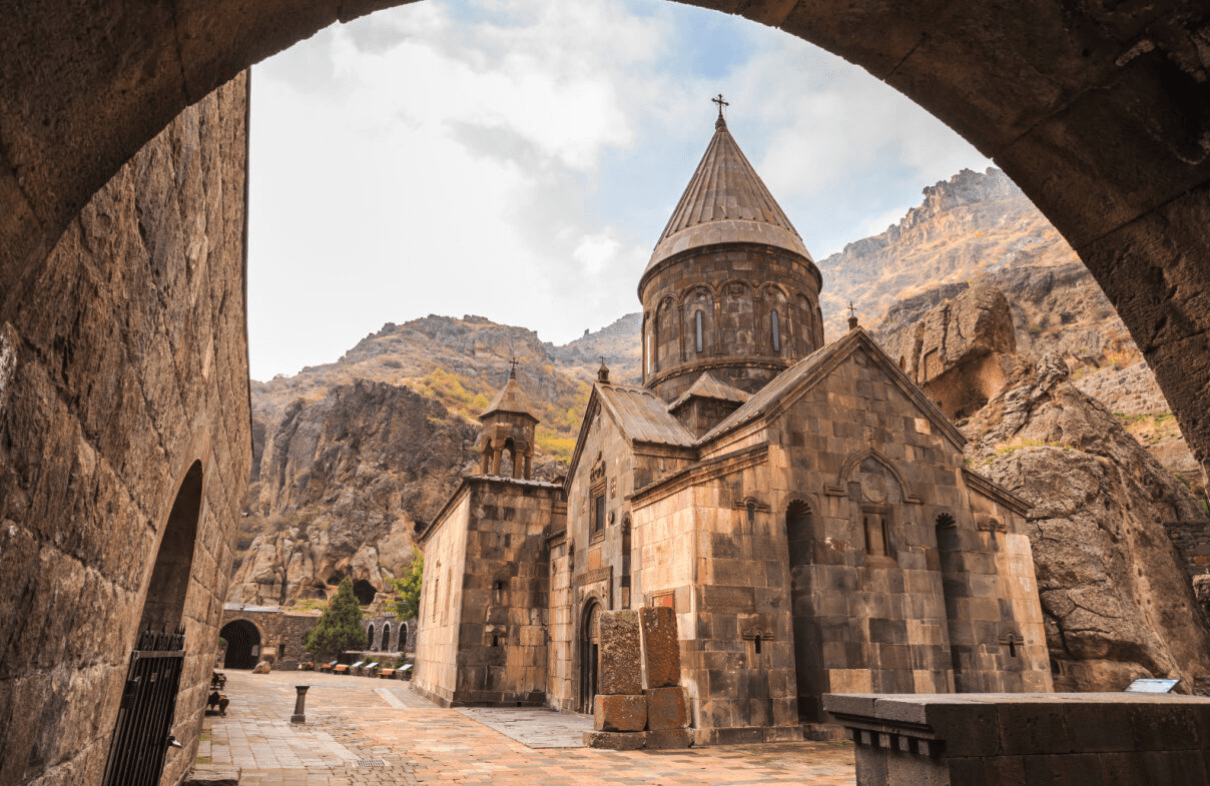 Geghard, located in the Kotayk region of Armenia, is a medieval monastery declared a UNESCO World Heritage Site. Founded in the 4th century and partly carved out of the rock, this sacred place is noted for its impressive architecture, which fuses nature and art. Its name, meaning "monastery of the spear", is linked to the relic said to have pierced the side of Christ. Surrounded by mountain landscapes and a mystical atmosphere, Geghard is a symbol of Armenian spirituality.
During our visit we will walk through its rock-carved chapels, admire the intricate engravings and enjoy the serenity of the surroundings as we discover its deep history and significance.
Road 26 km, 0 hours 40 minutes
Geghard, located in the Kotayk region of Armenia, is a medieval monastery declared a UNESCO World Heritage Site. Founded in the 4th century and partly carved out of the rock, this sacred place is noted for its impressive architecture, which fuses nature and art. Its name, meaning "monastery of the spear", is linked to the relic said to have pierced the side of Christ. Surrounded by mountain landscapes and a mystical atmosphere, Geghard is a symbol of Armenian spirituality.
During our visit we will walk through its rock-carved chapels, admire the intricate engravings and enjoy the serenity of the surroundings as we discover its deep history and significance.
Road 26 km, 0 hours 40 minutes
Day 12 - Yerevan - Echmiadzin - Zvartnots - Oshakan - Amberd - Yerevan
Total road distance - 92 km, 2 hours 26 minutes After breakfast at the hotel, we begin our adventure. The planned visits are: Road 21 km, 0 hours 45 minutesEchmiadzin
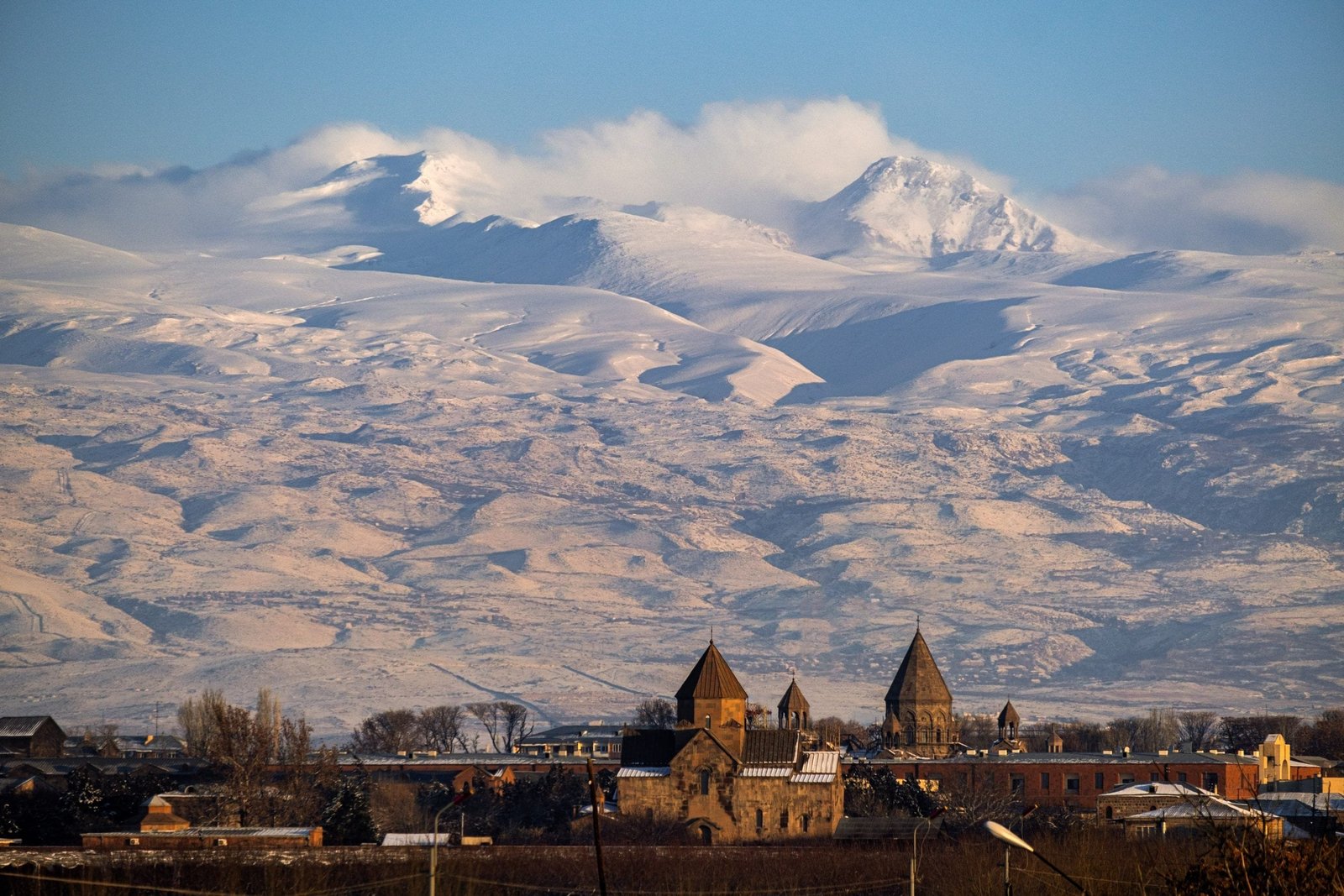 Echmiadzin, known as the Holy See of the Armenian Apostolic Church, is one of Armenia's most sacred cities. Located in the Armavir region, it houses the Echmiadzin Cathedral, considered the oldest Christian church in the world, built in the 4th century. This important spiritual and cultural centre features impressive architecture and a rich heritage, reflecting the deep Christian history of Armenia. It is a must-visit destination for lovers of history and religion. During our visit, we will explore the majestic cathedral, discover religious treasures and immerse ourselves in the sacred atmosphere of this unique place.
Road 10 km, 0 hours 5 minutes
Echmiadzin, known as the Holy See of the Armenian Apostolic Church, is one of Armenia's most sacred cities. Located in the Armavir region, it houses the Echmiadzin Cathedral, considered the oldest Christian church in the world, built in the 4th century. This important spiritual and cultural centre features impressive architecture and a rich heritage, reflecting the deep Christian history of Armenia. It is a must-visit destination for lovers of history and religion. During our visit, we will explore the majestic cathedral, discover religious treasures and immerse ourselves in the sacred atmosphere of this unique place.
Road 10 km, 0 hours 5 minutes
Zvartnots Temple
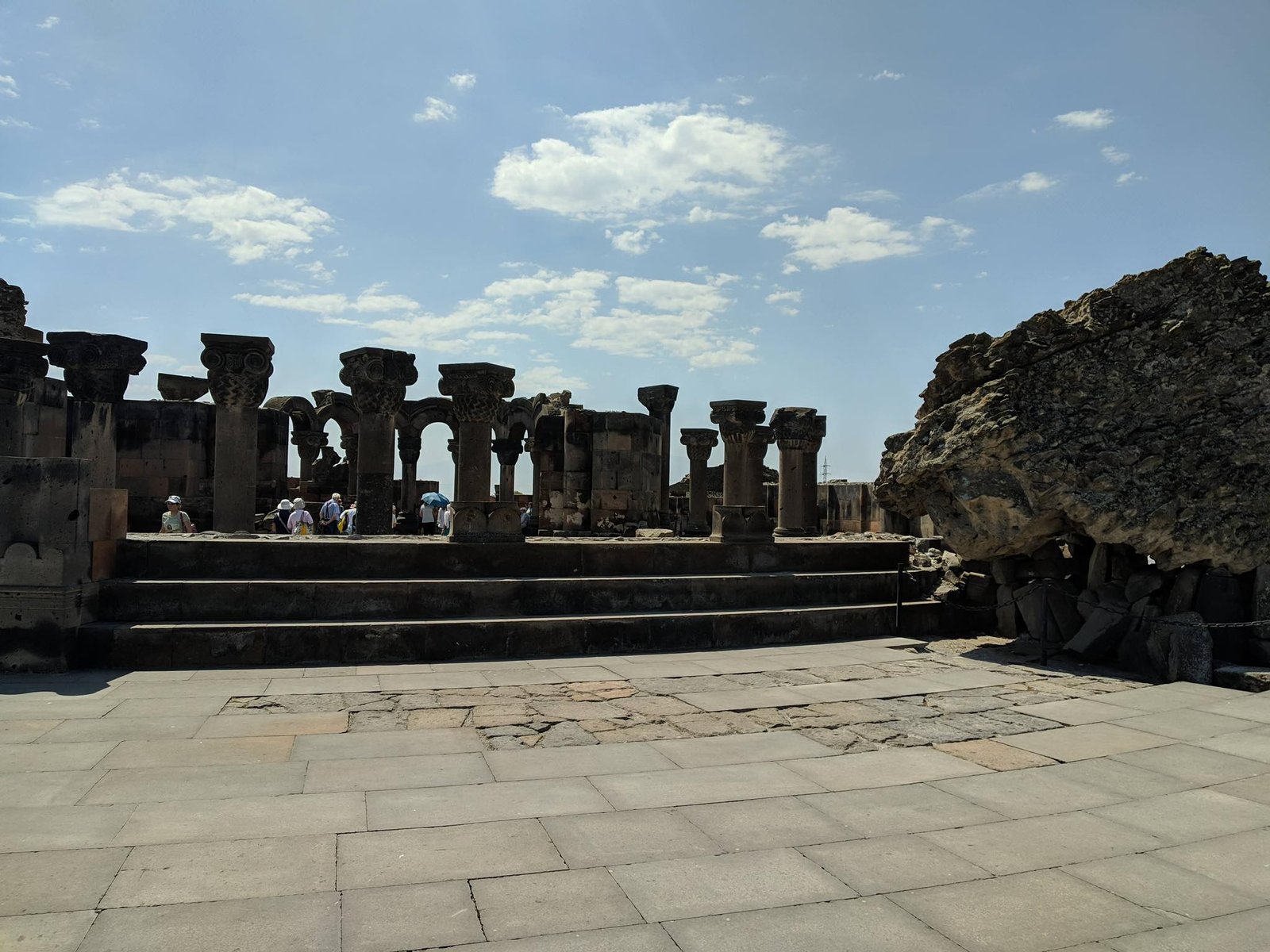 Declared a UNESCO World Heritage Site, the majestic Temple of Zvartnots was built in the 7th century near Echmiadzin, Armenia, representing the pinnacle of medieval Armenian architecture. This unique monument, whose name means "Temple of the Vigilant Angels", was distinguished by its innovative three-level circular design reaching 45 metres in height, setting new architectural standards for its era. Although now in ruins following its collapse in the 10th century due to an earthquake, its imposing remains, finely carved capitals and pioneering use of arches and vaulting demonstrate the sophistication of ancient Armenia. During our exploration, we will walk among the massive columns that once supported this architectural wonder, admire the delicate reliefs of vines and pomegranates and transport ourselves to the splendour of the ancient Armenian Kingdom as Mount Ararat draws on the horizon.
Road 18 km, 0 hours 28 minutes
Declared a UNESCO World Heritage Site, the majestic Temple of Zvartnots was built in the 7th century near Echmiadzin, Armenia, representing the pinnacle of medieval Armenian architecture. This unique monument, whose name means "Temple of the Vigilant Angels", was distinguished by its innovative three-level circular design reaching 45 metres in height, setting new architectural standards for its era. Although now in ruins following its collapse in the 10th century due to an earthquake, its imposing remains, finely carved capitals and pioneering use of arches and vaulting demonstrate the sophistication of ancient Armenia. During our exploration, we will walk among the massive columns that once supported this architectural wonder, admire the delicate reliefs of vines and pomegranates and transport ourselves to the splendour of the ancient Armenian Kingdom as Mount Ararat draws on the horizon.
Road 18 km, 0 hours 28 minutes
Oshakan
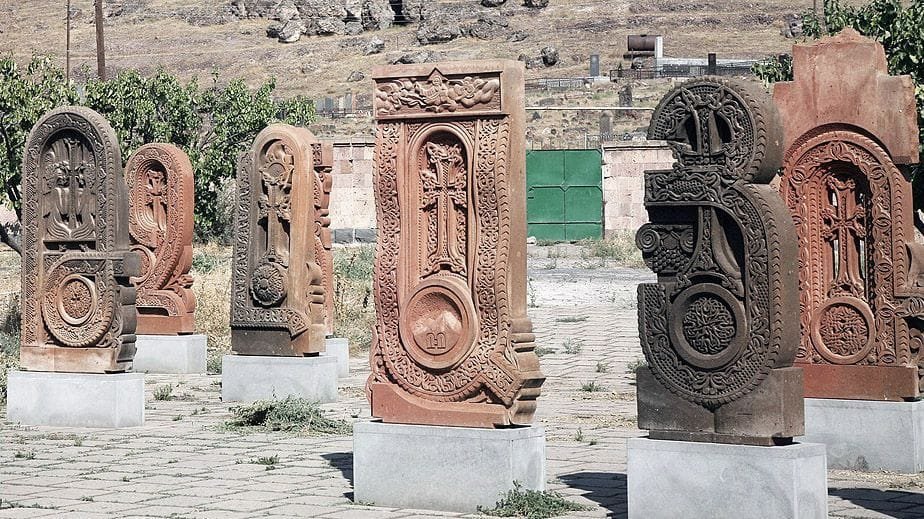 Oshakan, located in the Aragatsotn region of Armenia, is a place of great cultural and spiritual significance, known as the final resting place of Mesrop Mashtots, creator of the Armenian alphabet. Its main church, dedicated to Saint Mesrop Mashtots and built in the 5th century, is an important pilgrimage site. Surrounded by vineyards and tranquil landscapes, Oshakan is a destination that combines history, faith and tradition in a charming setting.
During our visit we will explore the historic church, learn about the invention of the Armenian alphabet and enjoy the serenity of this place full of cultural symbolism.
Road 11 km, 0 hours 18 minutes
Oshakan, located in the Aragatsotn region of Armenia, is a place of great cultural and spiritual significance, known as the final resting place of Mesrop Mashtots, creator of the Armenian alphabet. Its main church, dedicated to Saint Mesrop Mashtots and built in the 5th century, is an important pilgrimage site. Surrounded by vineyards and tranquil landscapes, Oshakan is a destination that combines history, faith and tradition in a charming setting.
During our visit we will explore the historic church, learn about the invention of the Armenian alphabet and enjoy the serenity of this place full of cultural symbolism.
Road 11 km, 0 hours 18 minutes
Amberd
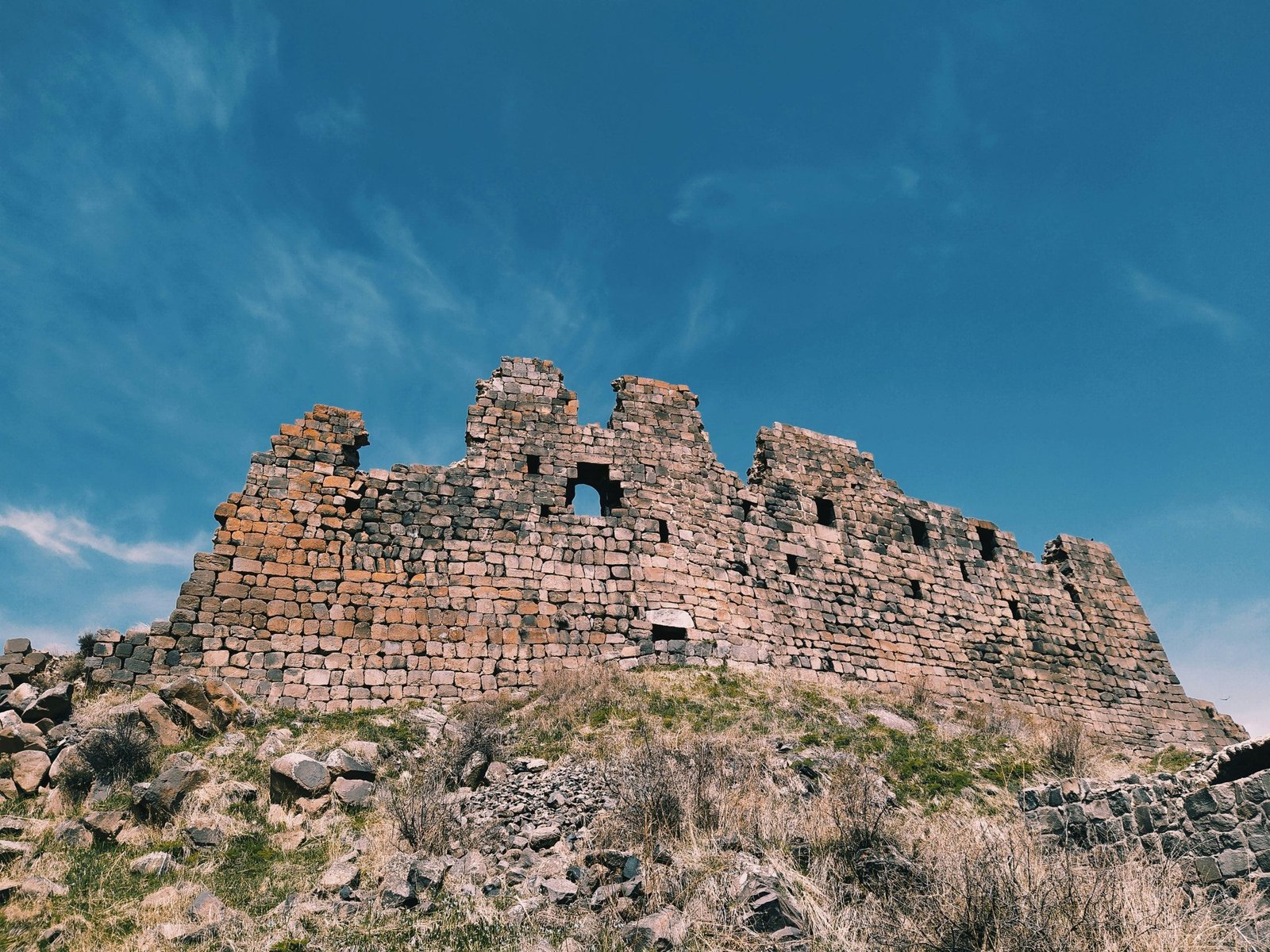 Perched at 2,300 metres above sea level on the slopes of Mount Aragats in Armenia, the Amberd fortress is an extraordinary 7th-century military structure that dominates the surrounding landscape with its imposing basalt walls. This "castle in the clouds" (the literal meaning of its name) is a masterpiece of medieval Armenian military architecture, complemented by an 11th-century church and a sophisticated water supply system. During our visit, we will climb the ancient paths to the fortress, explore its mysterious ruins as clouds drift around us and marvel at the impressive views of Mount Ararat and the Ararat valley spread out below.
Road 32 km, 0 hours 50 minutes
Perched at 2,300 metres above sea level on the slopes of Mount Aragats in Armenia, the Amberd fortress is an extraordinary 7th-century military structure that dominates the surrounding landscape with its imposing basalt walls. This "castle in the clouds" (the literal meaning of its name) is a masterpiece of medieval Armenian military architecture, complemented by an 11th-century church and a sophisticated water supply system. During our visit, we will climb the ancient paths to the fortress, explore its mysterious ruins as clouds drift around us and marvel at the impressive views of Mount Ararat and the Ararat valley spread out below.
Road 32 km, 0 hours 50 minutes
Day 13 - Yerevan - Khor Virap - Noravank - Areni Cave - Yerevan
Total road distance - 240 km, 4 hours 8 minutes After breakfast at the hotel, we begin our adventure. The planned visits are: Road 44 km, 0 hours 48 minutesKhor Virap
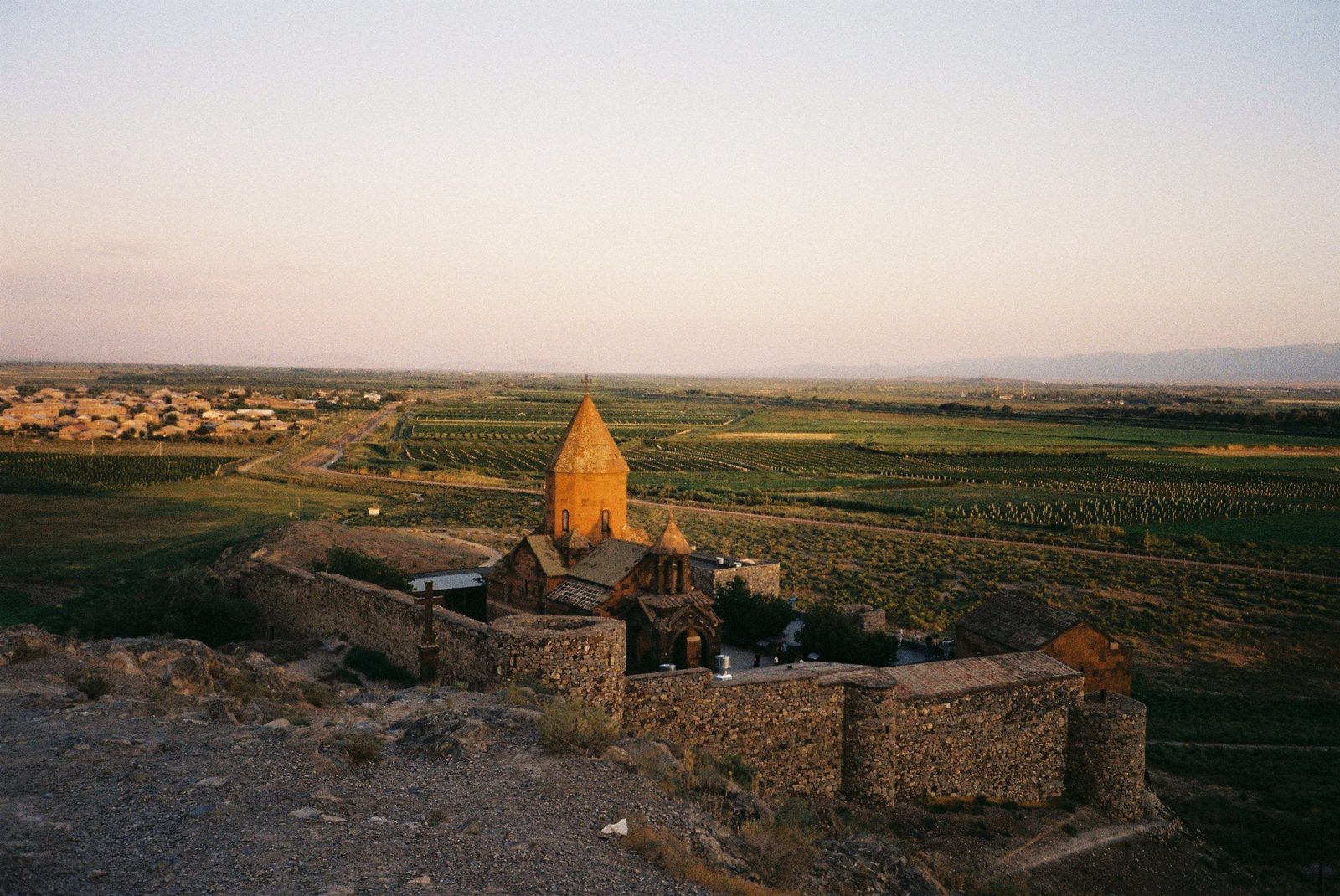 Khor Virap, situated on the Ararat plain in Armenia, is one of the country's most emblematic monasteries, with a rich history linked to Christianity. This site, where Saint Gregory the Illuminator was imprisoned before converting Armenia into the first Christian nation, offers spectacular views of Mount Ararat. Its strategic location and deep spiritual significance make it an important pilgrimage and tourist destination.
During our visit we will explore the ancient underground cells, admire the impressive view of Mount Ararat and discover the history that makes Khor Virap a sacred and unforgettable place.
Road 83 km, 1 hour 20 minutes
Khor Virap, situated on the Ararat plain in Armenia, is one of the country's most emblematic monasteries, with a rich history linked to Christianity. This site, where Saint Gregory the Illuminator was imprisoned before converting Armenia into the first Christian nation, offers spectacular views of Mount Ararat. Its strategic location and deep spiritual significance make it an important pilgrimage and tourist destination.
During our visit we will explore the ancient underground cells, admire the impressive view of Mount Ararat and discover the history that makes Khor Virap a sacred and unforgettable place.
Road 83 km, 1 hour 20 minutes
Noravank Monastery
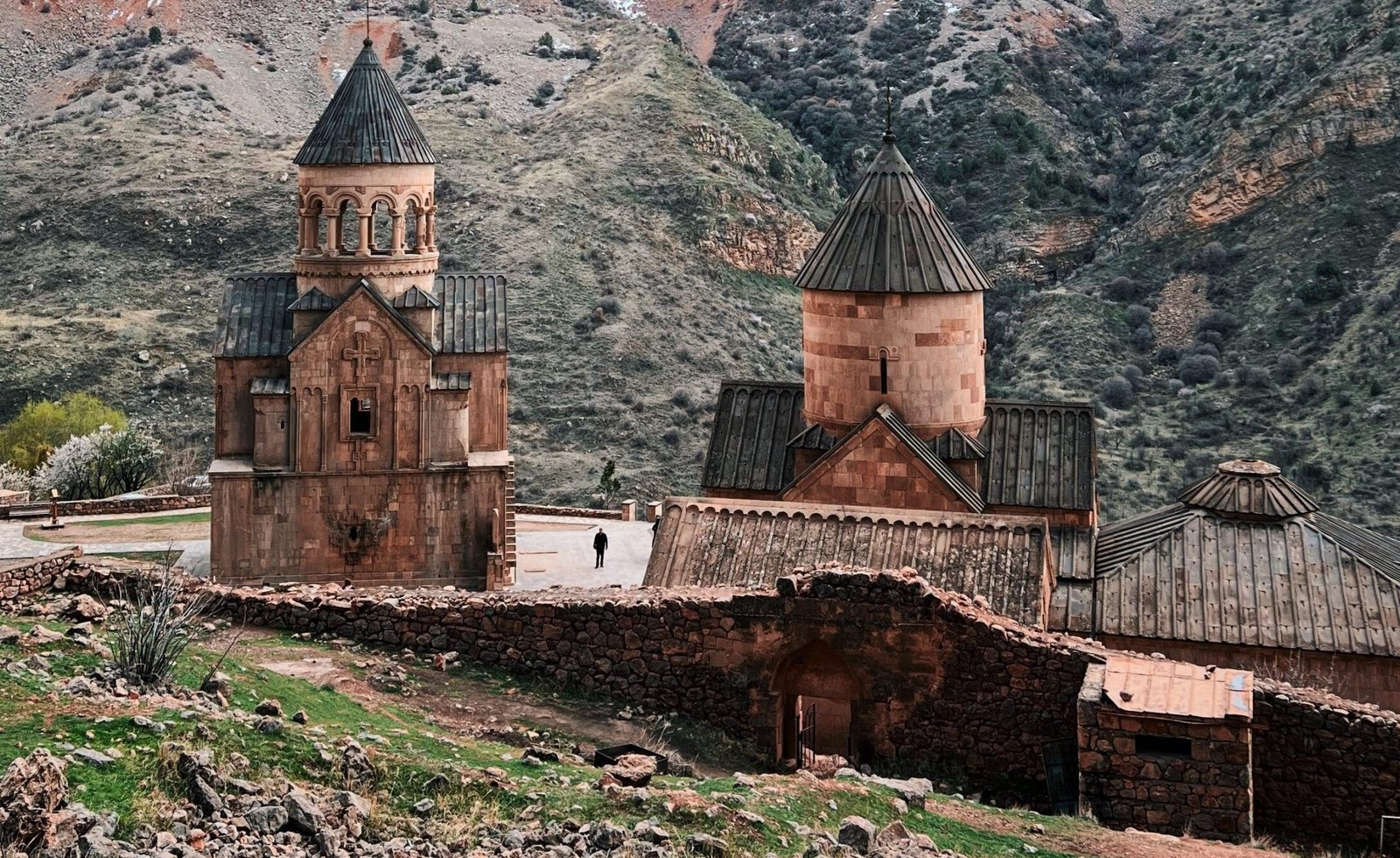 Noravank Monastery, set in a narrow canyon in the Vayots Dzor region of Armenia, is an impressive 13th-century religious complex. Famous for its distinctive architecture, which combines intricate engravings and a two-storey church, this monastery is surrounded by imposing red cliffs. Noravank was an important cultural and spiritual centre, and its unique beauty makes it one of Armenia's most emblematic destinations.
During our visit we will explore its elegant churches, admire the intricate details of its sculptures and enjoy the spectacular mountain landscape that makes Noravank an unforgettable place.
Road 3 km, 0 hours 5 minutes
Noravank Monastery, set in a narrow canyon in the Vayots Dzor region of Armenia, is an impressive 13th-century religious complex. Famous for its distinctive architecture, which combines intricate engravings and a two-storey church, this monastery is surrounded by imposing red cliffs. Noravank was an important cultural and spiritual centre, and its unique beauty makes it one of Armenia's most emblematic destinations.
During our visit we will explore its elegant churches, admire the intricate details of its sculptures and enjoy the spectacular mountain landscape that makes Noravank an unforgettable place.
Road 3 km, 0 hours 5 minutes
Areni Cave
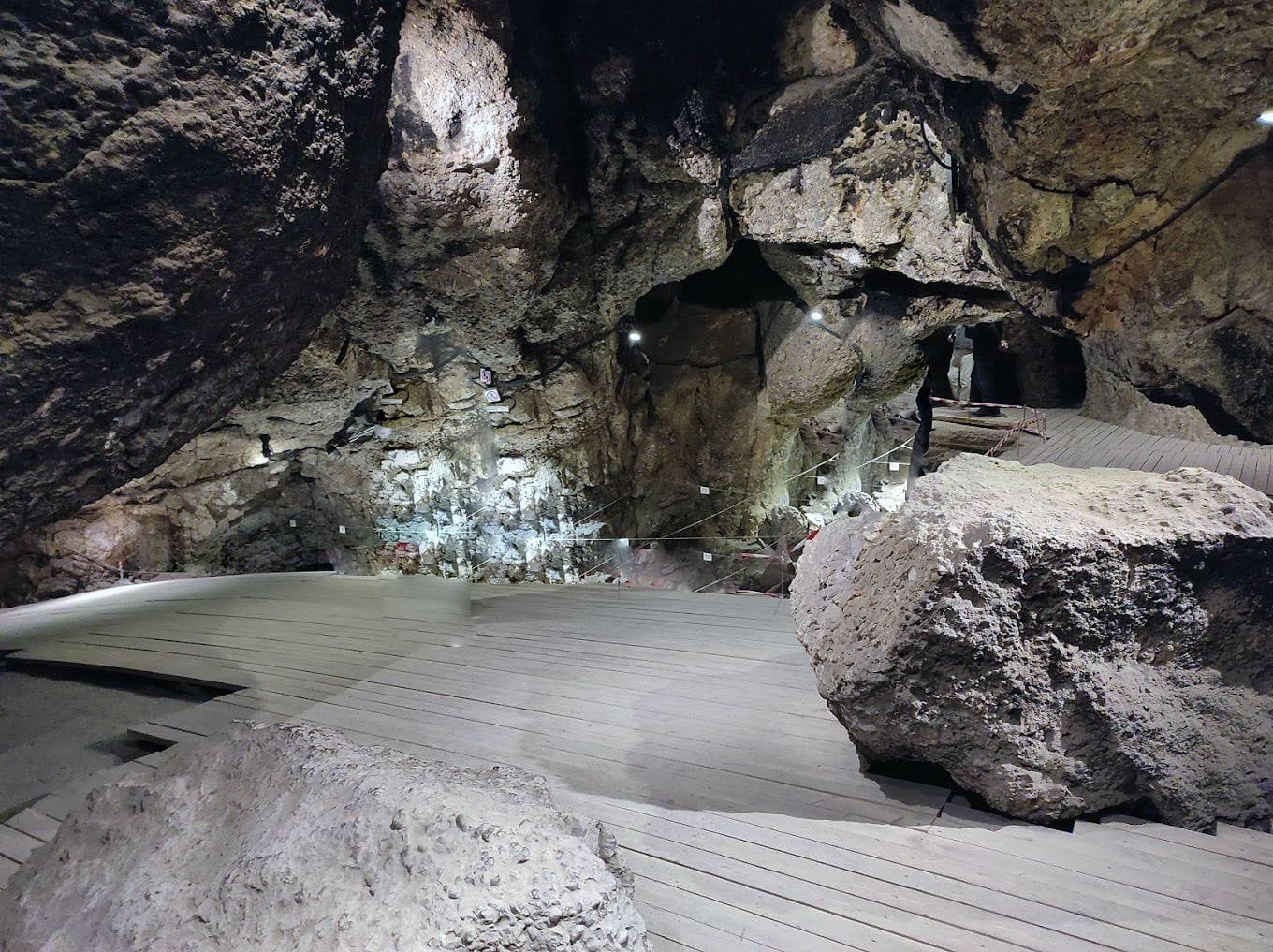 The Areni Cave, located in the Vayots Dzor region of Armenia, is an archaeological site of great historical importance. Known as one of the oldest settlements in the world, this cave is famous for the discovery of the world's oldest winery, dating back more than 6,000 years. Fascinating prehistoric artefacts have also been found here, revealing the origins of viticulture and life in the Chalcolithic period. Surrounded by mountain landscapes, it is a unique destination to explore the connection between history and nature. During our visit, we will explore the mysteries of this ancient cave, learn about its millennia-old history and enjoy the natural setting that makes it a truly special place.
Road 110 km, 1 hour 55 minutes
The Areni Cave, located in the Vayots Dzor region of Armenia, is an archaeological site of great historical importance. Known as one of the oldest settlements in the world, this cave is famous for the discovery of the world's oldest winery, dating back more than 6,000 years. Fascinating prehistoric artefacts have also been found here, revealing the origins of viticulture and life in the Chalcolithic period. Surrounded by mountain landscapes, it is a unique destination to explore the connection between history and nature. During our visit, we will explore the mysteries of this ancient cave, learn about its millennia-old history and enjoy the natural setting that makes it a truly special place.
Road 110 km, 1 hour 55 minutes


