Classic Georgia seen from the coast. After a day in Batumi, with Gonio fortress and the Borjgalo museum, the third crosses the country along the motorway to Tbilisi, 377 km, with stops at the Shekvetili dendrological park and the Ubisa monastery. Three nights in the capital: a day on foot, from Rustaveli to the sulphur baths, and the excursion up the Military Highway to the Gergeti church under Kazbek, with Ananuri on the way, 321 km there and back. The sixth day heads back west via Jvari and Svetitskhoveli, Uplistsikhe and the Stalin museum in Gori, with a night in Kutaisi.
The seventh is the water day, Prometheus Cave and the boat through the Martvili canyon, and ends in Batumi; the eighth, transfer to the airport. Three hotels and two long days, the motorway one and the Kazbegi one. Between November and April the Jvari pass can close and the Kazbegi day is swapped for Kakheti at no cost.
Itinerary
Day 1 - Transfer from Batumi airport to Batumi
We pick you up at the airport whenever your flight lands and go to the hotel. No more programme today.Day 2 - Batumi and surroundings
Total road of the day - 27KM 0 Hours and 50 Minutes In the morning, Borjgalo Ethnographic Museum; in the afternoon, Gonio Fortress. 27 km in all. Road 6KM 0 Hours and 15 MinutesBorjgalo Ethnographic Museum
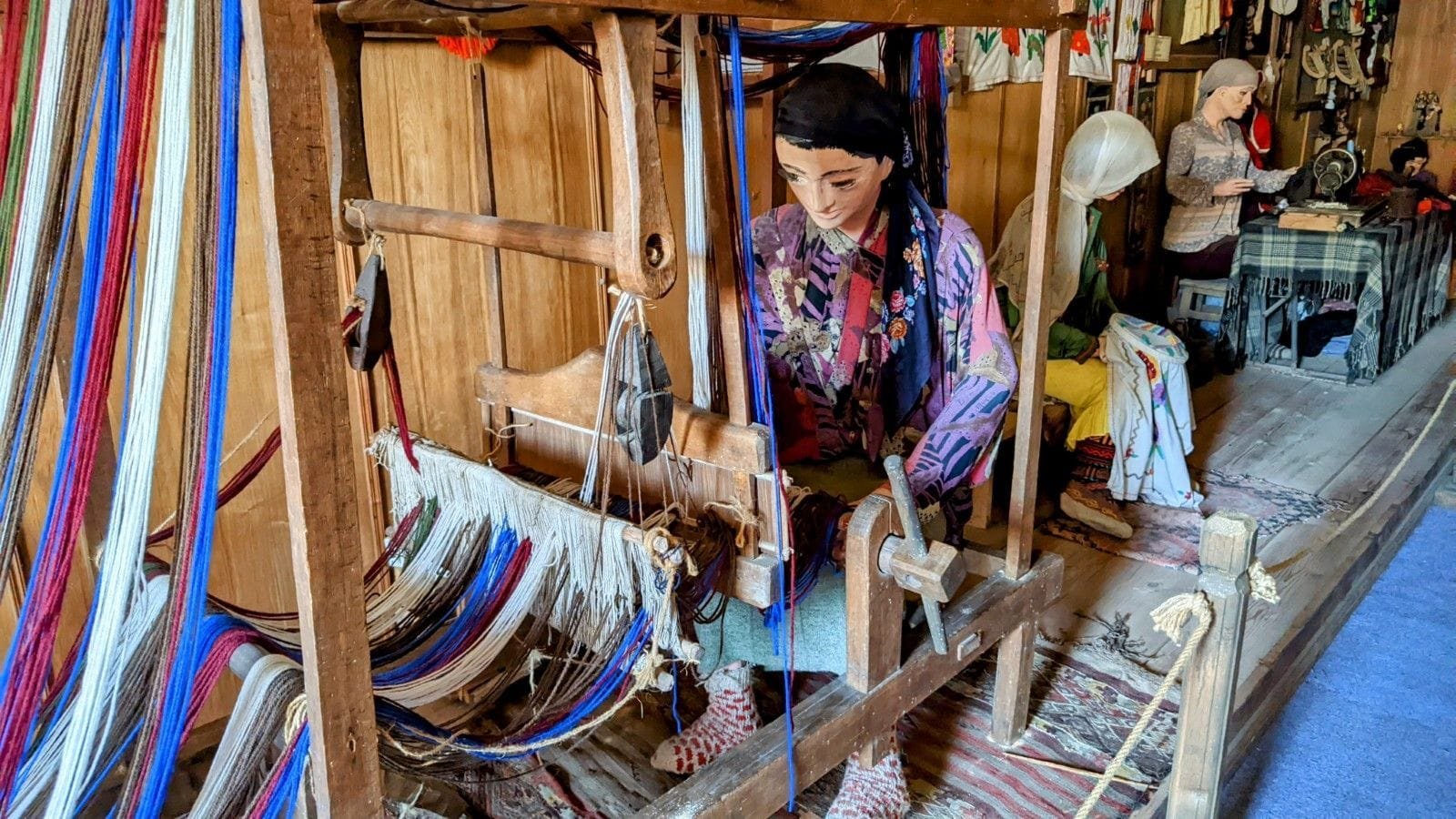 It is not a museum in the usual sense. Borjgalo was made by hand by Kemal Turmanidze, a sculptor from the area, and opened in 2016 on the outskirts of Batumi, near the airport: models and near life-size wooden figures showing how people lived in the villages of Adjara a hundred years ago, the house, the mill, the forge, the wedding, the beekeeper. Many pieces move or make sounds, and Kemal himself or his family are usually around.
It works very well with children and with anyone who is tired of churches by now. An hour. It sits on a residential street with nothing around it, so do not expect a café.
It is not a museum in the usual sense. Borjgalo was made by hand by Kemal Turmanidze, a sculptor from the area, and opened in 2016 on the outskirts of Batumi, near the airport: models and near life-size wooden figures showing how people lived in the villages of Adjara a hundred years ago, the house, the mill, the forge, the wedding, the beekeeper. Many pieces move or make sounds, and Kemal himself or his family are usually around.
It works very well with children and with anyone who is tired of churches by now. An hour. It sits on a residential street with nothing around it, so do not expect a café.
Gonio Fortress
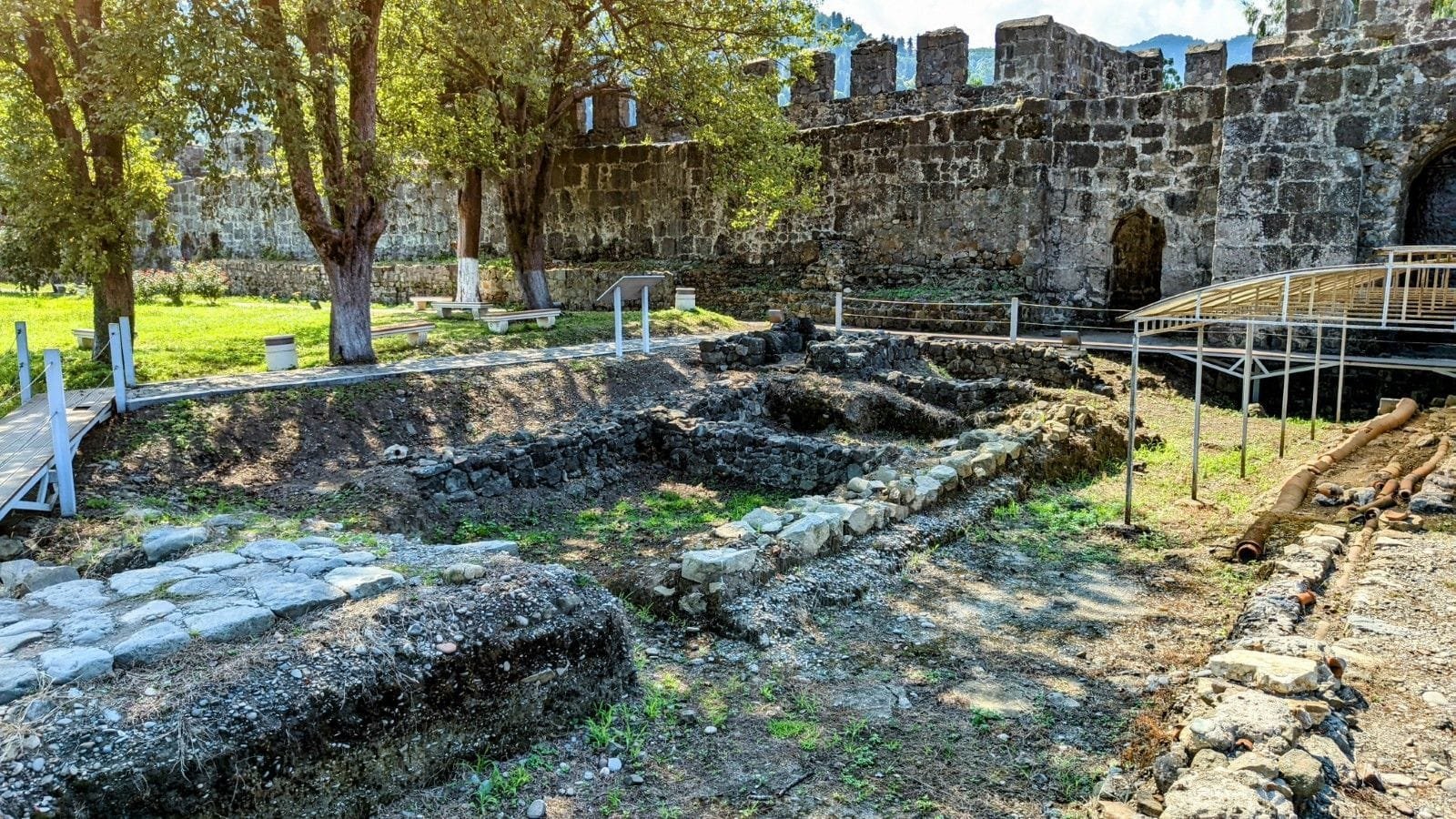 Fifteen kilometres south of Batumi, almost on the Turkish border, the Romans built the camp of Apsaros in the 1st century to watch the coast, and the walls are still standing: a rectangle with a perimeter of almost 900 metres and 18 of its original 22 towers. Later the Byzantines and the Ottomans used it, and the Ottomans called it Gonio. Inside there is a small museum with the finds from the digs, the remains of Roman baths and a grave that tradition attributes to the apostle Matthias, the one who replaced Judas. No proof, but people come to pray.
It is a 45-minute stop, flat and without shade; in summer bring a cap. If there is time, Gonio beach is next door and is one of the quietest in the area.
Fifteen kilometres south of Batumi, almost on the Turkish border, the Romans built the camp of Apsaros in the 1st century to watch the coast, and the walls are still standing: a rectangle with a perimeter of almost 900 metres and 18 of its original 22 towers. Later the Byzantines and the Ottomans used it, and the Ottomans called it Gonio. Inside there is a small museum with the finds from the digs, the remains of Roman baths and a grave that tradition attributes to the apostle Matthias, the one who replaced Judas. No proof, but people come to pray.
It is a 45-minute stop, flat and without shade; in summer bring a cap. If there is time, Gonio beach is next door and is one of the quietest in the area.
Day 3 - Batumi - Dendrological Park - Ubisa - Tbilisi
Total road of the day - 377KM 6 Hours and 7 Minutes First Shekvetili Dendrological Park, then Ubisa Monastery. 377 km, 6 hours 7 minutes; lunch on the way. Road 49KM 0 Hours and 51 MinutesShekvetili Dendrological Park
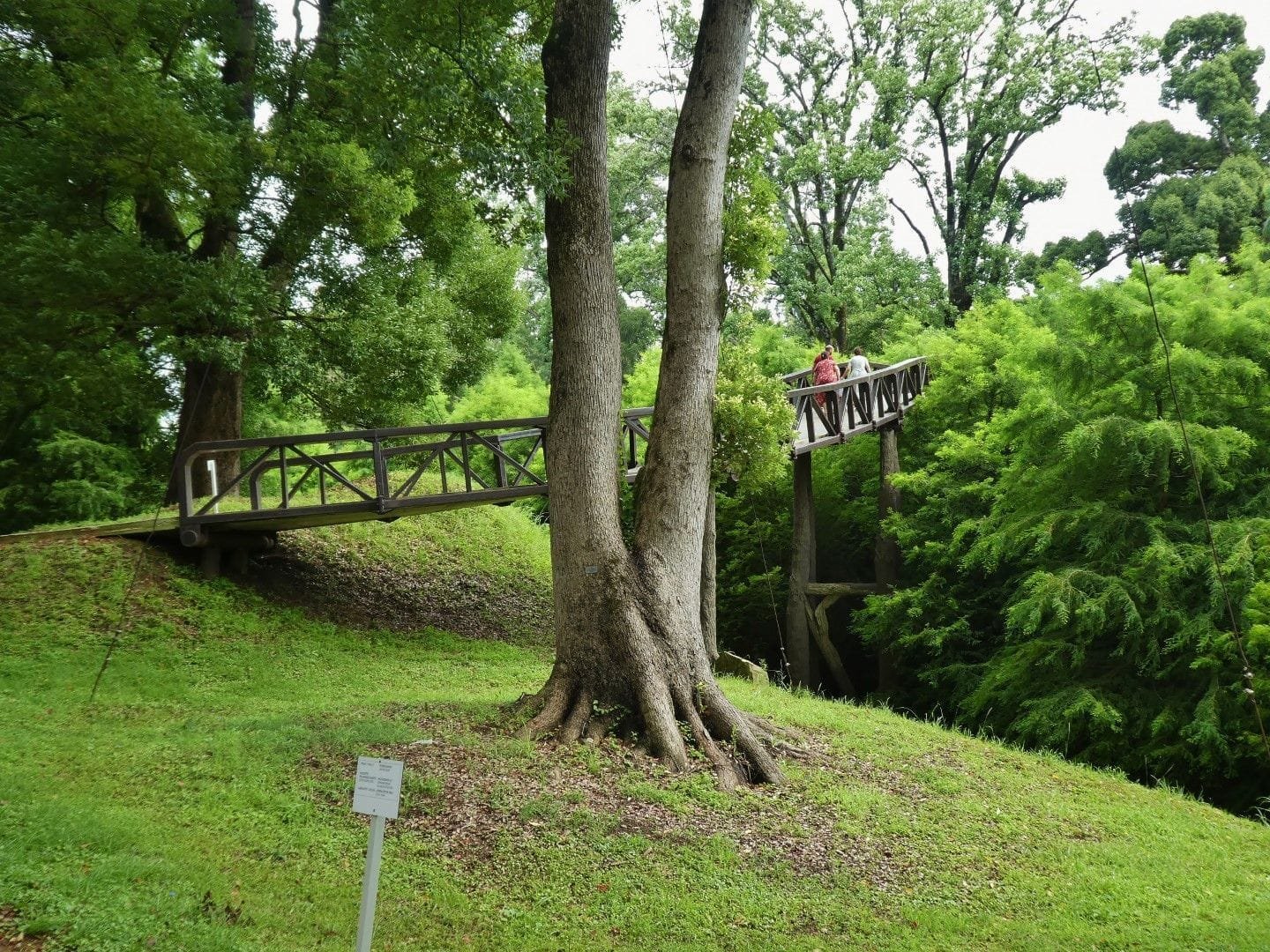 The trees in this park arrived by sea. They are specimens one and two hundred years old, tulip trees, magnolias, eucalyptus, that Bidzina Ivanishvili, the richest man in Georgia, bought all over the country and shipped by barge to the coast of Guria; there is a documentary, "Taming the Garden", that tells the story and does not flatter the owner. Shekvetili park opened in 2020: 60 hectares by the beach, more than 200 species, lakes, a bamboo grove and, in the middle, the biggest tree, visible from the road.
It is free, immaculate, and in summer there are queues at weekends. A good hour's walk; nearby are the magnetic black-sand beaches of Ureki, which local people use as a spa.
The trees in this park arrived by sea. They are specimens one and two hundred years old, tulip trees, magnolias, eucalyptus, that Bidzina Ivanishvili, the richest man in Georgia, bought all over the country and shipped by barge to the coast of Guria; there is a documentary, "Taming the Garden", that tells the story and does not flatter the owner. Shekvetili park opened in 2020: 60 hectares by the beach, more than 200 species, lakes, a bamboo grove and, in the middle, the biggest tree, visible from the road.
It is free, immaculate, and in summer there are queues at weekends. A good hour's walk; nearby are the magnetic black-sand beaches of Ureki, which local people use as a spa.
Ubisa Monastery
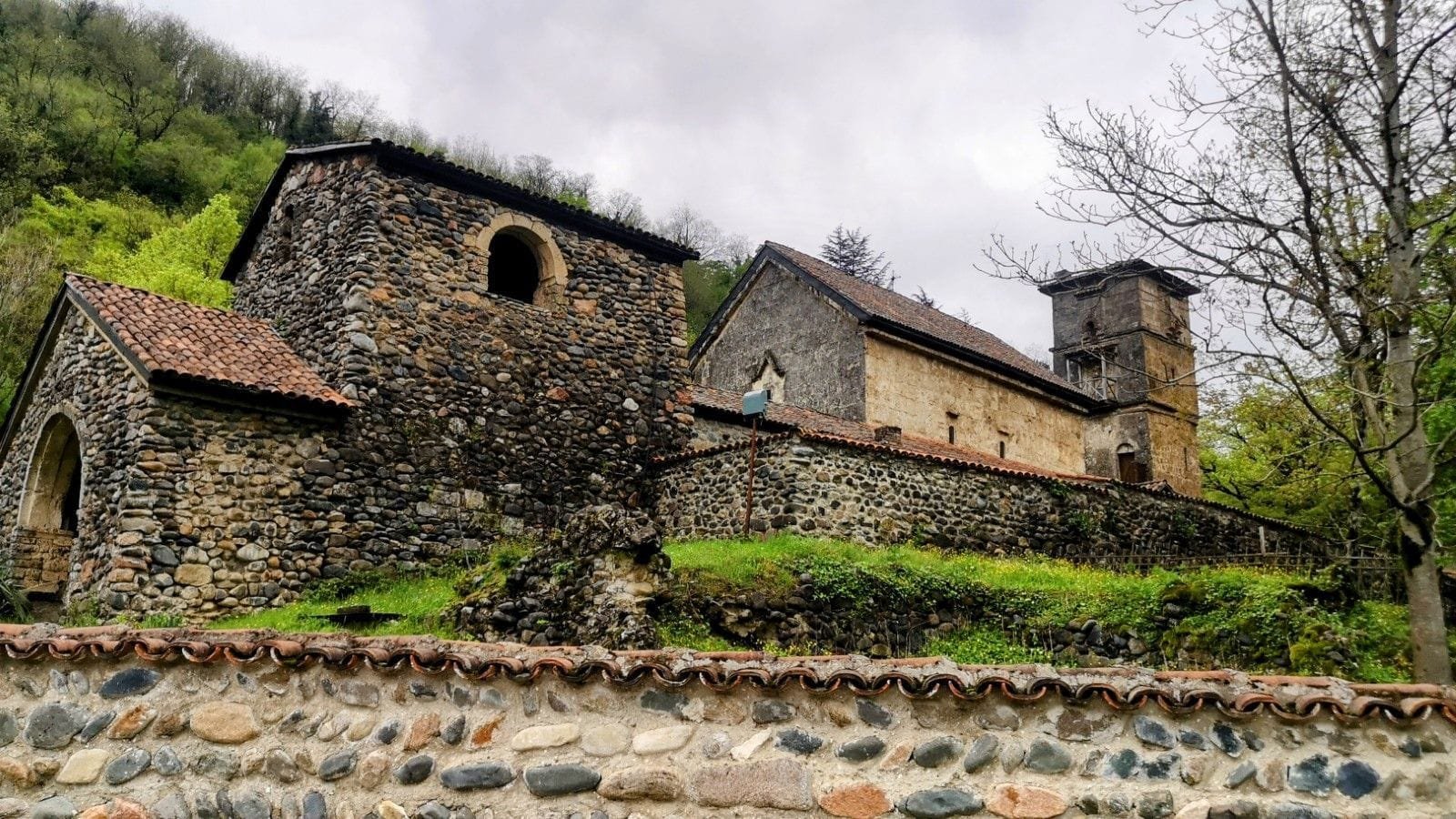 From the motorway between Tbilisi and Kutaisi you would never guess that one of the best sets of frescoes in Georgia is right there. Ubisa is a small 9th-century monastery founded by Grigol Khandzteli, the great organiser of Georgian monastic life, and inside it is painted from top to bottom by a 14th-century master called Damiane, in a style that came from Constantinople: elongated faces, muted colours, a lot of expression. You have to let your eyes get used to the gloom.
Half an hour. It is a stop that breaks the three hours of motorway nicely, and next door there are roadside places to eat, the khachapuri-and-lemonade kind.
From the motorway between Tbilisi and Kutaisi you would never guess that one of the best sets of frescoes in Georgia is right there. Ubisa is a small 9th-century monastery founded by Grigol Khandzteli, the great organiser of Georgian monastic life, and inside it is painted from top to bottom by a 14th-century master called Damiane, in a style that came from Constantinople: elongated faces, muted colours, a lot of expression. You have to let your eyes get used to the gloom.
Half an hour. It is a stop that breaks the three hours of motorway nicely, and next door there are roadside places to eat, the khachapuri-and-lemonade kind.
Day 4 - Tbilisi - Guided tour in Spanish
No driving On today's programme, Rustaveli Avenue, Metekhi Square, Narikala Fortress, Abanotubani and Anchiskhati.Rustaveli Avenue
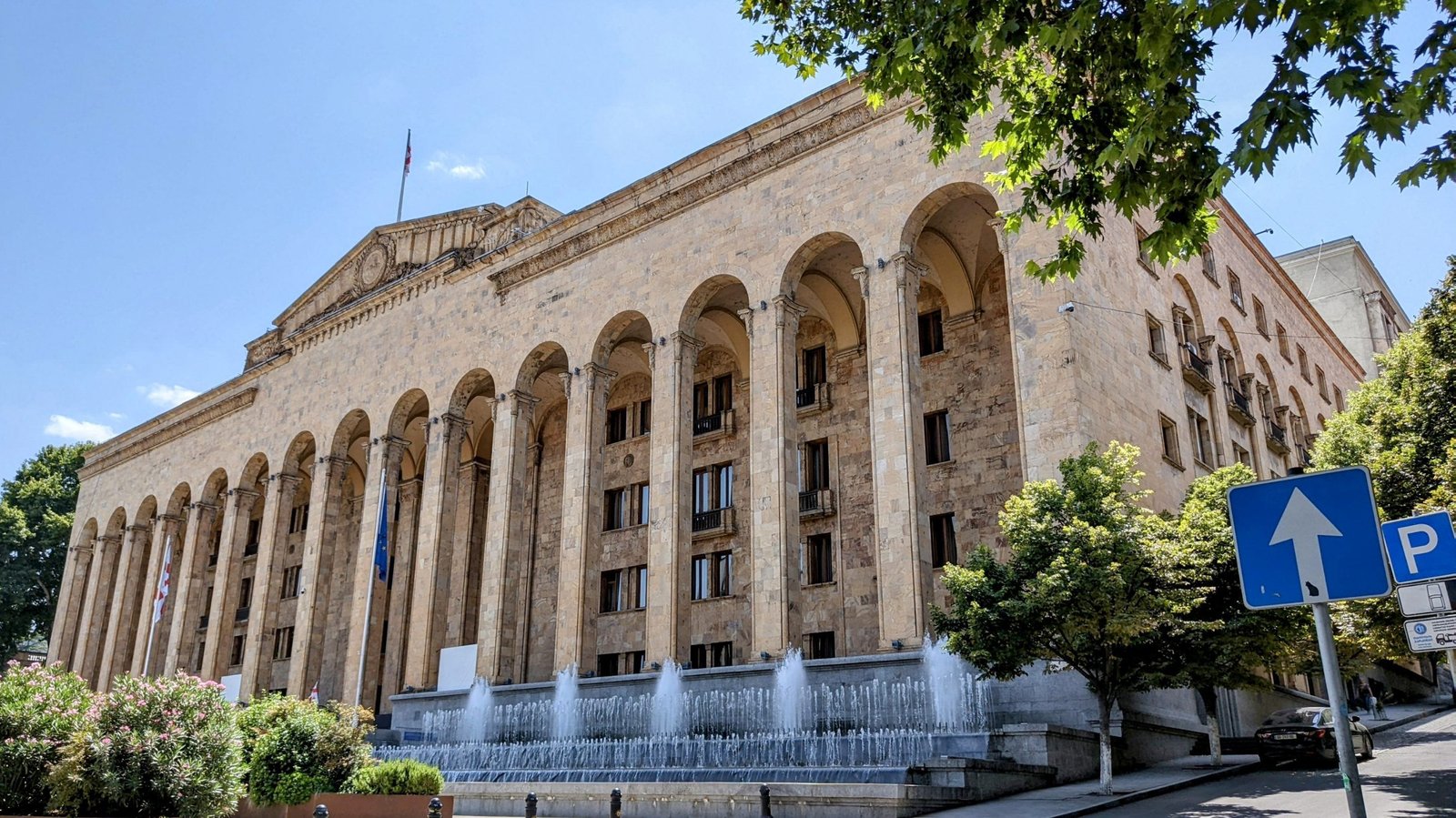 A kilometre and a half of plane trees between Freedom Square and Rustaveli Square. This is the street where Tbilisi shows off: the Parliament, the Moorish-looking Opera House of 1896, the Rustaveli Theatre, the Kashueti church, the National Museum and the grand hotels of the early 20th century. It is named after Shota Rustaveli, the 12th-century poet who wrote "The Knight in the Panther's Skin", the book every Georgian can quote.
It takes a good half hour on foot, or two metro stops if the heat is on. In front of the Parliament there is a plaque worth stopping for: on 9 April 1989 the Soviet army broke up a demonstration here and twenty-one people died, almost all of them women. That day still weighs on the politics of the country.
A kilometre and a half of plane trees between Freedom Square and Rustaveli Square. This is the street where Tbilisi shows off: the Parliament, the Moorish-looking Opera House of 1896, the Rustaveli Theatre, the Kashueti church, the National Museum and the grand hotels of the early 20th century. It is named after Shota Rustaveli, the 12th-century poet who wrote "The Knight in the Panther's Skin", the book every Georgian can quote.
It takes a good half hour on foot, or two metro stops if the heat is on. In front of the Parliament there is a plaque worth stopping for: on 9 April 1989 the Soviet army broke up a demonstration here and twenty-one people died, almost all of them women. That day still weighs on the politics of the country.
Metekhi Square
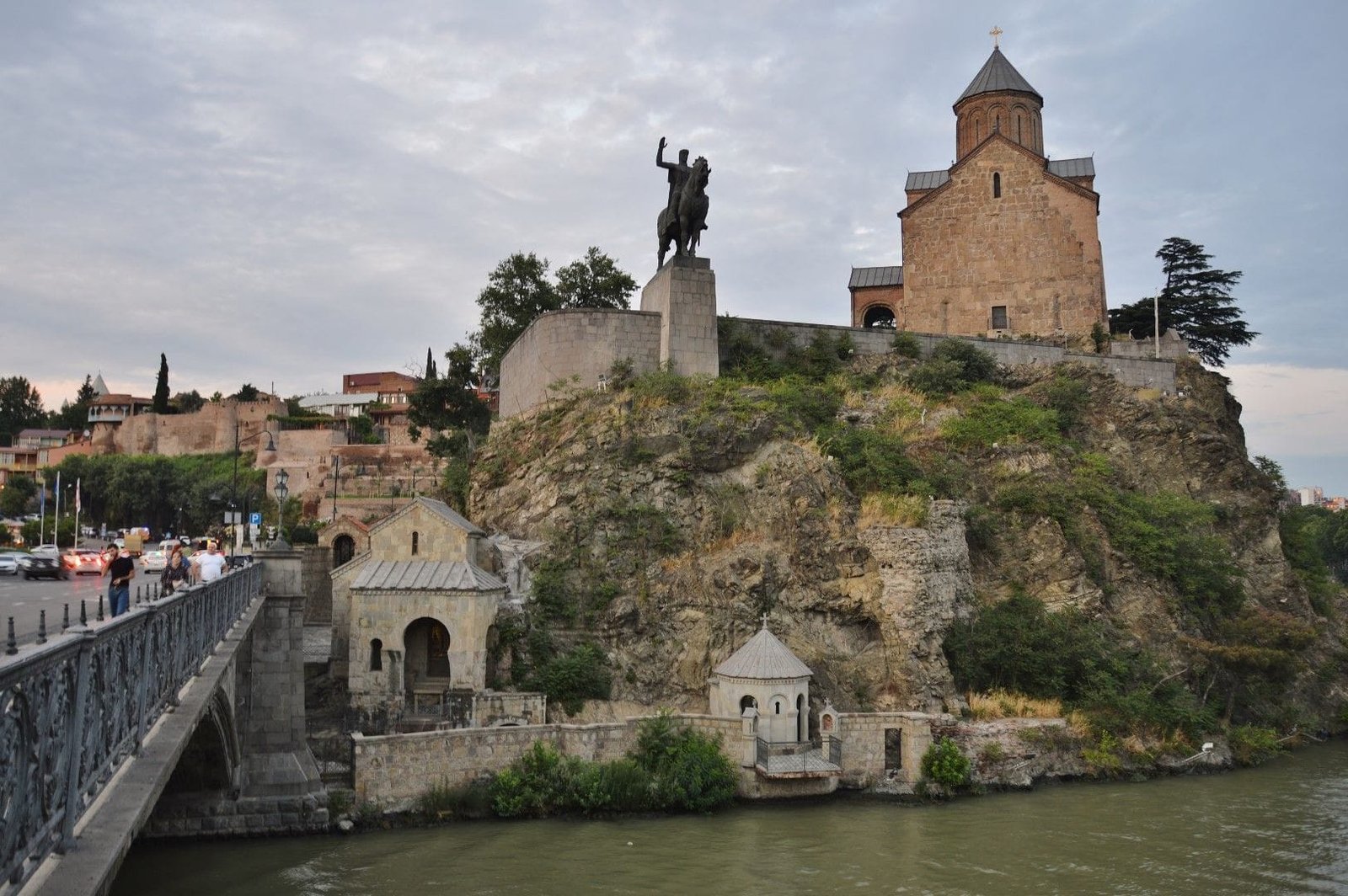 The king on horseback looking over the city from the cliff is Vakhtang Gorgasali, the founder of Tbilisi according to tradition; the statue dates from 1967. Next to him, the church of Metekhi, from the late 13th century, built by Demetre II on top of another from the 5th. The royal palace stood here for centuries, and in the 19th century and Soviet times the building was a prison: Gorky did time in it. Then it was a theatre, and in 1988 it became a church again.
We come here for the view, the best of the lower town: the sulphur baths right below, Narikala opposite and the river running between the two. It is a fifteen-minute stop that almost always runs longer because of the photos.
The king on horseback looking over the city from the cliff is Vakhtang Gorgasali, the founder of Tbilisi according to tradition; the statue dates from 1967. Next to him, the church of Metekhi, from the late 13th century, built by Demetre II on top of another from the 5th. The royal palace stood here for centuries, and in the 19th century and Soviet times the building was a prison: Gorky did time in it. Then it was a theatre, and in 1988 it became a church again.
We come here for the view, the best of the lower town: the sulphur baths right below, Narikala opposite and the river running between the two. It is a fifteen-minute stop that almost always runs longer because of the photos.
Narikala Fortress
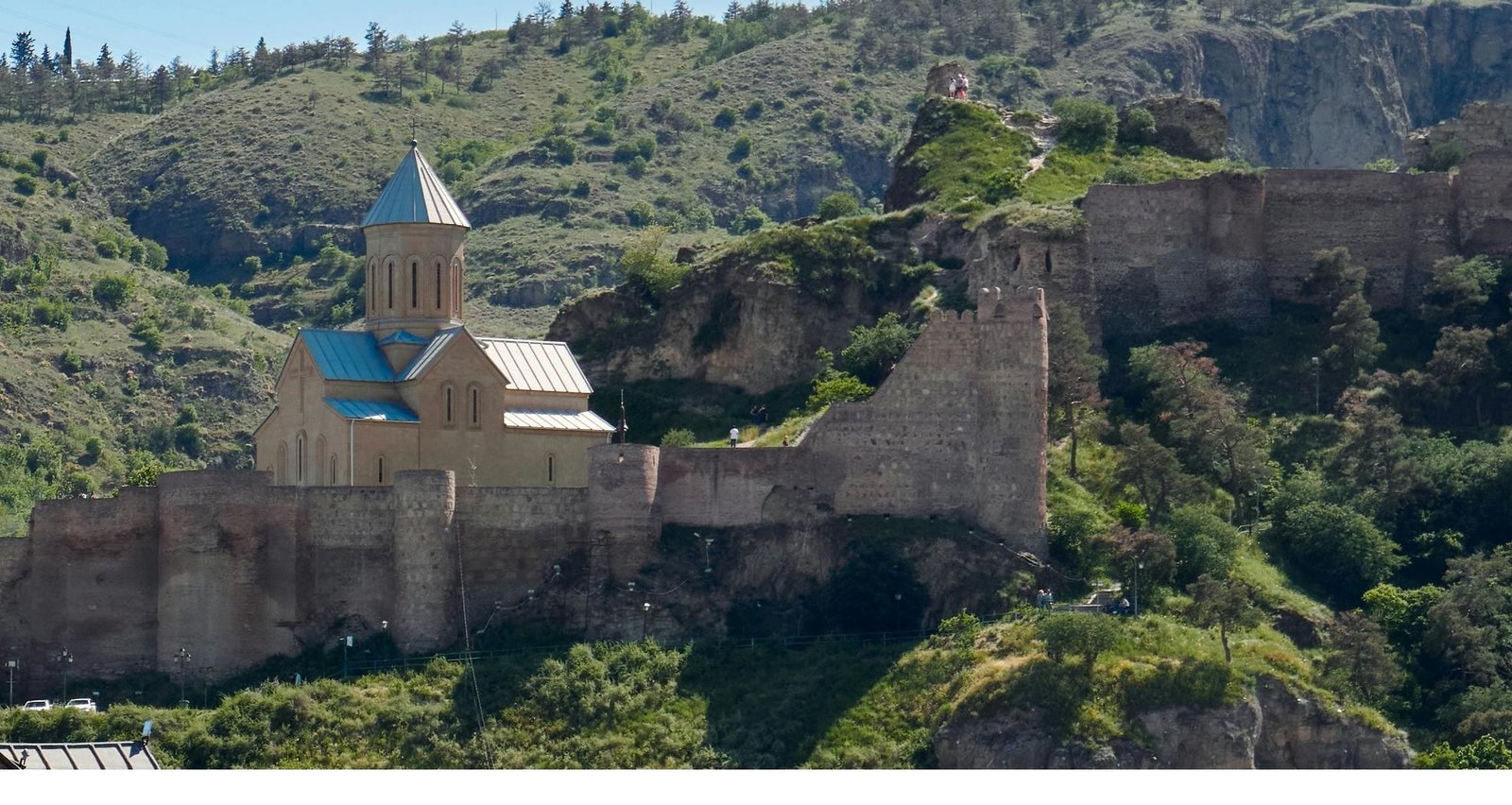 We take the cable car that leaves from Rike Park and crosses the river in two minutes; it costs the same as a metro ticket and is paid with the same card. At the top is Narikala, or what is left of it: the Persians founded it in the 4th century, the Arabs enlarged it in the 8th and the Georgians in the 12th, and in 1827 an explosion of the gunpowder store took out a good part of the walls. The church of St Nicholas inside dates from 1997, on medieval foundations.
The reason to come up is not the stones but the view: the whole old town, the domes of the baths, the river and Metekhi opposite. Careful, the walls have no railings and the rock is polished by so many feet. From here we walk down through the Betlemi quarter to the baths, passing the Mother of Georgia on the way, the aluminium statue of 1958 that watches over the city with a cup in one hand and a sword in the other.
We take the cable car that leaves from Rike Park and crosses the river in two minutes; it costs the same as a metro ticket and is paid with the same card. At the top is Narikala, or what is left of it: the Persians founded it in the 4th century, the Arabs enlarged it in the 8th and the Georgians in the 12th, and in 1827 an explosion of the gunpowder store took out a good part of the walls. The church of St Nicholas inside dates from 1997, on medieval foundations.
The reason to come up is not the stones but the view: the whole old town, the domes of the baths, the river and Metekhi opposite. Careful, the walls have no railings and the rock is polished by so many feet. From here we walk down through the Betlemi quarter to the baths, passing the Mother of Georgia on the way, the aluminium statue of 1958 that watches over the city with a cup in one hand and a sword in the other.
Abanotubani
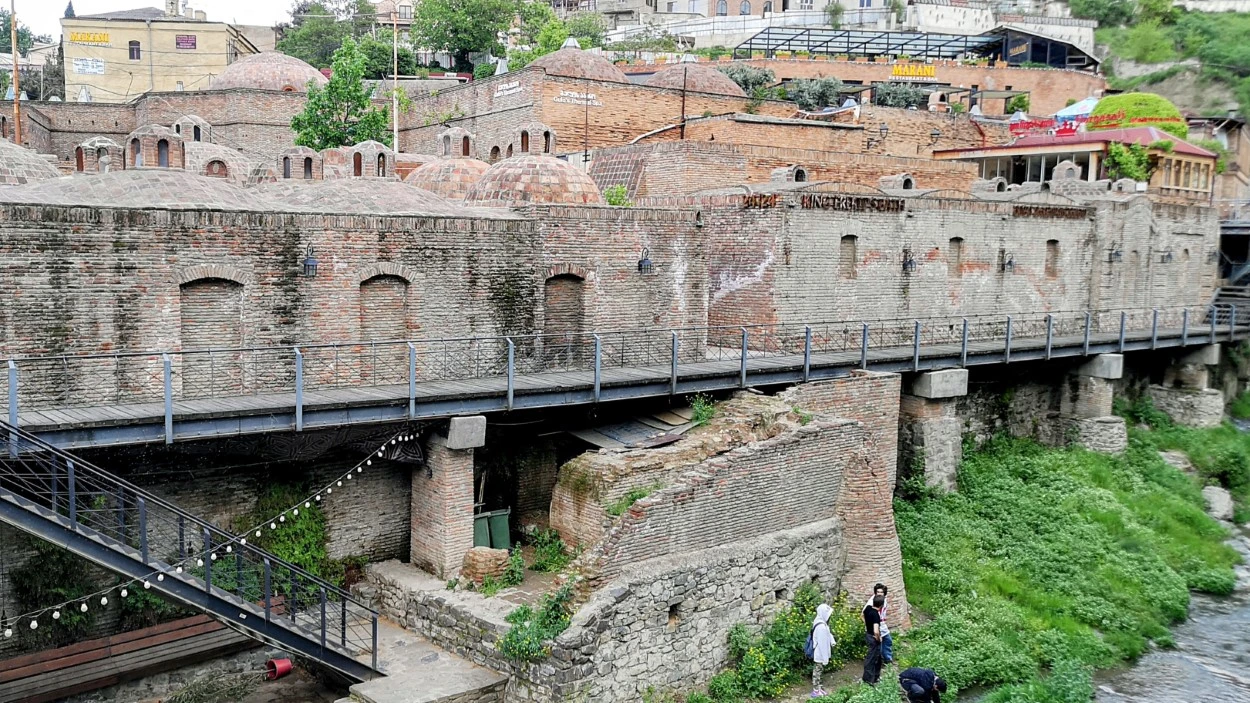 Tbilisi means "warm place", and the warmth comes from here. Abanotubani is the sulphur bath district, on the right bank of the Mtkvari just below Narikala: brick domes at ground level with the baths underneath, and water that comes up on its own at 37 to 40 degrees and smells of eggs. Legend has it that King Vakhtang Gorgasali founded the city in the 5th century after seeing a wounded pheasant healed in these waters. Pushkin bathed here in 1829 and wrote that he had never seen anything like it.
You can stroll and look, but what is worth it is going in: a private room with a hot-water pool and, if you like, a scrub with a coarse mitt that leaves you like new. Booking is needed in high season, and you bring swimwear and a towel or rent them. The blue-tiled façade belongs to the Orbeliani bath; the others are plainer outside.
Tbilisi means "warm place", and the warmth comes from here. Abanotubani is the sulphur bath district, on the right bank of the Mtkvari just below Narikala: brick domes at ground level with the baths underneath, and water that comes up on its own at 37 to 40 degrees and smells of eggs. Legend has it that King Vakhtang Gorgasali founded the city in the 5th century after seeing a wounded pheasant healed in these waters. Pushkin bathed here in 1829 and wrote that he had never seen anything like it.
You can stroll and look, but what is worth it is going in: a private room with a hot-water pool and, if you like, a scrub with a coarse mitt that leaves you like new. Booking is needed in high season, and you bring swimwear and a towel or rent them. The blue-tiled façade belongs to the Orbeliani bath; the others are plainer outside.
Anchiskhati
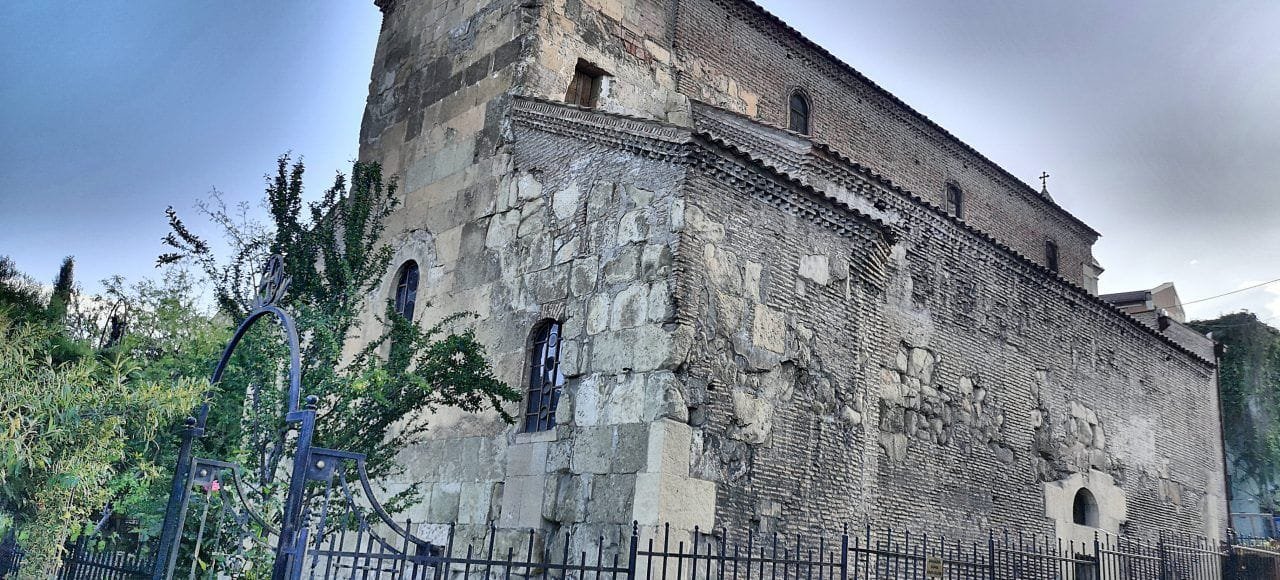 It is the oldest church still standing in Tbilisi, and it does not look it: a small three-nave basilica of plain stone, tucked into a street of the old town. King Dachi, son of Vakhtang Gorgasali, built it around the year 530. The name comes from the Christ icon of Ancha, which arrived here in 1664 from an area that is now Turkey and is now kept in the Art Museum. The brick bell tower of 1675 is what you see from the street.
If it falls on a Sunday morning, we go in during the liturgy: the Anchiskhati choir sings Georgian polyphony the way it was sung centuries ago, and it is one of the things people remember most from the trip. On other days it is almost empty and takes ten minutes. There are headscarves at the door for women.
It is the oldest church still standing in Tbilisi, and it does not look it: a small three-nave basilica of plain stone, tucked into a street of the old town. King Dachi, son of Vakhtang Gorgasali, built it around the year 530. The name comes from the Christ icon of Ancha, which arrived here in 1664 from an area that is now Turkey and is now kept in the Art Museum. The brick bell tower of 1675 is what you see from the street.
If it falls on a Sunday morning, we go in during the liturgy: the Anchiskhati choir sings Georgian polyphony the way it was sung centuries ago, and it is one of the things people remember most from the trip. On other days it is almost empty and takes ten minutes. There are headscarves at the door for women.
Day 5 - Tbilisi - Ananuri - Kazbegi - Tbilisi
Total road of the day - 321KM 6 Hours and 0 Minutes Ananuri and Gergeti Trinity Church. It is 321 km; we leave early so as not to rush. Road 67KM 1 Hours and 10 MinutesAnanuri
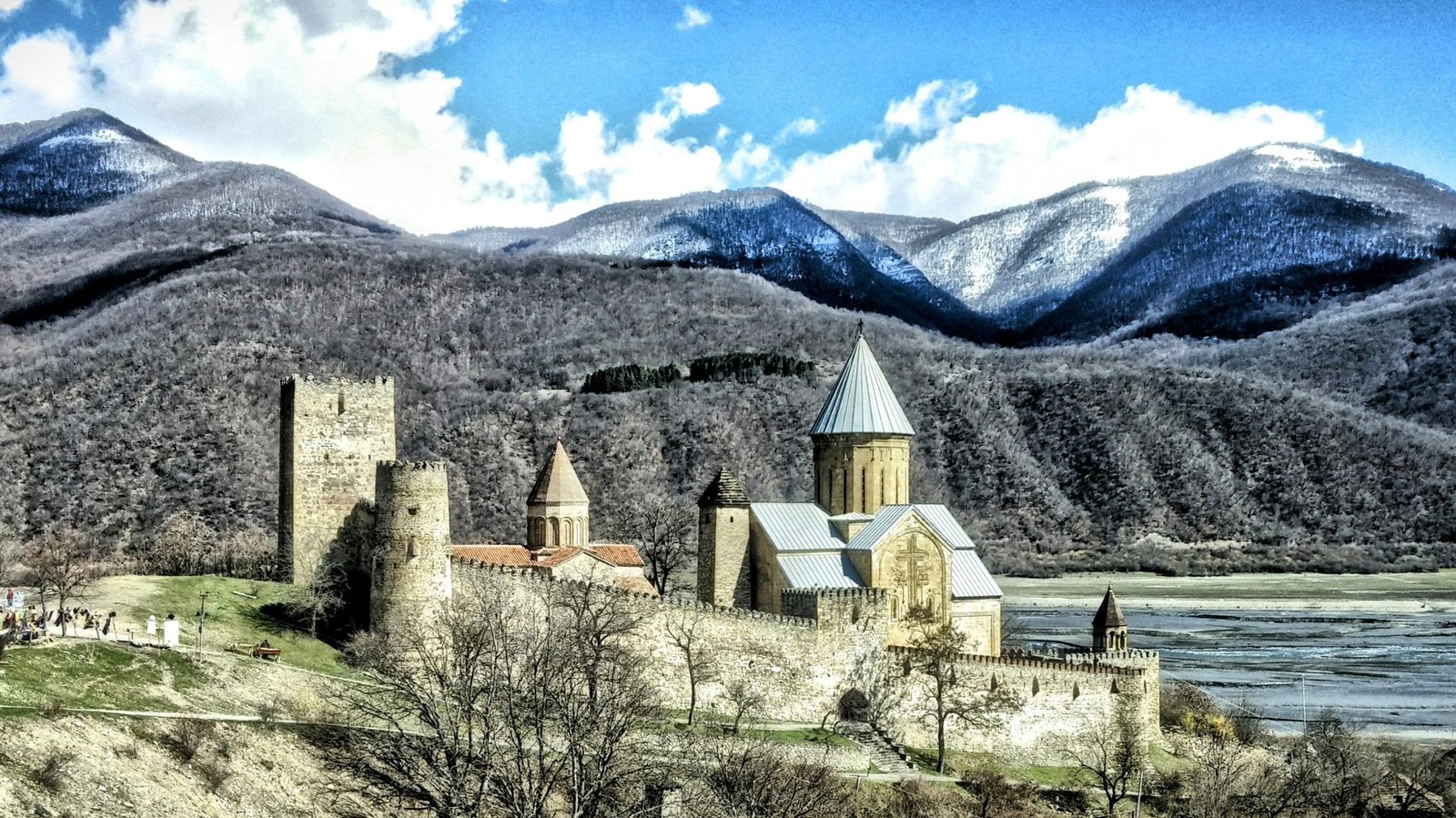 The first serious stop on the Georgian Military Highway, 66 km from Tbilisi: a fortress with two churches inside, planted above the Zhinvali reservoir. The turquoise water in all the photos dates from 1986, when the dam flooded the valley; until then the castle watched over a crossroads. It was the seat of the Eristavis of Aragvi, the dukes of the area, from the 13th to the 18th century, and the story you will be told is that of 1739, when a rival lord took it and put the whole family to the sword.
The best of Ananuri is the façade of the big church, the Assumption, from 1689: a huge cross carved with vines, lions and angels. You can climb the tower, up a narrow staircase. Half an hour, and at the exit there are stalls selling churchkhela, the strings of walnuts dipped in grape must, which are good here and not expensive. In autumn the reservoir drops and the postcard loses its colour.
The first serious stop on the Georgian Military Highway, 66 km from Tbilisi: a fortress with two churches inside, planted above the Zhinvali reservoir. The turquoise water in all the photos dates from 1986, when the dam flooded the valley; until then the castle watched over a crossroads. It was the seat of the Eristavis of Aragvi, the dukes of the area, from the 13th to the 18th century, and the story you will be told is that of 1739, when a rival lord took it and put the whole family to the sword.
The best of Ananuri is the façade of the big church, the Assumption, from 1689: a huge cross carved with vines, lions and angels. You can climb the tower, up a narrow staircase. Half an hour, and at the exit there are stalls selling churchkhela, the strings of walnuts dipped in grape must, which are good here and not expensive. In autumn the reservoir drops and the postcard loses its colour.
Gergeti Trinity Church
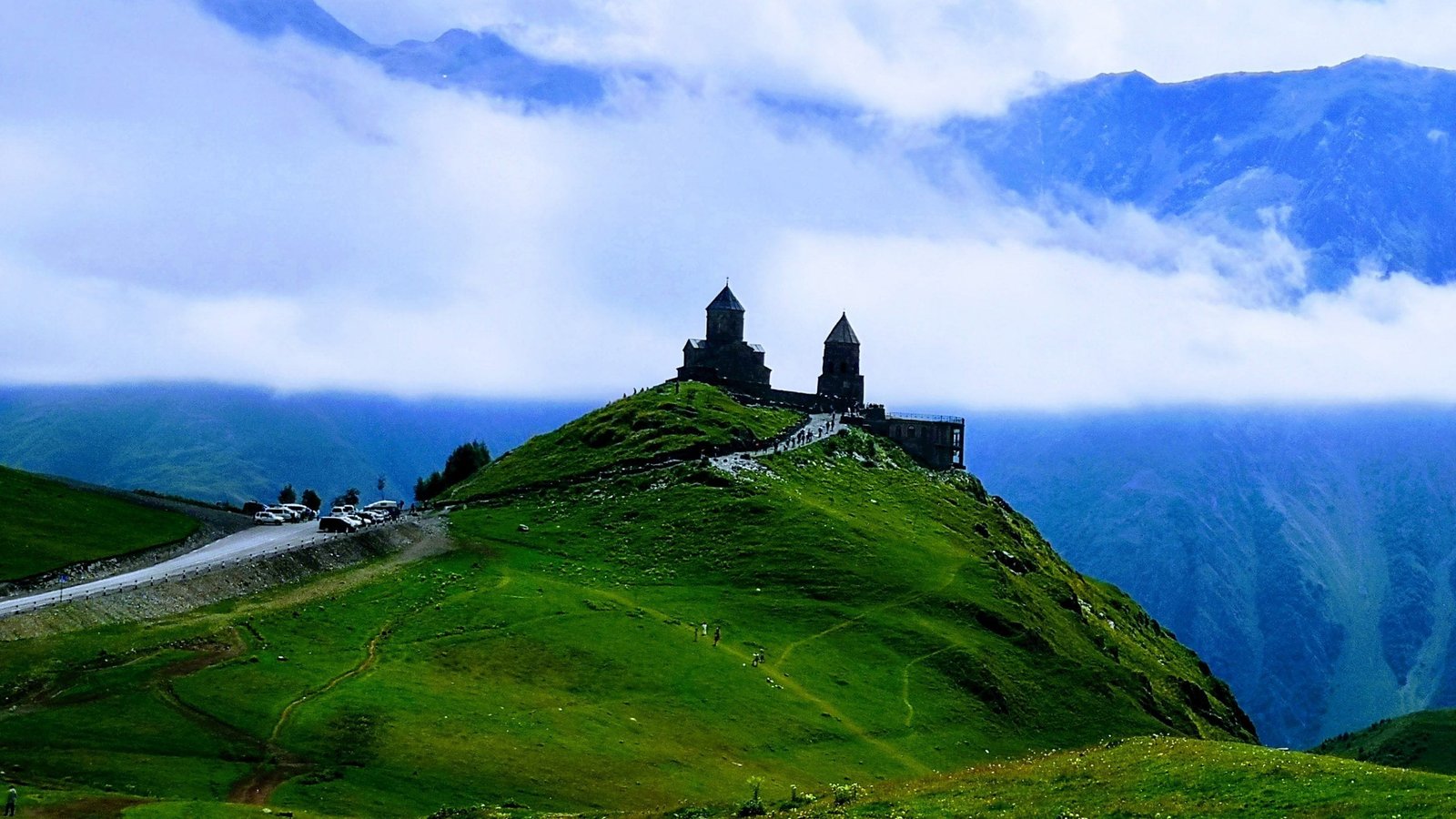 The photo of Georgia: a 14th-century church alone on a ridge at 2,170 metres, with Kazbek (5,047 m) behind it if the clouds allow. You get there from Stepantsminda, the village below, by a 6 km road that was paved only a few years ago; before that you needed a 4x4 or an hour and a half on foot, and in winter you still need the 4x4. For centuries the treasures of Mtskheta were hidden up here when invaders came, because of how remote it is.
Two warnings. First: Kazbek is usually covered from midday on, so we go up as early as we can and, if it is hidden, we wait a while, because sometimes it clears. Second: it is cold and windy at the top all year; in the middle of August we have seen people in T-shirts shivering. Headscarf to go in and covered shoulders; there are wrap skirts to borrow at the door for anyone in shorts. An hour for the drive up, the church and the photos.
The photo of Georgia: a 14th-century church alone on a ridge at 2,170 metres, with Kazbek (5,047 m) behind it if the clouds allow. You get there from Stepantsminda, the village below, by a 6 km road that was paved only a few years ago; before that you needed a 4x4 or an hour and a half on foot, and in winter you still need the 4x4. For centuries the treasures of Mtskheta were hidden up here when invaders came, because of how remote it is.
Two warnings. First: Kazbek is usually covered from midday on, so we go up as early as we can and, if it is hidden, we wait a while, because sometimes it clears. Second: it is cold and windy at the top all year; in the middle of August we have seen people in T-shirts shivering. Headscarf to go in and covered shoulders; there are wrap skirts to borrow at the door for anyone in shorts. An hour for the drive up, the church and the photos.
Day 6 - Tbilisi - Mtskheta - Uplistsikhe - Gori - Kutaisi
Total road of the day - 267KM 4 Hours and 44 Minutes 267 km and 4 hours 44 minutes in the car in all. Today's stops: Jvari, Svetitskhoveli, Uplistsikhe and Stalin Museum. Road 25KM 0 Hours and 36 MinutesJvari, the Monastery of the Cross
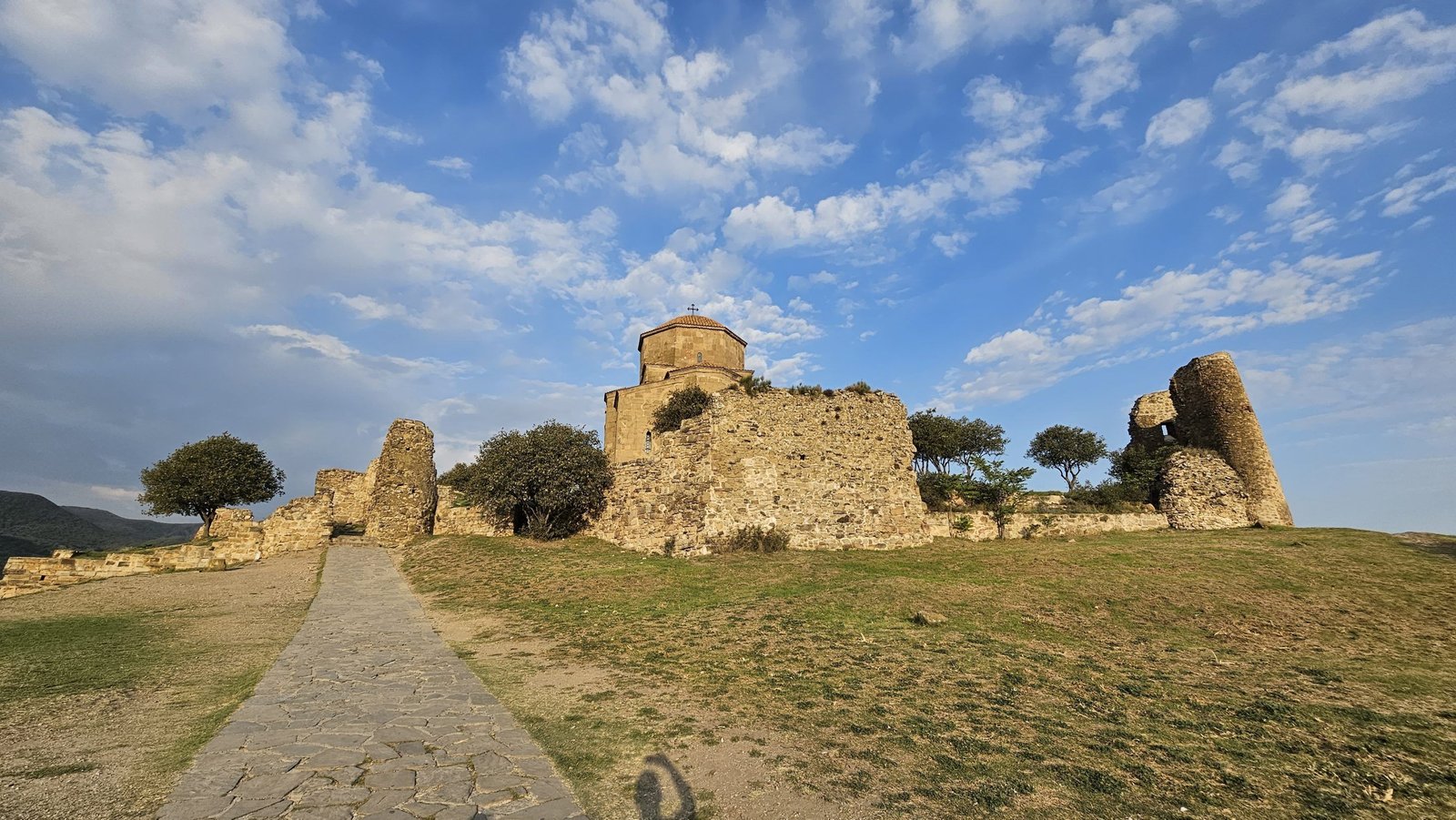 From the Tbilisi road you can see a small church on top of a bare hill above Mtskheta. It is Jvari, "the cross", and it is there because, according to tradition, in the 4th century St Nino planted a wooden cross on that spot when she converted Georgia. The present church was built between 586 and 605 and became the model for many others in the country: a cross plan with four apses and a dome in the middle, with hardly any decoration. It is a UNESCO site together with Mtskheta.
What you remember is the view: below, the Aragvi and the Mtkvari meet, each a different colour, with Svetitskhoveli cathedral in between. Lermontov set his poem "Mtsyri" here. It is almost always windy, so a jacket is not a bad idea even in July. Twenty minutes, half an hour if the day is clear.
Road 13KM 0 Hours and 18 Minutes
From the Tbilisi road you can see a small church on top of a bare hill above Mtskheta. It is Jvari, "the cross", and it is there because, according to tradition, in the 4th century St Nino planted a wooden cross on that spot when she converted Georgia. The present church was built between 586 and 605 and became the model for many others in the country: a cross plan with four apses and a dome in the middle, with hardly any decoration. It is a UNESCO site together with Mtskheta.
What you remember is the view: below, the Aragvi and the Mtkvari meet, each a different colour, with Svetitskhoveli cathedral in between. Lermontov set his poem "Mtsyri" here. It is almost always windy, so a jacket is not a bad idea even in July. Twenty minutes, half an hour if the day is clear.
Road 13KM 0 Hours and 18 Minutes
Svetitskhoveli
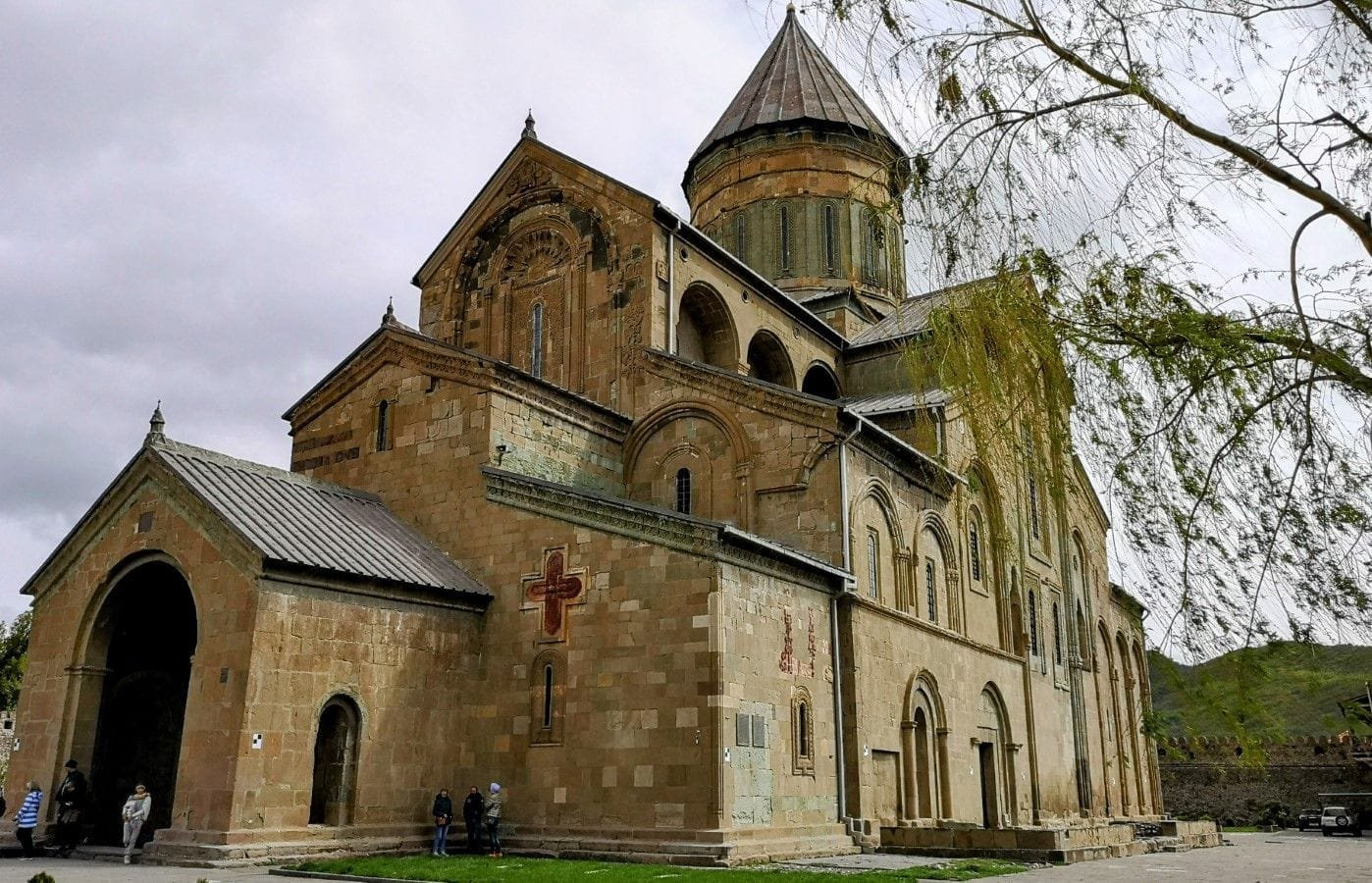 For a Georgian this is the cathedral, full stop. It stands in Mtskheta, the old capital, 20 km from Tbilisi, and the present building went up between 1010 and 1029 on the site of the 4th-century church of King Mirian, the one who converted the country to Christianity. Beneath it, according to tradition, lies the robe of Christ: a Jew from Mtskheta brought it from Jerusalem, his sister Sidonia died clutching it and they were buried together; a cedar grew from the spot, and from its trunk came the pillar that gives the church its name, "the life-giving pillar". Kings were crowned and buried here; the slabs of Vakhtang Gorgasali and Erekle II are in the floor.
A UNESCO site since 1994, and at weekends the weddings follow one another, so sometimes you wait at the door. Headscarves for women and covered shoulders for everyone. Half an hour inside, another in the lanes around it, which live off tourism but keep the feel of a village.
Road 61KM 1 Hours and 5 Minutes
For a Georgian this is the cathedral, full stop. It stands in Mtskheta, the old capital, 20 km from Tbilisi, and the present building went up between 1010 and 1029 on the site of the 4th-century church of King Mirian, the one who converted the country to Christianity. Beneath it, according to tradition, lies the robe of Christ: a Jew from Mtskheta brought it from Jerusalem, his sister Sidonia died clutching it and they were buried together; a cedar grew from the spot, and from its trunk came the pillar that gives the church its name, "the life-giving pillar". Kings were crowned and buried here; the slabs of Vakhtang Gorgasali and Erekle II are in the floor.
A UNESCO site since 1994, and at weekends the weddings follow one another, so sometimes you wait at the door. Headscarves for women and covered shoulders for everyone. Half an hour inside, another in the lanes around it, which live off tourism but keep the feel of a village.
Road 61KM 1 Hours and 5 Minutes
Uplistsikhe
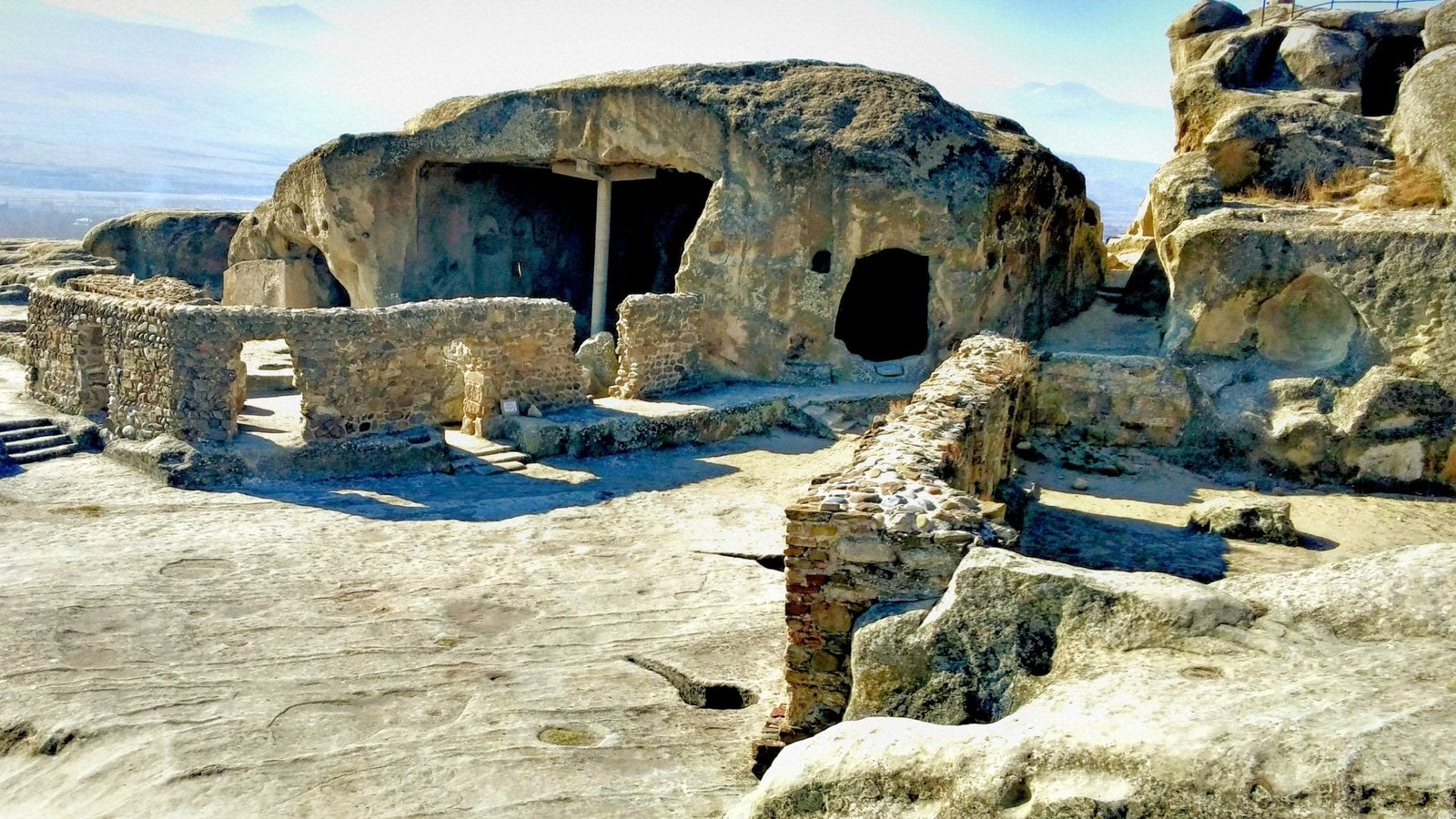 A whole town cut into the rock, 10 km from Gori above the Mtkvari river. People lived at Uplistsikhe from the first millennium BC until the Middle Ages: first a pagan centre, then a Christian one, and always a stop for the caravans. What remains are carved streets, a hall with a ceiling imitating wooden beams (they call it "Queen Tamar's hall"), wine presses, a tunnel down to the river and a 10th-century brick church planted on top of it all. The Mongols emptied it in the 13th century and it never recovered.
One piece of advice: in summer there is no shade and the rock burns, so go early or late in the day, and wear shoes with grip, because the polished stone is slippery. An hour is enough to climb up to the church and look down at the river.
Road 14KM 0 Hours and 20 Minutes
A whole town cut into the rock, 10 km from Gori above the Mtkvari river. People lived at Uplistsikhe from the first millennium BC until the Middle Ages: first a pagan centre, then a Christian one, and always a stop for the caravans. What remains are carved streets, a hall with a ceiling imitating wooden beams (they call it "Queen Tamar's hall"), wine presses, a tunnel down to the river and a 10th-century brick church planted on top of it all. The Mongols emptied it in the 13th century and it never recovered.
One piece of advice: in summer there is no shade and the rock burns, so go early or late in the day, and wear shoes with grip, because the polished stone is slippery. An hour is enough to climb up to the church and look down at the river.
Road 14KM 0 Hours and 20 Minutes
Stalin Museum
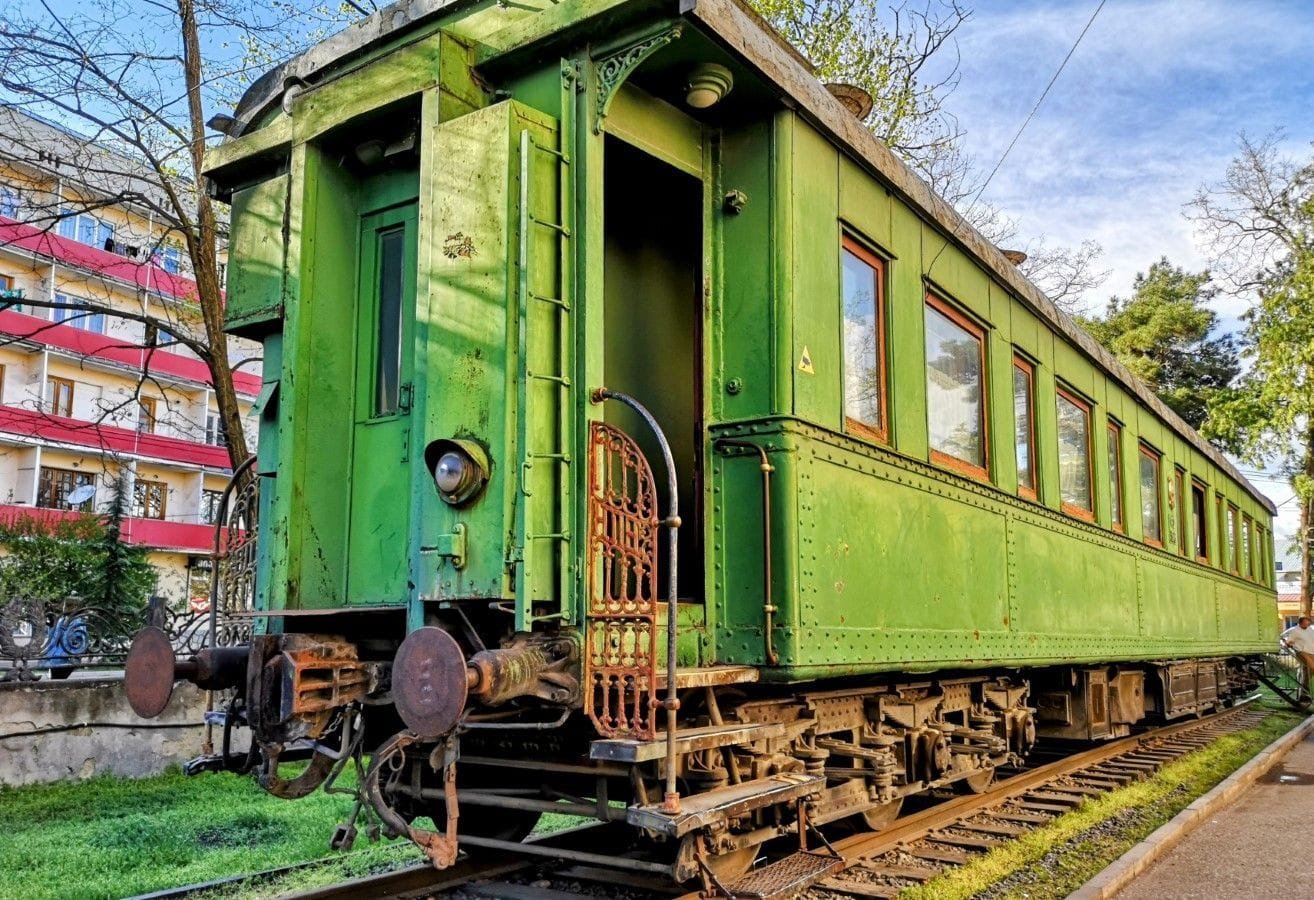 Gori is the town where Iosif Dzhugashvili was born in 1878, and the museum dedicated to him in 1957 is still open much as it was then. It is three things: the little wooden house where he was born, protected under a pavilion of columns; the main building, a Soviet-style palace with his personal belongings, photographs, gifts from heads of state and one of the bronze copies of his death mask; and the armoured railway carriage in which he travelled to Yalta and Potsdam, because he did not like flying.
Let us be plain: the museum tells the kind version. There is a small room on the repression, added late, and little else. We tell the rest on the road, and the one-hour visit usually ends in a long conversation in the car.
Road 154KM 2 Hours and 25 Minutes
Gori is the town where Iosif Dzhugashvili was born in 1878, and the museum dedicated to him in 1957 is still open much as it was then. It is three things: the little wooden house where he was born, protected under a pavilion of columns; the main building, a Soviet-style palace with his personal belongings, photographs, gifts from heads of state and one of the bronze copies of his death mask; and the armoured railway carriage in which he travelled to Yalta and Potsdam, because he did not like flying.
Let us be plain: the museum tells the kind version. There is a small room on the repression, added late, and little else. We tell the rest on the road, and the one-hour visit usually ends in a long conversation in the car.
Road 154KM 2 Hours and 25 Minutes
Day 7 - Kutaisi - Promete - Martvili - Batumi
Total road of the day - 240KM 4 Hours and 16 Minutes A day with 4 hours 16 minutes at the wheel, which is not nothing, and in return Prometheus Cave and Martvili Canyon. Road 22KM 0 Hours and 31 MinutesPrometheus Cave
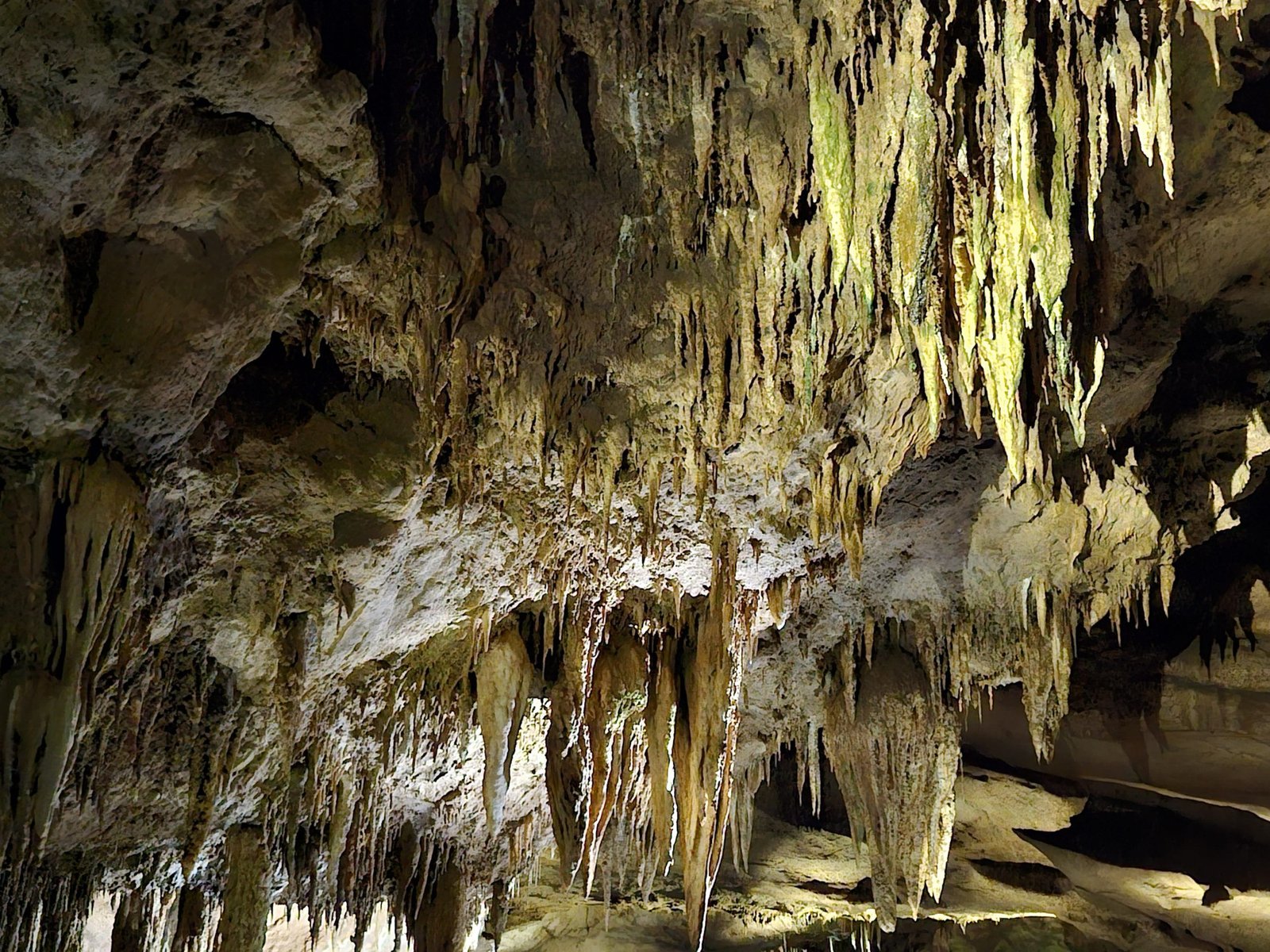 Inside it is 14 degrees all year round, which is welcome in summer and in winter too: bring a jacket. Prometheus Cave is at Kumistavi, 20 km from Kutaisi, next to the spa town of Tskaltubo. It was discovered in 1984 and opened to the public in 2011 with a route of just over a kilometre through six of its 22 halls, on concrete walkways with coloured lights that some people like and others do not. The name is for the titan who, according to the Greeks, ended up chained in these mountains; Georgians call him Amirani.
The visit takes a good hour. At the end, if the underground river has enough water, you can leave by boat along a stretch of about 300 metres, paid separately; when the level drops, you walk out. The floor is damp and slippery, so closed shoes are better.
Inside it is 14 degrees all year round, which is welcome in summer and in winter too: bring a jacket. Prometheus Cave is at Kumistavi, 20 km from Kutaisi, next to the spa town of Tskaltubo. It was discovered in 1984 and opened to the public in 2011 with a route of just over a kilometre through six of its 22 halls, on concrete walkways with coloured lights that some people like and others do not. The name is for the titan who, according to the Greeks, ended up chained in these mountains; Georgians call him Amirani.
The visit takes a good hour. At the end, if the underground river has enough water, you can leave by boat along a stretch of about 300 metres, paid separately; when the level drops, you walk out. The floor is damp and slippery, so closed shoes are better.
Martvili Canyon
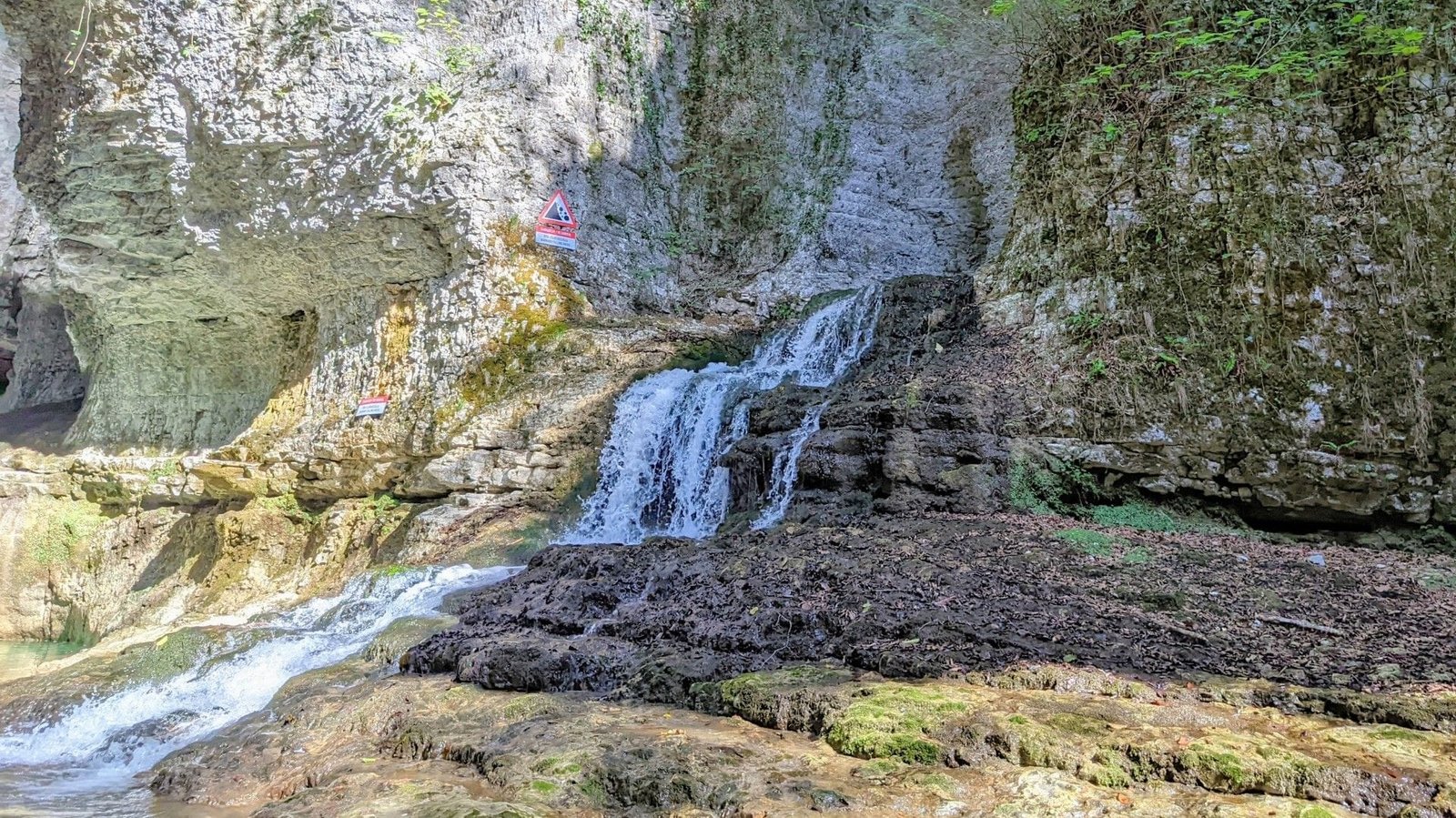 The water of the Abasha river is a turquoise that looks edited. It is not: this is Martvili canyon, in Samegrelo, three and a quarter hours from Mestia and the most visited canyon in western Georgia. It has two sections. In the upper one you take a boat ride of about fifteen minutes between walls 20 to 40 metres high; in the lower one there are walkways and a waterfall. It was the bathing place of the Dadiani princes, whose palace was in Zugdidi. Since it was developed in 2016 there is a ticket office, a car park and quite a crowd; on July and August weekends there is a queue for the boats [DATO: precio de entrada y de la barca en 2026]. We do the boat as soon as we arrive and then the walkways, half an hour without hurrying. If the river is swollen after rain, the boats do not go out and the water loses its colour; on those days we swap the order with Okatse.


