A ring around the country in ten days from the cheap flights into Kutaisi. First the south: the monasteries of Imereti with Nikortsminda cathedral, Borjomi and Rabati castle in Akhaltsikhe, and Vardzia with Khertvisi on the way to Tbilisi. Two nights in the capital, with a day on foot, and the return west via Mtskheta, Uplistsikhe and the Stalin museum in Gori. Then the mountains: the Enguri reservoir up to Mestia and, if the track allows, Ushguli, at 2,100 metres under Shkhara. And finally the sea: the Dadiani palace in Zugdidi and the Shekvetili park to Batumi, a day on the coast with Gonio and the Borjgalo museum, and two hours to the airport.
No Kakheti and no Kazbegi, but Svaneti, Vardzia and the coast, which is what most people never get to see. Five hotels and four days of over five hours in the car. Between November and April the Ushguli track is usually closed and that day stays in Mestia.
Itinerary
Day 1 - Transfer from Kutaisi airport to Kutaisi
Total road of the day - 25KM 0 Hours and 30 Minutes Arrival. Someone from the team is waiting at the airport with a sign; the rest of the day is yours. Road 25KM 0 Hours and 30 MinutesDay 2 - Kutaisi - Bagrati - Motsameta - Gelati - Nikortsminda-Kutaisi
Total road of the day - 192KM 4 Hours and 21 Minutes 192 km and 4 hours 21 minutes in the car in all. Today's stops: Bagrati Cathedral, Motsameta, Gelati Academy and Nikortsminda. Road 2KM 0 Hours and 9 MinutesBagrati Cathedral
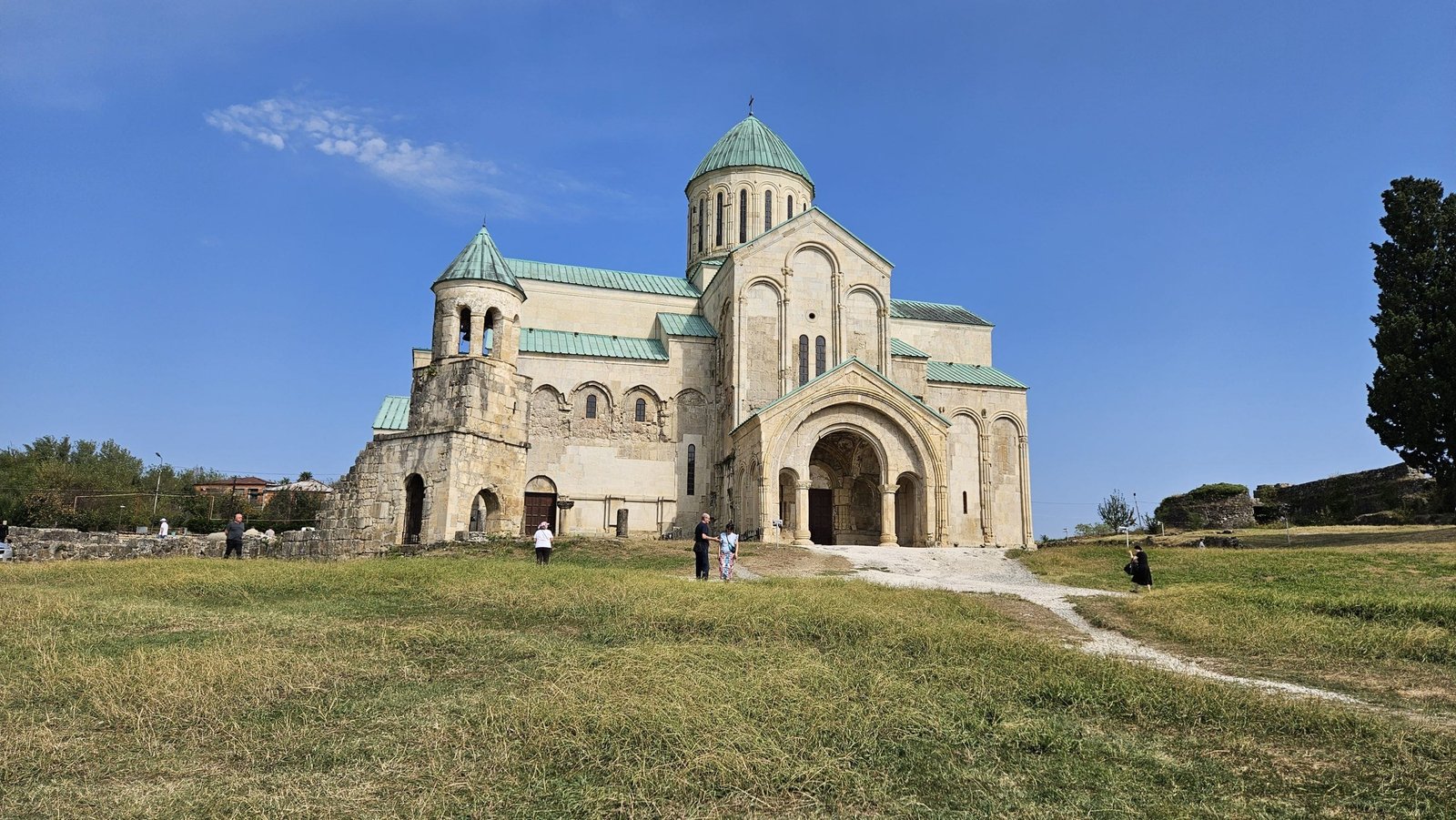 You can see it from half of Kutaisi, so you arrive already knowing what it is. What you cannot see from below is the controversy: Bagrat III consecrated it in 1003, the Ottomans blew it up in 1692 and it stood in ruins for three centuries until, in 2012, it was rebuilt in full, with concrete and a glass lift stuck to one side. UNESCO took it off the list in 2017 for that. Some people see it as a botch job. We still like it, mostly for the site: the terrace has the best view of the city and the Rioni valley. Ten minutes uphill from the centre and a full circuit of the building to find the original carvings left on the walls.
Road 8KM 0 Hours and 17 Minutes
Motsameta
 First the legend, because it is what you are told the moment you arrive: in the 8th century the Arabs killed the brothers David and Konstantin Mkheidze, nobles of Argveti, for refusing to give up their faith, and that is where the monastery gets its name, "the place of the martyrs". Their relics lie in a casket inside the church and passing under it three times, they say, grants a wish. Then the site: a rocky spur above the Tskaltsitela canyon ("red water" in Georgian), ten minutes from Kutaisi. The present building is 11th century, much altered.
Half an hour is enough. The best part is not the church, it is the balcony over the gorge.
Road 4KM 0 Hours and 8 Minutes
Gelati Academy
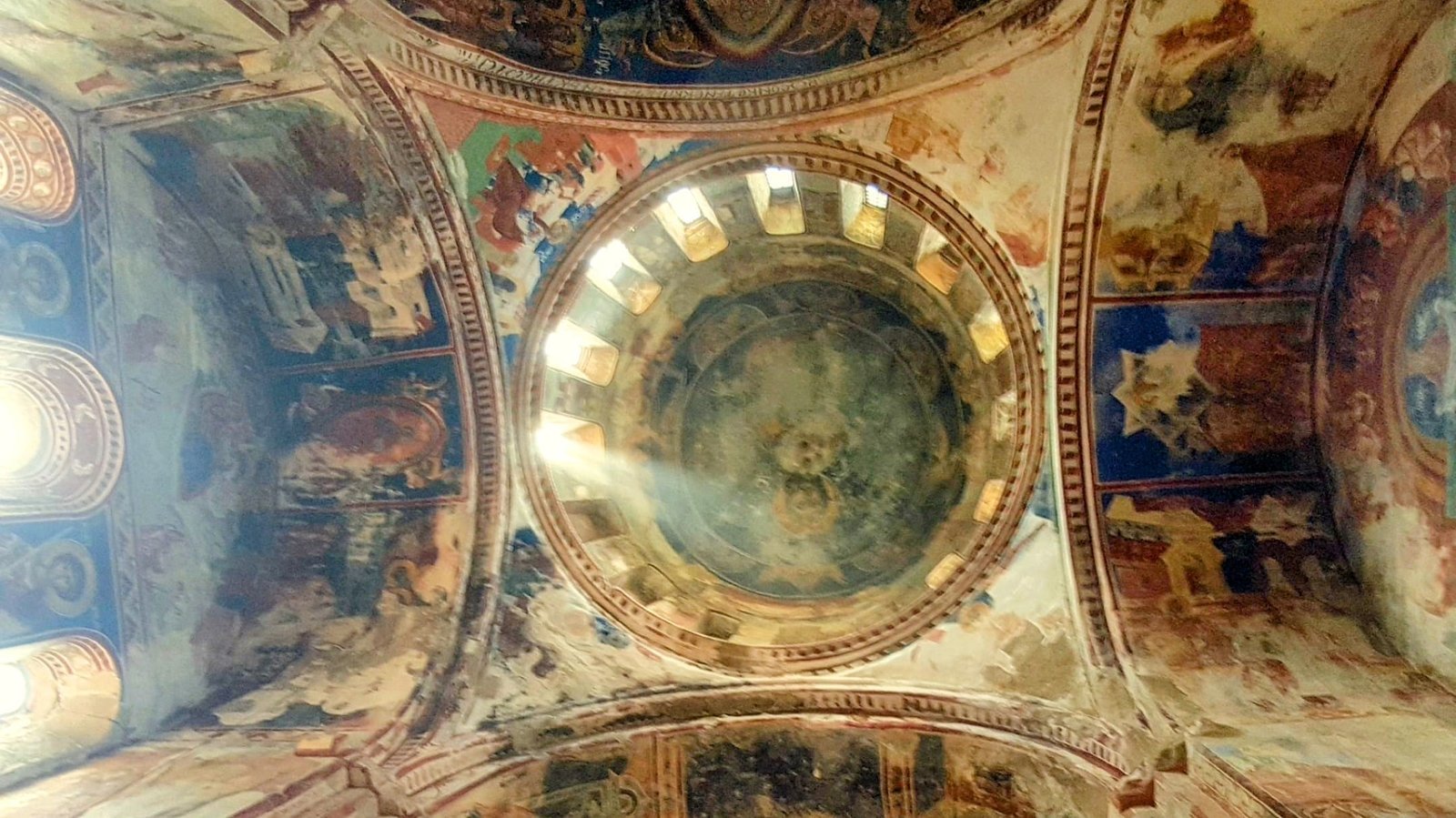 David the Builder asked to be buried in the floor of the south gate, so that everyone who came in would step on his grave. He has been there since 1125, and the monastery of Gelati, which he founded in 1106, was for centuries the great school of the kingdom: in its academy Greek philosophy was translated and copied at a time when Georgia looked to Byzantium. A UNESCO site since 1994 and, unlike Bagrati, still on the list. As soon as you enter the main church, the 12th-century mosaic of the Virgin in the apse; then frescoes on every wall, from different centuries. We give it almost an hour between the church, the tomb, the academy (a long hall with stone benches) and the church of St George. The domes were under repair for years because of leaks [VERIFICAR: estado de la restauración del tejado en 2026].
Road 58KM 1 Hours and 15 Minutes
Nikortsminda
 This is the debatable detour of the day, and we are the ones saying so, since we are the ones who include it: an hour and a quarter of mountain road from Gelati and 120 km back to Kutaisi that feel long once it gets dark. Why is it worth it? The façade. Nikortsminda cathedral is small, built in 1010-1014 under Bagrat III, but its outer walls are the most elaborately carved in Georgia: the Last Judgement, St George, animals, vines, all cut in stone. Inside, 17th-century frescoes. If you would rather shorten the day, it can be left out and the time given to Gelati; just say so when you book. In good weather we also stop at the viewpoint over the Shaori reservoir, which is on the way.
Road 120KM 2 Hours and 32 Minutes
Day 3 - Kutaisi - Borjomi - Akhaltsikhe
Total road of the day - 182KM 3 Hours and 6 Minutes In the morning, Borjomi; in the afternoon, Rabati Fortress. 182 km in all. Road 130KM 2 Hours and 16 MinutesBorjomi
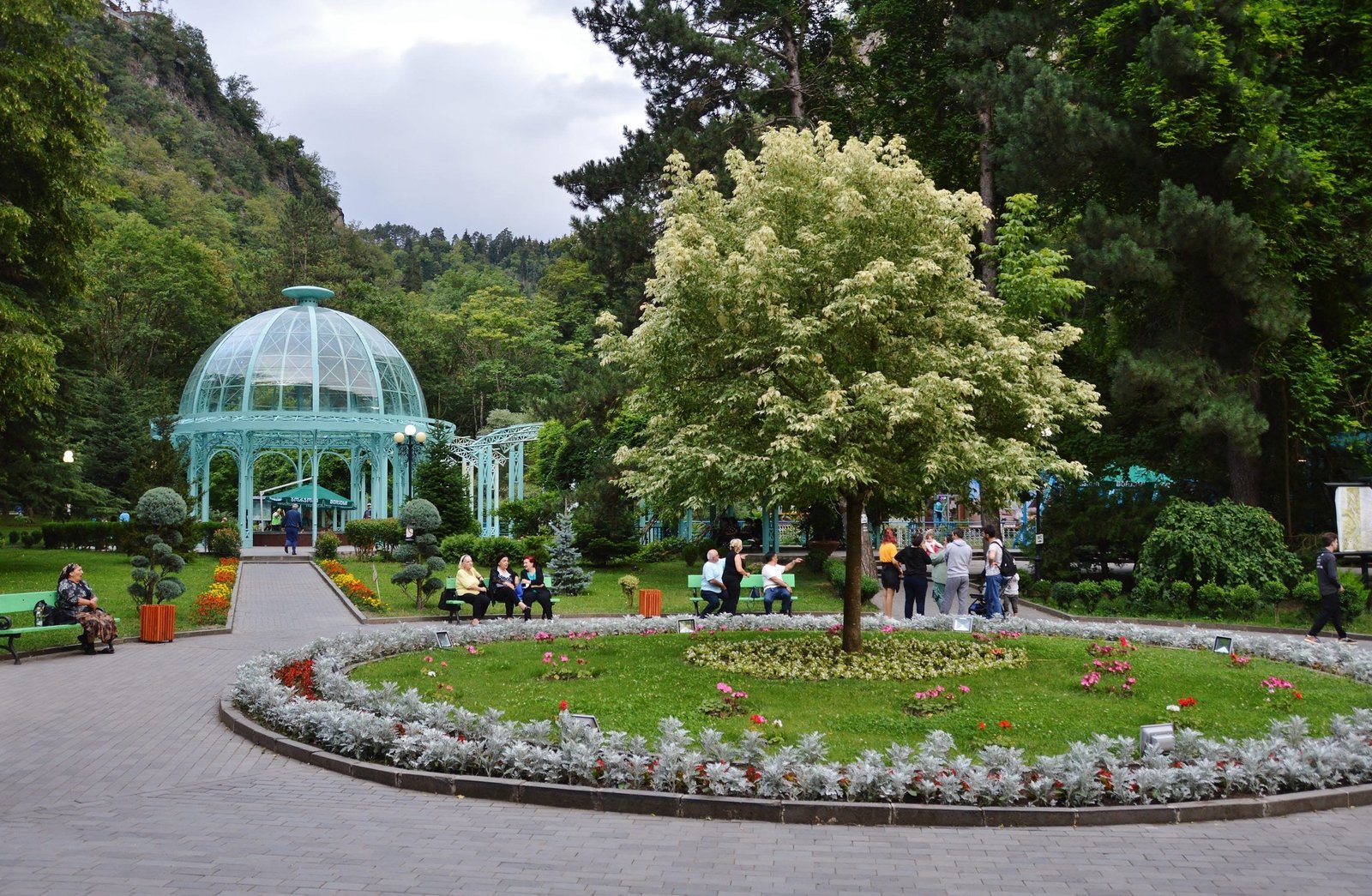 The fizzy water drunk all over the former Soviet Union comes from here, and it has been bottled since 1890. Borjomi was the spa of the Romanovs, who built themselves a palace at Likani, at the entrance to the town, and what remains of that is the air of a spa town from another age: wooden villas, a central park of 1850 with the spring where anyone can fill a bottle (it comes out warm, salty and fizzy, and not everyone likes it) and a cable car up to a viewpoint with a Ferris wheel.
An hour for the park and the spring; for walkers, the 3 km path to the sulphur pools in the forest starts at the far end of the park. The town is the gateway to the Borjomi-Kharagauli national park and the last stop with shops and banks before Vardzia.
Rabati Fortress, Akhaltsikhe
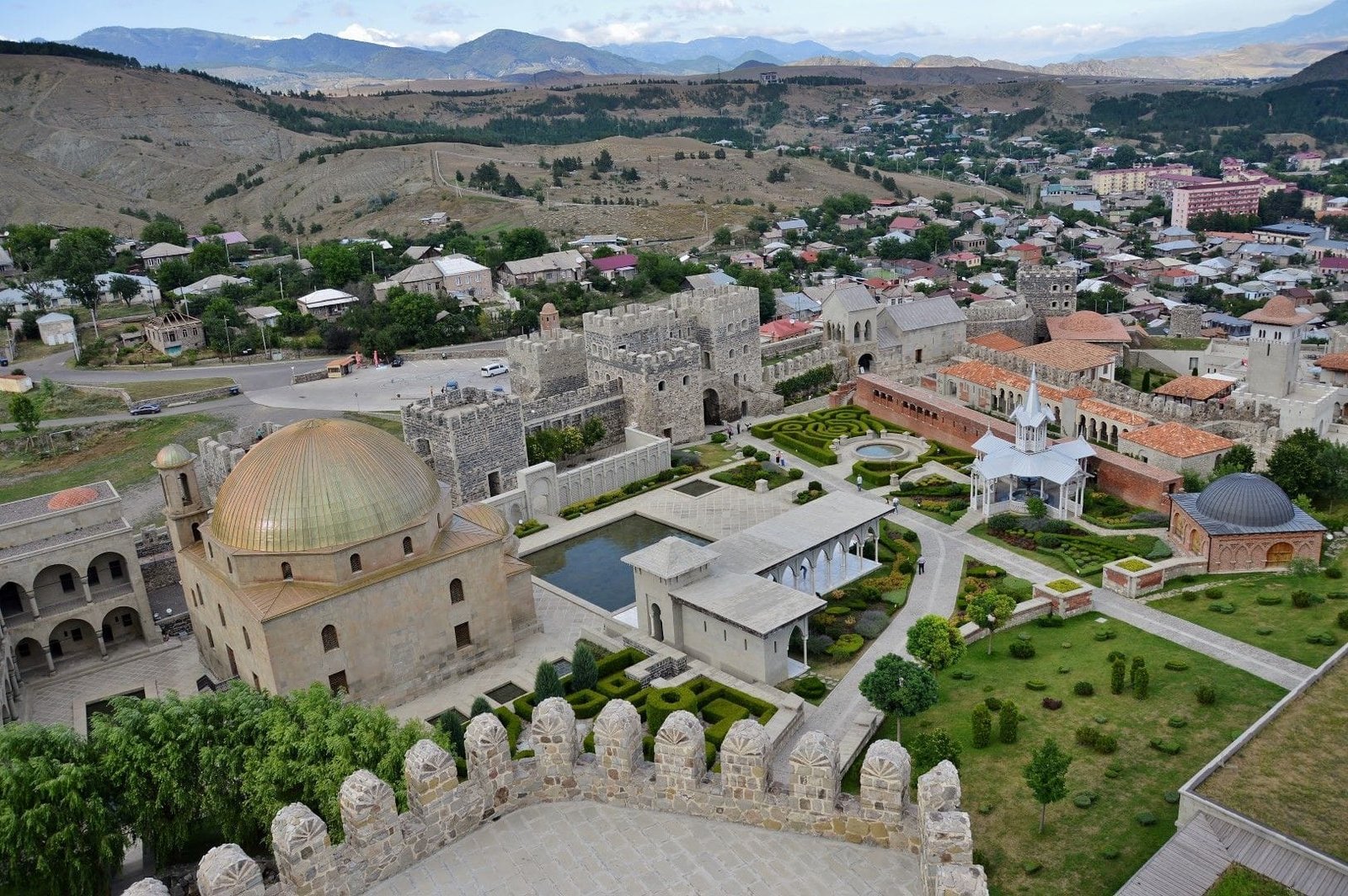 A 9th-century fortress that was Ottoman for 250 years, with its mosque of 1578, its madrasa and its baths, and which the government rebuilt entirely in a single year in 2012: new stone, gardens, fountains, a hotel inside and even a swimming pool. The result is debated. To us Rabati is a good place to understand Samtskhe-Javakheti, the region where Georgians, Armenians, Turks and Jews have lived side by side, and the museum in the citadel tells that story well. Ten minutes on foot is the Akhaltsikhe synagogue of 1863, still open.
An hour and a quarter. If you like real ruins, you will not find them here; if you like climbing towers and looking at the valley, you will. It is the logical stop before Vardzia, 60 km away.
Day 4 - Akhaltsikhe - Vardzia - Khertvisi - Tbilisi
Total road of the day - 287KM 5 Hours and 30 Minutes First Vardzia, then Khertvisi Fortress. 287 km, 5 hours 30 minutes; lunch on the way. Road 60KM 1 Hours and 20 MinutesVardzia
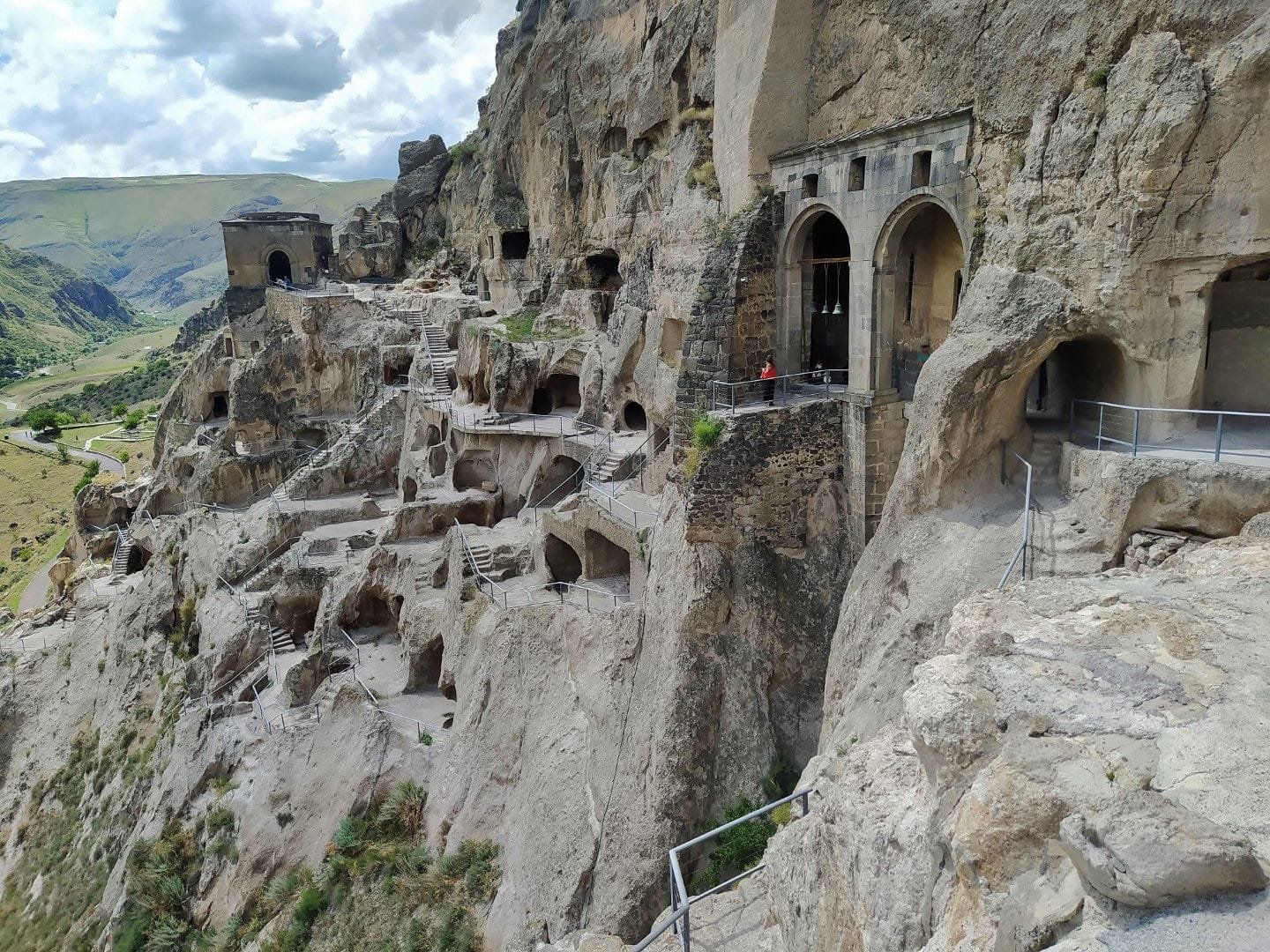 A rock face 500 metres long riddled with 19 storeys of openings: that is Vardzia, the cave monastery Queen Tamar finished around 1185 in the Mtkvari valley, 60 km from Akhaltsikhe. It once had thousands of rooms; the earthquake of 1283 took the whole front off and exposed what you see today, some 600 rooms including cells, wine cellars, refectories, a pharmacy and irrigation channels cut into the stone. In the Church of the Dormition are the 12th-century frescoes, with one of the few portraits of Tamar made in her lifetime.
It is still a monastery, with a few monks, so some areas are closed. The visit takes an hour and a half, almost all of it on stairs and through narrow tunnels: not for bad knees or claustrophobia, although there are routes that avoid the passages. In summer the sun hits the wall from mid-morning; we go as early as we can.
Khertvisi Fortress
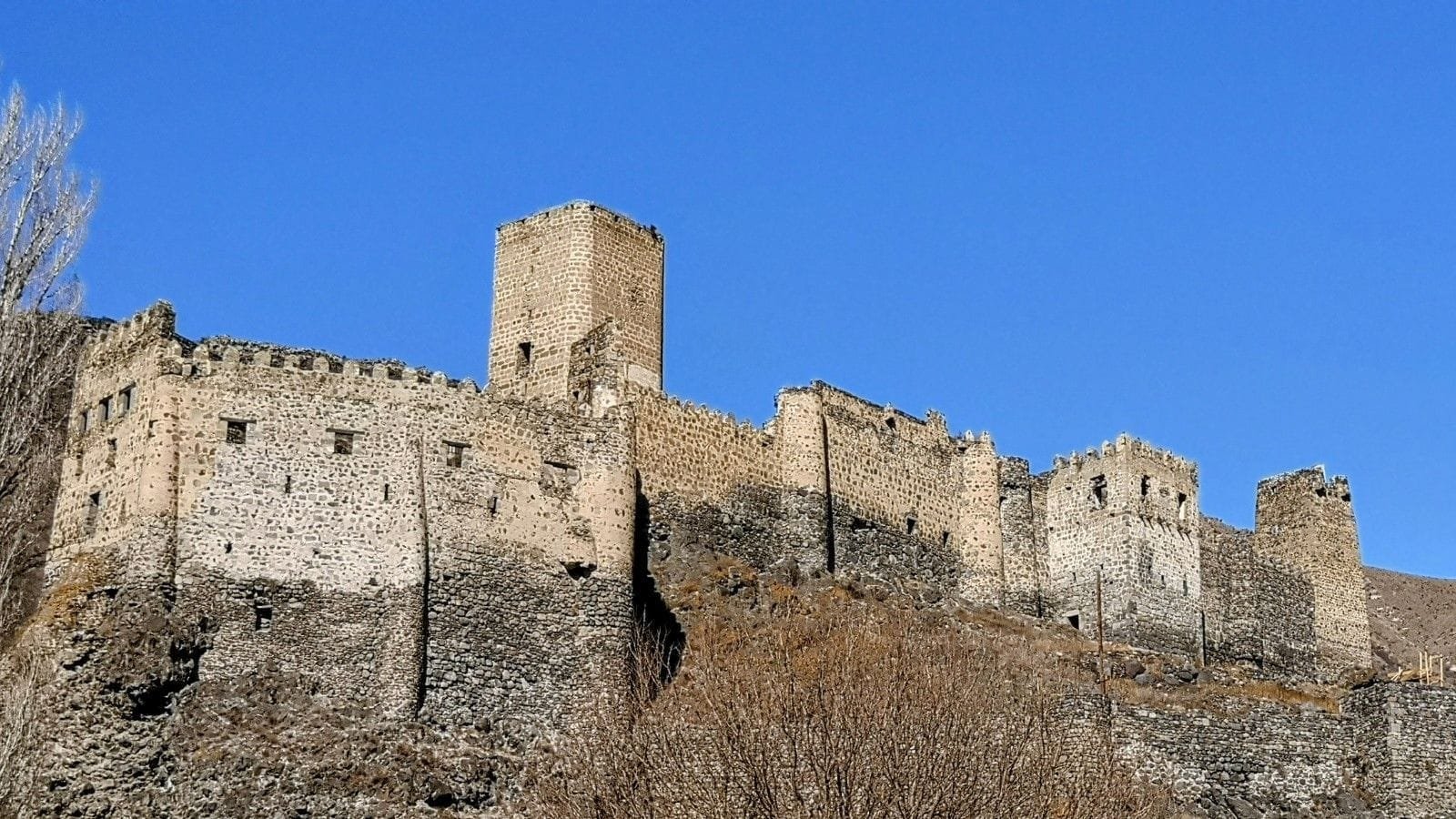 Where the Paravani river meets the Mtkvari, on the way to Vardzia, a castle perches on a crag that has been there in one form or another since the 2nd century BC; legend says Alexander the Great destroyed it, though he never came this way. The walls and towers you see date from the 10th to the 14th century, with a church of 985 inside. Khertvisi watched the road between Georgia and the Ottoman Empire, and changed hands as often as the region did.
A 20-minute stop, with a short, steep climb to the towers for anyone who wants the view of the valley. There is a secret tunnel that went down to the river, closed today.
Day 5 - Tbilisi - Guided tour in Spanish
No driving On today's programme, Rustaveli Avenue, Metekhi Square, Narikala Fortress, Abanotubani and Anchiskhati.Rustaveli Avenue
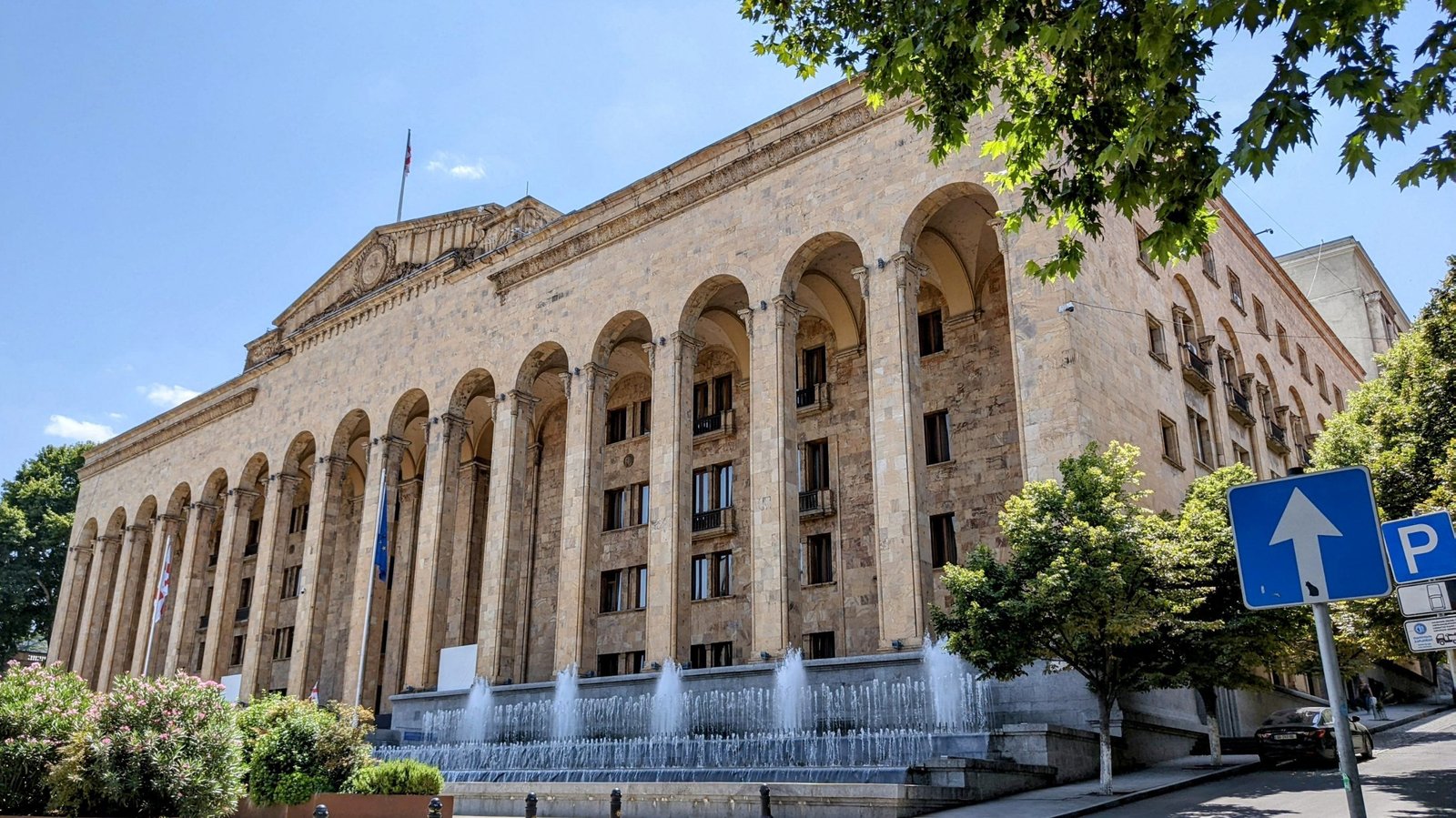 A kilometre and a half of plane trees between Freedom Square and Rustaveli Square. This is the street where Tbilisi shows off: the Parliament, the Moorish-looking Opera House of 1896, the Rustaveli Theatre, the Kashueti church, the National Museum and the grand hotels of the early 20th century. It is named after Shota Rustaveli, the 12th-century poet who wrote "The Knight in the Panther's Skin", the book every Georgian can quote.
It takes a good half hour on foot, or two metro stops if the heat is on. In front of the Parliament there is a plaque worth stopping for: on 9 April 1989 the Soviet army broke up a demonstration here and twenty-one people died, almost all of them women. That day still weighs on the politics of the country.
Metekhi Square
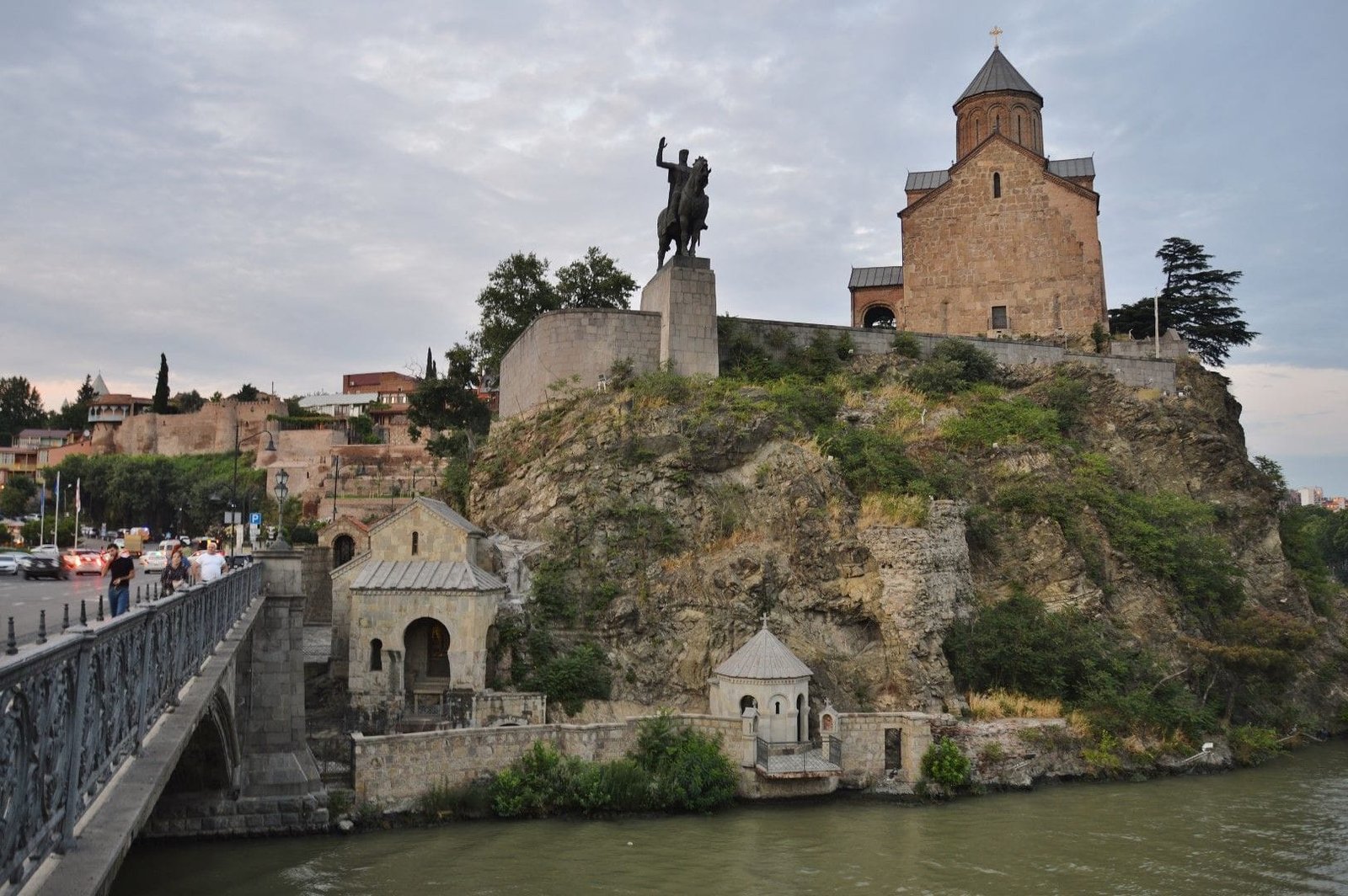 The king on horseback looking over the city from the cliff is Vakhtang Gorgasali, the founder of Tbilisi according to tradition; the statue dates from 1967. Next to him, the church of Metekhi, from the late 13th century, built by Demetre II on top of another from the 5th. The royal palace stood here for centuries, and in the 19th century and Soviet times the building was a prison: Gorky did time in it. Then it was a theatre, and in 1988 it became a church again.
We come here for the view, the best of the lower town: the sulphur baths right below, Narikala opposite and the river running between the two. It is a fifteen-minute stop that almost always runs longer because of the photos.
Narikala Fortress
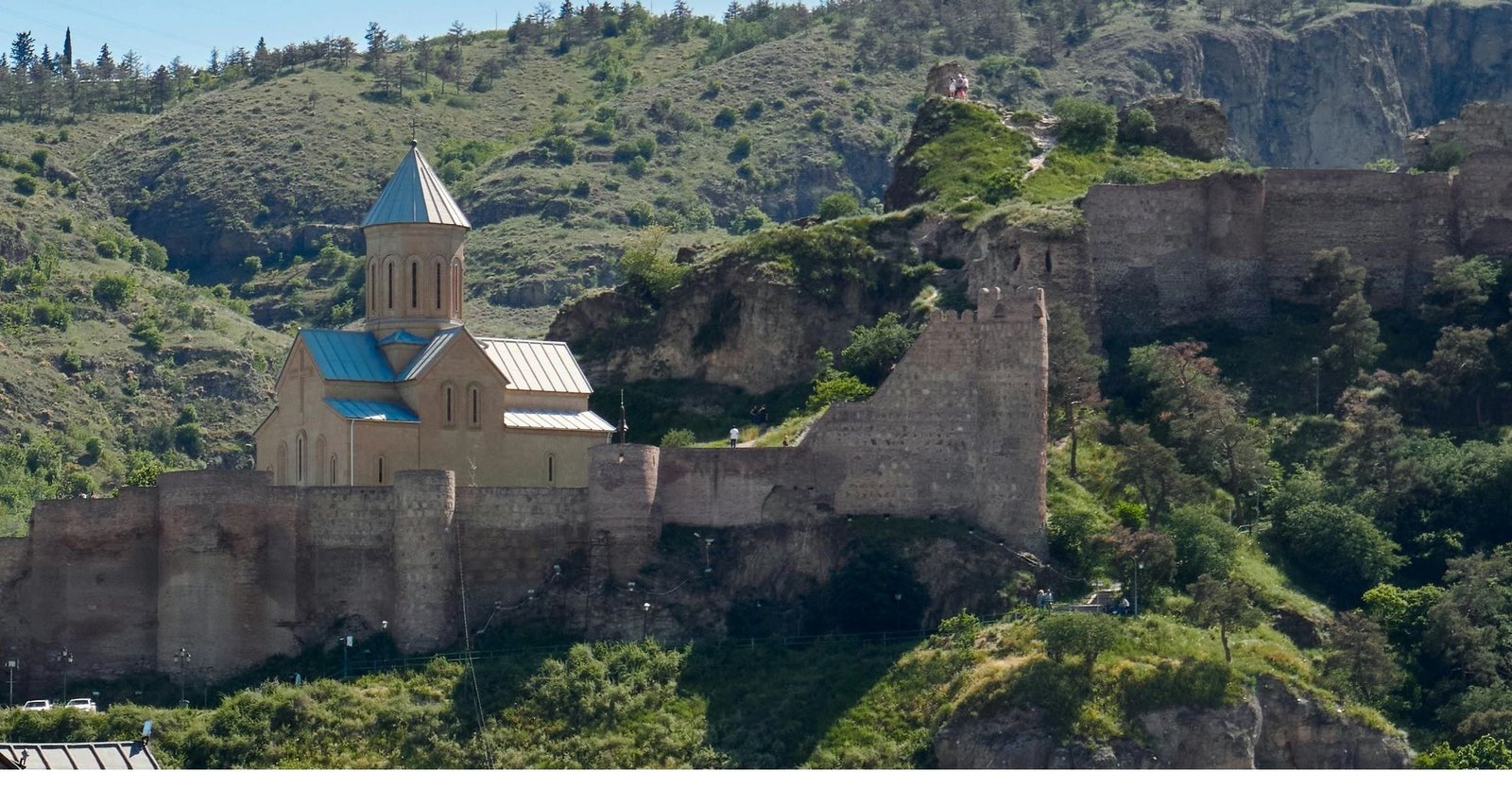 We take the cable car that leaves from Rike Park and crosses the river in two minutes; it costs the same as a metro ticket and is paid with the same card. At the top is Narikala, or what is left of it: the Persians founded it in the 4th century, the Arabs enlarged it in the 8th and the Georgians in the 12th, and in 1827 an explosion of the gunpowder store took out a good part of the walls. The church of St Nicholas inside dates from 1997, on medieval foundations.
The reason to come up is not the stones but the view: the whole old town, the domes of the baths, the river and Metekhi opposite. Careful, the walls have no railings and the rock is polished by so many feet. From here we walk down through the Betlemi quarter to the baths, passing the Mother of Georgia on the way, the aluminium statue of 1958 that watches over the city with a cup in one hand and a sword in the other.
Abanotubani
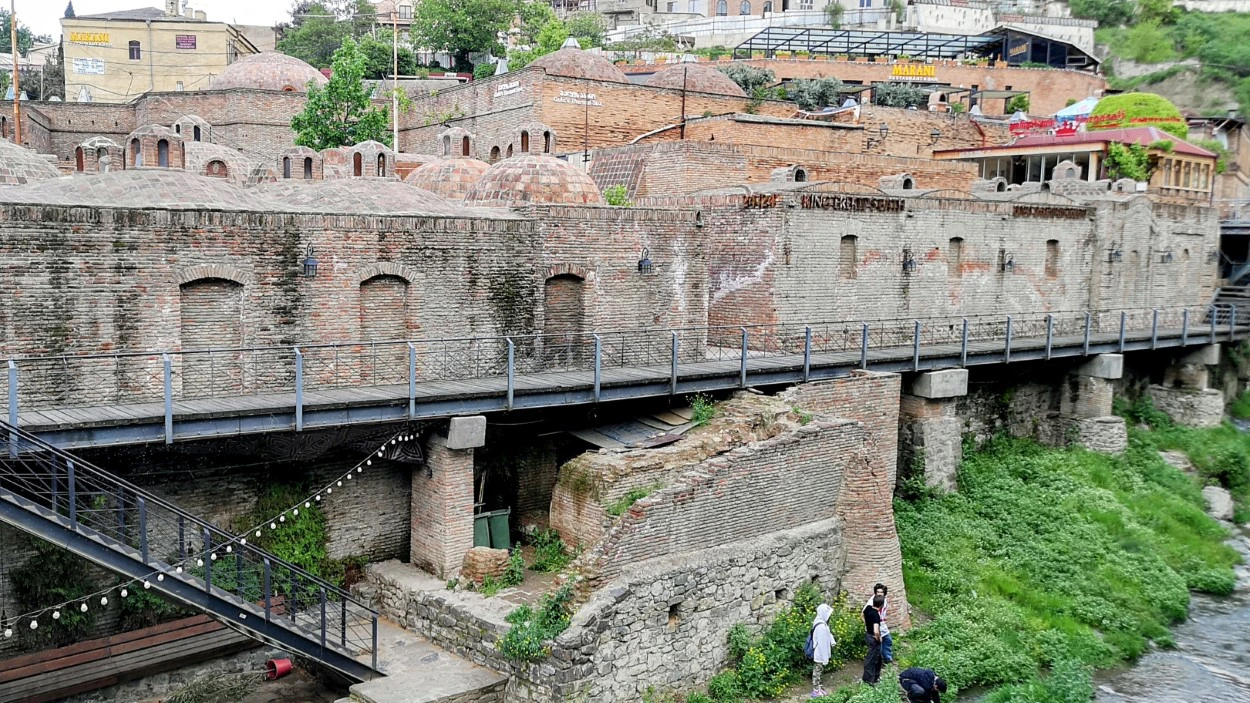 Tbilisi means "warm place", and the warmth comes from here. Abanotubani is the sulphur bath district, on the right bank of the Mtkvari just below Narikala: brick domes at ground level with the baths underneath, and water that comes up on its own at 37 to 40 degrees and smells of eggs. Legend has it that King Vakhtang Gorgasali founded the city in the 5th century after seeing a wounded pheasant healed in these waters. Pushkin bathed here in 1829 and wrote that he had never seen anything like it.
You can stroll and look, but what is worth it is going in: a private room with a hot-water pool and, if you like, a scrub with a coarse mitt that leaves you like new. Booking is needed in high season, and you bring swimwear and a towel or rent them. The blue-tiled façade belongs to the Orbeliani bath; the others are plainer outside.
Anchiskhati
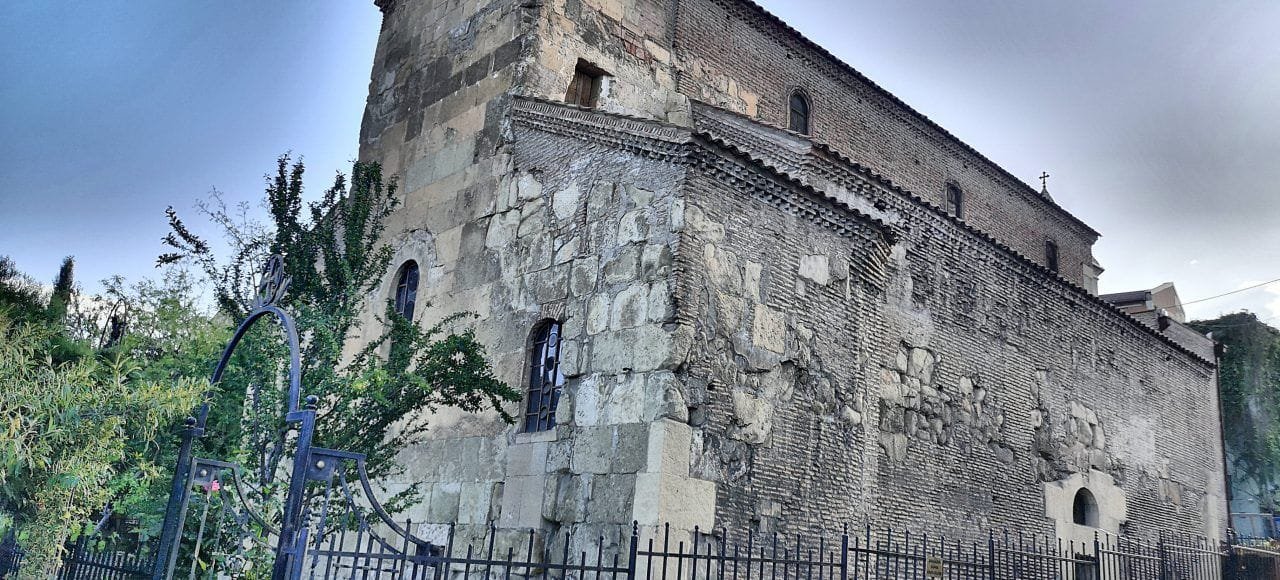 It is the oldest church still standing in Tbilisi, and it does not look it: a small three-nave basilica of plain stone, tucked into a street of the old town. King Dachi, son of Vakhtang Gorgasali, built it around the year 530. The name comes from the Christ icon of Ancha, which arrived here in 1664 from an area that is now Turkey and is now kept in the Art Museum. The brick bell tower of 1675 is what you see from the street.
If it falls on a Sunday morning, we go in during the liturgy: the Anchiskhati choir sings Georgian polyphony the way it was sung centuries ago, and it is one of the things people remember most from the trip. On other days it is almost empty and takes ten minutes. There are headscarves at the door for women.
Day 6 - Tbilisi - Mtskheta - Uplistsikhe - Gori - Kutaisi
Total road of the day - 267KM 4 Hours and 44 Minutes Jvari, Svetitskhoveli, Uplistsikhe and Stalin Museum. It is 267 km; we leave early so as not to rush. Road 25KM 0 Hours and 36 MinutesJvari, the Monastery of the Cross
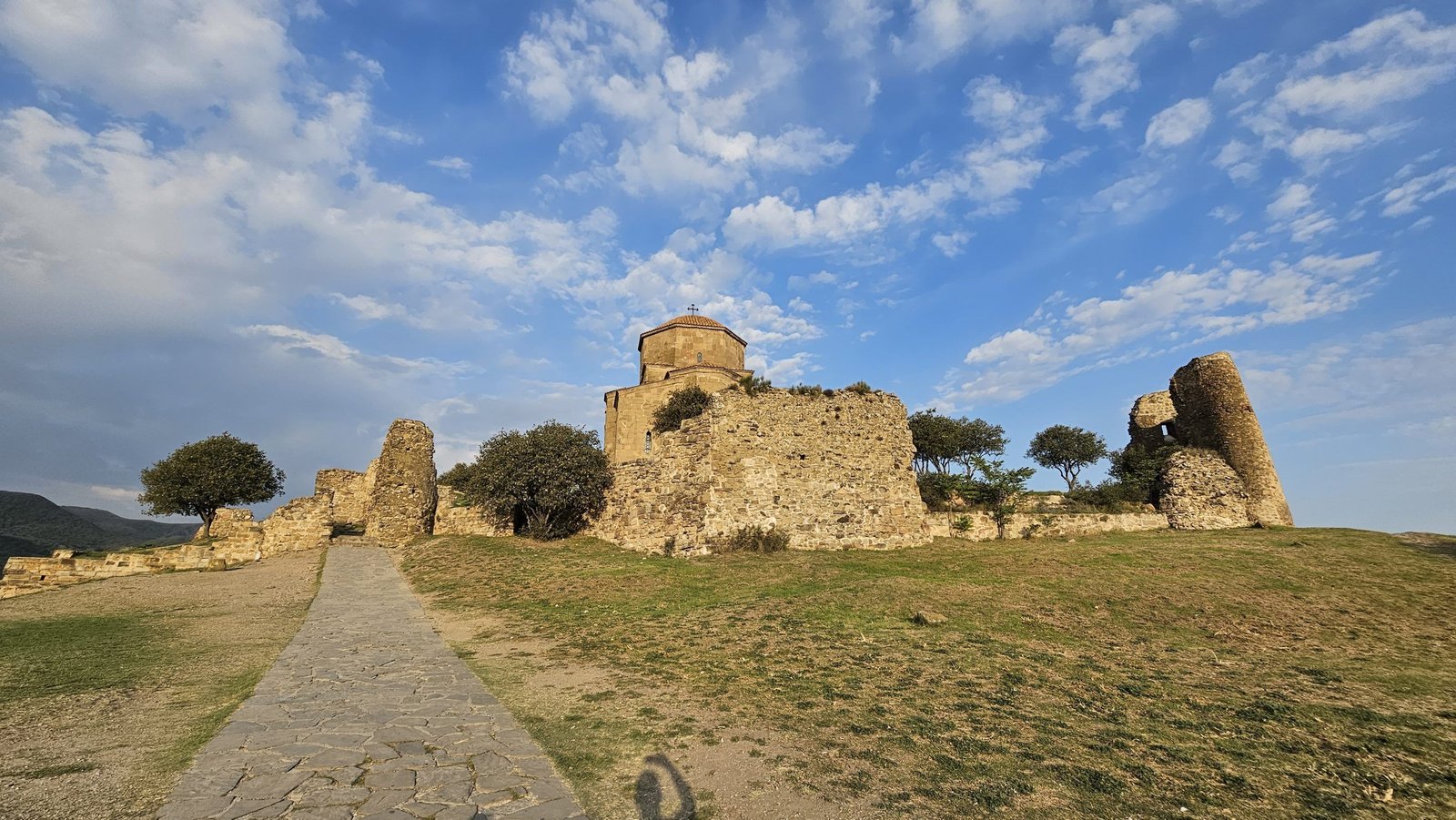 From the Tbilisi road you can see a small church on top of a bare hill above Mtskheta. It is Jvari, "the cross", and it is there because, according to tradition, in the 4th century St Nino planted a wooden cross on that spot when she converted Georgia. The present church was built between 586 and 605 and became the model for many others in the country: a cross plan with four apses and a dome in the middle, with hardly any decoration. It is a UNESCO site together with Mtskheta.
What you remember is the view: below, the Aragvi and the Mtkvari meet, each a different colour, with Svetitskhoveli cathedral in between. Lermontov set his poem "Mtsyri" here. It is almost always windy, so a jacket is not a bad idea even in July. Twenty minutes, half an hour if the day is clear.
Road 13KM 0 Hours and 18 Minutes
Svetitskhoveli
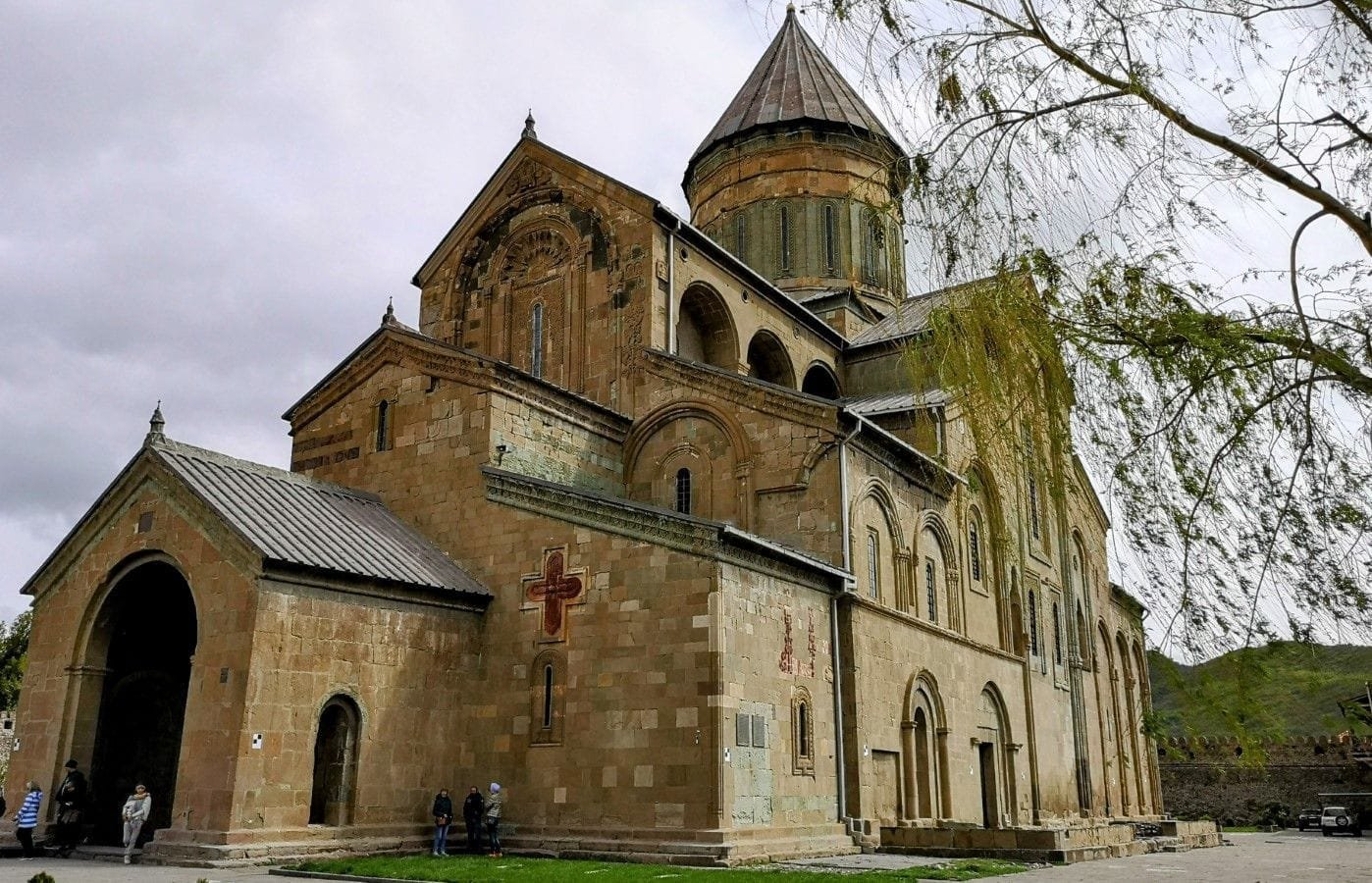 For a Georgian this is the cathedral, full stop. It stands in Mtskheta, the old capital, 20 km from Tbilisi, and the present building went up between 1010 and 1029 on the site of the 4th-century church of King Mirian, the one who converted the country to Christianity. Beneath it, according to tradition, lies the robe of Christ: a Jew from Mtskheta brought it from Jerusalem, his sister Sidonia died clutching it and they were buried together; a cedar grew from the spot, and from its trunk came the pillar that gives the church its name, "the life-giving pillar". Kings were crowned and buried here; the slabs of Vakhtang Gorgasali and Erekle II are in the floor.
A UNESCO site since 1994, and at weekends the weddings follow one another, so sometimes you wait at the door. Headscarves for women and covered shoulders for everyone. Half an hour inside, another in the lanes around it, which live off tourism but keep the feel of a village.
Road 61KM 1 Hours and 5 Minutes
Uplistsikhe
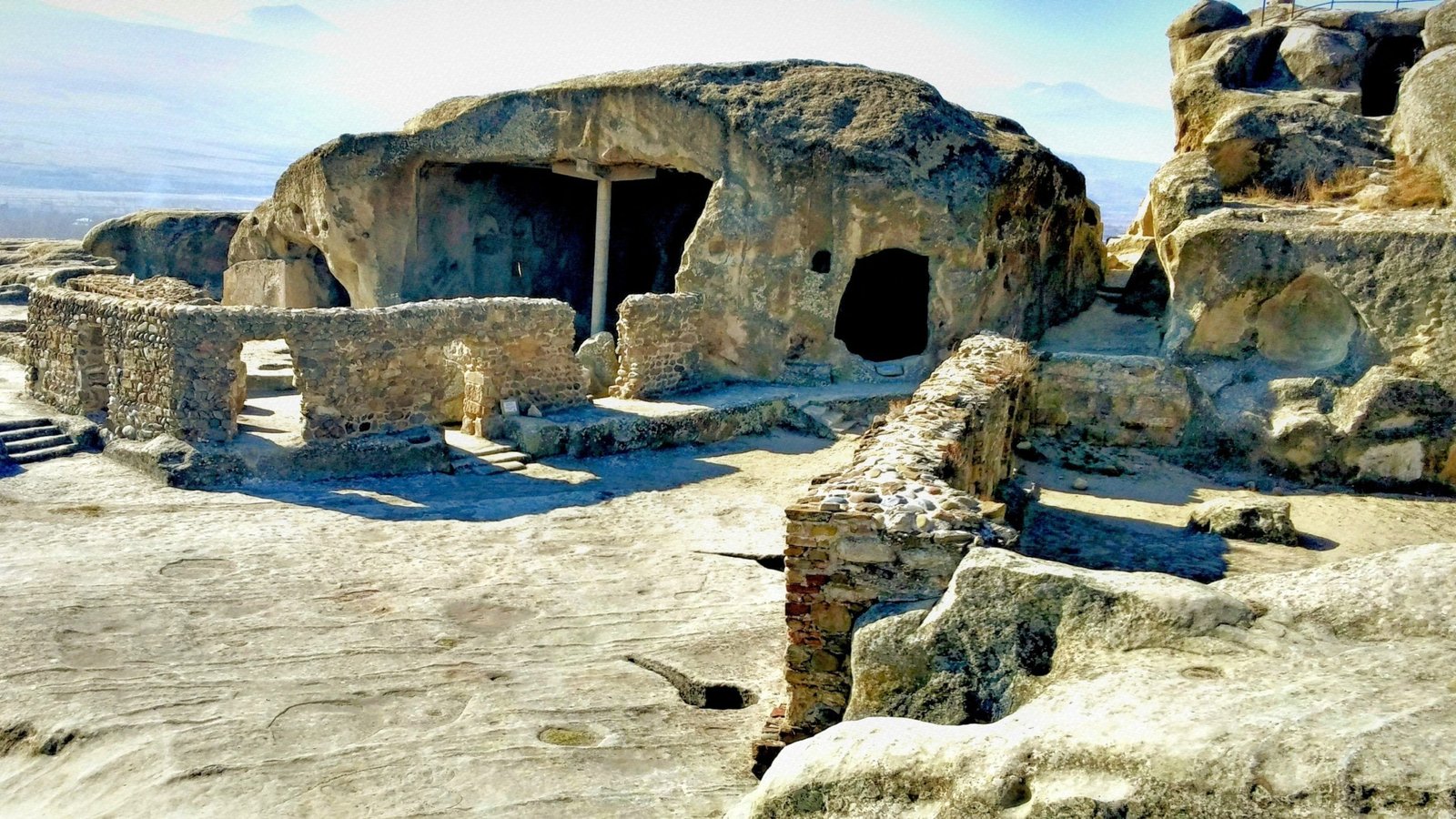 A whole town cut into the rock, 10 km from Gori above the Mtkvari river. People lived at Uplistsikhe from the first millennium BC until the Middle Ages: first a pagan centre, then a Christian one, and always a stop for the caravans. What remains are carved streets, a hall with a ceiling imitating wooden beams (they call it "Queen Tamar's hall"), wine presses, a tunnel down to the river and a 10th-century brick church planted on top of it all. The Mongols emptied it in the 13th century and it never recovered.
One piece of advice: in summer there is no shade and the rock burns, so go early or late in the day, and wear shoes with grip, because the polished stone is slippery. An hour is enough to climb up to the church and look down at the river.
Road 14KM 0 Hours and 20 Minutes
Stalin Museum
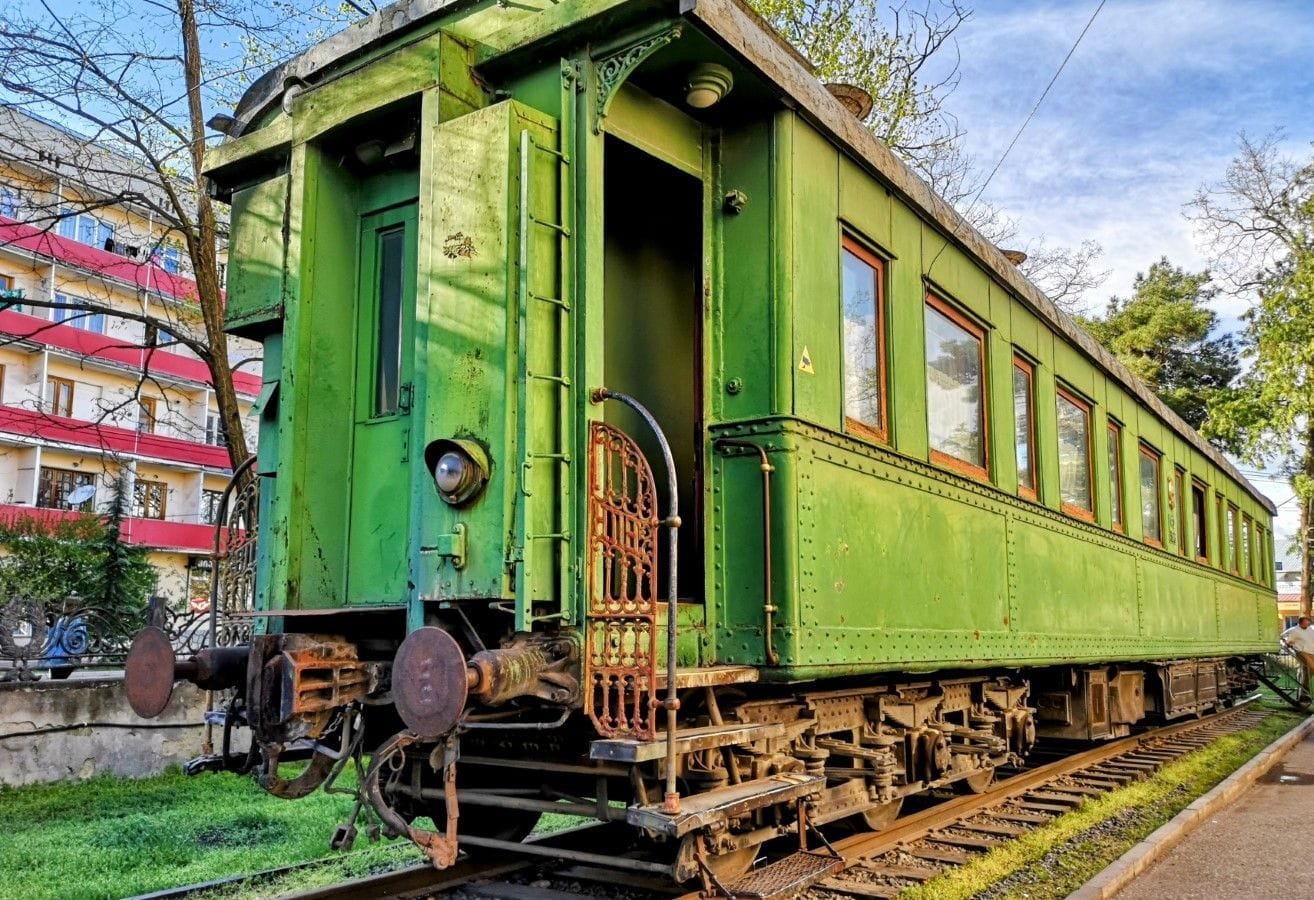 Gori is the town where Iosif Dzhugashvili was born in 1878, and the museum dedicated to him in 1957 is still open much as it was then. It is three things: the little wooden house where he was born, protected under a pavilion of columns; the main building, a Soviet-style palace with his personal belongings, photographs, gifts from heads of state and one of the bronze copies of his death mask; and the armoured railway carriage in which he travelled to Yalta and Potsdam, because he did not like flying.
Let us be plain: the museum tells the kind version. There is a small room on the repression, added late, and little else. We tell the rest on the road, and the one-hour visit usually ends in a long conversation in the car.
Road 154KM 2 Hours and 25 Minutes
Day 7 - Kutaisi - Ushguli - Mestia
Total road of the day - 208KM 5 Hours and 20 Minutes We leave after breakfast. On the programme, Ushguli; 208 km in short stretches. Road 161KM 3 Hours and 35 MinutesUshguli
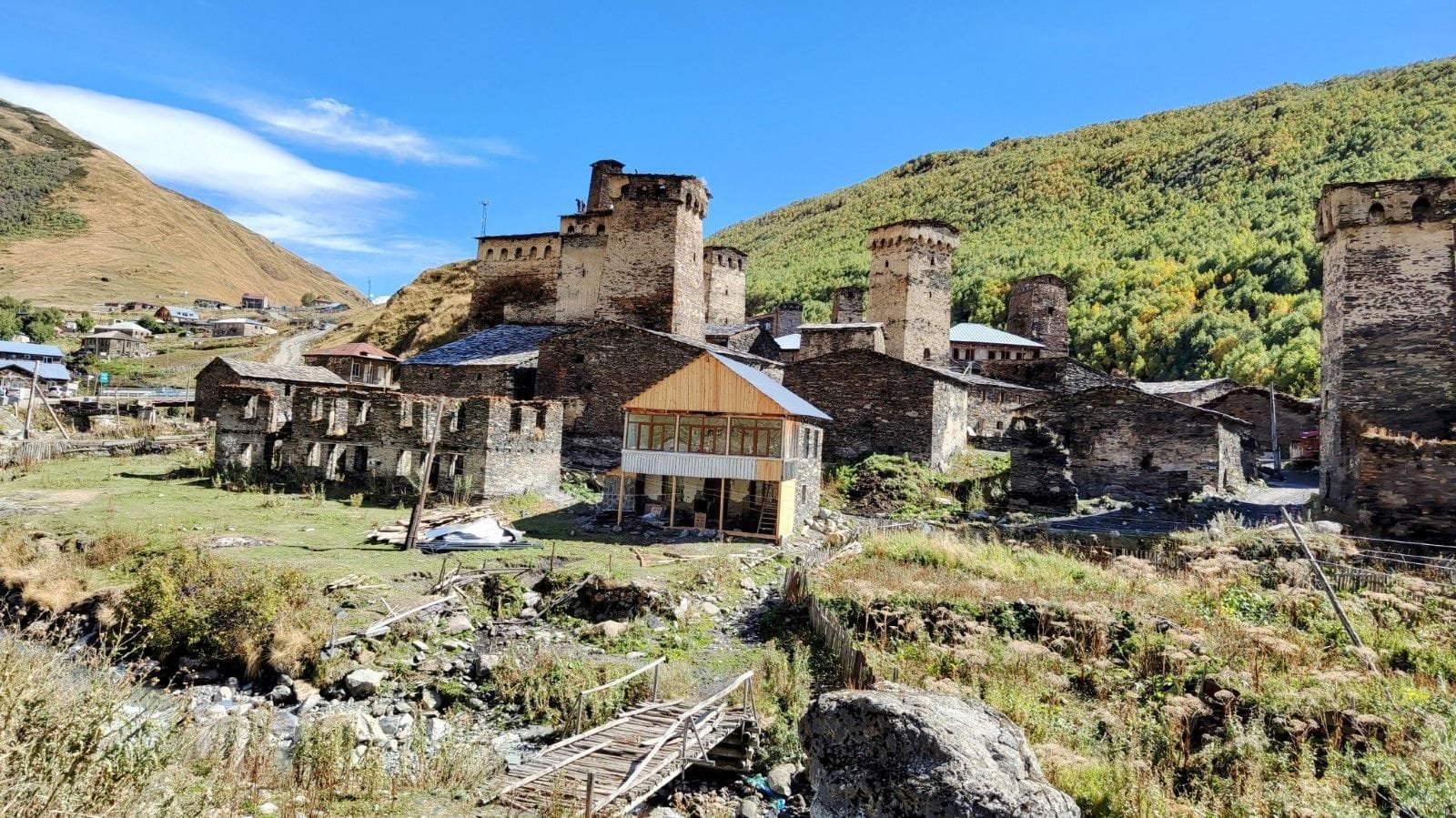 The last 45 km, from Mestia, are dirt road. It gets better every year and it is still dirt road [DATO: estado de la carretera Mestia-Ushguli esta temporada]; in winter it closes. At the end are the four villages of Ushguli, at 2,200 metres, with their more than twenty towers from the 9th to 12th centuries and Shkhara (5,193 m) closing the valley. A UNESCO site since 1996 and, depending on who you ask, the highest inhabited village in Europe; a couple of villages in the North Caucasus dispute the title.
We arrive around midday and have lunch in a village house. Then, on foot, the Lamaria church at the top, with Shkhara behind it, and one of the tower houses turned into a museum. With daylight short in the mountains, we drive down to sleep in Mestia. [VERIFICAR: el original decía que se duerme en Ushguli y se camina al glaciar de Shkhara; el día termina en Mestia]
Day 8 - Mestia - Zugdidi - Dendrological Park - Batumi
Total road of the day - 268KM 5 Hours and 8 Minutes A day with 5 hours 8 minutes at the wheel, which is not nothing, and in return Dadiani Palace, Shekvetili Dendrological Park and Batumi. Road 135KM 2 Hours and 53 MinutesDadiani Palace
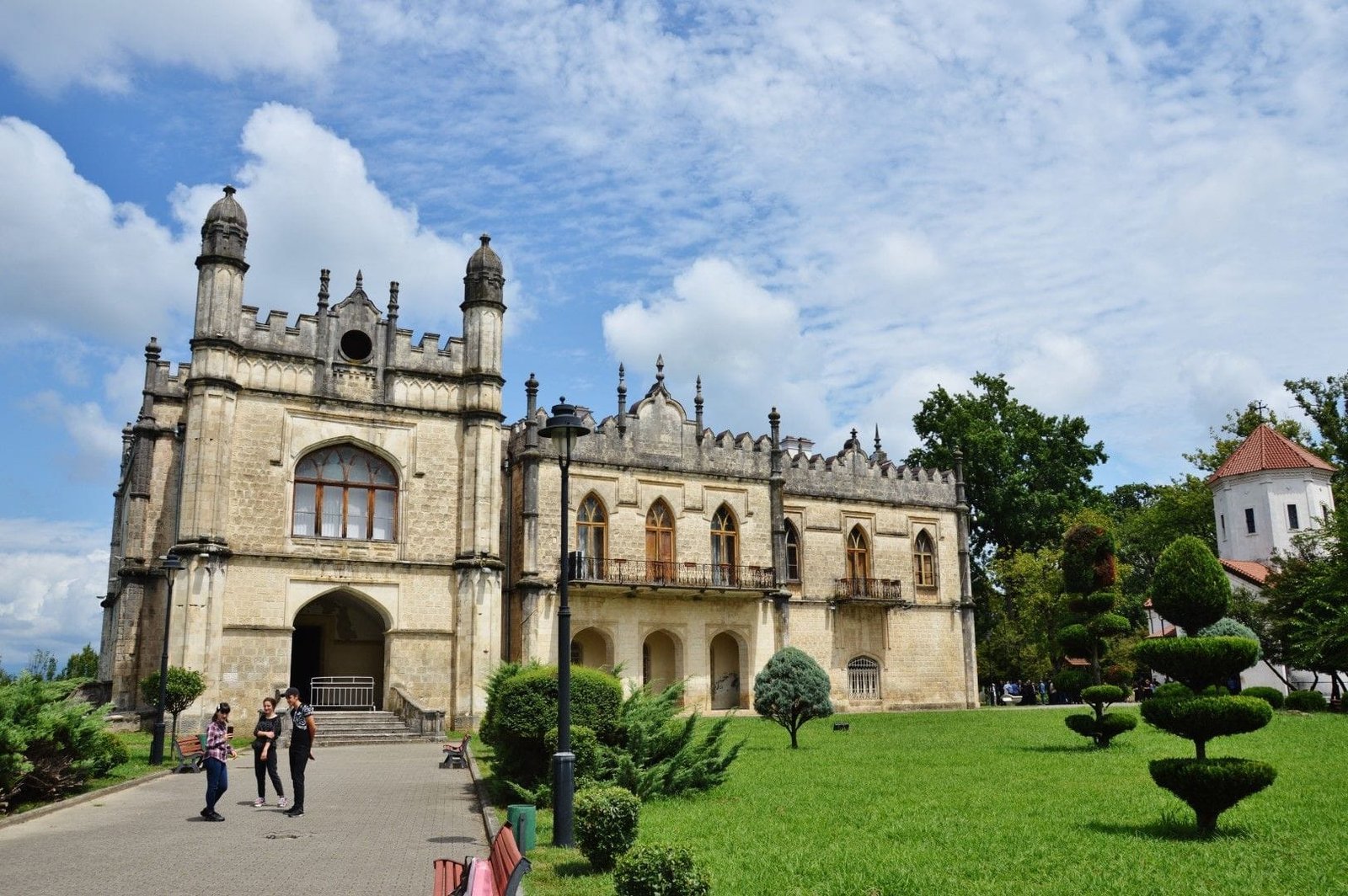 Napoleon's death mask is in Zugdidi, and that is no joke. One of the bronze copies was brought by Achille Murat, the emperor's great-nephew, when he married Princess Salome Dadiani in 1868, and it stayed in the palace of the family that ruled Samegrelo until the Russians came. The Dadiani palace, built from 1873 to 1878 in a style between European and Georgian, is now a museum: the mask, icons, manuscripts, one of the oldest libraries in the country and the gardens, which are a small botanical garden.
An hour. It is the natural stop on the way to Svaneti, before the climb to Mestia, and the best excuse to stretch your legs in Zugdidi.
Road 83KM 1 Hours and 25 Minutes
Shekvetili Dendrological Park
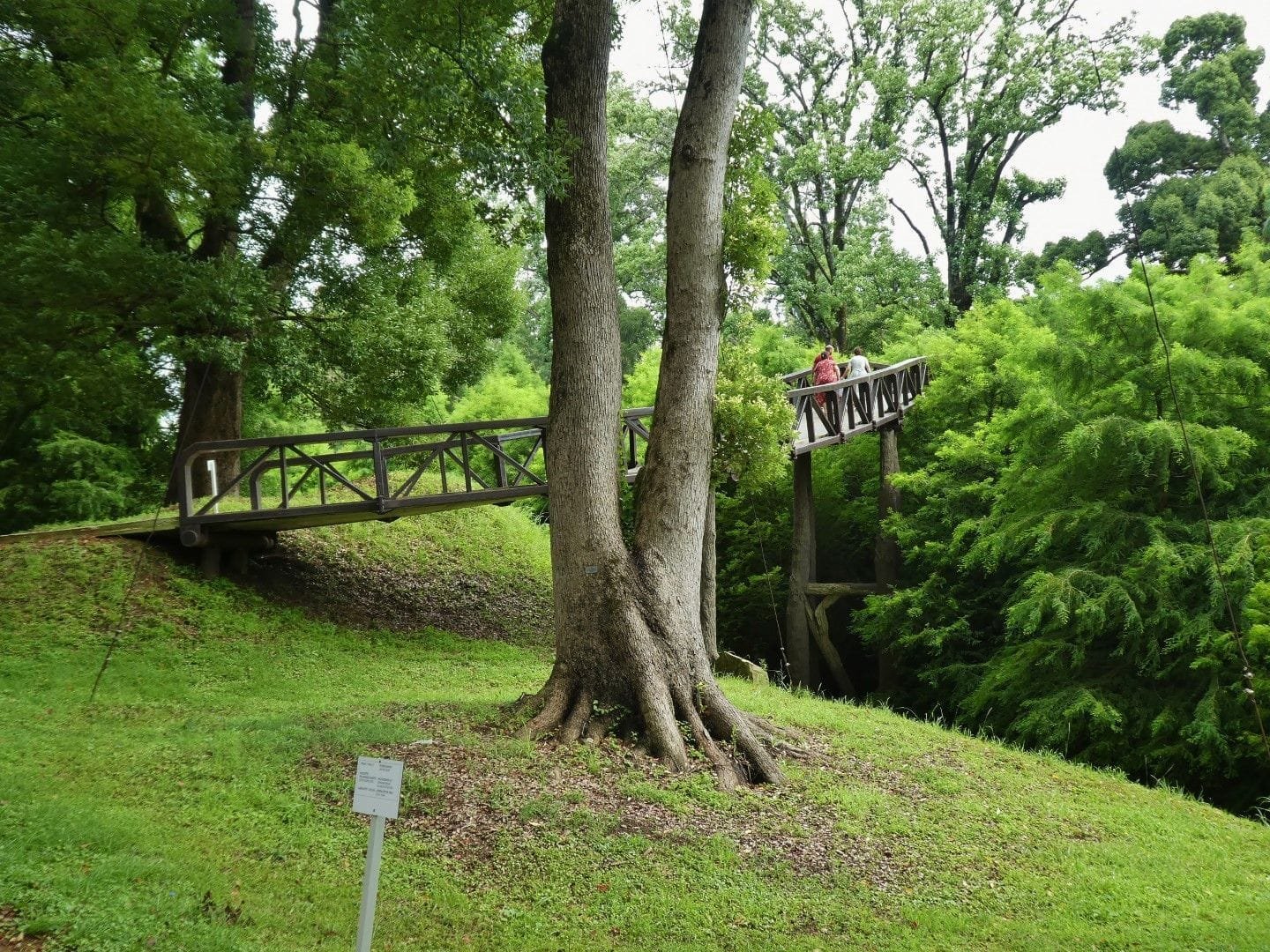 The trees in this park arrived by sea. They are specimens one and two hundred years old, tulip trees, magnolias, eucalyptus, that Bidzina Ivanishvili, the richest man in Georgia, bought all over the country and shipped by barge to the coast of Guria; there is a documentary, "Taming the Garden", that tells the story and does not flatter the owner. Shekvetili park opened in 2020: 60 hectares by the beach, more than 200 species, lakes, a bamboo grove and, in the middle, the biggest tree, visible from the road.
It is free, immaculate, and in summer there are queues at weekends. A good hour's walk; nearby are the magnetic black-sand beaches of Ureki, which local people use as a spa.
Road 50KM 0 Hours and 50 Minutes
Batumi
Batumi is another Georgia: subtropical, humid, with palm trees, casinos and glass towers next to late 19th-century houses, 20 km from Turkey. It is the capital of Adjara and the country's port since always. What you do here is walk: the boulevard along the sea, laid out in 1881 and now 7 km long, the Piazza in the old town with its Italian-looking terraces, and, at the end of the promenade, Ali and Nino, the two eight-metre steel figures that move and pass through each other every ten minutes, by Tamara Kvesitadze. Two things the brochures leave out: it rains a lot, even in summer, and in July and August the city is packed. In return, you eat well: Adjarian khachapuri, the bread boat with cheese, butter and a raw egg on top, was born here and is made better here than anywhere. Road 0KM 0 Hours and 0 MinutesDay 9 - Batumi and surroundings
Total road of the day - 27KM 0 Hours and 50 Minutes Today the car is only the means: 27 km to reach Borjgalo Ethnographic Museum and Gonio Fortress. Road 6KM 0 Hours and 15 MinutesBorjgalo Ethnographic Museum
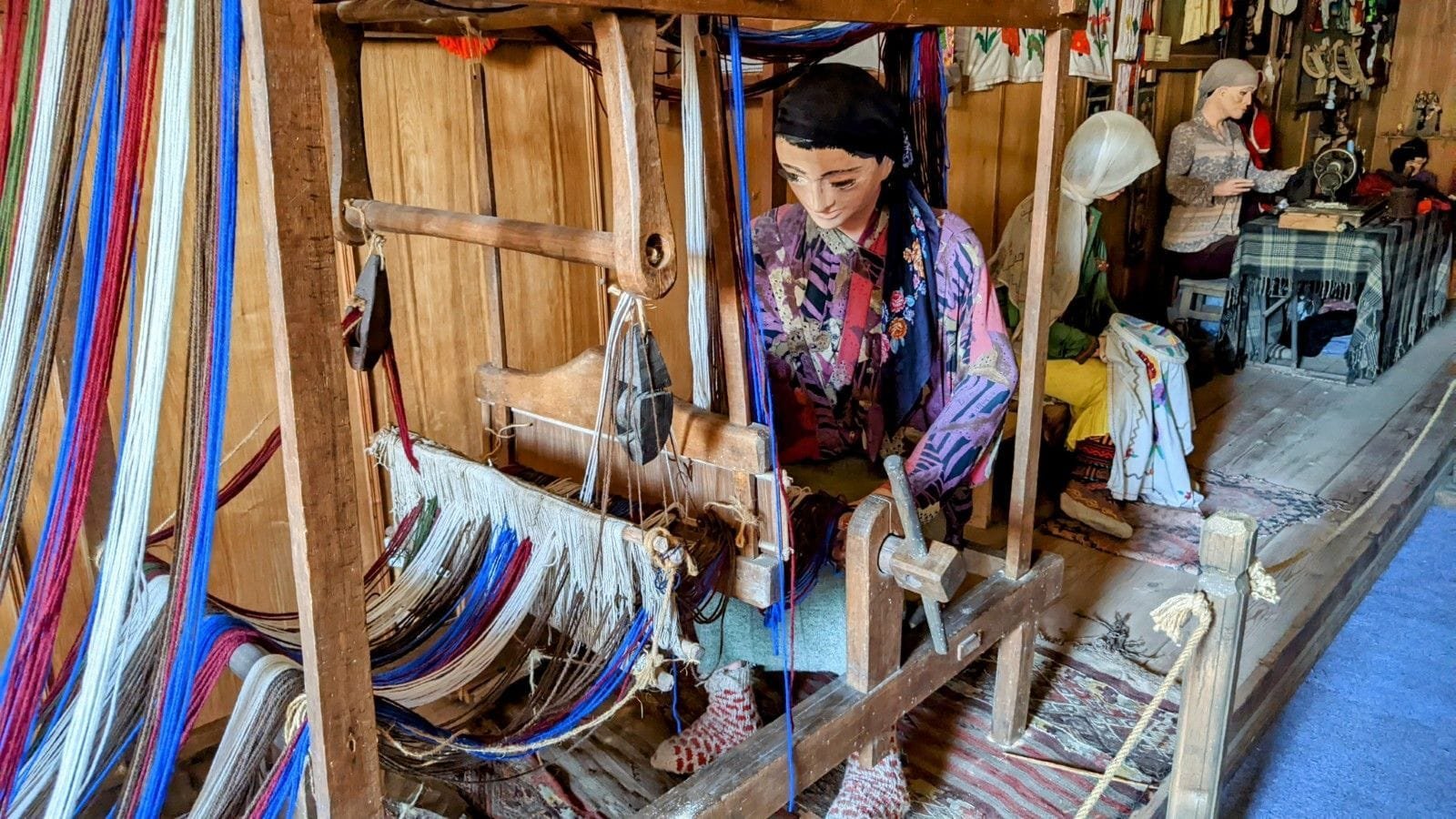 It is not a museum in the usual sense. Borjgalo was made by hand by Kemal Turmanidze, a sculptor from the area, and opened in 2016 on the outskirts of Batumi, near the airport: models and near life-size wooden figures showing how people lived in the villages of Adjara a hundred years ago, the house, the mill, the forge, the wedding, the beekeeper. Many pieces move or make sounds, and Kemal himself or his family are usually around.
It works very well with children and with anyone who is tired of churches by now. An hour. It sits on a residential street with nothing around it, so do not expect a café.
Gonio Fortress
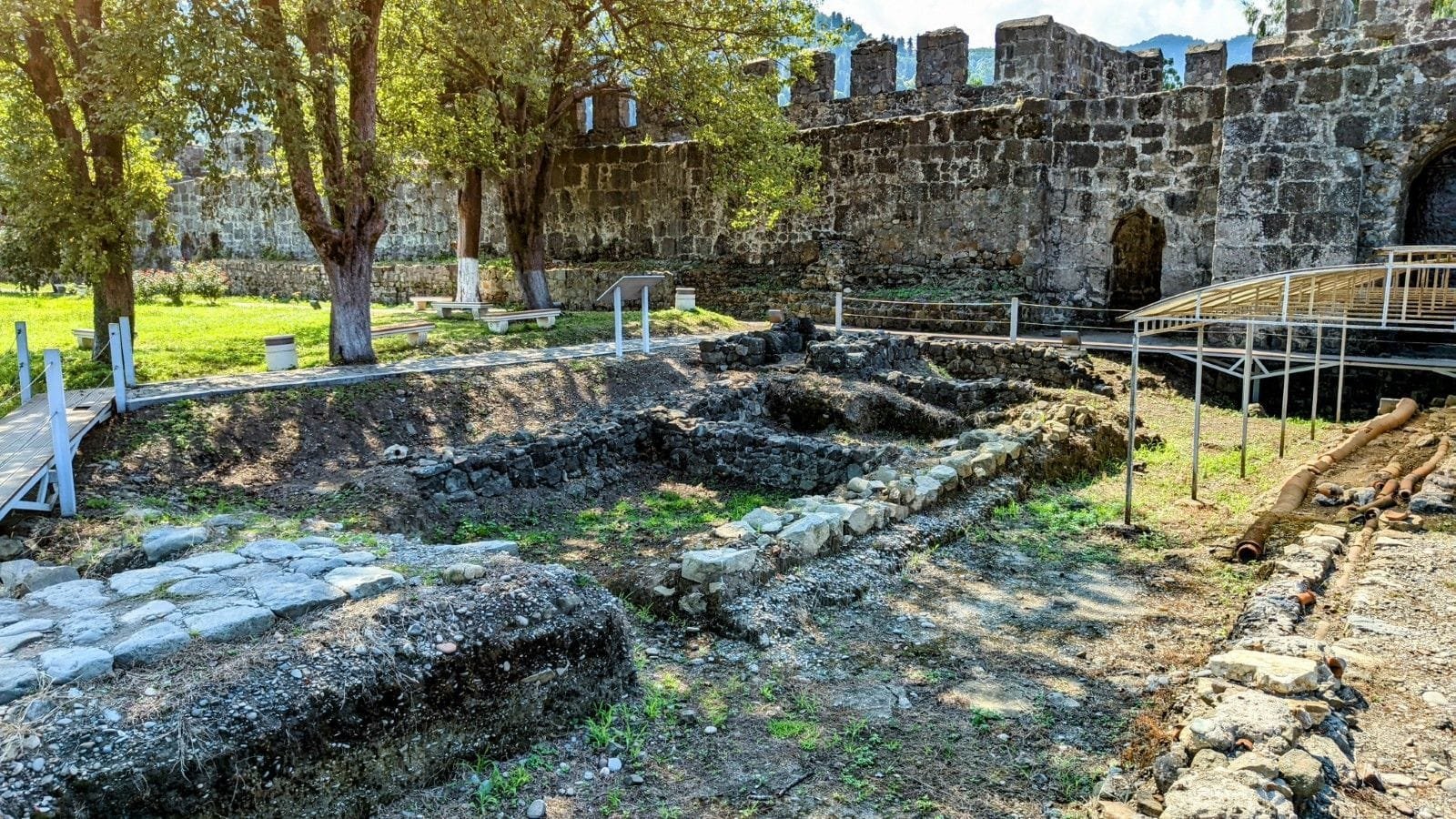 Fifteen kilometres south of Batumi, almost on the Turkish border, the Romans built the camp of Apsaros in the 1st century to watch the coast, and the walls are still standing: a rectangle with a perimeter of almost 900 metres and 18 of its original 22 towers. Later the Byzantines and the Ottomans used it, and the Ottomans called it Gonio. Inside there is a small museum with the finds from the digs, the remains of Roman baths and a grave that tradition attributes to the apostle Matthias, the one who replaced Judas. No proof, but people come to pray.
It is a 45-minute stop, flat and without shade; in summer bring a cap. If there is time, Gonio beach is next door and is one of the quietest in the area.


