Borjomi: the Romanovs' spa, the fizzy water that comes out warm and the biggest forest in Georgia
The train down from Tbilisi enters Borjomi through a forested gorge, with the Mtkvari narrow and fast between fir-covered slopes, and the town appears as the Russians of the 19th century left it: wooden chalets with verandas, a park with fountains, an iron bridge and the smell of sulphur from the springs. Borjomi lives off one water: the fizzy mineral water that comes out warm, at about 38 degrees, from sources more than a thousand metres deep, which the Russian army began to exploit in the 1830s, which the viceroy Mikhail Romanov and his son made their summer spa and which since the 1890s has been bottled with the green label now found on any table in the Caucasus and in half of Russia. In Georgia it is drunk for everything: hangovers, stomachs, heat.
The water and the park
The central park is at the end of the main street, in the gorge of the Borjomula stream: you pay a small entry and inside, under a glass pavilion, is the Ekaterina spring, from which the water comes out warm, fizzy and with a salty, iron taste that is strange the first time and sought after by the third. You drink it there or fill a bottle; in the street they sell the cold water, which is the same, bottled. The park continues two and a half kilometres up the stream, with old rides, a Soviet cable car up to the plateau with a Ferris wheel, and at the end of the path the open-air sulphur pools, hot, where people bathe in any season. Around the town, the wooden chalets of the holidaymakers of 1900, the local museum in the house of the Romanovs' estate manager, and at Likani, 3 km away, the palace Grand Duke Nikolai Mikhailovich built between 1892 and 1895, in brick and timber, now an official residence seen from the railings.
The forest
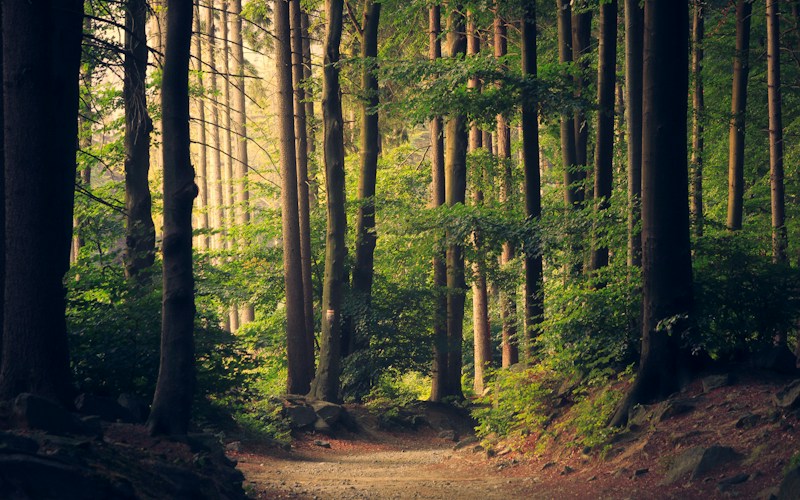
Above all this, Borjomi-Kharagauli national park, 85,000 hectares of beech and fir forest and high meadows, the first Georgia created to international standards, in 2001, with marked trails of one to four days between huts with bunks and a fireplace, where you see bear tracks, deer and, with luck, lynx. The park office is at the entrance to Borjomi, with maps, permits and the list of huts; the most walked route is from Likani to Lomismta peak, two days, or the four-day traverse to Marelisi.
When and how
May to October for walking, with October in colour; in winter, snow, stoves and Bakuriani, the ski resort 30 km away, reached since 1902 by the narrow-gauge train, the Kukushka, in two and a half hours over a bridge said to have been designed by the Eiffel company. From Tbilisi, 160 km: marshrutka from Didube in two and a half or three hours, or the train, slow and pretty, in four and a half. Borjomi is also the base for Akhaltsikhe and Rabat, 50 km away, and for Vardzia, 110.
Frequently asked questions
How do you get there from Tbilisi?
By marshrutka from Didube station, two and a half or three hours via the Gori motorway and the Khashuri road; by train, two a day, four and a half hours up the valley; by car, 160 km. From Kutaisi, via Khashuri, two and a half hours.
Can you drink the water from the spring?
Yes, in the central park, from the Ekaterina spring, warm and fizzy, with a small entry fee to the park; it is the same as the bottled water, unchilled. It tastes of salt and iron and it is best to start with one glass.
When is the best time?
May and June, with the forest green and the river high, and September and October, with the colours; in summer it is hot in the valley but the national park is cool. In winter, snow, steaming sulphur pools and skiing at Bakuriani.


