Sixteen days without leaving Georgia and without repeating a road, except the return to Tbilisi. Two nights in the capital for the city on foot; David Gareja, Bodbe and a night in Sighnaghi; Nekresi, Gremi and Alaverdi to Telavi; from there to the Military Highway via Tianeti, Ananuri, Gergeti and a night in Gudauri. Coming down, Uplistsikhe and Gori to Kutaisi, three nights: Bagrati, Motsameta, Gelati and Nikortsminda, and Prometheus Cave with the Martvili canyon. Then Svaneti, two nights in Mestia: the climb to Ushguli and the Chalaadi glacier with Hatsvali.
Zugdidi and the Shekvetili park lead to Batumi, two nights, with Gonio and the ethnographic museum. The way back goes through Ubisa and Borjomi to Akhaltsikhe, past Vardzia and Khertvisi to Tbilisi, and ends with the panorama of Sameba, Mtatsminda park and the Chronicles of Georgia. Eight hotels and a single day over five and a half hours in the car. From November to April the Ushguli track and the Jvari pass can close; those days are swapped at no cost.
Itinerary
Day 1 - Transfer from Tbilisi airport to the capital
Total road of the day - 18KM 0 Hours and 25 Minutes Pick-up at Tbilisi airport and 18 km to the hotel, the Metekhi Line 3*. The rest of the day is free. Road 18KM 0 Hours and 25 Minutes Pick-up at Tbilisi airport and 18 km to the hotel, the Metekhi Line 3*. The rest of the day is free.Day 2 - Tbilisi - Guided tour in Spanish
No driving On today's programme, Rustaveli Avenue, Metekhi Square, Narikala Fortress, Abanotubani and Anchiskhati.Rustaveli Avenue
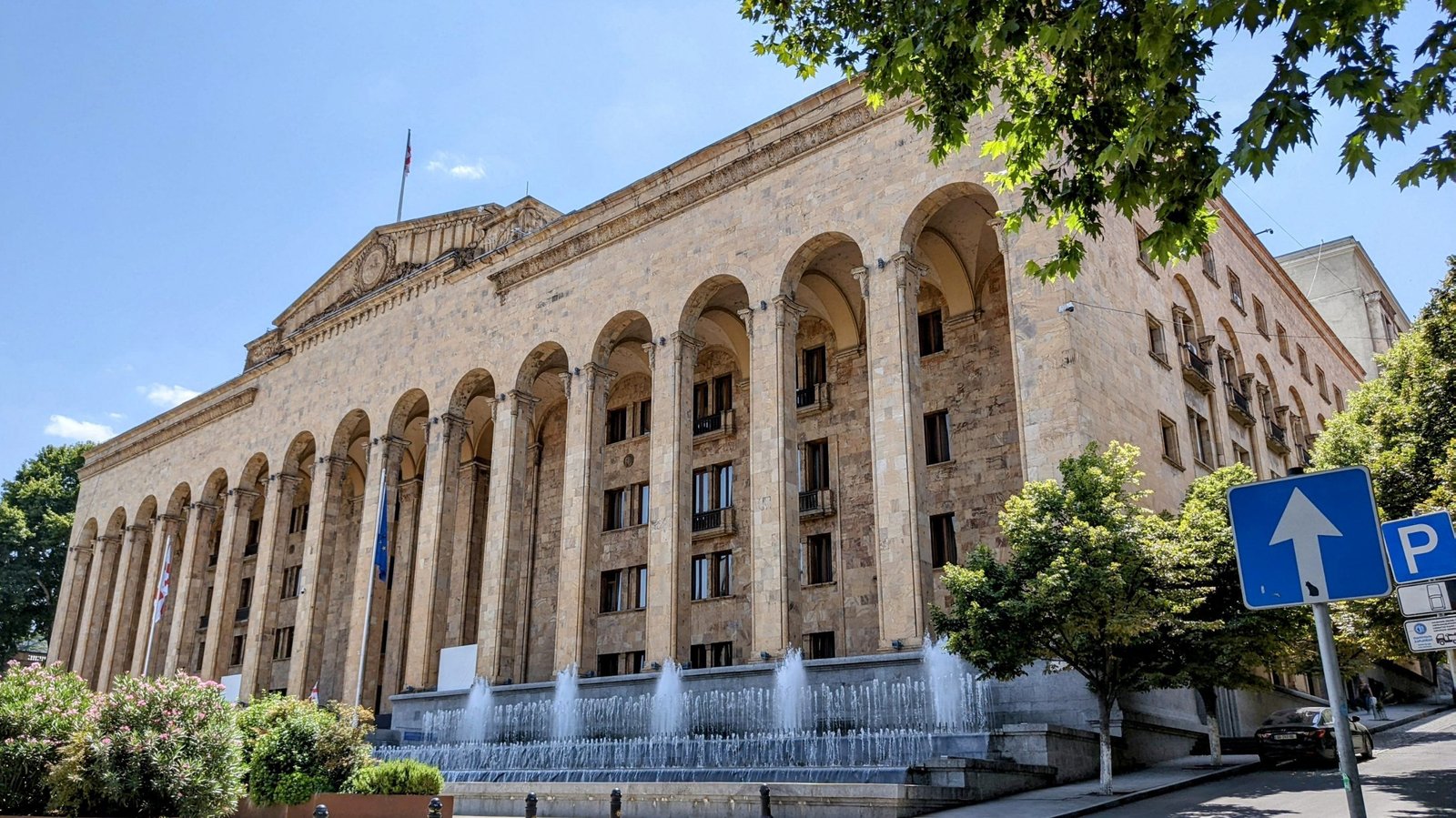 A kilometre and a half of plane trees between Freedom Square and Rustaveli Square. This is the street where Tbilisi shows off: the Parliament, the Moorish-looking Opera House of 1896, the Rustaveli Theatre, the Kashueti church, the National Museum and the grand hotels of the early 20th century. It is named after Shota Rustaveli, the 12th-century poet who wrote "The Knight in the Panther's Skin", the book every Georgian can quote.
It takes a good half hour on foot, or two metro stops if the heat is on. In front of the Parliament there is a plaque worth stopping for: on 9 April 1989 the Soviet army broke up a demonstration here and twenty-one people died, almost all of them women. That day still weighs on the politics of the country.
Metekhi Square
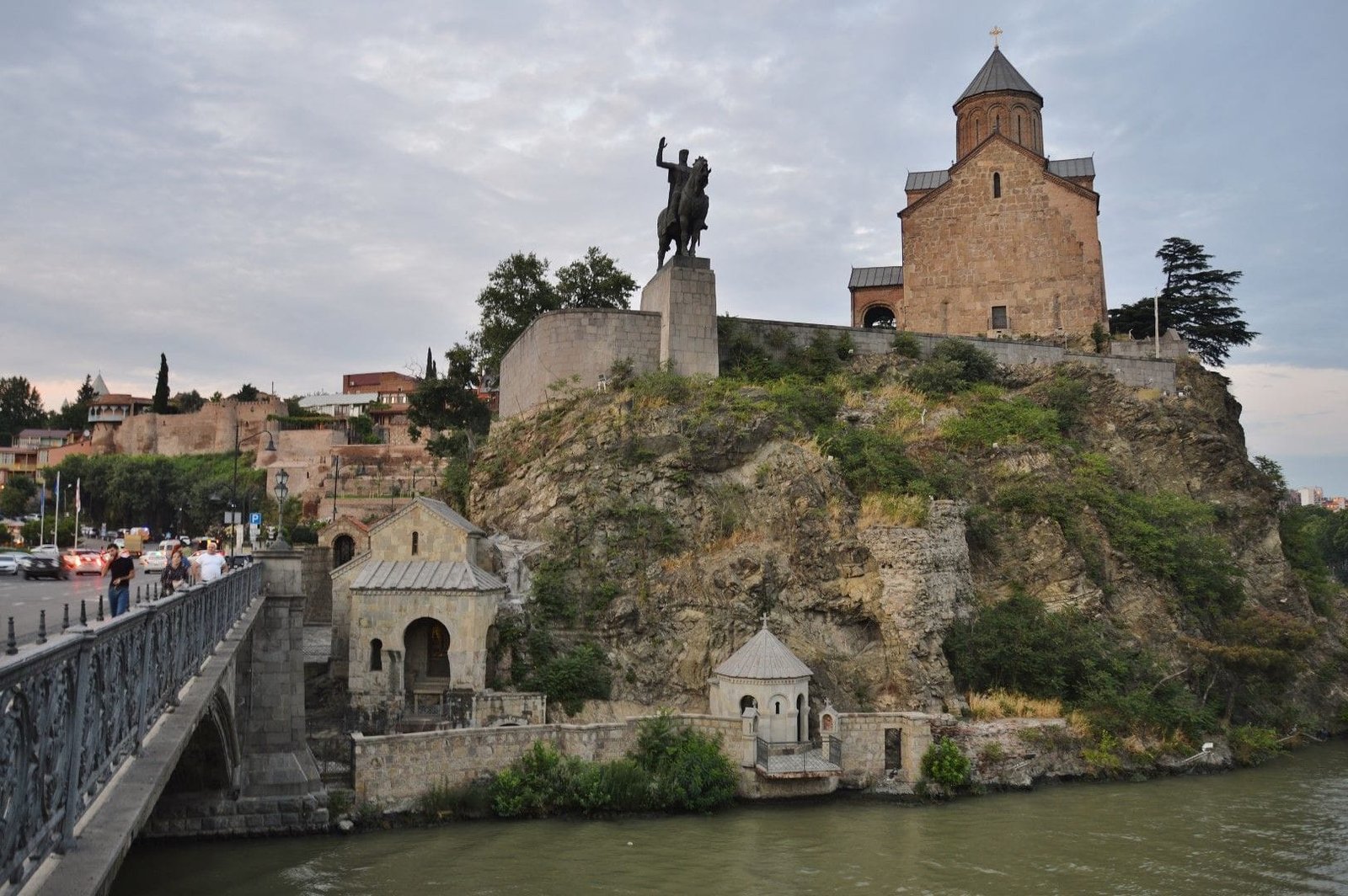 The king on horseback looking over the city from the cliff is Vakhtang Gorgasali, the founder of Tbilisi according to tradition; the statue dates from 1967. Next to him, the church of Metekhi, from the late 13th century, built by Demetre II on top of another from the 5th. The royal palace stood here for centuries, and in the 19th century and Soviet times the building was a prison: Gorky did time in it. Then it was a theatre, and in 1988 it became a church again.
We come here for the view, the best of the lower town: the sulphur baths right below, Narikala opposite and the river running between the two. It is a fifteen-minute stop that almost always runs longer because of the photos.
Narikala Fortress
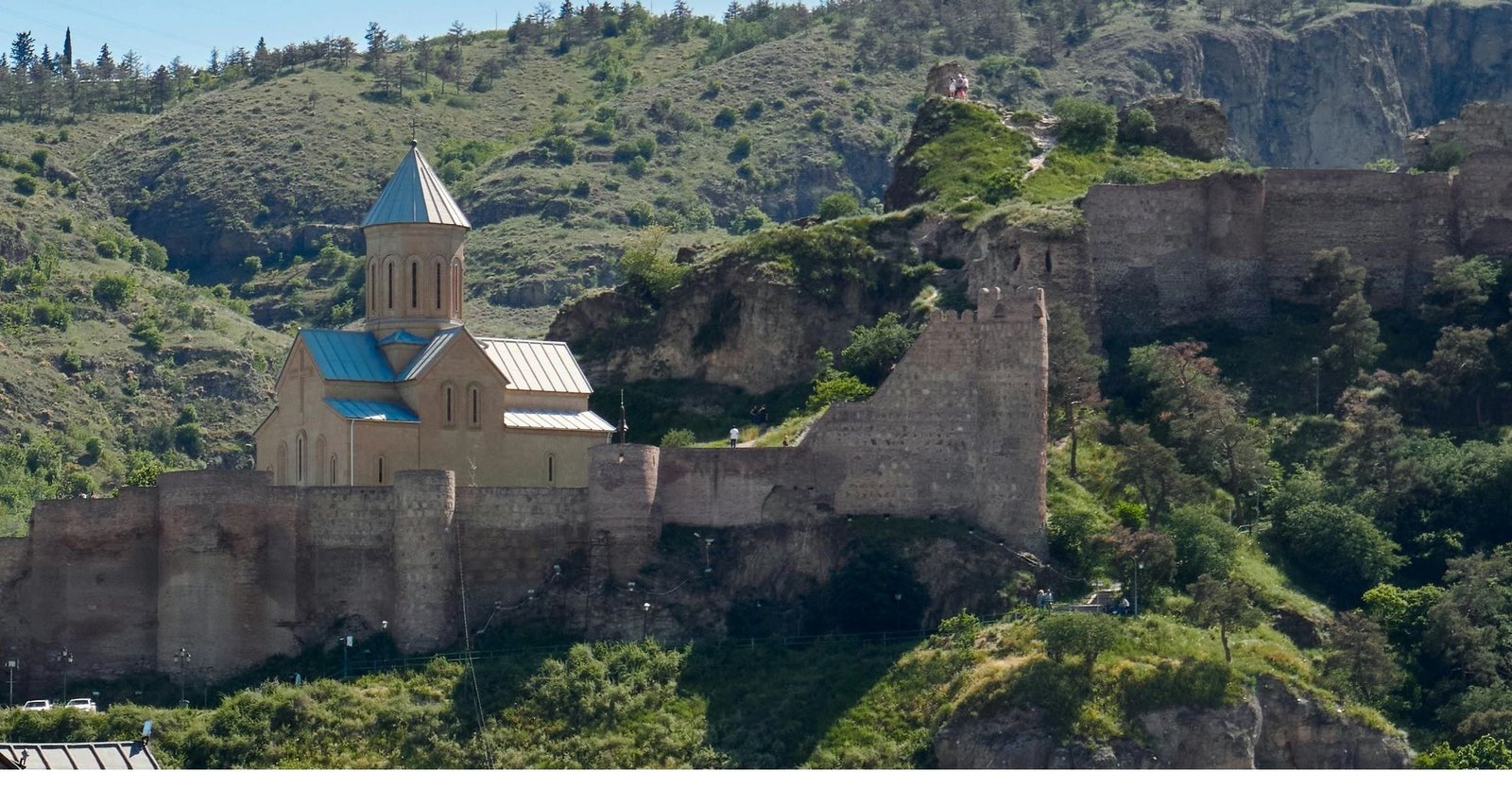 We take the cable car that leaves from Rike Park and crosses the river in two minutes; it costs the same as a metro ticket and is paid with the same card. At the top is Narikala, or what is left of it: the Persians founded it in the 4th century, the Arabs enlarged it in the 8th and the Georgians in the 12th, and in 1827 an explosion of the gunpowder store took out a good part of the walls. The church of St Nicholas inside dates from 1997, on medieval foundations.
The reason to come up is not the stones but the view: the whole old town, the domes of the baths, the river and Metekhi opposite. Careful, the walls have no railings and the rock is polished by so many feet. From here we walk down through the Betlemi quarter to the baths, passing the Mother of Georgia on the way, the aluminium statue of 1958 that watches over the city with a cup in one hand and a sword in the other.
Abanotubani
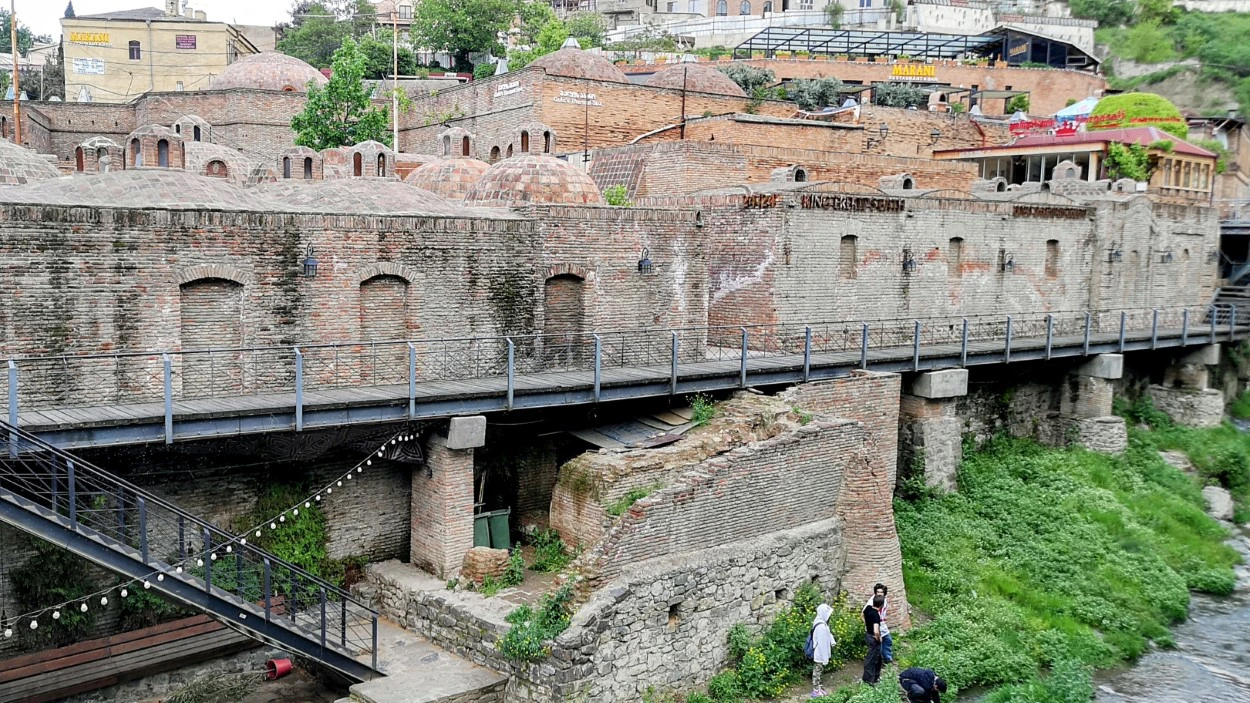 Tbilisi means "warm place", and the warmth comes from here. Abanotubani is the sulphur bath district, on the right bank of the Mtkvari just below Narikala: brick domes at ground level with the baths underneath, and water that comes up on its own at 37 to 40 degrees and smells of eggs. Legend has it that King Vakhtang Gorgasali founded the city in the 5th century after seeing a wounded pheasant healed in these waters. Pushkin bathed here in 1829 and wrote that he had never seen anything like it.
You can stroll and look, but what is worth it is going in: a private room with a hot-water pool and, if you like, a scrub with a coarse mitt that leaves you like new. Booking is needed in high season, and you bring swimwear and a towel or rent them. The blue-tiled façade belongs to the Orbeliani bath; the others are plainer outside.
Anchiskhati
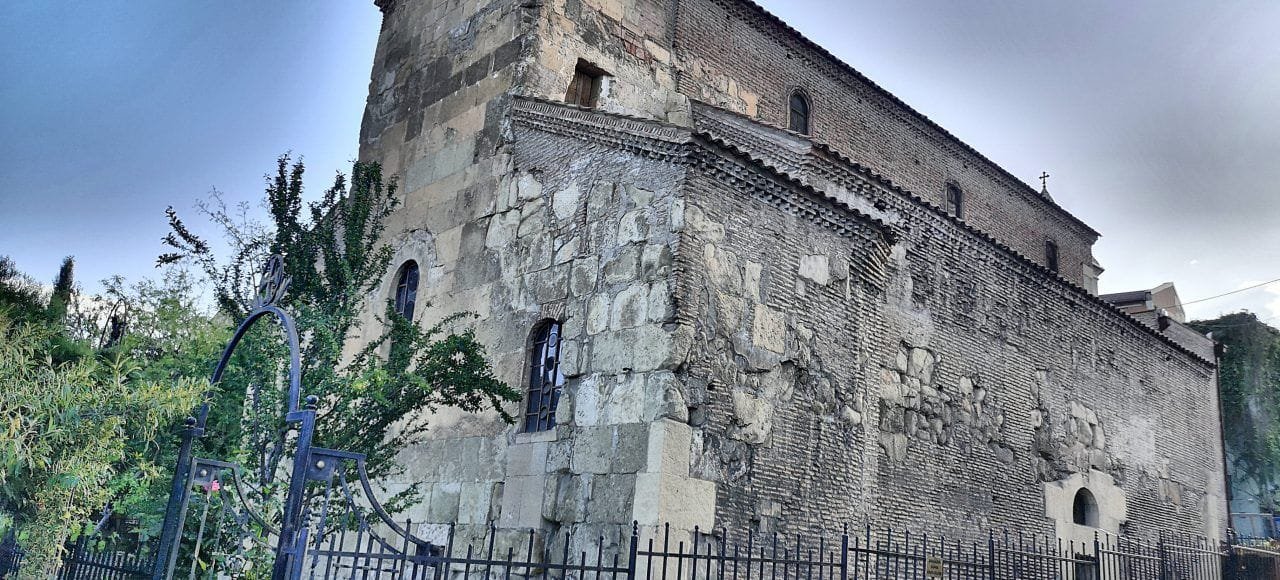 It is the oldest church still standing in Tbilisi, and it does not look it: a small three-nave basilica of plain stone, tucked into a street of the old town. King Dachi, son of Vakhtang Gorgasali, built it around the year 530. The name comes from the Christ icon of Ancha, which arrived here in 1664 from an area that is now Turkey and is now kept in the Art Museum. The brick bell tower of 1675 is what you see from the street.
If it falls on a Sunday morning, we go in during the liturgy: the Anchiskhati choir sings Georgian polyphony the way it was sung centuries ago, and it is one of the things people remember most from the trip. On other days it is almost empty and takes ten minutes. There are headscarves at the door for women.
Day 3 - Tbilisi - Davit Gareji - Bodbe - Sighnaghi
Total road of the day - 202KM 4 Hours and 35 Minutes In the morning, David Gareja; in the afternoon, Bodbe Monastery. 202 km in all. Road 100KM 2 Hours and 15 MinutesDavid Gareja
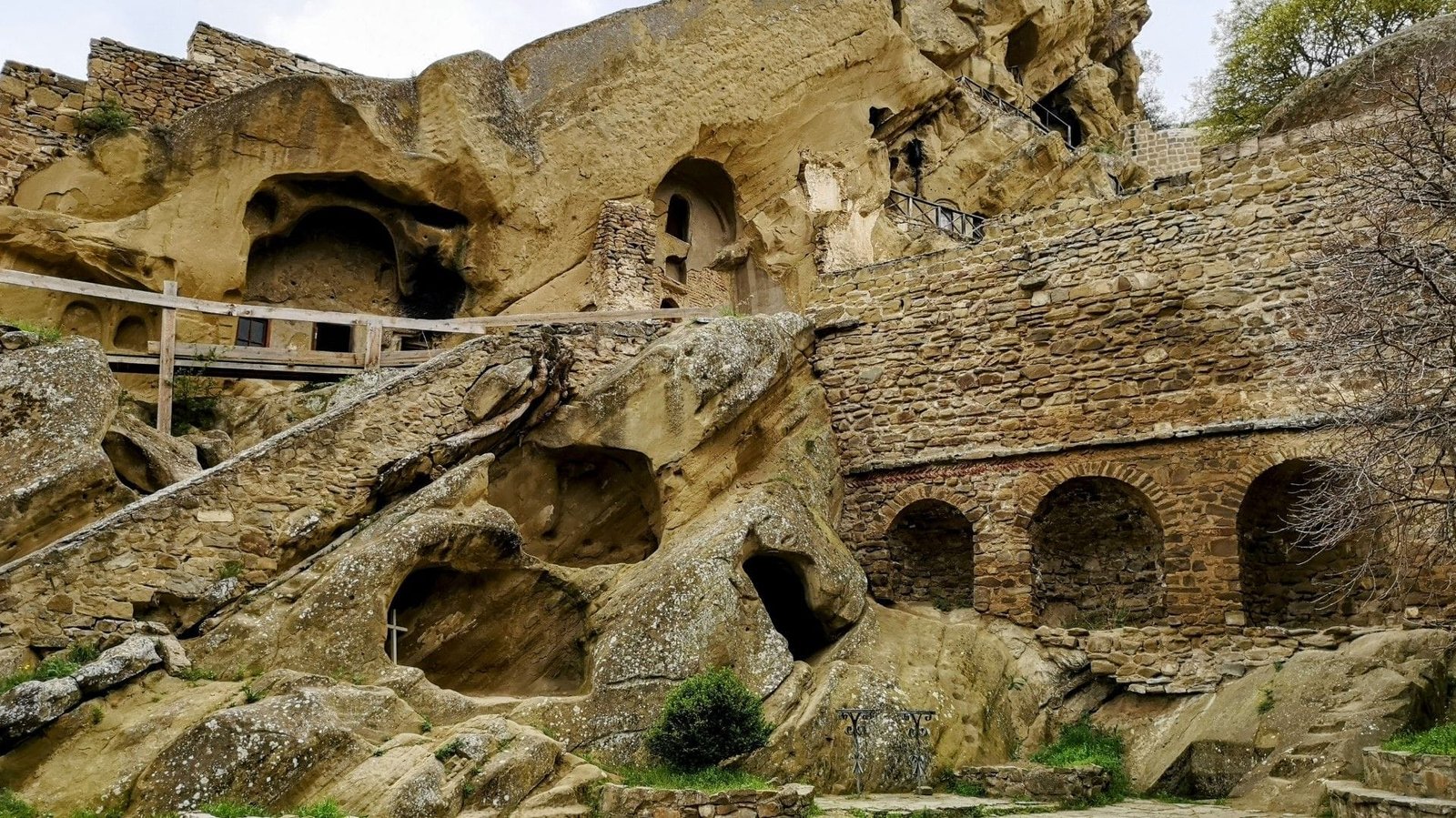 A monastery cut into the rock in the middle of a semi-desert of striped hills, 70 km from Tbilisi and right on the border with Azerbaijan. It was founded in the 6th century by David Garejeli, one of the thirteen Assyrian fathers, and for centuries it was the great centre of Georgian painting: the cells and chapels on the ridge, in the part called Udabno, keep frescoes from the 10th to the 13th century. In 1615 Shah Abbas killed six hundred monks here on an Easter night; the Lavra, the lower monastery, has had monks again since the 1990s.
An important warning: the ridge with the frescoes is disputed border territory and since 2019 access has been closed or restricted depending on the moment; what can be visited with certainty is the Lavra. The last stretch of road is dirt, in summer it is very hot and there are vipers: closed shoes and water. Two and a half hours including the drive there and back.
Bodbe Monastery
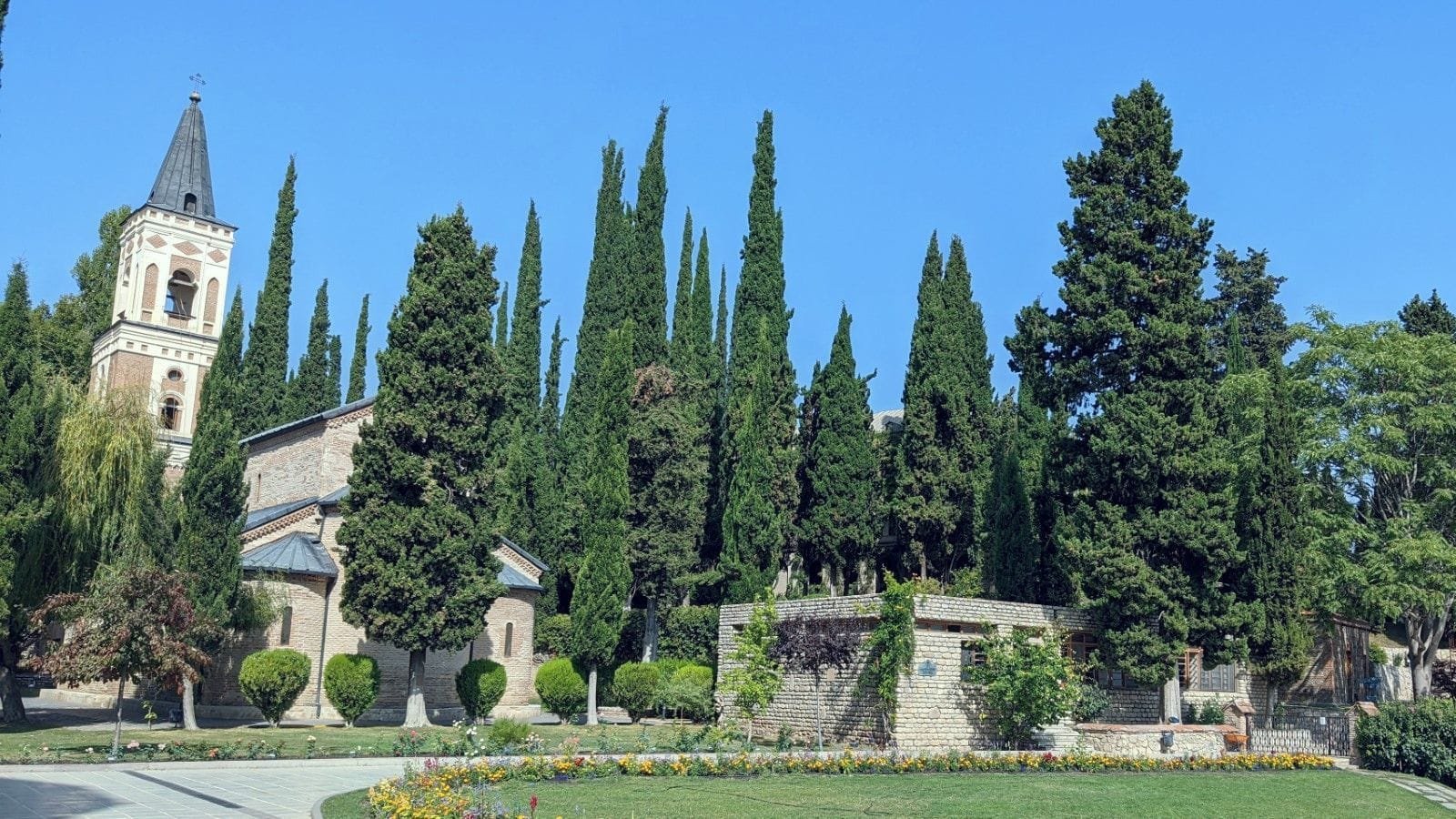 St Nino is buried here, the woman who converted Georgia to Christianity in the 4th century, and that is why Bodbe is the most visited place of pilgrimage in the country. It is a convent 2 km from Sighnaghi, among cypresses, with a small 9th-century church much rebuilt in the 17th, where the tomb is, and a huge new cathedral finished a few years ago that we like less. From the garden you see the whole Alazani valley.
What sets Bodbe apart is St Nino's spring: a source 3 km downhill along a path, where pilgrims get into the icy water in a white shirt. It is 30 minutes down and 45 up, and there are minibuses for the way back. With a normal group we stay at the top; if someone wants to go down, we arrange it. Headscarf and covered shoulders.
Day 4 - Sighnaghi - Nekresi - Gremi - Alaverdi - Telavi
Total road of the day - 140KM 2 Hours and 25 Minutes A day of 2 hours 25 minutes on the road with three things to see: Nekresi Monastery, Gremi and Alaverdi Monastery. Road 70KM 1 Hours and 13 MinutesNekresi Monastery
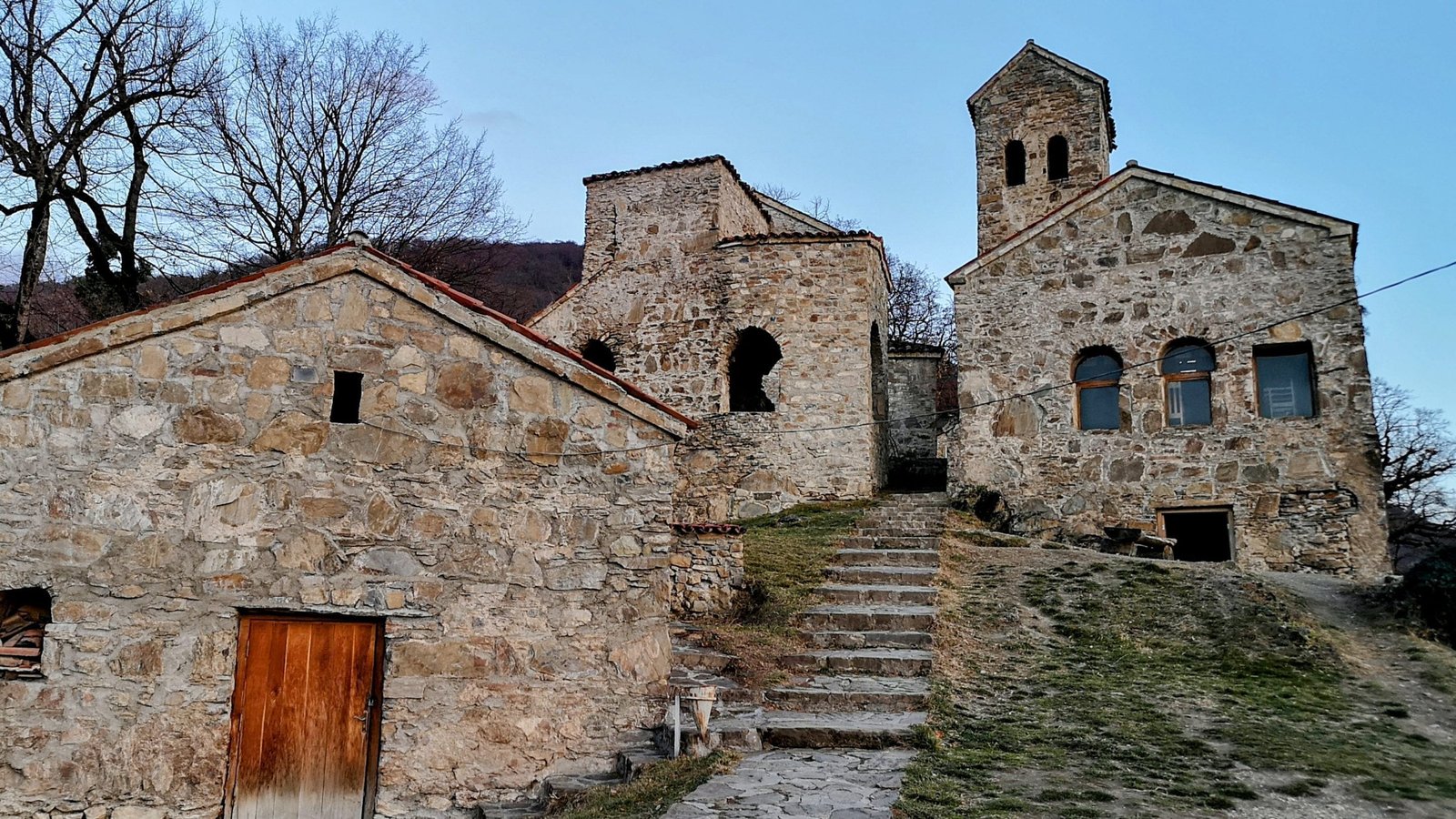 You leave the car at the bottom and go up in the monastery minibus, a kilometre and a half of slope through the forest, because Nekresi hangs on the hillside above the Alazani valley, near Kvareli. At the top there is a tiny 4th-century basilica, one of the oldest churches still standing in Georgia, and the complex founded in the 6th century by Abibos of Nekresi, another of the thirteen Assyrian fathers: church, tower, refectory and a marani, the cellar with buried wine jars. The views are among the best in Kakheti.
Forty-five minutes. The minibus goes up every few minutes; anyone who prefers to walk should allow half an hour of climb.
Road 14KM 0 Hours and 15 Minutes
Gremi
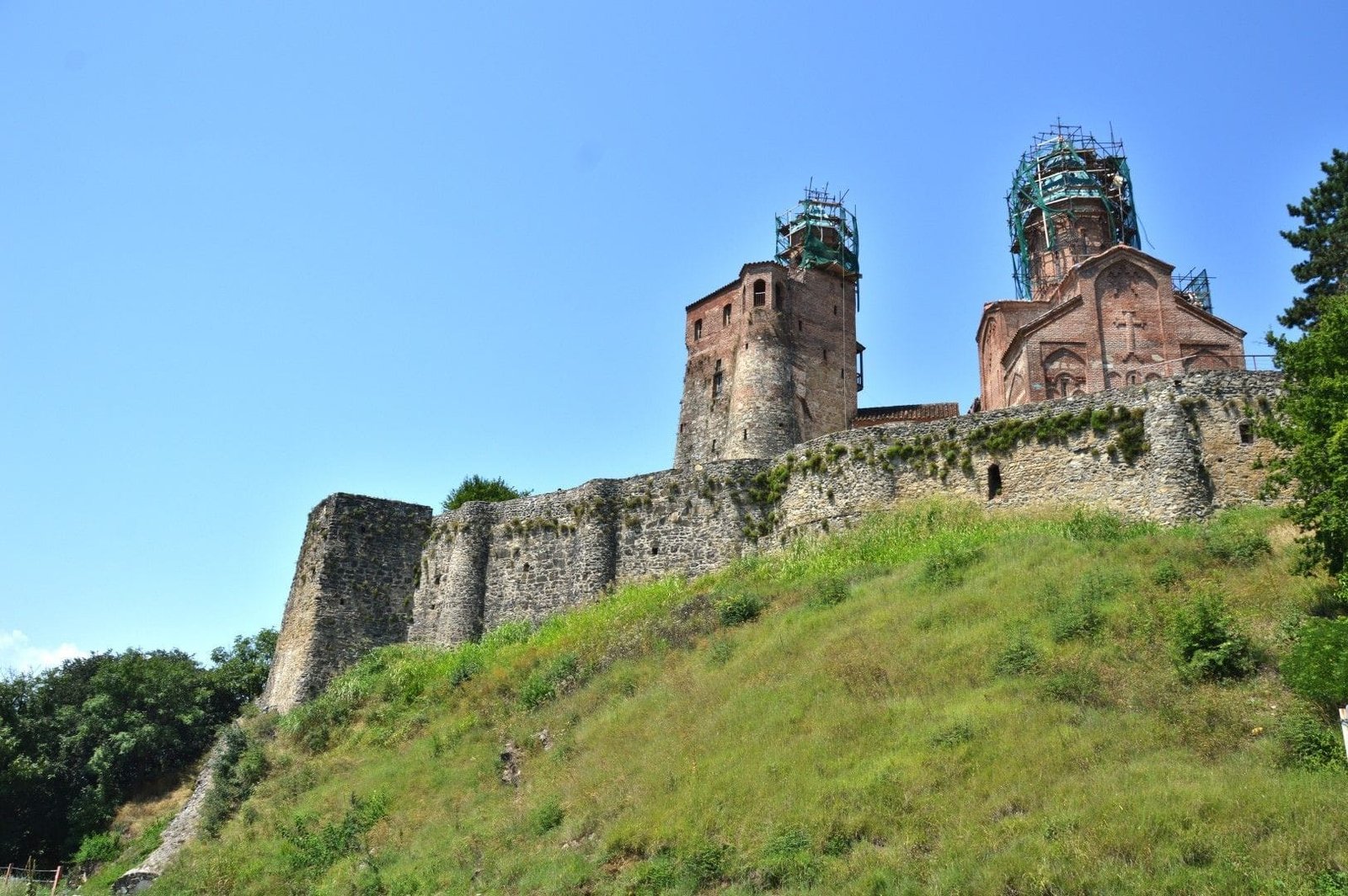 For 150 years, from 1466 to 1616, Gremi was the capital of the kingdom of Kakheti, a Silk Road city with markets, baths and caravanserais. In 1616 Shah Abbas of Persia razed it and deported its people, and it never rose again; the capital moved to Telavi. What remains stands on top of a rock: the Church of the Archangels of 1565, with frescoes, and the royal tower residence, now a small museum with a good model of what the city looked like.
Half an hour. You drive up to the top, and from the tower you see the Alazani valley and, in the distance, the wall of the Caucasus.
Road 35KM 0 Hours and 32 Minutes
Alaverdi Monastery
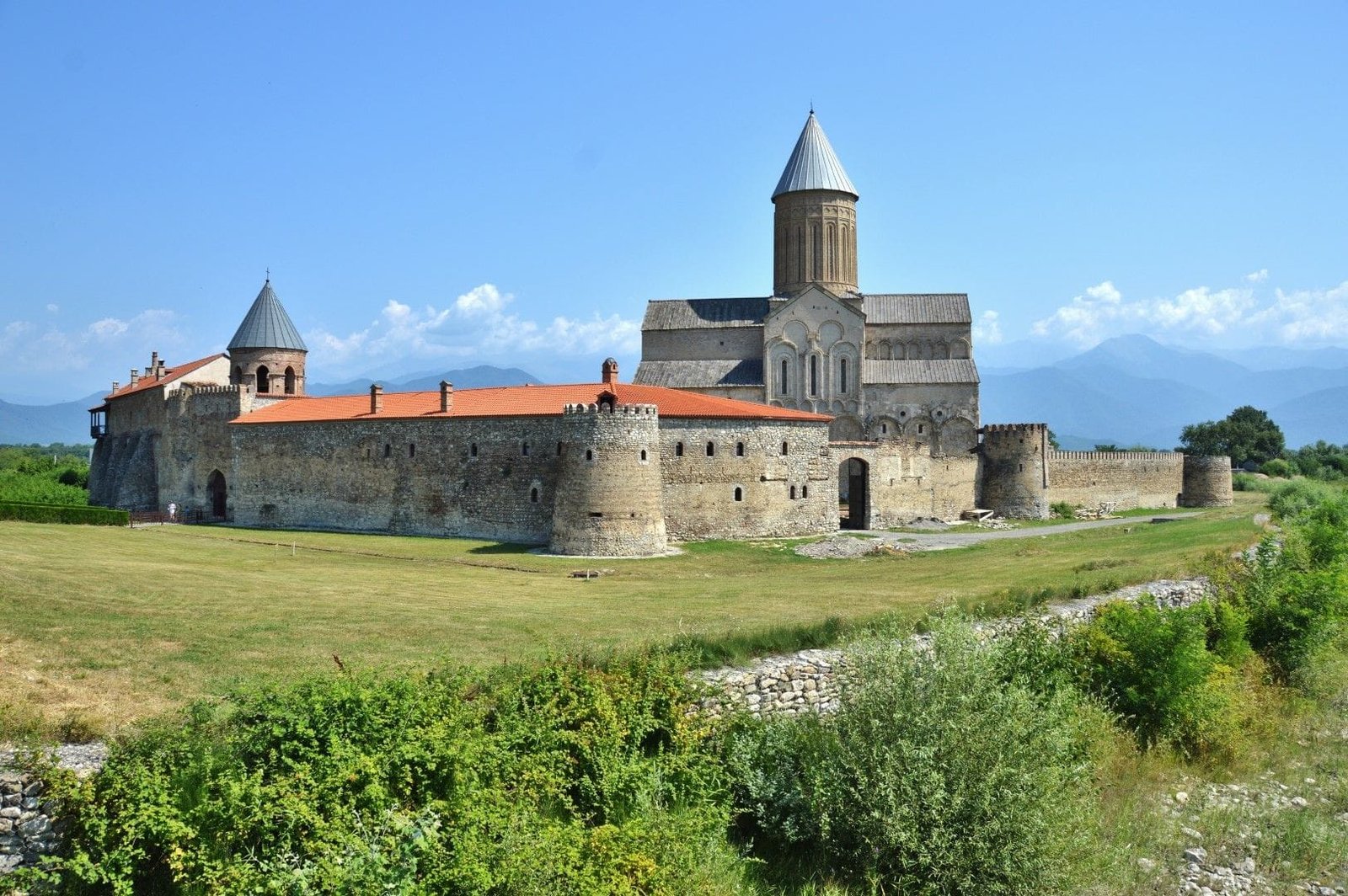 Alaverdi cathedral can be seen from far off across the Kakheti plain: 50 metres high, the second tallest church in Georgia and for almost a thousand years the tallest. Kvirike III built it in the early 11th century on the monastery founded in the 6th by Joseph of Alaverdi, one of the thirteen Assyrian fathers who brought monastic life to the country. Inside there are frescoes from the 11th to the 15th century, and photographing them is forbidden.
The monks have made wine in qvevri since 2006, reviving a tradition that goes back centuries here, and in September the Alaverdoba festival brings half the region together in the meadow outside. A 40-minute visit; headscarves for women and, if you are in shorts, there are skirts to borrow at the door.
Road 21KM 0 Hours and 25 Minutes
Alaverdi cathedral can be seen from far off across the Kakheti plain: 50 metres high, the second tallest church in Georgia and for almost a thousand years the tallest. Kvirike III built it in the early 11th century on the monastery founded in the 6th by Joseph of Alaverdi, one of the thirteen Assyrian fathers who brought monastic life to the country. Inside there are frescoes from the 11th to the 15th century, and photographing them is forbidden.
The monks have made wine in qvevri since 2006, reviving a tradition that goes back centuries here, and in September the Alaverdoba festival brings half the region together in the meadow outside. A 40-minute visit; headscarves for women and, if you are in shorts, there are skirts to borrow at the door.
Day 5 - Telavi - Ananuri - Gergeti - Gudauri
Road 198KM 4 Hours and 35 Minutes About 280 km: from Telavi to the Military Highway via Tianeti, a stop at Ananuri and the climb to Gergeti. Lunch on the way. Road 65KM 1 Hours and 45 MinutesAnanuri
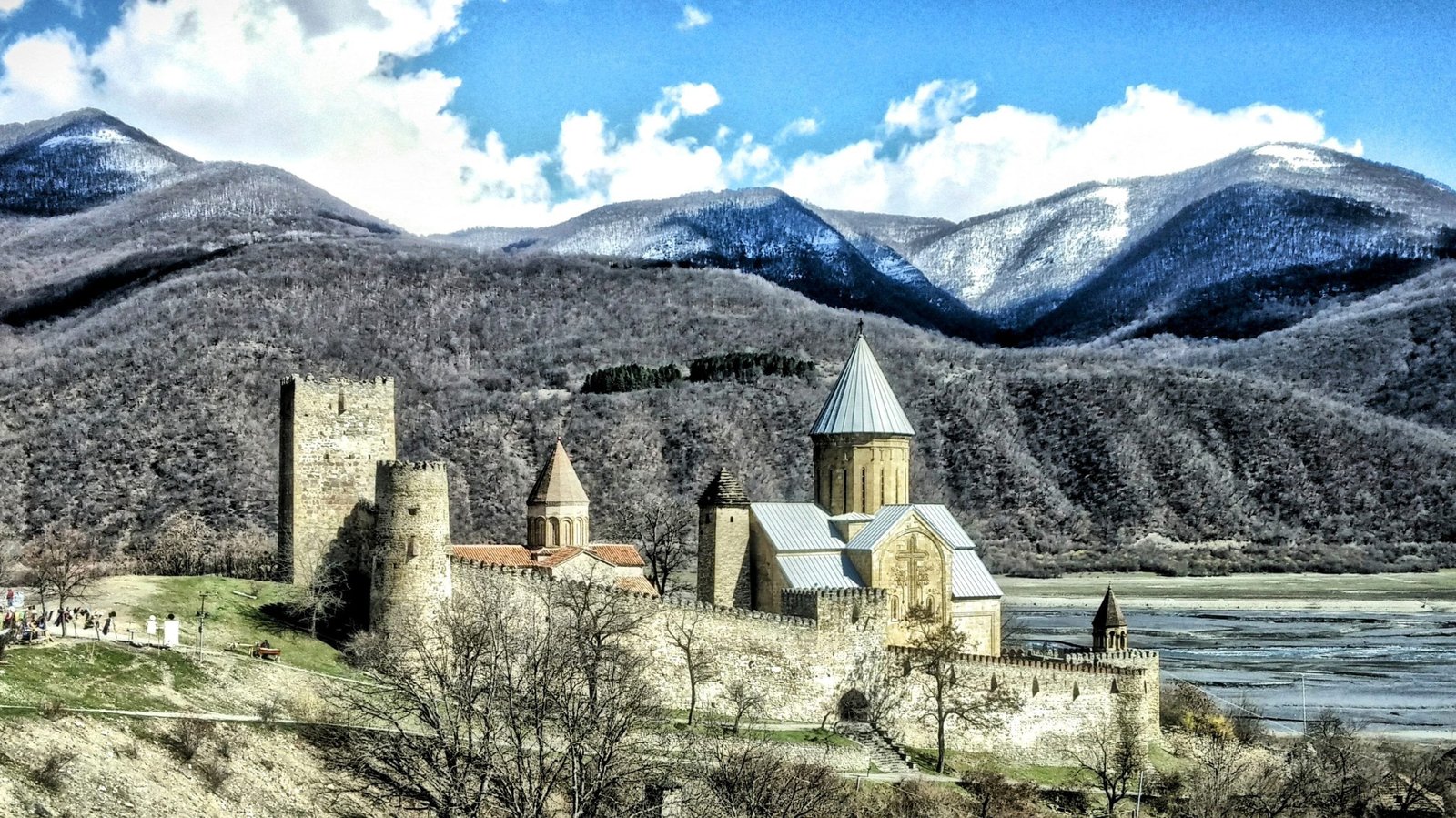 The first serious stop on the Georgian Military Highway, 66 km from Tbilisi: a fortress with two churches inside, planted above the Zhinvali reservoir. The turquoise water in all the photos dates from 1986, when the dam flooded the valley; until then the castle watched over a crossroads. It was the seat of the Eristavis of Aragvi, the dukes of the area, from the 13th to the 18th century, and the story you will be told is that of 1739, when a rival lord took it and put the whole family to the sword.
The best of Ananuri is the façade of the big church, the Assumption, from 1689: a huge cross carved with vines, lions and angels. You can climb the tower, up a narrow staircase. Half an hour, and at the exit there are stalls selling churchkhela, the strings of walnuts dipped in grape must, which are good here and not expensive. In autumn the reservoir drops and the postcard loses its colour.
Gergeti Trinity Church
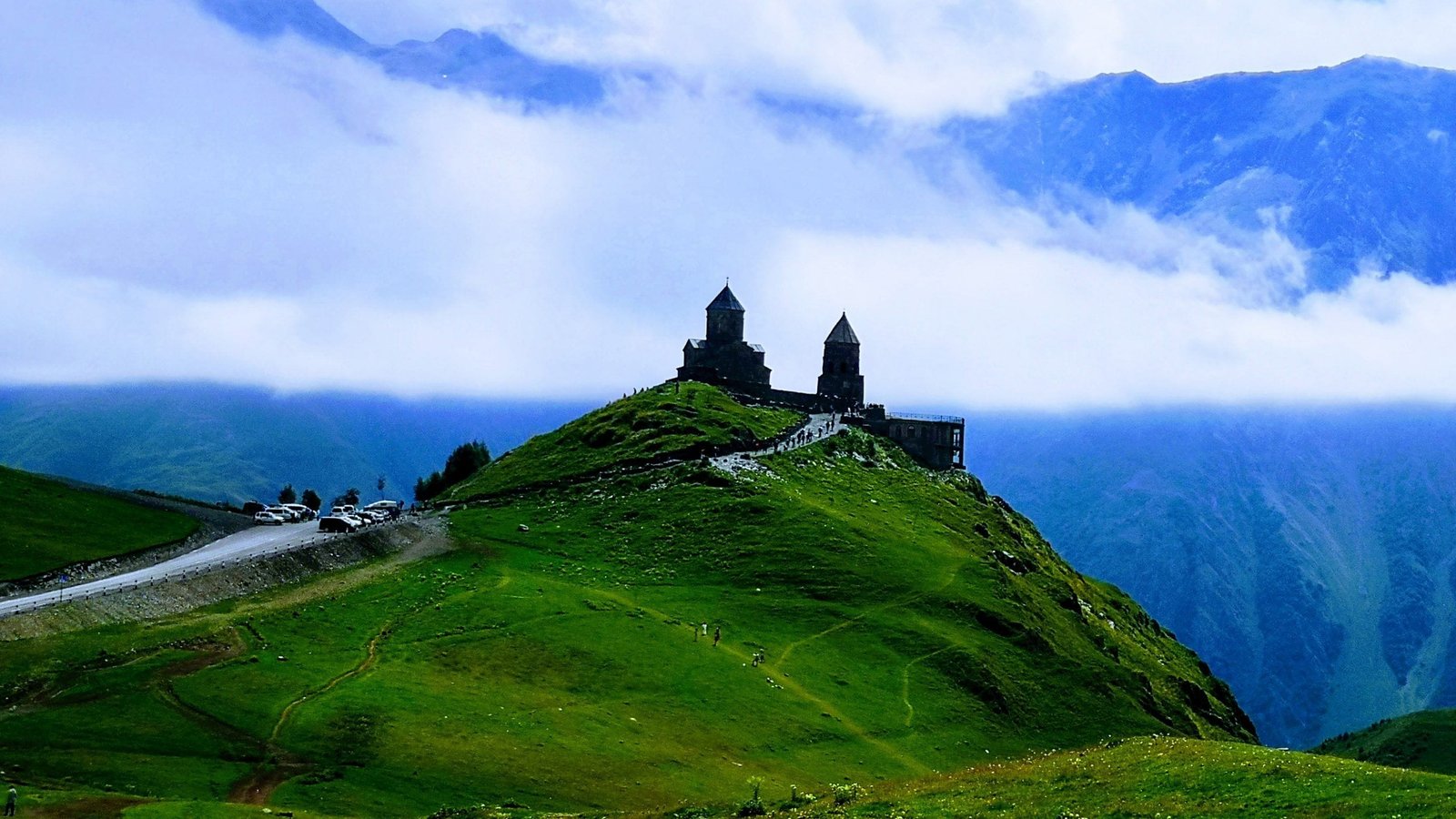 The photo of Georgia: a 14th-century church alone on a ridge at 2,170 metres, with Kazbek (5,047 m) behind it if the clouds allow. You get there from Stepantsminda, the village below, by a 6 km road that was paved only a few years ago; before that you needed a 4x4 or an hour and a half on foot, and in winter you still need the 4x4. For centuries the treasures of Mtskheta were hidden up here when invaders came, because of how remote it is.
Two warnings. First: Kazbek is usually covered from midday on, so we go up as early as we can and, if it is hidden, we wait a while, because sometimes it clears. Second: it is cold and windy at the top all year; in the middle of August we have seen people in T-shirts shivering. Headscarf to go in and covered shoulders; there are wrap skirts to borrow at the door for anyone in shorts. An hour for the drive up, the church and the photos.
Day 6 - Gudauri - Uplistsikhe - Gori - Kutaisi
Total road of the day - 335KM 5 Hours and 20 Minutes Uplistsikhe and Stalin Museum. It is 335 km; we leave early so as not to rush. Road 167KM 2 Hours and 35 MinutesUplistsikhe
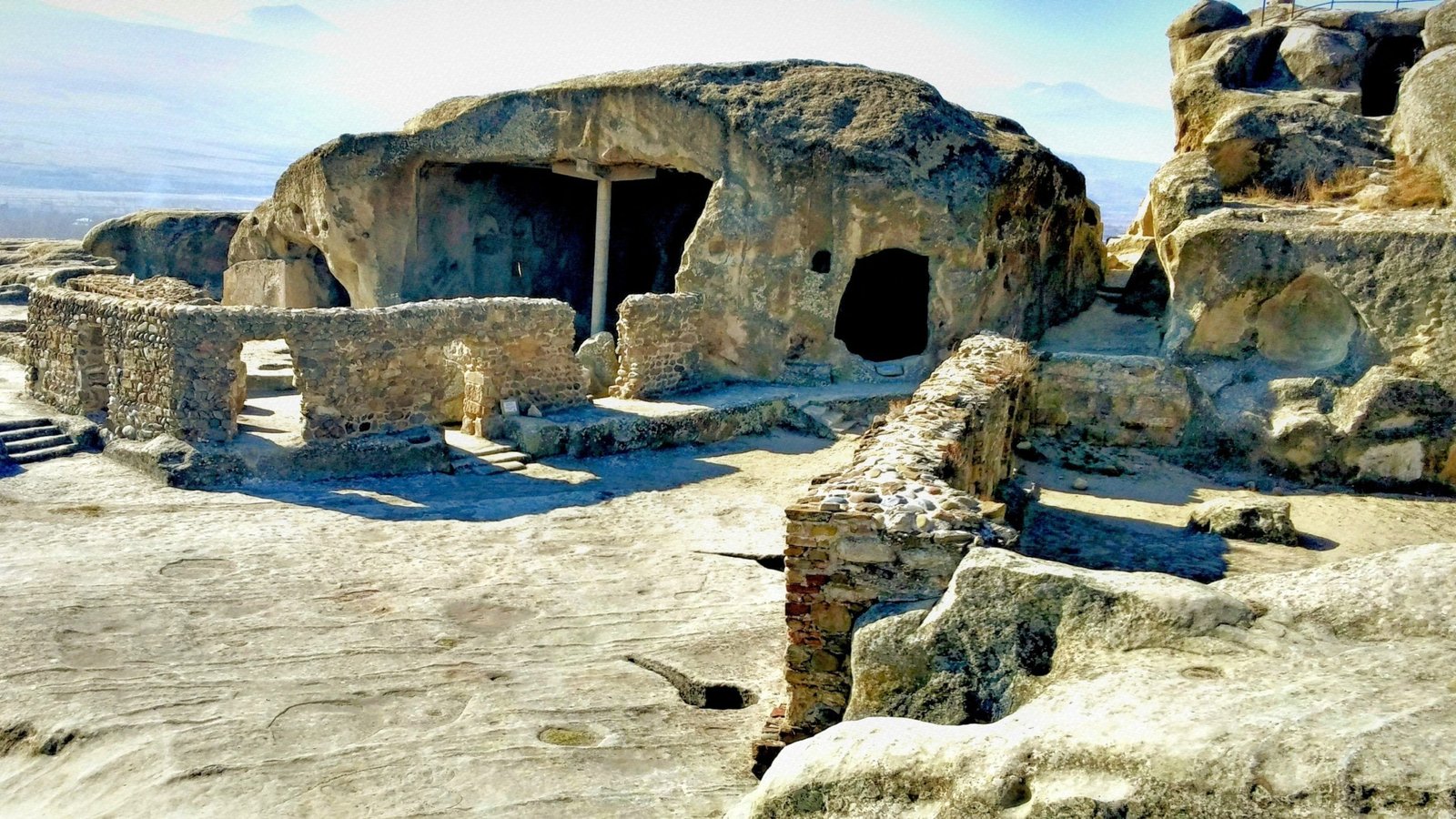 A whole town cut into the rock, 10 km from Gori above the Mtkvari river. People lived at Uplistsikhe from the first millennium BC until the Middle Ages: first a pagan centre, then a Christian one, and always a stop for the caravans. What remains are carved streets, a hall with a ceiling imitating wooden beams (they call it "Queen Tamar's hall"), wine presses, a tunnel down to the river and a 10th-century brick church planted on top of it all. The Mongols emptied it in the 13th century and it never recovered.
One piece of advice: in summer there is no shade and the rock burns, so go early or late in the day, and wear shoes with grip, because the polished stone is slippery. An hour is enough to climb up to the church and look down at the river.
Stalin Museum
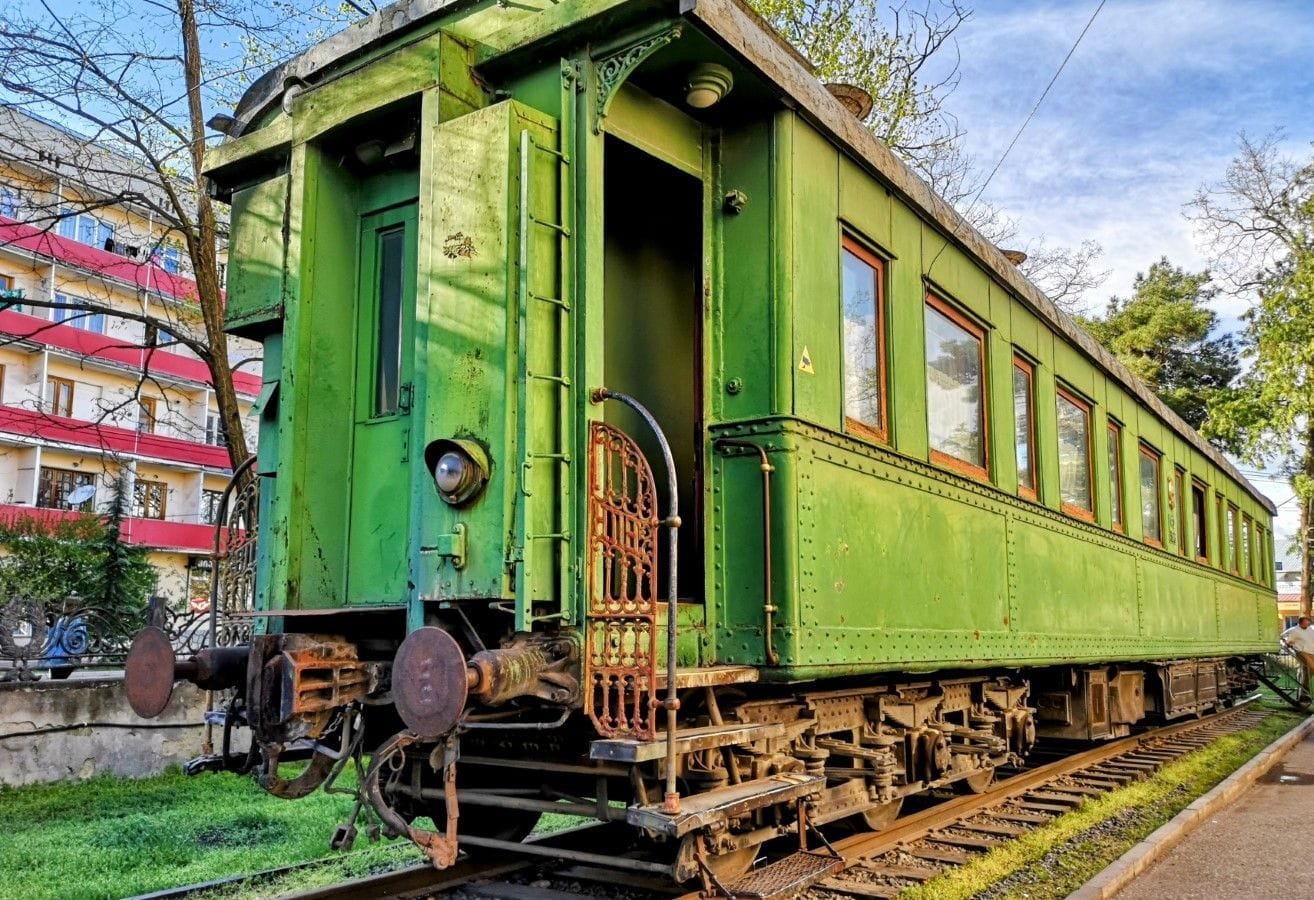 Gori is the town where Iosif Dzhugashvili was born in 1878, and the museum dedicated to him in 1957 is still open much as it was then. It is three things: the little wooden house where he was born, protected under a pavilion of columns; the main building, a Soviet-style palace with his personal belongings, photographs, gifts from heads of state and one of the bronze copies of his death mask; and the armoured railway carriage in which he travelled to Yalta and Potsdam, because he did not like flying.
Let us be plain: the museum tells the kind version. There is a small room on the repression, added late, and little else. We tell the rest on the road, and the one-hour visit usually ends in a long conversation in the car.
Day 7 - Kutaisi - Bagrati - Motsameta - Gelati - Nikortsminda-Kutaisi
Total road of the day - 192KM 4 Hours and 21 Minutes First Bagrati Cathedral, then Motsameta, Gelati Academy and Nikortsminda. 192 km, 4 hours 21 minutes; lunch on the way. Road 2KM 0 Hours and 9 MinutesBagrati Cathedral
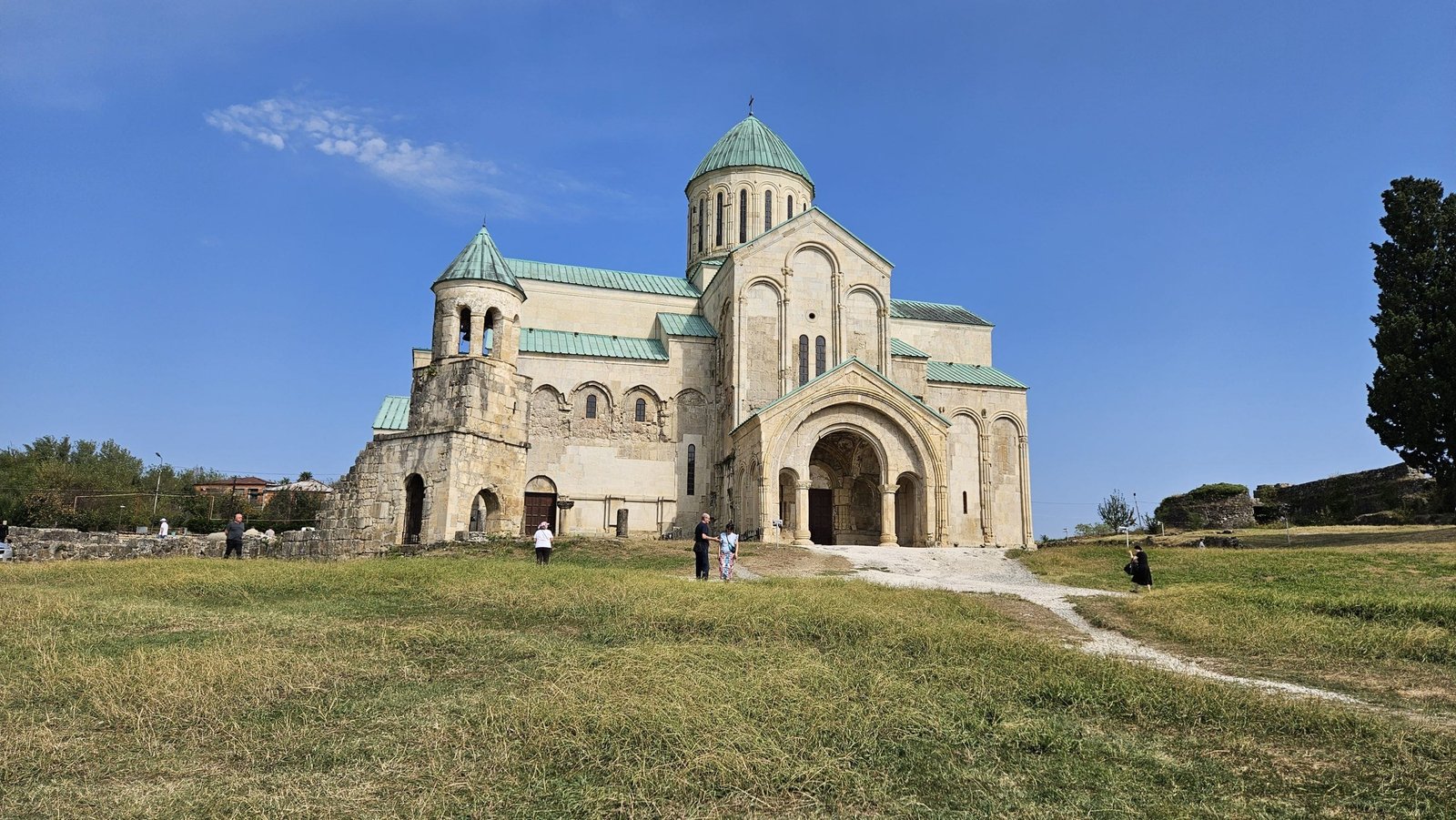 You can see it from half of Kutaisi, so you arrive already knowing what it is. What you cannot see from below is the controversy: Bagrat III consecrated it in 1003, the Ottomans blew it up in 1692 and it stood in ruins for three centuries until, in 2012, it was rebuilt in full, with concrete and a glass lift stuck to one side. UNESCO took it off the list in 2017 for that. Some people see it as a botch job. We still like it, mostly for the site: the terrace has the best view of the city and the Rioni valley. Ten minutes uphill from the centre and a full circuit of the building to find the original carvings left on the walls.
Road 8KM 0 Hours and 17 Minutes
Motsameta
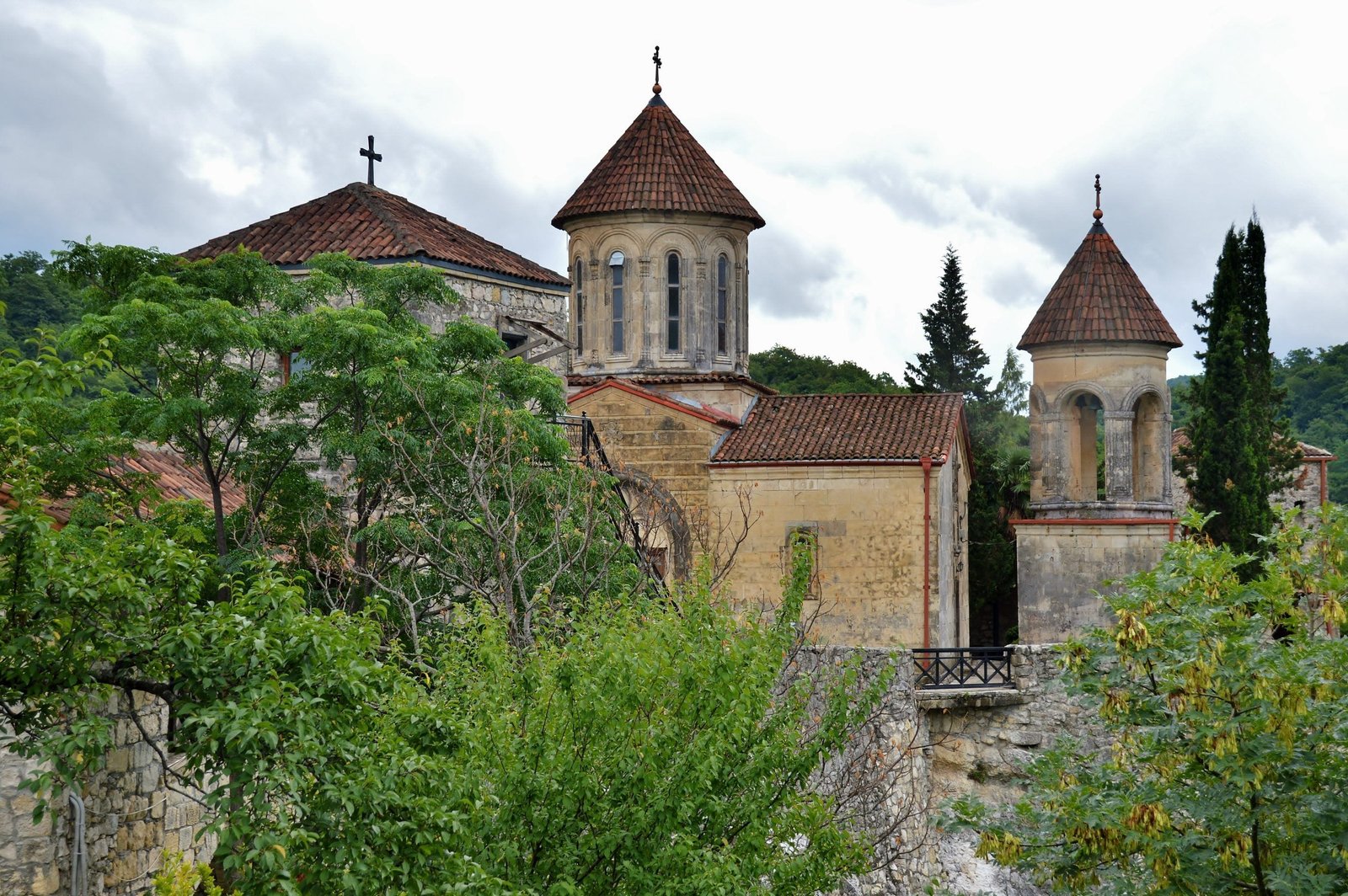 First the legend, because it is what you are told the moment you arrive: in the 8th century the Arabs killed the brothers David and Konstantin Mkheidze, nobles of Argveti, for refusing to give up their faith, and that is where the monastery gets its name, "the place of the martyrs". Their relics lie in a casket inside the church and passing under it three times, they say, grants a wish. Then the site: a rocky spur above the Tskaltsitela canyon ("red water" in Georgian), ten minutes from Kutaisi. The present building is 11th century, much altered.
Half an hour is enough. The best part is not the church, it is the balcony over the gorge.
Road 4KM 0 Hours and 8 Minutes
Gelati Academy
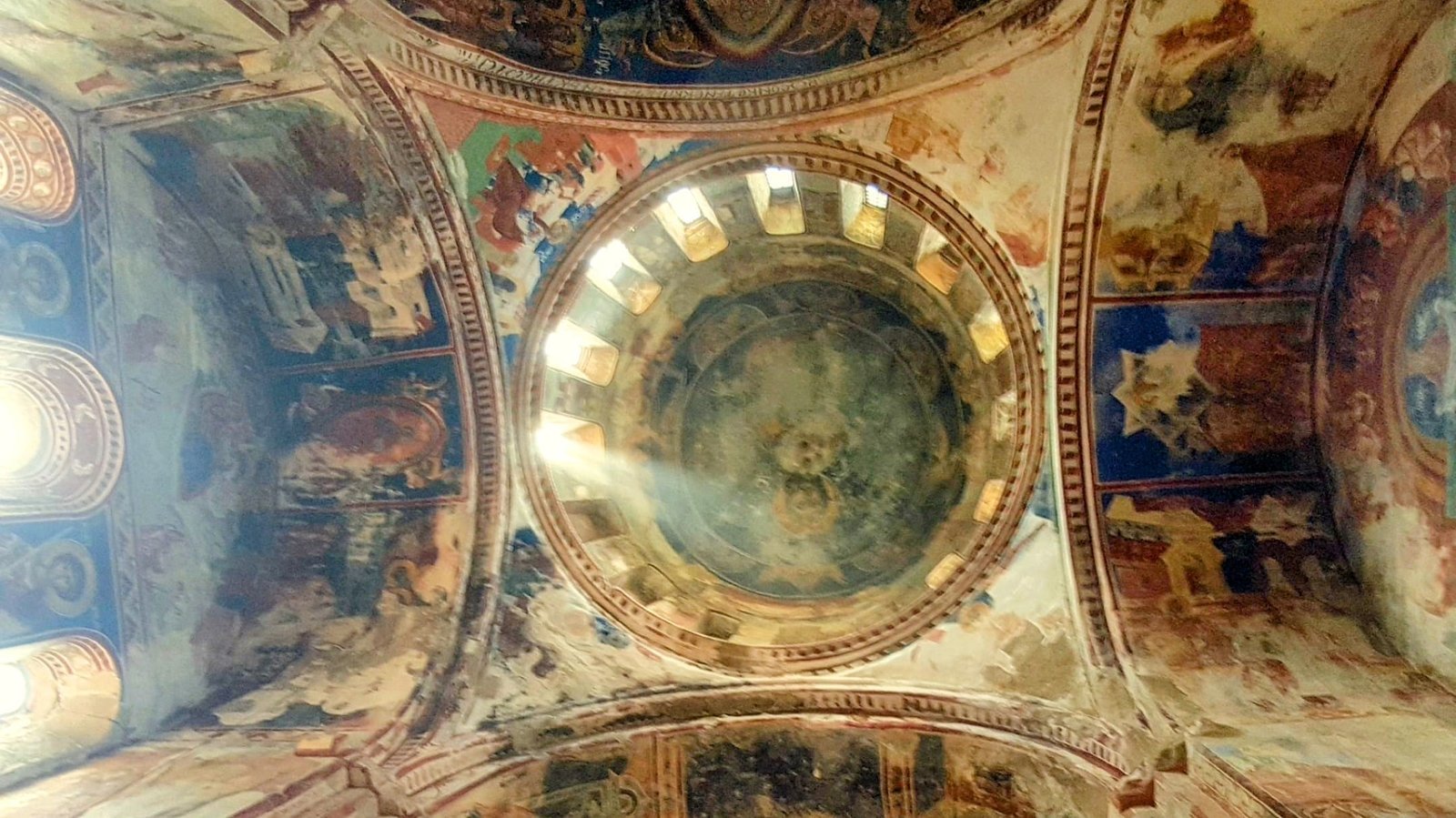 David the Builder asked to be buried in the floor of the south gate, so that everyone who came in would step on his grave. He has been there since 1125, and the monastery of Gelati, which he founded in 1106, was for centuries the great school of the kingdom: in its academy Greek philosophy was translated and copied at a time when Georgia looked to Byzantium. A UNESCO site since 1994 and, unlike Bagrati, still on the list. As soon as you enter the main church, the 12th-century mosaic of the Virgin in the apse; then frescoes on every wall, from different centuries. We give it almost an hour between the church, the tomb, the academy (a long hall with stone benches) and the church of St George. The domes were under repair for years because of leaks [VERIFICAR: estado de la restauración del tejado en 2026].
Road 58KM 1 Hours and 15 Minutes
Nikortsminda
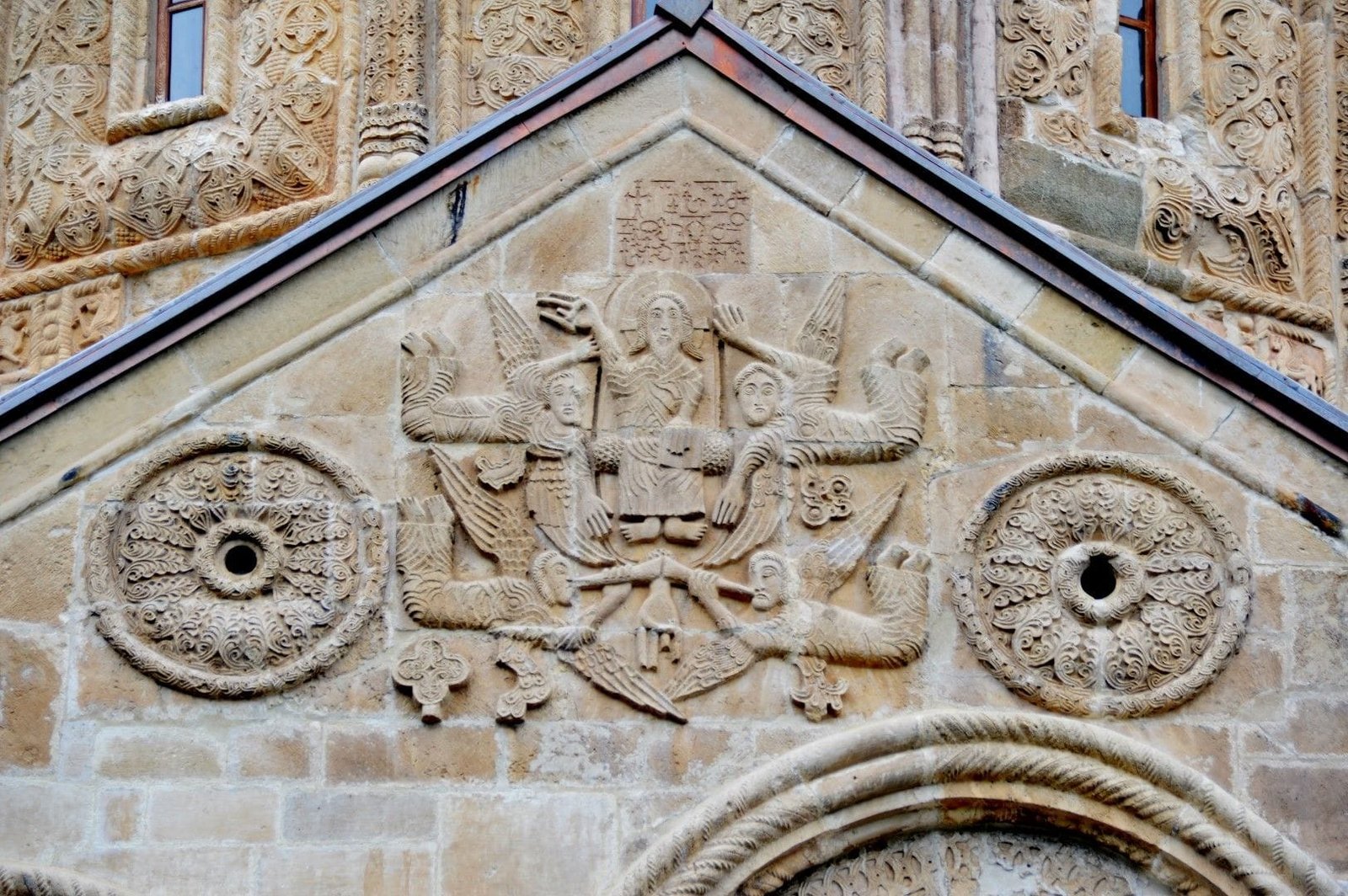 This is the debatable detour of the day, and we are the ones saying so, since we are the ones who include it: an hour and a quarter of mountain road from Gelati and 120 km back to Kutaisi that feel long once it gets dark. Why is it worth it? The façade. Nikortsminda cathedral is small, built in 1010-1014 under Bagrat III, but its outer walls are the most elaborately carved in Georgia: the Last Judgement, St George, animals, vines, all cut in stone. Inside, 17th-century frescoes. If you would rather shorten the day, it can be left out and the time given to Gelati; just say so when you book. In good weather we also stop at the viewpoint over the Shaori reservoir, which is on the way.
Road 120KM 2 Hours and 32 Minutes
This is the debatable detour of the day, and we are the ones saying so, since we are the ones who include it: an hour and a quarter of mountain road from Gelati and 120 km back to Kutaisi that feel long once it gets dark. Why is it worth it? The façade. Nikortsminda cathedral is small, built in 1010-1014 under Bagrat III, but its outer walls are the most elaborately carved in Georgia: the Last Judgement, St George, animals, vines, all cut in stone. Inside, 17th-century frescoes. If you would rather shorten the day, it can be left out and the time given to Gelati; just say so when you book. In good weather we also stop at the viewpoint over the Shaori reservoir, which is on the way.
Day 8 - Kutaisi - Promete - Martvili - Kutaisi
Total road of the day - 129KM 2 Hours and 16 Minutes Today the car is only the means: 129 km to reach Prometheus Cave and Martvili Canyon. Road 22KM 0 Hours and 31 MinutesPrometheus Cave
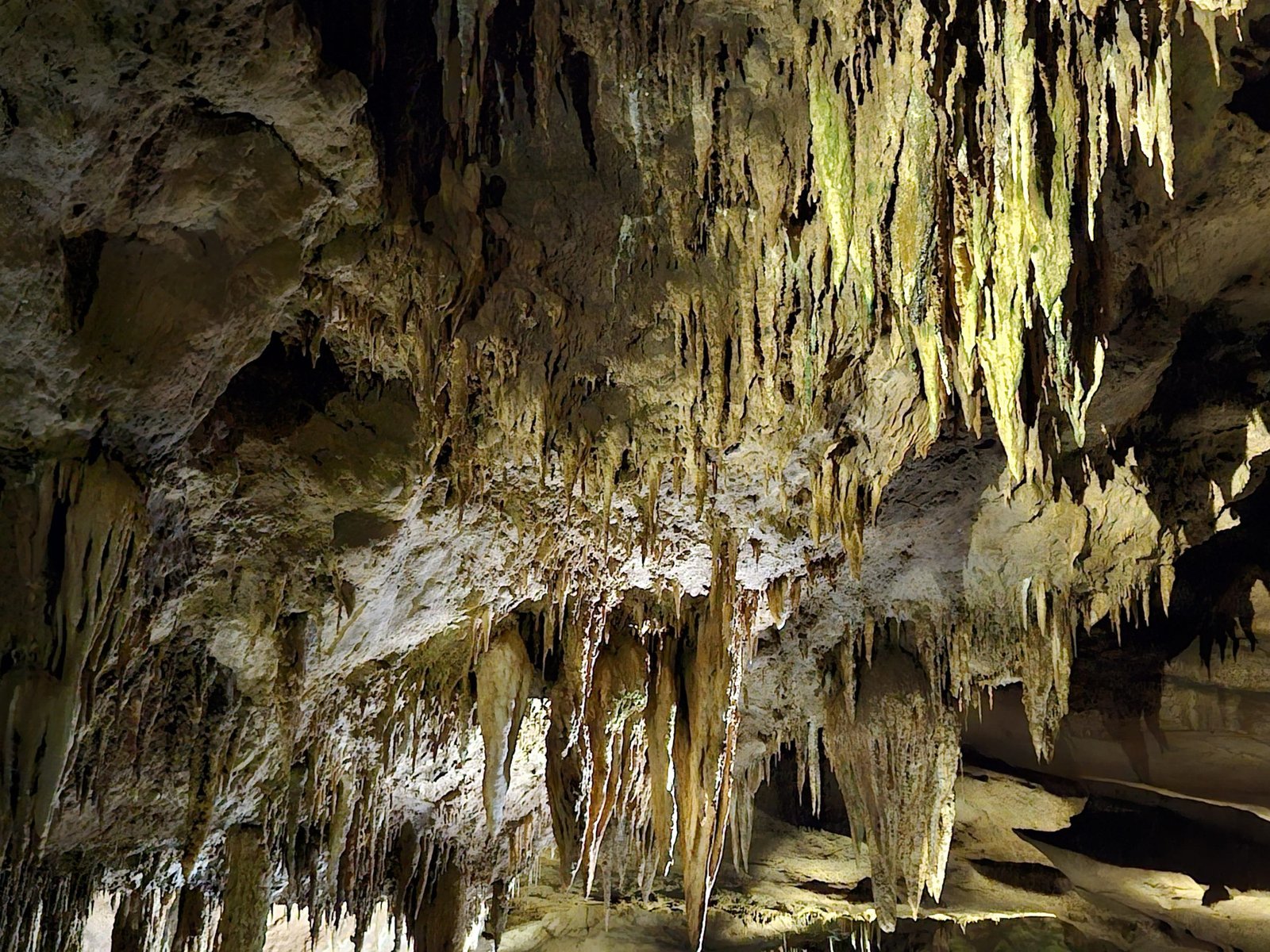 Inside it is 14 degrees all year round, which is welcome in summer and in winter too: bring a jacket. Prometheus Cave is at Kumistavi, 20 km from Kutaisi, next to the spa town of Tskaltubo. It was discovered in 1984 and opened to the public in 2011 with a route of just over a kilometre through six of its 22 halls, on concrete walkways with coloured lights that some people like and others do not. The name is for the titan who, according to the Greeks, ended up chained in these mountains; Georgians call him Amirani.
The visit takes a good hour. At the end, if the underground river has enough water, you can leave by boat along a stretch of about 300 metres, paid separately; when the level drops, you walk out. The floor is damp and slippery, so closed shoes are better.
Martvili Canyon
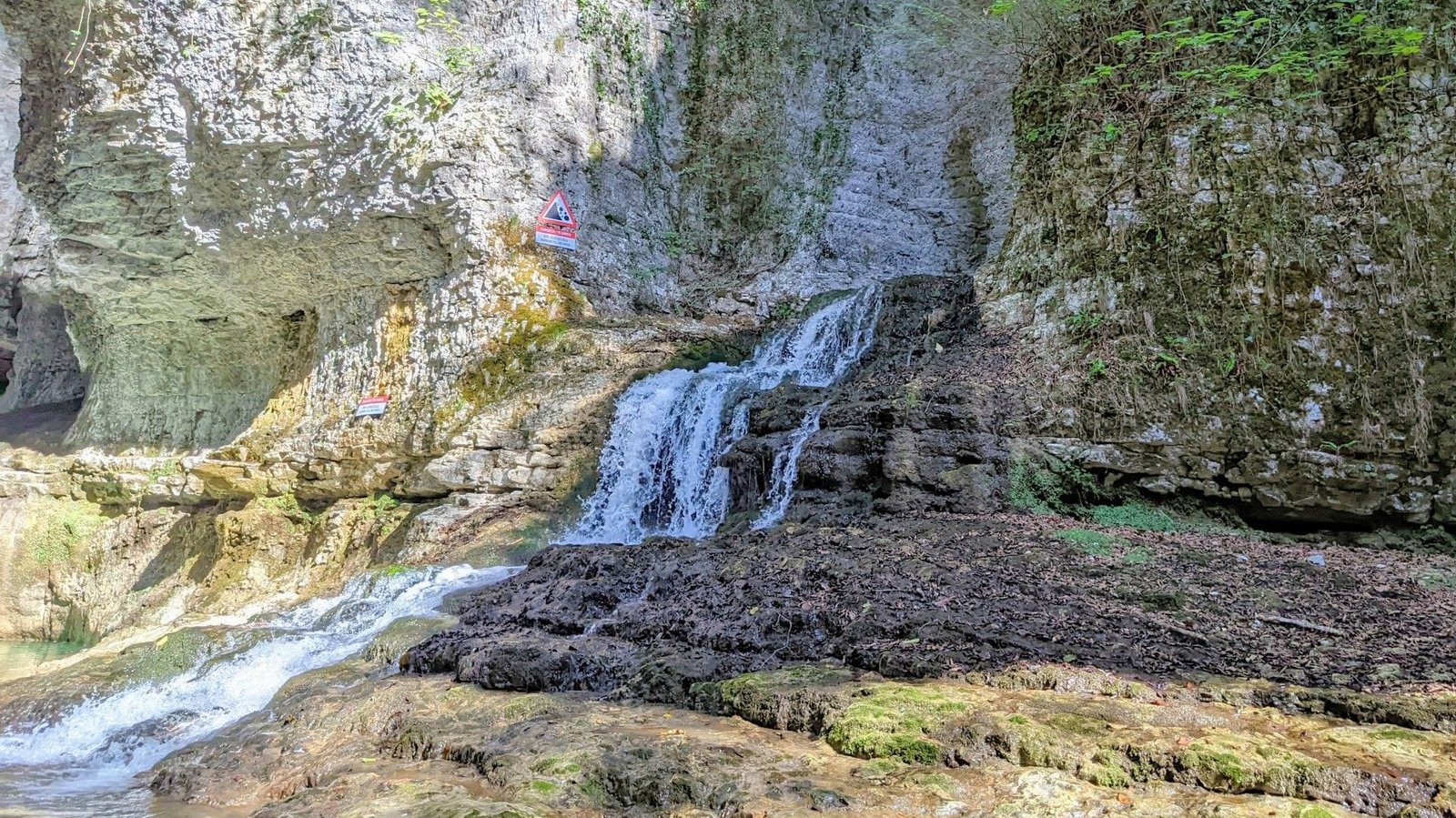 The water of the Abasha river is a turquoise that looks edited. It is not: this is Martvili canyon, in Samegrelo, three and a quarter hours from Mestia and the most visited canyon in western Georgia. It has two sections. In the upper one you take a boat ride of about fifteen minutes between walls 20 to 40 metres high; in the lower one there are walkways and a waterfall. It was the bathing place of the Dadiani princes, whose palace was in Zugdidi. Since it was developed in 2016 there is a ticket office, a car park and quite a crowd; on July and August weekends there is a queue for the boats [DATO: precio de entrada y de la barca en 2026]. We do the boat as soon as we arrive and then the walkways, half an hour without hurrying. If the river is swollen after rain, the boats do not go out and the water loses its colour; on those days we swap the order with Okatse.
Day 9 - Kutaisi - Ushguli - Mestia
Total road of the day - 208KM 5 Hours and 20 Minutes 208 km and 5 hours 20 minutes in the car in all. Today's stops: Ushguli. Road 161KM 3 Hours and 35 MinutesUshguli
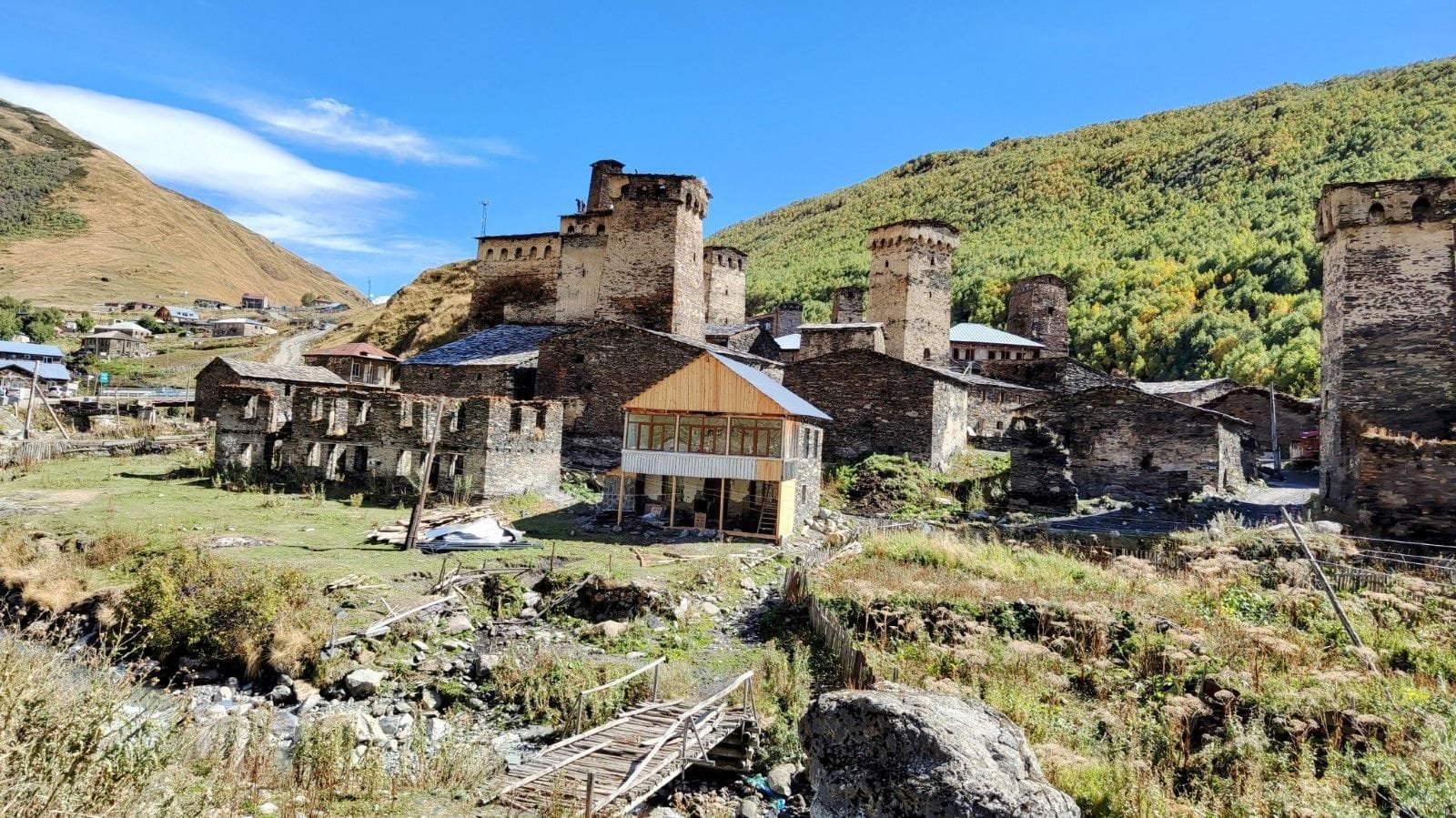 The last 45 km, from Mestia, are dirt road. It gets better every year and it is still dirt road [DATO: estado de la carretera Mestia-Ushguli esta temporada]; in winter it closes. At the end are the four villages of Ushguli, at 2,200 metres, with their more than twenty towers from the 9th to 12th centuries and Shkhara (5,193 m) closing the valley. A UNESCO site since 1996 and, depending on who you ask, the highest inhabited village in Europe; a couple of villages in the North Caucasus dispute the title.
We arrive around midday and have lunch in a village house. Then, on foot, the Lamaria church at the top, with Shkhara behind it, and one of the tower houses turned into a museum. With daylight short in the mountains, we drive down to sleep in Mestia. [VERIFICAR: el original decía que se duerme en Ushguli y se camina al glaciar de Shkhara; el día termina en Mestia]
Day 10 - Mestia - Chalaadi - Hatsvali - Mestia
Total road of the day - 34KM 1 Hours and 11 Minutes We leave after breakfast. On the programme, Chalaadi Glacier and Hatsvali; 34 km in short stretches. Road 9KM 0 Hours and 20 MinutesChalaadi Glacier
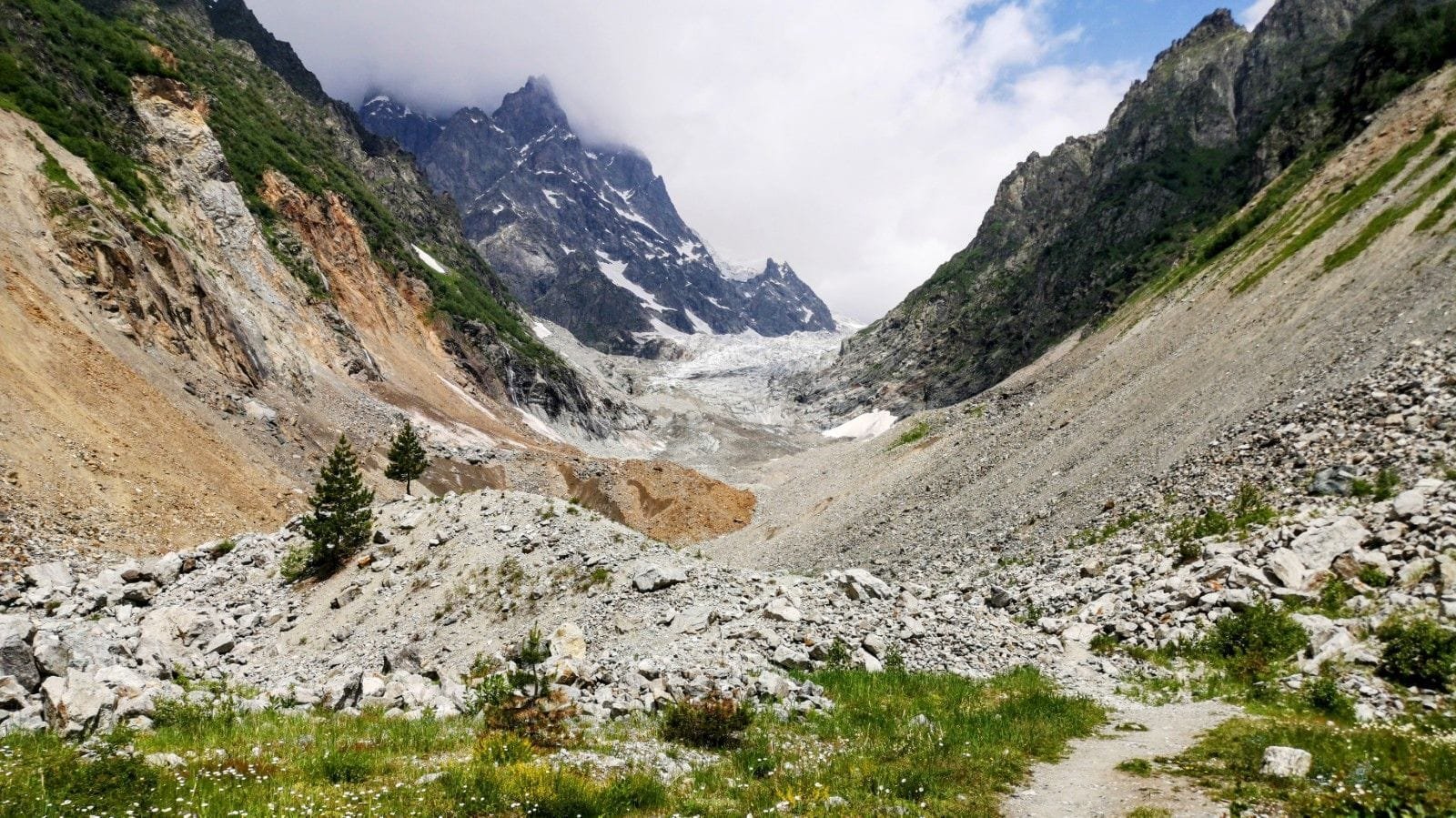 Closed shoes: that is the only thing we ask for this morning. The Chalaadi glacier is 9 km from Mestia, at the end of the track up the Mestiachala valley, the river that is born from it, and it is one of the few glaciers in the Caucasus you can touch without being a climber. From the suspension bridge it is about 3 km of forest trail and some 300 metres of climb, the last part over a moraine of loose blocks. The ice comes down from the Ushba and Chatini massif and arrives grey with rock, not white.
Three hours there and back, with stops. We do not go near the mouth of the glacier because stones fall, and if it rains we leave it for the afternoon and do Hatsvali first.
Hatsvali
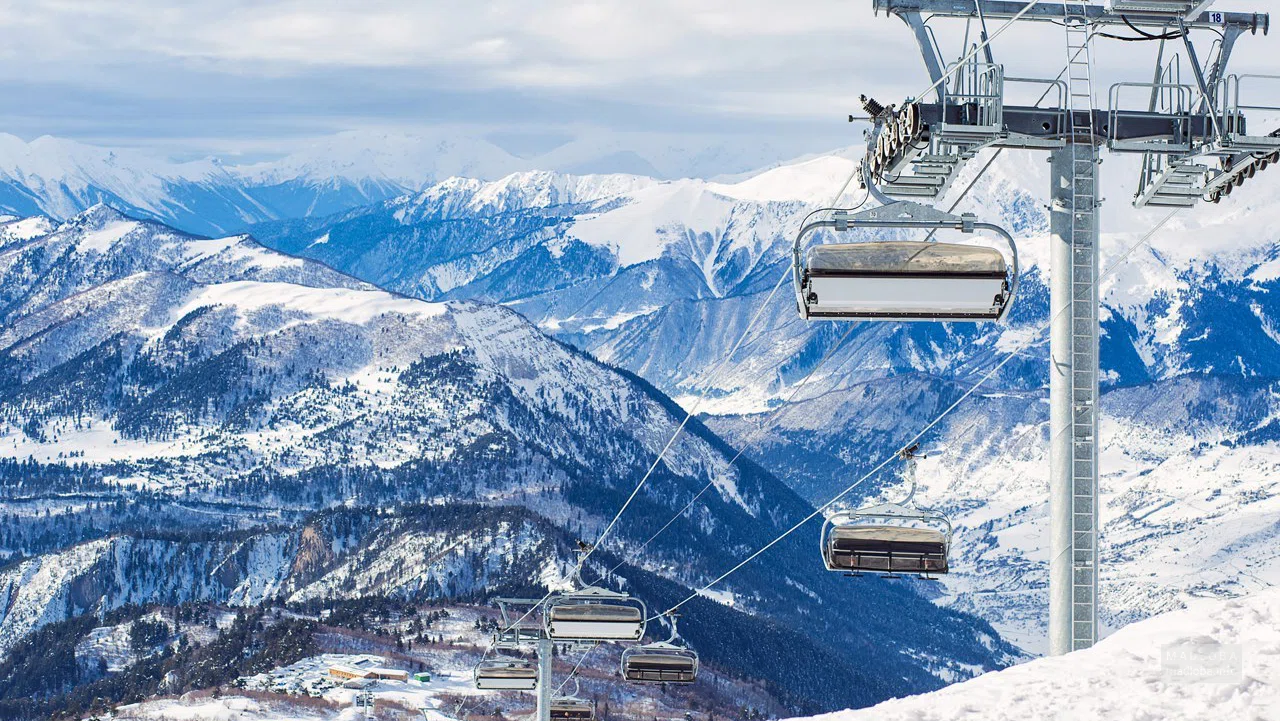 Ushba, with its two summits, is the mountain in every photo of Svaneti and the hardest to climb in Georgia. From Mestia you cannot see it properly. That is what Hatsvali is for, the village's small ski resort 9 km away: a chairlift of about 15 minutes from the base at 1,870 metres up to Mount Zuruldi at 2,340, with Ushba right in front. At the top there is a café with a terrace and, if you feel like it, you can walk down along the ridge. In winter a handful of runs operate [DATO: precio del telesilla en 2026].
A tip: by midday cloud usually sits on the summit, so we stay at the top without hurrying until it clears. We get back to Mestia with time for the museum or a walk among the towers of Lanchvali. [VERIFICAR: si este tour se vende también en invierno, aquí iría el esquí en lugar del telesilla de verano]
Day 11 - Mestia - Zugdidi - Dendrological Park - Batumi
Total road of the day - 268KM 5 Hours and 8 Minutes We leave after breakfast. On the programme, Dadiani Palace, Shekvetili Dendrological Park and Batumi; 268 km in short stretches. Road 135KM 2 Hours and 53 MinutesDadiani Palace
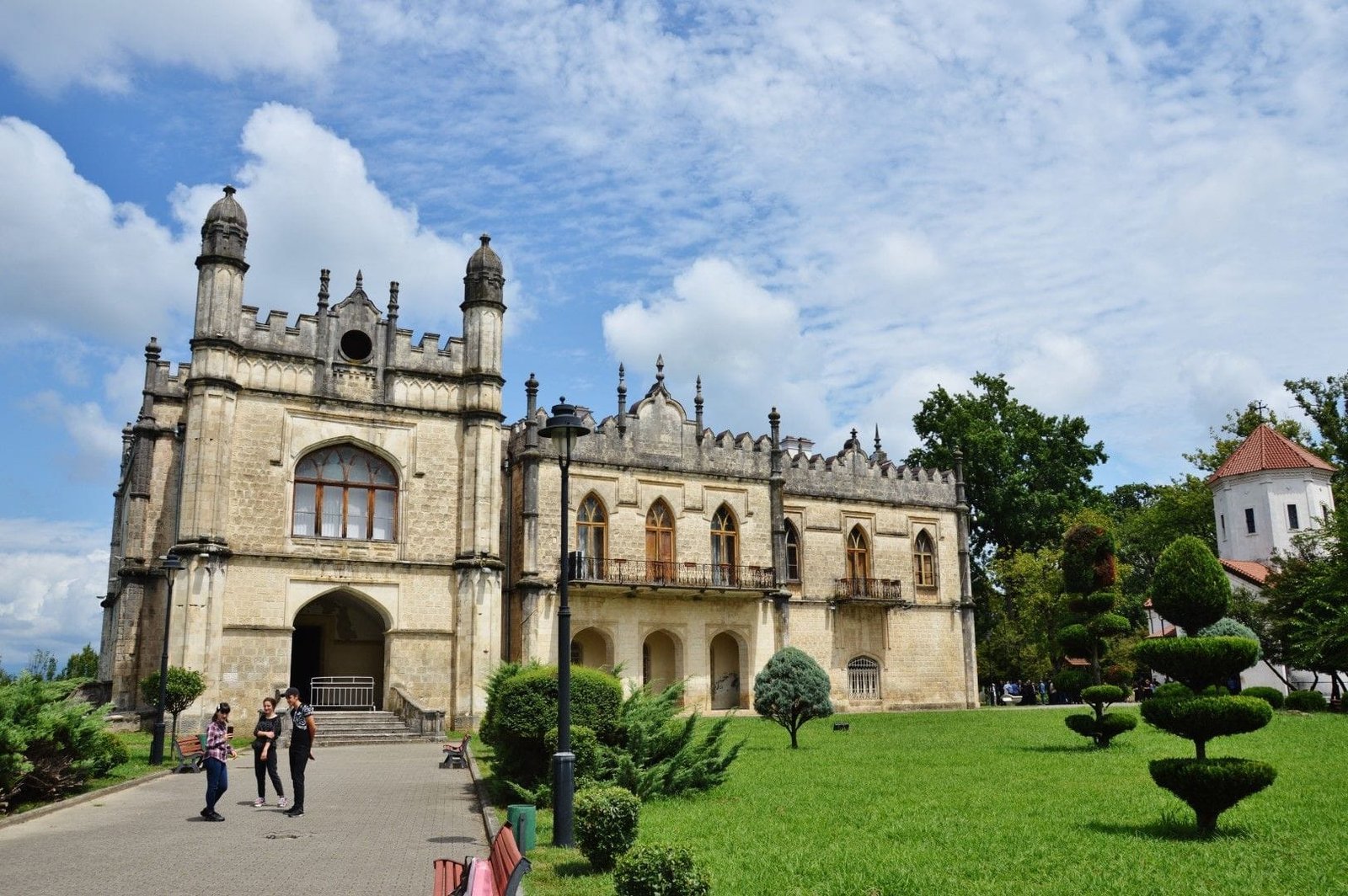 Napoleon's death mask is in Zugdidi, and that is no joke. One of the bronze copies was brought by Achille Murat, the emperor's great-nephew, when he married Princess Salome Dadiani in 1868, and it stayed in the palace of the family that ruled Samegrelo until the Russians came. The Dadiani palace, built from 1873 to 1878 in a style between European and Georgian, is now a museum: the mask, icons, manuscripts, one of the oldest libraries in the country and the gardens, which are a small botanical garden.
An hour. It is the natural stop on the way to Svaneti, before the climb to Mestia, and the best excuse to stretch your legs in Zugdidi.
Road 83KM 1 Hours and 25 Minutes
Shekvetili Dendrological Park
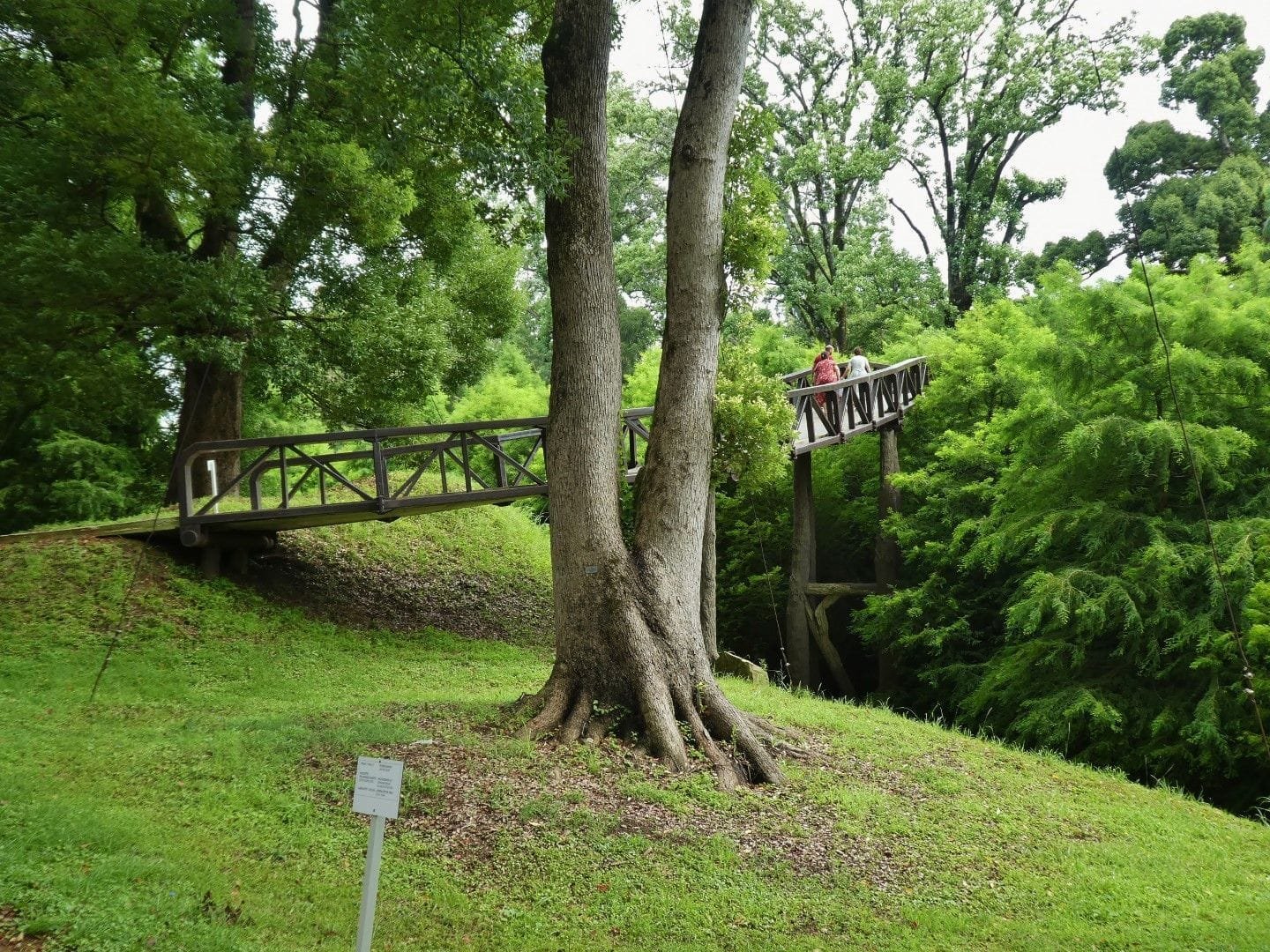 The trees in this park arrived by sea. They are specimens one and two hundred years old, tulip trees, magnolias, eucalyptus, that Bidzina Ivanishvili, the richest man in Georgia, bought all over the country and shipped by barge to the coast of Guria; there is a documentary, "Taming the Garden", that tells the story and does not flatter the owner. Shekvetili park opened in 2020: 60 hectares by the beach, more than 200 species, lakes, a bamboo grove and, in the middle, the biggest tree, visible from the road.
It is free, immaculate, and in summer there are queues at weekends. A good hour's walk; nearby are the magnetic black-sand beaches of Ureki, which local people use as a spa.
Road 50KM 0 Hours and 50 Minutes
Batumi
Batumi is another Georgia: subtropical, humid, with palm trees, casinos and glass towers next to late 19th-century houses, 20 km from Turkey. It is the capital of Adjara and the country's port since always. What you do here is walk: the boulevard along the sea, laid out in 1881 and now 7 km long, the Piazza in the old town with its Italian-looking terraces, and, at the end of the promenade, Ali and Nino, the two eight-metre steel figures that move and pass through each other every ten minutes, by Tamara Kvesitadze. Two things the brochures leave out: it rains a lot, even in summer, and in July and August the city is packed. In return, you eat well: Adjarian khachapuri, the bread boat with cheese, butter and a raw egg on top, was born here and is made better here than anywhere. Road 0KM 0 Hours and 0 Minutes Batumi is another Georgia: subtropical, humid, with palm trees, casinos and glass towers next to late 19th-century houses, 20 km from Turkey. It is the capital of Adjara and the country's port since always. What you do here is walk: the boulevard along the sea, laid out in 1881 and now 7 km long, the Piazza in the old town with its Italian-looking terraces, and, at the end of the promenade, Ali and Nino, the two eight-metre steel figures that move and pass through each other every ten minutes, by Tamara Kvesitadze. Two things the brochures leave out: it rains a lot, even in summer, and in July and August the city is packed. In return, you eat well: Adjarian khachapuri, the bread boat with cheese, butter and a raw egg on top, was born here and is made better here than anywhere.Day 12 - Batumi and surroundings
Total road of the day - 27KM 0 Hours and 50 Minutes A day with 50 minutes at the wheel, which is not nothing, and in return Borjgalo Ethnographic Museum and Gonio Fortress. Road 6KM 0 Hours and 15 MinutesBorjgalo Ethnographic Museum
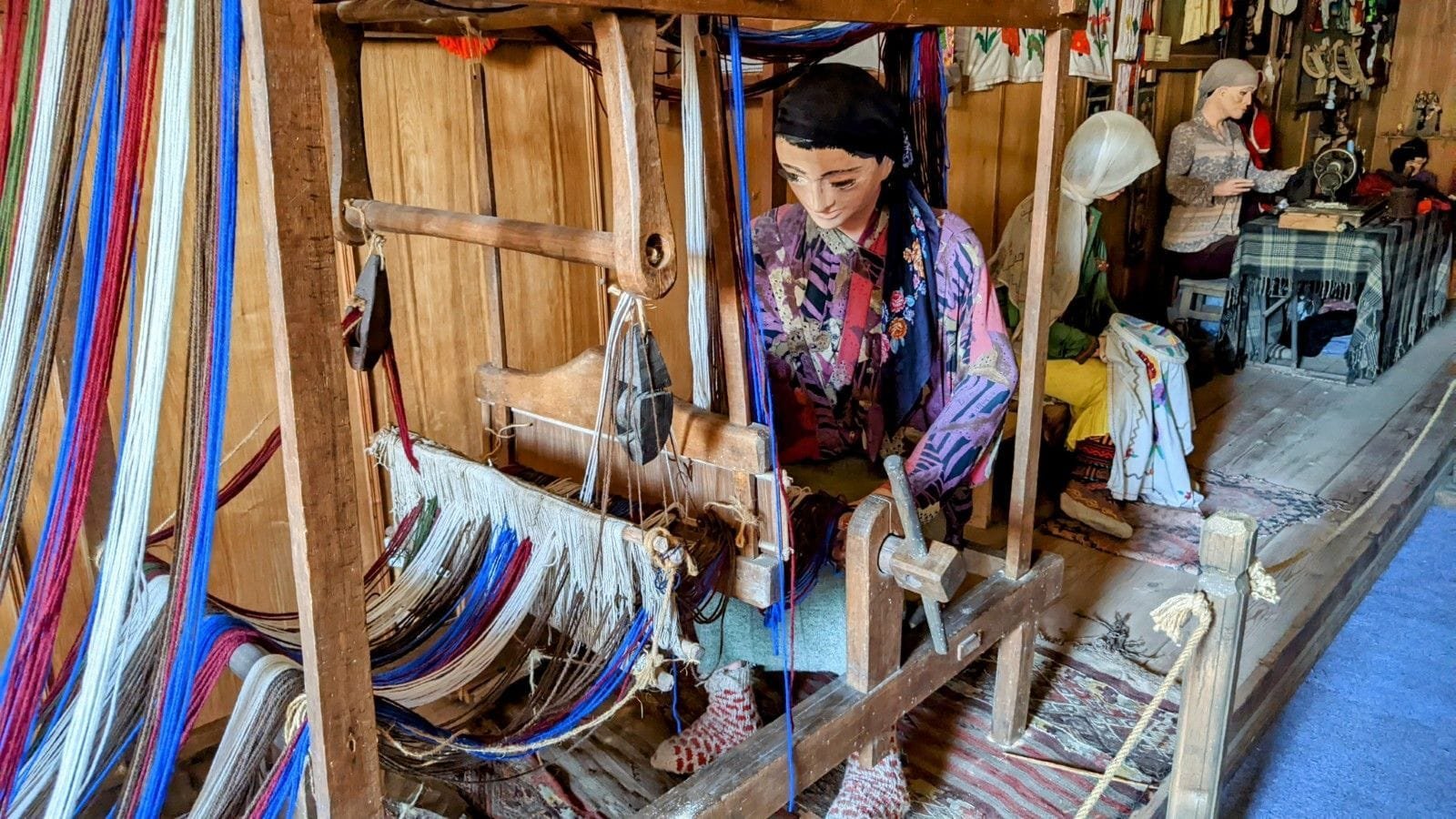 It is not a museum in the usual sense. Borjgalo was made by hand by Kemal Turmanidze, a sculptor from the area, and opened in 2016 on the outskirts of Batumi, near the airport: models and near life-size wooden figures showing how people lived in the villages of Adjara a hundred years ago, the house, the mill, the forge, the wedding, the beekeeper. Many pieces move or make sounds, and Kemal himself or his family are usually around.
It works very well with children and with anyone who is tired of churches by now. An hour. It sits on a residential street with nothing around it, so do not expect a café.
Gonio Fortress
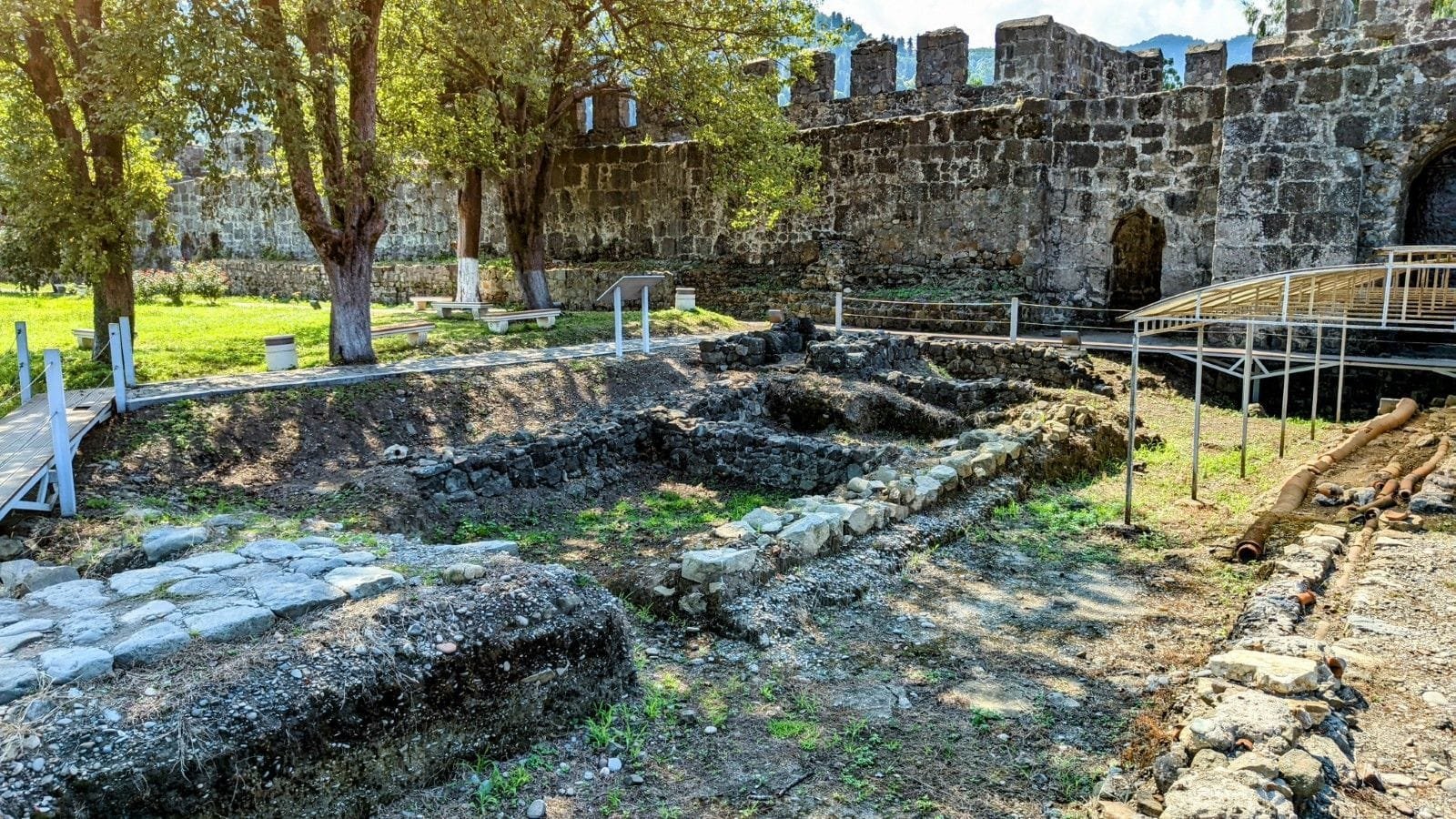 Fifteen kilometres south of Batumi, almost on the Turkish border, the Romans built the camp of Apsaros in the 1st century to watch the coast, and the walls are still standing: a rectangle with a perimeter of almost 900 metres and 18 of its original 22 towers. Later the Byzantines and the Ottomans used it, and the Ottomans called it Gonio. Inside there is a small museum with the finds from the digs, the remains of Roman baths and a grave that tradition attributes to the apostle Matthias, the one who replaced Judas. No proof, but people come to pray.
It is a 45-minute stop, flat and without shade; in summer bring a cap. If there is time, Gonio beach is next door and is one of the quietest in the area.
Day 13 - Batumi - Ubisa - Borjomi-Akhaltsikhe
Total road of the day - 324KM 5 Hours and 43 Minutes In the morning, Ubisa Monastery; in the afternoon, Borjomi. 324 km in all. Road 203KM 3 Hours and 23 MinutesUbisa Monastery
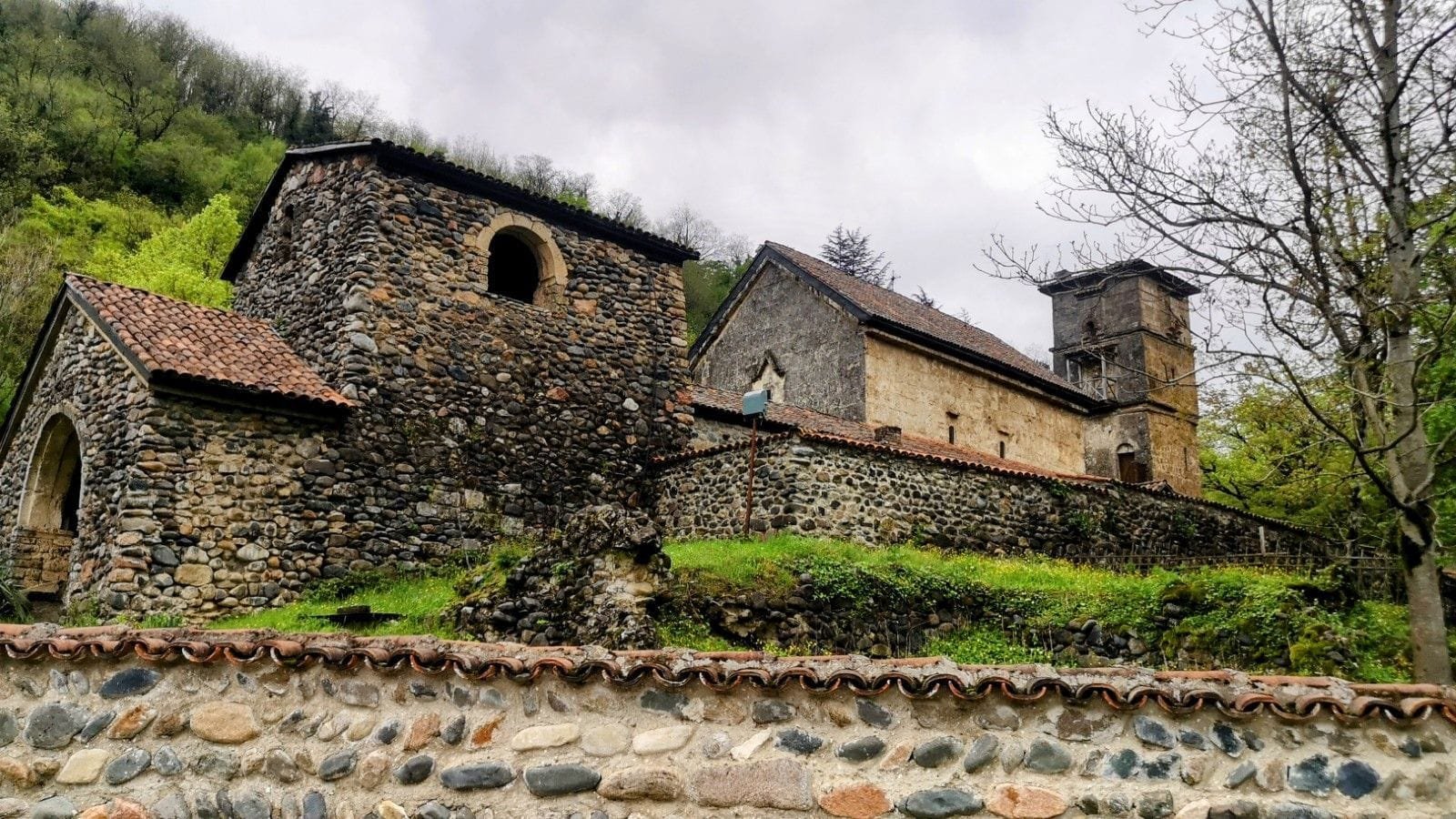 From the motorway between Tbilisi and Kutaisi you would never guess that one of the best sets of frescoes in Georgia is right there. Ubisa is a small 9th-century monastery founded by Grigol Khandzteli, the great organiser of Georgian monastic life, and inside it is painted from top to bottom by a 14th-century master called Damiane, in a style that came from Constantinople: elongated faces, muted colours, a lot of expression. You have to let your eyes get used to the gloom.
Half an hour. It is a stop that breaks the three hours of motorway nicely, and next door there are roadside places to eat, the khachapuri-and-lemonade kind.
Borjomi
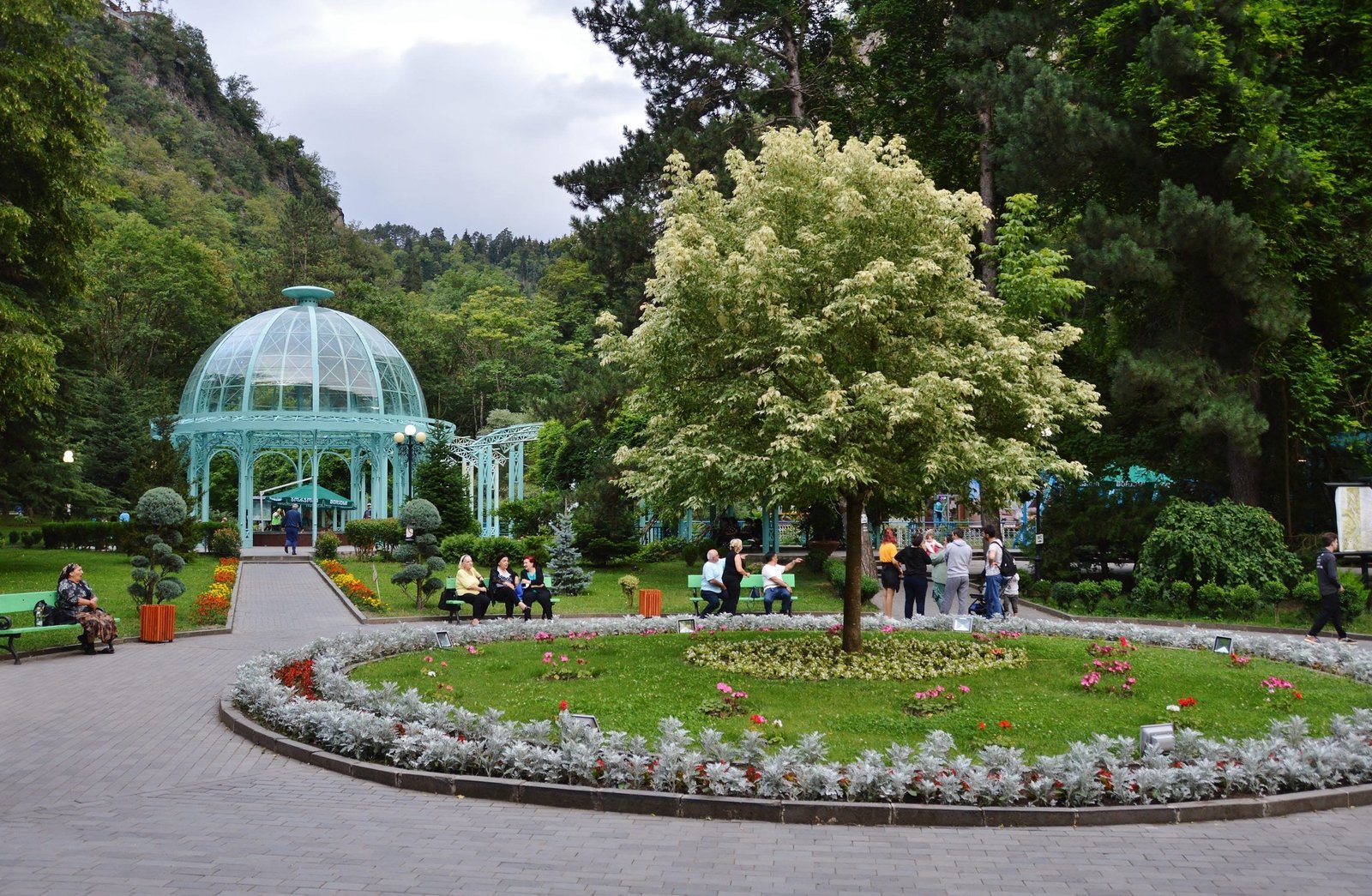 The fizzy water drunk all over the former Soviet Union comes from here, and it has been bottled since 1890. Borjomi was the spa of the Romanovs, who built themselves a palace at Likani, at the entrance to the town, and what remains of that is the air of a spa town from another age: wooden villas, a central park of 1850 with the spring where anyone can fill a bottle (it comes out warm, salty and fizzy, and not everyone likes it) and a cable car up to a viewpoint with a Ferris wheel.
An hour for the park and the spring; for walkers, the 3 km path to the sulphur pools in the forest starts at the far end of the park. The town is the gateway to the Borjomi-Kharagauli national park and the last stop with shops and banks before Vardzia.
Day 14 - Akhaltsikhe - Vardzia - Khertvisi - Tbilisi
Total road of the day - 287KM 5 Hours and 30 Minutes Vardzia and Khertvisi Fortress. It is 287 km; we leave early so as not to rush. Road 60KM 1 Hours and 20 MinutesVardzia
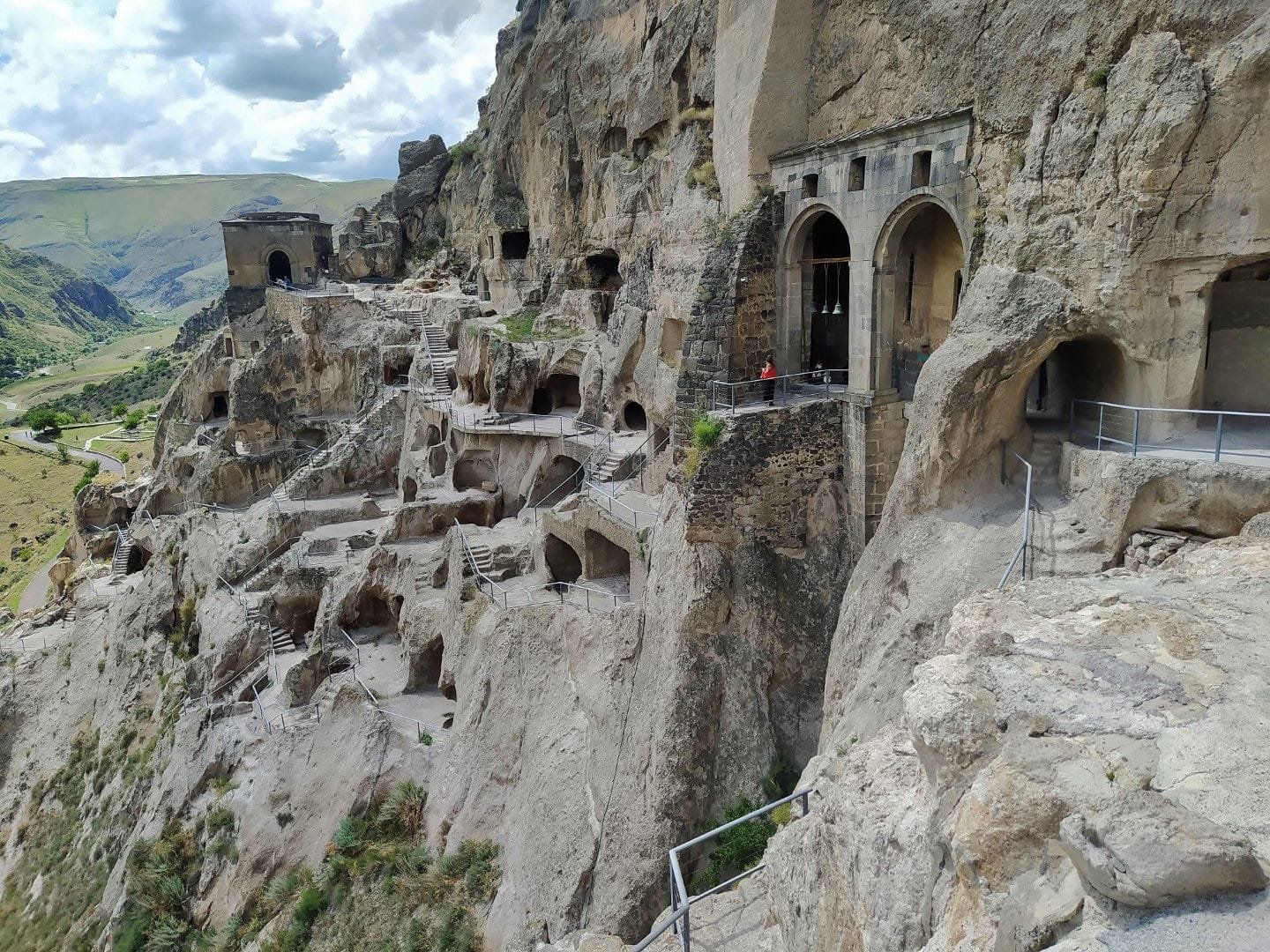 A rock face 500 metres long riddled with 19 storeys of openings: that is Vardzia, the cave monastery Queen Tamar finished around 1185 in the Mtkvari valley, 60 km from Akhaltsikhe. It once had thousands of rooms; the earthquake of 1283 took the whole front off and exposed what you see today, some 600 rooms including cells, wine cellars, refectories, a pharmacy and irrigation channels cut into the stone. In the Church of the Dormition are the 12th-century frescoes, with one of the few portraits of Tamar made in her lifetime.
It is still a monastery, with a few monks, so some areas are closed. The visit takes an hour and a half, almost all of it on stairs and through narrow tunnels: not for bad knees or claustrophobia, although there are routes that avoid the passages. In summer the sun hits the wall from mid-morning; we go as early as we can.
Khertvisi Fortress
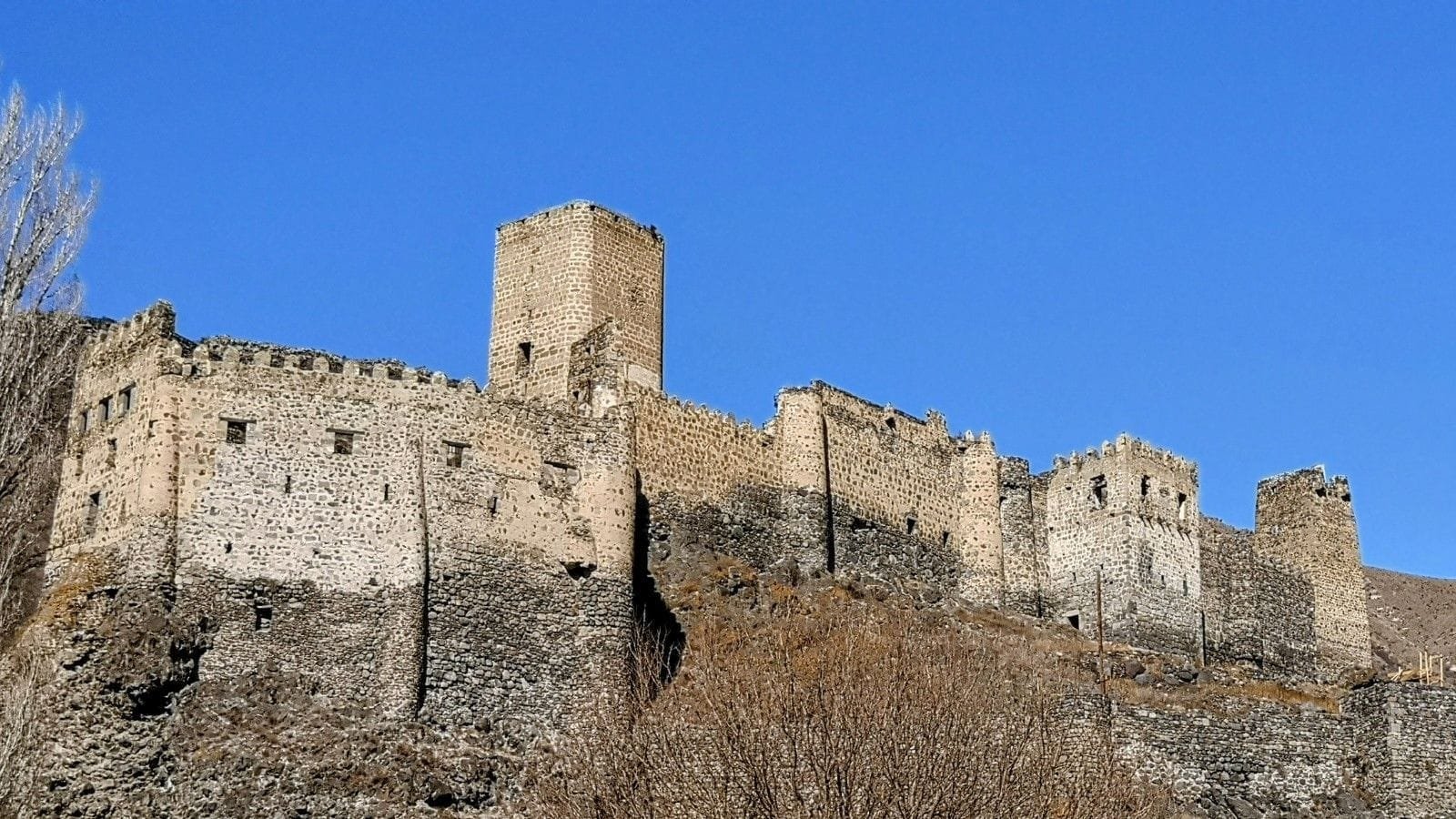 Where the Paravani river meets the Mtkvari, on the way to Vardzia, a castle perches on a crag that has been there in one form or another since the 2nd century BC; legend says Alexander the Great destroyed it, though he never came this way. The walls and towers you see date from the 10th to the 14th century, with a church of 985 inside. Khertvisi watched the road between Georgia and the Ottoman Empire, and changed hands as often as the region did.
A 20-minute stop, with a short, steep climb to the towers for anyone who wants the view of the valley. There is a secret tunnel that went down to the river, closed today.
Day 15 - Tbilisi - Panorámica
Total road of the day - 45KM 1 Hours and 40 Minutes Today the car is only the means: 45 km to reach the Holy Trinity Cathedral (Sameba), Mtatsminda and the Chronicle of Georgia. Road 3KM 0 Hours and 10 MinutesHoly Trinity Cathedral (Sameba)
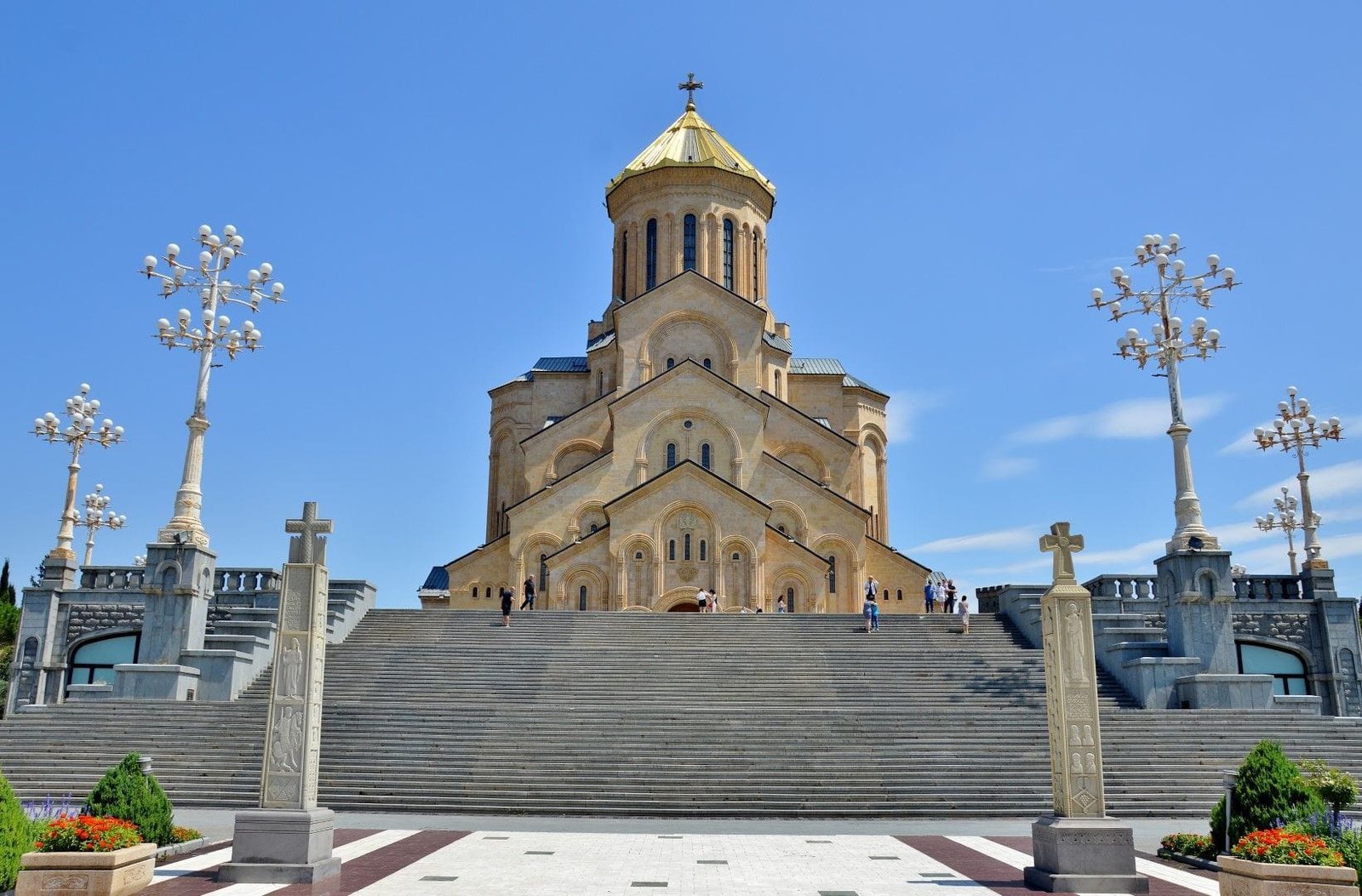 You can see it from anywhere in Tbilisi: the golden dome of Sameba, on Elia hill, 87 metres high and the largest Orthodox church in Georgia. It was built between 1995 and 2004, in the country's hardest years, with donations, to mark 1,500 years of the Georgian Church, and some see it as a symbol of resurrection and others as excess. Inside it is enormous and rather empty; the best part is the gardens and the view of the old town from the esplanade.
Forty minutes. Headscarves for women and covered shoulders; there are skirts to borrow at the door. The Patriarch's liturgy on Sunday mornings fills the church.
Road 5KM 0 Hours and 15 Minutes
Mtatsminda
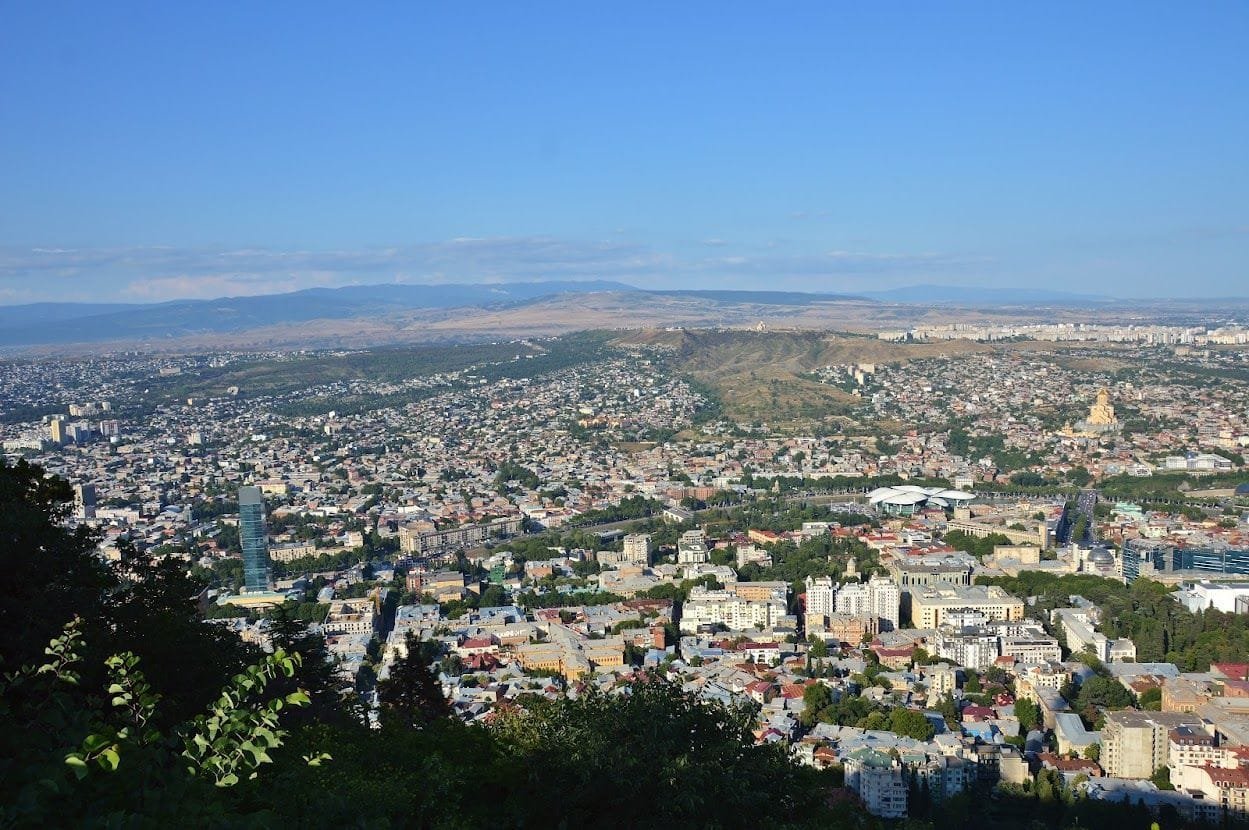 The "holy mountain" is the one that closes Tbilisi to the west, with the TV tower on top. You go up by the funicular of 1905, renovated in 2012, and halfway up is what is really worth it: the church of St David and the Pantheon, the cemetery of the country's writers and artists, with, in the first tomb, Griboyedov, the Russian playwright married to a Georgian princess and murdered in Tehran in 1829. At the top, at 770 metres, an old-fashioned amusement park, a restaurant with a terrace and the view of the whole city.
An hour, or the whole afternoon if there are children. At night, with the lights, it is a different place.
Road 22KM 0 Hours and 45 Minutes
The Chronicle of Georgia
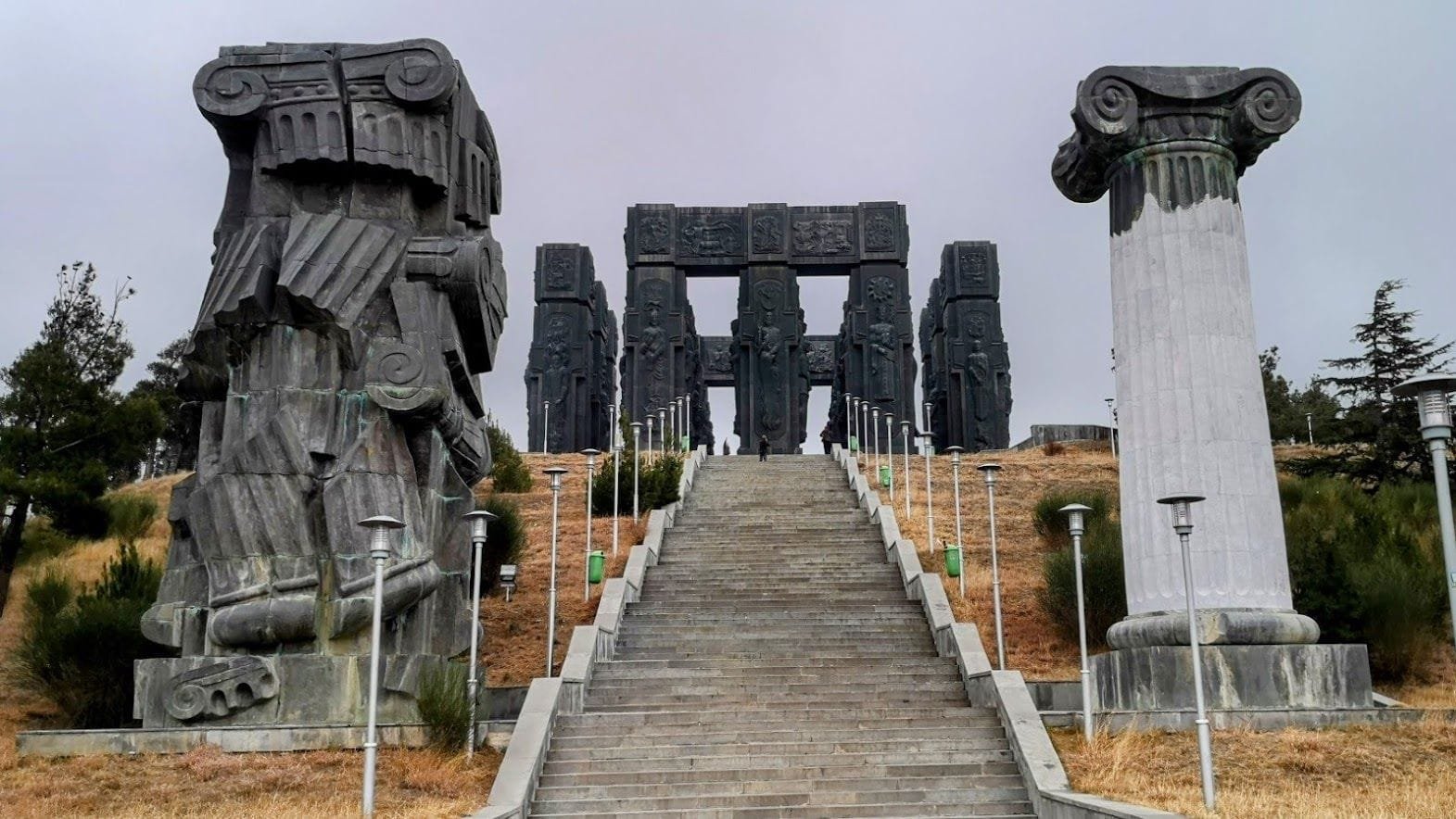 Sixteen bronze and copper pillars more than 30 metres high planted on a hill above the Tbilisi reservoir, the city's "sea". Zurab Tsereteli began them in 1985, the sculptor of the giant monuments he later made in Moscow, and they were never finished; maybe that is why people like them. On the lower part of each pillar, kings and queens of Georgia; above, scenes from the life of Christ; next to them, a chapel and a huge cross. People call it the Georgian Stonehenge, and there is something to it.
Half an hour, free, and best at sunset, when the metal turns orange and you see the whole city. It is 20 minutes from the centre.
Road 15KM 0 Hours and 30 Minutes
Sixteen bronze and copper pillars more than 30 metres high planted on a hill above the Tbilisi reservoir, the city's "sea". Zurab Tsereteli began them in 1985, the sculptor of the giant monuments he later made in Moscow, and they were never finished; maybe that is why people like them. On the lower part of each pillar, kings and queens of Georgia; above, scenes from the life of Christ; next to them, a chapel and a huge cross. People call it the Georgian Stonehenge, and there is something to it.
Half an hour, free, and best at sunset, when the metal turns orange and you see the whole city. It is 20 minutes from the centre.


