Saperavi is the red grape of Kakheti, and the first two days revolve around it: the David Gareja lavra in the steppe, Bodbe, the night inside the walls of Sighnaghi, and the Alazani valley from monastery to monastery, Nekresi, Gremi and Alaverdi, with a night in Telavi and dinner in a house with its own wine if you feel like it. The third day crosses to the Military Highway, about 280 km, up to the Gergeti church under Kazbek, and sleeps in Gudauri at 2,200 metres.
The last two are the west: Uplistsikhe and the Stalin museum in Gori on the way to Kutaisi, 335 km, and Bagrati, Gelati and Prometheus Cave before the 230 km back to Tbilisi. Four hotels in five days and not a single stretch repeated. In September and October it coincides with the grape harvest; between November and April, with the chance that the Jvari pass closes and the order changes.
Itinerary
Day 1 - Tbilisi - Davit Gareji - Bodbe - Sighnaghi
Total road of the day - 202KM 4 Hours and 35 Minutes Today the car is only the means: 202 km to reach David Gareja and Bodbe Monastery. Road 100KM 2 Hours and 15 MinutesDavid Gareja
 A monastery cut into the rock in the middle of a semi-desert of striped hills, 70 km from Tbilisi and right on the border with Azerbaijan. It was founded in the 6th century by David Garejeli, one of the thirteen Assyrian fathers, and for centuries it was the great centre of Georgian painting: the cells and chapels on the ridge, in the part called Udabno, keep frescoes from the 10th to the 13th century. In 1615 Shah Abbas killed six hundred monks here on an Easter night; the Lavra, the lower monastery, has had monks again since the 1990s.
An important warning: the ridge with the frescoes is disputed border territory and since 2019 access has been closed or restricted depending on the moment; what can be visited with certainty is the Lavra. The last stretch of road is dirt, in summer it is very hot and there are vipers: closed shoes and water. Two and a half hours including the drive there and back.
Bodbe Monastery
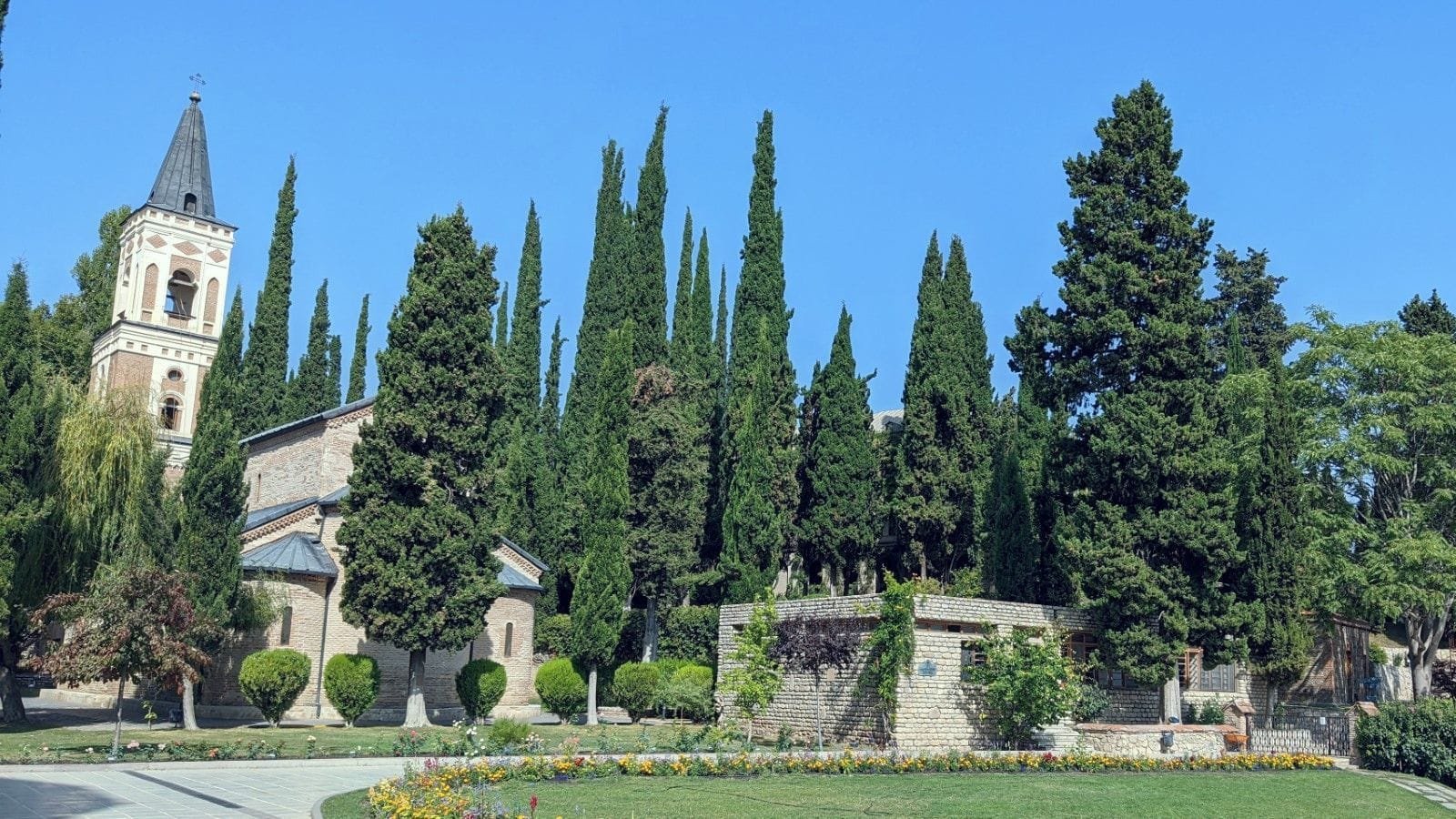 St Nino is buried here, the woman who converted Georgia to Christianity in the 4th century, and that is why Bodbe is the most visited place of pilgrimage in the country. It is a convent 2 km from Sighnaghi, among cypresses, with a small 9th-century church much rebuilt in the 17th, where the tomb is, and a huge new cathedral finished a few years ago that we like less. From the garden you see the whole Alazani valley.
What sets Bodbe apart is St Nino's spring: a source 3 km downhill along a path, where pilgrims get into the icy water in a white shirt. It is 30 minutes down and 45 up, and there are minibuses for the way back. With a normal group we stay at the top; if someone wants to go down, we arrange it. Headscarf and covered shoulders.
Day 2 - Sighnaghi - Nekresi - Gremi - Alaverdi - Telavi
Total road of the day - 140KM 2 Hours and 25 Minutes 140 km and 2 hours 25 minutes in the car in all. Today's stops: Nekresi Monastery, Gremi and Alaverdi Monastery. Road 70KM 1 Hours and 13 MinutesNekresi Monastery
 You leave the car at the bottom and go up in the monastery minibus, a kilometre and a half of slope through the forest, because Nekresi hangs on the hillside above the Alazani valley, near Kvareli. At the top there is a tiny 4th-century basilica, one of the oldest churches still standing in Georgia, and the complex founded in the 6th century by Abibos of Nekresi, another of the thirteen Assyrian fathers: church, tower, refectory and a marani, the cellar with buried wine jars. The views are among the best in Kakheti.
Forty-five minutes. The minibus goes up every few minutes; anyone who prefers to walk should allow half an hour of climb.
Road 14KM 0 Hours and 15 Minutes
Gremi
 For 150 years, from 1466 to 1616, Gremi was the capital of the kingdom of Kakheti, a Silk Road city with markets, baths and caravanserais. In 1616 Shah Abbas of Persia razed it and deported its people, and it never rose again; the capital moved to Telavi. What remains stands on top of a rock: the Church of the Archangels of 1565, with frescoes, and the royal tower residence, now a small museum with a good model of what the city looked like.
Half an hour. You drive up to the top, and from the tower you see the Alazani valley and, in the distance, the wall of the Caucasus.
Road 35KM 0 Hours and 32 Minutes
Alaverdi Monastery
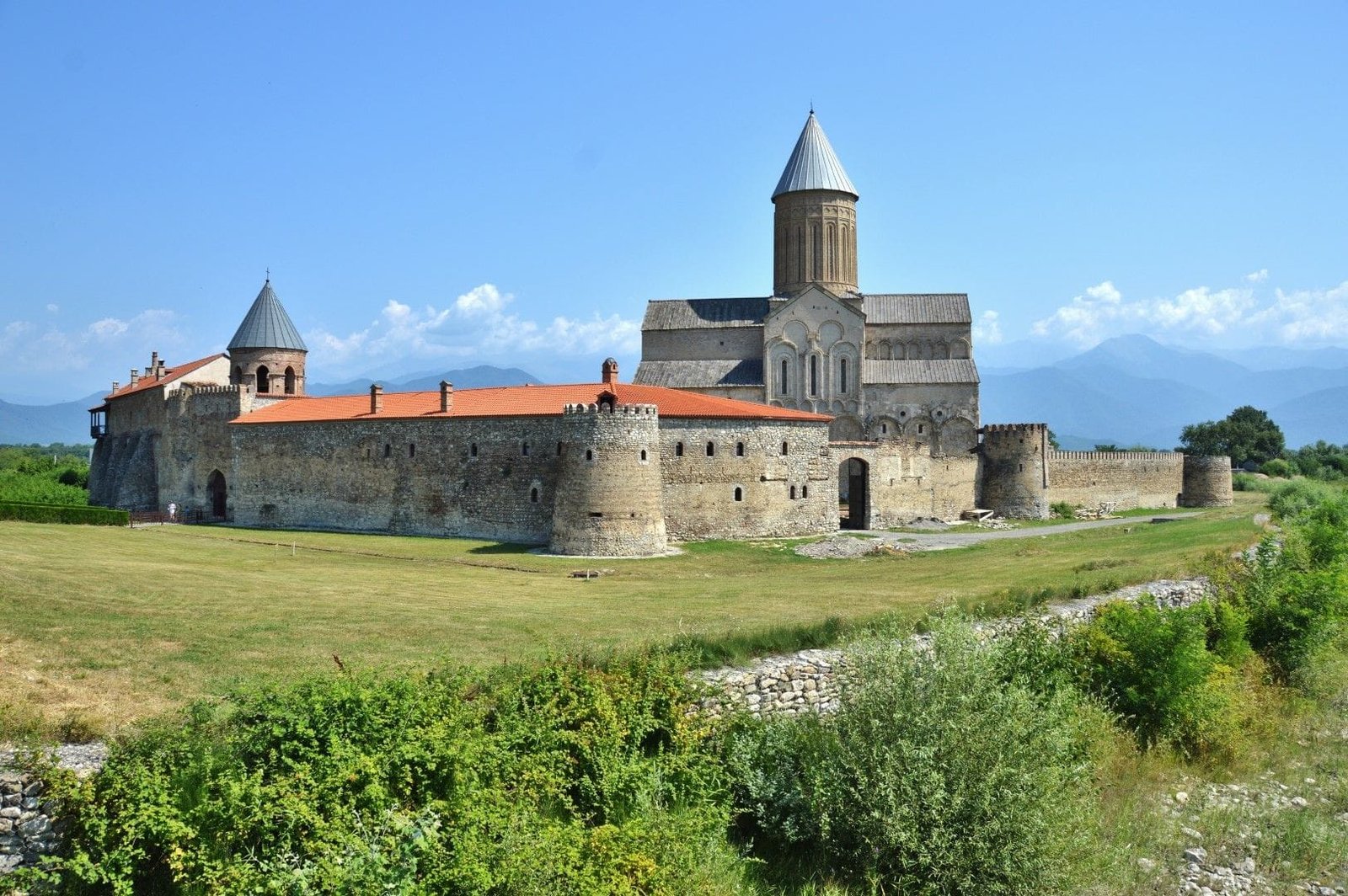 Alaverdi cathedral can be seen from far off across the Kakheti plain: 50 metres high, the second tallest church in Georgia and for almost a thousand years the tallest. Kvirike III built it in the early 11th century on the monastery founded in the 6th by Joseph of Alaverdi, one of the thirteen Assyrian fathers who brought monastic life to the country. Inside there are frescoes from the 11th to the 15th century, and photographing them is forbidden.
The monks have made wine in qvevri since 2006, reviving a tradition that goes back centuries here, and in September the Alaverdoba festival brings half the region together in the meadow outside. A 40-minute visit; headscarves for women and, if you are in shorts, there are skirts to borrow at the door.
Road 21KM 0 Hours and 25 Minutes
Day 3 - Telavi - Ananuri - Gergeti - Gudauri
Road 198KM 4 Hours and 35 Minutes About 280 km: from Telavi to the Military Highway via Tianeti, a stop at Ananuri and the climb to Gergeti. Lunch on the way.Ananuri
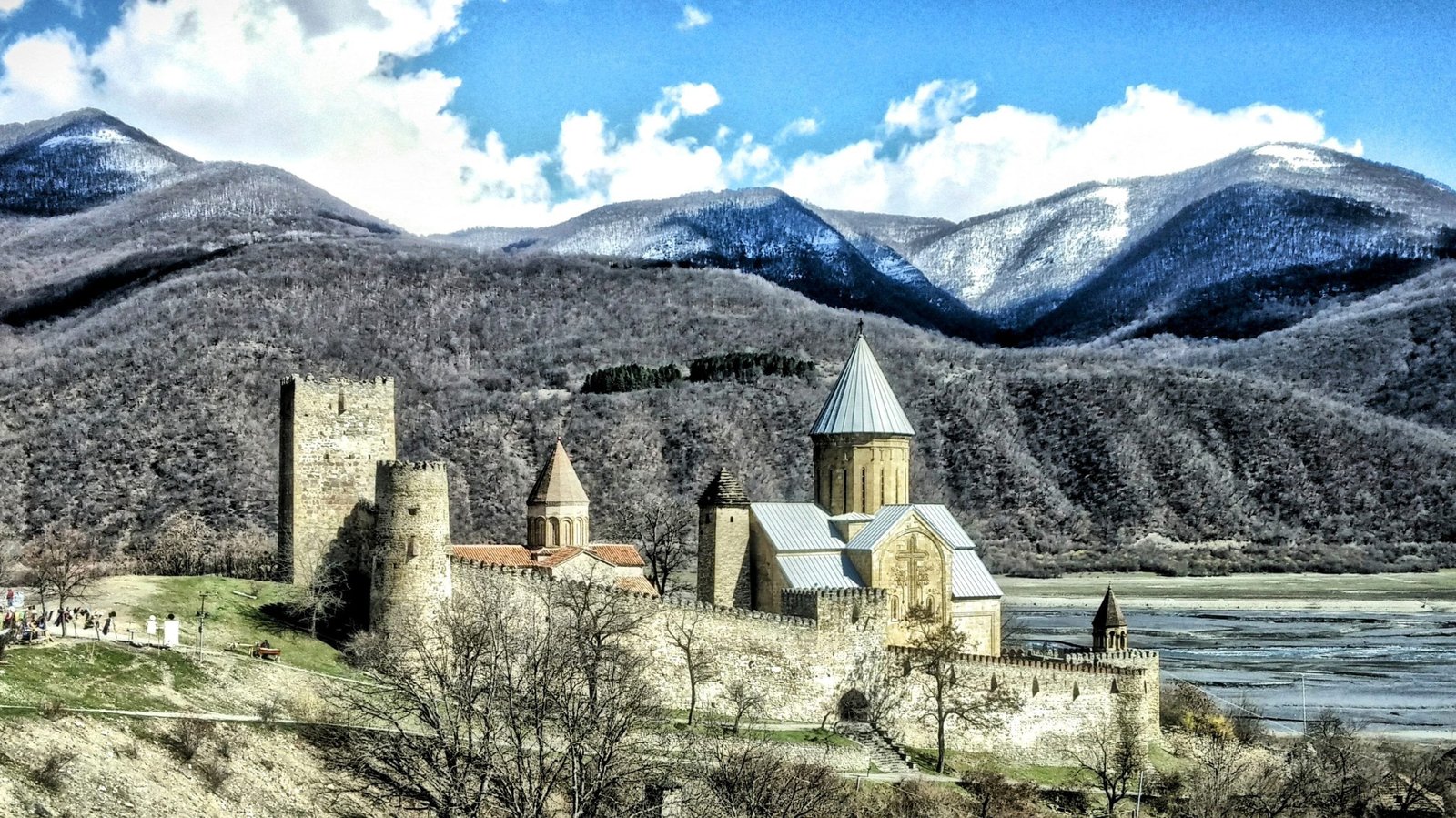 The first serious stop on the Georgian Military Highway, 66 km from Tbilisi: a fortress with two churches inside, planted above the Zhinvali reservoir. The turquoise water in all the photos dates from 1986, when the dam flooded the valley; until then the castle watched over a crossroads. It was the seat of the Eristavis of Aragvi, the dukes of the area, from the 13th to the 18th century, and the story you will be told is that of 1739, when a rival lord took it and put the whole family to the sword.
The best of Ananuri is the façade of the big church, the Assumption, from 1689: a huge cross carved with vines, lions and angels. You can climb the tower, up a narrow staircase. Half an hour, and at the exit there are stalls selling churchkhela, the strings of walnuts dipped in grape must, which are good here and not expensive. In autumn the reservoir drops and the postcard loses its colour.
Gergeti Trinity Church
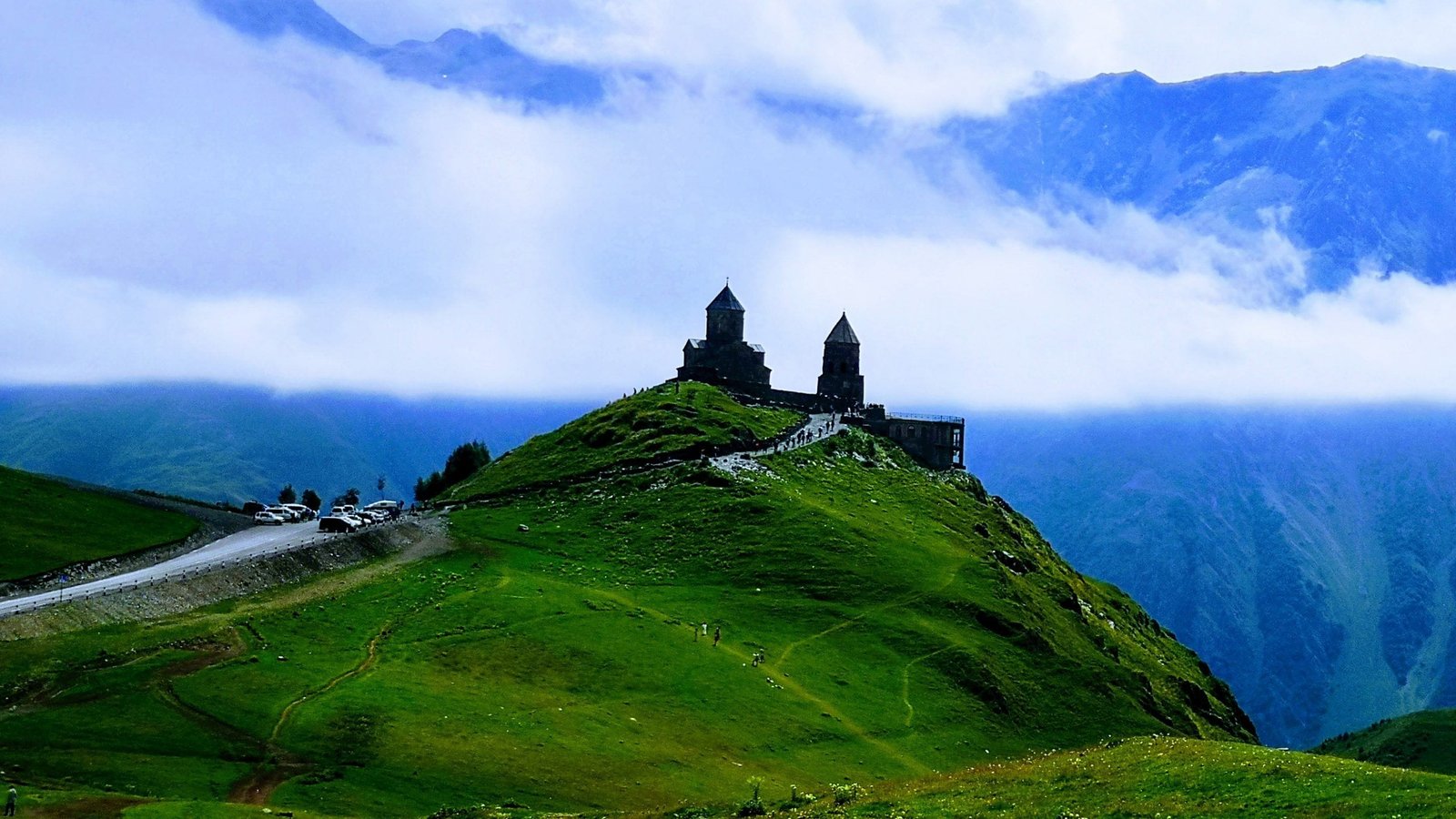 The photo of Georgia: a 14th-century church alone on a ridge at 2,170 metres, with Kazbek (5,047 m) behind it if the clouds allow. You get there from Stepantsminda, the village below, by a 6 km road that was paved only a few years ago; before that you needed a 4x4 or an hour and a half on foot, and in winter you still need the 4x4. For centuries the treasures of Mtskheta were hidden up here when invaders came, because of how remote it is.
Two warnings. First: Kazbek is usually covered from midday on, so we go up as early as we can and, if it is hidden, we wait a while, because sometimes it clears. Second: it is cold and windy at the top all year; in the middle of August we have seen people in T-shirts shivering. Headscarf to go in and covered shoulders; there are wrap skirts to borrow at the door for anyone in shorts. An hour for the drive up, the church and the photos.
Day 4 - Gudauri - Uplistsikhe - Gori - Kutaisi
Total road of the day - 335KM 5 Hours and 20 Minutes First Uplistsikhe, then Stalin Museum. 335 km, 5 hours 20 minutes; lunch on the way. Road 167KM 2 Hours and 35 MinutesUplistsikhe
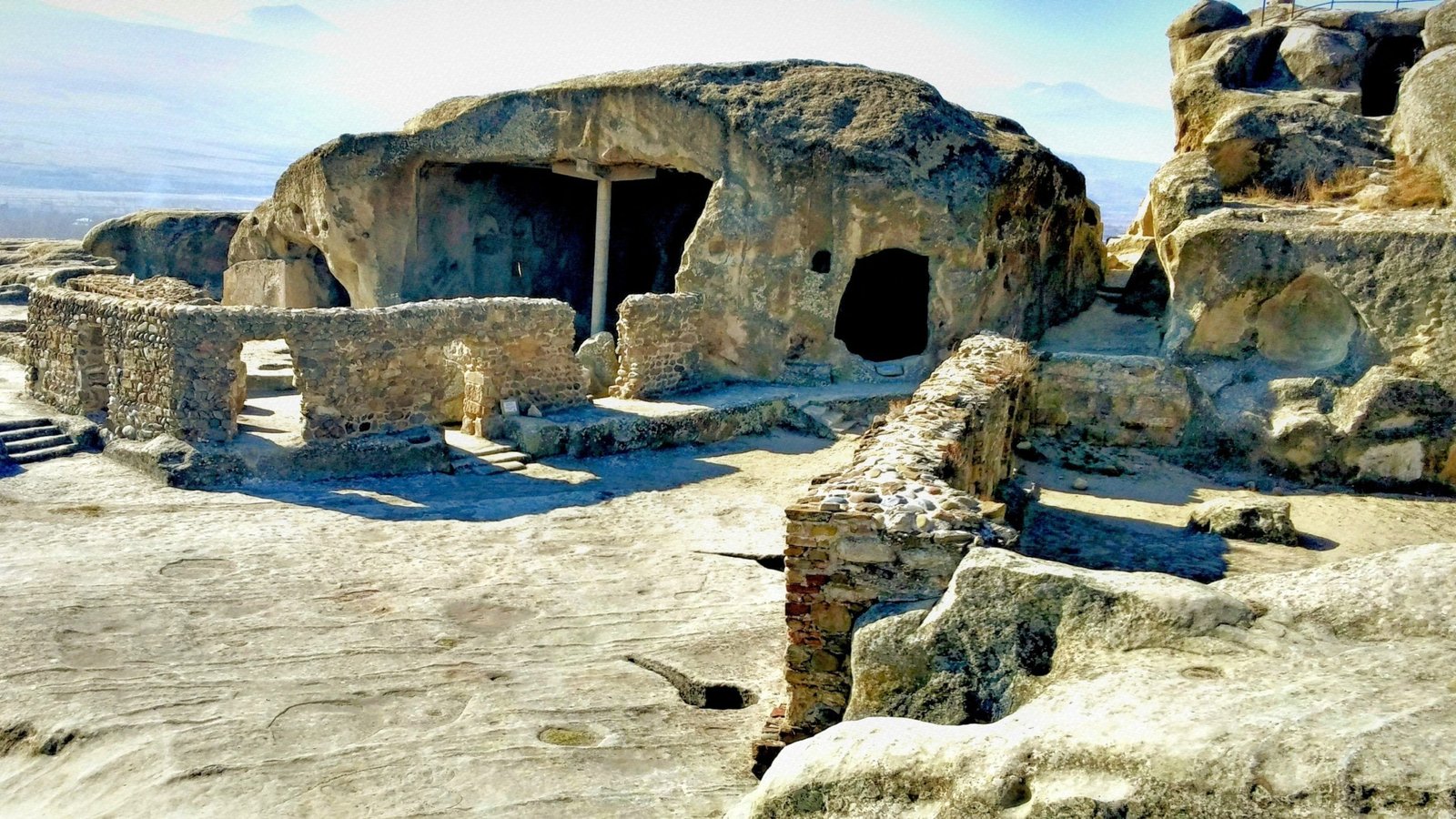 A whole town cut into the rock, 10 km from Gori above the Mtkvari river. People lived at Uplistsikhe from the first millennium BC until the Middle Ages: first a pagan centre, then a Christian one, and always a stop for the caravans. What remains are carved streets, a hall with a ceiling imitating wooden beams (they call it "Queen Tamar's hall"), wine presses, a tunnel down to the river and a 10th-century brick church planted on top of it all. The Mongols emptied it in the 13th century and it never recovered.
One piece of advice: in summer there is no shade and the rock burns, so go early or late in the day, and wear shoes with grip, because the polished stone is slippery. An hour is enough to climb up to the church and look down at the river.
Stalin Museum
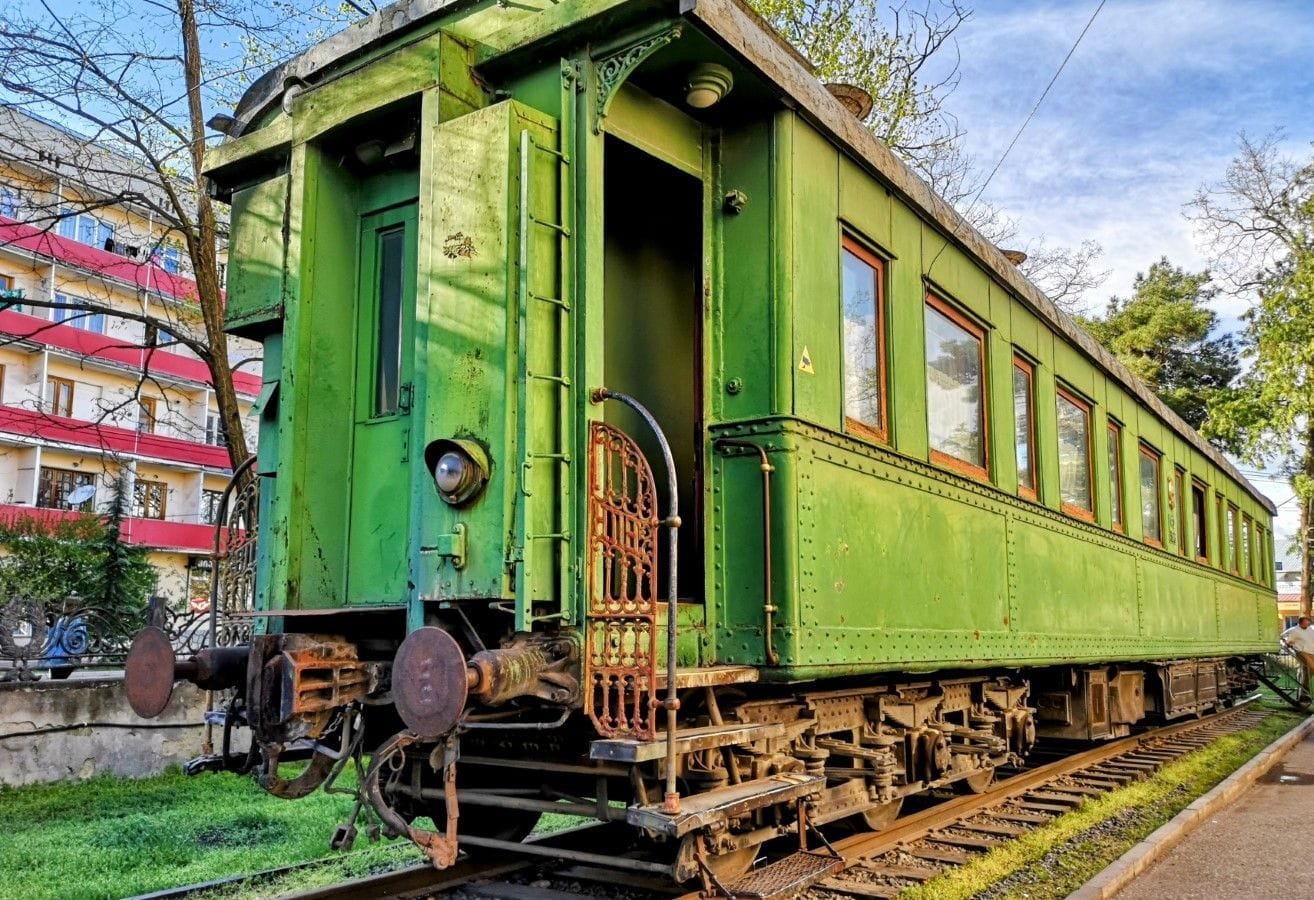 Gori is the town where Iosif Dzhugashvili was born in 1878, and the museum dedicated to him in 1957 is still open much as it was then. It is three things: the little wooden house where he was born, protected under a pavilion of columns; the main building, a Soviet-style palace with his personal belongings, photographs, gifts from heads of state and one of the bronze copies of his death mask; and the armoured railway carriage in which he travelled to Yalta and Potsdam, because he did not like flying.
Let us be plain: the museum tells the kind version. There is a small room on the repression, added late, and little else. We tell the rest on the road, and the one-hour visit usually ends in a long conversation in the car.
Day 5 - Kutaisi - Bagrati - Gelati - Promete - Tbilisi
Total road of the day - 523KM 5 Hours and 0 Minutes We leave after breakfast. On the programme, Bagrati Cathedral, Gelati Academy, Prometheus Cave and Kutaisi market; 523 km in short stretches. Road 2KM 0 Hours and 9 MinutesBagrati Cathedral
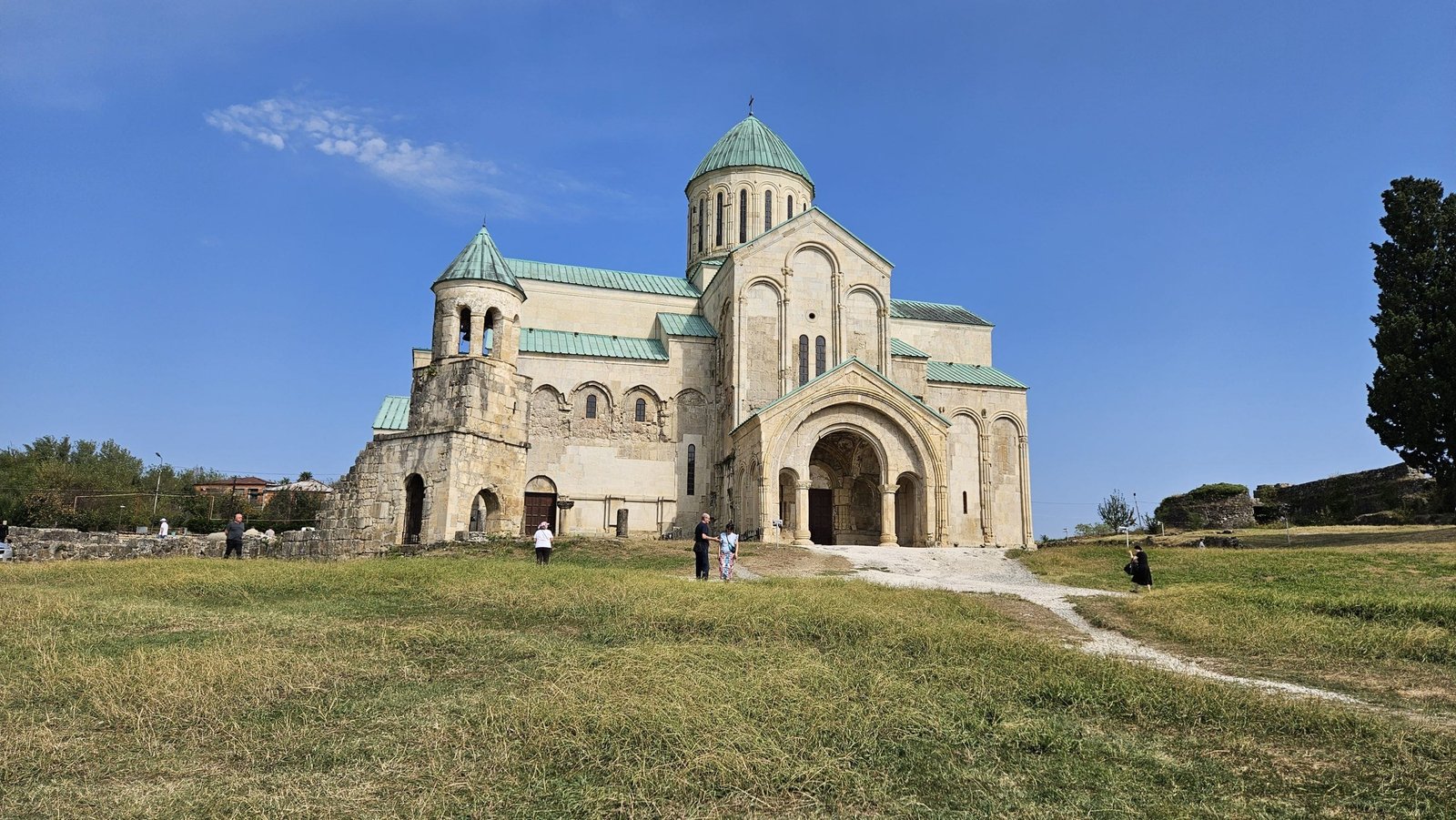 You can see it from half of Kutaisi, so you arrive already knowing what it is. What you cannot see from below is the controversy: Bagrat III consecrated it in 1003, the Ottomans blew it up in 1692 and it stood in ruins for three centuries until, in 2012, it was rebuilt in full, with concrete and a glass lift stuck to one side. UNESCO took it off the list in 2017 for that. Some people see it as a botch job. We still like it, mostly for the site: the terrace has the best view of the city and the Rioni valley. Ten minutes uphill from the centre and a full circuit of the building to find the original carvings left on the walls.
Road 10KM 0 Hours and 20 Minutes
Gelati Academy
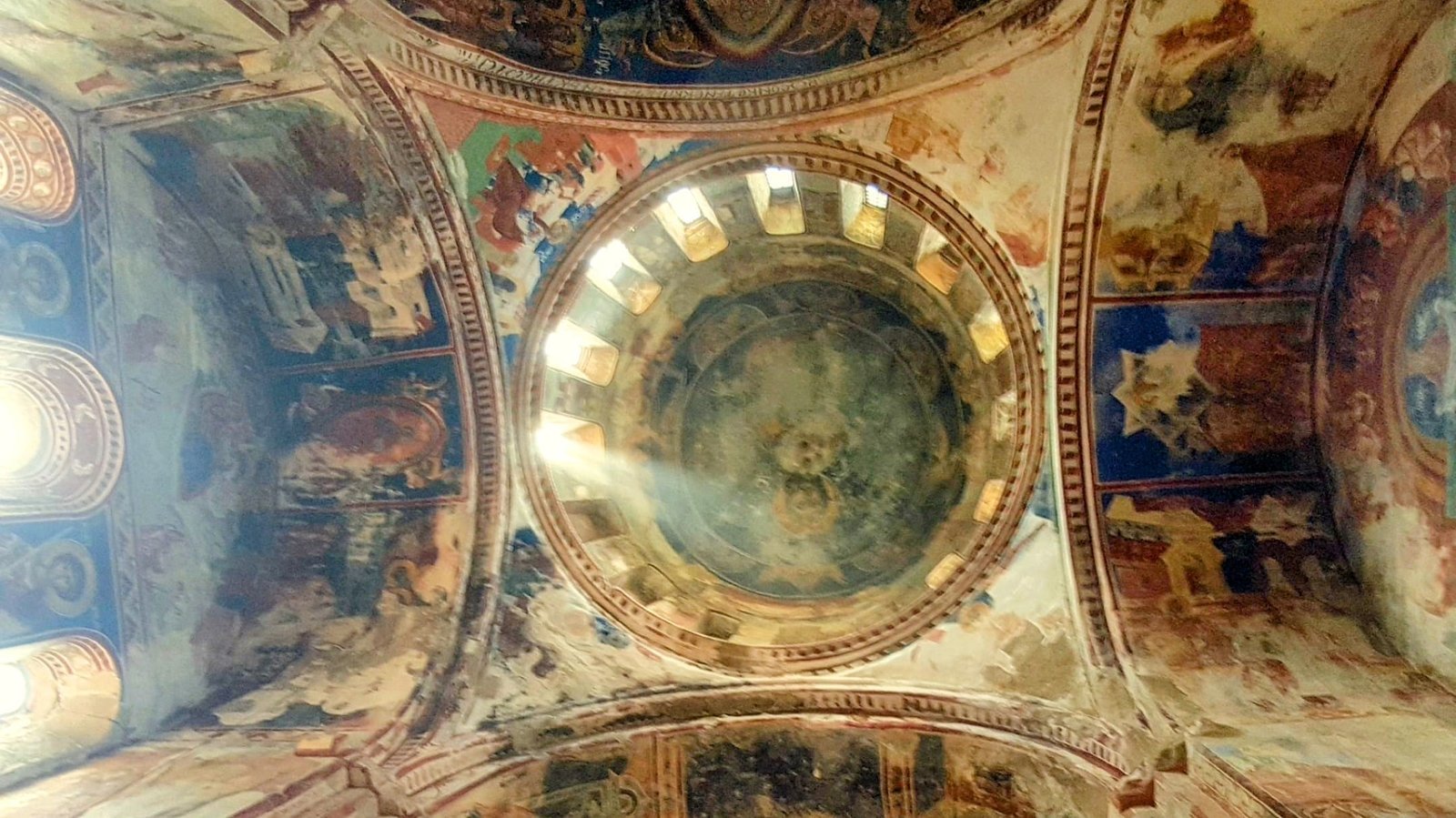 David the Builder asked to be buried in the floor of the south gate, so that everyone who came in would step on his grave. He has been there since 1125, and the monastery of Gelati, which he founded in 1106, was for centuries the great school of the kingdom: in its academy Greek philosophy was translated and copied at a time when Georgia looked to Byzantium. A UNESCO site since 1994 and, unlike Bagrati, still on the list. As soon as you enter the main church, the 12th-century mosaic of the Virgin in the apse; then frescoes on every wall, from different centuries. We give it almost an hour between the church, the tomb, the academy (a long hall with stone benches) and the church of St George. The domes were under repair for years because of leaks [VERIFICAR: estado de la restauración del tejado en 2026].
Road 29KM 0 Hours and 41 Minutes
Prometheus Cave
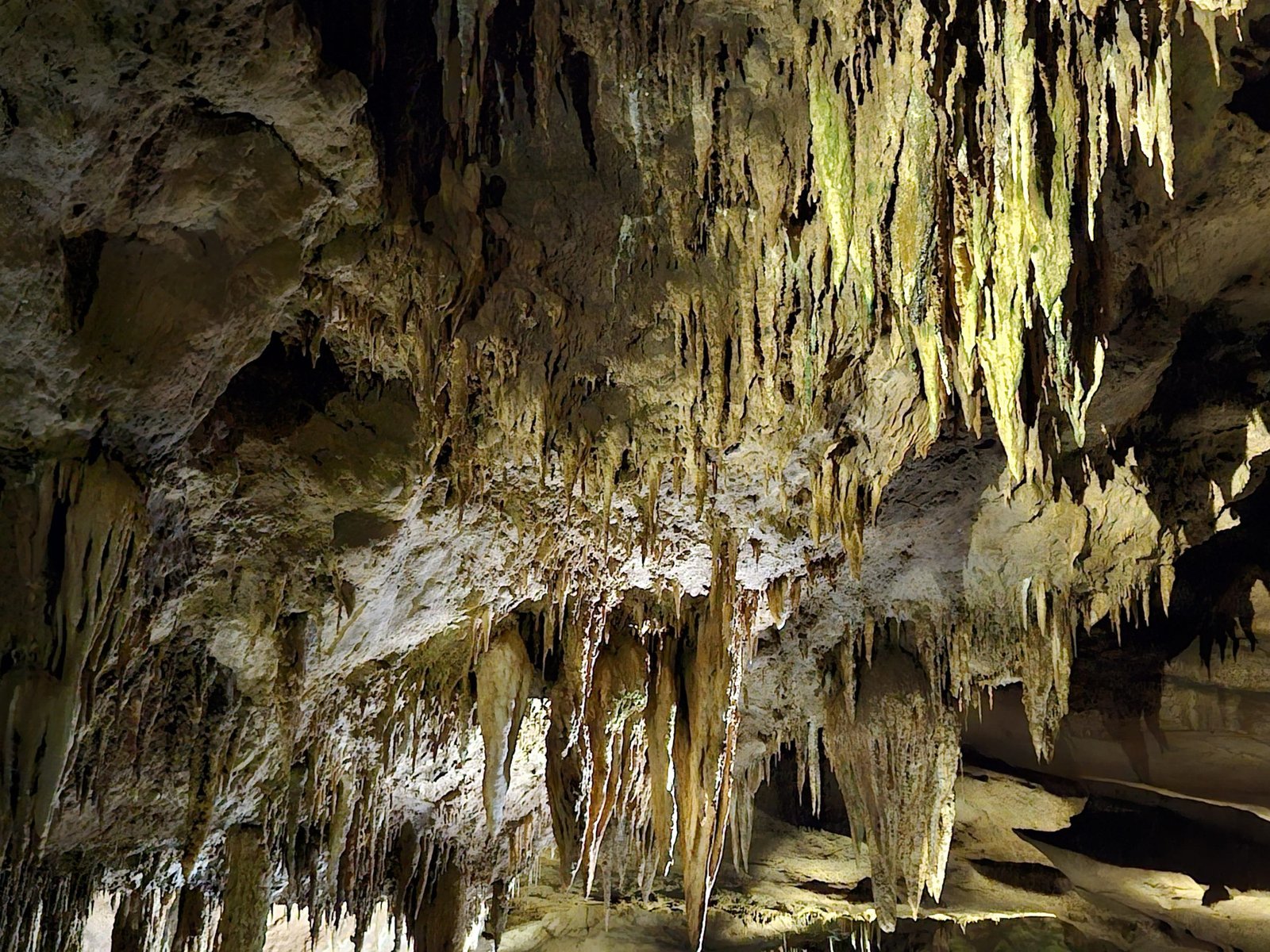 Inside it is 14 degrees all year round, which is welcome in summer and in winter too: bring a jacket. Prometheus Cave is at Kumistavi, 20 km from Kutaisi, next to the spa town of Tskaltubo. It was discovered in 1984 and opened to the public in 2011 with a route of just over a kilometre through six of its 22 halls, on concrete walkways with coloured lights that some people like and others do not. The name is for the titan who, according to the Greeks, ended up chained in these mountains; Georgians call him Amirani.
The visit takes a good hour. At the end, if the underground river has enough water, you can leave by boat along a stretch of about 300 metres, paid separately; when the level drops, you walk out. The floor is damp and slippery, so closed shoes are better.
Road 252KM 3 Hours and 50 Minutes
Kutaisi market
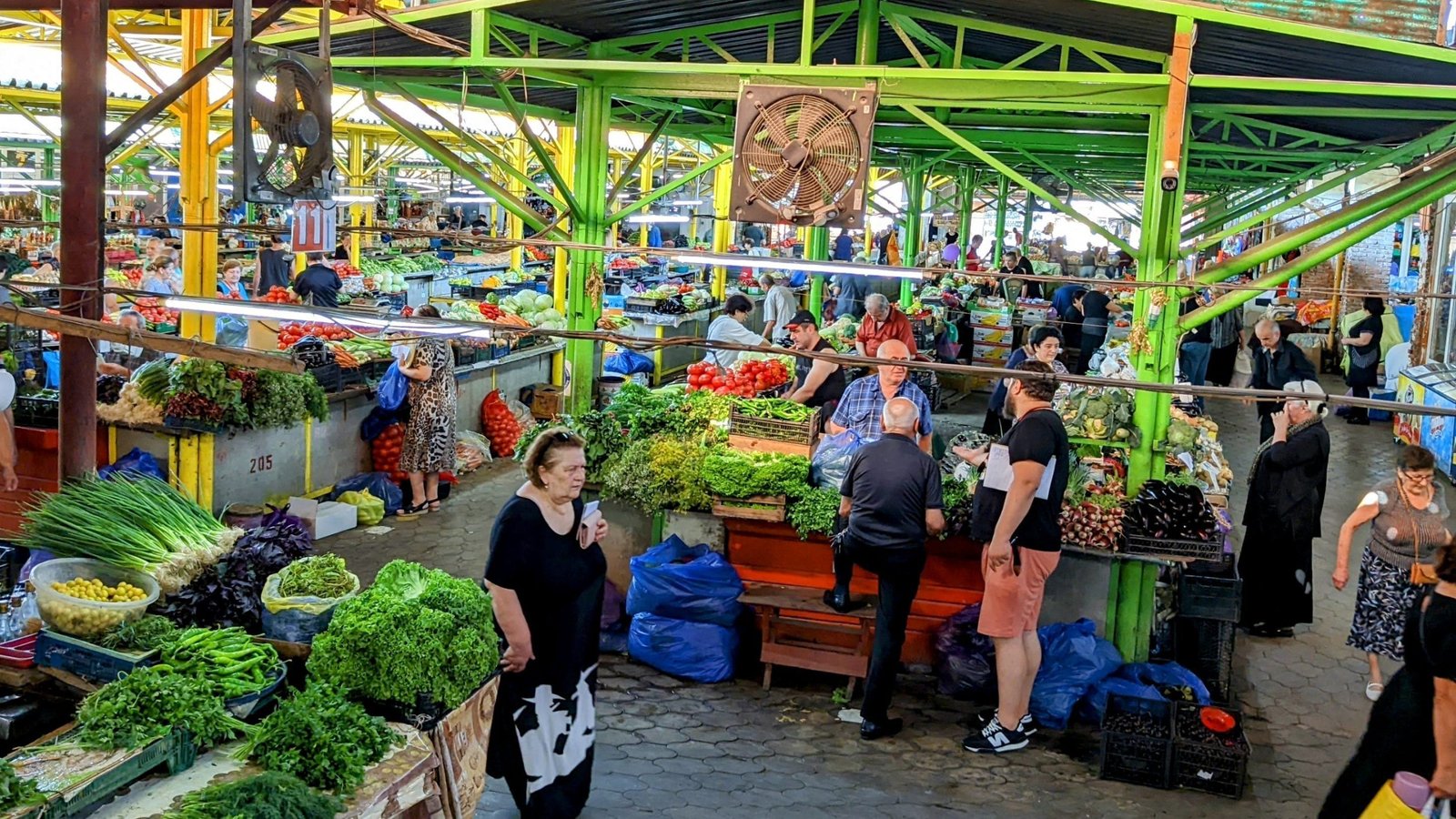 The central market of Kutaisi, two steps from the White Bridge, is the best lesson in Georgian cooking you can get in 45 minutes. What to try: sulguni and fresh Imeretian cheese, the one that goes inside khachapuri; ajika, the local chilli paste; khmeli-suneli, the spice mix that goes into half the country's recipes; tklapi, sheets of dried fruit that look like leather; churchkhela hanging everywhere and, in autumn, persimmons and pomegranates by the heap.
The women on the stalls give you things to taste and do not mind if you do not buy. Prices are real ones, not tourist ones, so if you want to take spices or honey home, this is the place. Outside, on the square, the Colchis fountain, with gilded copies of the 3,000-year-old gold pieces found around here.
Road 230KM 3 Hours and 26 Minutes


