From the Caspian to the Black Sea in twelve days, by way of Kazbek and Vardzia. Azerbaijan is four days: Baku with Absheron and Gobustan, and the crossing via Shamakhi to Sheki. The fifth passes the Lagodekhi border with a stop at the Khareba tunnel and reaches Tbilisi, where there are three nights: the capital on foot and the Military Highway up to the Gergeti church under Kazbek. Then the south, with Mtskheta, Gori, Uplistsikhe and Borjomi to Akhaltsikhe, and Vardzia, Khertvisi and Rabati before sleeping in Kutaisi.
The last two full days go to the sea: Bagrati, Gelati and Prometheus Cave on the way to Batumi, and the coast with Gonio fortress and the Borjgalo museum. Transfer to Batumi airport on the twelfth. Six hotels, two guides and four days of over five hours in the car. Between November and April the Jvari pass can close and the Kazbegi day is swapped at no cost.
Itinerary
Day 1 - Transfer from Baku airport to Baku
Total road of the day - 20KM 0 Hours and 30 Minutes Arrival. Someone from the team is waiting at the airport with a sign; the rest of the day is yours. Road 20KM 0 Hours and 30 MinutesDay 2 - Baku - Absheron - Baku
Total road of the day - 94KM 2 Hours and 4 Minutes First the Palace of the Shirvanshahs, then Ateshgah, Yanardag, Heydar Aliyev Center and Yashil Bazar. 94 km, 2 hours 4 minutes; lunch on the way. Road 9KM 0 Hours and 25 MinutesPalace of the Shirvanshahs
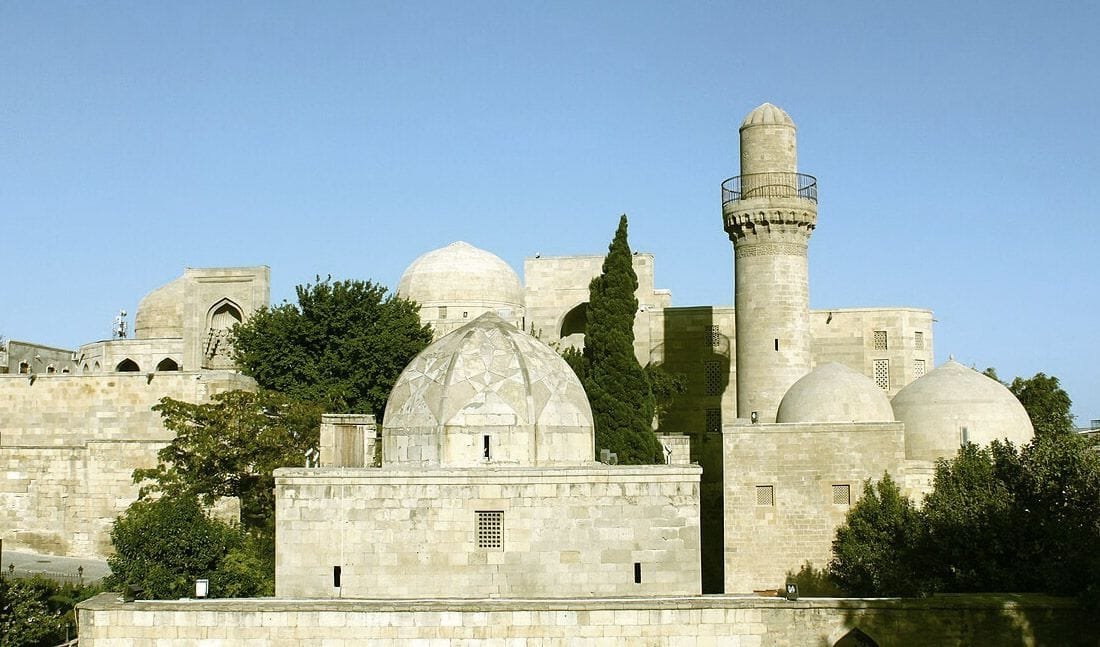 The Shirvanshahs ruled this coast for almost a thousand years, and when in the 15th century they moved from Shamakhi to Baku, fleeing the earthquakes, they built themselves this palace at the top of the old city. It is not a palace of gilded halls: it is a group of pale limestone buildings, plain, with the divan where audiences were held, the mosque, the family mausoleum, the baths and the tomb of Seyid Yahya Bakuvi, the court scholar. The eastern portal, from 1585, is the most elaborate piece. A UNESCO site since 2000, together with the Maiden Tower.
An hour, including the explanation of who was who. It is five minutes on foot from the Maiden Tower, so the two visits run into each other. In the afternoon the stone takes on a golden colour that is worth the photo.
Road 21KM 0 Hours and 30 Minutes
The Shirvanshahs ruled this coast for almost a thousand years, and when in the 15th century they moved from Shamakhi to Baku, fleeing the earthquakes, they built themselves this palace at the top of the old city. It is not a palace of gilded halls: it is a group of pale limestone buildings, plain, with the divan where audiences were held, the mosque, the family mausoleum, the baths and the tomb of Seyid Yahya Bakuvi, the court scholar. The eastern portal, from 1585, is the most elaborate piece. A UNESCO site since 2000, together with the Maiden Tower.
An hour, including the explanation of who was who. It is five minutes on foot from the Maiden Tower, so the two visits run into each other. In the afternoon the stone takes on a golden colour that is worth the photo.
Road 21KM 0 Hours and 30 Minutes
Ateshgah, the fire temple
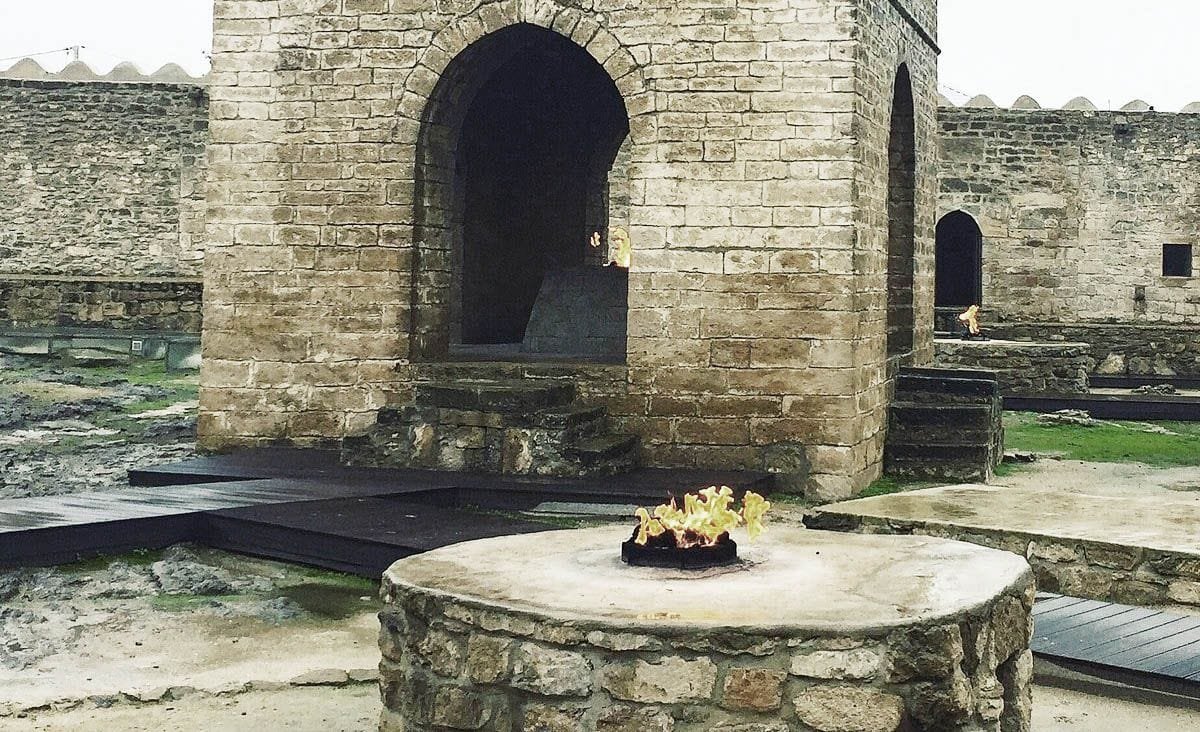 The flames you see on the altar come out of a pipe nowadays; the real ones went out in 1969, when the wells around exhausted the gas that had seeped out of the ground on its own for centuries. That does not make the place less interesting: Ateshgah, at Surakhani, 30 km from Baku, was built in the 17th and 18th centuries by Hindu and Sikh merchants from Multan, in today's Pakistan, who worshipped fire and paid for the cells around the pentagonal courtyard. Inscriptions in Sanskrit and Punjabi remain above the doors. It has been a museum since 1975 and is a candidate for the UNESCO list.
Three quarters of an hour, much of it in the sun. The story that matters here is that of a crossroads: Zoroastrians, Hindus and traders on the India route praying to the same flame in the middle of the caliphate.
Road 35KM 0 Hours and 30 Minutes
The flames you see on the altar come out of a pipe nowadays; the real ones went out in 1969, when the wells around exhausted the gas that had seeped out of the ground on its own for centuries. That does not make the place less interesting: Ateshgah, at Surakhani, 30 km from Baku, was built in the 17th and 18th centuries by Hindu and Sikh merchants from Multan, in today's Pakistan, who worshipped fire and paid for the cells around the pentagonal courtyard. Inscriptions in Sanskrit and Punjabi remain above the doors. It has been a museum since 1975 and is a candidate for the UNESCO list.
Three quarters of an hour, much of it in the sun. The story that matters here is that of a crossroads: Zoroastrians, Hindus and traders on the India route praying to the same flame in the middle of the caliphate.
Road 35KM 0 Hours and 30 Minutes
Yanardag, the burning mountain
A sandstone hillside ten metres wide that has been burning for decades with nobody feeding it. Gas seeps through the rock and, once lit, goes out neither in rain nor in snow; local lore says it was a shepherd with a cigarette in the 1950s. Yanardag means "burning mountain", it is 27 km from Baku and it is the shortest explanation of why Azerbaijan is called the land of fire: Zoroastrians worshipped flames like these long before oil. The flames reach a metre, sometimes more when the wind picks up. It has been a protected reserve since 2007 and in 2019 it got a visitor centre and seating. Half an hour, and if there is a choice, at dusk: in daylight, with the sun out, you can barely see the fire. Road 17KM 0 Hours and 35 MinutesHeydar Aliyev Center
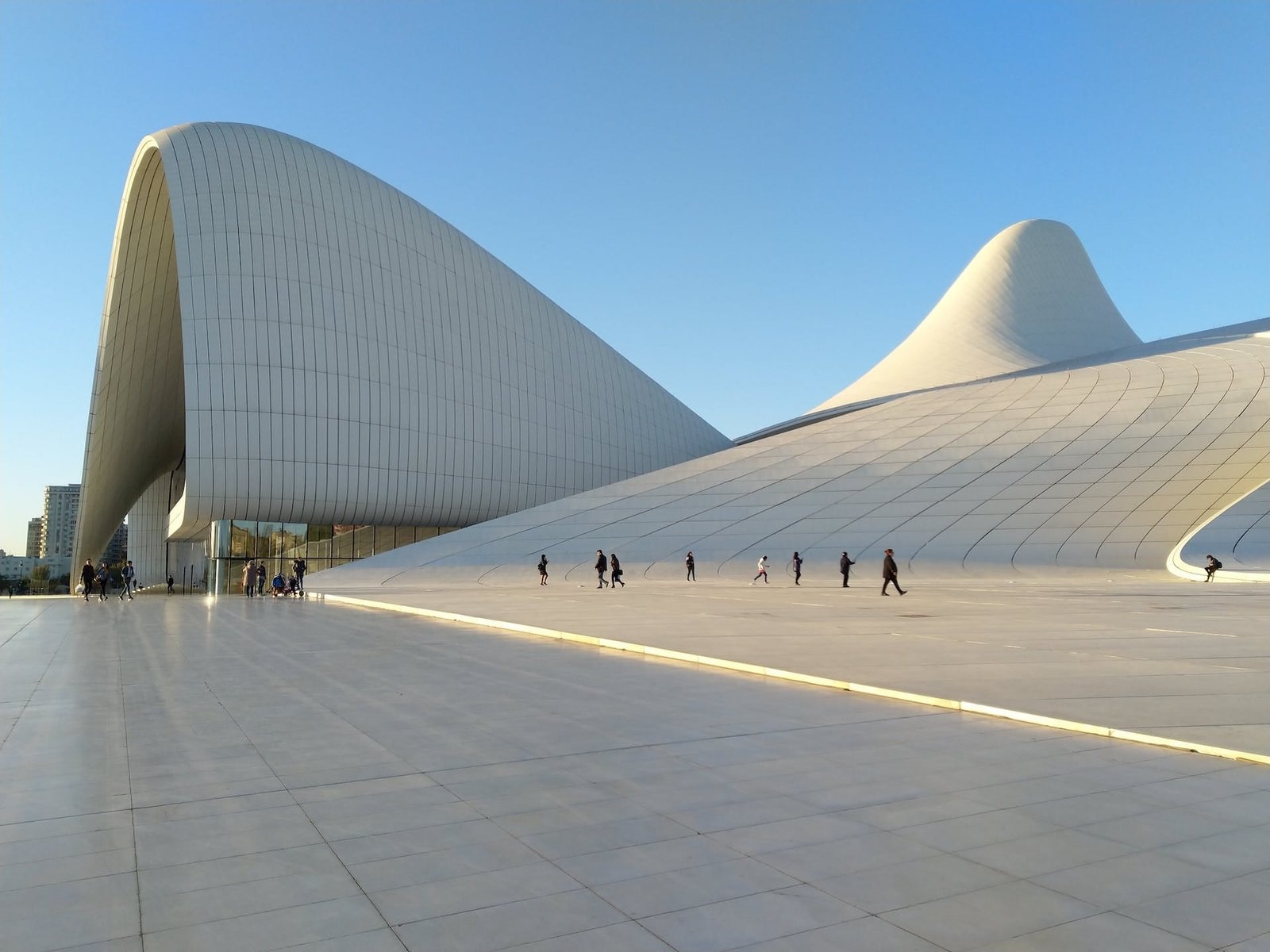 There is not a single straight line in the whole building. Zaha Hadid designed it as a white wave rising out of the ground and it opened in 2012; it is by far the most photographed thing in new Baku. Inside the Heydar Aliyev Center there are changing exhibitions, a collection of classic cars and a museum devoted to the president the building is named after, father of the current one. We say so to make clear what it is: a great piece of architecture and, at the same time, a state monument.
The best part is the timing: at dusk the façade changes colour and people from the neighbourhood come out to stroll on the lawn in front. An hour if you go in, twenty minutes if you only walk around it, which is also worth it.
Road 2KM 0 Hours and 4 Minutes
There is not a single straight line in the whole building. Zaha Hadid designed it as a white wave rising out of the ground and it opened in 2012; it is by far the most photographed thing in new Baku. Inside the Heydar Aliyev Center there are changing exhibitions, a collection of classic cars and a museum devoted to the president the building is named after, father of the current one. We say so to make clear what it is: a great piece of architecture and, at the same time, a state monument.
The best part is the timing: at dusk the façade changes colour and people from the neighbourhood come out to stroll on the lawn in front. An hour if you go in, twenty minutes if you only walk around it, which is also worth it.
Road 2KM 0 Hours and 4 Minutes
Yashil Bazar, the green market
If you want to know what Baku eats, this is the place. The Yashil Bazar is the covered market of old, a Soviet building with no charm outside and full of life inside: pomegranates and persimmons in autumn, mountains of fresh herbs that are eaten here as salad, sheep's cheeses, dried fruit and nuts, Shirvan saffron, pickles of everything that can be pickled and, on some stalls, Caspian caviar at prices worth asking about twice. They will give you things to taste without being asked and expect you to haggle, which is part of the deal. Three quarters of an hour. Bring small notes and, if you buy spices or nuts, ask them to vacuum-seal it, because it travels better that way. Road 10KM 0 Hours and 4 MinutesDay 3 - Baku - Gobustan - Baku
Total road of the day - 204KM 3 Hours and 30 Minutes We leave after breakfast. On the programme, Gobustan, the mud volcanoes and the Carpet Museum; 204 km in short stretches. Road 70KM 1 Hours and 5 MinutesGobustan, the petroglyphs
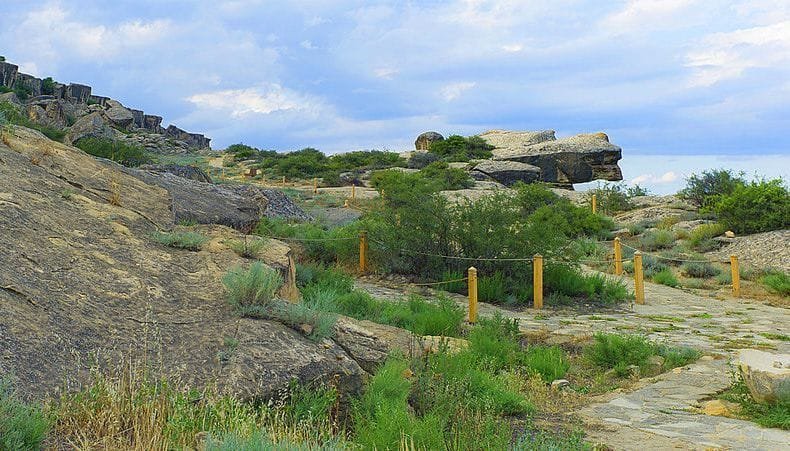 Sixty kilometres south of Baku, in a landscape of stone and wind by the Caspian, there are more than six thousand drawings carved into the rocks: hunters, bulls, reed boats, dancing women. The oldest are around forty thousand years old and the most recent are medieval. Gobustan has been a UNESCO site since 2007 and has a modern museum at the entrance that is worth seeing before you go up, because without it the rocks are just rocks.
Two things we always look for: the Roman inscription of the Twelfth Legion, from the 1st century, the easternmost the Empire ever left, and the "gavaldash", a slab that sounds like a drum when you strike it with a stone. An hour and a half with the museum. Hot in summer and windy almost always.
Road 30KM 0 Hours and 50 Minutes
Sixty kilometres south of Baku, in a landscape of stone and wind by the Caspian, there are more than six thousand drawings carved into the rocks: hunters, bulls, reed boats, dancing women. The oldest are around forty thousand years old and the most recent are medieval. Gobustan has been a UNESCO site since 2007 and has a modern museum at the entrance that is worth seeing before you go up, because without it the rocks are just rocks.
Two things we always look for: the Roman inscription of the Twelfth Legion, from the 1st century, the easternmost the Empire ever left, and the "gavaldash", a slab that sounds like a drum when you strike it with a stone. An hour and a half with the museum. Hot in summer and windy almost always.
Road 30KM 0 Hours and 50 Minutes
Mud volcanoes
Almost half of the mud volcanoes on the planet are in Azerbaijan, around four hundred, and the easiest to see are the Gobustan ones, on a bare hill near the petroglyphs. They are cones of grey mud one or two metres high that burp gas and bubbles every few seconds; the mud comes out cold, you can touch it, and now and then one of them spits. No lava: it is gas from below pushing up for the same reason there is oil here. You get to the top in the locals' old Ladas along a dirt track, and that is half the fun. There is nothing up there: no shade, no toilets, no water. Half an hour. After rain the track turns to mud and sometimes you cannot get up at all. Road 84KM 1 Hours and 25 MinutesCarpet Museum
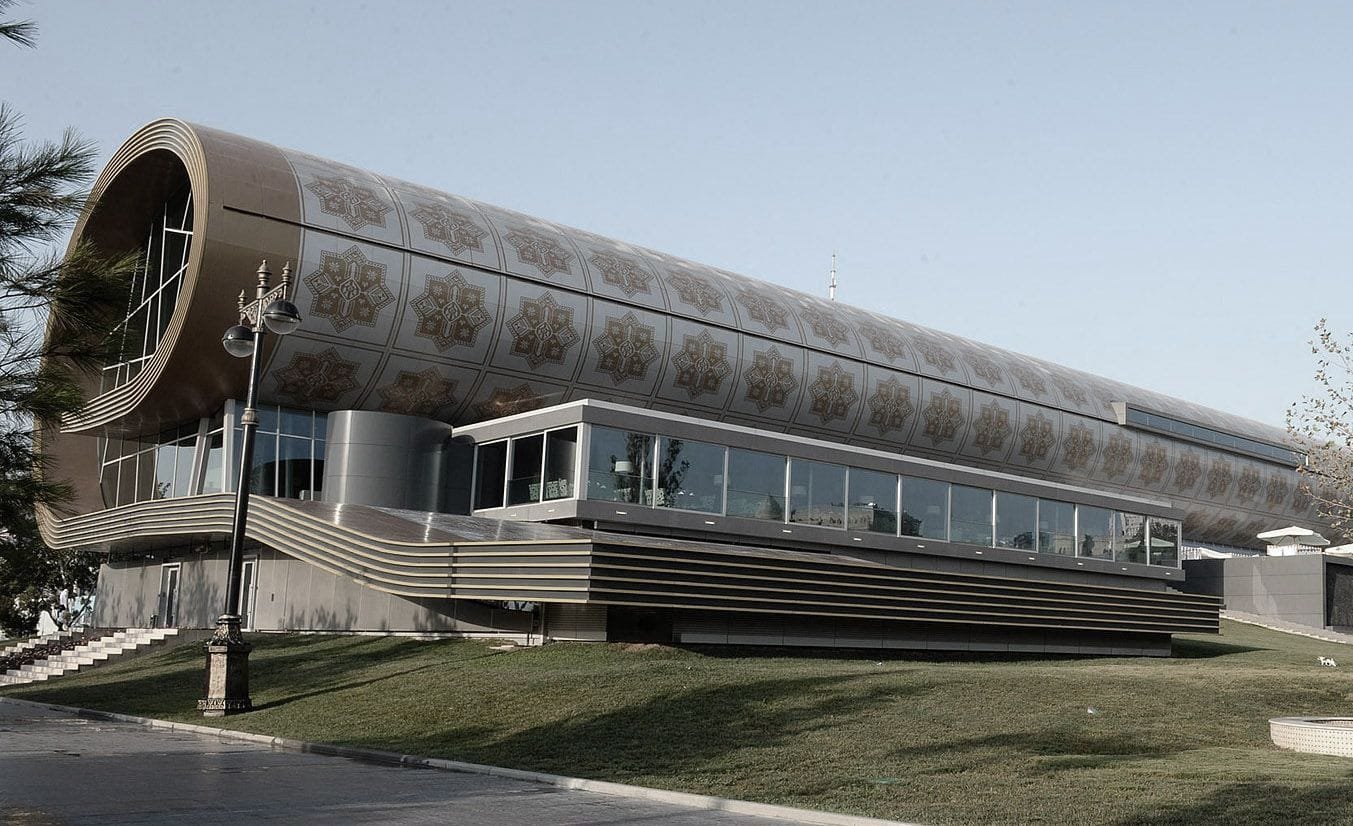 The building is a statement in itself: a rolled-up carpet of glass and metal right on the Baku seafront, opened in 2014. Inside, the Carpet Museum holds more than ten thousand pieces and explains something Azerbaijan takes seriously: carpet weaving has been on UNESCO's intangible heritage list since 2010, and each region (Quba, Shirvan, Karabakh, Tabriz) has its own patterns and colours, which an Azerbaijani can tell apart from ten metres away.
On the ground floor there are usually weavers at work, and that is the part that hooks people: watching the knots go in one by one and understanding why a good carpet costs what it costs. An hour. If you plan to buy a carpet on the trip, come here first so you know what you are looking at.
Road 20KM 0 Hours and 10 Minutes
The building is a statement in itself: a rolled-up carpet of glass and metal right on the Baku seafront, opened in 2014. Inside, the Carpet Museum holds more than ten thousand pieces and explains something Azerbaijan takes seriously: carpet weaving has been on UNESCO's intangible heritage list since 2010, and each region (Quba, Shirvan, Karabakh, Tabriz) has its own patterns and colours, which an Azerbaijani can tell apart from ten metres away.
On the ground floor there are usually weavers at work, and that is the part that hooks people: watching the knots go in one by one and understanding why a good carpet costs what it costs. An hour. If you plan to buy a carpet on the trip, come here first so you know what you are looking at.
Road 20KM 0 Hours and 10 Minutes
Day 4 - Baku - Shamaki - Sheki
Total road of the day - 347KM 5 Hours and 27 Minutes Diri Baba Mausoleum, Yeddi Gumbez, the Palace of the Sheki Khans and the Albanian church of Kish. It is 347 km; we leave early so as not to rush. Road 90KM 1 Hours and 20 MinutesDiri Baba Mausoleum
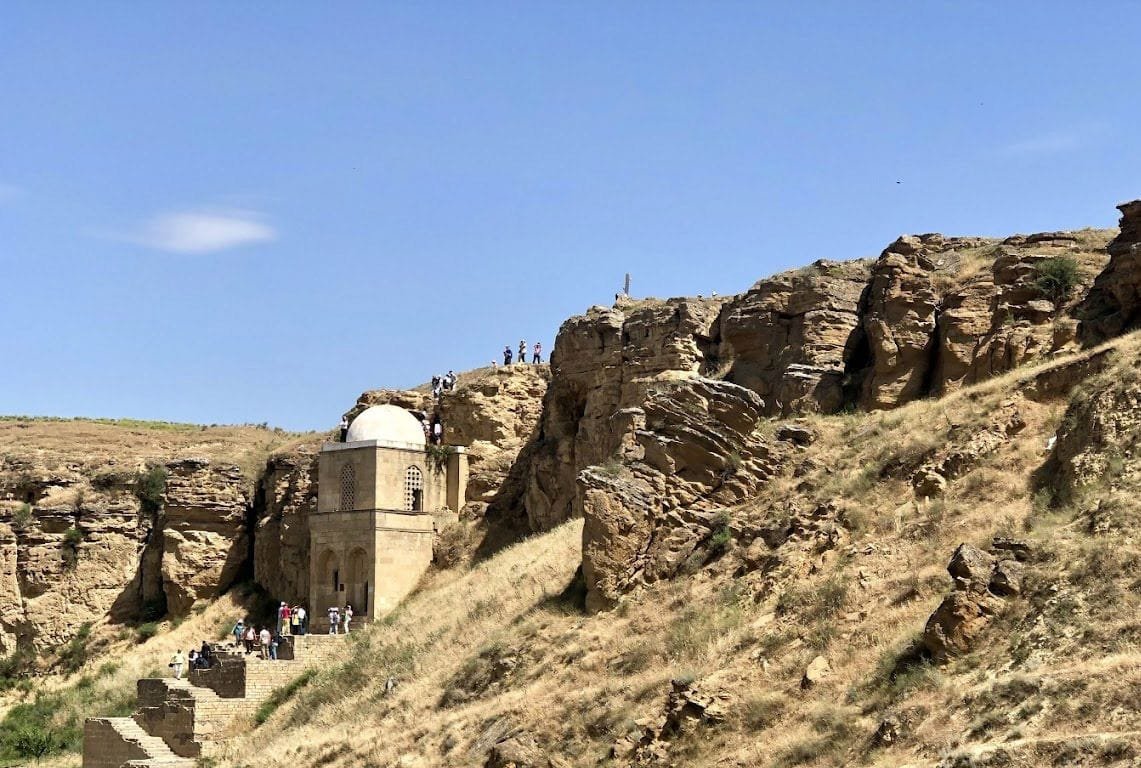 A short stop on the road from Baku to Shamakhi, in the village of Maraza: a two-storey mausoleum from 1402 pressed against the wall of a ravine, as if it grew out of the rock. Diri Baba means "the living grandfather", and the name comes from the legend of a Sufi saint whose body, they say, never decayed. For centuries it was a place of pilgrimage and of hermits; today it is restored and empty.
You climb a narrow staircase to the upper floor and, through a passage, to the top of the cliff, from where you see the valley. Twenty minutes. Mind the steps if it has rained.
Road 35KM 0 Hours and 30 Minutes
A short stop on the road from Baku to Shamakhi, in the village of Maraza: a two-storey mausoleum from 1402 pressed against the wall of a ravine, as if it grew out of the rock. Diri Baba means "the living grandfather", and the name comes from the legend of a Sufi saint whose body, they say, never decayed. For centuries it was a place of pilgrimage and of hermits; today it is restored and empty.
You climb a narrow staircase to the upper floor and, through a passage, to the top of the cliff, from where you see the valley. Twenty minutes. Mind the steps if it has rained.
Road 35KM 0 Hours and 30 Minutes
Yeddi Gumbez, the seven domes
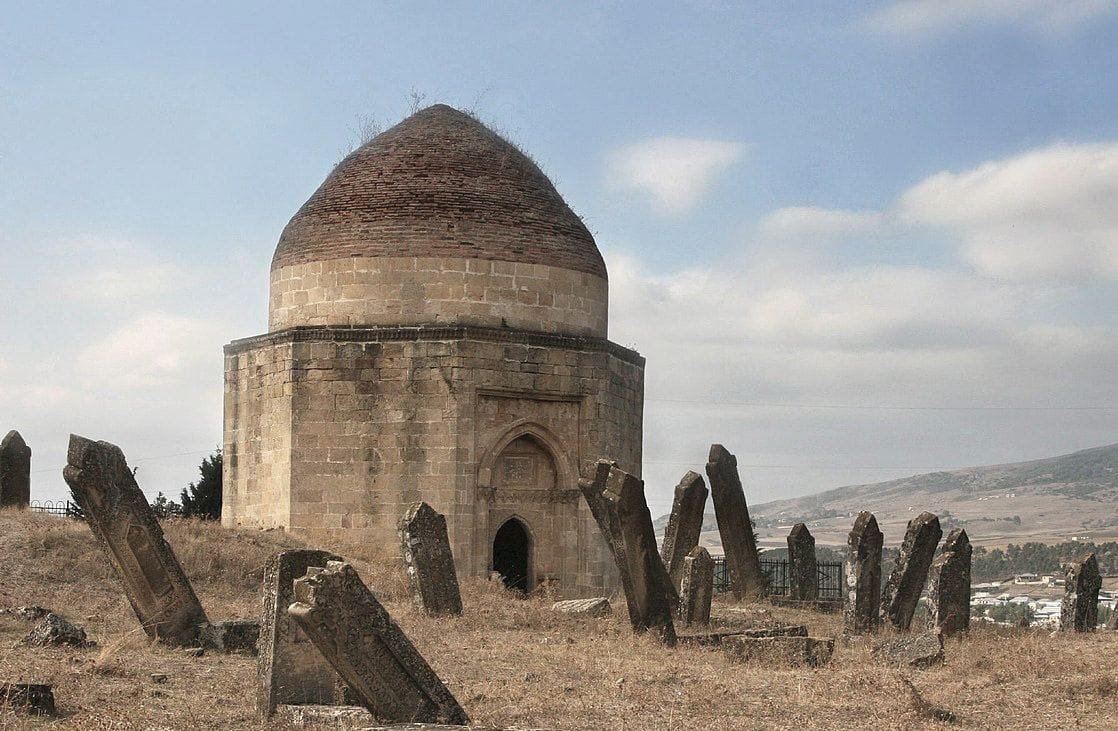 On a hill outside Shamakhi, among old graves and long grass, stand the mausoleums of the last khans of Shirvan, from the 18th and 19th centuries. It is called Yeddi Gumbez, "seven domes", although fewer than that survive whole; the earthquakes, frequent here and the reason the Shirvanshahs moved to Baku centuries earlier, have done their work on these tombs too.
A quiet twenty-minute stop, with Shamakhi and its Juma mosque at your feet. The mosque, founded in 743 and rebuilt after every earthquake, most recently in 2013, passes for the oldest in the Caucasus.
Road 206KM 3 Hours and 2 Minutes
On a hill outside Shamakhi, among old graves and long grass, stand the mausoleums of the last khans of Shirvan, from the 18th and 19th centuries. It is called Yeddi Gumbez, "seven domes", although fewer than that survive whole; the earthquakes, frequent here and the reason the Shirvanshahs moved to Baku centuries earlier, have done their work on these tombs too.
A quiet twenty-minute stop, with Shamakhi and its Juma mosque at your feet. The mosque, founded in 743 and rebuilt after every earthquake, most recently in 2013, passes for the oldest in the Caucasus.
Road 206KM 3 Hours and 2 Minutes
Palace of the Sheki Khans
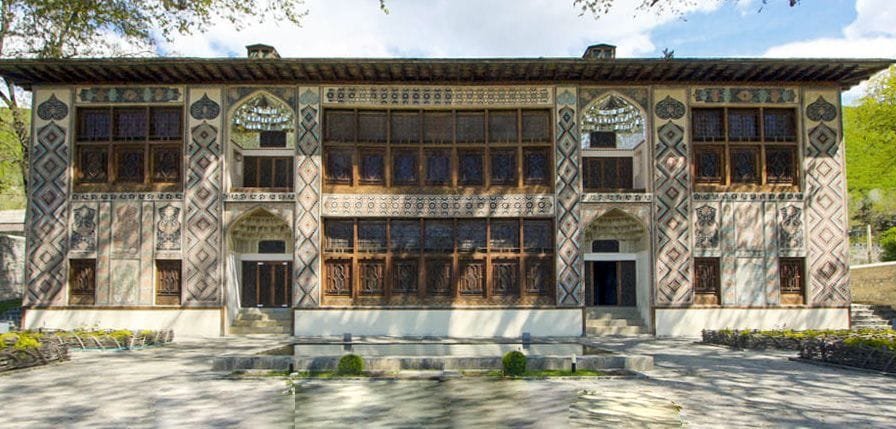 Two storeys, six rooms and not a single nail: the façade of the palace of the Sheki Khans is a wooden lattice holding thousands of pieces of coloured glass fitted without glue, the technique they call shebeke here, and when the sun comes through it the floor fills with red and blue diamonds. Khan Huseyn built it in 1762 as a summer residence, and inside the walls are painted top to bottom with battles, hunts and flowers. The two plane trees in the courtyard date from 1530, older than the palace.
Photography is forbidden inside, which has its logic. A half-hour visit, and Sheki deserves another hour: the 18th-century caravanserai, where you can have tea, and the local halva, made of rice dough and walnuts, unlike any other. The historic centre has been a UNESCO site since 2019.
Road 8KM 0 Hours and 20 Minutes
Two storeys, six rooms and not a single nail: the façade of the palace of the Sheki Khans is a wooden lattice holding thousands of pieces of coloured glass fitted without glue, the technique they call shebeke here, and when the sun comes through it the floor fills with red and blue diamonds. Khan Huseyn built it in 1762 as a summer residence, and inside the walls are painted top to bottom with battles, hunts and flowers. The two plane trees in the courtyard date from 1530, older than the palace.
Photography is forbidden inside, which has its logic. A half-hour visit, and Sheki deserves another hour: the 18th-century caravanserai, where you can have tea, and the local halva, made of rice dough and walnuts, unlike any other. The historic centre has been a UNESCO site since 2019.
Road 8KM 0 Hours and 20 Minutes
Albanian church of Kish
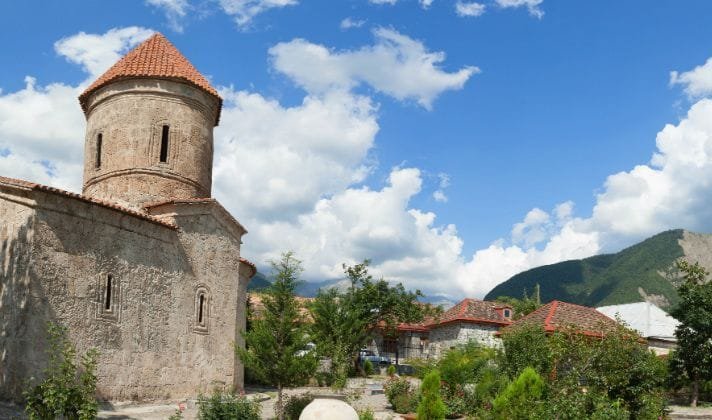 Albania, but not the Balkan one: Caucasian Albania, the kingdom that occupied the north of today's Azerbaijan until the arrival of Islam and had its own Christian church. The church of Kish, a village 5 km from Sheki, is one of the few still standing; tradition takes it back to the 1st century and the apostle Elisha, and what you see dates from the 12th and 13th centuries. The excavations of 2000 to 2003, with Norwegian archaeologists, exposed graves under glass floors and left a small museum inside.
It is a short visit, 40 minutes, in a mountain village of walnut trees and stone houses that you want to walk through slowly. Thor Heyerdahl, of Kon-Tiki fame, came here convinced that the Vikings came from the Caucasus; the theory did not catch on, but the sign is still there.
Road 8KM 0 Hours and 15 Minutes
Albania, but not the Balkan one: Caucasian Albania, the kingdom that occupied the north of today's Azerbaijan until the arrival of Islam and had its own Christian church. The church of Kish, a village 5 km from Sheki, is one of the few still standing; tradition takes it back to the 1st century and the apostle Elisha, and what you see dates from the 12th and 13th centuries. The excavations of 2000 to 2003, with Norwegian archaeologists, exposed graves under glass floors and left a small museum inside.
It is a short visit, 40 minutes, in a mountain village of walnut trees and stone houses that you want to walk through slowly. Thor Heyerdahl, of Kon-Tiki fame, came here convinced that the Vikings came from the Caucasus; the theory did not catch on, but the sign is still there.
Road 8KM 0 Hours and 15 Minutes
Day 5 - Sheki - Lagodekhi - Bodega - Tbilisi
Total road of the day - 297KM 4 Hours and 45 Minutes Border day: 297 km, 4 hours 45 minutes, and Khareba Winery. A new car and guide are waiting on the other side. Road 110KM 1 Hours and 50 MinutesLagodekhi, the Georgia-Azerbaijan border
You cross on foot: Georgian control, a few hundred metres with your suitcase and Azerbaijani control, which is the most thorough of the three countries and can take its time. Allow an hour. On the far side the Azerbaijani car and guide are waiting. Check before leaving home whether your passport needs an e-visa for Azerbaijan; it cannot be arranged at the border.Khareba Winery, the wine tunnel
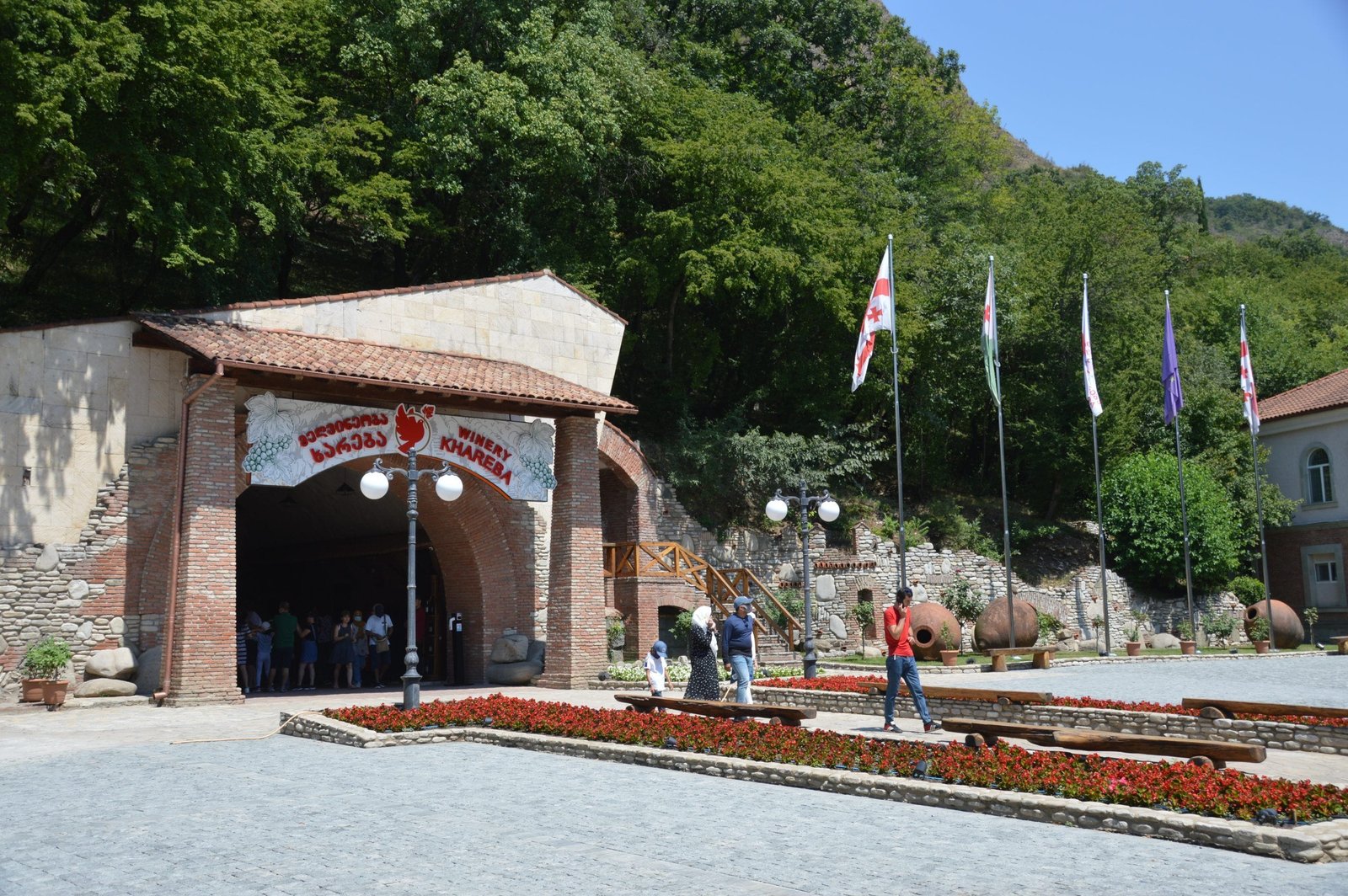 In 1962 the Soviets dug 7.7 km of tunnels into the Caucasus foothills near Kvareli to store wine at a constant temperature: 12 to 14 degrees all year round. Today they belong to the Khareba winery, which has filled them with bottles and qvevris, the buried clay vessels Georgia has made wine in for 8,000 years. You walk a lit stretch, the method is explained and you taste: usually a white from rkatsiteli, a red from saperavi and, for the brave, chacha, the grape-pomace spirit.
It is a big and fairly touristy winery, we say it so you know; in return, the tunnel is cool in high summer and the explanation is clear. An hour. Outside there is a restaurant with a terrace if lunch falls in the area.
In 1962 the Soviets dug 7.7 km of tunnels into the Caucasus foothills near Kvareli to store wine at a constant temperature: 12 to 14 degrees all year round. Today they belong to the Khareba winery, which has filled them with bottles and qvevris, the buried clay vessels Georgia has made wine in for 8,000 years. You walk a lit stretch, the method is explained and you taste: usually a white from rkatsiteli, a red from saperavi and, for the brave, chacha, the grape-pomace spirit.
It is a big and fairly touristy winery, we say it so you know; in return, the tunnel is cool in high summer and the explanation is clear. An hour. Outside there is a restaurant with a terrace if lunch falls in the area.
Day 6 - Tbilisi - Guided tour in Spanish
No driving Today: Rustaveli Avenue, Metekhi Square, Narikala Fortress, Abanotubani and Anchiskhati.Rustaveli Avenue
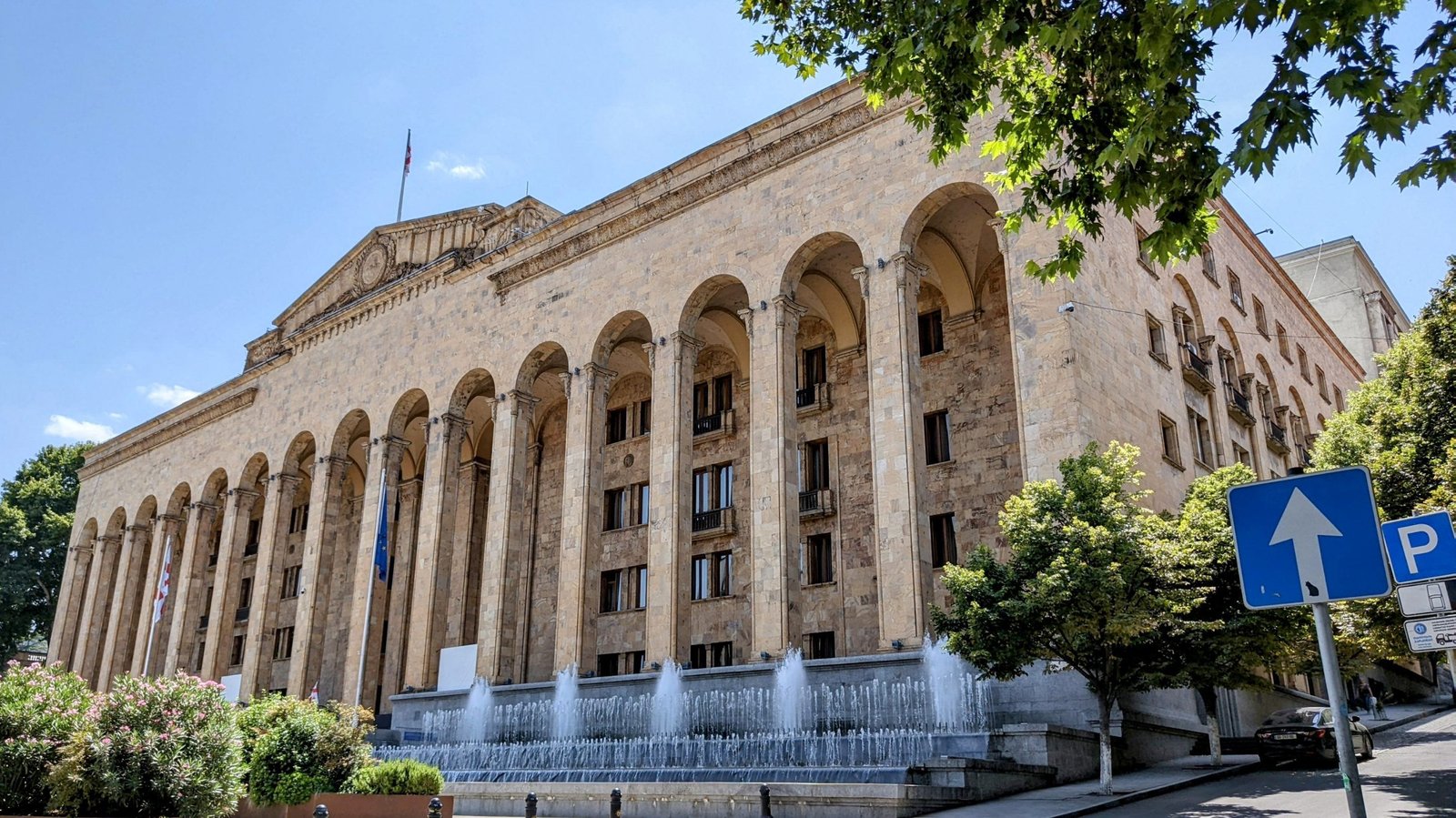 A kilometre and a half of plane trees between Freedom Square and Rustaveli Square. This is the street where Tbilisi shows off: the Parliament, the Moorish-looking Opera House of 1896, the Rustaveli Theatre, the Kashueti church, the National Museum and the grand hotels of the early 20th century. It is named after Shota Rustaveli, the 12th-century poet who wrote "The Knight in the Panther's Skin", the book every Georgian can quote.
It takes a good half hour on foot, or two metro stops if the heat is on. In front of the Parliament there is a plaque worth stopping for: on 9 April 1989 the Soviet army broke up a demonstration here and twenty-one people died, almost all of them women. That day still weighs on the politics of the country.
A kilometre and a half of plane trees between Freedom Square and Rustaveli Square. This is the street where Tbilisi shows off: the Parliament, the Moorish-looking Opera House of 1896, the Rustaveli Theatre, the Kashueti church, the National Museum and the grand hotels of the early 20th century. It is named after Shota Rustaveli, the 12th-century poet who wrote "The Knight in the Panther's Skin", the book every Georgian can quote.
It takes a good half hour on foot, or two metro stops if the heat is on. In front of the Parliament there is a plaque worth stopping for: on 9 April 1989 the Soviet army broke up a demonstration here and twenty-one people died, almost all of them women. That day still weighs on the politics of the country.
Metekhi Square
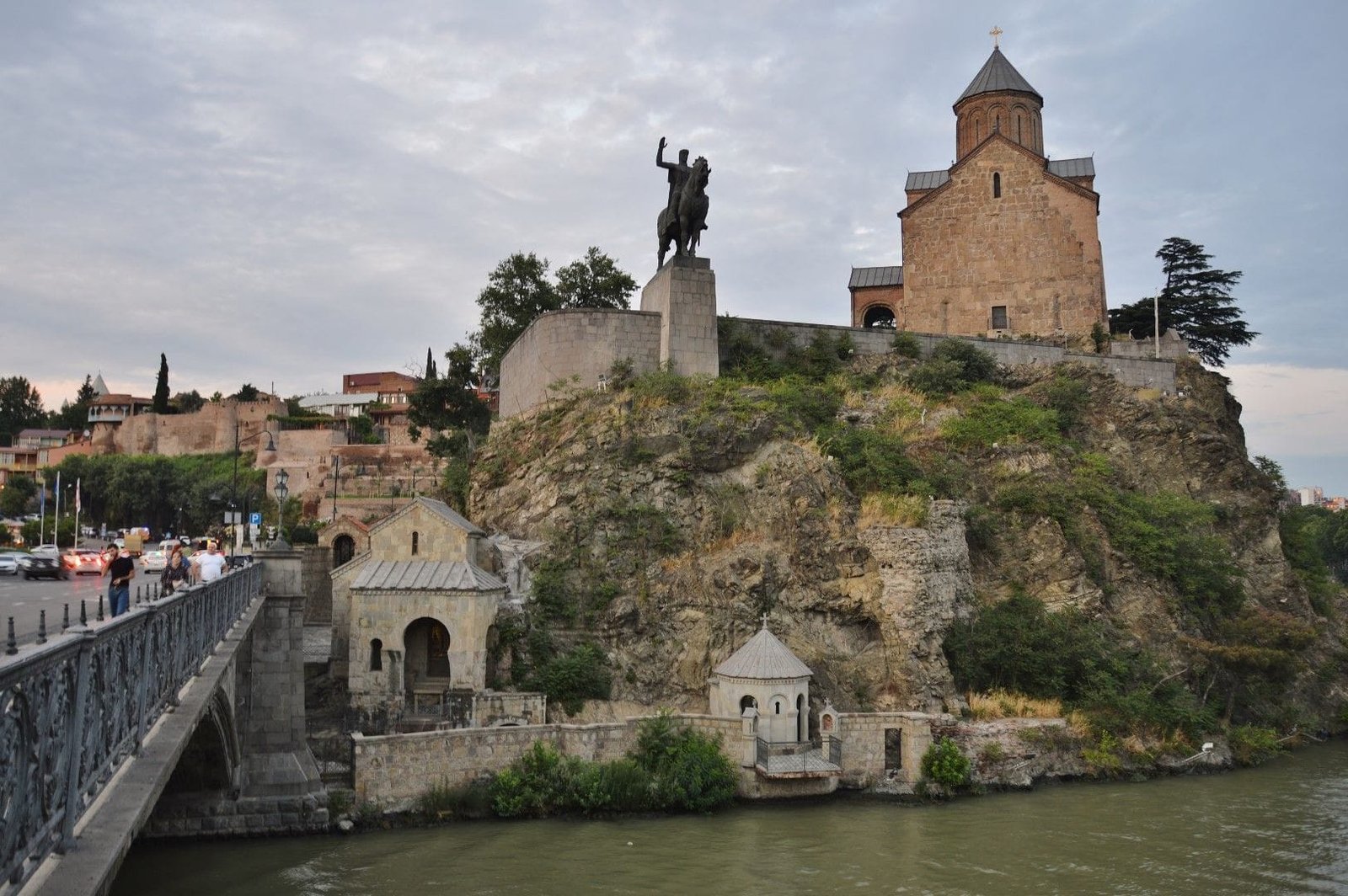 The king on horseback looking over the city from the cliff is Vakhtang Gorgasali, the founder of Tbilisi according to tradition; the statue dates from 1967. Next to him, the church of Metekhi, from the late 13th century, built by Demetre II on top of another from the 5th. The royal palace stood here for centuries, and in the 19th century and Soviet times the building was a prison: Gorky did time in it. Then it was a theatre, and in 1988 it became a church again.
We come here for the view, the best of the lower town: the sulphur baths right below, Narikala opposite and the river running between the two. It is a fifteen-minute stop that almost always runs longer because of the photos.
The king on horseback looking over the city from the cliff is Vakhtang Gorgasali, the founder of Tbilisi according to tradition; the statue dates from 1967. Next to him, the church of Metekhi, from the late 13th century, built by Demetre II on top of another from the 5th. The royal palace stood here for centuries, and in the 19th century and Soviet times the building was a prison: Gorky did time in it. Then it was a theatre, and in 1988 it became a church again.
We come here for the view, the best of the lower town: the sulphur baths right below, Narikala opposite and the river running between the two. It is a fifteen-minute stop that almost always runs longer because of the photos.
Narikala Fortress
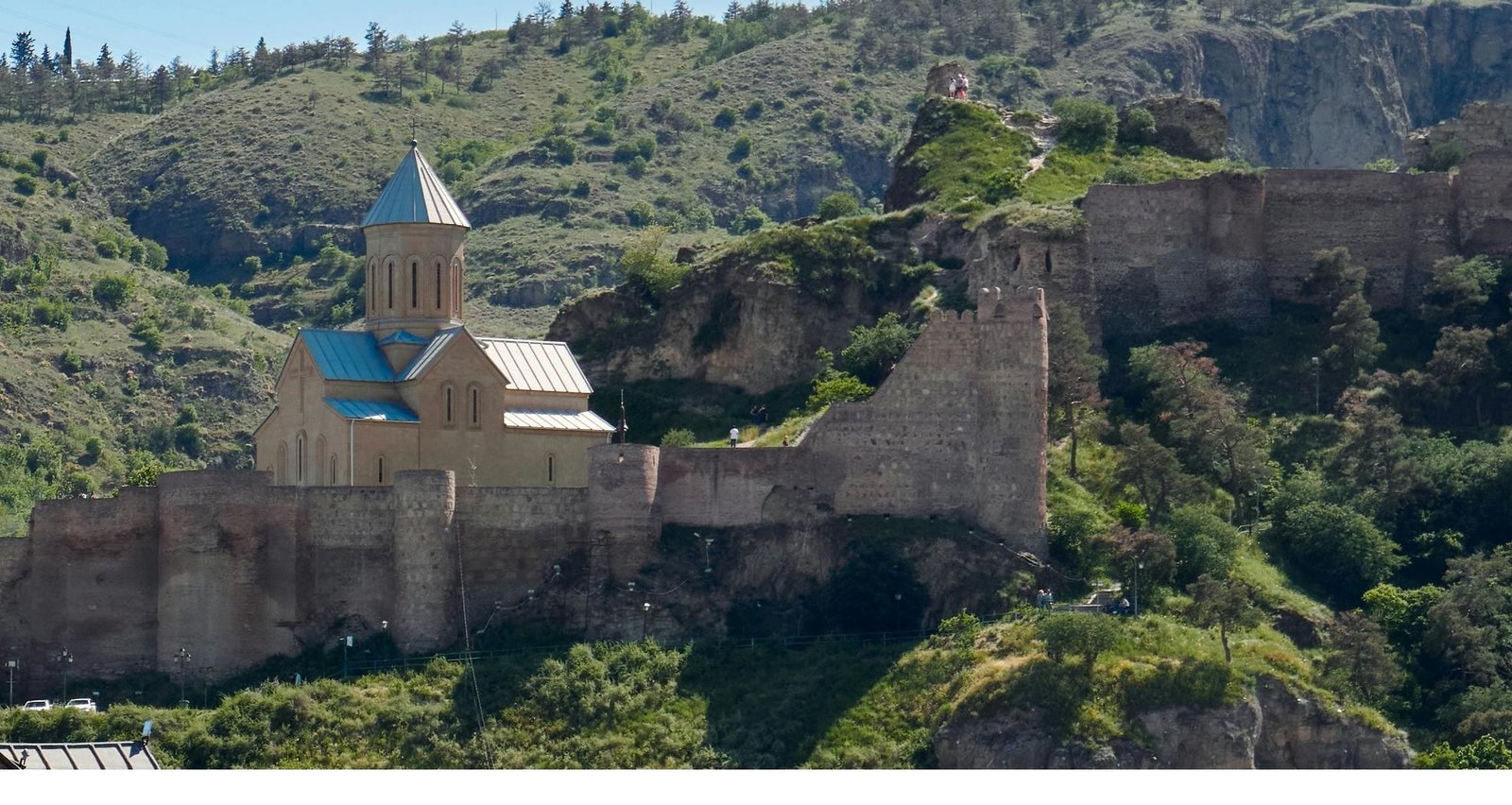 We take the cable car that leaves from Rike Park and crosses the river in two minutes; it costs the same as a metro ticket and is paid with the same card. At the top is Narikala, or what is left of it: the Persians founded it in the 4th century, the Arabs enlarged it in the 8th and the Georgians in the 12th, and in 1827 an explosion of the gunpowder store took out a good part of the walls. The church of St Nicholas inside dates from 1997, on medieval foundations.
The reason to come up is not the stones but the view: the whole old town, the domes of the baths, the river and Metekhi opposite. Careful, the walls have no railings and the rock is polished by so many feet. From here we walk down through the Betlemi quarter to the baths, passing the Mother of Georgia on the way, the aluminium statue of 1958 that watches over the city with a cup in one hand and a sword in the other.
We take the cable car that leaves from Rike Park and crosses the river in two minutes; it costs the same as a metro ticket and is paid with the same card. At the top is Narikala, or what is left of it: the Persians founded it in the 4th century, the Arabs enlarged it in the 8th and the Georgians in the 12th, and in 1827 an explosion of the gunpowder store took out a good part of the walls. The church of St Nicholas inside dates from 1997, on medieval foundations.
The reason to come up is not the stones but the view: the whole old town, the domes of the baths, the river and Metekhi opposite. Careful, the walls have no railings and the rock is polished by so many feet. From here we walk down through the Betlemi quarter to the baths, passing the Mother of Georgia on the way, the aluminium statue of 1958 that watches over the city with a cup in one hand and a sword in the other.
Abanotubani
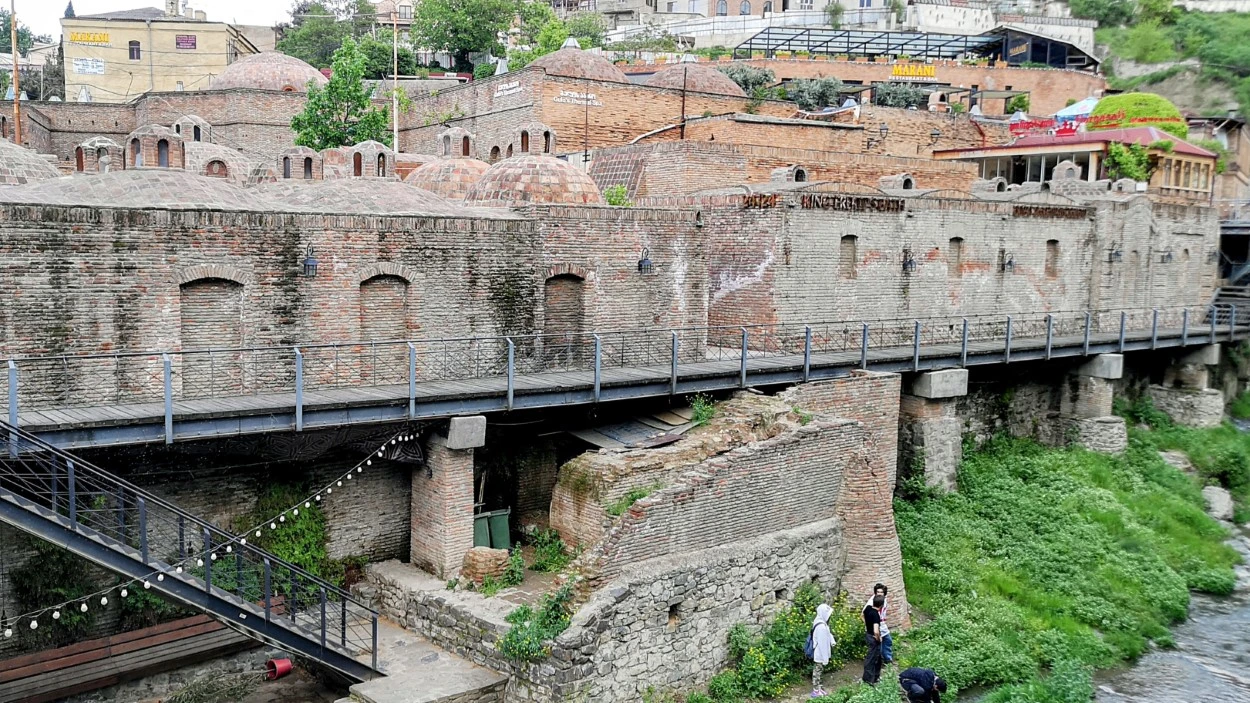 Tbilisi means "warm place", and the warmth comes from here. Abanotubani is the sulphur bath district, on the right bank of the Mtkvari just below Narikala: brick domes at ground level with the baths underneath, and water that comes up on its own at 37 to 40 degrees and smells of eggs. Legend has it that King Vakhtang Gorgasali founded the city in the 5th century after seeing a wounded pheasant healed in these waters. Pushkin bathed here in 1829 and wrote that he had never seen anything like it.
You can stroll and look, but what is worth it is going in: a private room with a hot-water pool and, if you like, a scrub with a coarse mitt that leaves you like new. Booking is needed in high season, and you bring swimwear and a towel or rent them. The blue-tiled façade belongs to the Orbeliani bath; the others are plainer outside.
Tbilisi means "warm place", and the warmth comes from here. Abanotubani is the sulphur bath district, on the right bank of the Mtkvari just below Narikala: brick domes at ground level with the baths underneath, and water that comes up on its own at 37 to 40 degrees and smells of eggs. Legend has it that King Vakhtang Gorgasali founded the city in the 5th century after seeing a wounded pheasant healed in these waters. Pushkin bathed here in 1829 and wrote that he had never seen anything like it.
You can stroll and look, but what is worth it is going in: a private room with a hot-water pool and, if you like, a scrub with a coarse mitt that leaves you like new. Booking is needed in high season, and you bring swimwear and a towel or rent them. The blue-tiled façade belongs to the Orbeliani bath; the others are plainer outside.
Anchiskhati
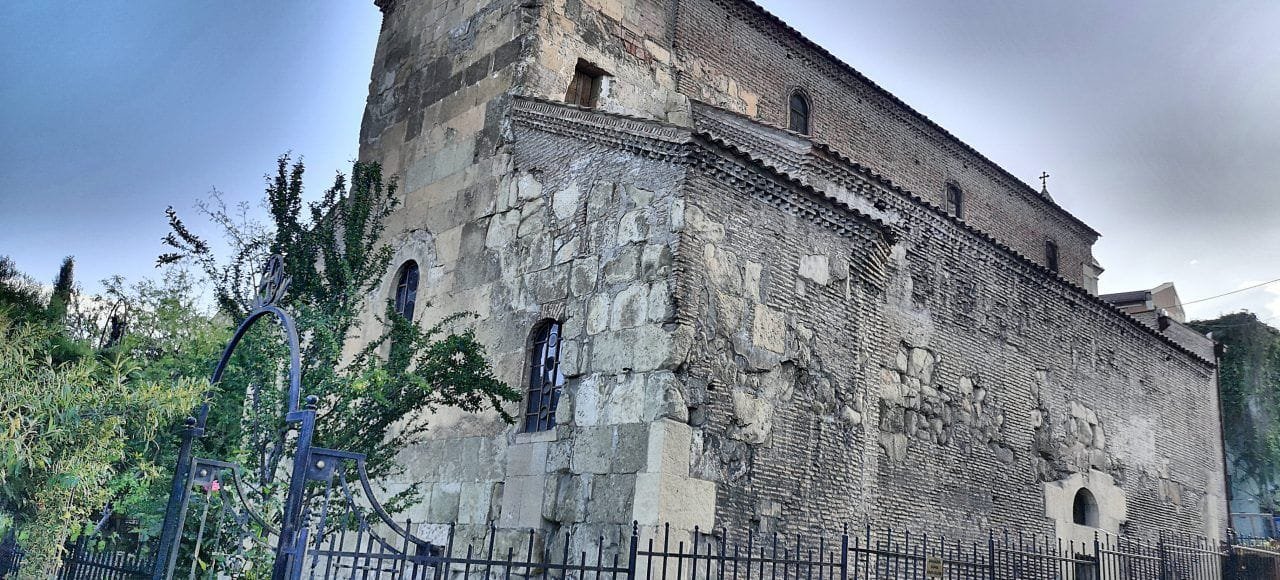 It is the oldest church still standing in Tbilisi, and it does not look it: a small three-nave basilica of plain stone, tucked into a street of the old town. King Dachi, son of Vakhtang Gorgasali, built it around the year 530. The name comes from the Christ icon of Ancha, which arrived here in 1664 from an area that is now Turkey and is now kept in the Art Museum. The brick bell tower of 1675 is what you see from the street.
If it falls on a Sunday morning, we go in during the liturgy: the Anchiskhati choir sings Georgian polyphony the way it was sung centuries ago, and it is one of the things people remember most from the trip. On other days it is almost empty and takes ten minutes. There are headscarves at the door for women.
It is the oldest church still standing in Tbilisi, and it does not look it: a small three-nave basilica of plain stone, tucked into a street of the old town. King Dachi, son of Vakhtang Gorgasali, built it around the year 530. The name comes from the Christ icon of Ancha, which arrived here in 1664 from an area that is now Turkey and is now kept in the Art Museum. The brick bell tower of 1675 is what you see from the street.
If it falls on a Sunday morning, we go in during the liturgy: the Anchiskhati choir sings Georgian polyphony the way it was sung centuries ago, and it is one of the things people remember most from the trip. On other days it is almost empty and takes ten minutes. There are headscarves at the door for women.
Day 7 - Tbilisi - Ananuri - Kazbegi - Tbilisi
Total road of the day - 321KM 6 Hours and 0 Minutes Today the car is only the means: 321 km to reach Ananuri and Gergeti Trinity Church. Road 67KM 1 Hours and 10 MinutesAnanuri
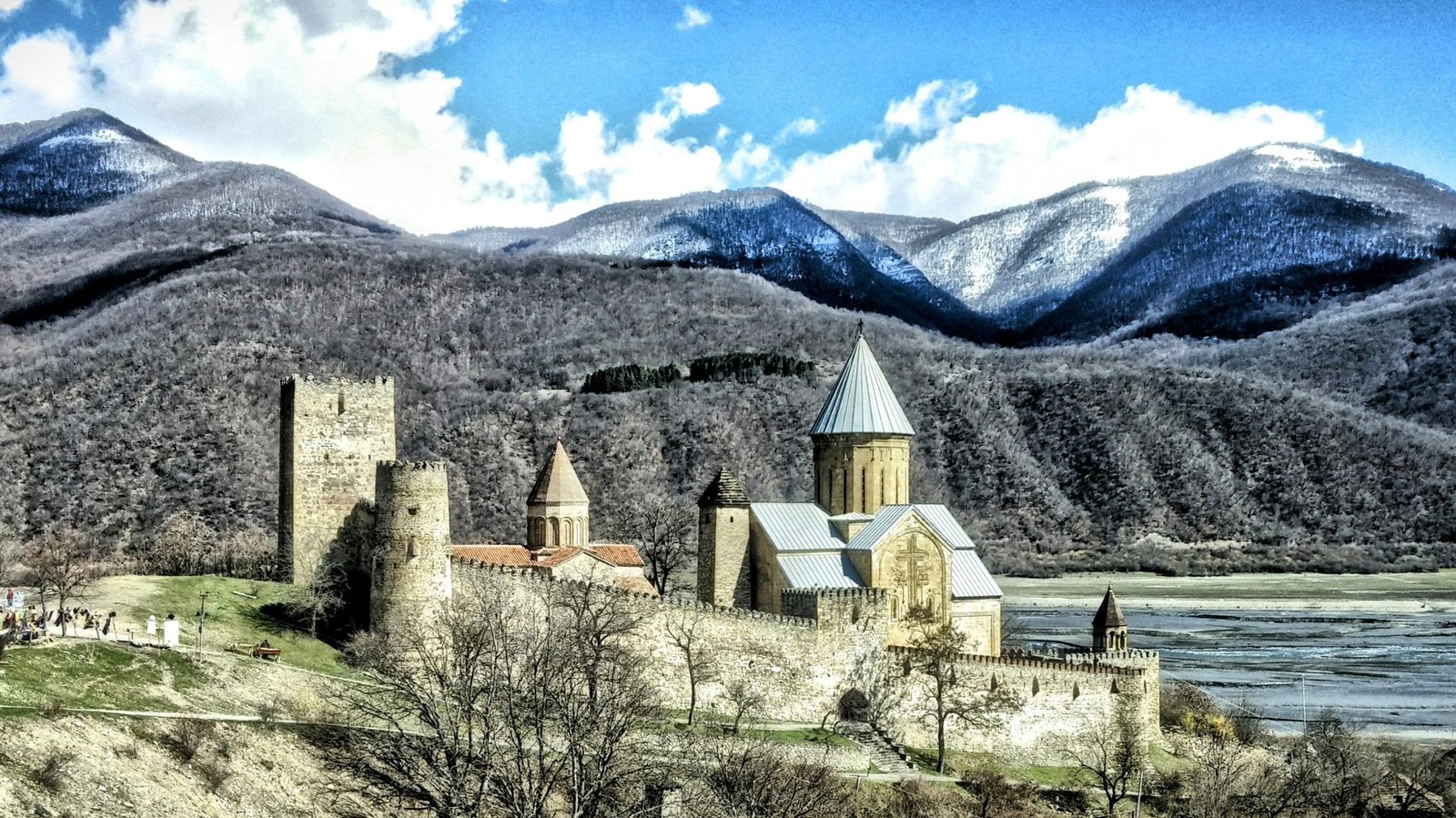 The first serious stop on the Georgian Military Highway, 66 km from Tbilisi: a fortress with two churches inside, planted above the Zhinvali reservoir. The turquoise water in all the photos dates from 1986, when the dam flooded the valley; until then the castle watched over a crossroads. It was the seat of the Eristavis of Aragvi, the dukes of the area, from the 13th to the 18th century, and the story you will be told is that of 1739, when a rival lord took it and put the whole family to the sword.
The best of Ananuri is the façade of the big church, the Assumption, from 1689: a huge cross carved with vines, lions and angels. You can climb the tower, up a narrow staircase. Half an hour, and at the exit there are stalls selling churchkhela, the strings of walnuts dipped in grape must, which are good here and not expensive. In autumn the reservoir drops and the postcard loses its colour.
The first serious stop on the Georgian Military Highway, 66 km from Tbilisi: a fortress with two churches inside, planted above the Zhinvali reservoir. The turquoise water in all the photos dates from 1986, when the dam flooded the valley; until then the castle watched over a crossroads. It was the seat of the Eristavis of Aragvi, the dukes of the area, from the 13th to the 18th century, and the story you will be told is that of 1739, when a rival lord took it and put the whole family to the sword.
The best of Ananuri is the façade of the big church, the Assumption, from 1689: a huge cross carved with vines, lions and angels. You can climb the tower, up a narrow staircase. Half an hour, and at the exit there are stalls selling churchkhela, the strings of walnuts dipped in grape must, which are good here and not expensive. In autumn the reservoir drops and the postcard loses its colour.
Gergeti Trinity Church
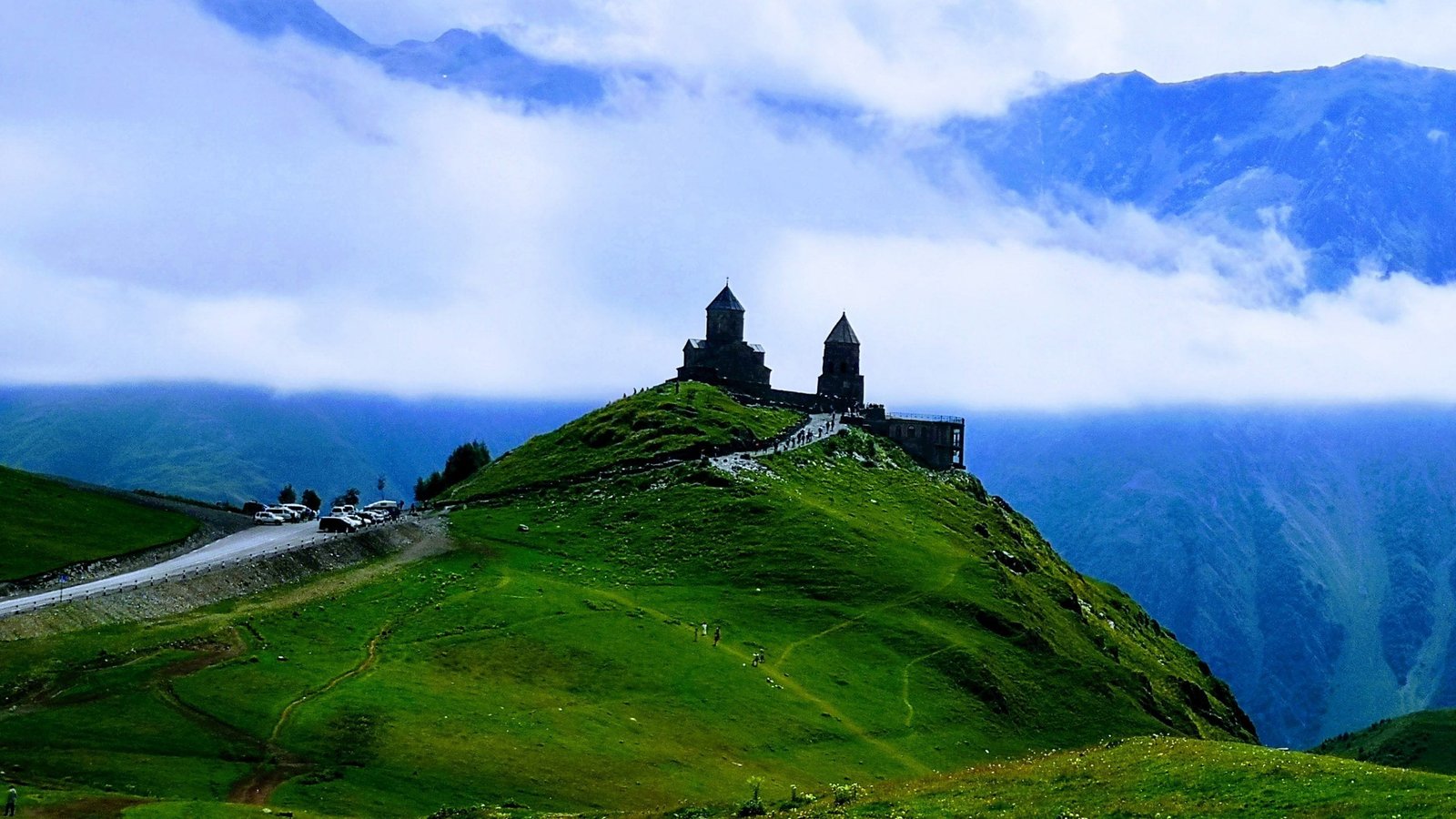 The photo of Georgia: a 14th-century church alone on a ridge at 2,170 metres, with Kazbek (5,047 m) behind it if the clouds allow. You get there from Stepantsminda, the village below, by a 6 km road that was paved only a few years ago; before that you needed a 4x4 or an hour and a half on foot, and in winter you still need the 4x4. For centuries the treasures of Mtskheta were hidden up here when invaders came, because of how remote it is.
Two warnings. First: Kazbek is usually covered from midday on, so we go up as early as we can and, if it is hidden, we wait a while, because sometimes it clears. Second: it is cold and windy at the top all year; in the middle of August we have seen people in T-shirts shivering. Headscarf to go in and covered shoulders; there are wrap skirts to borrow at the door for anyone in shorts. An hour for the drive up, the church and the photos.
The photo of Georgia: a 14th-century church alone on a ridge at 2,170 metres, with Kazbek (5,047 m) behind it if the clouds allow. You get there from Stepantsminda, the village below, by a 6 km road that was paved only a few years ago; before that you needed a 4x4 or an hour and a half on foot, and in winter you still need the 4x4. For centuries the treasures of Mtskheta were hidden up here when invaders came, because of how remote it is.
Two warnings. First: Kazbek is usually covered from midday on, so we go up as early as we can and, if it is hidden, we wait a while, because sometimes it clears. Second: it is cold and windy at the top all year; in the middle of August we have seen people in T-shirts shivering. Headscarf to go in and covered shoulders; there are wrap skirts to borrow at the door for anyone in shorts. An hour for the drive up, the church and the photos.
Day 8 - Tbilisi - Mtskheta - Gori - Uplistsikhe - Borjomi - Akhaltsikhe
Total road of the day - 245KM 3 Hours and 33 Minutes 245 km and 3 hours 33 minutes in the car in all. Today's stops: Jvari, Svetitskhoveli, Uplistsikhe, Stalin Museum and Borjomi. Road 25KM 0 Hours and 36 MinutesJvari, the Monastery of the Cross
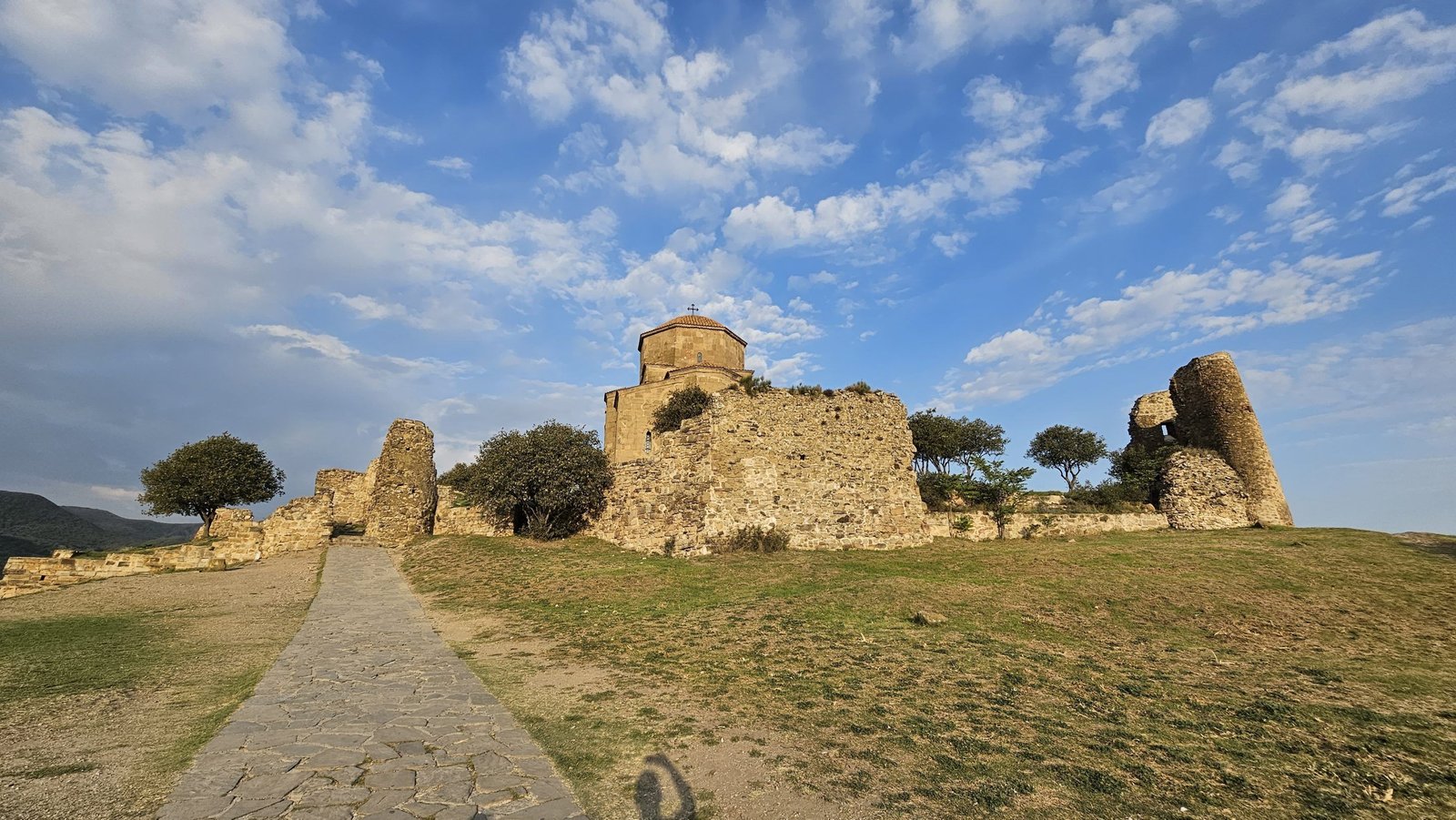 From the Tbilisi road you can see a small church on top of a bare hill above Mtskheta. It is Jvari, "the cross", and it is there because, according to tradition, in the 4th century St Nino planted a wooden cross on that spot when she converted Georgia. The present church was built between 586 and 605 and became the model for many others in the country: a cross plan with four apses and a dome in the middle, with hardly any decoration. It is a UNESCO site together with Mtskheta.
What you remember is the view: below, the Aragvi and the Mtkvari meet, each a different colour, with Svetitskhoveli cathedral in between. Lermontov set his poem "Mtsyri" here. It is almost always windy, so a jacket is not a bad idea even in July. Twenty minutes, half an hour if the day is clear.
Road 13KM 0 Hours and 18 Minutes
From the Tbilisi road you can see a small church on top of a bare hill above Mtskheta. It is Jvari, "the cross", and it is there because, according to tradition, in the 4th century St Nino planted a wooden cross on that spot when she converted Georgia. The present church was built between 586 and 605 and became the model for many others in the country: a cross plan with four apses and a dome in the middle, with hardly any decoration. It is a UNESCO site together with Mtskheta.
What you remember is the view: below, the Aragvi and the Mtkvari meet, each a different colour, with Svetitskhoveli cathedral in between. Lermontov set his poem "Mtsyri" here. It is almost always windy, so a jacket is not a bad idea even in July. Twenty minutes, half an hour if the day is clear.
Road 13KM 0 Hours and 18 Minutes
Svetitskhoveli
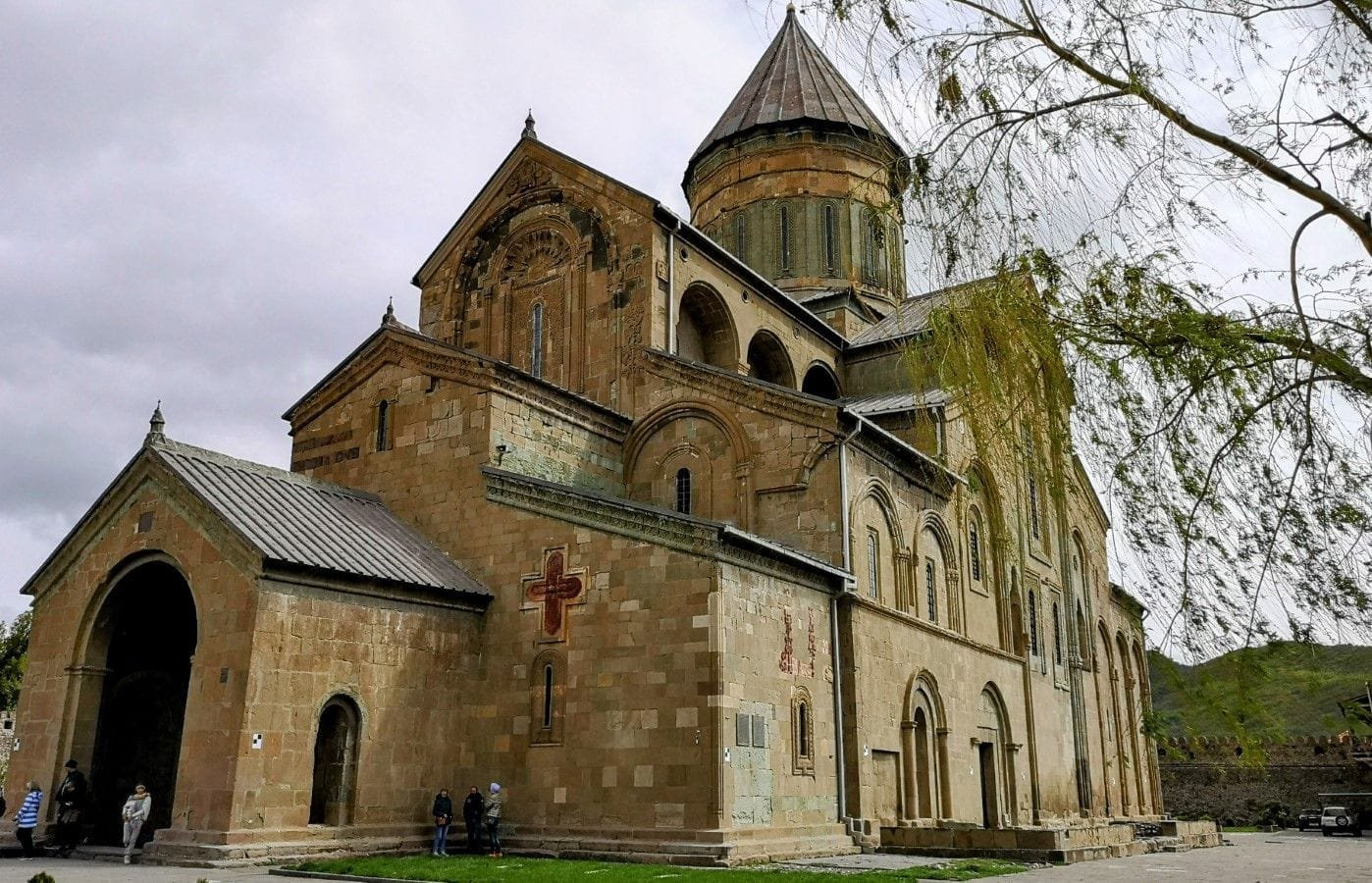 For a Georgian this is the cathedral, full stop. It stands in Mtskheta, the old capital, 20 km from Tbilisi, and the present building went up between 1010 and 1029 on the site of the 4th-century church of King Mirian, the one who converted the country to Christianity. Beneath it, according to tradition, lies the robe of Christ: a Jew from Mtskheta brought it from Jerusalem, his sister Sidonia died clutching it and they were buried together; a cedar grew from the spot, and from its trunk came the pillar that gives the church its name, "the life-giving pillar". Kings were crowned and buried here; the slabs of Vakhtang Gorgasali and Erekle II are in the floor.
A UNESCO site since 1994, and at weekends the weddings follow one another, so sometimes you wait at the door. Headscarves for women and covered shoulders for everyone. Half an hour inside, another in the lanes around it, which live off tourism but keep the feel of a village.
Road 61KM 1 Hours and 5 Minutes
For a Georgian this is the cathedral, full stop. It stands in Mtskheta, the old capital, 20 km from Tbilisi, and the present building went up between 1010 and 1029 on the site of the 4th-century church of King Mirian, the one who converted the country to Christianity. Beneath it, according to tradition, lies the robe of Christ: a Jew from Mtskheta brought it from Jerusalem, his sister Sidonia died clutching it and they were buried together; a cedar grew from the spot, and from its trunk came the pillar that gives the church its name, "the life-giving pillar". Kings were crowned and buried here; the slabs of Vakhtang Gorgasali and Erekle II are in the floor.
A UNESCO site since 1994, and at weekends the weddings follow one another, so sometimes you wait at the door. Headscarves for women and covered shoulders for everyone. Half an hour inside, another in the lanes around it, which live off tourism but keep the feel of a village.
Road 61KM 1 Hours and 5 Minutes
Uplistsikhe
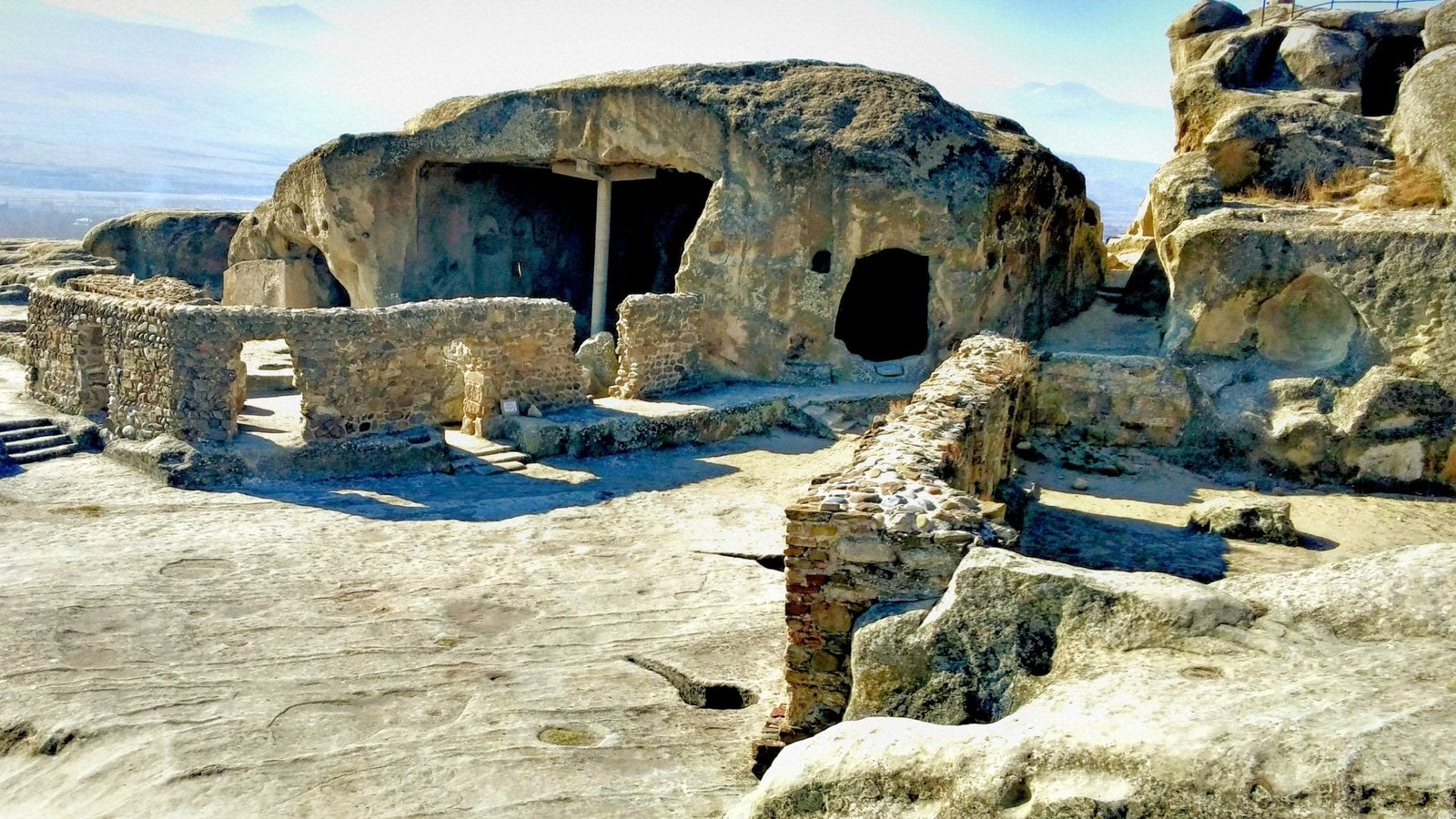 A whole town cut into the rock, 10 km from Gori above the Mtkvari river. People lived at Uplistsikhe from the first millennium BC until the Middle Ages: first a pagan centre, then a Christian one, and always a stop for the caravans. What remains are carved streets, a hall with a ceiling imitating wooden beams (they call it "Queen Tamar's hall"), wine presses, a tunnel down to the river and a 10th-century brick church planted on top of it all. The Mongols emptied it in the 13th century and it never recovered.
One piece of advice: in summer there is no shade and the rock burns, so go early or late in the day, and wear shoes with grip, because the polished stone is slippery. An hour is enough to climb up to the church and look down at the river.
Road 14KM 0 Hours and 20 Minutes
A whole town cut into the rock, 10 km from Gori above the Mtkvari river. People lived at Uplistsikhe from the first millennium BC until the Middle Ages: first a pagan centre, then a Christian one, and always a stop for the caravans. What remains are carved streets, a hall with a ceiling imitating wooden beams (they call it "Queen Tamar's hall"), wine presses, a tunnel down to the river and a 10th-century brick church planted on top of it all. The Mongols emptied it in the 13th century and it never recovered.
One piece of advice: in summer there is no shade and the rock burns, so go early or late in the day, and wear shoes with grip, because the polished stone is slippery. An hour is enough to climb up to the church and look down at the river.
Road 14KM 0 Hours and 20 Minutes
Stalin Museum
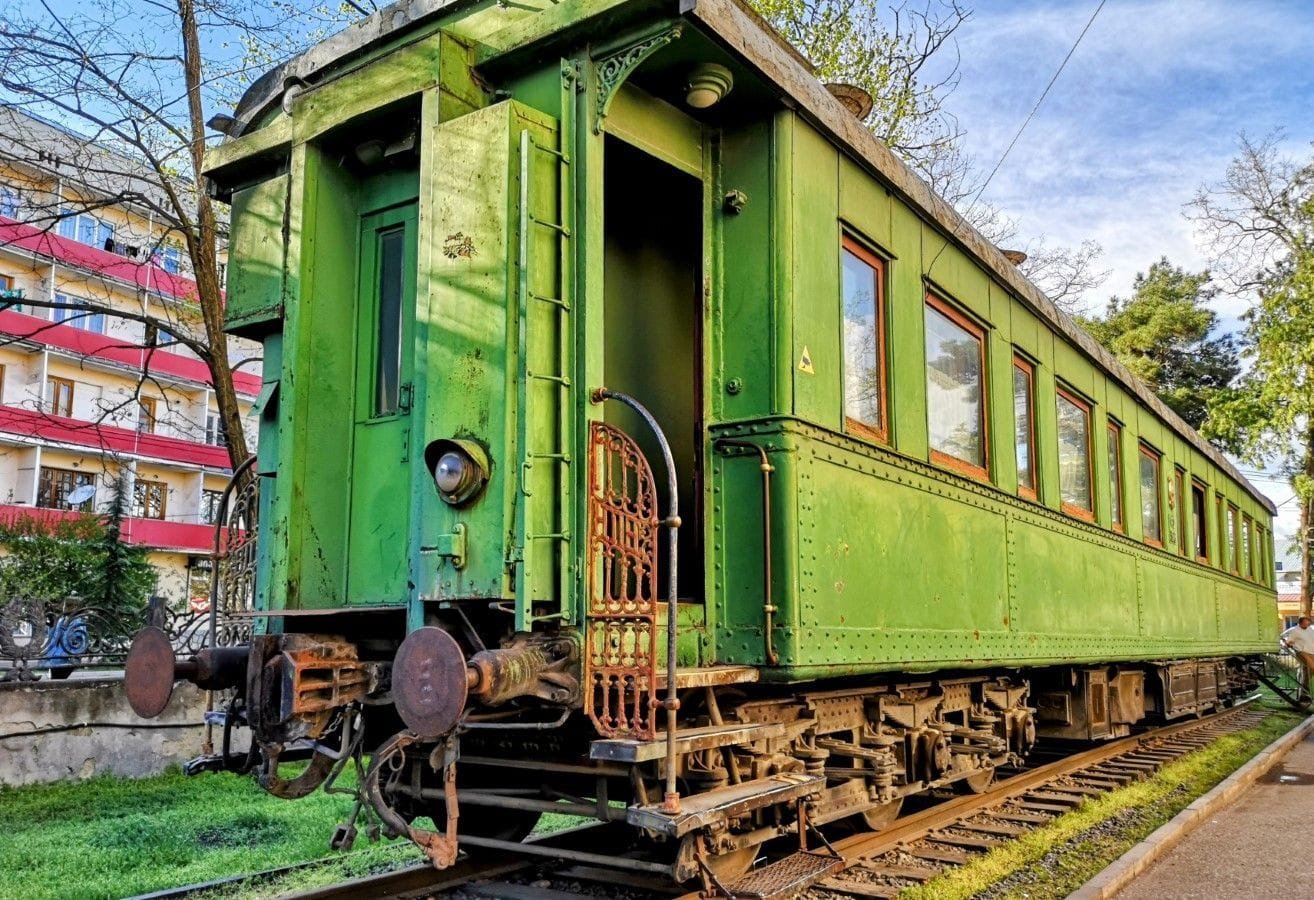 Gori is the town where Iosif Dzhugashvili was born in 1878, and the museum dedicated to him in 1957 is still open much as it was then. It is three things: the little wooden house where he was born, protected under a pavilion of columns; the main building, a Soviet-style palace with his personal belongings, photographs, gifts from heads of state and one of the bronze copies of his death mask; and the armoured railway carriage in which he travelled to Yalta and Potsdam, because he did not like flying.
Let us be plain: the museum tells the kind version. There is a small room on the repression, added late, and little else. We tell the rest on the road, and the one-hour visit usually ends in a long conversation in the car.
Road 84KM 1 Hours and 14 Minutes
Gori is the town where Iosif Dzhugashvili was born in 1878, and the museum dedicated to him in 1957 is still open much as it was then. It is three things: the little wooden house where he was born, protected under a pavilion of columns; the main building, a Soviet-style palace with his personal belongings, photographs, gifts from heads of state and one of the bronze copies of his death mask; and the armoured railway carriage in which he travelled to Yalta and Potsdam, because he did not like flying.
Let us be plain: the museum tells the kind version. There is a small room on the repression, added late, and little else. We tell the rest on the road, and the one-hour visit usually ends in a long conversation in the car.
Road 84KM 1 Hours and 14 Minutes
Borjomi
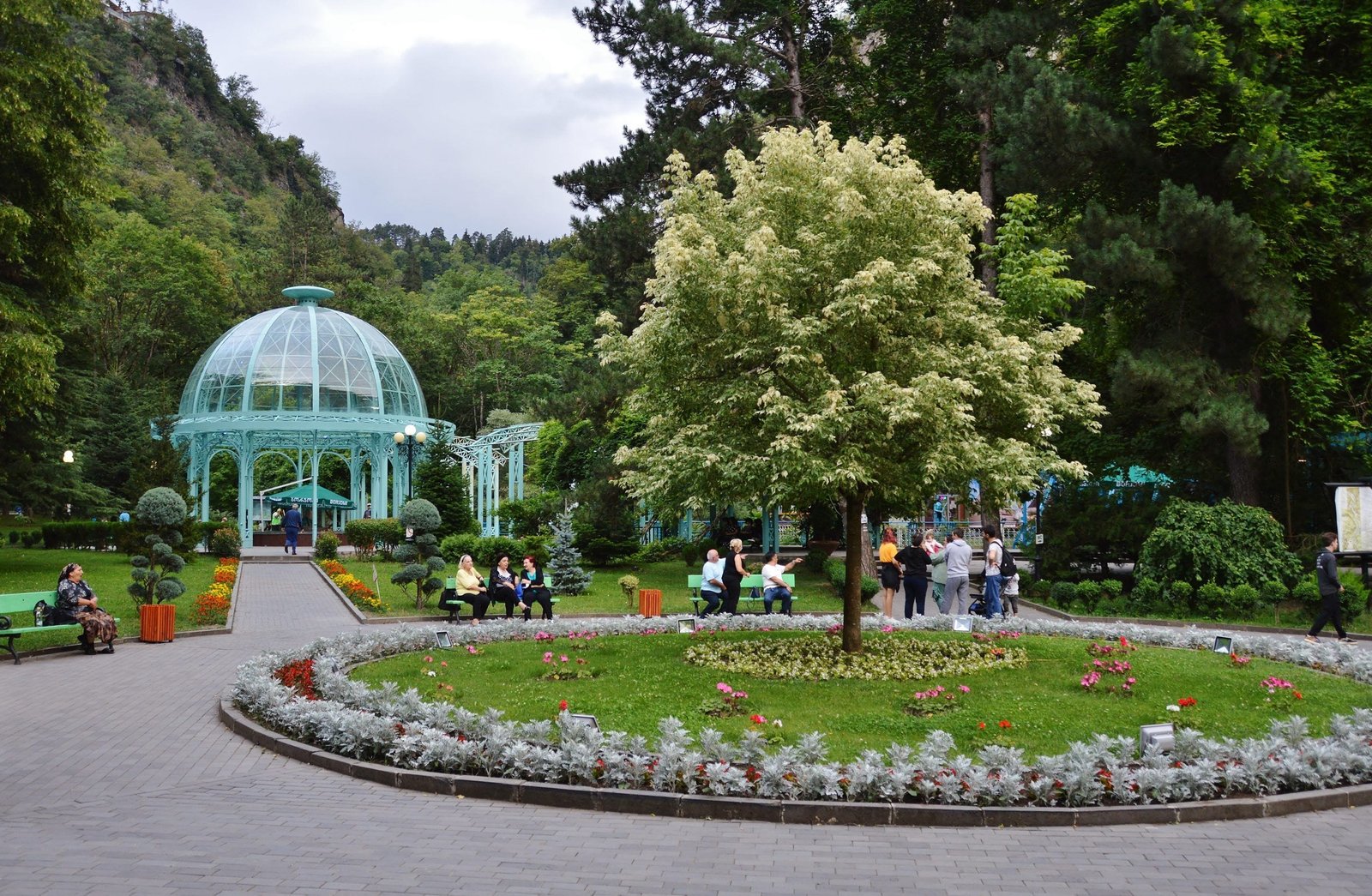 The fizzy water drunk all over the former Soviet Union comes from here, and it has been bottled since 1890. Borjomi was the spa of the Romanovs, who built themselves a palace at Likani, at the entrance to the town, and what remains of that is the air of a spa town from another age: wooden villas, a central park of 1850 with the spring where anyone can fill a bottle (it comes out warm, salty and fizzy, and not everyone likes it) and a cable car up to a viewpoint with a Ferris wheel.
An hour for the park and the spring; for walkers, the 3 km path to the sulphur pools in the forest starts at the far end of the park. The town is the gateway to the Borjomi-Kharagauli national park and the last stop with shops and banks before Vardzia.
Road 48KM 0 Hours and 55 Minutes
The fizzy water drunk all over the former Soviet Union comes from here, and it has been bottled since 1890. Borjomi was the spa of the Romanovs, who built themselves a palace at Likani, at the entrance to the town, and what remains of that is the air of a spa town from another age: wooden villas, a central park of 1850 with the spring where anyone can fill a bottle (it comes out warm, salty and fizzy, and not everyone likes it) and a cable car up to a viewpoint with a Ferris wheel.
An hour for the park and the spring; for walkers, the 3 km path to the sulphur pools in the forest starts at the far end of the park. The town is the gateway to the Borjomi-Kharagauli national park and the last stop with shops and banks before Vardzia.
Road 48KM 0 Hours and 55 Minutes
Day 9 - Akhaltsikhe - Vardzia - Khertvisi - Rabati - Kutaisi
Total road of the day - 299KM 5 Hours and 45 Minutes In the morning, Vardzia; in the afternoon, Khertvisi Fortress and Rabati Fortress. 299 km in all. Road 60KM 1 Hours and 20 MinutesVardzia
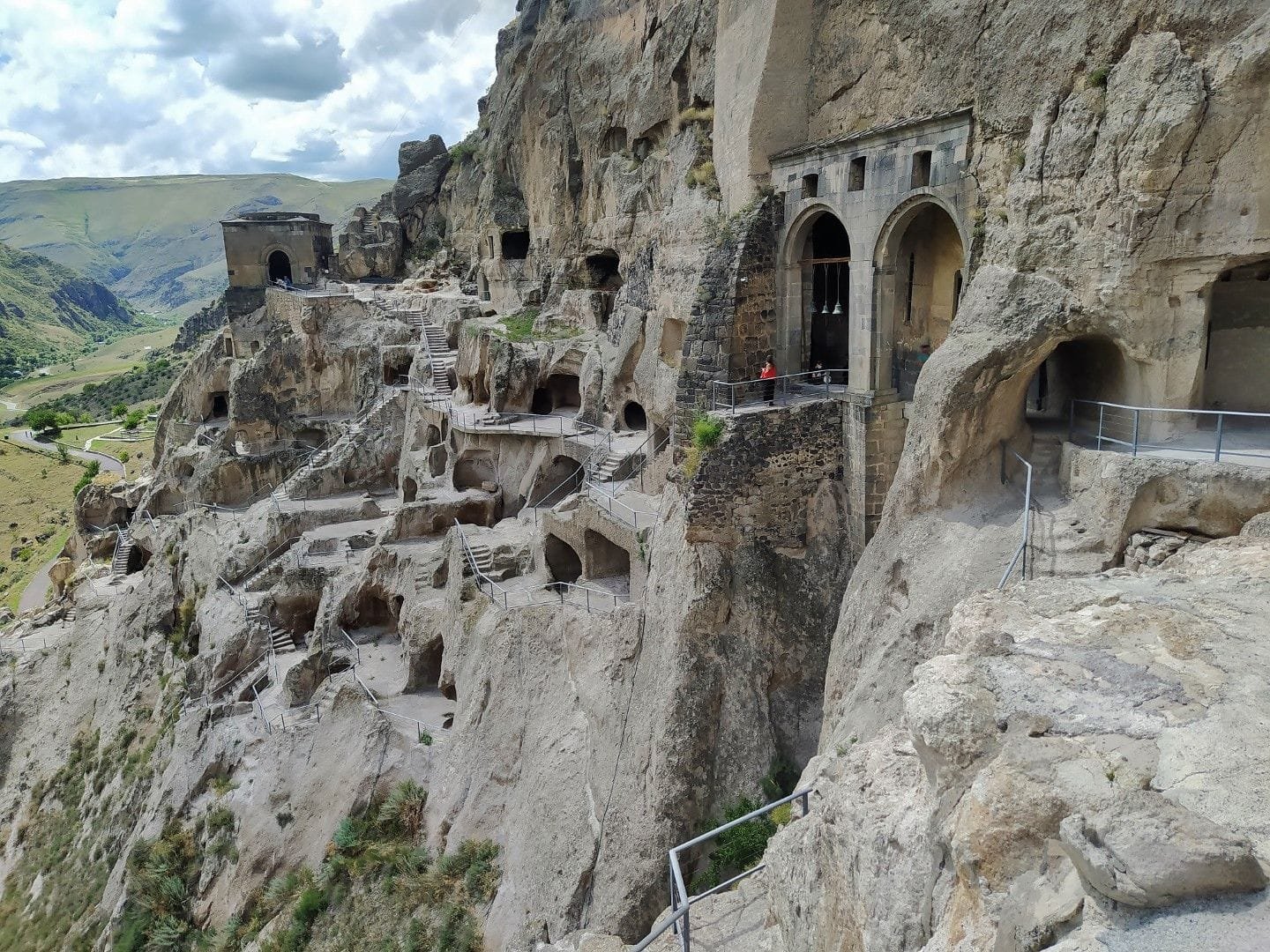 A rock face 500 metres long riddled with 19 storeys of openings: that is Vardzia, the cave monastery Queen Tamar finished around 1185 in the Mtkvari valley, 60 km from Akhaltsikhe. It once had thousands of rooms; the earthquake of 1283 took the whole front off and exposed what you see today, some 600 rooms including cells, wine cellars, refectories, a pharmacy and irrigation channels cut into the stone. In the Church of the Dormition are the 12th-century frescoes, with one of the few portraits of Tamar made in her lifetime.
It is still a monastery, with a few monks, so some areas are closed. The visit takes an hour and a half, almost all of it on stairs and through narrow tunnels: not for bad knees or claustrophobia, although there are routes that avoid the passages. In summer the sun hits the wall from mid-morning; we go as early as we can.
Road 16KM 0 Hours and 20 Minutes
A rock face 500 metres long riddled with 19 storeys of openings: that is Vardzia, the cave monastery Queen Tamar finished around 1185 in the Mtkvari valley, 60 km from Akhaltsikhe. It once had thousands of rooms; the earthquake of 1283 took the whole front off and exposed what you see today, some 600 rooms including cells, wine cellars, refectories, a pharmacy and irrigation channels cut into the stone. In the Church of the Dormition are the 12th-century frescoes, with one of the few portraits of Tamar made in her lifetime.
It is still a monastery, with a few monks, so some areas are closed. The visit takes an hour and a half, almost all of it on stairs and through narrow tunnels: not for bad knees or claustrophobia, although there are routes that avoid the passages. In summer the sun hits the wall from mid-morning; we go as early as we can.
Road 16KM 0 Hours and 20 Minutes
Khertvisi Fortress
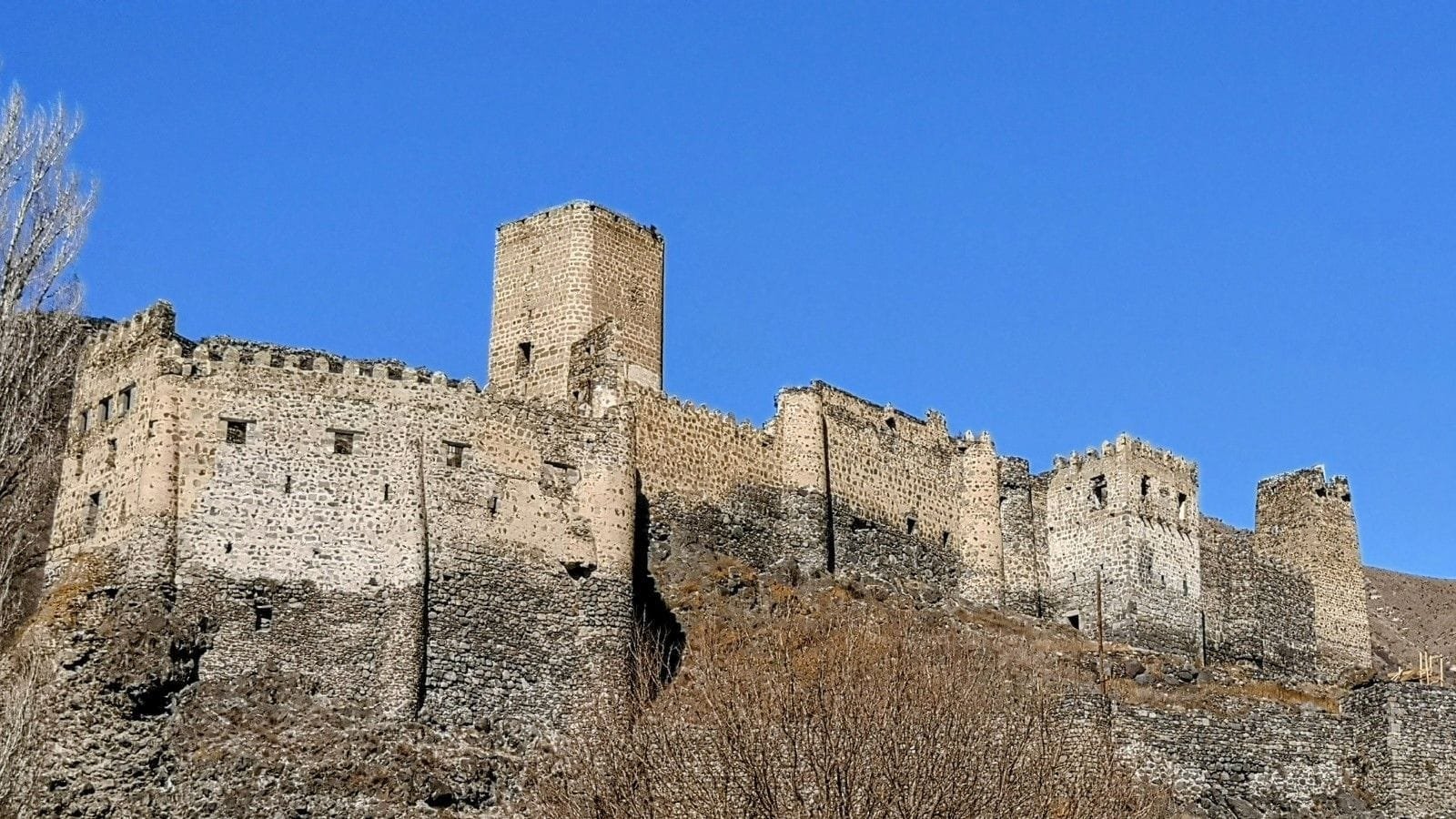 Where the Paravani river meets the Mtkvari, on the way to Vardzia, a castle perches on a crag that has been there in one form or another since the 2nd century BC; legend says Alexander the Great destroyed it, though he never came this way. The walls and towers you see date from the 10th to the 14th century, with a church of 985 inside. Khertvisi watched the road between Georgia and the Ottoman Empire, and changed hands as often as the region did.
A 20-minute stop, with a short, steep climb to the towers for anyone who wants the view of the valley. There is a secret tunnel that went down to the river, closed today.
Road 47KM 0 Hours and 50 Minutes
Where the Paravani river meets the Mtkvari, on the way to Vardzia, a castle perches on a crag that has been there in one form or another since the 2nd century BC; legend says Alexander the Great destroyed it, though he never came this way. The walls and towers you see date from the 10th to the 14th century, with a church of 985 inside. Khertvisi watched the road between Georgia and the Ottoman Empire, and changed hands as often as the region did.
A 20-minute stop, with a short, steep climb to the towers for anyone who wants the view of the valley. There is a secret tunnel that went down to the river, closed today.
Road 47KM 0 Hours and 50 Minutes
Rabati Fortress, Akhaltsikhe
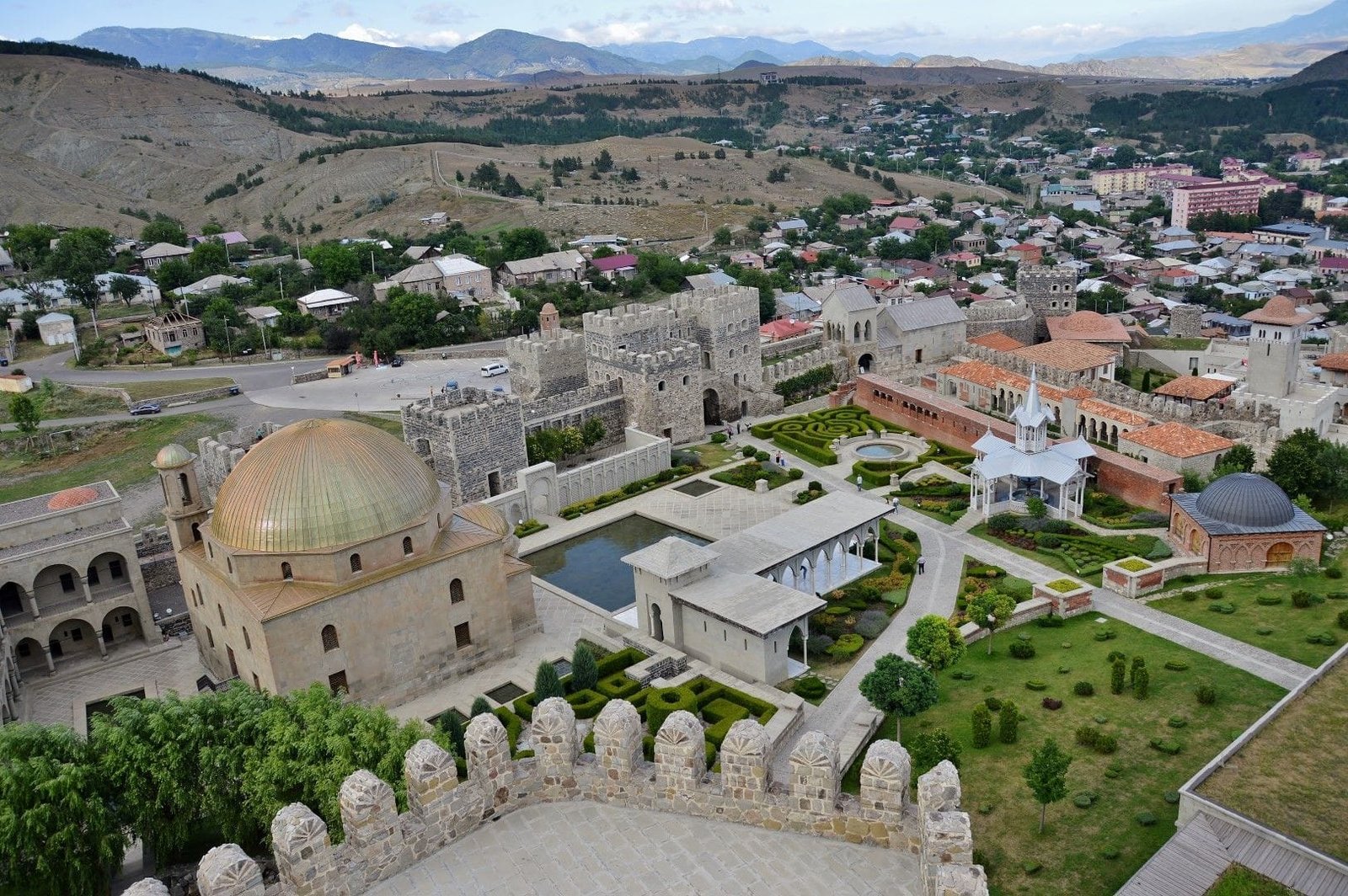 A 9th-century fortress that was Ottoman for 250 years, with its mosque of 1578, its madrasa and its baths, and which the government rebuilt entirely in a single year in 2012: new stone, gardens, fountains, a hotel inside and even a swimming pool. The result is debated. To us Rabati is a good place to understand Samtskhe-Javakheti, the region where Georgians, Armenians, Turks and Jews have lived side by side, and the museum in the citadel tells that story well. Ten minutes on foot is the Akhaltsikhe synagogue of 1863, still open.
An hour and a quarter. If you like real ruins, you will not find them here; if you like climbing towers and looking at the valley, you will. It is the logical stop before Vardzia, 60 km away.
Road 176KM 3 Hours and 15 Minutes
A 9th-century fortress that was Ottoman for 250 years, with its mosque of 1578, its madrasa and its baths, and which the government rebuilt entirely in a single year in 2012: new stone, gardens, fountains, a hotel inside and even a swimming pool. The result is debated. To us Rabati is a good place to understand Samtskhe-Javakheti, the region where Georgians, Armenians, Turks and Jews have lived side by side, and the museum in the citadel tells that story well. Ten minutes on foot is the Akhaltsikhe synagogue of 1863, still open.
An hour and a quarter. If you like real ruins, you will not find them here; if you like climbing towers and looking at the valley, you will. It is the logical stop before Vardzia, 60 km away.
Road 176KM 3 Hours and 15 Minutes
Day 10 - Kutaisi - Bagrati - Gelati - Promete - Batumi
Total road of the day - 197KM 3 Hours and 52 Minutes A day with 3 hours 52 minutes at the wheel, which is not nothing, and in return Kutaisi market, Bagrati Cathedral, Gelati Academy and Prometheus Cave. Road 0KM 0 Hours and 0 MinutesKutaisi market
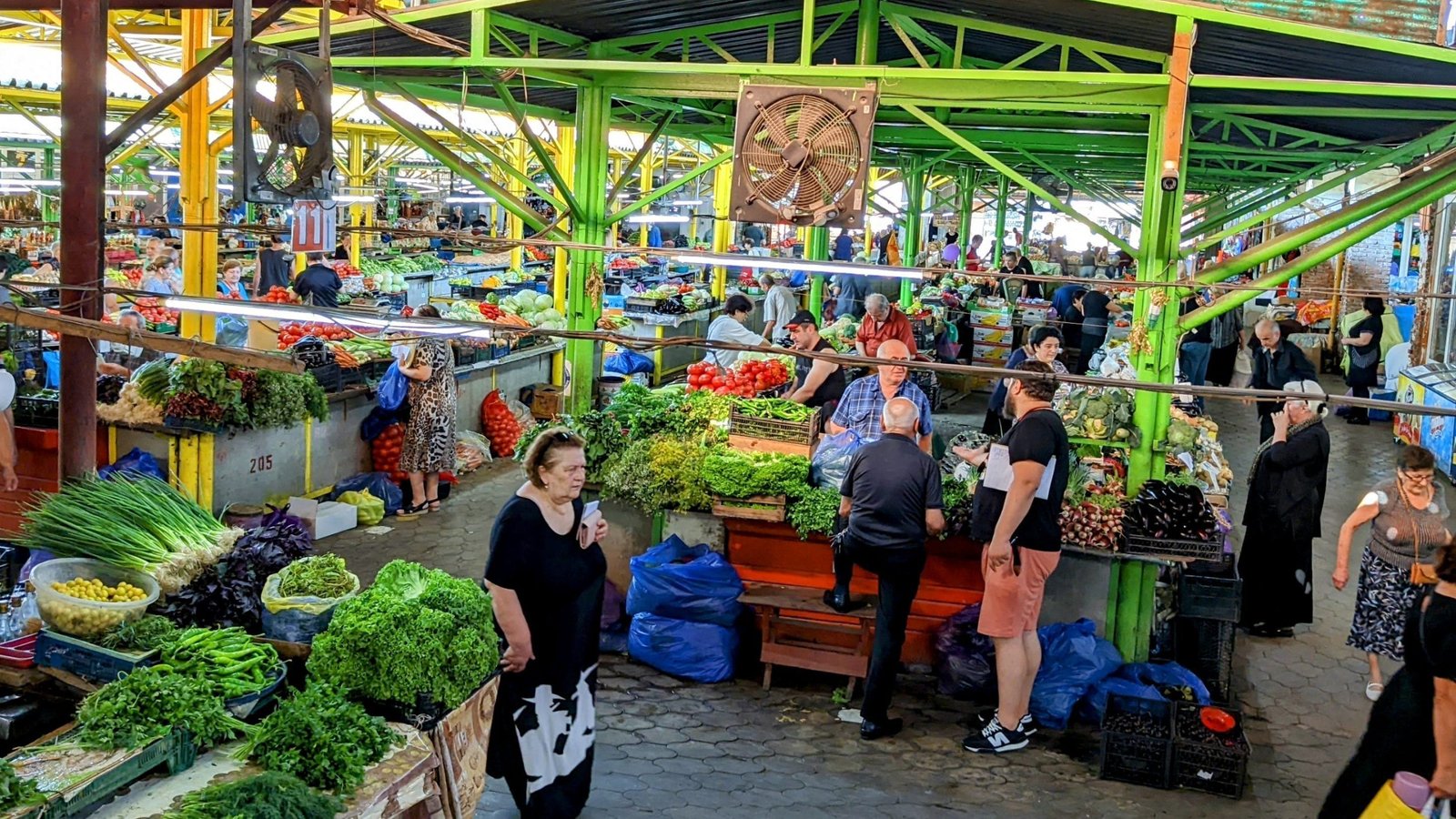 The central market of Kutaisi, two steps from the White Bridge, is the best lesson in Georgian cooking you can get in 45 minutes. What to try: sulguni and fresh Imeretian cheese, the one that goes inside khachapuri; ajika, the local chilli paste; khmeli-suneli, the spice mix that goes into half the country's recipes; tklapi, sheets of dried fruit that look like leather; churchkhela hanging everywhere and, in autumn, persimmons and pomegranates by the heap.
The women on the stalls give you things to taste and do not mind if you do not buy. Prices are real ones, not tourist ones, so if you want to take spices or honey home, this is the place. Outside, on the square, the Colchis fountain, with gilded copies of the 3,000-year-old gold pieces found around here.
Road 2KM 0 Hours and 9 Minutes
The central market of Kutaisi, two steps from the White Bridge, is the best lesson in Georgian cooking you can get in 45 minutes. What to try: sulguni and fresh Imeretian cheese, the one that goes inside khachapuri; ajika, the local chilli paste; khmeli-suneli, the spice mix that goes into half the country's recipes; tklapi, sheets of dried fruit that look like leather; churchkhela hanging everywhere and, in autumn, persimmons and pomegranates by the heap.
The women on the stalls give you things to taste and do not mind if you do not buy. Prices are real ones, not tourist ones, so if you want to take spices or honey home, this is the place. Outside, on the square, the Colchis fountain, with gilded copies of the 3,000-year-old gold pieces found around here.
Road 2KM 0 Hours and 9 Minutes
Bagrati Cathedral
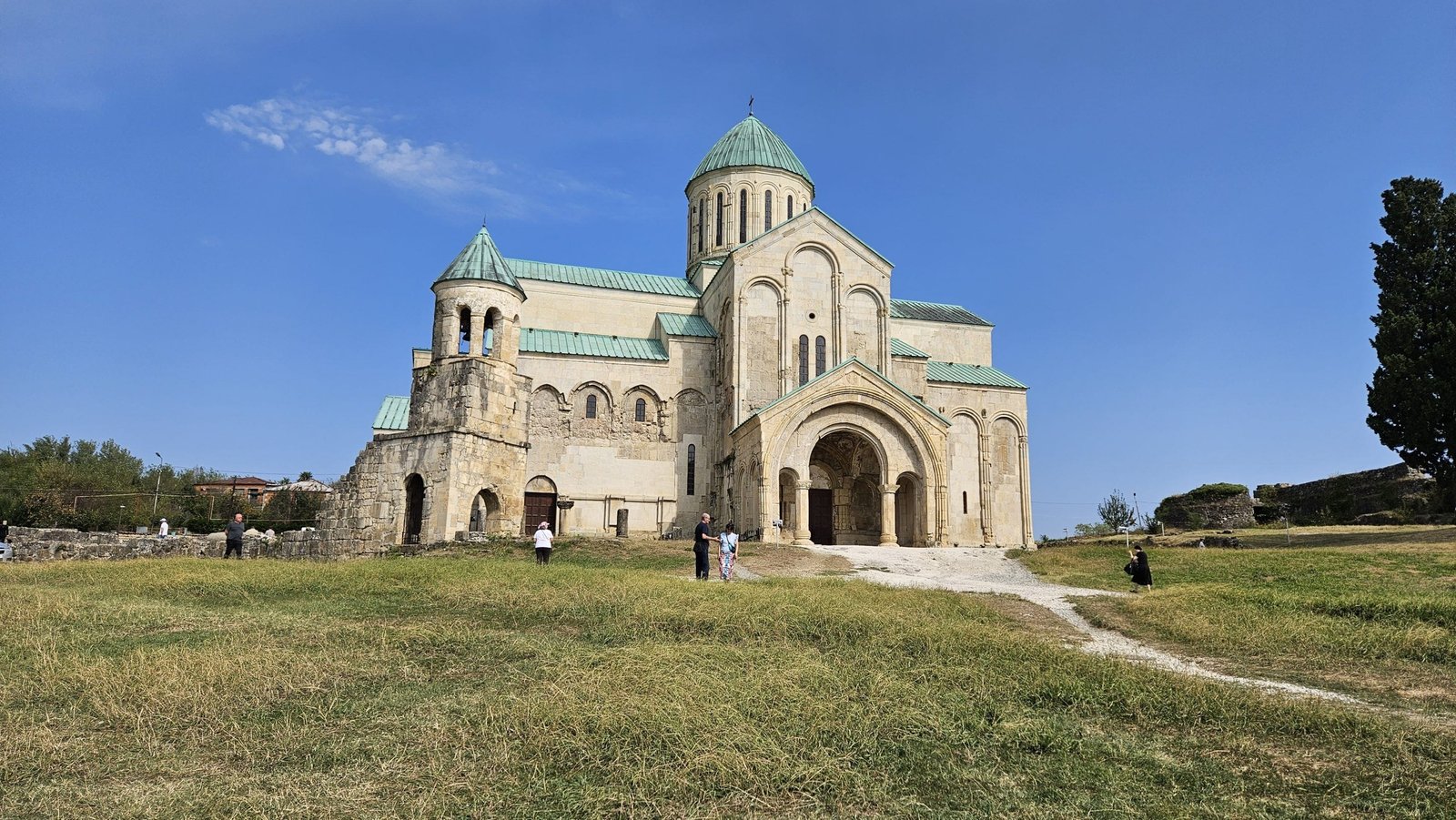 You can see it from half of Kutaisi, so you arrive already knowing what it is. What you cannot see from below is the controversy: Bagrat III consecrated it in 1003, the Ottomans blew it up in 1692 and it stood in ruins for three centuries until, in 2012, it was rebuilt in full, with concrete and a glass lift stuck to one side. UNESCO took it off the list in 2017 for that. Some people see it as a botch job. We still like it, mostly for the site: the terrace has the best view of the city and the Rioni valley. Ten minutes uphill from the centre and a full circuit of the building to find the original carvings left on the walls.
Road 10KM 0 Hours and 20 Minutes
You can see it from half of Kutaisi, so you arrive already knowing what it is. What you cannot see from below is the controversy: Bagrat III consecrated it in 1003, the Ottomans blew it up in 1692 and it stood in ruins for three centuries until, in 2012, it was rebuilt in full, with concrete and a glass lift stuck to one side. UNESCO took it off the list in 2017 for that. Some people see it as a botch job. We still like it, mostly for the site: the terrace has the best view of the city and the Rioni valley. Ten minutes uphill from the centre and a full circuit of the building to find the original carvings left on the walls.
Road 10KM 0 Hours and 20 Minutes
Gelati Academy
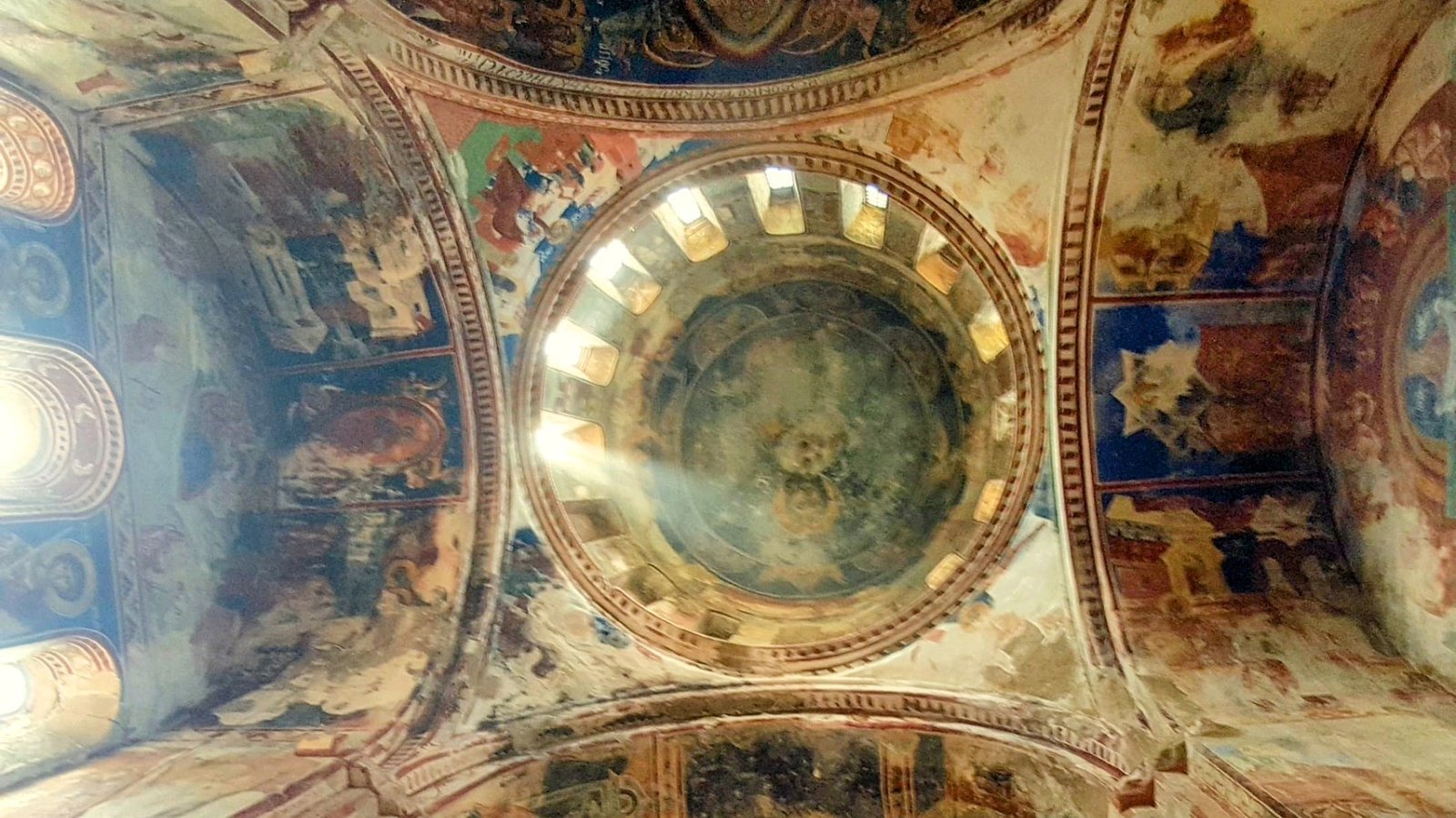 David the Builder asked to be buried in the floor of the south gate, so that everyone who came in would step on his grave. He has been there since 1125, and the monastery of Gelati, which he founded in 1106, was for centuries the great school of the kingdom: in its academy Greek philosophy was translated and copied at a time when Georgia looked to Byzantium. A UNESCO site since 1994 and, unlike Bagrati, still on the list. As soon as you enter the main church, the 12th-century mosaic of the Virgin in the apse; then frescoes on every wall, from different centuries. We give it almost an hour between the church, the tomb, the academy (a long hall with stone benches) and the church of St George. The domes were under repair for years because of leaks [VERIFICAR: estado de la restauración del tejado en 2026].
Road 29KM 0 Hours and 41 Minutes
David the Builder asked to be buried in the floor of the south gate, so that everyone who came in would step on his grave. He has been there since 1125, and the monastery of Gelati, which he founded in 1106, was for centuries the great school of the kingdom: in its academy Greek philosophy was translated and copied at a time when Georgia looked to Byzantium. A UNESCO site since 1994 and, unlike Bagrati, still on the list. As soon as you enter the main church, the 12th-century mosaic of the Virgin in the apse; then frescoes on every wall, from different centuries. We give it almost an hour between the church, the tomb, the academy (a long hall with stone benches) and the church of St George. The domes were under repair for years because of leaks [VERIFICAR: estado de la restauración del tejado en 2026].
Road 29KM 0 Hours and 41 Minutes
Prometheus Cave
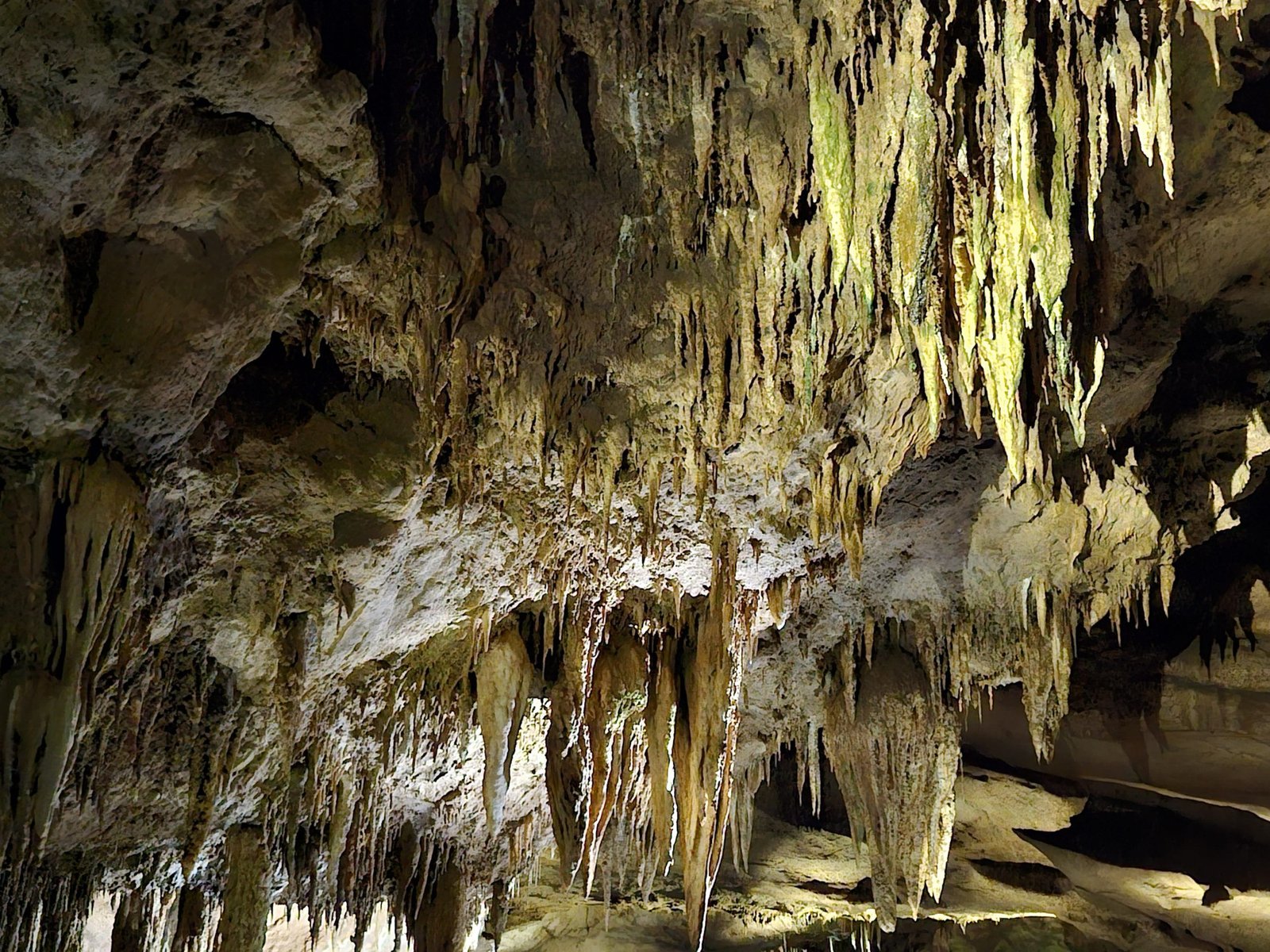 Inside it is 14 degrees all year round, which is welcome in summer and in winter too: bring a jacket. Prometheus Cave is at Kumistavi, 20 km from Kutaisi, next to the spa town of Tskaltubo. It was discovered in 1984 and opened to the public in 2011 with a route of just over a kilometre through six of its 22 halls, on concrete walkways with coloured lights that some people like and others do not. The name is for the titan who, according to the Greeks, ended up chained in these mountains; Georgians call him Amirani.
The visit takes a good hour. At the end, if the underground river has enough water, you can leave by boat along a stretch of about 300 metres, paid separately; when the level drops, you walk out. The floor is damp and slippery, so closed shoes are better.
Road 156KM 2 Hours and 42 Minutes
Inside it is 14 degrees all year round, which is welcome in summer and in winter too: bring a jacket. Prometheus Cave is at Kumistavi, 20 km from Kutaisi, next to the spa town of Tskaltubo. It was discovered in 1984 and opened to the public in 2011 with a route of just over a kilometre through six of its 22 halls, on concrete walkways with coloured lights that some people like and others do not. The name is for the titan who, according to the Greeks, ended up chained in these mountains; Georgians call him Amirani.
The visit takes a good hour. At the end, if the underground river has enough water, you can leave by boat along a stretch of about 300 metres, paid separately; when the level drops, you walk out. The floor is damp and slippery, so closed shoes are better.
Road 156KM 2 Hours and 42 Minutes
Day 11 - Batumi and surroundings
Total road of the day - 27KM 0 Hours and 50 Minutes In the morning, Borjgalo Ethnographic Museum; in the afternoon, Gonio Fortress. 27 km in all. Road 6KM 0 Hours and 15 MinutesBorjgalo Ethnographic Museum
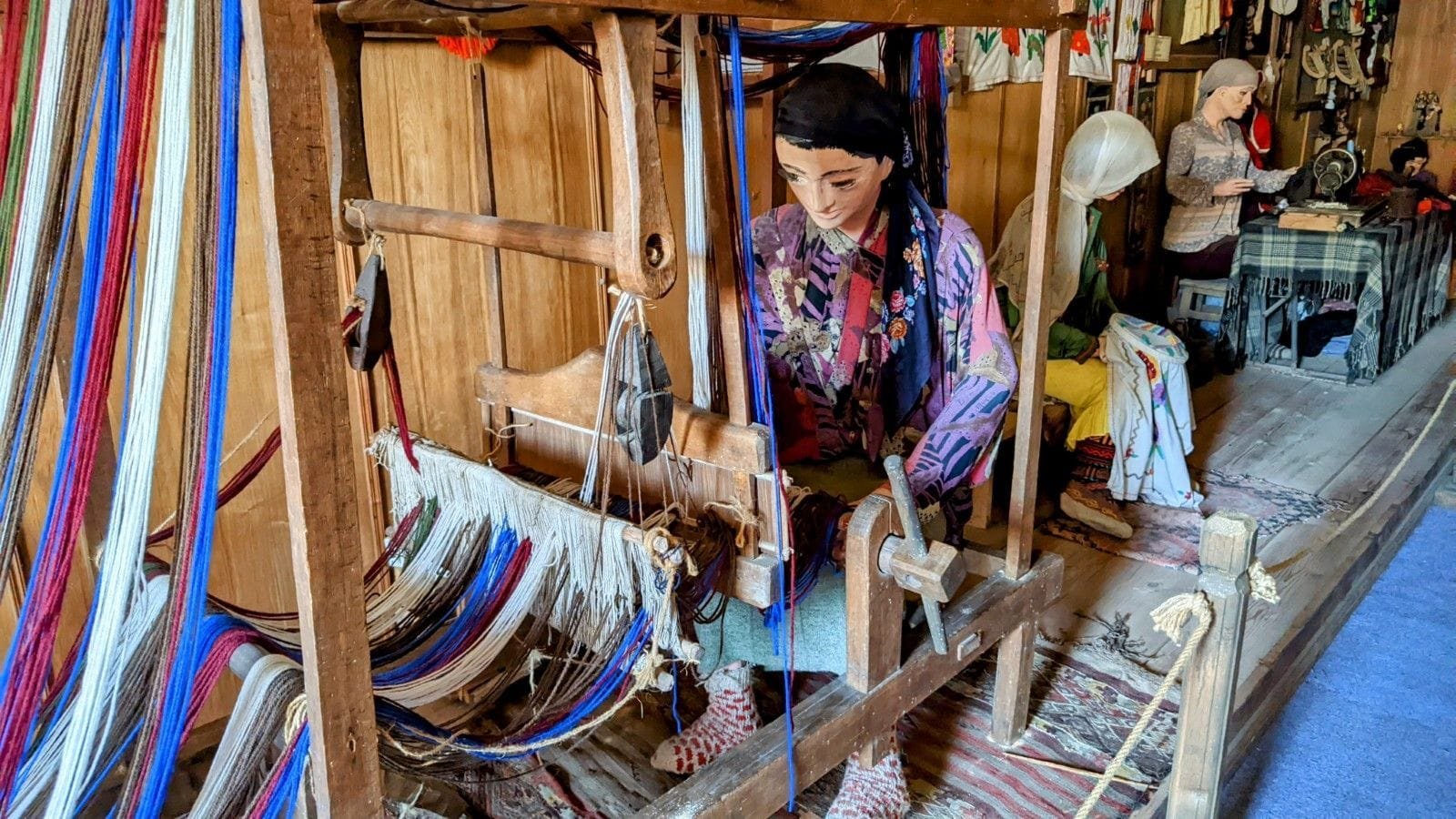 It is not a museum in the usual sense. Borjgalo was made by hand by Kemal Turmanidze, a sculptor from the area, and opened in 2016 on the outskirts of Batumi, near the airport: models and near life-size wooden figures showing how people lived in the villages of Adjara a hundred years ago, the house, the mill, the forge, the wedding, the beekeeper. Many pieces move or make sounds, and Kemal himself or his family are usually around.
It works very well with children and with anyone who is tired of churches by now. An hour. It sits on a residential street with nothing around it, so do not expect a café.
It is not a museum in the usual sense. Borjgalo was made by hand by Kemal Turmanidze, a sculptor from the area, and opened in 2016 on the outskirts of Batumi, near the airport: models and near life-size wooden figures showing how people lived in the villages of Adjara a hundred years ago, the house, the mill, the forge, the wedding, the beekeeper. Many pieces move or make sounds, and Kemal himself or his family are usually around.
It works very well with children and with anyone who is tired of churches by now. An hour. It sits on a residential street with nothing around it, so do not expect a café.
Gonio Fortress
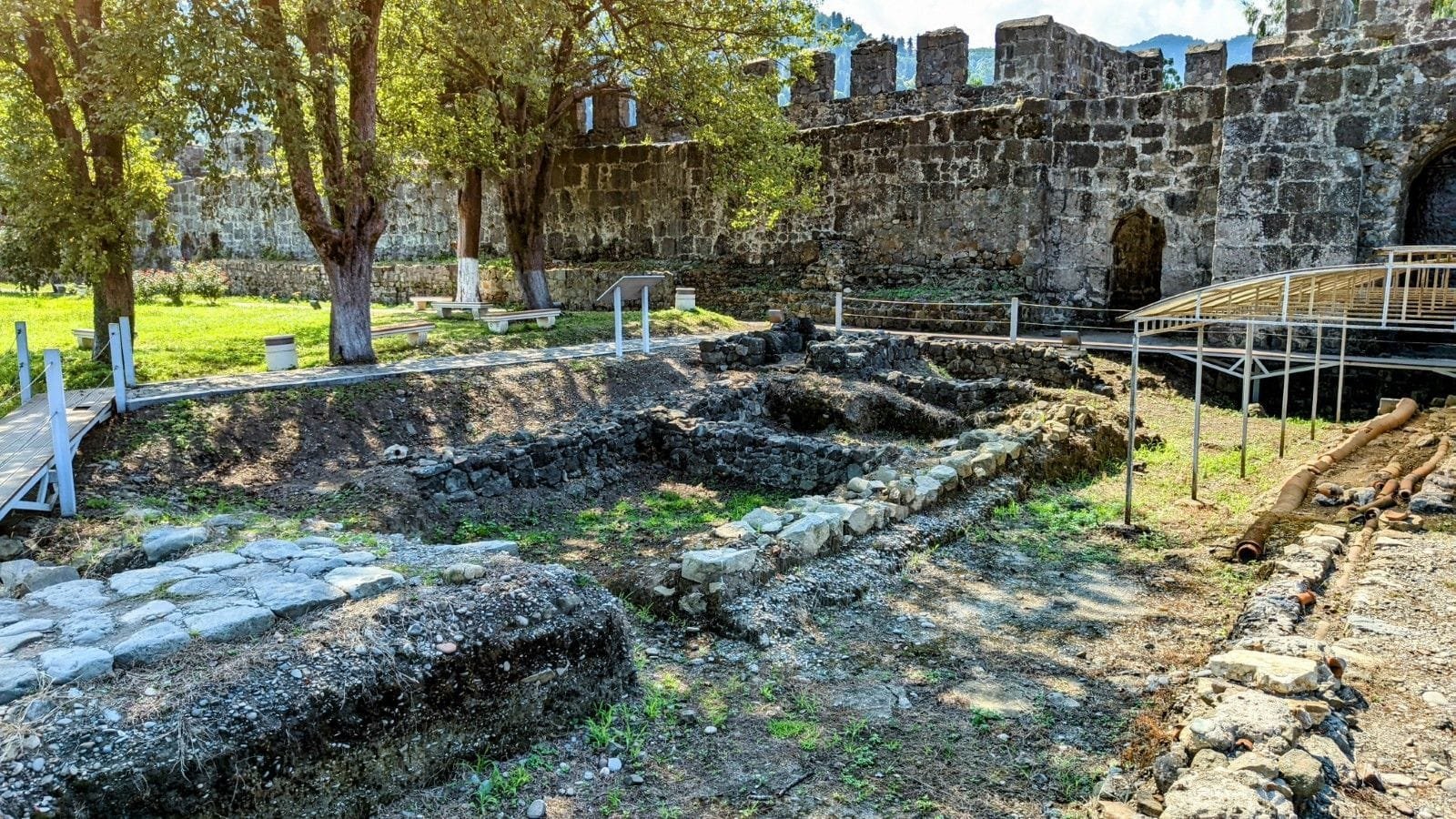 Fifteen kilometres south of Batumi, almost on the Turkish border, the Romans built the camp of Apsaros in the 1st century to watch the coast, and the walls are still standing: a rectangle with a perimeter of almost 900 metres and 18 of its original 22 towers. Later the Byzantines and the Ottomans used it, and the Ottomans called it Gonio. Inside there is a small museum with the finds from the digs, the remains of Roman baths and a grave that tradition attributes to the apostle Matthias, the one who replaced Judas. No proof, but people come to pray.
It is a 45-minute stop, flat and without shade; in summer bring a cap. If there is time, Gonio beach is next door and is one of the quietest in the area.
Fifteen kilometres south of Batumi, almost on the Turkish border, the Romans built the camp of Apsaros in the 1st century to watch the coast, and the walls are still standing: a rectangle with a perimeter of almost 900 metres and 18 of its original 22 towers. Later the Byzantines and the Ottomans used it, and the Ottomans called it Gonio. Inside there is a small museum with the finds from the digs, the remains of Roman baths and a grave that tradition attributes to the apostle Matthias, the one who replaced Judas. No proof, but people come to pray.
It is a 45-minute stop, flat and without shade; in summer bring a cap. If there is time, Gonio beach is next door and is one of the quietest in the area.


