This day is designed for those who have slept in Sighnaghi and want to end in Tbilisi without retracing their steps. In the morning, a walk along the walls, with the Alazani valley and the Caucasus in the background on a clear day, and the 2 km to Bodbe, the convent where Saint Nino rests, the woman who converted Georgia to Christianity in the 4th century. Below the monastery there is a spring reached by several hundred steps; if you want to go down, allow an extra hour.
Then the landscape changes completely: vineyards first, then steppe, as far as the David Gareja lavra, cut into the rock in the 6th century right on the border with Azerbaijan. We visit the lower monastery, the one still inhabited; the trail to the Udabno caves on the ridge has had restricted access for years because of the border dispute, and the guide will tell you how things stand that day. Back to Tbilisi late in the afternoon, about 70 km of dirt track and road.
Itinerary
Day 1 - Sighnaghi - Bodbe - David Gareja - Tbilisi
Total road of the day - 202KM 4 Hours and 35 Minutes 202 km and 4 hours 35 minutes in the car in all. Today's stops: Bodbe Monastery and David Gareja. Road 2KM 0 Hours and 5 MinutesBodbe Monastery
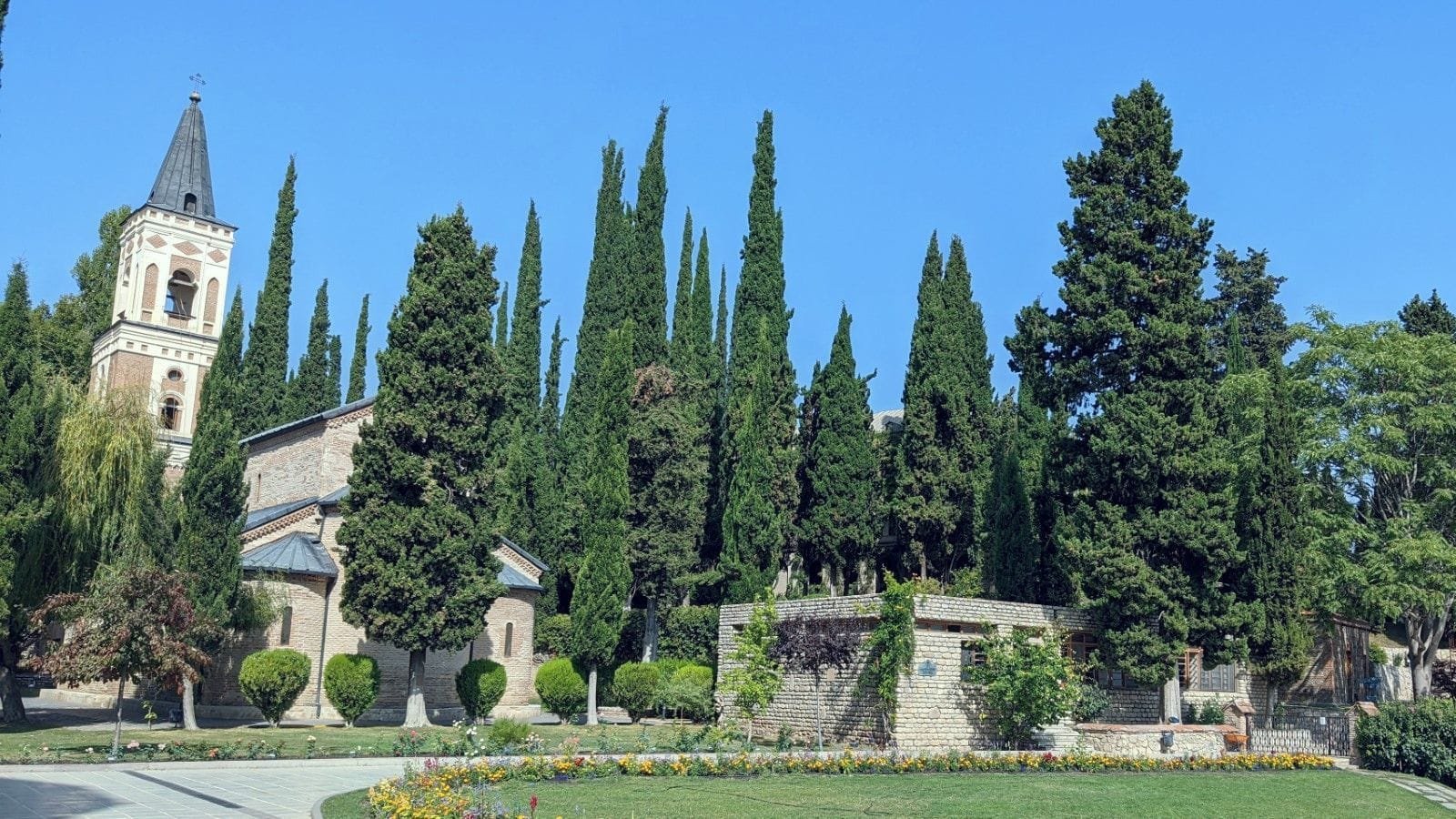 St Nino is buried here, the woman who converted Georgia to Christianity in the 4th century, and that is why Bodbe is the most visited place of pilgrimage in the country. It is a convent 2 km from Sighnaghi, among cypresses, with a small 9th-century church much rebuilt in the 17th, where the tomb is, and a huge new cathedral finished a few years ago that we like less. From the garden you see the whole Alazani valley.
What sets Bodbe apart is St Nino's spring: a source 3 km downhill along a path, where pilgrims get into the icy water in a white shirt. It is 30 minutes down and 45 up, and there are minibuses for the way back. With a normal group we stay at the top; if someone wants to go down, we arrange it. Headscarf and covered shoulders.
David Gareja
 A monastery cut into the rock in the middle of a semi-desert of striped hills, 70 km from Tbilisi and right on the border with Azerbaijan. It was founded in the 6th century by David Garejeli, one of the thirteen Assyrian fathers, and for centuries it was the great centre of Georgian painting: the cells and chapels on the ridge, in the part called Udabno, keep frescoes from the 10th to the 13th century. In 1615 Shah Abbas killed six hundred monks here on an Easter night; the Lavra, the lower monastery, has had monks again since the 1990s.
An important warning: the ridge with the frescoes is disputed border territory and since 2019 access has been closed or restricted depending on the moment; what can be visited with certainty is the Lavra. The last stretch of road is dirt, in summer it is very hot and there are vipers: closed shoes and water. Two and a half hours including the drive there and back.


