Georgia has three places cut into the rock that are nothing like each other, and this trip joins them in a triangle. Uplistsikhe, on the first day, is the oldest: a pagan Iron Age town with carved streets and wine cellars. Prometheus Cave, on the second, is the work of water: 1.4 km of galleries with stalactites at 14 degrees. And Vardzia, on the third, is the monastery city Queen Tamar had dug in the 12th century, with hundreds of rooms on thirteen levels and a painted church in the middle.
In between: Mtskheta and the Stalin museum in Gori on the way to Kutaisi; Bagrati and Gelati on the morning of the second day and Borjomi in the afternoon, so as to reach Akhaltsikhe in daylight and go up to Rabati castle; and Khertvisi fortress before the return to Tbilisi. No day goes over 290 km. Nights in Kutaisi and Akhaltsikhe, hotels of your choice.
Itinerary
Day 1 - Tbilisi - Mtskheta - Uplistsikhe - Gori - Kutaisi
Total road of the day - 267KM 4 Hours and 44 Minutes Jvari, Svetitskhoveli, Uplistsikhe and Stalin Museum. It is 267 km; we leave early so as not to rush. Road 25KM 0 Hours and 36 MinutesJvari, the Monastery of the Cross
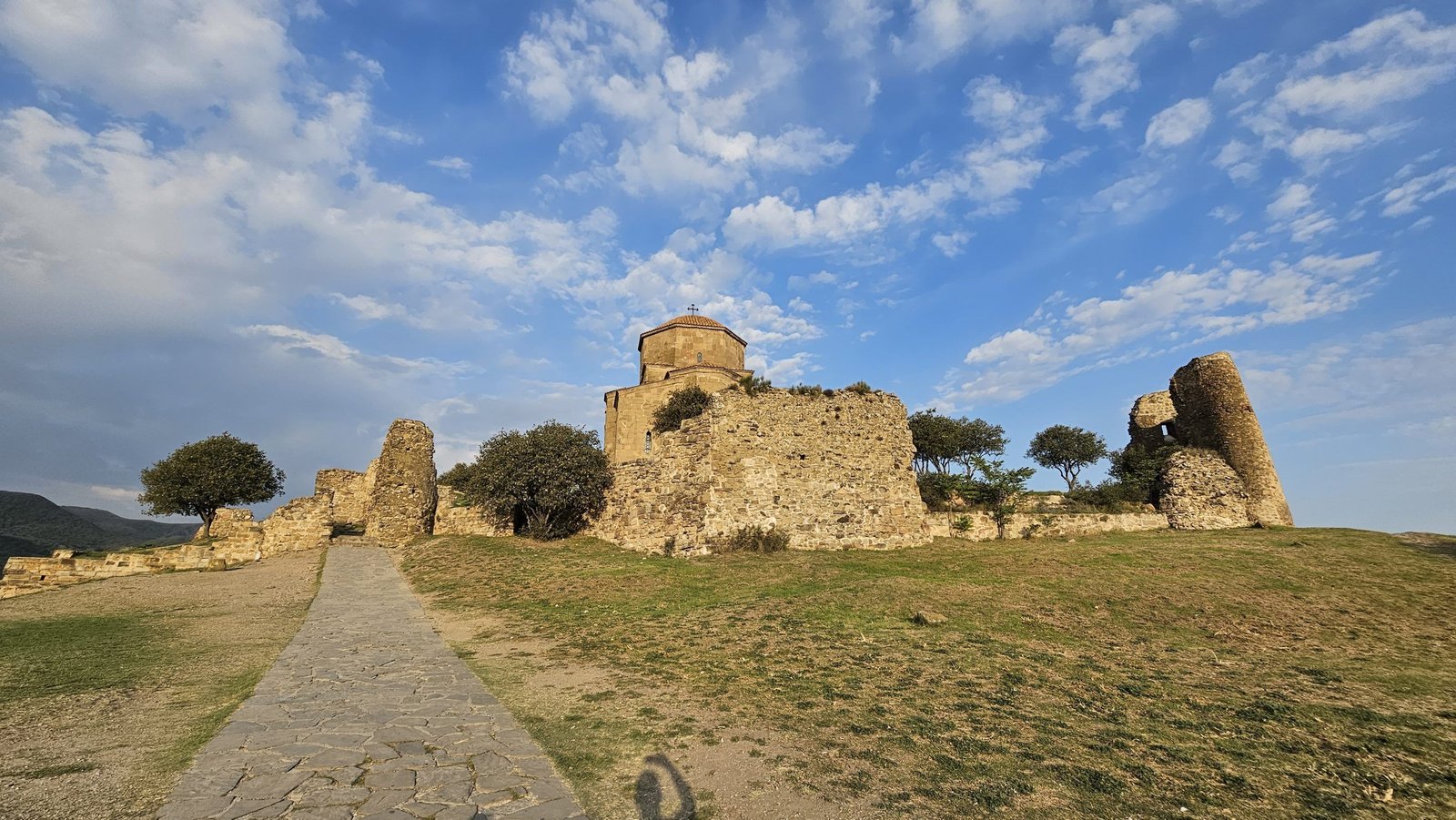 From the Tbilisi road you can see a small church on top of a bare hill above Mtskheta. It is Jvari, "the cross", and it is there because, according to tradition, in the 4th century St Nino planted a wooden cross on that spot when she converted Georgia. The present church was built between 586 and 605 and became the model for many others in the country: a cross plan with four apses and a dome in the middle, with hardly any decoration. It is a UNESCO site together with Mtskheta.
What you remember is the view: below, the Aragvi and the Mtkvari meet, each a different colour, with Svetitskhoveli cathedral in between. Lermontov set his poem "Mtsyri" here. It is almost always windy, so a jacket is not a bad idea even in July. Twenty minutes, half an hour if the day is clear.
Road 13KM 0 Hours and 18 Minutes
Svetitskhoveli
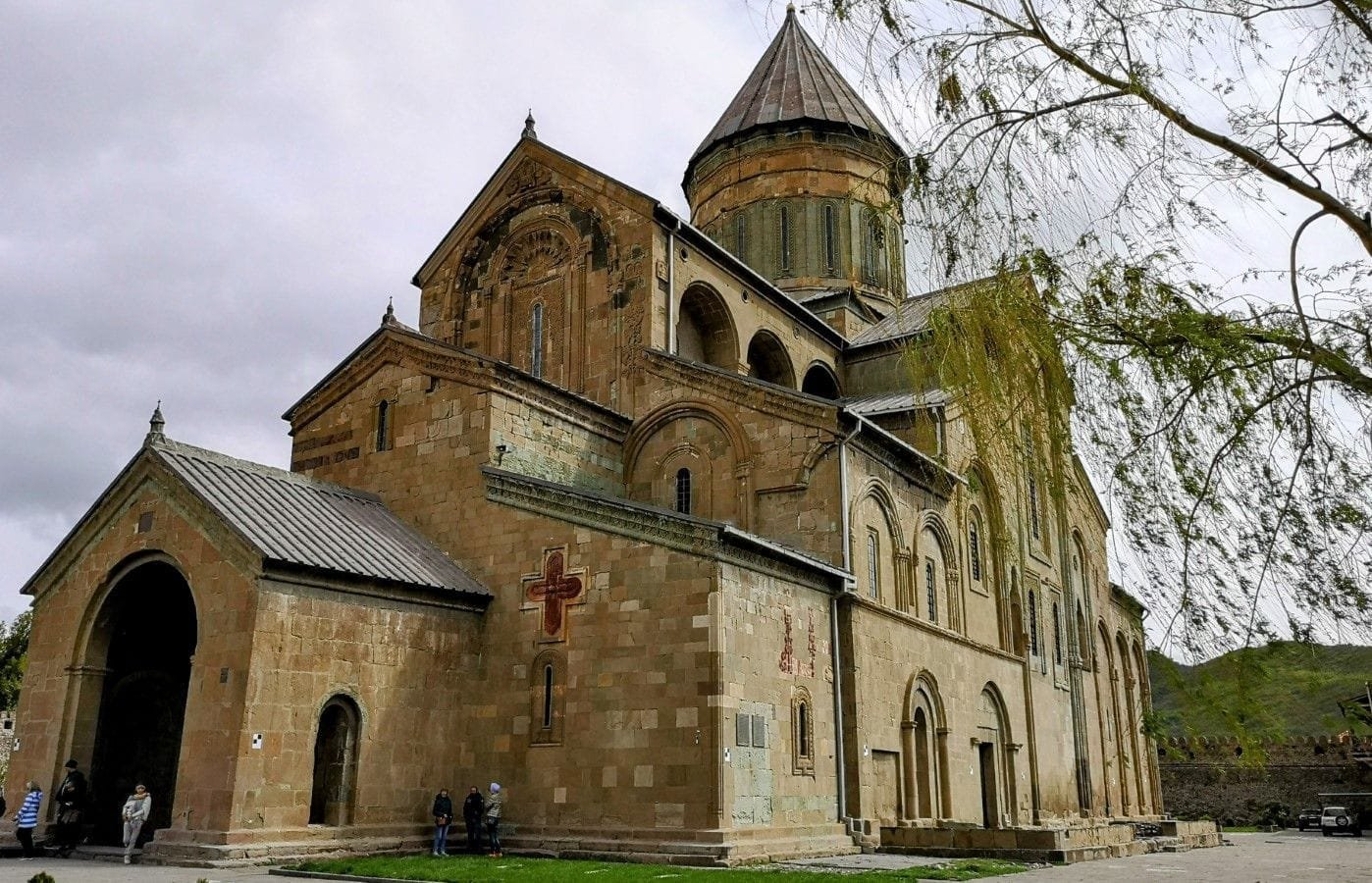 For a Georgian this is the cathedral, full stop. It stands in Mtskheta, the old capital, 20 km from Tbilisi, and the present building went up between 1010 and 1029 on the site of the 4th-century church of King Mirian, the one who converted the country to Christianity. Beneath it, according to tradition, lies the robe of Christ: a Jew from Mtskheta brought it from Jerusalem, his sister Sidonia died clutching it and they were buried together; a cedar grew from the spot, and from its trunk came the pillar that gives the church its name, "the life-giving pillar". Kings were crowned and buried here; the slabs of Vakhtang Gorgasali and Erekle II are in the floor.
A UNESCO site since 1994, and at weekends the weddings follow one another, so sometimes you wait at the door. Headscarves for women and covered shoulders for everyone. Half an hour inside, another in the lanes around it, which live off tourism but keep the feel of a village.
Road 61KM 1 Hours and 5 Minutes
Uplistsikhe
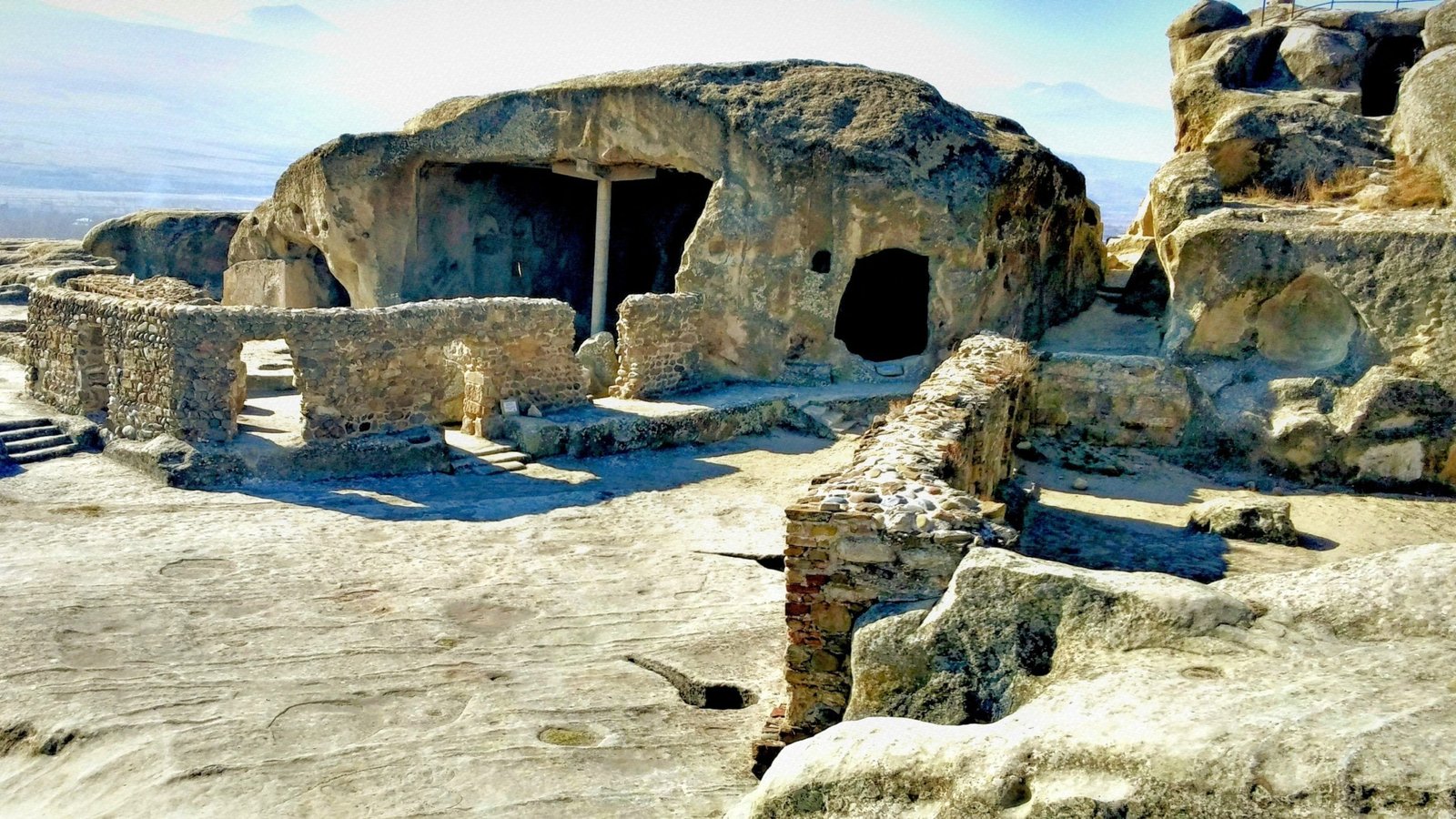 A whole town cut into the rock, 10 km from Gori above the Mtkvari river. People lived at Uplistsikhe from the first millennium BC until the Middle Ages: first a pagan centre, then a Christian one, and always a stop for the caravans. What remains are carved streets, a hall with a ceiling imitating wooden beams (they call it "Queen Tamar's hall"), wine presses, a tunnel down to the river and a 10th-century brick church planted on top of it all. The Mongols emptied it in the 13th century and it never recovered.
One piece of advice: in summer there is no shade and the rock burns, so go early or late in the day, and wear shoes with grip, because the polished stone is slippery. An hour is enough to climb up to the church and look down at the river.
Road 14KM 0 Hours and 20 Minutes
Stalin Museum
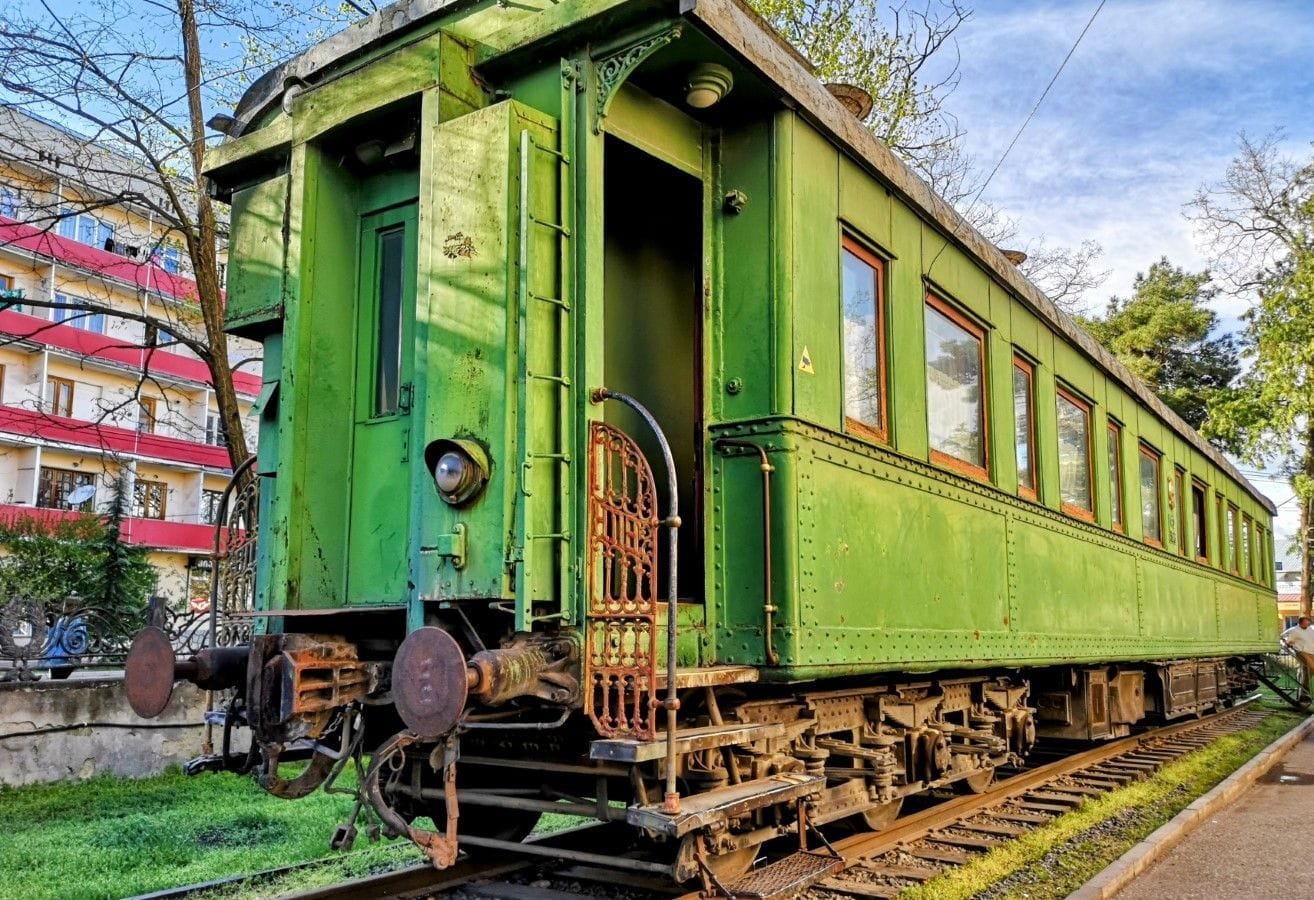 Gori is the town where Iosif Dzhugashvili was born in 1878, and the museum dedicated to him in 1957 is still open much as it was then. It is three things: the little wooden house where he was born, protected under a pavilion of columns; the main building, a Soviet-style palace with his personal belongings, photographs, gifts from heads of state and one of the bronze copies of his death mask; and the armoured railway carriage in which he travelled to Yalta and Potsdam, because he did not like flying.
Let us be plain: the museum tells the kind version. There is a small room on the repression, added late, and little else. We tell the rest on the road, and the one-hour visit usually ends in a long conversation in the car.
Road 154KM 2 Hours and 25 Minutes
Day 2 - Kutaisi - Bagrati - Gelati - Promete - Borjomi-Akhaltsikhe
Total road of the day - 240KM 4 Hours and 55 Minutes First Bagrati Cathedral, then Gelati Academy, Prometheus Cave and Borjomi. 240 km, 4 hours 55 minutes; lunch on the way. Road 2KM 0 Hours and 9 MinutesBagrati Cathedral
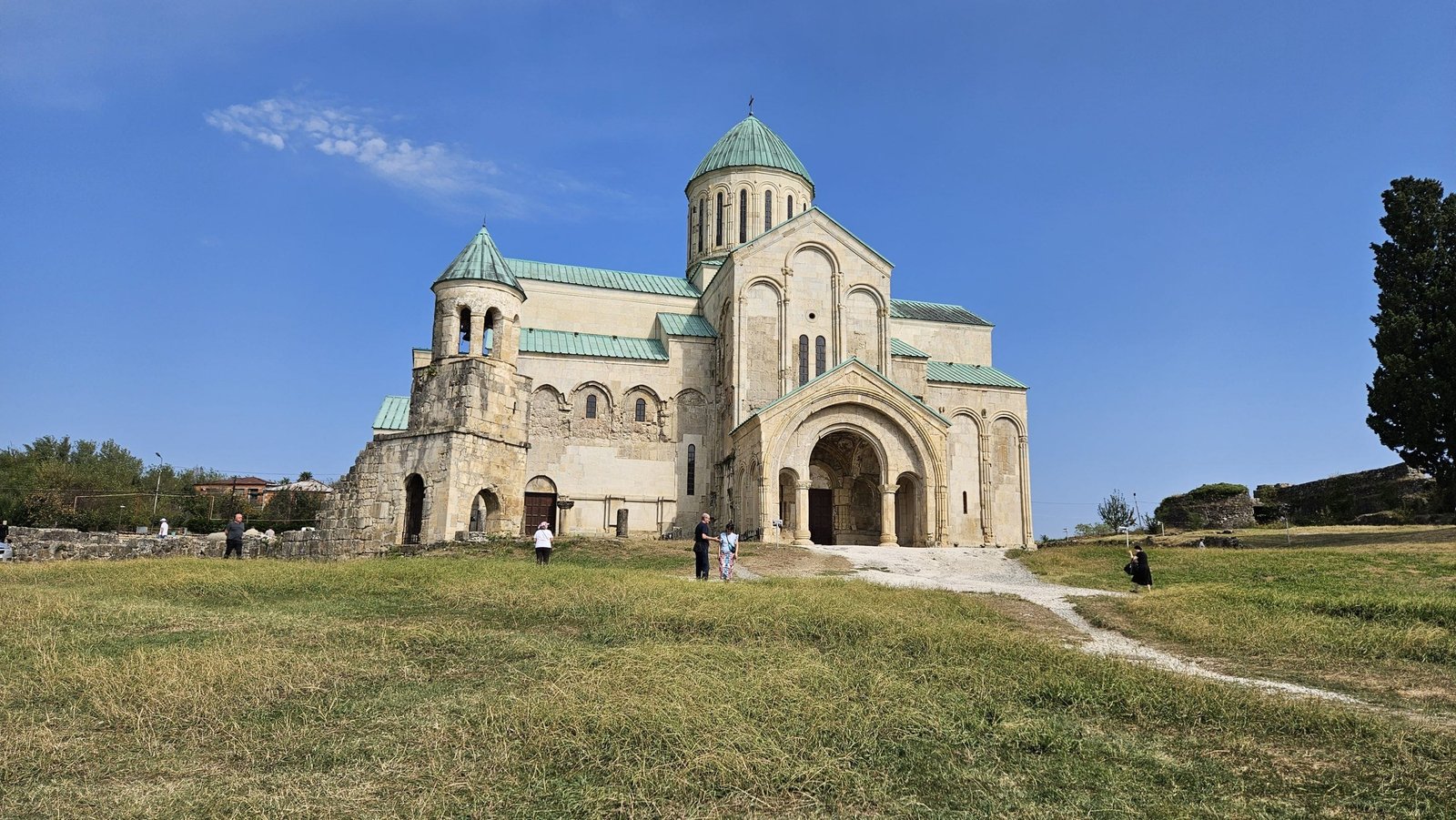 You can see it from half of Kutaisi, so you arrive already knowing what it is. What you cannot see from below is the controversy: Bagrat III consecrated it in 1003, the Ottomans blew it up in 1692 and it stood in ruins for three centuries until, in 2012, it was rebuilt in full, with concrete and a glass lift stuck to one side. UNESCO took it off the list in 2017 for that. Some people see it as a botch job. We still like it, mostly for the site: the terrace has the best view of the city and the Rioni valley. Ten minutes uphill from the centre and a full circuit of the building to find the original carvings left on the walls.
Road 10KM 0 Hours and 20 Minutes
Gelati Academy
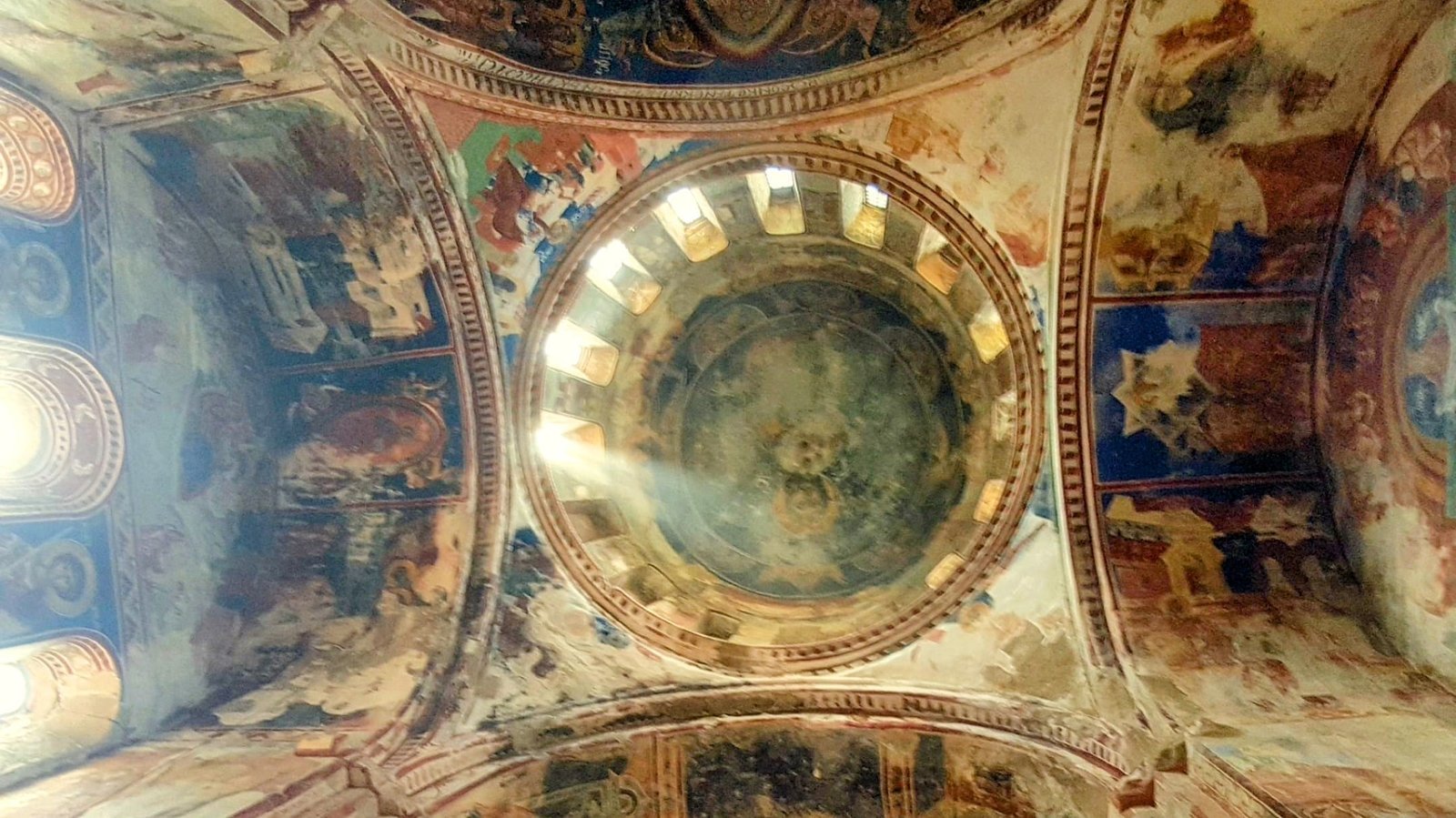 David the Builder asked to be buried in the floor of the south gate, so that everyone who came in would step on his grave. He has been there since 1125, and the monastery of Gelati, which he founded in 1106, was for centuries the great school of the kingdom: in its academy Greek philosophy was translated and copied at a time when Georgia looked to Byzantium. A UNESCO site since 1994 and, unlike Bagrati, still on the list. As soon as you enter the main church, the 12th-century mosaic of the Virgin in the apse; then frescoes on every wall, from different centuries. We give it almost an hour between the church, the tomb, the academy (a long hall with stone benches) and the church of St George. The domes were under repair for years because of leaks [VERIFICAR: estado de la restauración del tejado en 2026].
Road 29KM 0 Hours and 41 Minutes
Prometheus Cave
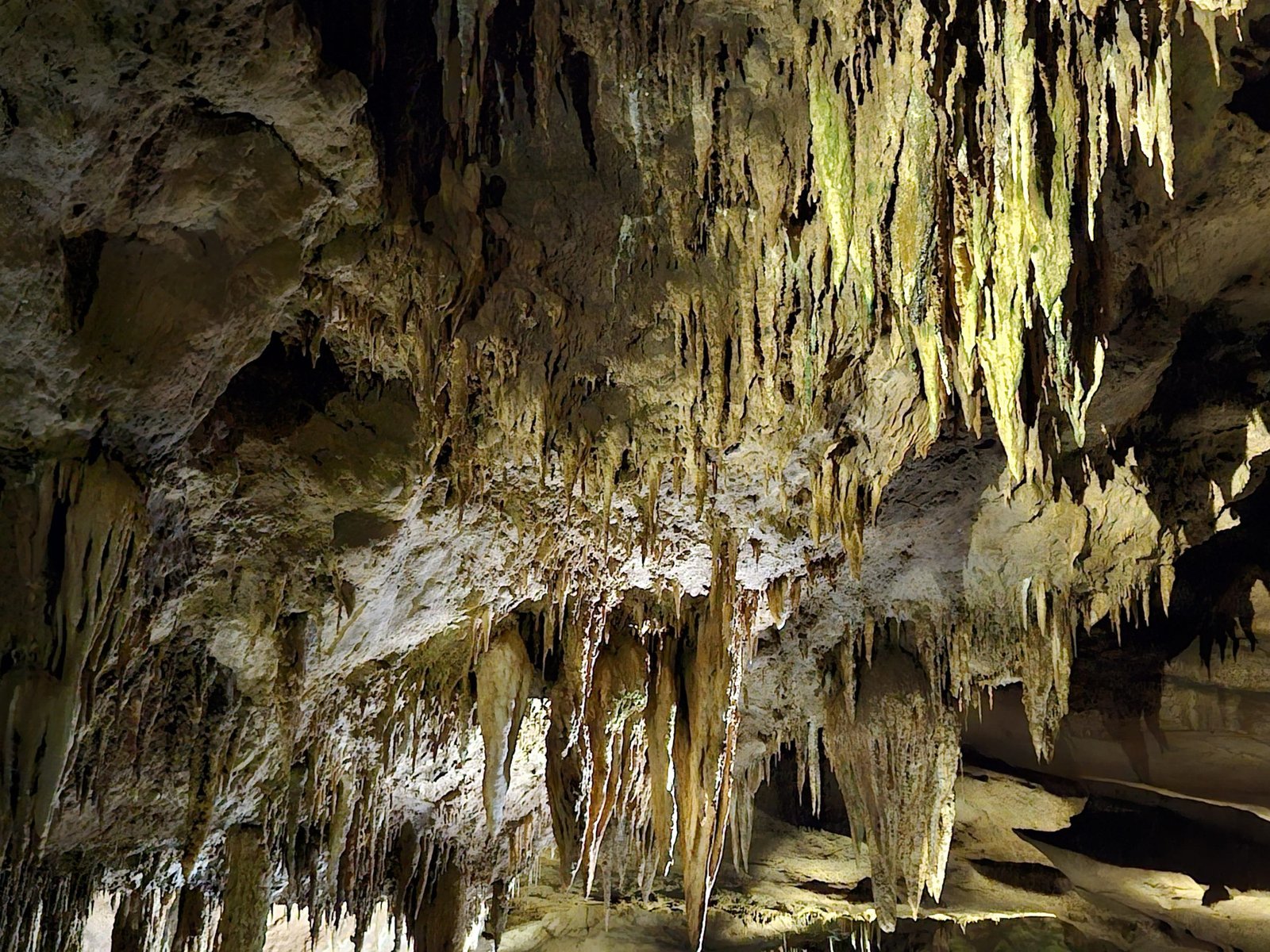 Inside it is 14 degrees all year round, which is welcome in summer and in winter too: bring a jacket. Prometheus Cave is at Kumistavi, 20 km from Kutaisi, next to the spa town of Tskaltubo. It was discovered in 1984 and opened to the public in 2011 with a route of just over a kilometre through six of its 22 halls, on concrete walkways with coloured lights that some people like and others do not. The name is for the titan who, according to the Greeks, ended up chained in these mountains; Georgians call him Amirani.
The visit takes a good hour. At the end, if the underground river has enough water, you can leave by boat along a stretch of about 300 metres, paid separately; when the level drops, you walk out. The floor is damp and slippery, so closed shoes are better.
Road 151KM 2 Hours and 50 Minutes
Borjomi
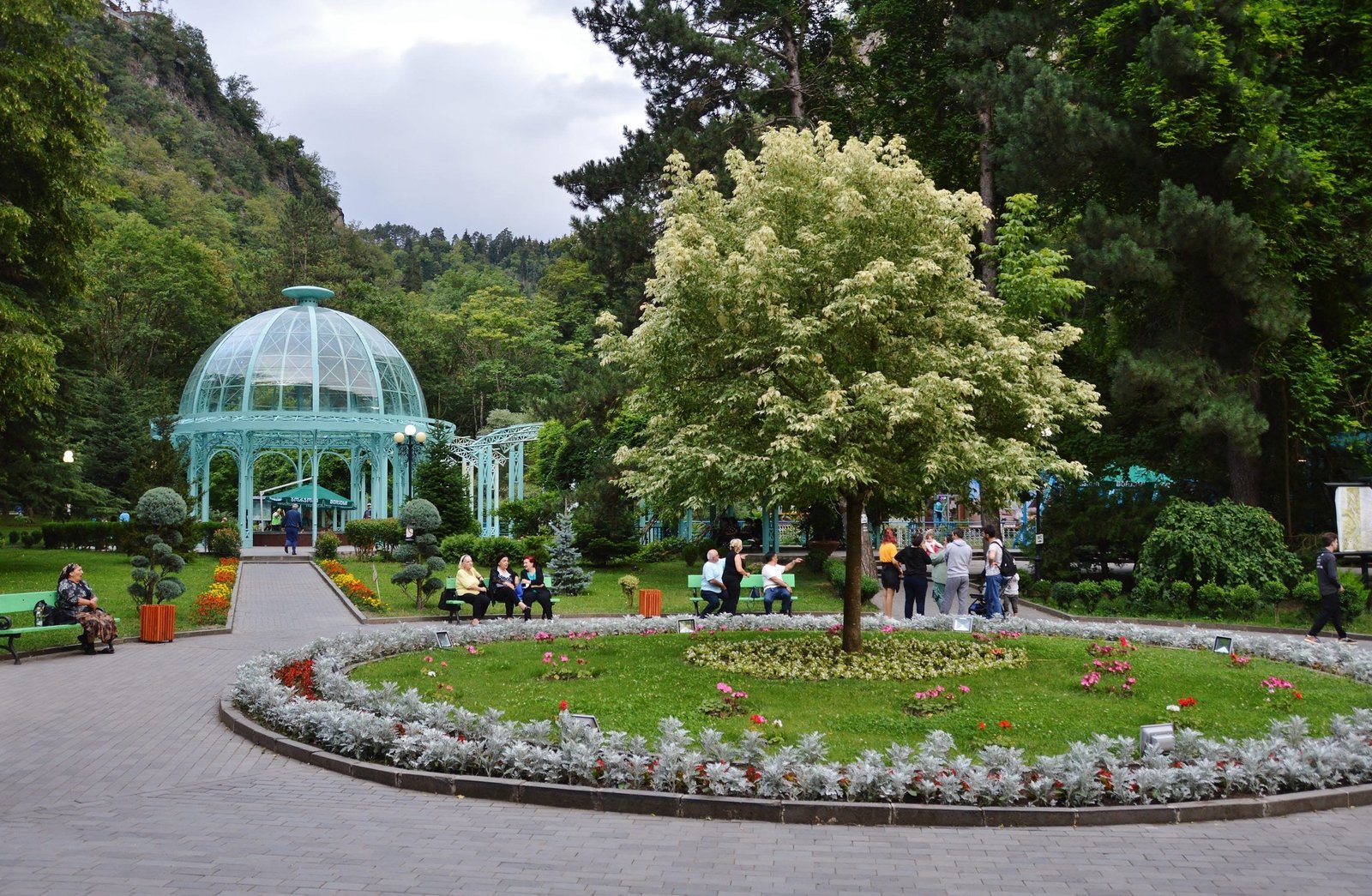 The fizzy water drunk all over the former Soviet Union comes from here, and it has been bottled since 1890. Borjomi was the spa of the Romanovs, who built themselves a palace at Likani, at the entrance to the town, and what remains of that is the air of a spa town from another age: wooden villas, a central park of 1850 with the spring where anyone can fill a bottle (it comes out warm, salty and fizzy, and not everyone likes it) and a cable car up to a viewpoint with a Ferris wheel.
An hour for the park and the spring; for walkers, the 3 km path to the sulphur pools in the forest starts at the far end of the park. The town is the gateway to the Borjomi-Kharagauli national park and the last stop with shops and banks before Vardzia.
Road 48KM 0 Hours and 55 Minutes
Day 3 - Akhaltsikhe - Vardzia - Khertvisi - Tbilisi
Total road of the day - 287KM 5 Hours and 30 Minutes A day with 5 hours 30 minutes at the wheel, which is not nothing, and in return Vardzia and Khertvisi Fortress. Road 60KM 1 Hours and 20 MinutesVardzia
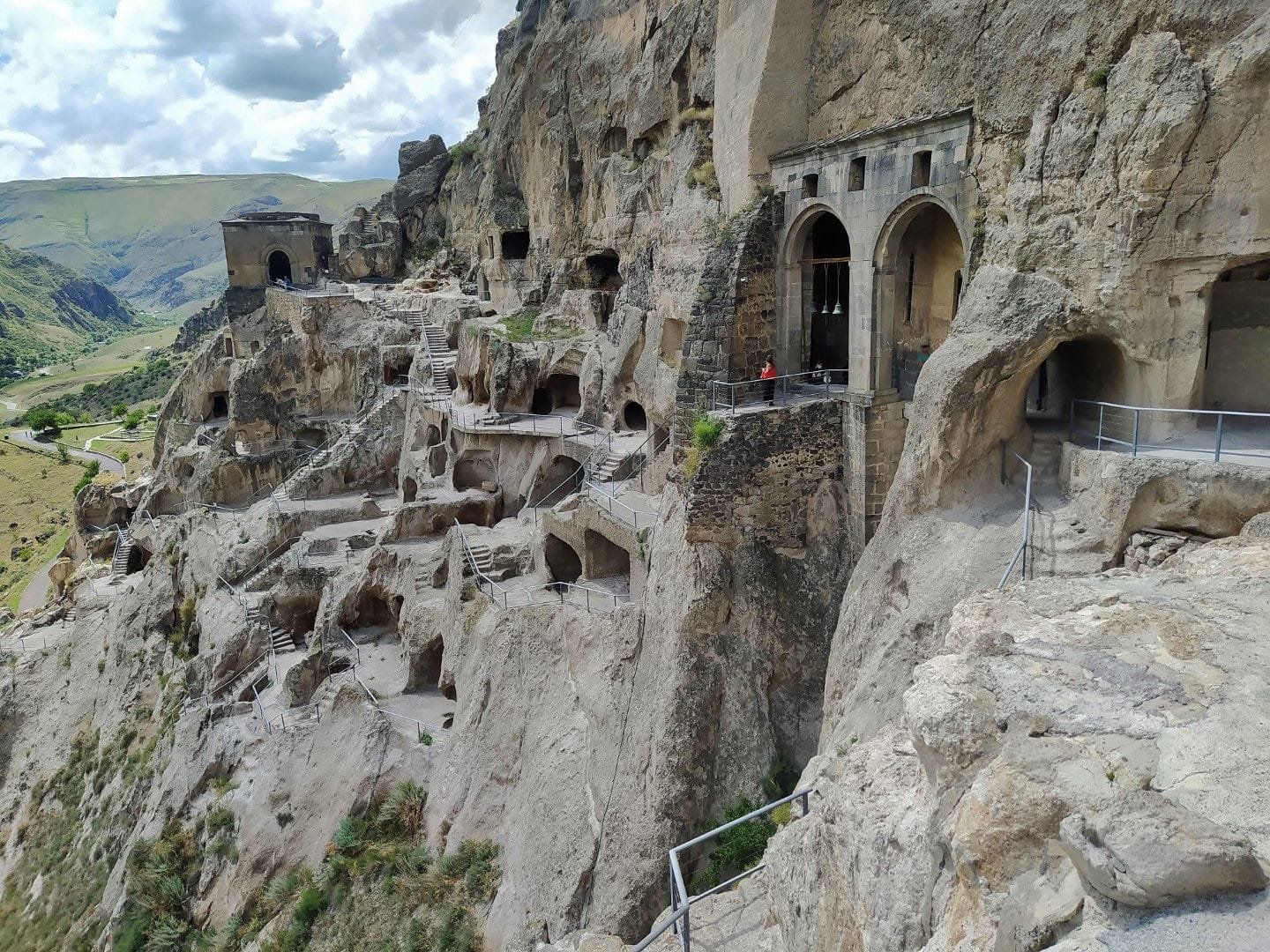 A rock face 500 metres long riddled with 19 storeys of openings: that is Vardzia, the cave monastery Queen Tamar finished around 1185 in the Mtkvari valley, 60 km from Akhaltsikhe. It once had thousands of rooms; the earthquake of 1283 took the whole front off and exposed what you see today, some 600 rooms including cells, wine cellars, refectories, a pharmacy and irrigation channels cut into the stone. In the Church of the Dormition are the 12th-century frescoes, with one of the few portraits of Tamar made in her lifetime.
It is still a monastery, with a few monks, so some areas are closed. The visit takes an hour and a half, almost all of it on stairs and through narrow tunnels: not for bad knees or claustrophobia, although there are routes that avoid the passages. In summer the sun hits the wall from mid-morning; we go as early as we can.
Khertvisi Fortress
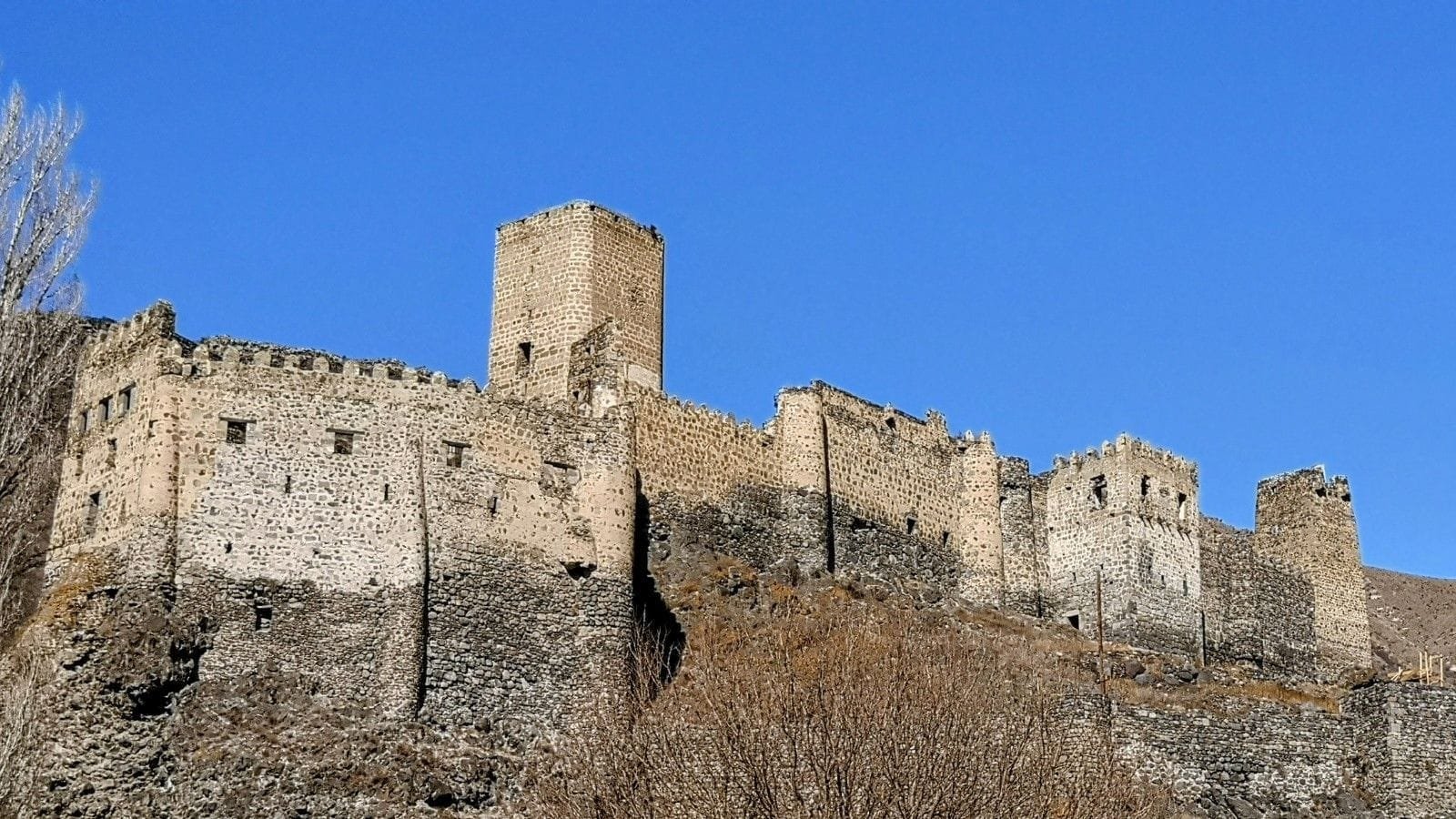 Where the Paravani river meets the Mtkvari, on the way to Vardzia, a castle perches on a crag that has been there in one form or another since the 2nd century BC; legend says Alexander the Great destroyed it, though he never came this way. The walls and towers you see date from the 10th to the 14th century, with a church of 985 inside. Khertvisi watched the road between Georgia and the Ottoman Empire, and changed hands as often as the region did.
A 20-minute stop, with a short, steep climb to the towers for anyone who wants the view of the valley. There is a secret tunnel that went down to the river, closed today.


