It is the four-day canyons-and-caves trip with one more day to touch the sea. From Kutaisi, where we sleep three nights, the second day goes to the Okatse and Martvili canyons, and the third drops down to the Shekvetili dendrological park and Batumi, with time for the boulevard and the old town before returning. The fourth is the cathedral day: Bagrati, above the city, and Gelati, with its frescoes, then Prometheus Cave and the road south via Borjomi to Akhaltsikhe.
The fifth closes with Vardzia, the 12th-century monastery city, and Khertvisi fortress, and reaches Tbilisi mid-afternoon. The outward leg from the capital is the usual one: Jvari and Svetitskhoveli in Mtskheta, Uplistsikhe and the Stalin museum in Gori. Four hotels of your choice, no day over 330 km, and the sea as a bonus in the middle.
Itinerary
Day 1 - Tbilisi - Mtskheta - Uplistsikhe - Gori - Kutaisi
Total road of the day - 267KM 4 Hours and 44 Minutes We leave after breakfast. On the programme, Jvari, Svetitskhoveli, Uplistsikhe and Stalin Museum; 267 km in short stretches. Road 25KM 0 Hours and 36 MinutesJvari, the Monastery of the Cross
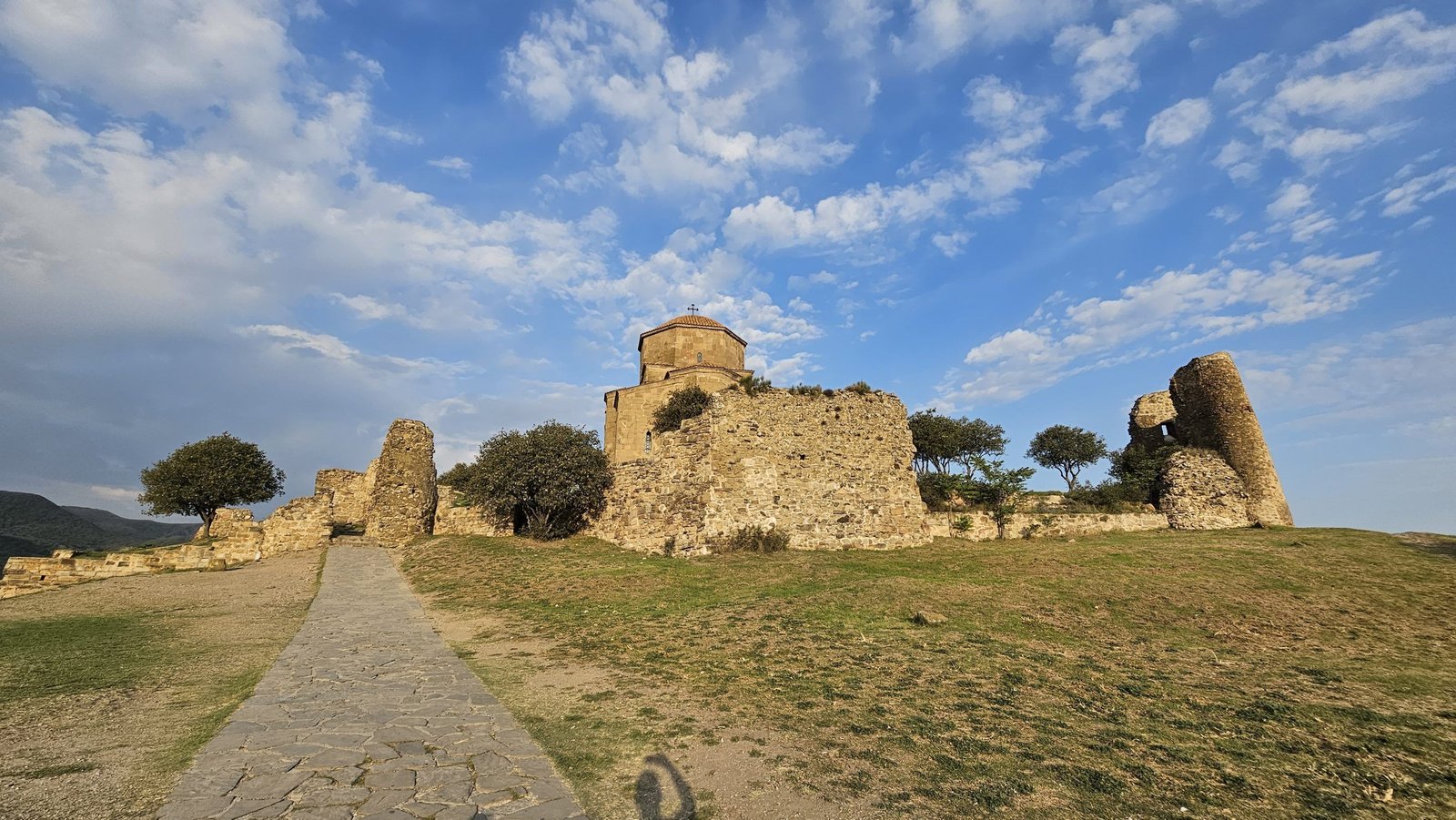 From the Tbilisi road you can see a small church on top of a bare hill above Mtskheta. It is Jvari, "the cross", and it is there because, according to tradition, in the 4th century St Nino planted a wooden cross on that spot when she converted Georgia. The present church was built between 586 and 605 and became the model for many others in the country: a cross plan with four apses and a dome in the middle, with hardly any decoration. It is a UNESCO site together with Mtskheta.
What you remember is the view: below, the Aragvi and the Mtkvari meet, each a different colour, with Svetitskhoveli cathedral in between. Lermontov set his poem "Mtsyri" here. It is almost always windy, so a jacket is not a bad idea even in July. Twenty minutes, half an hour if the day is clear.
Road 13KM 0 Hours and 18 Minutes
Svetitskhoveli
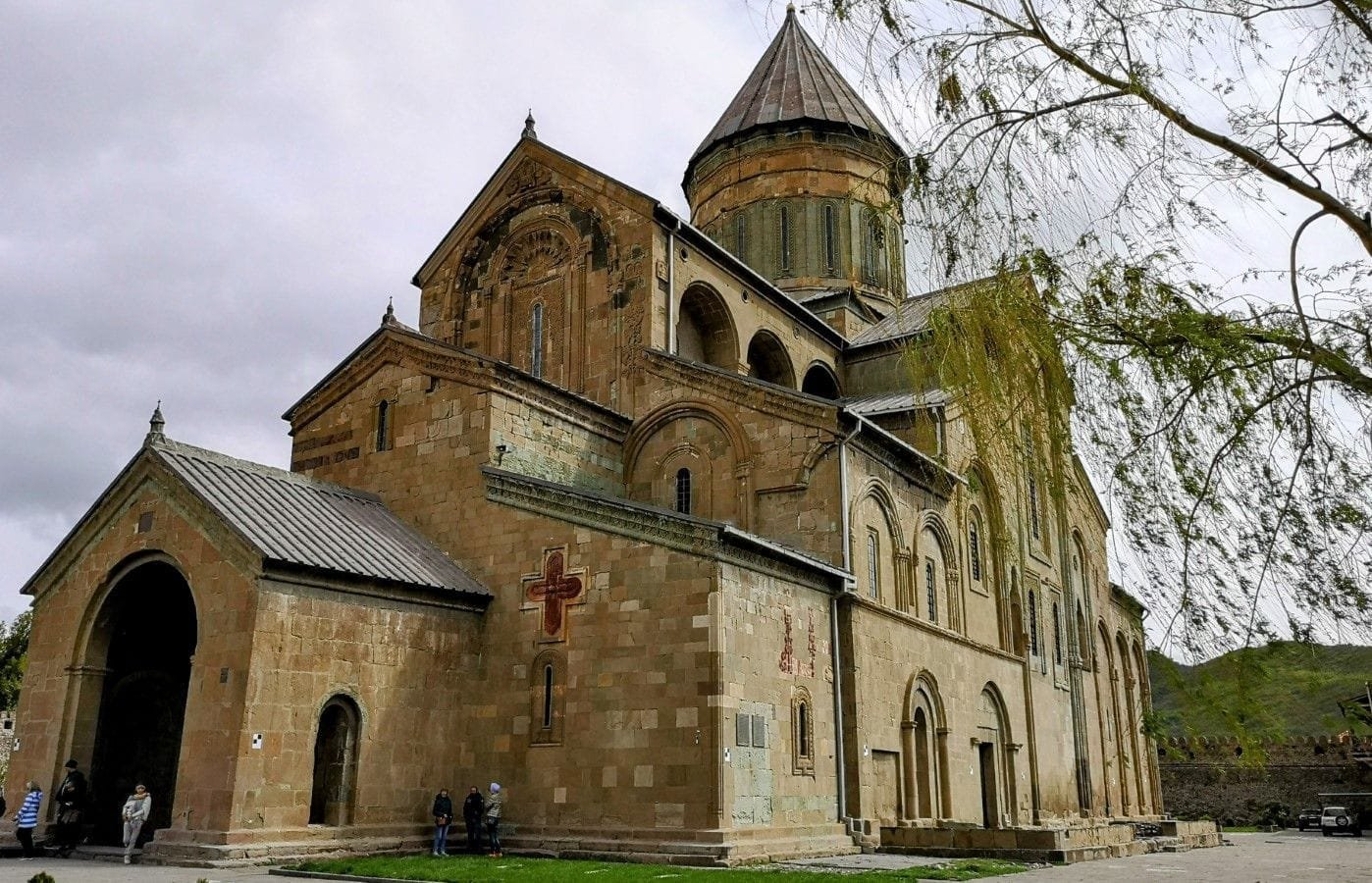 For a Georgian this is the cathedral, full stop. It stands in Mtskheta, the old capital, 20 km from Tbilisi, and the present building went up between 1010 and 1029 on the site of the 4th-century church of King Mirian, the one who converted the country to Christianity. Beneath it, according to tradition, lies the robe of Christ: a Jew from Mtskheta brought it from Jerusalem, his sister Sidonia died clutching it and they were buried together; a cedar grew from the spot, and from its trunk came the pillar that gives the church its name, "the life-giving pillar". Kings were crowned and buried here; the slabs of Vakhtang Gorgasali and Erekle II are in the floor.
A UNESCO site since 1994, and at weekends the weddings follow one another, so sometimes you wait at the door. Headscarves for women and covered shoulders for everyone. Half an hour inside, another in the lanes around it, which live off tourism but keep the feel of a village.
Road 61KM 1 Hours and 5 Minutes
Uplistsikhe
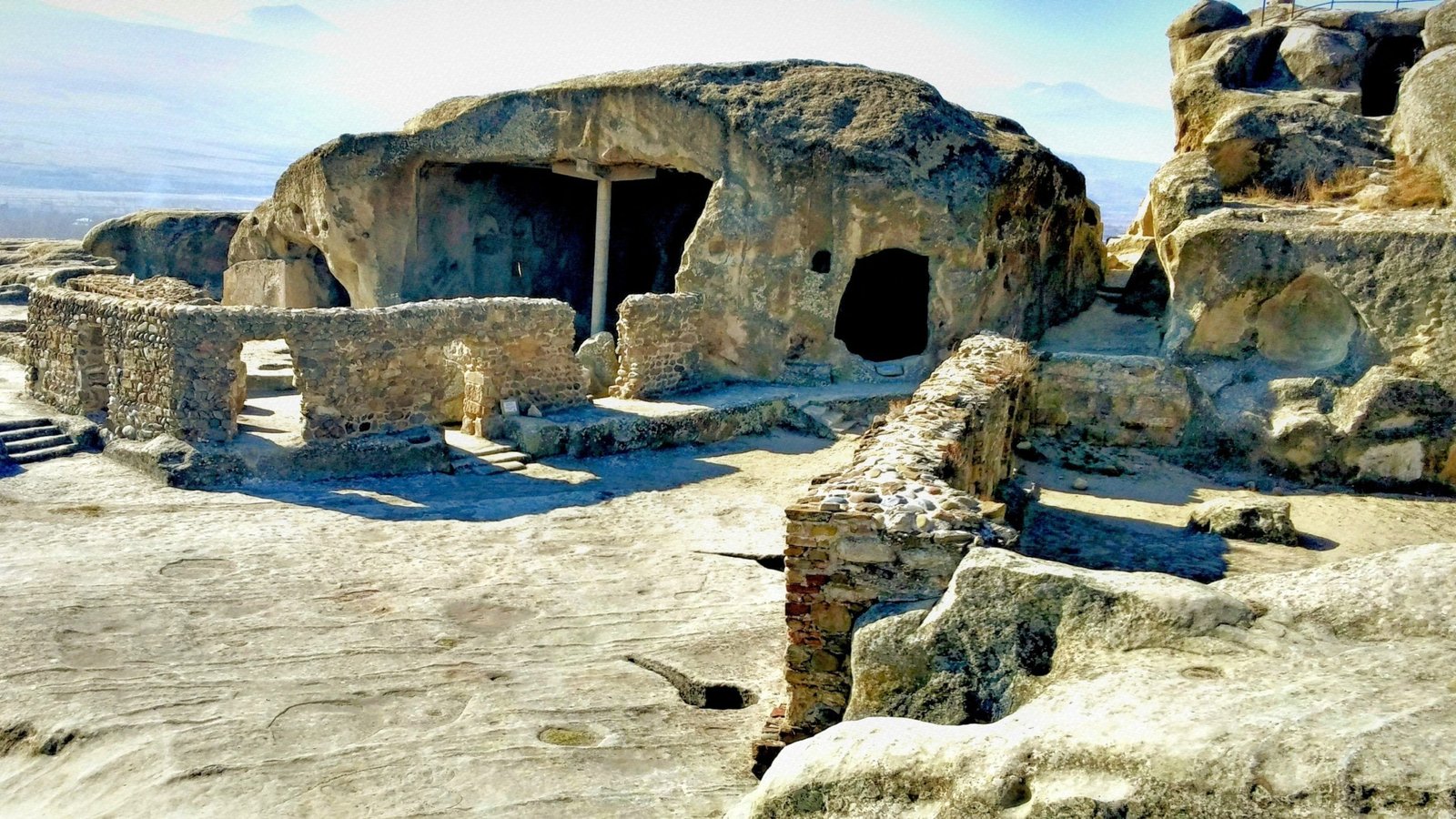 A whole town cut into the rock, 10 km from Gori above the Mtkvari river. People lived at Uplistsikhe from the first millennium BC until the Middle Ages: first a pagan centre, then a Christian one, and always a stop for the caravans. What remains are carved streets, a hall with a ceiling imitating wooden beams (they call it "Queen Tamar's hall"), wine presses, a tunnel down to the river and a 10th-century brick church planted on top of it all. The Mongols emptied it in the 13th century and it never recovered.
One piece of advice: in summer there is no shade and the rock burns, so go early or late in the day, and wear shoes with grip, because the polished stone is slippery. An hour is enough to climb up to the church and look down at the river.
Road 14KM 0 Hours and 20 Minutes
Stalin Museum
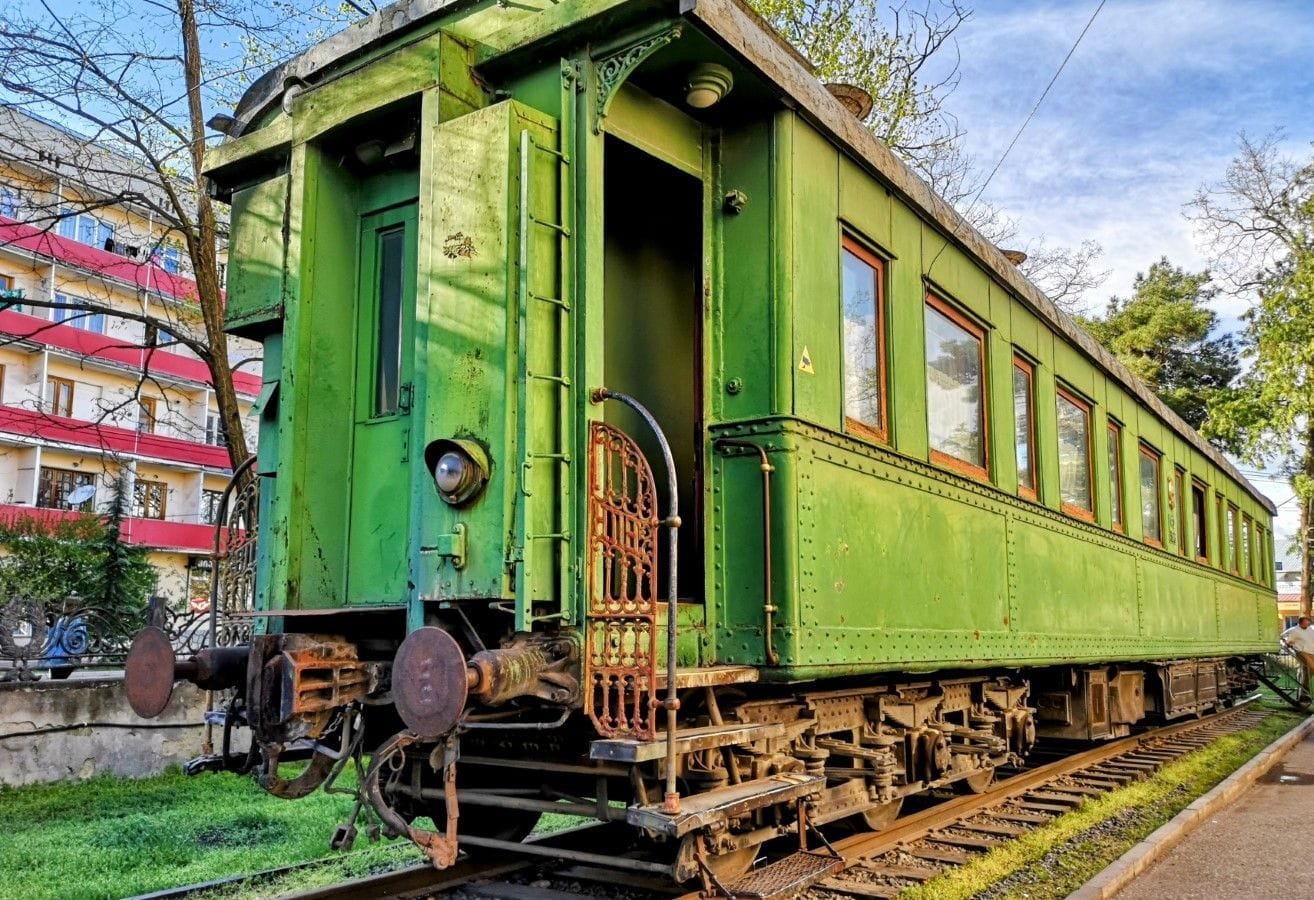 Gori is the town where Iosif Dzhugashvili was born in 1878, and the museum dedicated to him in 1957 is still open much as it was then. It is three things: the little wooden house where he was born, protected under a pavilion of columns; the main building, a Soviet-style palace with his personal belongings, photographs, gifts from heads of state and one of the bronze copies of his death mask; and the armoured railway carriage in which he travelled to Yalta and Potsdam, because he did not like flying.
Let us be plain: the museum tells the kind version. There is a small room on the repression, added late, and little else. We tell the rest on the road, and the one-hour visit usually ends in a long conversation in the car.
Road 154KM 2 Hours and 25 Minutes
Day 2 - Kutaisi - Okatse - Martvili - Kutaisi
Total road of the day - 130KM 2 Hours and 40 Minutes Okatse Canyon and Martvili Canyon. It is 130 km; we leave early so as not to rush. Road 50KM 1 Hours and 5 MinutesOkatse Canyon
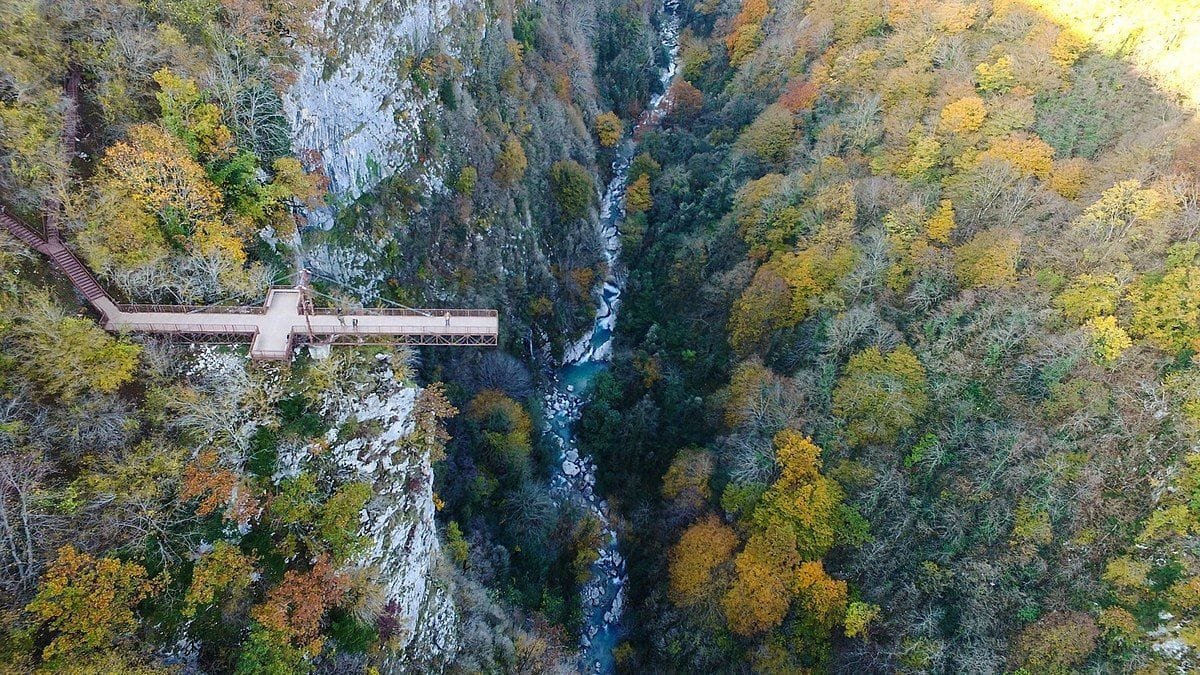 If you have a fear of heights, read this first. Okatse canyon, back in Imereti, is not visited from the water but from above: a 700-metre metal walkway bolted to the wall of the gorge, some 50 metres above the river, with a grid floor that lets you see the bottom, and a final platform that juts a few metres out over the drop. From the car park in the village of Gordi it is 2.5 km through the forest of the old Dadiani park to the start of the walkway; you do it on foot or in the locals' 4x4s, which charge extra [DATO: precio del 4x4 en 2026].
Two hours in all. We usually walk there and come back by 4x4 if the group prefers.
Martvili Canyon
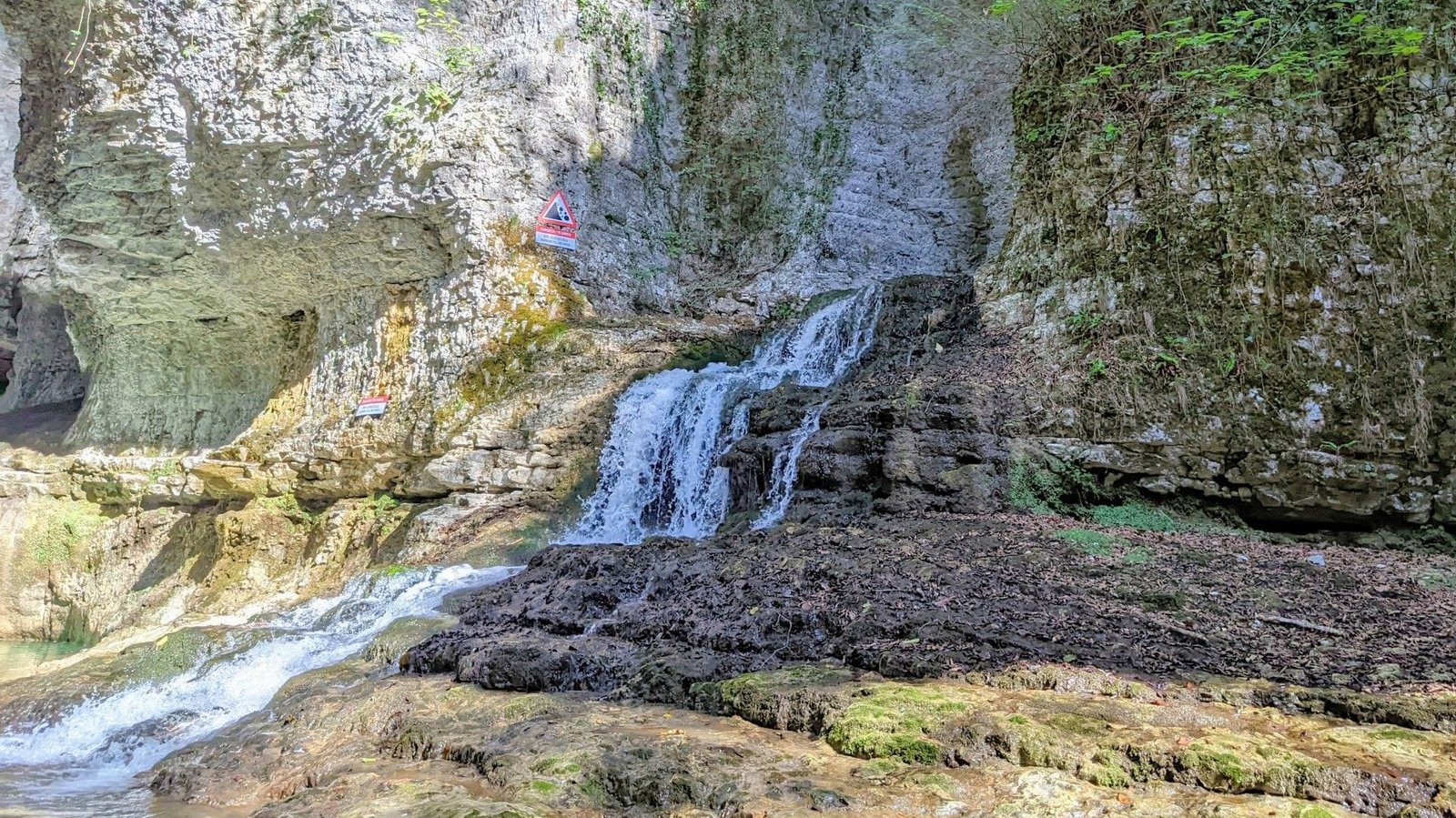 The water of the Abasha river is a turquoise that looks edited. It is not: this is Martvili canyon, in Samegrelo, three and a quarter hours from Mestia and the most visited canyon in western Georgia. It has two sections. In the upper one you take a boat ride of about fifteen minutes between walls 20 to 40 metres high; in the lower one there are walkways and a waterfall. It was the bathing place of the Dadiani princes, whose palace was in Zugdidi. Since it was developed in 2016 there is a ticket office, a car park and quite a crowd; on July and August weekends there is a queue for the boats [DATO: precio de entrada y de la barca en 2026]. We do the boat as soon as we arrive and then the walkways, half an hour without hurrying. If the river is swollen after rain, the boats do not go out and the water loses its colour; on those days we swap the order with Okatse.
Day 3 - Kutaisi - Dendrological Park - Batumi - Kutaisi
Total road of the day - 325KM 5 Hours and 32 Minutes First Shekvetili Dendrological Park, then Batumi. 325 km, 5 hours 32 minutes; lunch on the way. Road 115KM 2 Hours and 0 MinutesShekvetili Dendrological Park
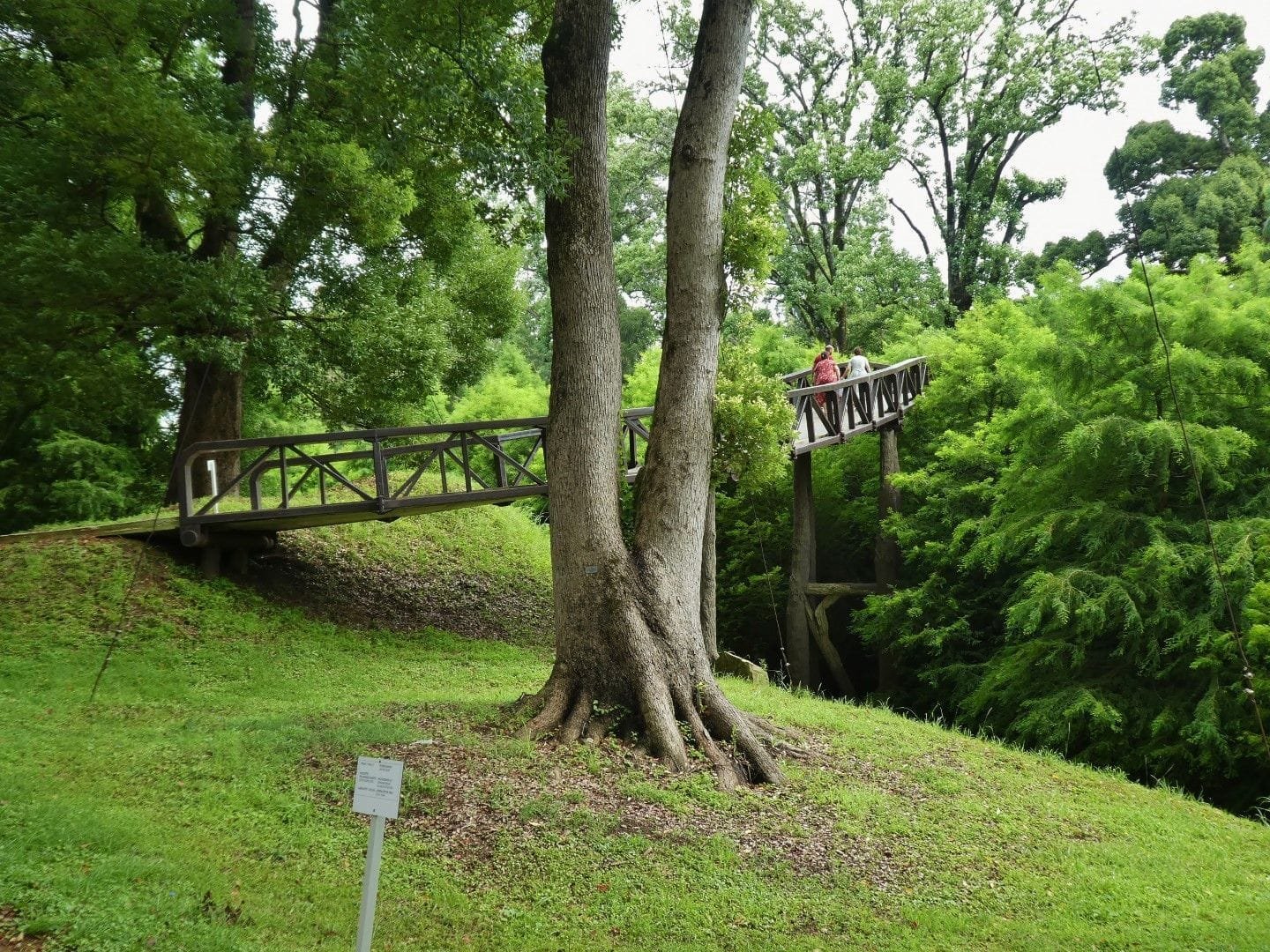 The trees in this park arrived by sea. They are specimens one and two hundred years old, tulip trees, magnolias, eucalyptus, that Bidzina Ivanishvili, the richest man in Georgia, bought all over the country and shipped by barge to the coast of Guria; there is a documentary, "Taming the Garden", that tells the story and does not flatter the owner. Shekvetili park opened in 2020: 60 hectares by the beach, more than 200 species, lakes, a bamboo grove and, in the middle, the biggest tree, visible from the road.
It is free, immaculate, and in summer there are queues at weekends. A good hour's walk; nearby are the magnetic black-sand beaches of Ureki, which local people use as a spa.
Batumi
Batumi is another Georgia: subtropical, humid, with palm trees, casinos and glass towers next to late 19th-century houses, 20 km from Turkey. It is the capital of Adjara and the country's port since always. What you do here is walk: the boulevard along the sea, laid out in 1881 and now 7 km long, the Piazza in the old town with its Italian-looking terraces, and, at the end of the promenade, Ali and Nino, the two eight-metre steel figures that move and pass through each other every ten minutes, by Tamara Kvesitadze. Two things the brochures leave out: it rains a lot, even in summer, and in July and August the city is packed. In return, you eat well: Adjarian khachapuri, the bread boat with cheese, butter and a raw egg on top, was born here and is made better here than anywhere.Day 4 - Kutaisi - Bagrati - Gelati - Promete - Borjomi-Akhaltsikhe
Total road of the day - 240KM 4 Hours and 55 Minutes A day with 4 hours 55 minutes at the wheel, which is not nothing, and in return Bagrati Cathedral, Gelati Academy, Prometheus Cave and Borjomi. Road 2KM 0 Hours and 9 MinutesBagrati Cathedral
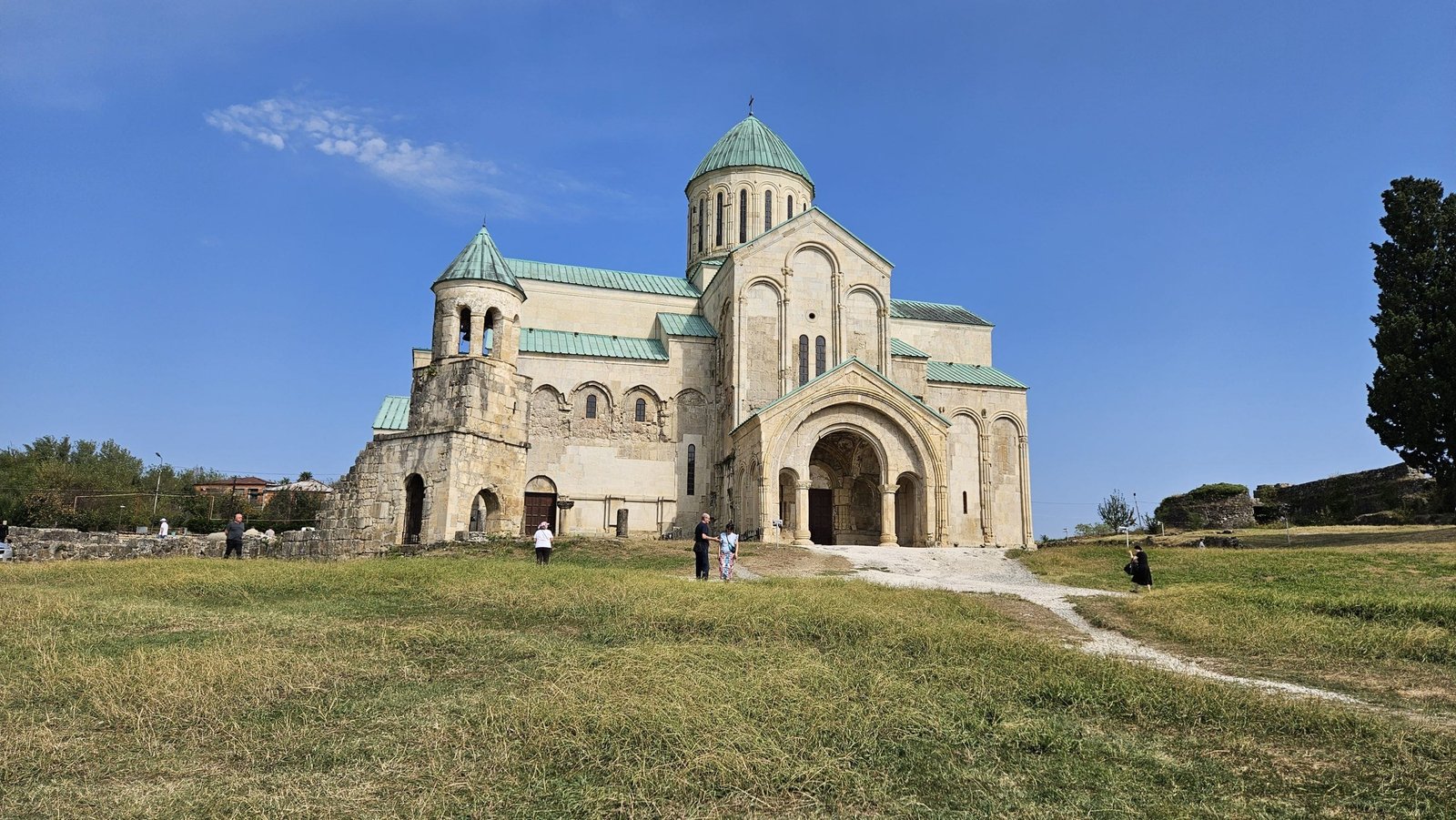 You can see it from half of Kutaisi, so you arrive already knowing what it is. What you cannot see from below is the controversy: Bagrat III consecrated it in 1003, the Ottomans blew it up in 1692 and it stood in ruins for three centuries until, in 2012, it was rebuilt in full, with concrete and a glass lift stuck to one side. UNESCO took it off the list in 2017 for that. Some people see it as a botch job. We still like it, mostly for the site: the terrace has the best view of the city and the Rioni valley. Ten minutes uphill from the centre and a full circuit of the building to find the original carvings left on the walls.
Road 10KM 0 Hours and 20 Minutes
Gelati Academy
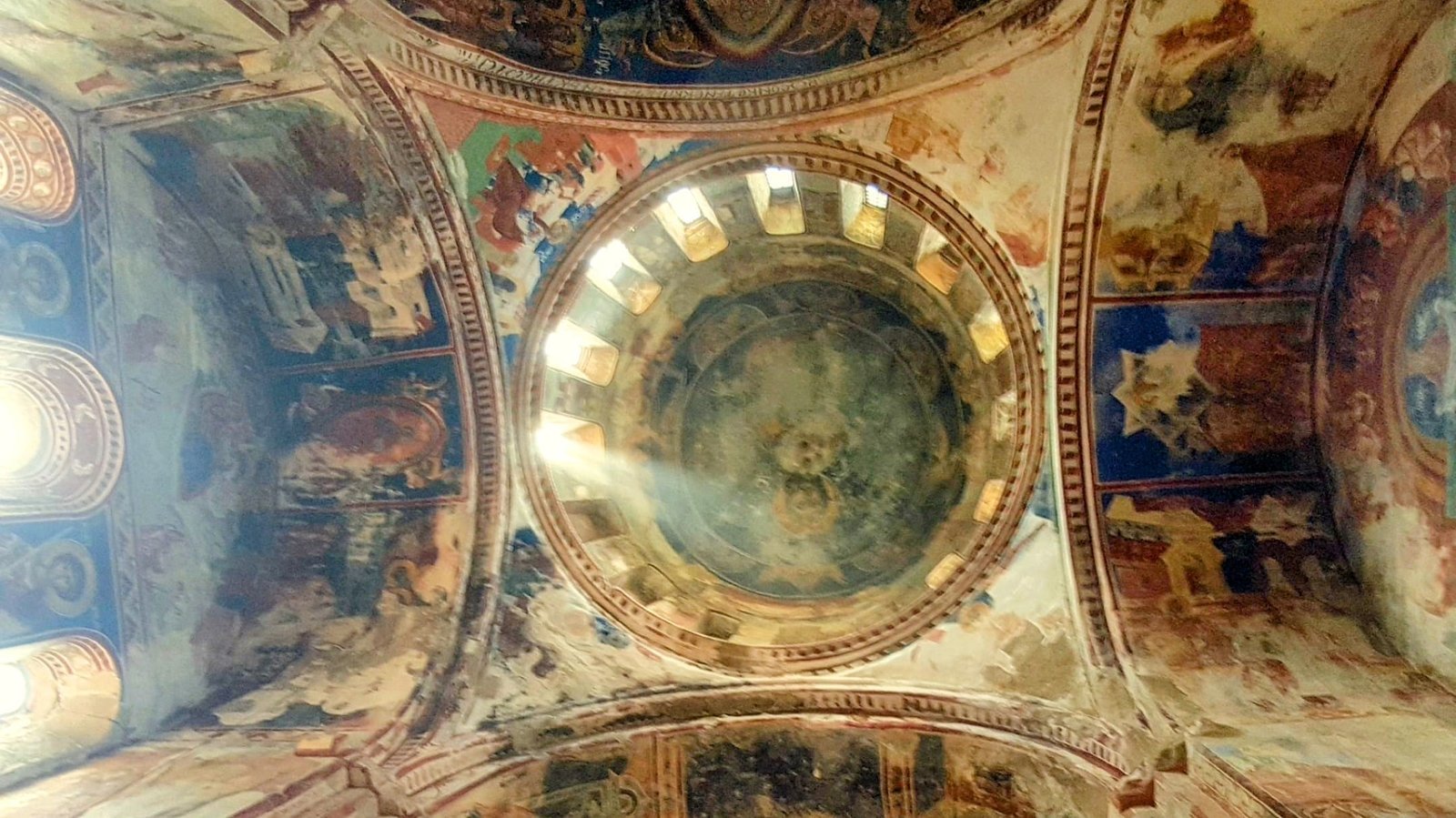 David the Builder asked to be buried in the floor of the south gate, so that everyone who came in would step on his grave. He has been there since 1125, and the monastery of Gelati, which he founded in 1106, was for centuries the great school of the kingdom: in its academy Greek philosophy was translated and copied at a time when Georgia looked to Byzantium. A UNESCO site since 1994 and, unlike Bagrati, still on the list. As soon as you enter the main church, the 12th-century mosaic of the Virgin in the apse; then frescoes on every wall, from different centuries. We give it almost an hour between the church, the tomb, the academy (a long hall with stone benches) and the church of St George. The domes were under repair for years because of leaks [VERIFICAR: estado de la restauración del tejado en 2026].
Road 29KM 0 Hours and 41 Minutes
Prometheus Cave
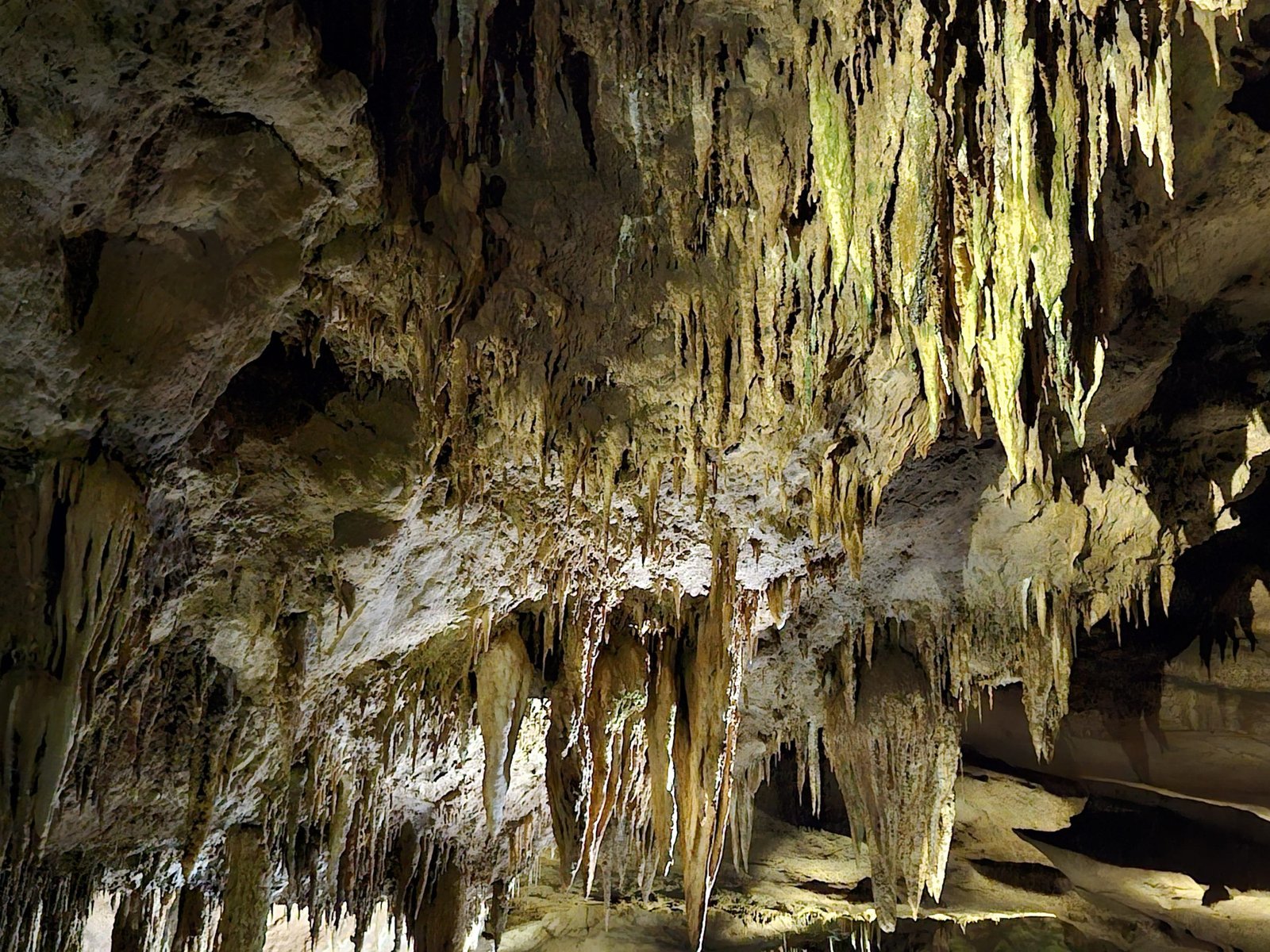 Inside it is 14 degrees all year round, which is welcome in summer and in winter too: bring a jacket. Prometheus Cave is at Kumistavi, 20 km from Kutaisi, next to the spa town of Tskaltubo. It was discovered in 1984 and opened to the public in 2011 with a route of just over a kilometre through six of its 22 halls, on concrete walkways with coloured lights that some people like and others do not. The name is for the titan who, according to the Greeks, ended up chained in these mountains; Georgians call him Amirani.
The visit takes a good hour. At the end, if the underground river has enough water, you can leave by boat along a stretch of about 300 metres, paid separately; when the level drops, you walk out. The floor is damp and slippery, so closed shoes are better.
Road 151KM 2 Hours and 50 Minutes
Borjomi
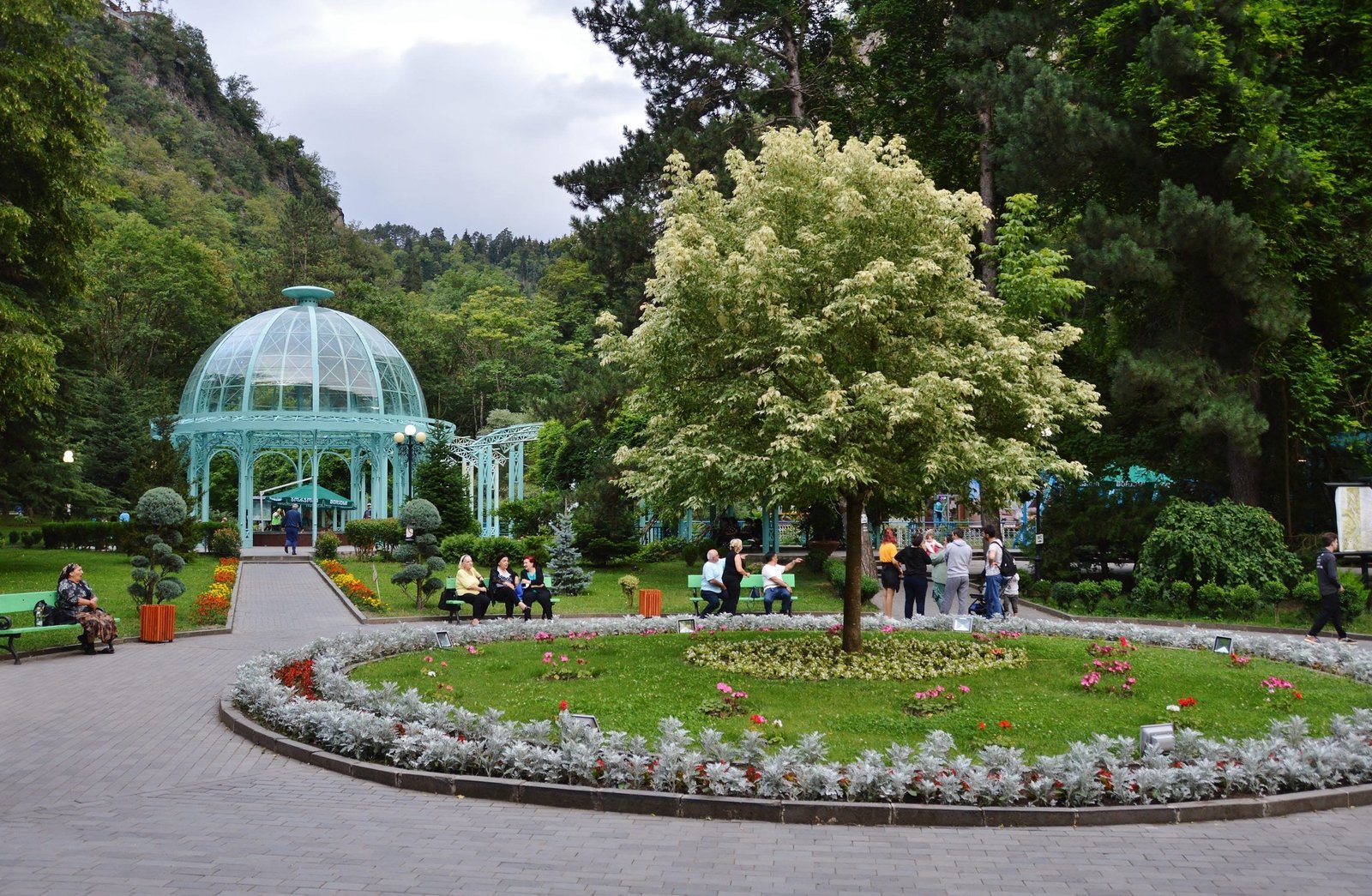 The fizzy water drunk all over the former Soviet Union comes from here, and it has been bottled since 1890. Borjomi was the spa of the Romanovs, who built themselves a palace at Likani, at the entrance to the town, and what remains of that is the air of a spa town from another age: wooden villas, a central park of 1850 with the spring where anyone can fill a bottle (it comes out warm, salty and fizzy, and not everyone likes it) and a cable car up to a viewpoint with a Ferris wheel.
An hour for the park and the spring; for walkers, the 3 km path to the sulphur pools in the forest starts at the far end of the park. The town is the gateway to the Borjomi-Kharagauli national park and the last stop with shops and banks before Vardzia.
Road 48KM 0 Hours and 55 Minutes
Day 5 - Akhaltsikhe - Vardzia - Khertvisi - Tbilisi
Total road of the day - 287KM 5 Hours and 30 Minutes Today the car is only the means: 287 km to reach Vardzia and Khertvisi Fortress. Road 60KM 1 Hours and 20 MinutesVardzia
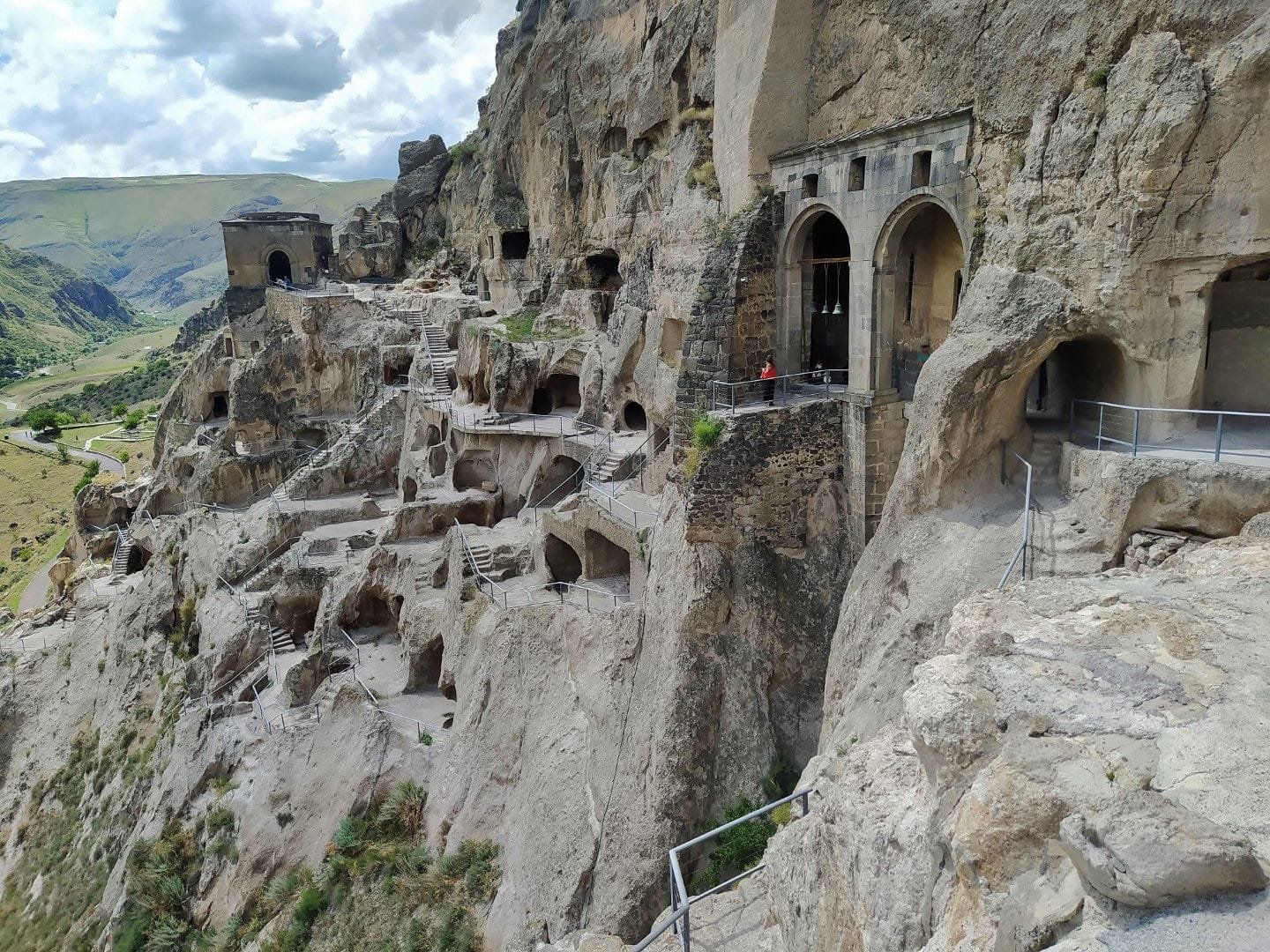 A rock face 500 metres long riddled with 19 storeys of openings: that is Vardzia, the cave monastery Queen Tamar finished around 1185 in the Mtkvari valley, 60 km from Akhaltsikhe. It once had thousands of rooms; the earthquake of 1283 took the whole front off and exposed what you see today, some 600 rooms including cells, wine cellars, refectories, a pharmacy and irrigation channels cut into the stone. In the Church of the Dormition are the 12th-century frescoes, with one of the few portraits of Tamar made in her lifetime.
It is still a monastery, with a few monks, so some areas are closed. The visit takes an hour and a half, almost all of it on stairs and through narrow tunnels: not for bad knees or claustrophobia, although there are routes that avoid the passages. In summer the sun hits the wall from mid-morning; we go as early as we can.
Khertvisi Fortress
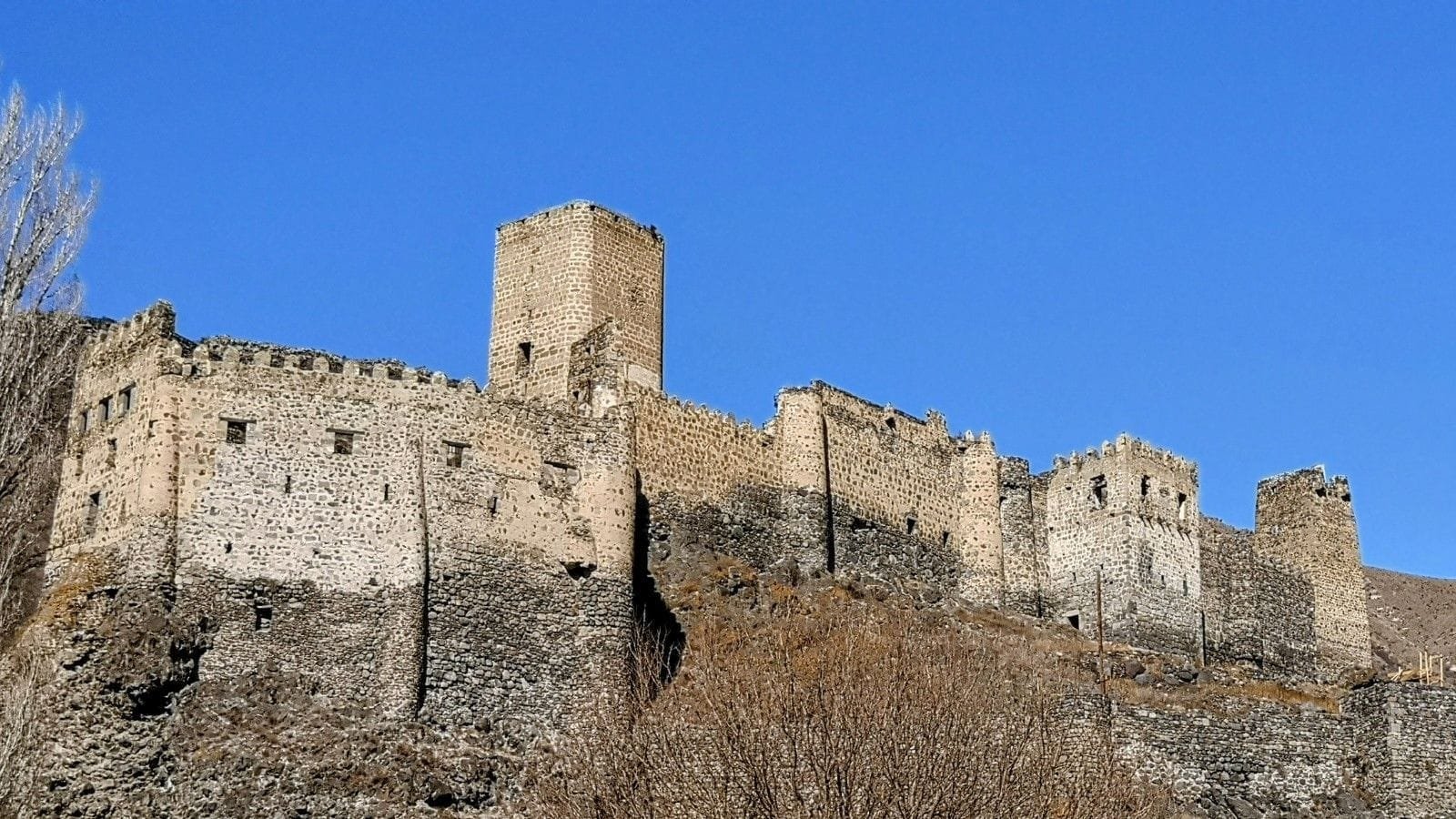 Where the Paravani river meets the Mtkvari, on the way to Vardzia, a castle perches on a crag that has been there in one form or another since the 2nd century BC; legend says Alexander the Great destroyed it, though he never came this way. The walls and towers you see date from the 10th to the 14th century, with a church of 985 inside. Khertvisi watched the road between Georgia and the Ottoman Empire, and changed hands as often as the region did.
A 20-minute stop, with a short, steep climb to the towers for anyone who wants the view of the valley. There is a secret tunnel that went down to the river, closed today.


