Ushguli: the four tower villages beneath Shkhara, what is true of what is said, the Lamaria church, the glacier and how to get there from Mestia
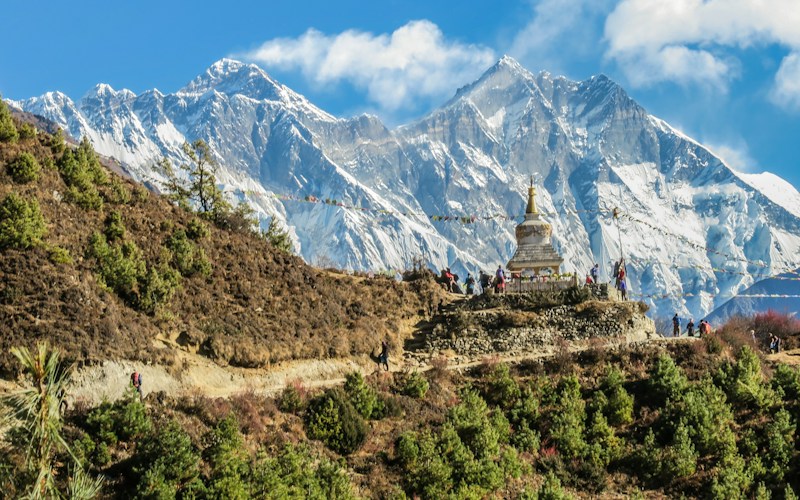
The track from Mestia takes two or three hours to cover 46 km, with the Enguri river below and the towers of the villages of Kala showing between the walnut trees, and at the end of the valley, when it seems nothing more can fit, four clusters of stone houses with towers appear and, behind them, closing everything off, the white wall of Shkhara, 5,193 metres, the highest mountain in Georgia. That is Ushguli, four villages at 2,100 metres where some two hundred people live with snow from November to April, with cows in the muddy streets, dogs, children, a thousand-year-old church on a knoll and the feeling of having reached the end of a country. This guide tells what each village is, how the towers work, what is true and what is brochure in what is said, what to do in one day or two and how to get there.

The four villages
Ushguli is a community, not a village: from bottom to top, Murkmeli, the first on arrival, with few towers; Chazhashi, on the central knoll above the river, the best preserved, with a dozen towers packed together, unchanged stone houses and the museum, which is the one on the UNESCO list since 1996 as part of the cultural landscape of Upper Svaneti; Chvibiani, opposite, where most of the guesthouses and cafés are; and Zhibiani, the highest, with the Lamaria church above it and the path to the glacier. They are ten minutes' walk from one another, along streets of mud and stone the cows share, and are covered in an afternoon, with the towers changing colour with the light.
The towers
The Svan towers, the koshki, date from the 9th to the 13th century, built of stone with lime mortar, four or five storeys and up to 25 metres, narrowing towards the top, with loopholes and a crown of arches; each family had its own next to the house, and they served for defence against neighbours and vendettas, which here lasted generations, for storing grain and for shelter from avalanches, which are the real danger in Ushguli. You enter by a ladder on the first floor and climb inside on notched logs; in Chazhashi several are open, one with the ethnographic museum of silver icons and objects of the 10th to 12th centuries taken from the churches of the area, shown with a key kept by a neighbour. That they were built without mortar is false; that they have withstood a thousand years of earthquakes and snowfalls is true.
Lamaria, the glacier and Svan culture
Above Zhibiani, on a knoll with Shkhara behind, stands the Lamaria church, the church of the Virgin, of the 10th to 12th centuries, small, with a wall, worn frescoes inside and the view that appears in every photograph; it is the Ushguli picture, at dawn or sunset. From there runs the path to the Shkhara glacier, 8 km up the valley along a flat track beside the river to the tongue of ice, three or four hours there and back, with horses for hire and no way to get lost; it is the second day's outing. The Svans speak Svan, a Kartvelian language, sister to Georgian but not mutually intelligible with it, without a script of its own, and keep polyphonic songs, rounds of toasts and a religion halfway between Orthodoxy and mountain rites; the guesthouses serve kubdari, the spiced meat pie, and home-made chacha, and at the churches you ask permission to enter from the neighbour who keeps the key.
How to get there and when
Mestia is reached by small plane from Natakhtari, next to Tbilisi, or from Kutaisi, in an hour, or by marshrutka from Zugdidi, three or four hours of mountain road; from Mestia there are 46 km of track to Ushguli done by 4x4 or in the shared jeeps that leave the square in the morning, two or three hours with stops, which from November to April is closed by snow and avalanches. The alternative is to arrive on foot: the four-day trek from Mestia to Ushguli via Zhabeshi, Adishi and Iprali, sleeping in guesthouses, is the best-known walk in Georgia and the best way to enter Ushguli, from June to September. You sleep in Chvibiani or Zhibiani, in family houses with dinner and breakfast, and one night is enough for dawn at Lamaria and the glacier; anyone wanting to join Svaneti with the south of the country and Vardzia in one trip needs two weeks, because they are at opposite ends of Georgia.
Frequently asked questions
When can you go?
June to September, when the track from Mestia is open, the trek is possible and the glacier can be reached; May and October are possible with snow on the passes and the track sometimes cut. From November to April Ushguli is cut off by snow and avalanches, except for a few weeks when jeeps with chains or snowmobiles get up, and it is not a trip to improvise.
Is there anywhere to stay?
Yes, in Chvibiani and Zhibiani there are a score of family guesthouses with dinner and breakfast, shared or private bathroom and wood-stove heating, and a small hotel or two; there is nothing luxurious and in July and August they fill up, so book or arrive early. One night is enough for dawn at Lamaria and the glacier.
Why is Ushguli a World Heritage site?
Because the village of Chazhashi, one of the four, was inscribed in 1996 as the best-preserved part of the cultural landscape of Upper Svaneti, with its intact medieval towers and houses and a mountain way of life that continues; the other three villages are protected as a national monument, but are not on the list.


