Kartli is the region that gave the country its name in Georgian, Sakartvelo, and in 190 km you can cover a good part of its history. We start in Mtskheta, the old capital, twenty minutes from Tbilisi, with Svetitskhoveli cathedral, where kings were crowned and where tradition says the robe of Christ is buried; from the road you can see Jvari monastery up on its hill. We go on to Uplistsikhe, a town carved into the rock that already existed before Rome, and we finish in Gori, the town where Stalin was born, with its museum, which is anything but neutral.
It is a varied day and not a tiring one: three and a half hours in the car in short stretches and a lot of walking. There is no shade at Uplistsikhe, so in summer we visit it before lunch. The Stalin museum is for each person to take as they like; for us it is a way to tell the story of Georgia's seventy Soviet years, which the museum does not tell.
Itinerary
Day 1 - Tbilisi - Mtskheta - Uplistsikhe - Gori - Tbilisi
Total road of the day - 190KM 3 Hours and 22 Minutes A history day in three acts: Christian Georgia in Mtskheta, pre-Christian Georgia in Uplistsikhe and Soviet Georgia in Gori. 190 km in all, in short stretches. Road 26KM 0 Hours and 35 MinutesSvetitskhoveli
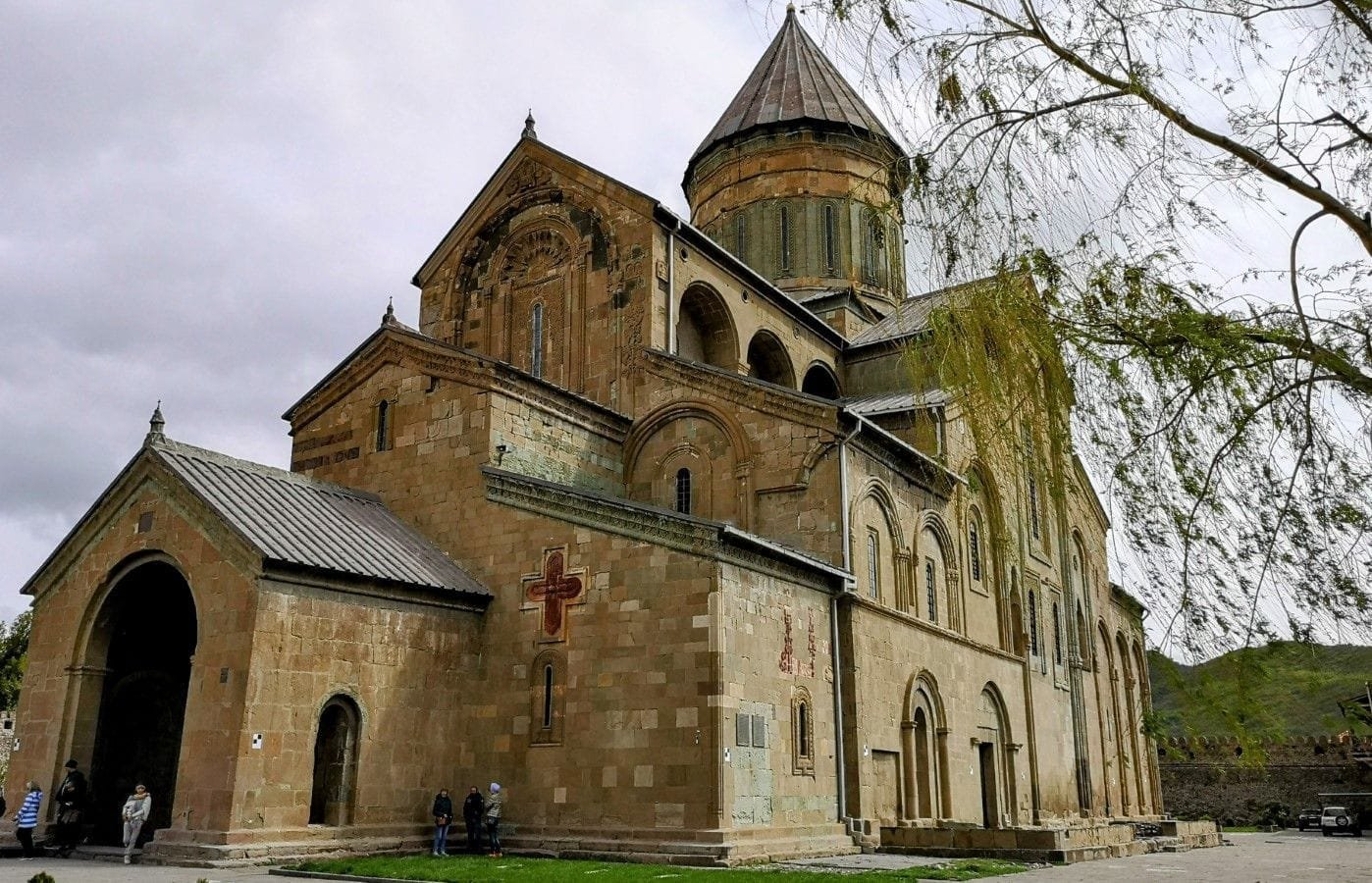 For a Georgian this is the cathedral, full stop. It stands in Mtskheta, the old capital, 20 km from Tbilisi, and the present building went up between 1010 and 1029 on the site of the 4th-century church of King Mirian, the one who converted the country to Christianity. Beneath it, according to tradition, lies the robe of Christ: a Jew from Mtskheta brought it from Jerusalem, his sister Sidonia died clutching it and they were buried together; a cedar grew from the spot, and from its trunk came the pillar that gives the church its name, "the life-giving pillar". Kings were crowned and buried here; the slabs of Vakhtang Gorgasali and Erekle II are in the floor.
A UNESCO site since 1994, and at weekends the weddings follow one another, so sometimes you wait at the door. Headscarves for women and covered shoulders for everyone. Half an hour inside, another in the lanes around it, which live off tourism but keep the feel of a village.
Road 61KM 1 Hours and 5 Minutes
Uplistsikhe
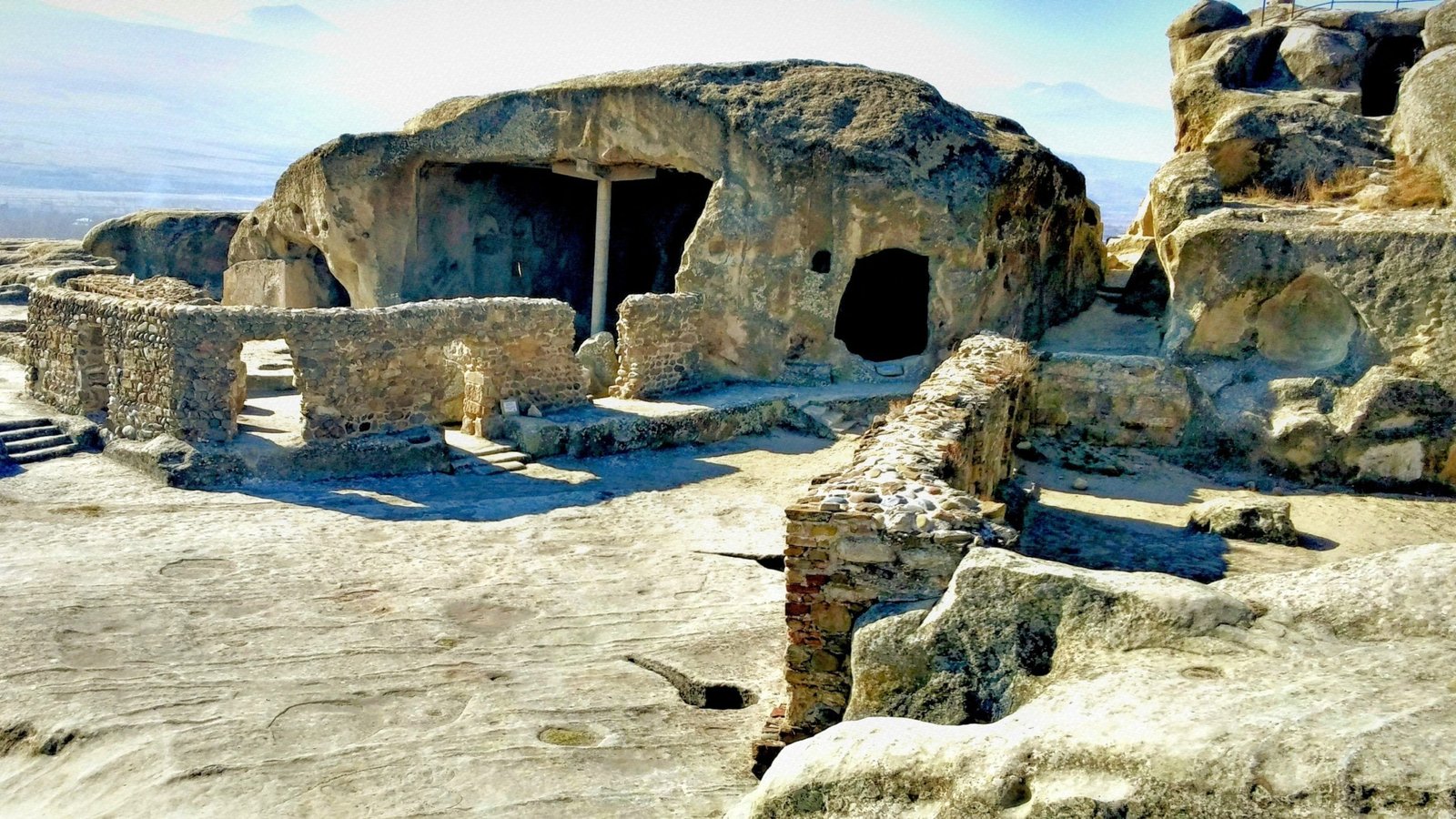 A whole town cut into the rock, 10 km from Gori above the Mtkvari river. People lived at Uplistsikhe from the first millennium BC until the Middle Ages: first a pagan centre, then a Christian one, and always a stop for the caravans. What remains are carved streets, a hall with a ceiling imitating wooden beams (they call it "Queen Tamar's hall"), wine presses, a tunnel down to the river and a 10th-century brick church planted on top of it all. The Mongols emptied it in the 13th century and it never recovered.
One piece of advice: in summer there is no shade and the rock burns, so go early or late in the day, and wear shoes with grip, because the polished stone is slippery. An hour is enough to climb up to the church and look down at the river.
Road 14KM 0 Hours and 20 Minutes
Stalin Museum
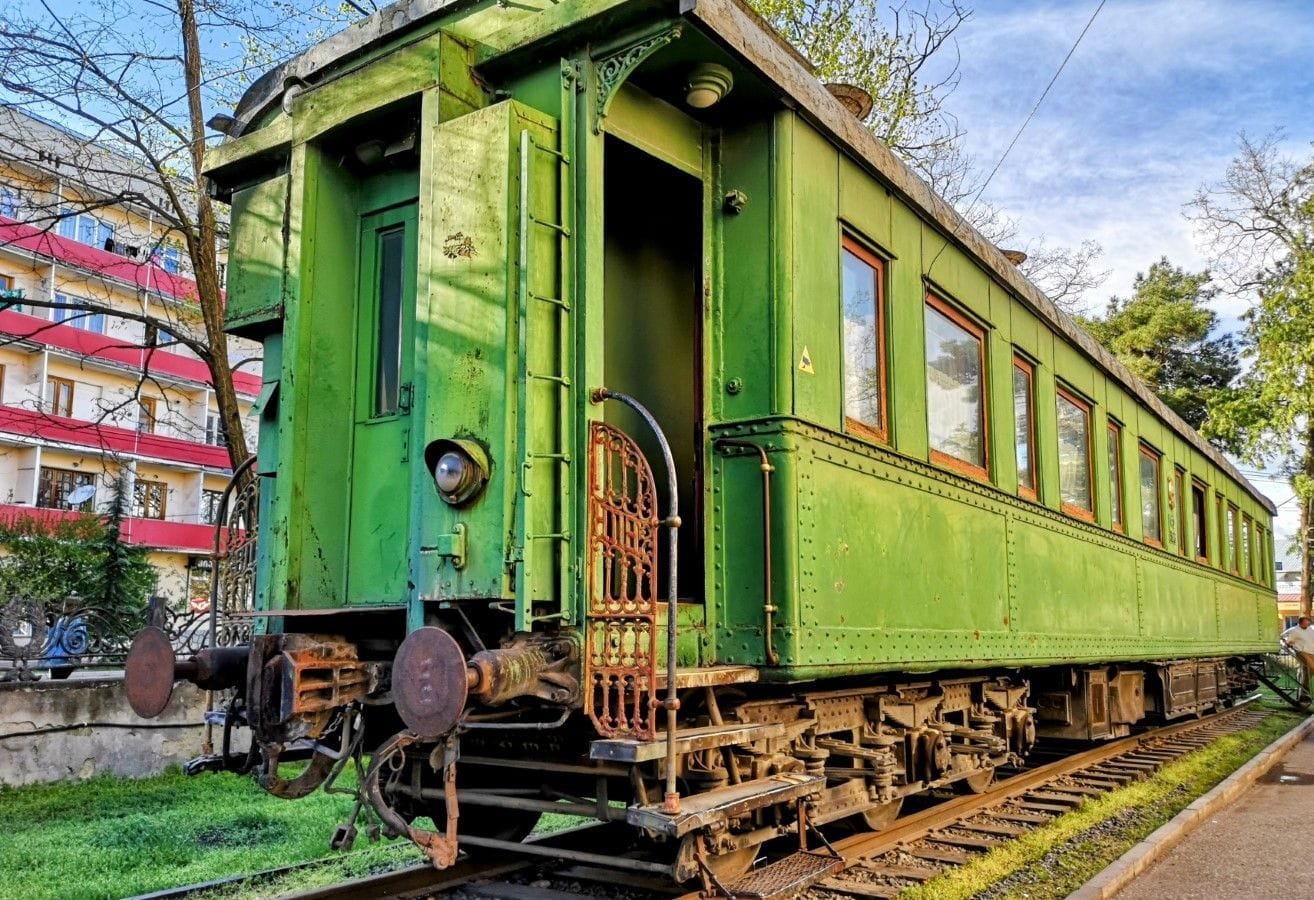 Gori is the town where Iosif Dzhugashvili was born in 1878, and the museum dedicated to him in 1957 is still open much as it was then. It is three things: the little wooden house where he was born, protected under a pavilion of columns; the main building, a Soviet-style palace with his personal belongings, photographs, gifts from heads of state and one of the bronze copies of his death mask; and the armoured railway carriage in which he travelled to Yalta and Potsdam, because he did not like flying.
Let us be plain: the museum tells the kind version. There is a small room on the repression, added late, and little else. We tell the rest on the road, and the one-hour visit usually ends in a long conversation in the car.
Road 89KM 1 Hours and 22 Minutes


