Unhurried in kilometres, not in what you see: no day goes over 305 km and almost all stay under 250. Yerevan takes the first two full days, with Garni and Geghard, Echmiadzin, Zvartnots, Oshakan and Amberd. The fourth climbs to Lake Sevan, passes Dilijan and crosses the Sadakhlo border to Tbilisi; the fifth is the Georgian capital on foot. The sixth heads south via Mtskheta, Gori, Uplistsikhe and Borjomi to Akhaltsikhe, and the seventh, after Vardzia and Khertvisi, returns to Armenia via Bavra to sleep in Gyumri.
The eighth is the day hardly anyone does: the 7th-century churches of Talin, Aruch and Mastara, on the plain at the foot of Aragats, with no buses and Ararat in front of you if the air is clear, before reaching Yerevan. Transfer to the airport on the ninth. Four hotels, two borders on foot and a pace that leaves afternoons free.
Itinerary
Day 1 - Transfer from Zvartnots airport to Yerevan
Total road of the day - 13KM 0 Hours and 25 Minutes We pick you up at the airport whenever your flight lands and go to the hotel. No more programme today. Road 13KM 0 Hours and 25 MinutesDay 2 - Yerevan - Yerevan city walk - Armenian Genocide Museum and Memorial - Victory Park - Garni - Geghard -Yerevan
Total road of the day - 81KM 1 Hours and 45 Minutes Today the car is only the means: 81 km to reach a walk around Yerevan, Armenian Genocide Museum, Tsitsernakaberd Memorial and Victory Park, Garni and Geghard. Road 0KM 0 Hours and 0 MinutesA walk around Yerevan
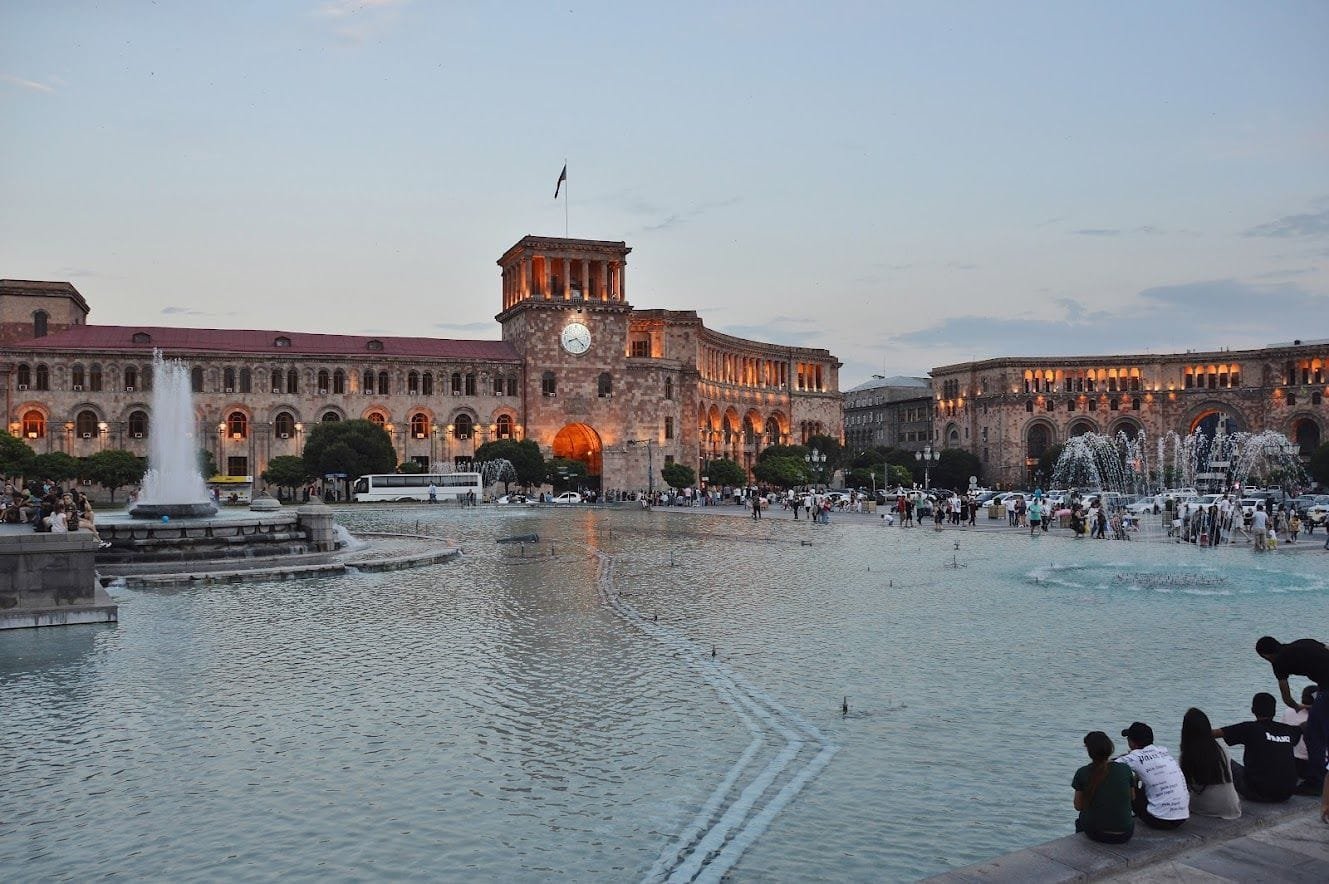 Yerevan is pink. Almost the whole centre is built of volcanic tuff of that colour, following the circular plan Alexander Tamanian drew in the 1920s, and Republic Square, with its arcades and its fountain, is the centrepiece. From there we go up to the Cascade, the monumental stairway begun in the seventies and finished in 2009 with the Cafesjian museum inside, by its escalators and past Botero's fat cat at the bottom. From the top, if the air is clean, the whole of Ararat, which is in Turkey but presides over the city.
The city boasts of being 29 years older than Rome: the fortress of Erebuni dates from 782 BC. But what you live today is something else: terraces, the Vernissage market at weekends, cafés that never close. Three or four hours on foot, comfortable shoes and, in summer, water: Yerevan in July goes over 35 degrees.
Road 5KM 0 Hours and 10 Minutes
Yerevan is pink. Almost the whole centre is built of volcanic tuff of that colour, following the circular plan Alexander Tamanian drew in the 1920s, and Republic Square, with its arcades and its fountain, is the centrepiece. From there we go up to the Cascade, the monumental stairway begun in the seventies and finished in 2009 with the Cafesjian museum inside, by its escalators and past Botero's fat cat at the bottom. From the top, if the air is clean, the whole of Ararat, which is in Turkey but presides over the city.
The city boasts of being 29 years older than Rome: the fortress of Erebuni dates from 782 BC. But what you live today is something else: terraces, the Vernissage market at weekends, cafés that never close. Three or four hours on foot, comfortable shoes and, in summer, water: Yerevan in July goes over 35 degrees.
Road 5KM 0 Hours and 10 Minutes
Armenian Genocide Museum
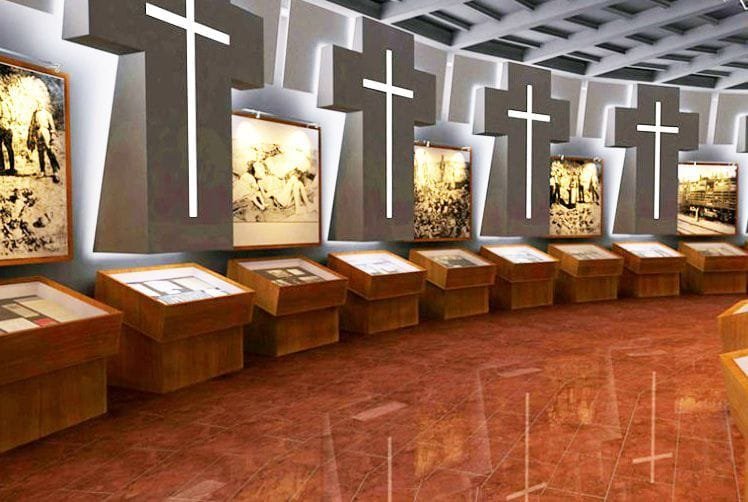 It is not an easy visit and we do not sell it as one. The museum is buried in the Tsitsernakaberd hill, under the memorial, and tells with documents, photographs and testimonies what happened between 1915 and 1923 in the Ottoman Empire: around a million and a half Armenians dead and a diaspora that today is larger than the country itself. It opened in 1995 and was enlarged in 2015, for the centenary, and entry is free.
We give it an hour and go at our own pace, each person theirs. To understand Armenia you have to come here: it explains why Ararat, in sight from all over Yerevan, lies on the other side of a closed border.
Road 9KM 0 Hours and 25 Minutes
It is not an easy visit and we do not sell it as one. The museum is buried in the Tsitsernakaberd hill, under the memorial, and tells with documents, photographs and testimonies what happened between 1915 and 1923 in the Ottoman Empire: around a million and a half Armenians dead and a diaspora that today is larger than the country itself. It opened in 1995 and was enlarged in 2015, for the centenary, and entry is free.
We give it an hour and go at our own pace, each person theirs. To understand Armenia you have to come here: it explains why Ararat, in sight from all over Yerevan, lies on the other side of a closed border.
Road 9KM 0 Hours and 25 Minutes
Tsitsernakaberd Memorial and Victory Park
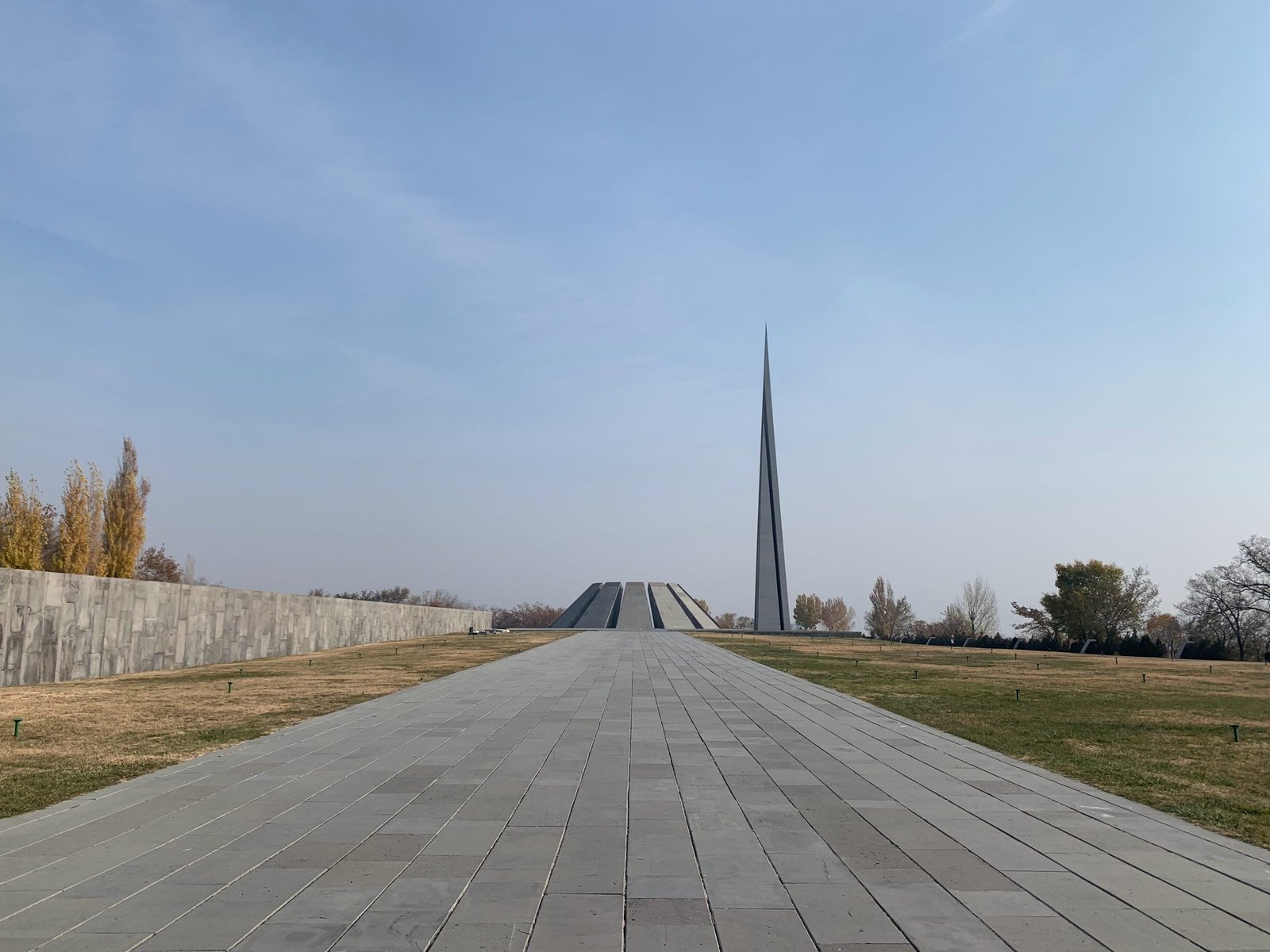 Twelve basalt slabs leaning towards a flame that never goes out, and beside them a 44-metre needle split in two: the small part is the Armenia that remained, the large one the Armenia that was lost. The Tsitsernakaberd memorial was opened in 1967, when the Soviet Union finally allowed the genocide to be spoken of, and every 24 April half the country climbs up here with flowers. Next to the memorial is a row of trees planted by heads of state who came to recognise it; the plaques tell you who came and who did not.
Half an hour, in silence, with the museum underneath. On the other side of the city, in Victory Park, Mother Armenia of 1967, a 22-metre copper statue that replaced Stalin's on the same pedestal, looks over Yerevan with a sword in her hands; from her terrace you see the whole city and, with luck, Ararat.
Road 31KM 0 Hours and 55 Minutes
Twelve basalt slabs leaning towards a flame that never goes out, and beside them a 44-metre needle split in two: the small part is the Armenia that remained, the large one the Armenia that was lost. The Tsitsernakaberd memorial was opened in 1967, when the Soviet Union finally allowed the genocide to be spoken of, and every 24 April half the country climbs up here with flowers. Next to the memorial is a row of trees planted by heads of state who came to recognise it; the plaques tell you who came and who did not.
Half an hour, in silence, with the museum underneath. On the other side of the city, in Victory Park, Mother Armenia of 1967, a 22-metre copper statue that replaced Stalin's on the same pedestal, looks over Yerevan with a sword in her hands; from her terrace you see the whole city and, with luck, Ararat.
Road 31KM 0 Hours and 55 Minutes
Garni
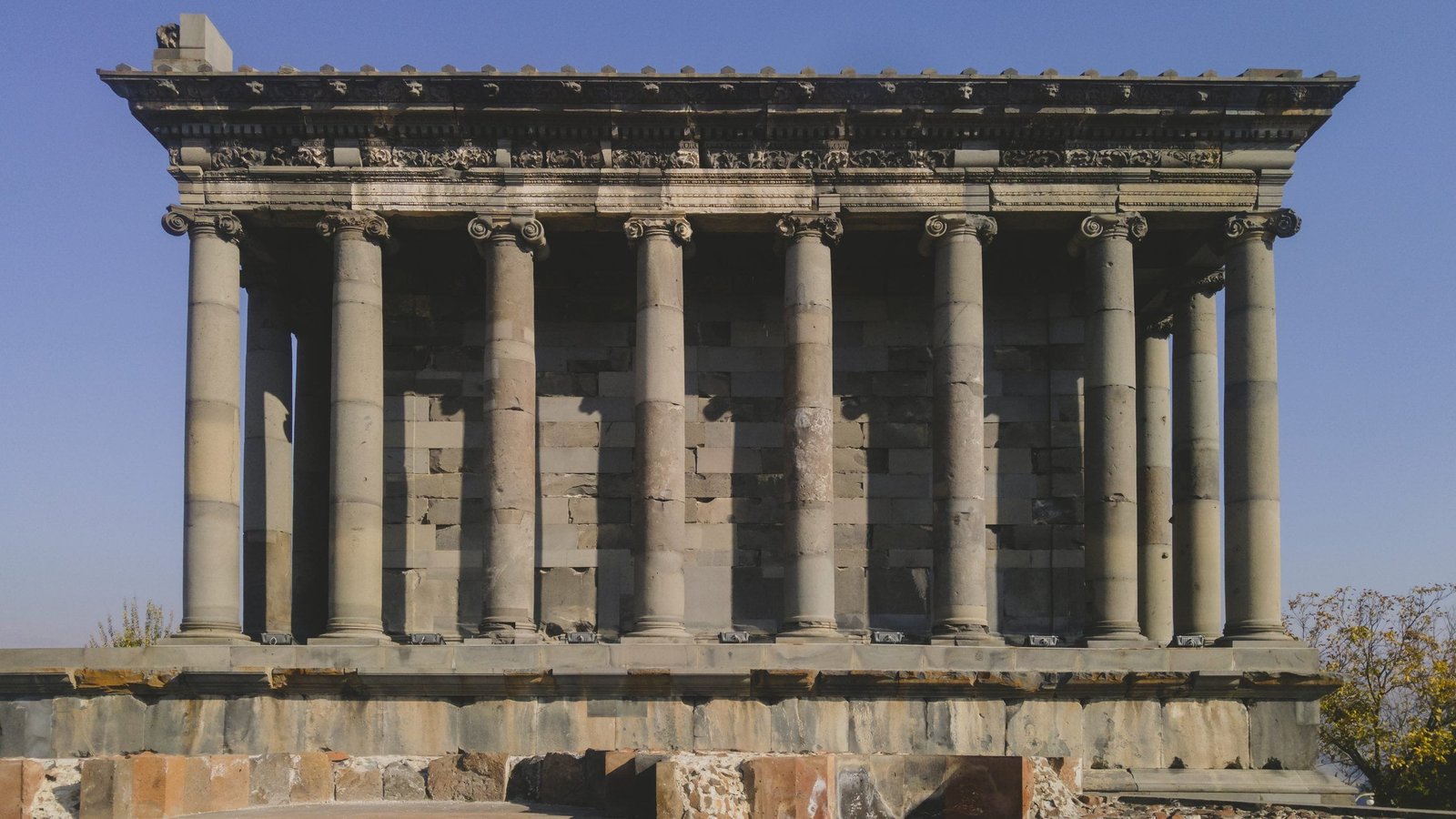 A Greek temple in Armenia. Garni was built by King Tiridates I around the year 77, dedicated to the sun god Mihr, and it is the only pagan building that survived the country's conversion to Christianity, probably because the kings used it as a summer house. What you see today is a reconstruction of 1969 to 1975 with the original stones: the earthquake of 1679 had brought the whole thing down. Next to it are the Roman baths with a mosaic and the inscription "we worked without receiving anything", which we guides find funny.
The other thing is the Azat gorge just below: the "symphony of stones", a wall of perfectly hexagonal basalt columns that look like an organ. You go down in the locals' 4x4s or on foot, 20 minutes of slope. An hour in all, more if we go down to the columns.
Road 10KM 0 Hours and 15 Minutes
A Greek temple in Armenia. Garni was built by King Tiridates I around the year 77, dedicated to the sun god Mihr, and it is the only pagan building that survived the country's conversion to Christianity, probably because the kings used it as a summer house. What you see today is a reconstruction of 1969 to 1975 with the original stones: the earthquake of 1679 had brought the whole thing down. Next to it are the Roman baths with a mosaic and the inscription "we worked without receiving anything", which we guides find funny.
The other thing is the Azat gorge just below: the "symphony of stones", a wall of perfectly hexagonal basalt columns that look like an organ. You go down in the locals' 4x4s or on foot, 20 minutes of slope. An hour in all, more if we go down to the columns.
Road 10KM 0 Hours and 15 Minutes
Geghard
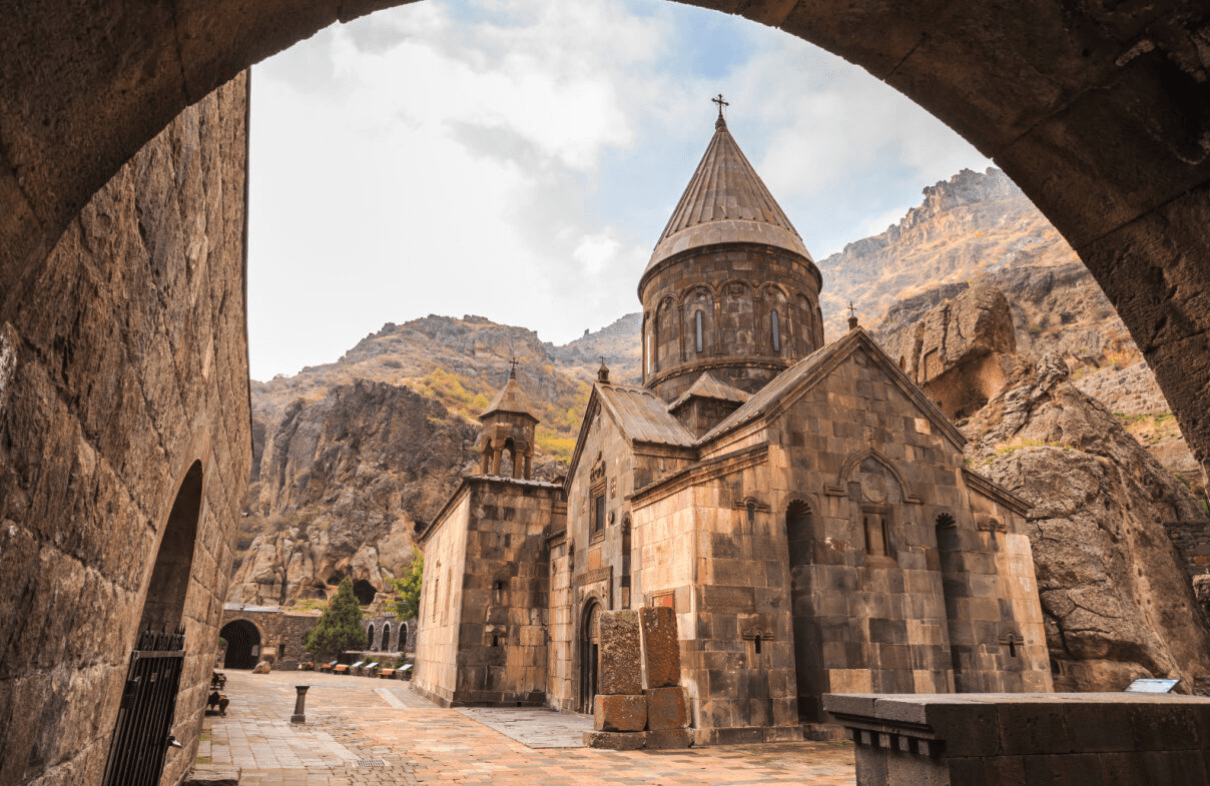 Half the monastery is inside the mountain. Geghard was founded by St Gregory the Illuminator in the 4th century beside a spring that still flows inside one of the chapels, and what you see dates from the 13th: the main church, of 1215, and the chambers cut into the rock by the Proshian princes, with their carved coats of arms and an acoustic you test by singing. The name means "spear": for centuries the one that, according to tradition, pierced Christ's side was kept here; it is now in the Echmiadzin museum. A UNESCO site since 2000.
An hour. It is the place in Armenia where we have most often seen people moved, especially if a choir happens to be in the rock chamber. At the exit the village women sell fresh lavash and gata, a sweet bread; worth stopping for.
Road 26KM 0 Hours and 40 Minutes
Half the monastery is inside the mountain. Geghard was founded by St Gregory the Illuminator in the 4th century beside a spring that still flows inside one of the chapels, and what you see dates from the 13th: the main church, of 1215, and the chambers cut into the rock by the Proshian princes, with their carved coats of arms and an acoustic you test by singing. The name means "spear": for centuries the one that, according to tradition, pierced Christ's side was kept here; it is now in the Echmiadzin museum. A UNESCO site since 2000.
An hour. It is the place in Armenia where we have most often seen people moved, especially if a choir happens to be in the rock chamber. At the exit the village women sell fresh lavash and gata, a sweet bread; worth stopping for.
Road 26KM 0 Hours and 40 Minutes
Day 3 - Yerevan - Echmiadzin - Zvartnots - Oshakan - Amberd - Yerevan
Total road of the day - 92KM 2 Hours and 26 Minutes 92 km and 2 hours 26 minutes in the car in all. Today's stops: Echmiadzin, Zvartnots, Oshakan and Amberd. Road 21KM 0 Hours and 45 MinutesEchmiadzin
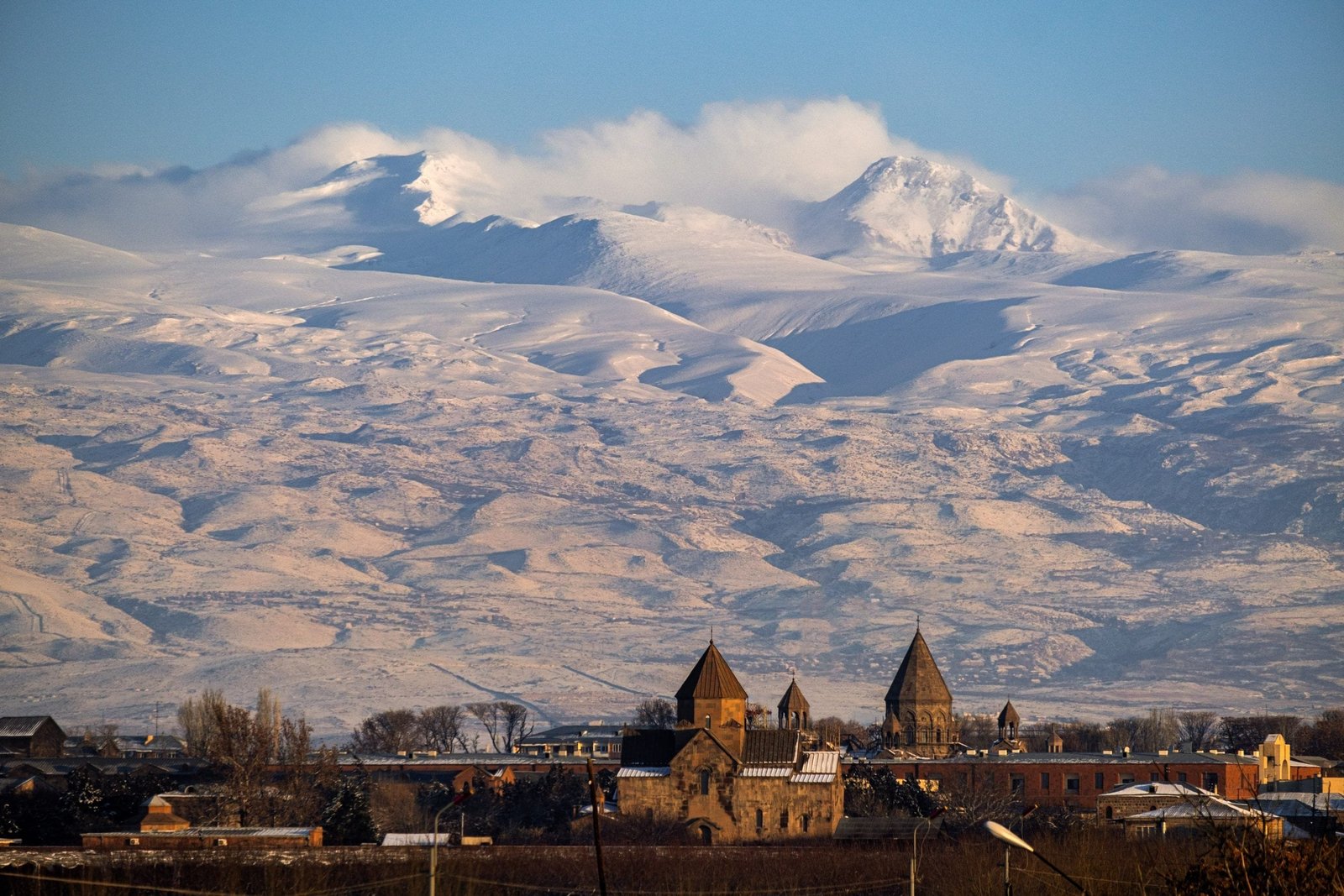 The Armenian Vatican. Echmiadzin, 20 km from Yerevan, is where the Catholicos lives, head of the Armenian Apostolic Church, and where the cathedral stands that St Gregory the Illuminator founded in 303, two years after Armenia became Christian, the first nation to do so. What you see is mostly 5th century and later alterations, and the cathedral has spent more than ten years under restoration. In the museum on the grounds are the spear of Geghard and other relics that say a lot to a believer and, to everyone else, at least explain what this place means.
An hour for the cathedral and the museum. On Sundays the sung liturgy fills the church and you go in all the same, quietly. Five minutes away are the churches of Hripsime and Gayane, from the 7th century, which are the ones architects like best, and the ruins of Zvartnots.
Road 10KM 0 Hours and 5 Minutes
The Armenian Vatican. Echmiadzin, 20 km from Yerevan, is where the Catholicos lives, head of the Armenian Apostolic Church, and where the cathedral stands that St Gregory the Illuminator founded in 303, two years after Armenia became Christian, the first nation to do so. What you see is mostly 5th century and later alterations, and the cathedral has spent more than ten years under restoration. In the museum on the grounds are the spear of Geghard and other relics that say a lot to a believer and, to everyone else, at least explain what this place means.
An hour for the cathedral and the museum. On Sundays the sung liturgy fills the church and you go in all the same, quietly. Five minutes away are the churches of Hripsime and Gayane, from the 7th century, which are the ones architects like best, and the ruins of Zvartnots.
Road 10KM 0 Hours and 5 Minutes
Zvartnots
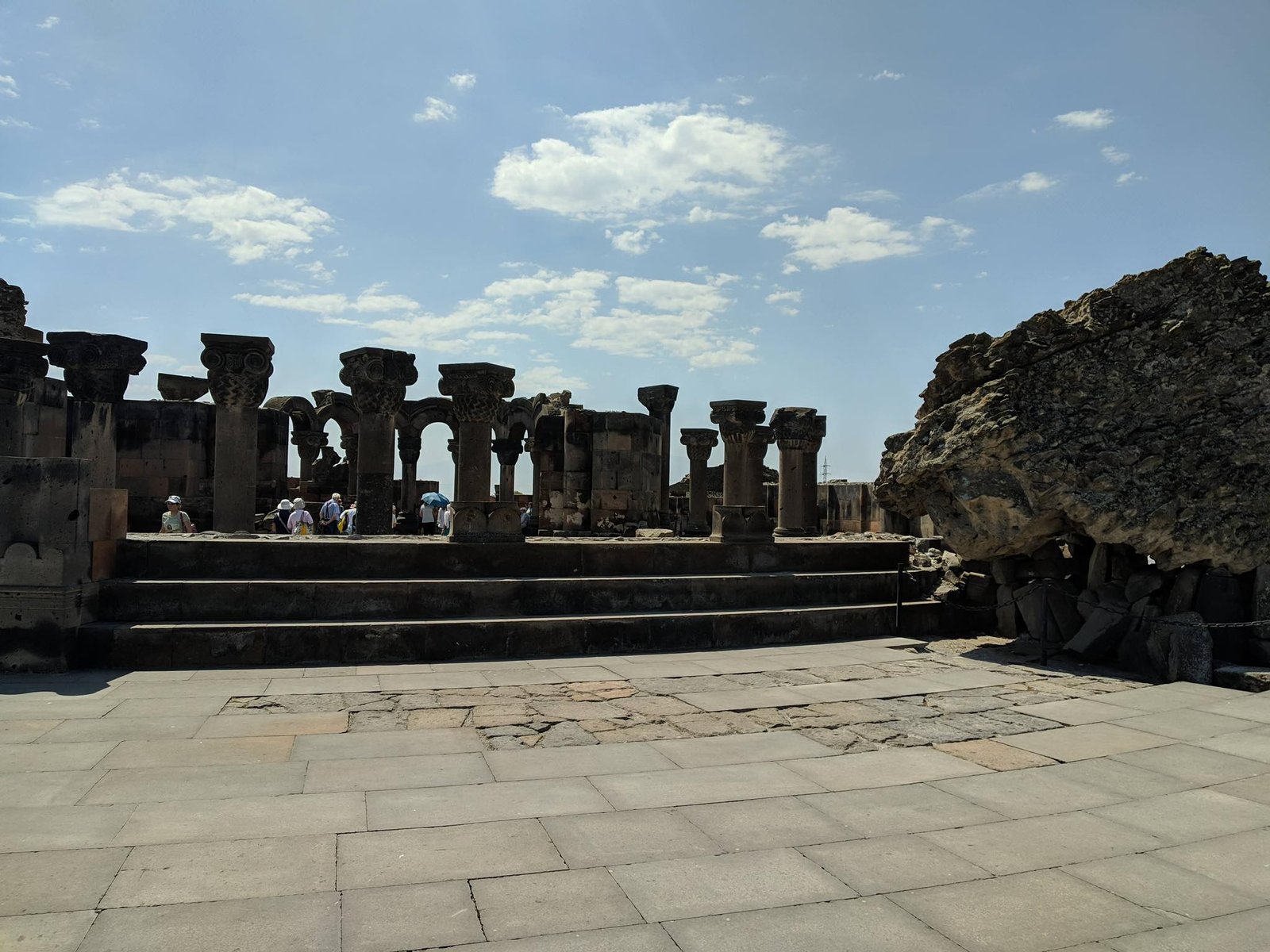 What is left of Zvartnots is a ring of columns and capitals with eagles, ten minutes from Echmiadzin and next to the airport. In the 7th century, between 641 and 661, Catholicos Nerses III raised here a round cathedral of three tiers and some 45 metres, the boldest of its age; an earthquake brought it down in the 10th century and nobody rebuilt it. It was excavated between 1900 and 1907, and in the small museum there is a model that helps you imagine what it was. A UNESCO site since 2000, together with Echmiadzin.
Half an hour. It is a flat, open site with Ararat in the background when the day is clear, which is why photos from here always come out well.
Road 18KM 0 Hours and 28 Minutes
What is left of Zvartnots is a ring of columns and capitals with eagles, ten minutes from Echmiadzin and next to the airport. In the 7th century, between 641 and 661, Catholicos Nerses III raised here a round cathedral of three tiers and some 45 metres, the boldest of its age; an earthquake brought it down in the 10th century and nobody rebuilt it. It was excavated between 1900 and 1907, and in the small museum there is a model that helps you imagine what it was. A UNESCO site since 2000, together with Echmiadzin.
Half an hour. It is a flat, open site with Ararat in the background when the day is clear, which is why photos from here always come out well.
Road 18KM 0 Hours and 28 Minutes
Oshakan
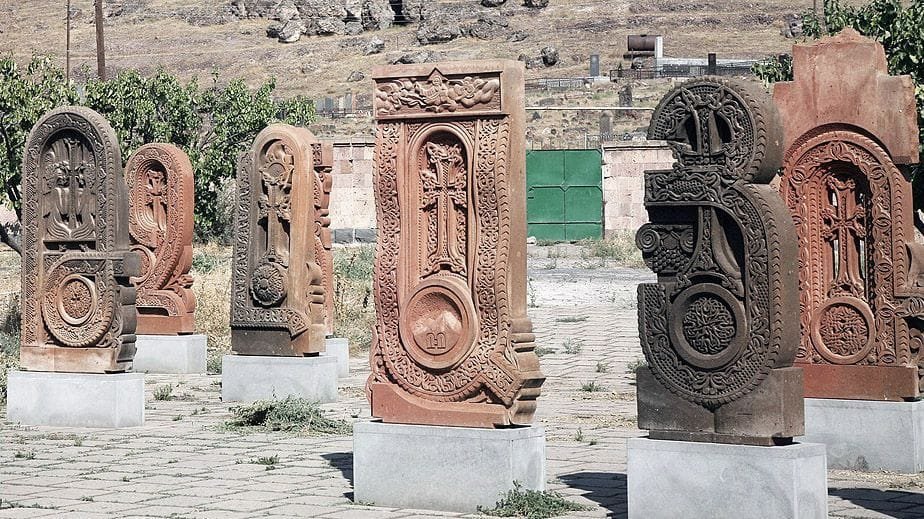 Armenians write with their own 39-letter alphabet, invented by a monk, Mesrop Mashtots, in the year 405, and the monk is buried here, at Oshakan, beneath the altar of the church. That is why on the first day of school children from half the country come to leave flowers, and why the railing carries 36 khachkars, one for each original letter. The present church dates from 1875; the tomb, from the 5th century. The village, 30 km from Yerevan, lives off its vines.
Twenty minutes. If you are going up to Mount Aragats, the alphabet park is a few kilometres away, with the letters carved in stone at giant size, which children like better than the church.
Road 11KM 0 Hours and 18 Minutes
Armenians write with their own 39-letter alphabet, invented by a monk, Mesrop Mashtots, in the year 405, and the monk is buried here, at Oshakan, beneath the altar of the church. That is why on the first day of school children from half the country come to leave flowers, and why the railing carries 36 khachkars, one for each original letter. The present church dates from 1875; the tomb, from the 5th century. The village, 30 km from Yerevan, lives off its vines.
Twenty minutes. If you are going up to Mount Aragats, the alphabet park is a few kilometres away, with the letters carved in stone at giant size, which children like better than the church.
Road 11KM 0 Hours and 18 Minutes
Amberd
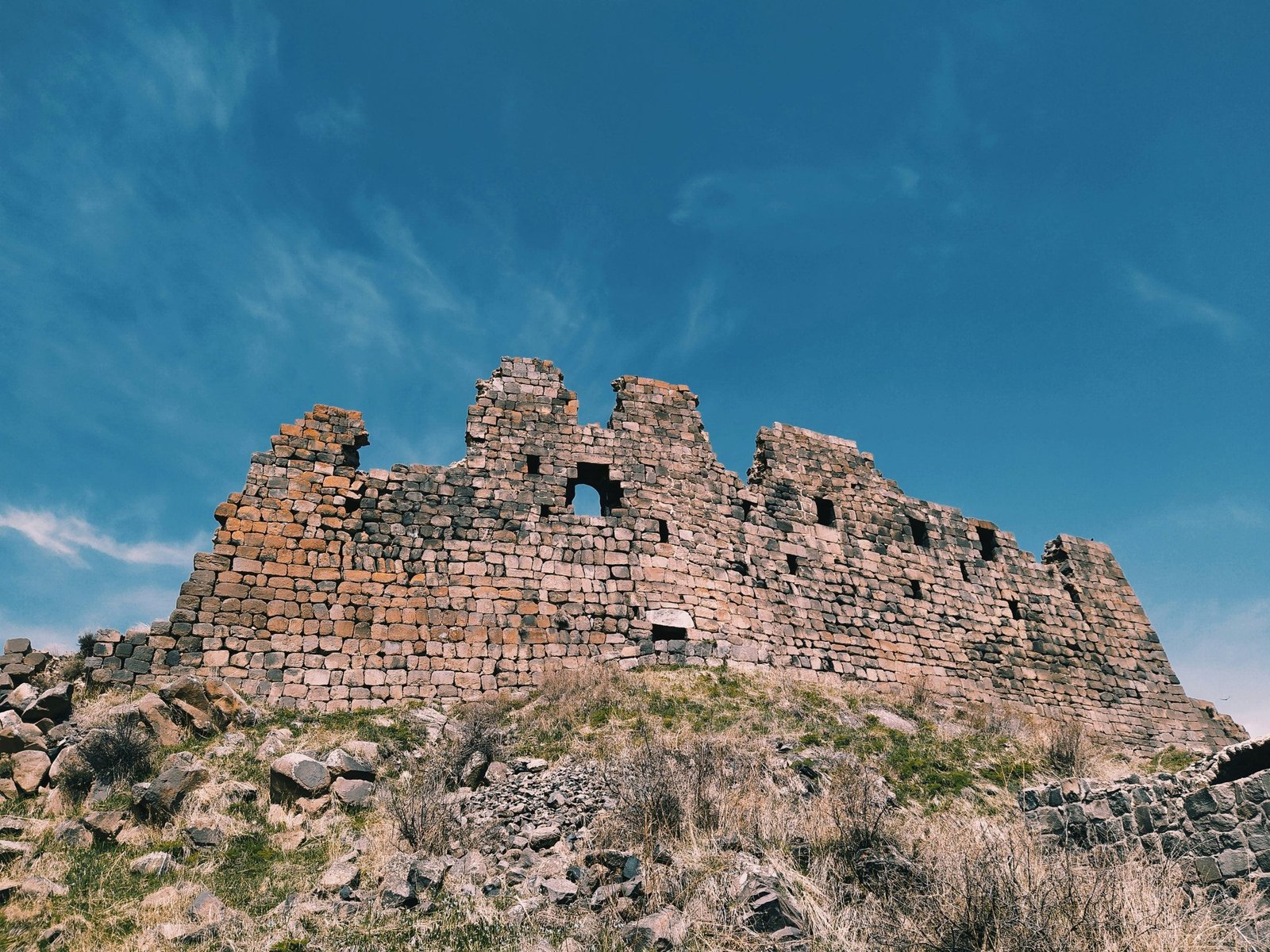 Amberd sits at 2,300 metres on the southern slope of Aragats, where two ravines meet. The first thing you see on arrival is the church, of 1026, and behind it what is left of the fortress, which is much older: the oldest walls are 7th century and the Pahlavuni princes enlarged it in the 10th and 11th. Do not expect a whole castle. What remains is the church, the base of the basalt walls, a bathhouse and the outline of the citadel. What makes up for it is the site: from the top you see the valley and, on a clear day, Ararat.
A practical warning: the access track is closed by snow for a good part of the year, well into spring, and it is cool at the top even in July. Forty minutes.
Road 32KM 0 Hours and 50 Minutes
Amberd sits at 2,300 metres on the southern slope of Aragats, where two ravines meet. The first thing you see on arrival is the church, of 1026, and behind it what is left of the fortress, which is much older: the oldest walls are 7th century and the Pahlavuni princes enlarged it in the 10th and 11th. Do not expect a whole castle. What remains is the church, the base of the basalt walls, a bathhouse and the outline of the citadel. What makes up for it is the site: from the top you see the valley and, on a clear day, Ararat.
A practical warning: the access track is closed by snow for a good part of the year, well into spring, and it is cool at the top even in July. Forty minutes.
Road 32KM 0 Hours and 50 Minutes
Day 4 - Yerevan - Sevanavank - Diliyan- Tbilisi
Total road of the day - 304KM 5 Hours and 23 Minutes Border day: 304 km, 5 hours 23 minutes, and Sevanavank Monastery and Dilijan. A new car and guide are waiting on the other side. Road 68KM 1 Hours and 10 MinutesSevanavank Monastery
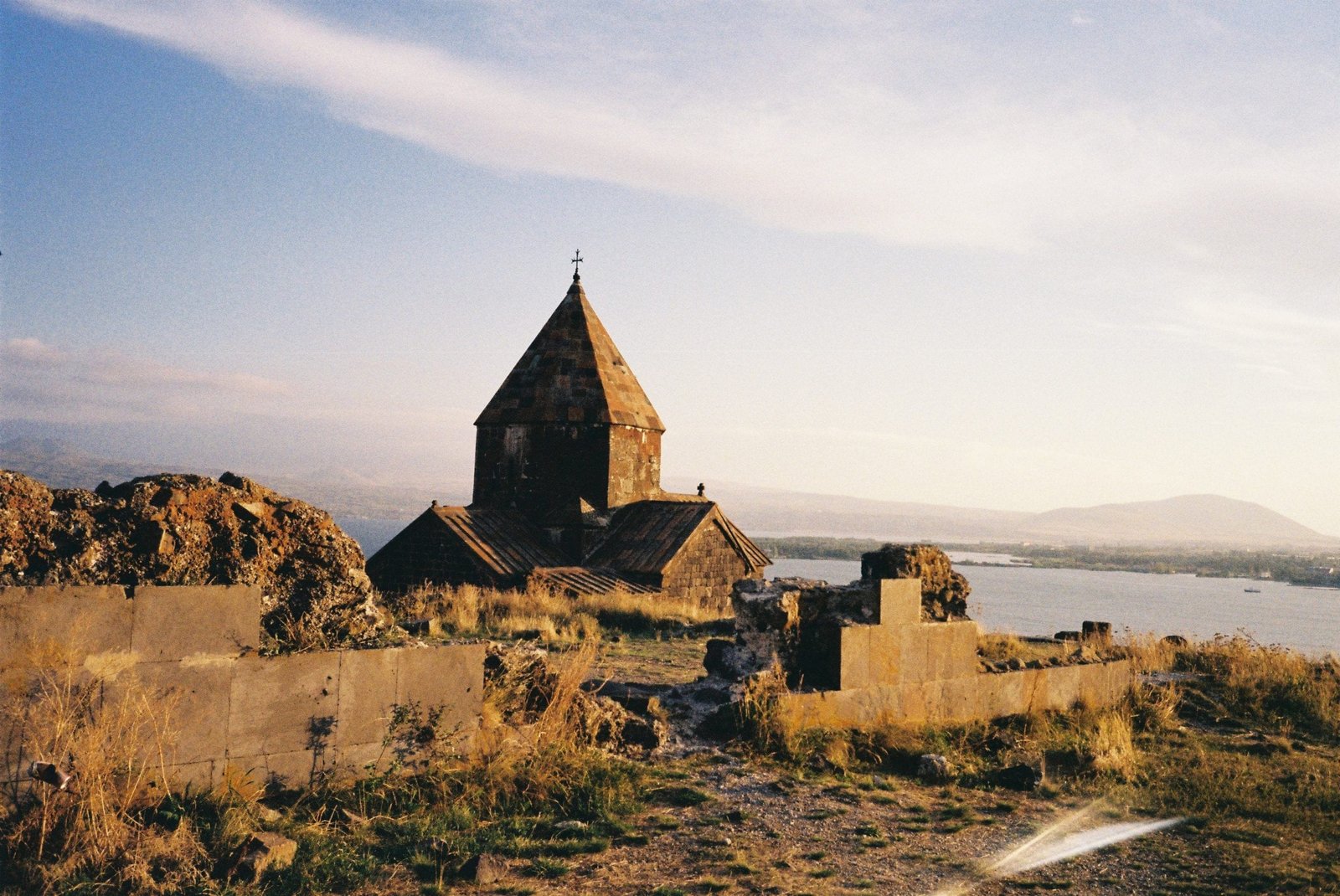 Lake Sevan sits at 1,900 metres and is so big it looks like the sea: 1,240 km², the largest in the Caucasus. Until the 1930s Sevanavank stood on an island; the Soviets lowered the lake by almost twenty metres for irrigation, and the island became a peninsula. Two black tuff churches of the year 874 remain, founded by Princess Mariam, daughter of King Ashot I, and 200 steps to climb. Today there is a seminary next door.
Three quarters of an hour. It is almost always windy and by September it is already cold; in high summer, on the other hand, people swim and along the shores they grill trout and ishkhan, the lake's own fish. It is 65 km from Yerevan.
Road 32KM 0 Hours and 35 Minutes
Lake Sevan sits at 1,900 metres and is so big it looks like the sea: 1,240 km², the largest in the Caucasus. Until the 1930s Sevanavank stood on an island; the Soviets lowered the lake by almost twenty metres for irrigation, and the island became a peninsula. Two black tuff churches of the year 874 remain, founded by Princess Mariam, daughter of King Ashot I, and 200 steps to climb. Today there is a seminary next door.
Three quarters of an hour. It is almost always windy and by September it is already cold; in high summer, on the other hand, people swim and along the shores they grill trout and ishkhan, the lake's own fish. It is 65 km from Yerevan.
Road 32KM 0 Hours and 35 Minutes
Dilijan
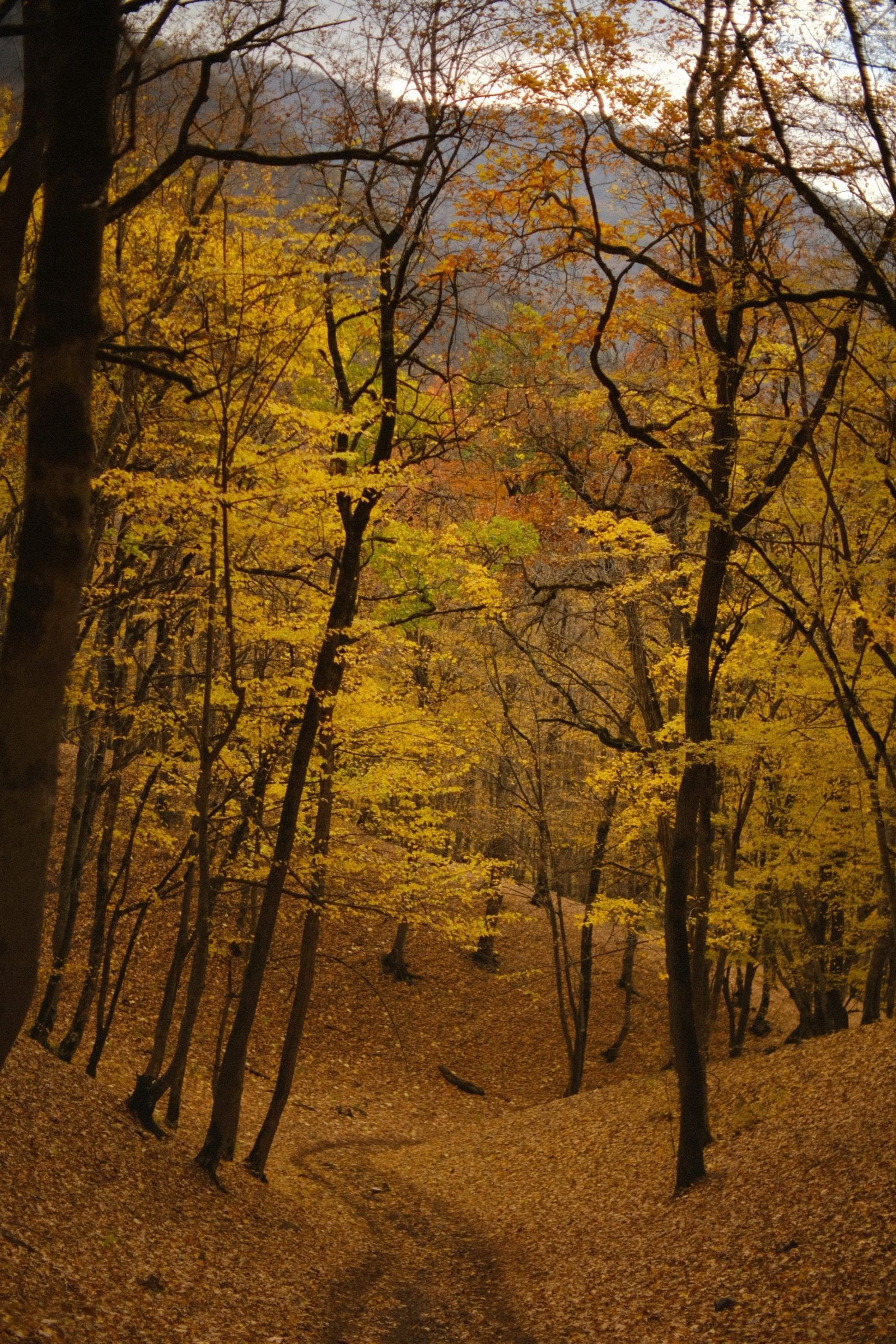 After the dry, pink Armenia of Yerevan, Dilijan is green: a spa town at 1,300 metres in the middle of a forested national park, in the province of Tavush, which the Soviets filled with sanatoriums and rest houses for composers. They call it "little Switzerland", as they do every place with pines and fresh air; no need to believe it. What there is is a restored stretch of old street, Sharambeyan, with 19th-century houses of wood and stone, craft workshops and a couple of cafés, and mineral water coming out of the street fountains.
An hour for the town is enough. Its value is elsewhere: it is the perfect base for the forest monasteries, Haghartsin and Goshavank, and for sleeping cool in summer when Yerevan goes over 35 degrees.
Road 130KM 2 Hours and 20 Minutes
After the dry, pink Armenia of Yerevan, Dilijan is green: a spa town at 1,300 metres in the middle of a forested national park, in the province of Tavush, which the Soviets filled with sanatoriums and rest houses for composers. They call it "little Switzerland", as they do every place with pines and fresh air; no need to believe it. What there is is a restored stretch of old street, Sharambeyan, with 19th-century houses of wood and stone, craft workshops and a couple of cafés, and mineral water coming out of the street fountains.
An hour for the town is enough. Its value is elsewhere: it is the perfect base for the forest monasteries, Haghartsin and Goshavank, and for sleeping cool in summer when Yerevan goes over 35 degrees.
Road 130KM 2 Hours and 20 Minutes
Sadakhlo, the Georgia-Armenia border
Here you cross on foot: passport control on one side, a few hundred metres walking with your suitcase and control on the other. Between half an hour and an hour depending on the day. On the far side the car and guide of the next country are waiting, so this is where you say goodbye to the ones from this side. Road 74KM 1 Hours and 18 MinutesDay 5 - Tbilisi - Guided tour in Spanish
No driving Today: Rustaveli Avenue, Metekhi Square, Narikala Fortress, Abanotubani and Anchiskhati.Rustaveli Avenue
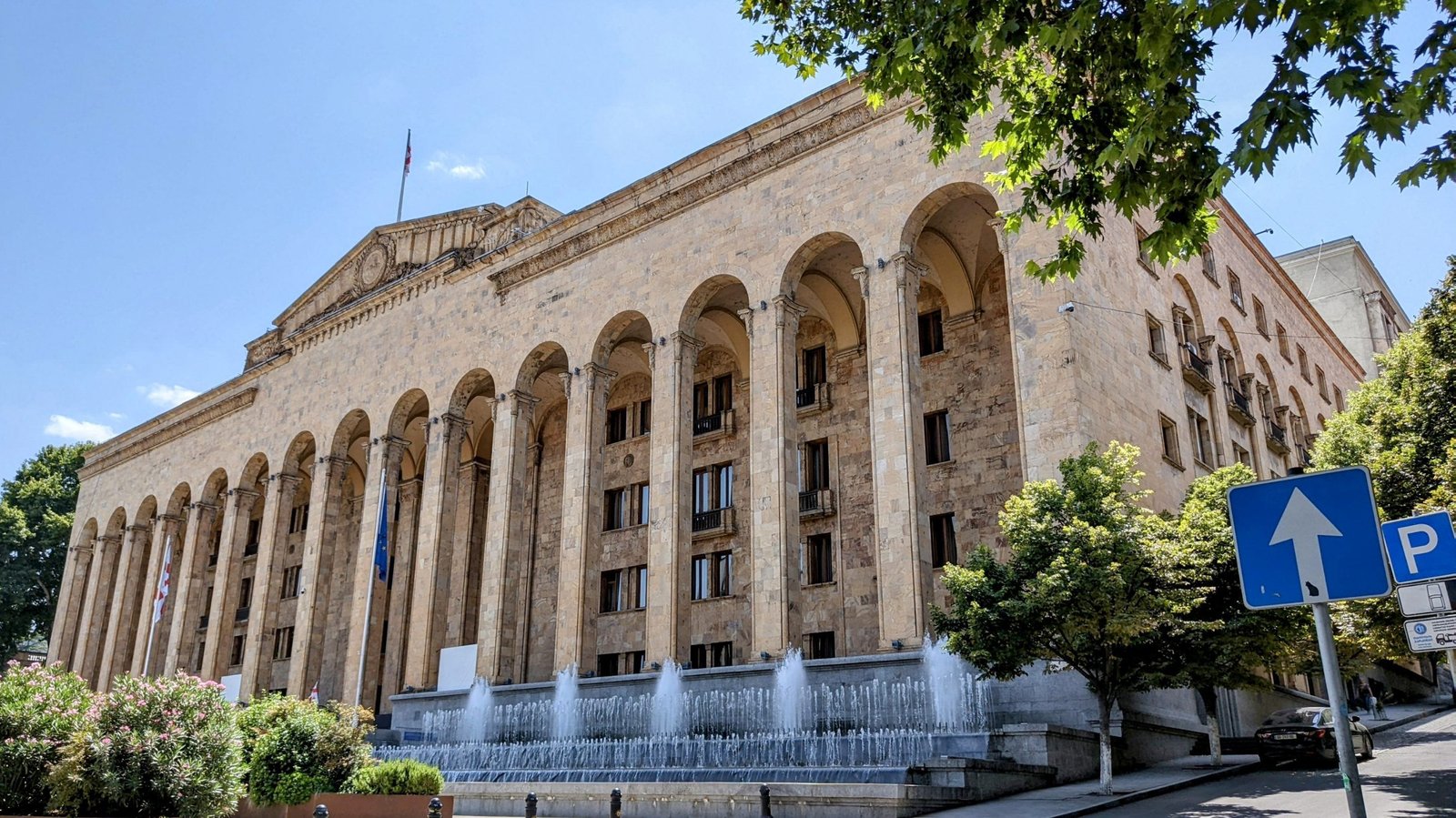 A kilometre and a half of plane trees between Freedom Square and Rustaveli Square. This is the street where Tbilisi shows off: the Parliament, the Moorish-looking Opera House of 1896, the Rustaveli Theatre, the Kashueti church, the National Museum and the grand hotels of the early 20th century. It is named after Shota Rustaveli, the 12th-century poet who wrote "The Knight in the Panther's Skin", the book every Georgian can quote.
It takes a good half hour on foot, or two metro stops if the heat is on. In front of the Parliament there is a plaque worth stopping for: on 9 April 1989 the Soviet army broke up a demonstration here and twenty-one people died, almost all of them women. That day still weighs on the politics of the country.
A kilometre and a half of plane trees between Freedom Square and Rustaveli Square. This is the street where Tbilisi shows off: the Parliament, the Moorish-looking Opera House of 1896, the Rustaveli Theatre, the Kashueti church, the National Museum and the grand hotels of the early 20th century. It is named after Shota Rustaveli, the 12th-century poet who wrote "The Knight in the Panther's Skin", the book every Georgian can quote.
It takes a good half hour on foot, or two metro stops if the heat is on. In front of the Parliament there is a plaque worth stopping for: on 9 April 1989 the Soviet army broke up a demonstration here and twenty-one people died, almost all of them women. That day still weighs on the politics of the country.
Metekhi Square
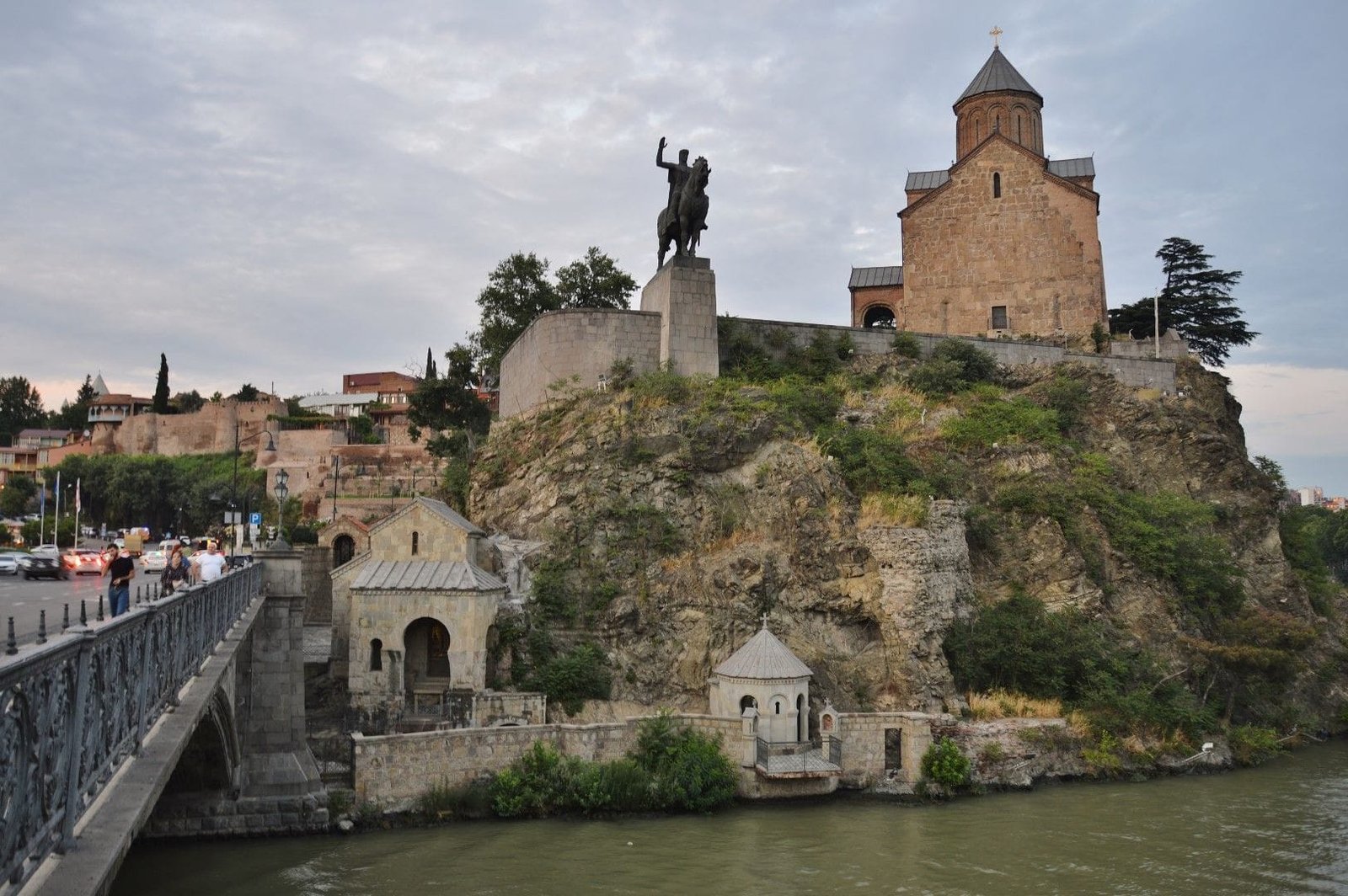 The king on horseback looking over the city from the cliff is Vakhtang Gorgasali, the founder of Tbilisi according to tradition; the statue dates from 1967. Next to him, the church of Metekhi, from the late 13th century, built by Demetre II on top of another from the 5th. The royal palace stood here for centuries, and in the 19th century and Soviet times the building was a prison: Gorky did time in it. Then it was a theatre, and in 1988 it became a church again.
We come here for the view, the best of the lower town: the sulphur baths right below, Narikala opposite and the river running between the two. It is a fifteen-minute stop that almost always runs longer because of the photos.
The king on horseback looking over the city from the cliff is Vakhtang Gorgasali, the founder of Tbilisi according to tradition; the statue dates from 1967. Next to him, the church of Metekhi, from the late 13th century, built by Demetre II on top of another from the 5th. The royal palace stood here for centuries, and in the 19th century and Soviet times the building was a prison: Gorky did time in it. Then it was a theatre, and in 1988 it became a church again.
We come here for the view, the best of the lower town: the sulphur baths right below, Narikala opposite and the river running between the two. It is a fifteen-minute stop that almost always runs longer because of the photos.
Narikala Fortress
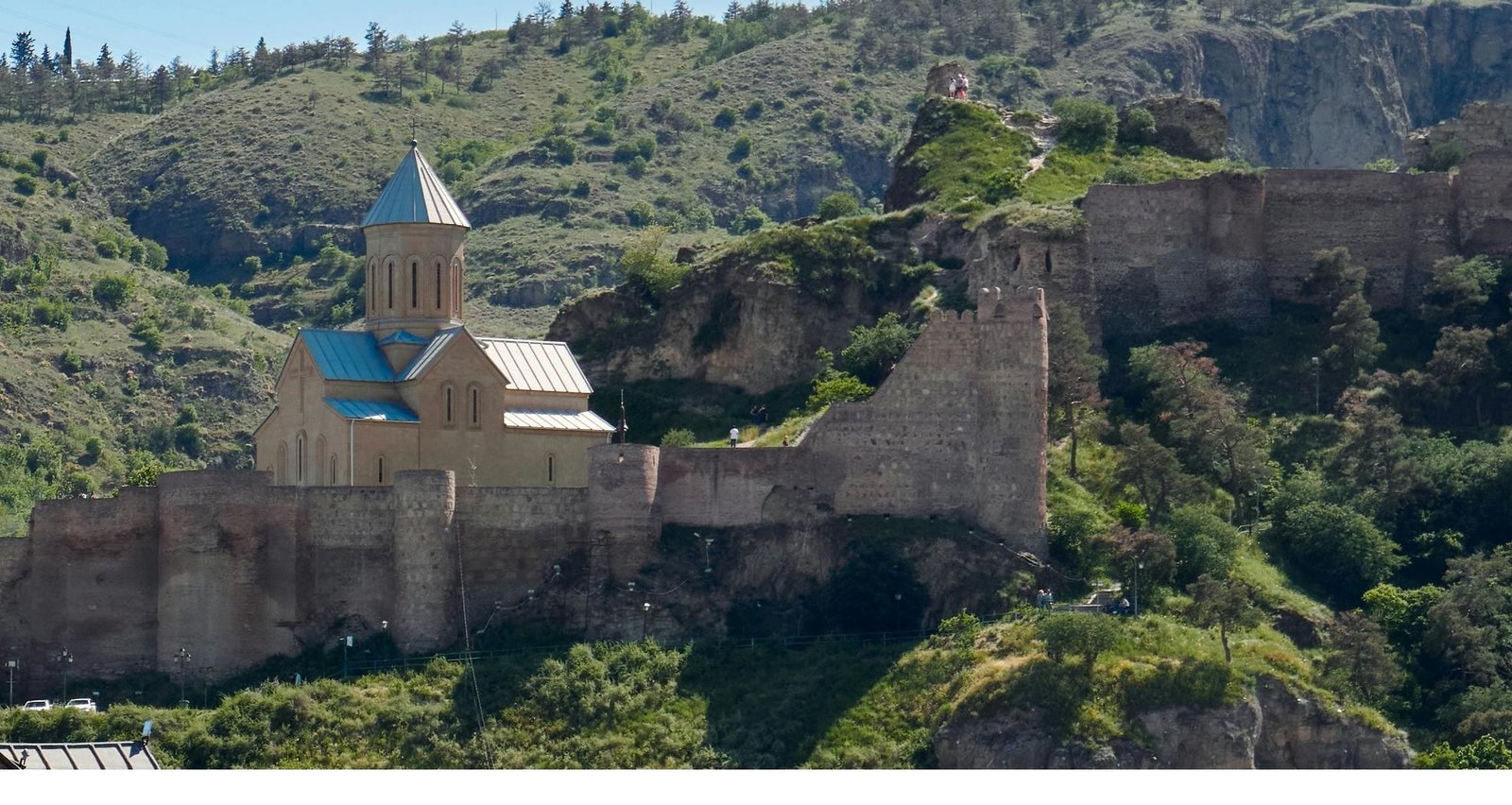 We take the cable car that leaves from Rike Park and crosses the river in two minutes; it costs the same as a metro ticket and is paid with the same card. At the top is Narikala, or what is left of it: the Persians founded it in the 4th century, the Arabs enlarged it in the 8th and the Georgians in the 12th, and in 1827 an explosion of the gunpowder store took out a good part of the walls. The church of St Nicholas inside dates from 1997, on medieval foundations.
The reason to come up is not the stones but the view: the whole old town, the domes of the baths, the river and Metekhi opposite. Careful, the walls have no railings and the rock is polished by so many feet. From here we walk down through the Betlemi quarter to the baths, passing the Mother of Georgia on the way, the aluminium statue of 1958 that watches over the city with a cup in one hand and a sword in the other.
We take the cable car that leaves from Rike Park and crosses the river in two minutes; it costs the same as a metro ticket and is paid with the same card. At the top is Narikala, or what is left of it: the Persians founded it in the 4th century, the Arabs enlarged it in the 8th and the Georgians in the 12th, and in 1827 an explosion of the gunpowder store took out a good part of the walls. The church of St Nicholas inside dates from 1997, on medieval foundations.
The reason to come up is not the stones but the view: the whole old town, the domes of the baths, the river and Metekhi opposite. Careful, the walls have no railings and the rock is polished by so many feet. From here we walk down through the Betlemi quarter to the baths, passing the Mother of Georgia on the way, the aluminium statue of 1958 that watches over the city with a cup in one hand and a sword in the other.
Abanotubani
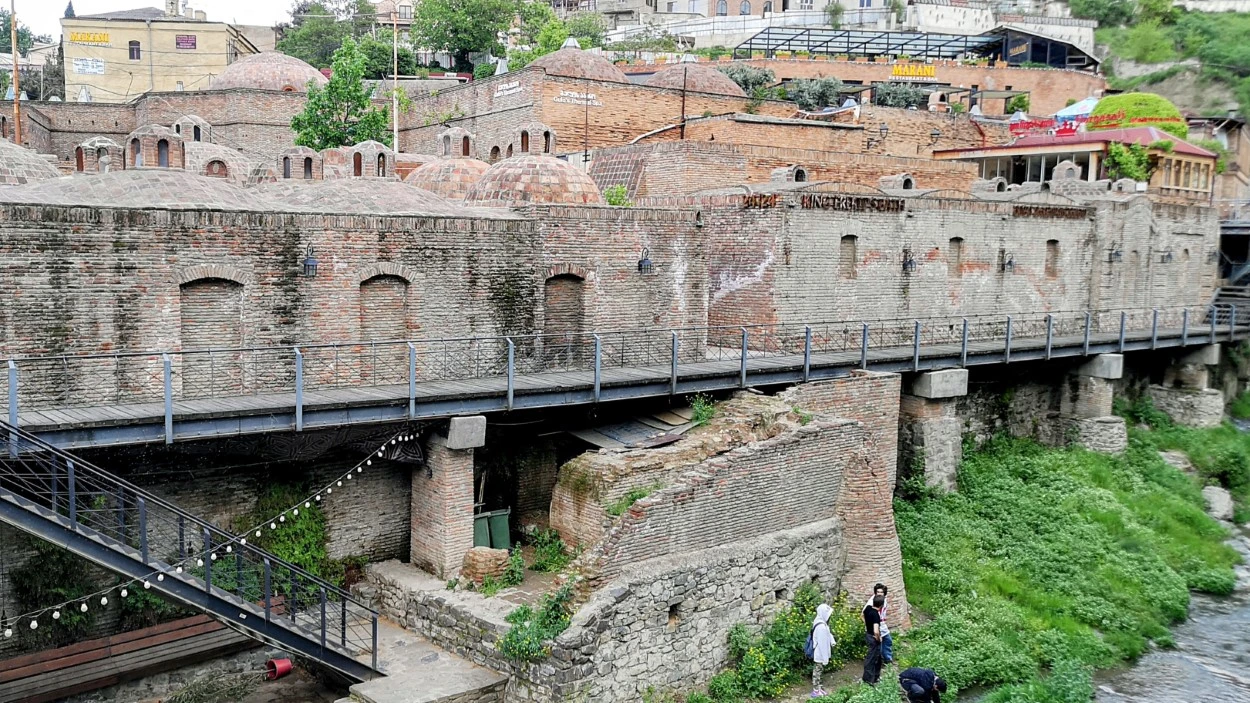 Tbilisi means "warm place", and the warmth comes from here. Abanotubani is the sulphur bath district, on the right bank of the Mtkvari just below Narikala: brick domes at ground level with the baths underneath, and water that comes up on its own at 37 to 40 degrees and smells of eggs. Legend has it that King Vakhtang Gorgasali founded the city in the 5th century after seeing a wounded pheasant healed in these waters. Pushkin bathed here in 1829 and wrote that he had never seen anything like it.
You can stroll and look, but what is worth it is going in: a private room with a hot-water pool and, if you like, a scrub with a coarse mitt that leaves you like new. Booking is needed in high season, and you bring swimwear and a towel or rent them. The blue-tiled façade belongs to the Orbeliani bath; the others are plainer outside.
Tbilisi means "warm place", and the warmth comes from here. Abanotubani is the sulphur bath district, on the right bank of the Mtkvari just below Narikala: brick domes at ground level with the baths underneath, and water that comes up on its own at 37 to 40 degrees and smells of eggs. Legend has it that King Vakhtang Gorgasali founded the city in the 5th century after seeing a wounded pheasant healed in these waters. Pushkin bathed here in 1829 and wrote that he had never seen anything like it.
You can stroll and look, but what is worth it is going in: a private room with a hot-water pool and, if you like, a scrub with a coarse mitt that leaves you like new. Booking is needed in high season, and you bring swimwear and a towel or rent them. The blue-tiled façade belongs to the Orbeliani bath; the others are plainer outside.
Anchiskhati
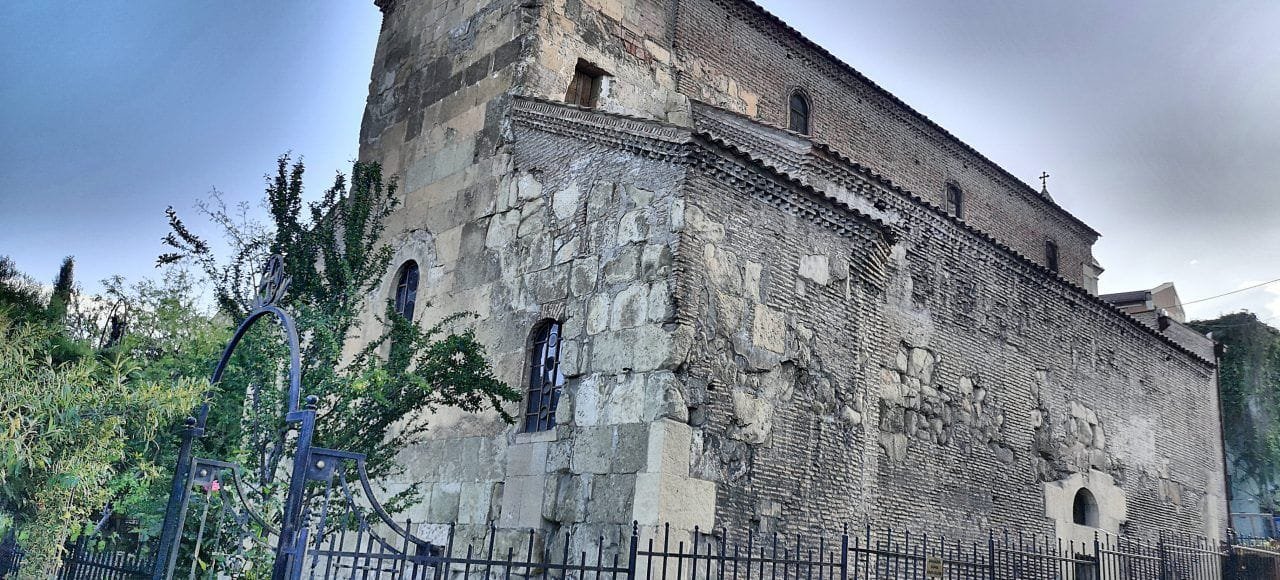 It is the oldest church still standing in Tbilisi, and it does not look it: a small three-nave basilica of plain stone, tucked into a street of the old town. King Dachi, son of Vakhtang Gorgasali, built it around the year 530. The name comes from the Christ icon of Ancha, which arrived here in 1664 from an area that is now Turkey and is now kept in the Art Museum. The brick bell tower of 1675 is what you see from the street.
If it falls on a Sunday morning, we go in during the liturgy: the Anchiskhati choir sings Georgian polyphony the way it was sung centuries ago, and it is one of the things people remember most from the trip. On other days it is almost empty and takes ten minutes. There are headscarves at the door for women.
It is the oldest church still standing in Tbilisi, and it does not look it: a small three-nave basilica of plain stone, tucked into a street of the old town. King Dachi, son of Vakhtang Gorgasali, built it around the year 530. The name comes from the Christ icon of Ancha, which arrived here in 1664 from an area that is now Turkey and is now kept in the Art Museum. The brick bell tower of 1675 is what you see from the street.
If it falls on a Sunday morning, we go in during the liturgy: the Anchiskhati choir sings Georgian polyphony the way it was sung centuries ago, and it is one of the things people remember most from the trip. On other days it is almost empty and takes ten minutes. There are headscarves at the door for women.
Day 6 - Tbilisi - Mtskheta - Gori - Uplistsikhe - Borjomi - Akhaltsikhe
Total road of the day - 245KM 3 Hours and 33 Minutes We leave after breakfast. On the programme, Jvari, Svetitskhoveli, Uplistsikhe, Stalin Museum and Borjomi; 245 km in short stretches. Road 25KM 0 Hours and 36 MinutesJvari, the Monastery of the Cross
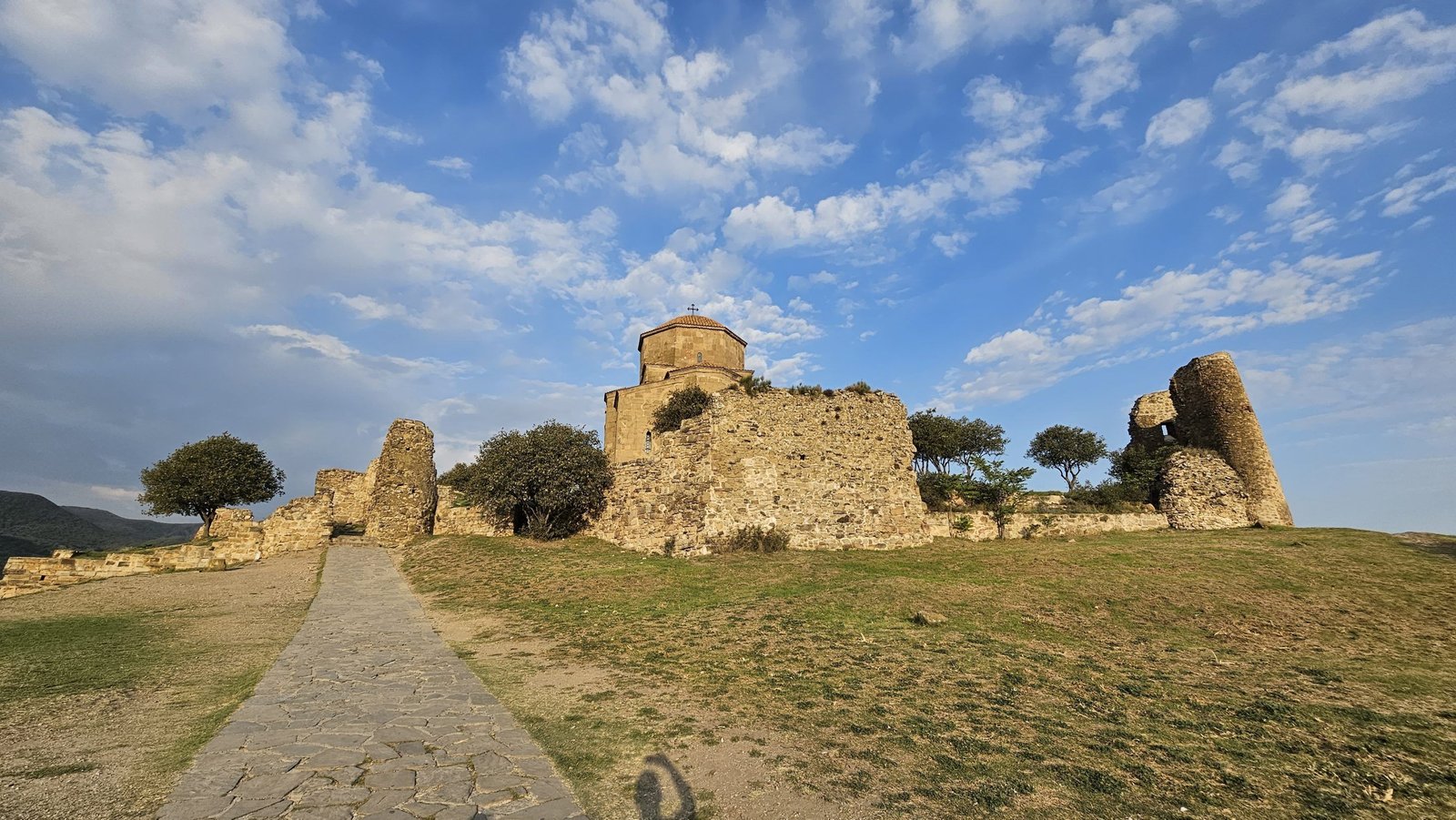 From the Tbilisi road you can see a small church on top of a bare hill above Mtskheta. It is Jvari, "the cross", and it is there because, according to tradition, in the 4th century St Nino planted a wooden cross on that spot when she converted Georgia. The present church was built between 586 and 605 and became the model for many others in the country: a cross plan with four apses and a dome in the middle, with hardly any decoration. It is a UNESCO site together with Mtskheta.
What you remember is the view: below, the Aragvi and the Mtkvari meet, each a different colour, with Svetitskhoveli cathedral in between. Lermontov set his poem "Mtsyri" here. It is almost always windy, so a jacket is not a bad idea even in July. Twenty minutes, half an hour if the day is clear.
Road 13KM 0 Hours and 18 Minutes
From the Tbilisi road you can see a small church on top of a bare hill above Mtskheta. It is Jvari, "the cross", and it is there because, according to tradition, in the 4th century St Nino planted a wooden cross on that spot when she converted Georgia. The present church was built between 586 and 605 and became the model for many others in the country: a cross plan with four apses and a dome in the middle, with hardly any decoration. It is a UNESCO site together with Mtskheta.
What you remember is the view: below, the Aragvi and the Mtkvari meet, each a different colour, with Svetitskhoveli cathedral in between. Lermontov set his poem "Mtsyri" here. It is almost always windy, so a jacket is not a bad idea even in July. Twenty minutes, half an hour if the day is clear.
Road 13KM 0 Hours and 18 Minutes
Svetitskhoveli
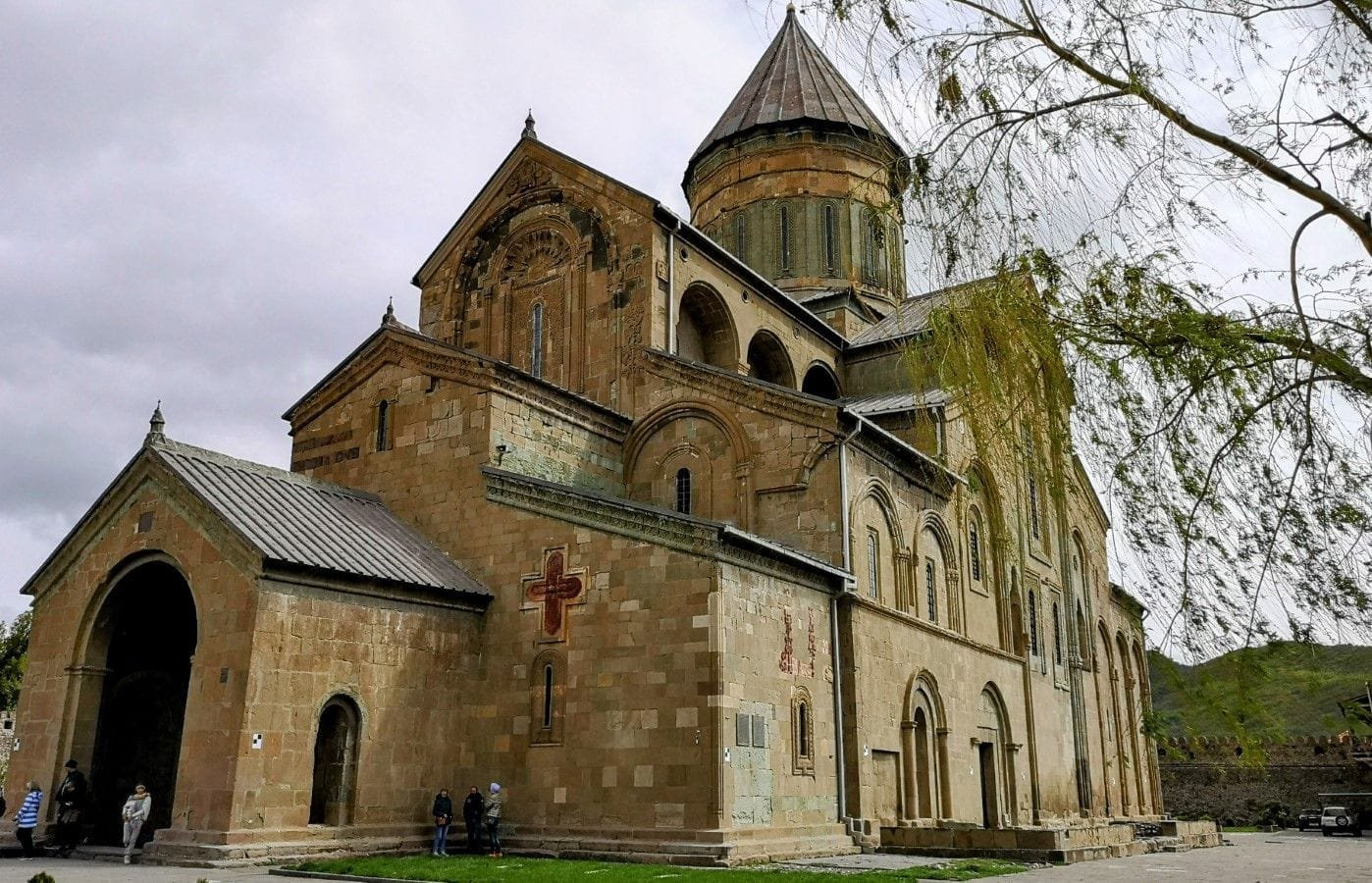 For a Georgian this is the cathedral, full stop. It stands in Mtskheta, the old capital, 20 km from Tbilisi, and the present building went up between 1010 and 1029 on the site of the 4th-century church of King Mirian, the one who converted the country to Christianity. Beneath it, according to tradition, lies the robe of Christ: a Jew from Mtskheta brought it from Jerusalem, his sister Sidonia died clutching it and they were buried together; a cedar grew from the spot, and from its trunk came the pillar that gives the church its name, "the life-giving pillar". Kings were crowned and buried here; the slabs of Vakhtang Gorgasali and Erekle II are in the floor.
A UNESCO site since 1994, and at weekends the weddings follow one another, so sometimes you wait at the door. Headscarves for women and covered shoulders for everyone. Half an hour inside, another in the lanes around it, which live off tourism but keep the feel of a village.
Road 61KM 1 Hours and 5 Minutes
For a Georgian this is the cathedral, full stop. It stands in Mtskheta, the old capital, 20 km from Tbilisi, and the present building went up between 1010 and 1029 on the site of the 4th-century church of King Mirian, the one who converted the country to Christianity. Beneath it, according to tradition, lies the robe of Christ: a Jew from Mtskheta brought it from Jerusalem, his sister Sidonia died clutching it and they were buried together; a cedar grew from the spot, and from its trunk came the pillar that gives the church its name, "the life-giving pillar". Kings were crowned and buried here; the slabs of Vakhtang Gorgasali and Erekle II are in the floor.
A UNESCO site since 1994, and at weekends the weddings follow one another, so sometimes you wait at the door. Headscarves for women and covered shoulders for everyone. Half an hour inside, another in the lanes around it, which live off tourism but keep the feel of a village.
Road 61KM 1 Hours and 5 Minutes
Uplistsikhe
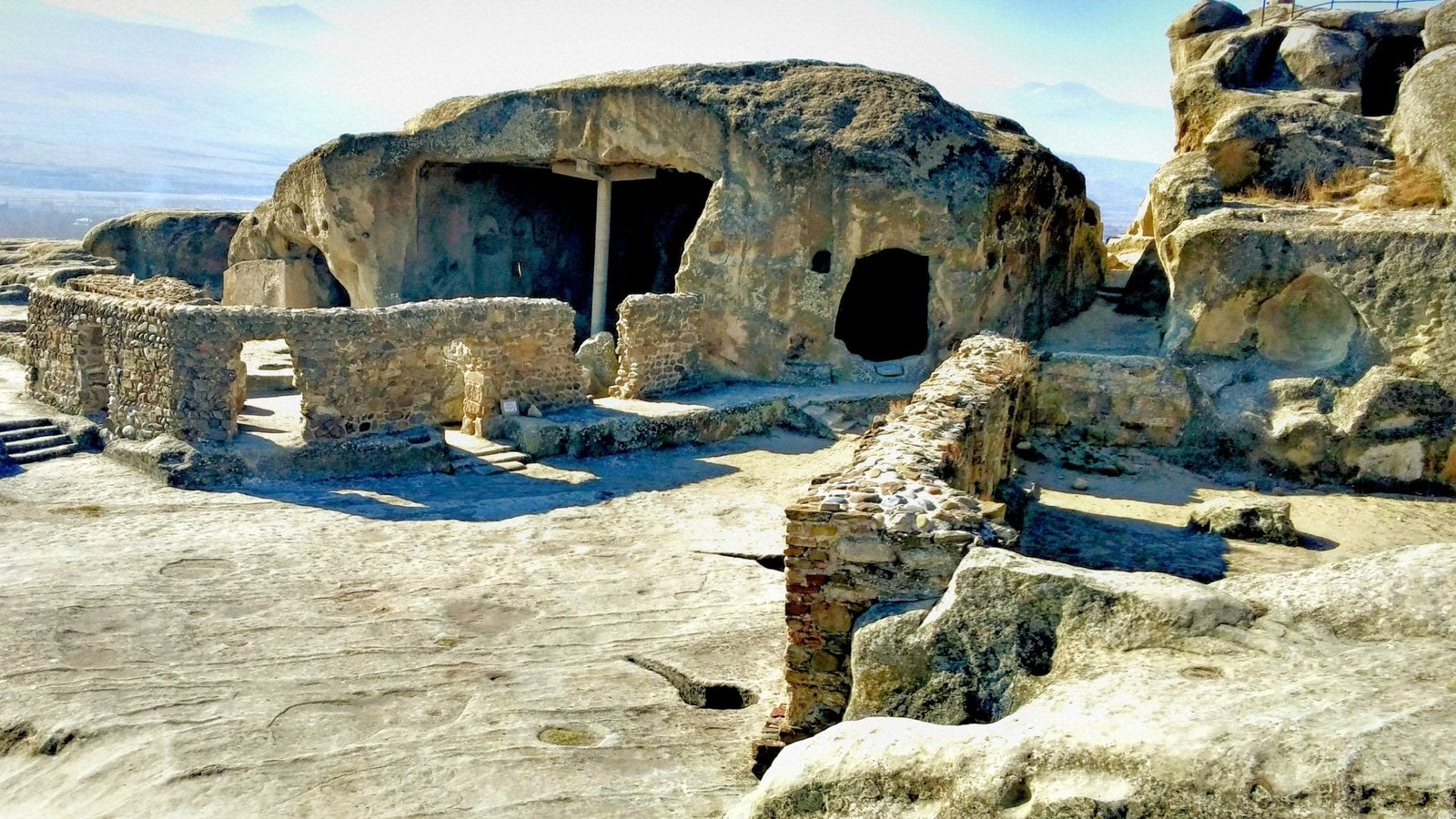 A whole town cut into the rock, 10 km from Gori above the Mtkvari river. People lived at Uplistsikhe from the first millennium BC until the Middle Ages: first a pagan centre, then a Christian one, and always a stop for the caravans. What remains are carved streets, a hall with a ceiling imitating wooden beams (they call it "Queen Tamar's hall"), wine presses, a tunnel down to the river and a 10th-century brick church planted on top of it all. The Mongols emptied it in the 13th century and it never recovered.
One piece of advice: in summer there is no shade and the rock burns, so go early or late in the day, and wear shoes with grip, because the polished stone is slippery. An hour is enough to climb up to the church and look down at the river.
Road 14KM 0 Hours and 20 Minutes
A whole town cut into the rock, 10 km from Gori above the Mtkvari river. People lived at Uplistsikhe from the first millennium BC until the Middle Ages: first a pagan centre, then a Christian one, and always a stop for the caravans. What remains are carved streets, a hall with a ceiling imitating wooden beams (they call it "Queen Tamar's hall"), wine presses, a tunnel down to the river and a 10th-century brick church planted on top of it all. The Mongols emptied it in the 13th century and it never recovered.
One piece of advice: in summer there is no shade and the rock burns, so go early or late in the day, and wear shoes with grip, because the polished stone is slippery. An hour is enough to climb up to the church and look down at the river.
Road 14KM 0 Hours and 20 Minutes
Stalin Museum
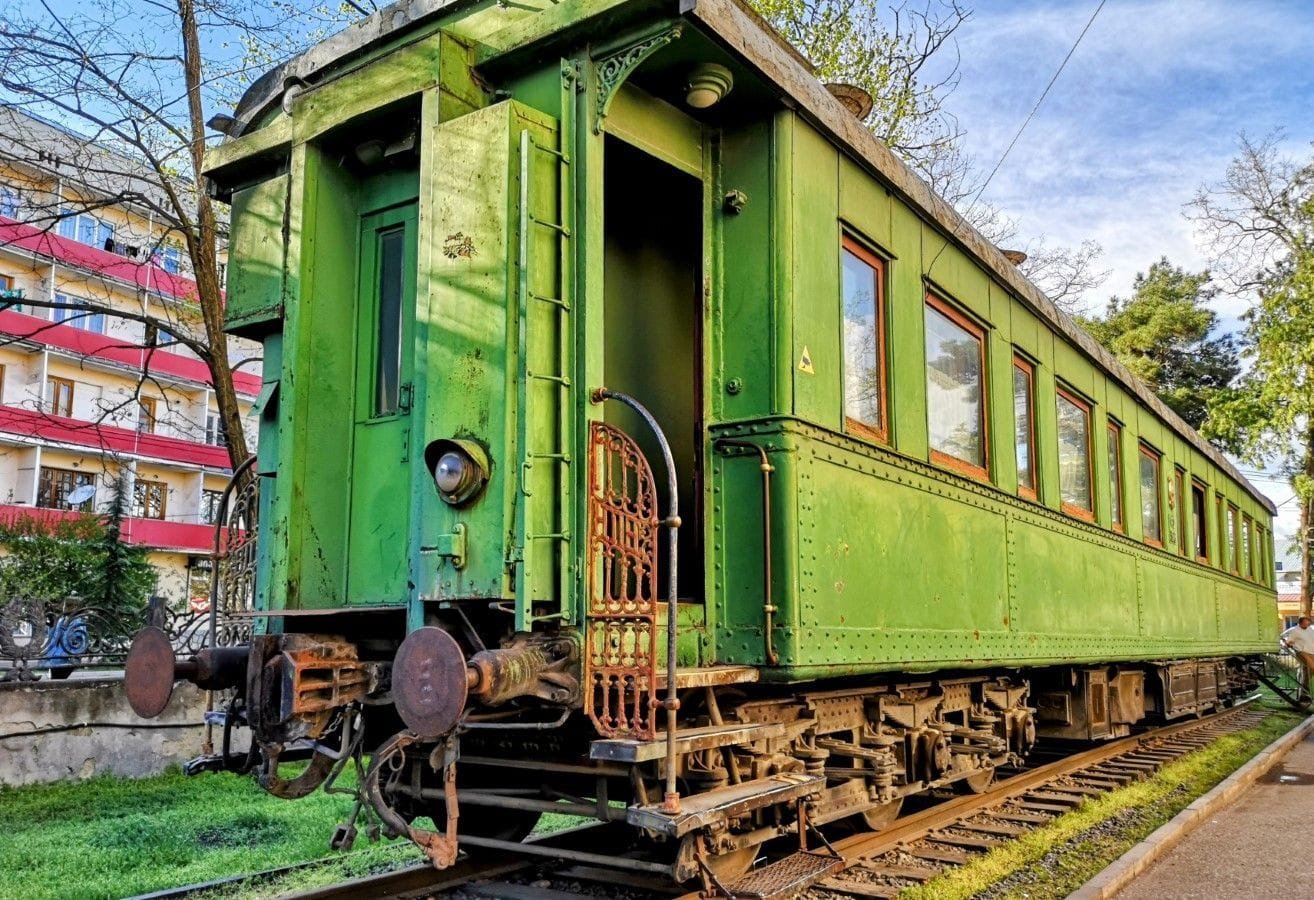 Gori is the town where Iosif Dzhugashvili was born in 1878, and the museum dedicated to him in 1957 is still open much as it was then. It is three things: the little wooden house where he was born, protected under a pavilion of columns; the main building, a Soviet-style palace with his personal belongings, photographs, gifts from heads of state and one of the bronze copies of his death mask; and the armoured railway carriage in which he travelled to Yalta and Potsdam, because he did not like flying.
Let us be plain: the museum tells the kind version. There is a small room on the repression, added late, and little else. We tell the rest on the road, and the one-hour visit usually ends in a long conversation in the car.
Road 84KM 1 Hours and 14 Minutes
Gori is the town where Iosif Dzhugashvili was born in 1878, and the museum dedicated to him in 1957 is still open much as it was then. It is three things: the little wooden house where he was born, protected under a pavilion of columns; the main building, a Soviet-style palace with his personal belongings, photographs, gifts from heads of state and one of the bronze copies of his death mask; and the armoured railway carriage in which he travelled to Yalta and Potsdam, because he did not like flying.
Let us be plain: the museum tells the kind version. There is a small room on the repression, added late, and little else. We tell the rest on the road, and the one-hour visit usually ends in a long conversation in the car.
Road 84KM 1 Hours and 14 Minutes
Borjomi
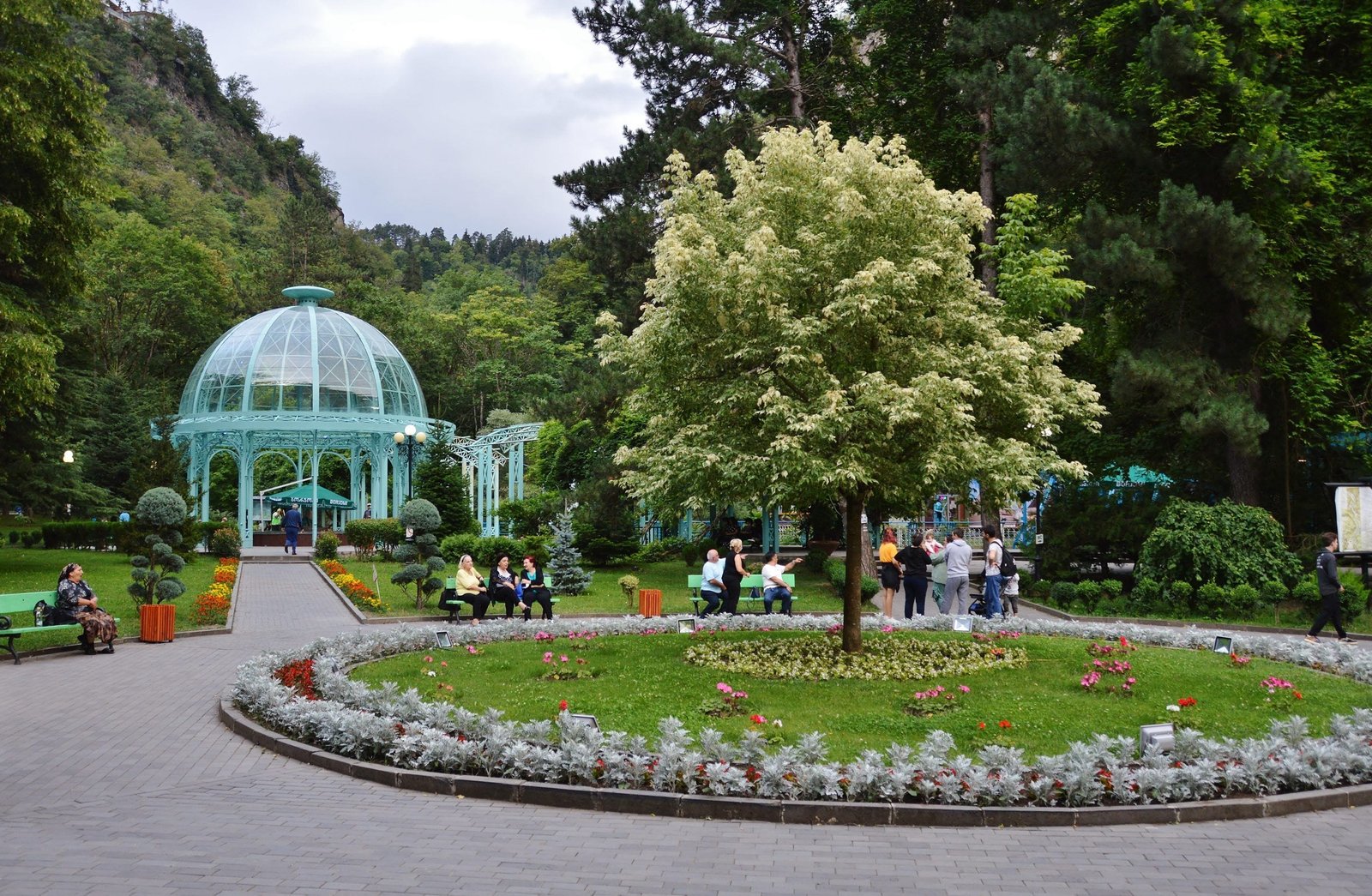 The fizzy water drunk all over the former Soviet Union comes from here, and it has been bottled since 1890. Borjomi was the spa of the Romanovs, who built themselves a palace at Likani, at the entrance to the town, and what remains of that is the air of a spa town from another age: wooden villas, a central park of 1850 with the spring where anyone can fill a bottle (it comes out warm, salty and fizzy, and not everyone likes it) and a cable car up to a viewpoint with a Ferris wheel.
An hour for the park and the spring; for walkers, the 3 km path to the sulphur pools in the forest starts at the far end of the park. The town is the gateway to the Borjomi-Kharagauli national park and the last stop with shops and banks before Vardzia.
Road 48KM 0 Hours and 55 Minutes
The fizzy water drunk all over the former Soviet Union comes from here, and it has been bottled since 1890. Borjomi was the spa of the Romanovs, who built themselves a palace at Likani, at the entrance to the town, and what remains of that is the air of a spa town from another age: wooden villas, a central park of 1850 with the spring where anyone can fill a bottle (it comes out warm, salty and fizzy, and not everyone likes it) and a cable car up to a viewpoint with a Ferris wheel.
An hour for the park and the spring; for walkers, the 3 km path to the sulphur pools in the forest starts at the far end of the park. The town is the gateway to the Borjomi-Kharagauli national park and the last stop with shops and banks before Vardzia.
Road 48KM 0 Hours and 55 Minutes
Day 7 - Akhaltsikhe - Vardzia - Khertvisi - Bavra - Gyumri
Total road of the day - 193KM 4 Hours and 5 Minutes Today we change country. Vardzia; allow an hour for the border. 193 km in all. Road 60KM 1 Hours and 20 MinutesVardzia
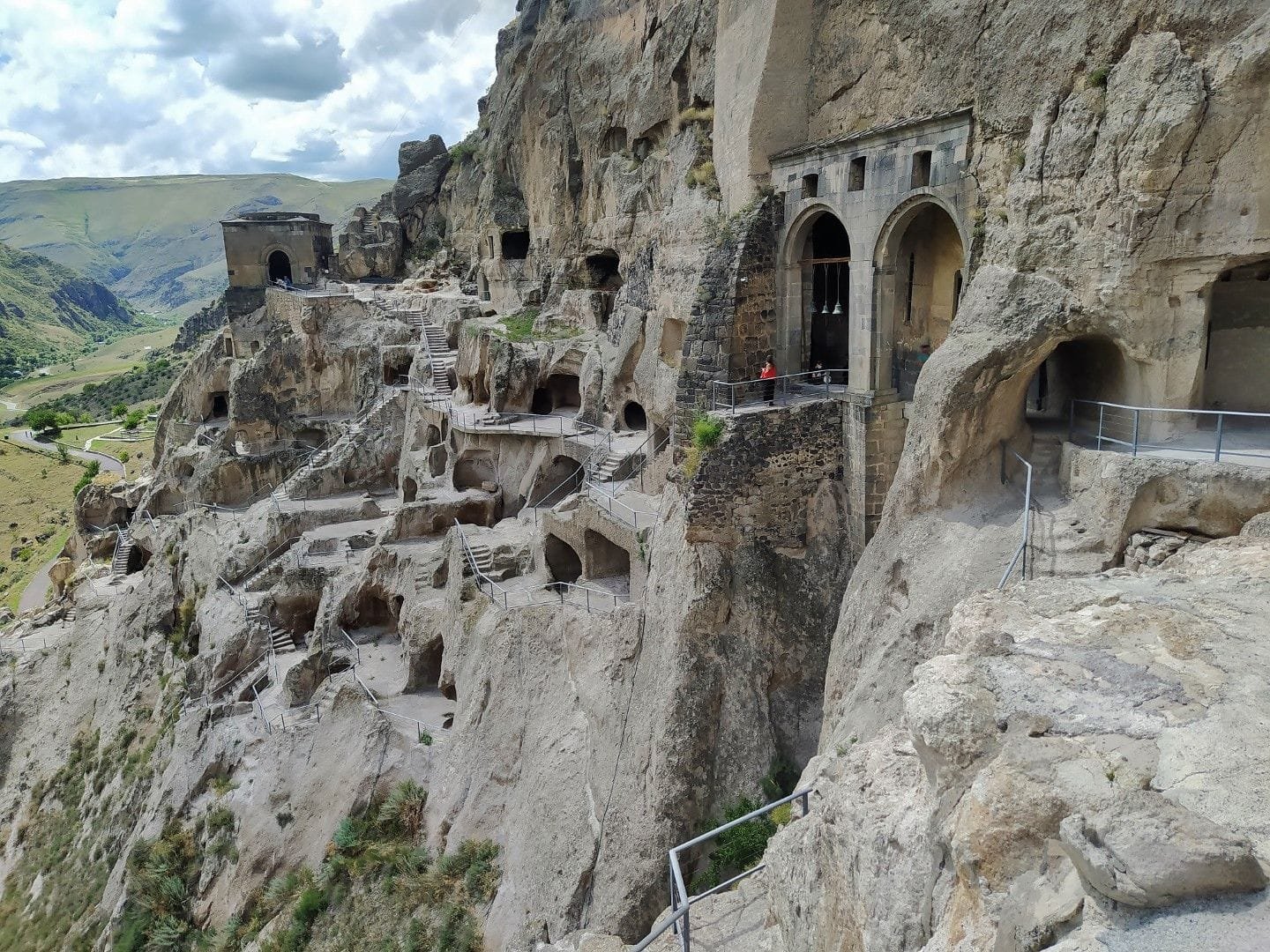 A rock face 500 metres long riddled with 19 storeys of openings: that is Vardzia, the cave monastery Queen Tamar finished around 1185 in the Mtkvari valley, 60 km from Akhaltsikhe. It once had thousands of rooms; the earthquake of 1283 took the whole front off and exposed what you see today, some 600 rooms including cells, wine cellars, refectories, a pharmacy and irrigation channels cut into the stone. In the Church of the Dormition are the 12th-century frescoes, with one of the few portraits of Tamar made in her lifetime.
It is still a monastery, with a few monks, so some areas are closed. The visit takes an hour and a half, almost all of it on stairs and through narrow tunnels: not for bad knees or claustrophobia, although there are routes that avoid the passages. In summer the sun hits the wall from mid-morning; we go as early as we can.
A rock face 500 metres long riddled with 19 storeys of openings: that is Vardzia, the cave monastery Queen Tamar finished around 1185 in the Mtkvari valley, 60 km from Akhaltsikhe. It once had thousands of rooms; the earthquake of 1283 took the whole front off and exposed what you see today, some 600 rooms including cells, wine cellars, refectories, a pharmacy and irrigation channels cut into the stone. In the Church of the Dormition are the 12th-century frescoes, with one of the few portraits of Tamar made in her lifetime.
It is still a monastery, with a few monks, so some areas are closed. The visit takes an hour and a half, almost all of it on stairs and through narrow tunnels: not for bad knees or claustrophobia, although there are routes that avoid the passages. In summer the sun hits the wall from mid-morning; we go as early as we can.


